THE 14 ISLANDS
Stockholm doesn't sit beside water. It's made of it — fourteen islands and a scatter of peninsulas, stitched together by fifty-seven bridges, where the freshwater of Lake Mälaren spills into the brackish Baltic right through downtown. Ask a Stockholmer for directions and water crossings fold into the answer without a second thought — "over the bridge, past the lock, second island on the left."
Which makes it, mostly, just logistics with a view: ferries run on the same transit pass as the metro, apartment listings casually mention "waterfront," and half the city takes a swim on their lunch break because the water is, improbably, clean enough to want to.
Here's the twist nobody mentions upfront: the actual center — Norrmalm, Östermalm, Vasastan — isn't an island at all. It's mainland, solid ground, the part of Stockholm that never had to earn its footing. Which is a little funny, because it's also the part that feels most like Stockholm to most visitors: Sergels Torg, the department stores of Norrmalm, the grand apartment blocks of Östermalm, the quieter residential streets of Vasastan climbing north. Everything here is walkable in a way the islands sometimes aren't, and it's where you'll likely sleep, eat breakfast, and orient yourself before setting out toward the water on either side.
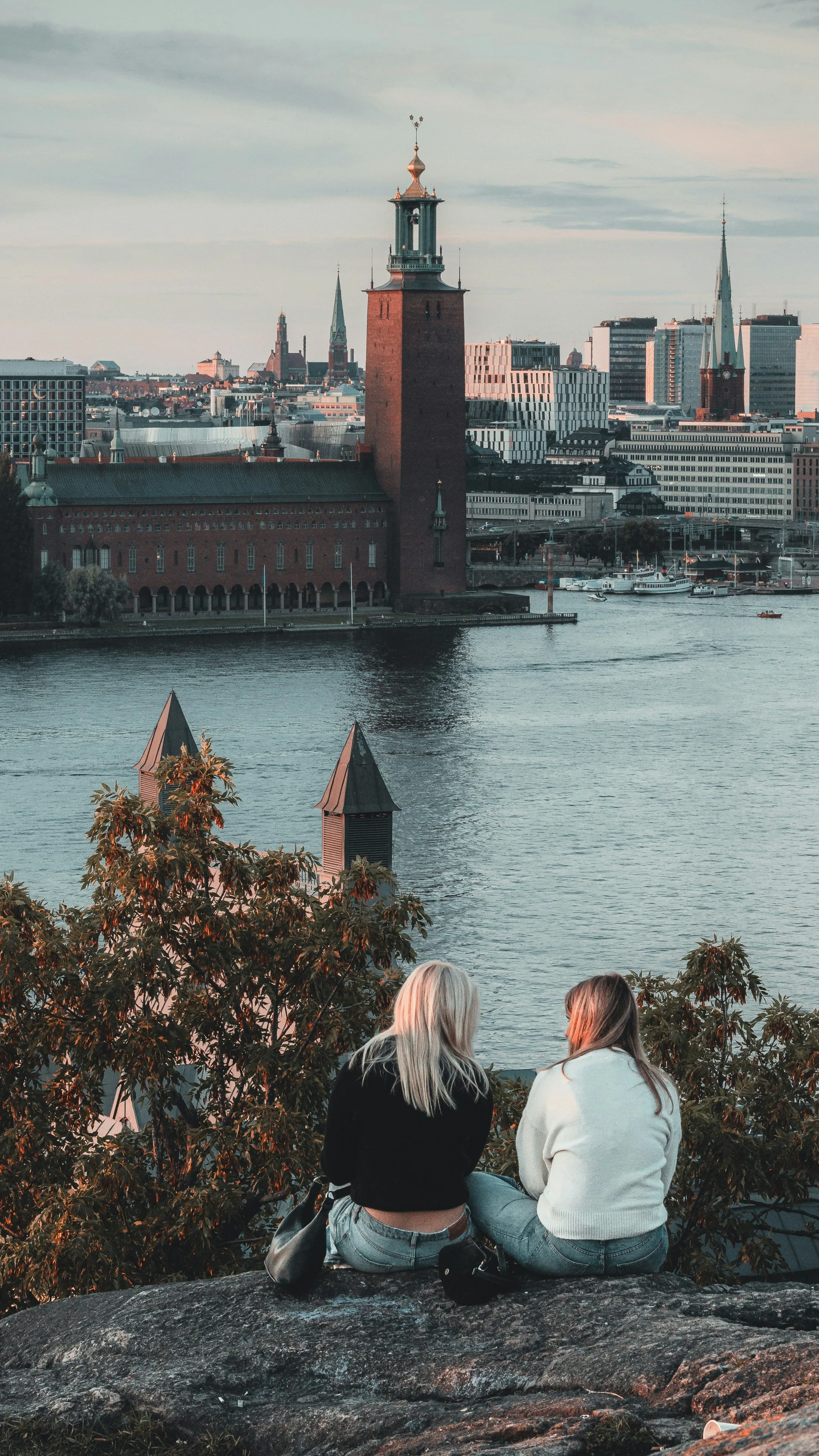
Kungsholmen, west of the center, is the island that runs the show — literally. Stockholm's City Hall sits on its eastern tip, the building where the Nobel Banquet happens every December, its brick tower visible from half the city. Beyond that, Kungsholmen is quieter than its neighbors, more residential, the kind of island where you notice families pushing prams along the waterfront path rather than tour groups. Worth the walk even if City Hall's tower tour isn't on your list — the promenade along Norr Mälarstrand, water on one side, grand old buildings on the other, is Stockholm doing the thing it does best without trying.
Fourteen islands, each with its own temperament — here's the full set, from the ones you'll actually walk to the ones you'll only ever see from a bridge:
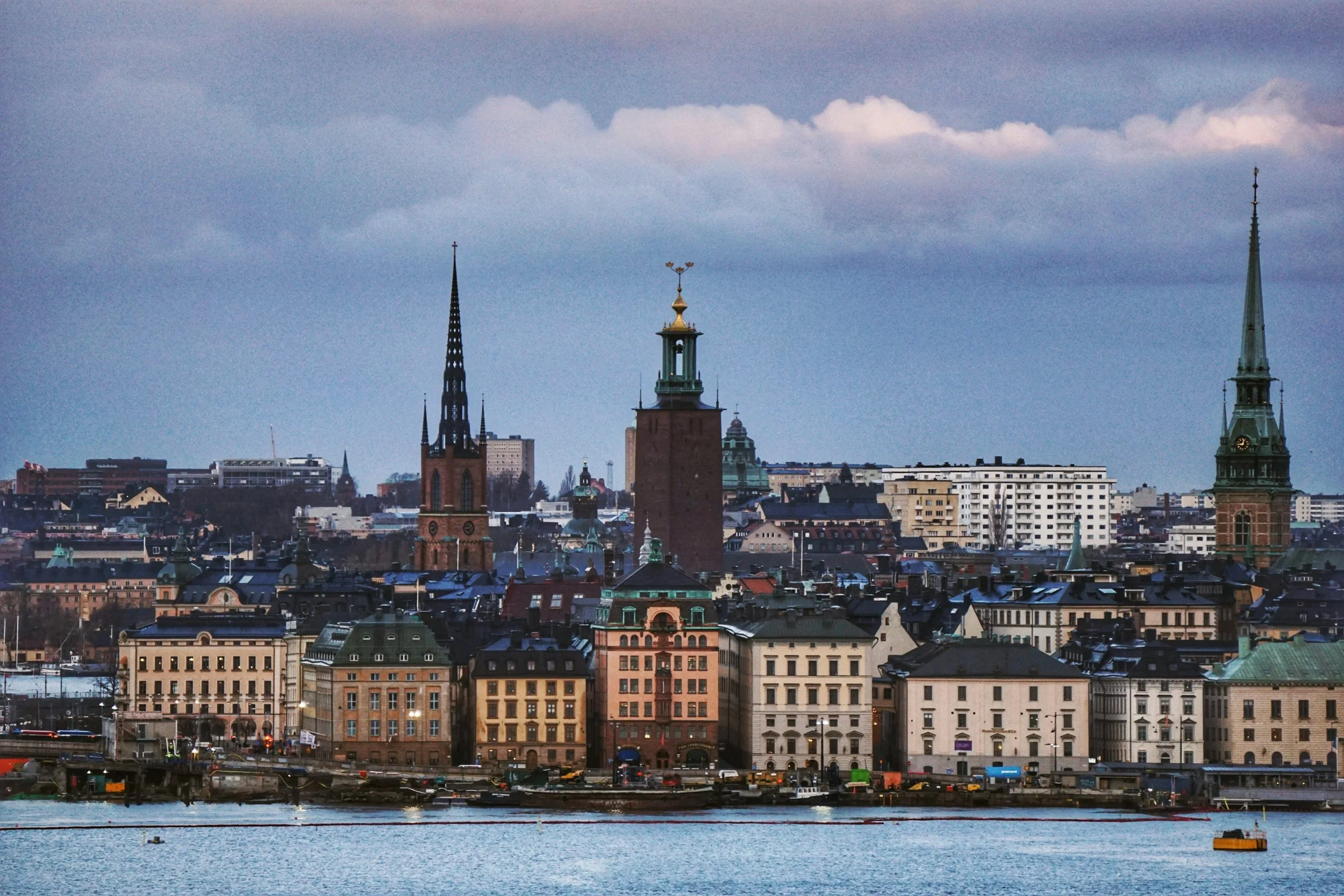
GAMLA STAN — The original island, where Stockholm began in the 13th century, still narrow-laned and cobbled under the weight of its own history.
SÖDERMALM — Once working-class, now the city's creative pulse, all steep streets, water views, and unhurried Sunday mornings.
KUNGSHOLMEN — Home to City Hall and the Nobel Banquet, quieter and more residential than its downtown neighbors.
DJURGÅRDEN — A royal hunting ground turned island of museums and parkland, water pressing in on every side.
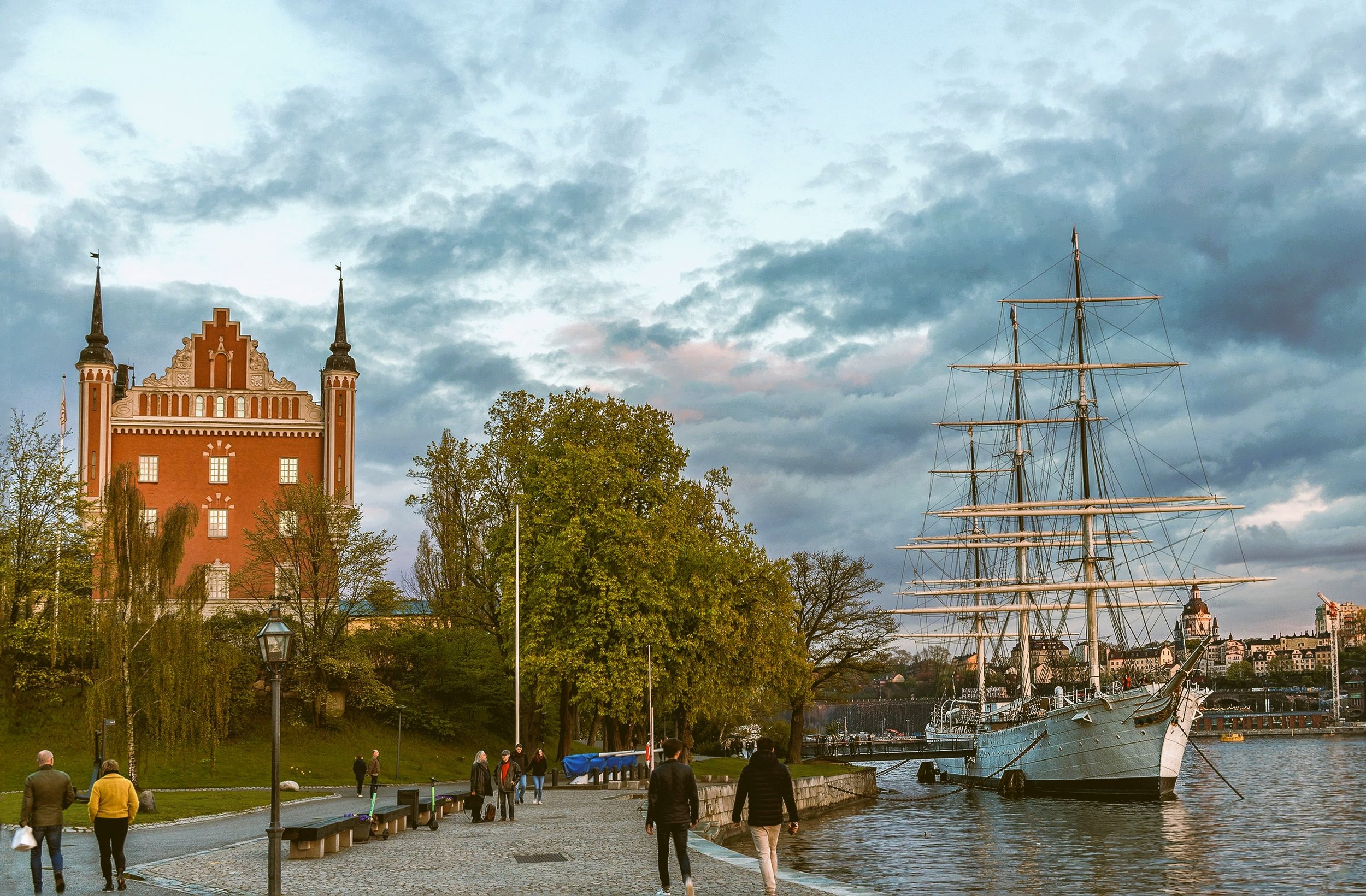
SKEPPSHOLMEN — A former naval base, small enough to walk in minutes, where the city's noise drops to almost nothing.
LÅNGHOLMEN — A former prison island, now pine forest and rocky swimming spots, barely ten minutes from downtown.
RIDDARHOLMEN — Barely populated, dominated by a church that's held Swedish royalty since the 1600s, and startlingly quiet after dark.
HELGEANDSHOLMEN — The tiny island where Sweden's Parliament sits, wedged so tightly between bridges most people cross it without noticing.
KASTELLHOLMEN — A speck of an island crowned by a small castle, connected to Skeppsholmen by a footbridge nobody hurries across.
BECKHOLMEN — Once a tar and shipbuilding yard, now home to a working dry dock still repairing old wooden vessels by hand.
LILLA ESSINGEN — A residential sliver wedged into the E4 motorway's path, more commuter home than destination.
STORA ESSINGEN — Lilla Essingen's larger, leafier neighbor, mostly mid-century apartment blocks and quiet waterside walks.
REIMERSHOLME — A small residential island with a vodka past (the man behind the original Absolut brännvin built his distillery here), now mostly known for its swimming jetties.
STRÖMSBORG — The smallest of them all, a single 19th-century building on a rock in the current, now home to an international democracy institute.
And this is only the city itself — beyond these fourteen, the real archipelago begins: some 30,000 islands scattering east into the Baltic, most of them uninhabited, a handful of them worth an entire day trip of their own. Check it out at THE ARCHIPELAGO.
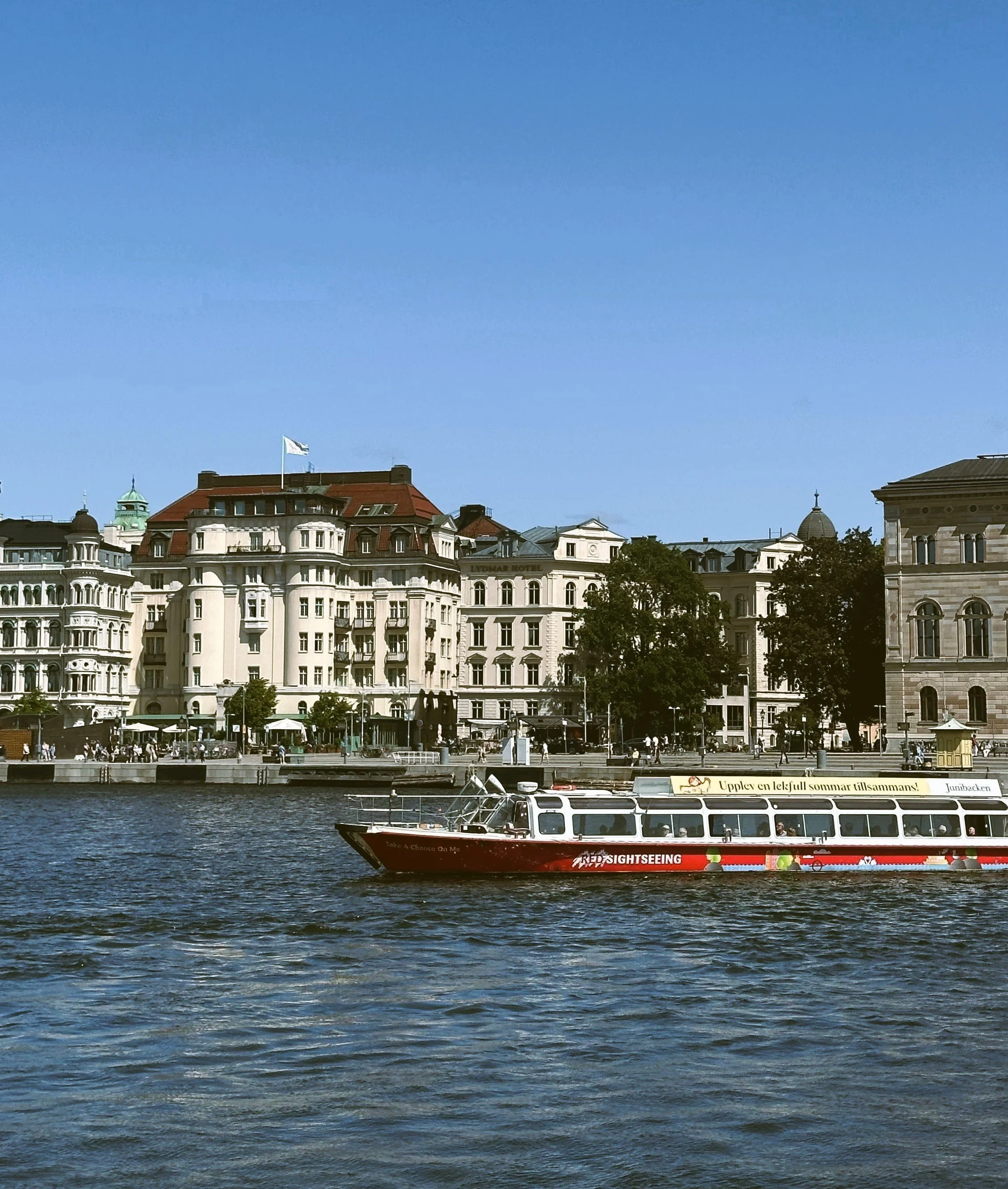
SEE IT FROM THE WATER — Boat Tour
Fourteen islands make more sense from a deck than a map. A canal tour threads you past the Royal Palace, City Hall, and the waterfront everyone else is only seeing from the shore — no walking required, just the current doing the work. [Book a Stockholm boat tour →]
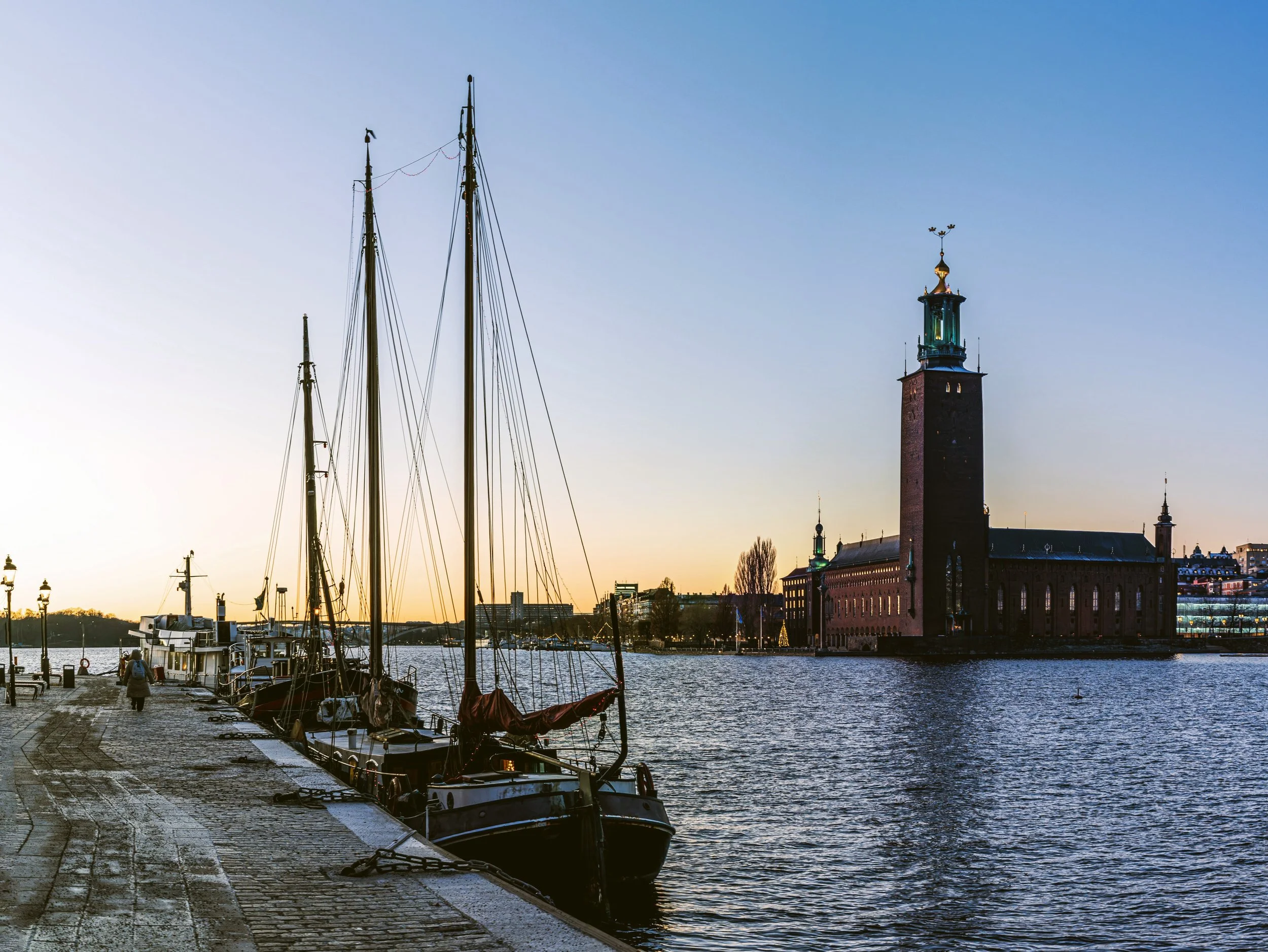
Stockholm City Hall
Three islands ask for more room than this page can give them: Södermalm, the island where Stockholm's edge and its espresso bars live side by side; Gamla Stan, the medieval core everything else grew out from, all cobblestone and narrow lanes that haven't moved in centuries; and Djurgården, half museum district, half royal park, water on every side and barely a car in sight. Each of the three carries enough on its own — history, character, a rhythm entirely its own — that a paragraph here would only shortchange it. Consider this the map, not the destination.
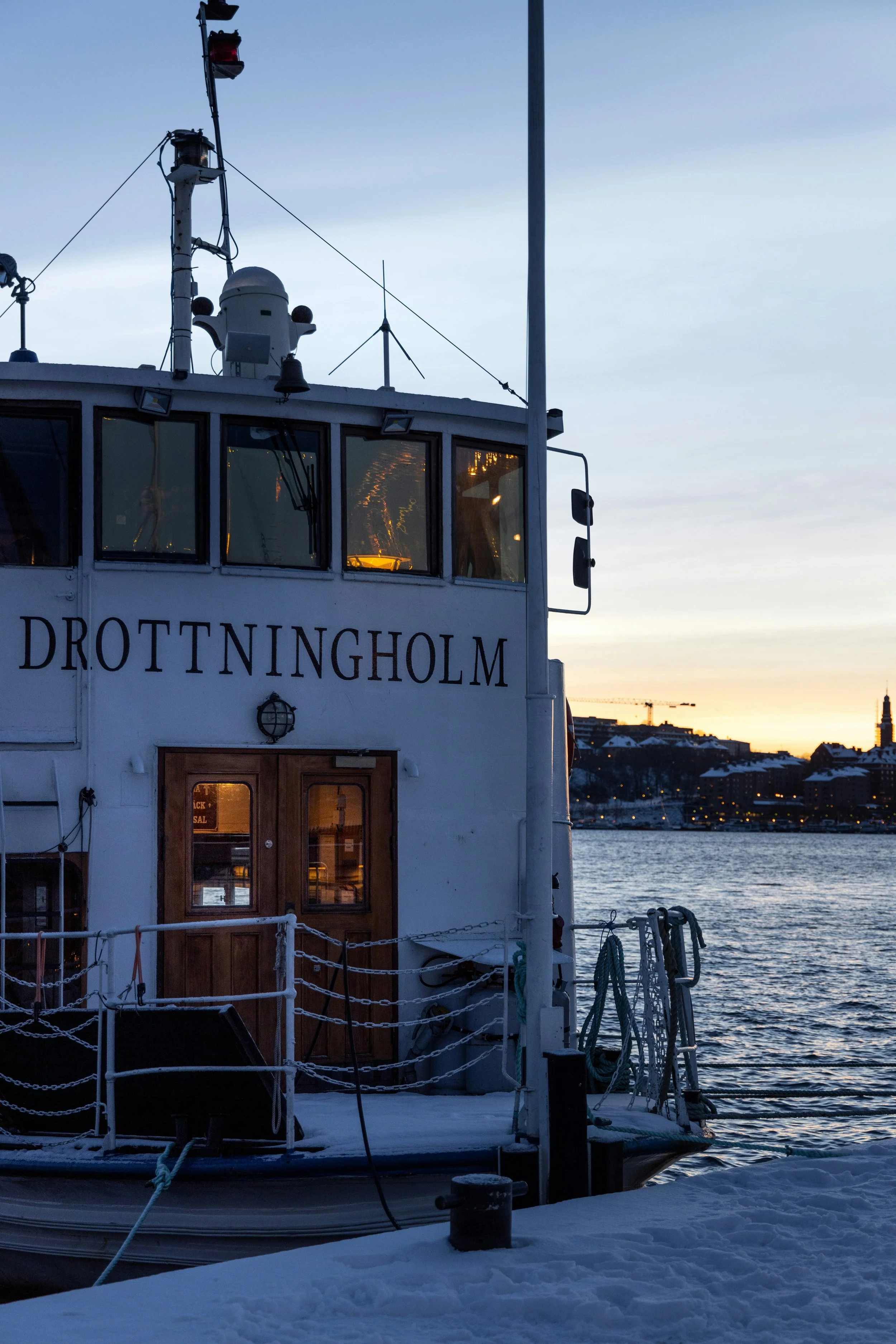
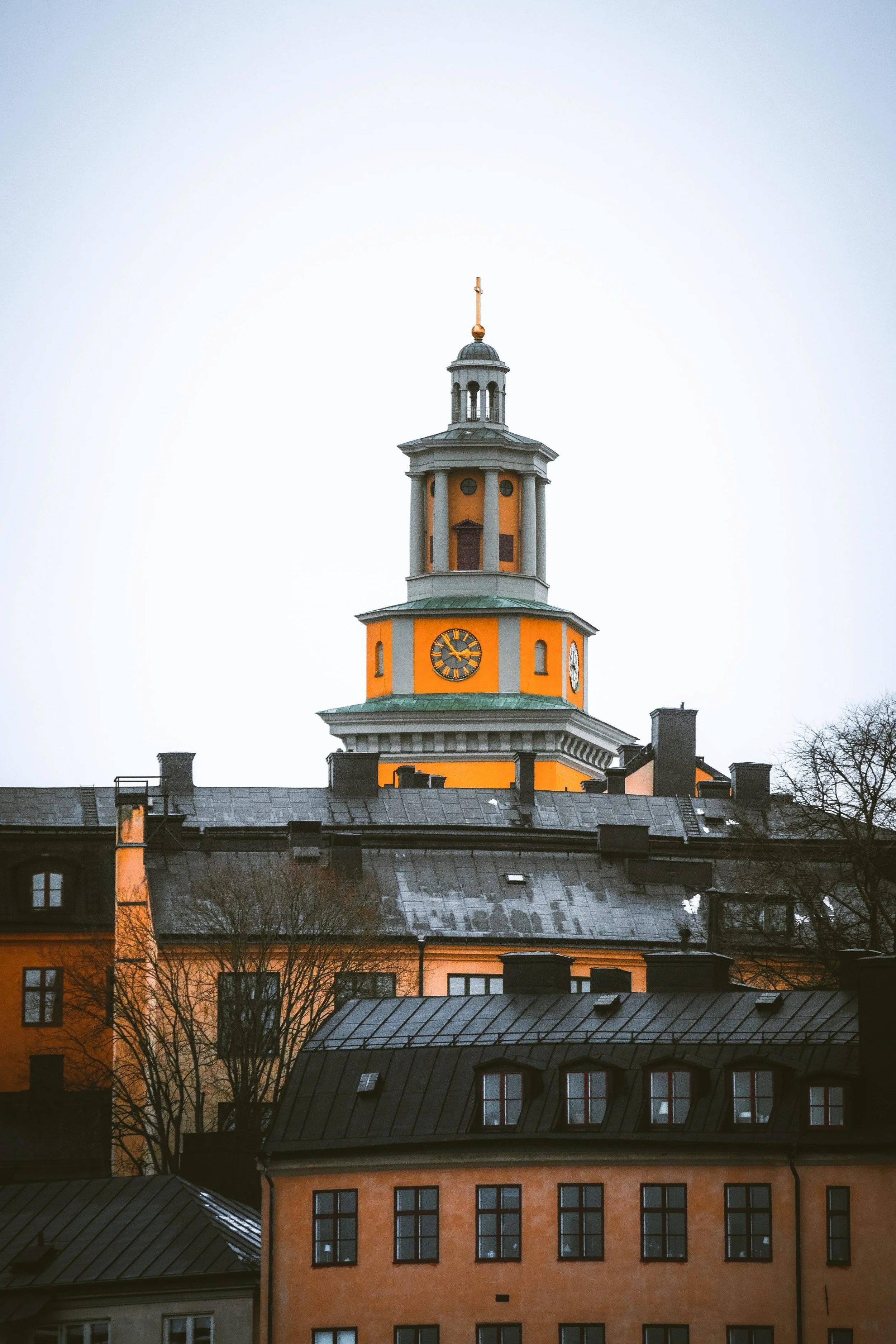
Skeppsholmen, small and easy to miss on a map, holds a strange density of culture for its size — the Museum of Modern Art, the East Asian Museum, an old naval base repurposed into something calmer. It's connected to the mainland by a single narrow bridge, which does something psychological to the place: cross it and the city noise seems to drop half a register. Few tourists make the walk. That's most of the appeal.