gamla stan
Everything Stockholm is now started on this one island, in the 1200s, when a fortified settlement went up where Lake Mälaren spills into the Baltic. Seven centuries later, the street plan hasn't moved. Cars mostly can't fit down here, which sounds like an inconvenience until you realise it's the whole point — this is a city built for walking, at a scale nobody bothered to update.
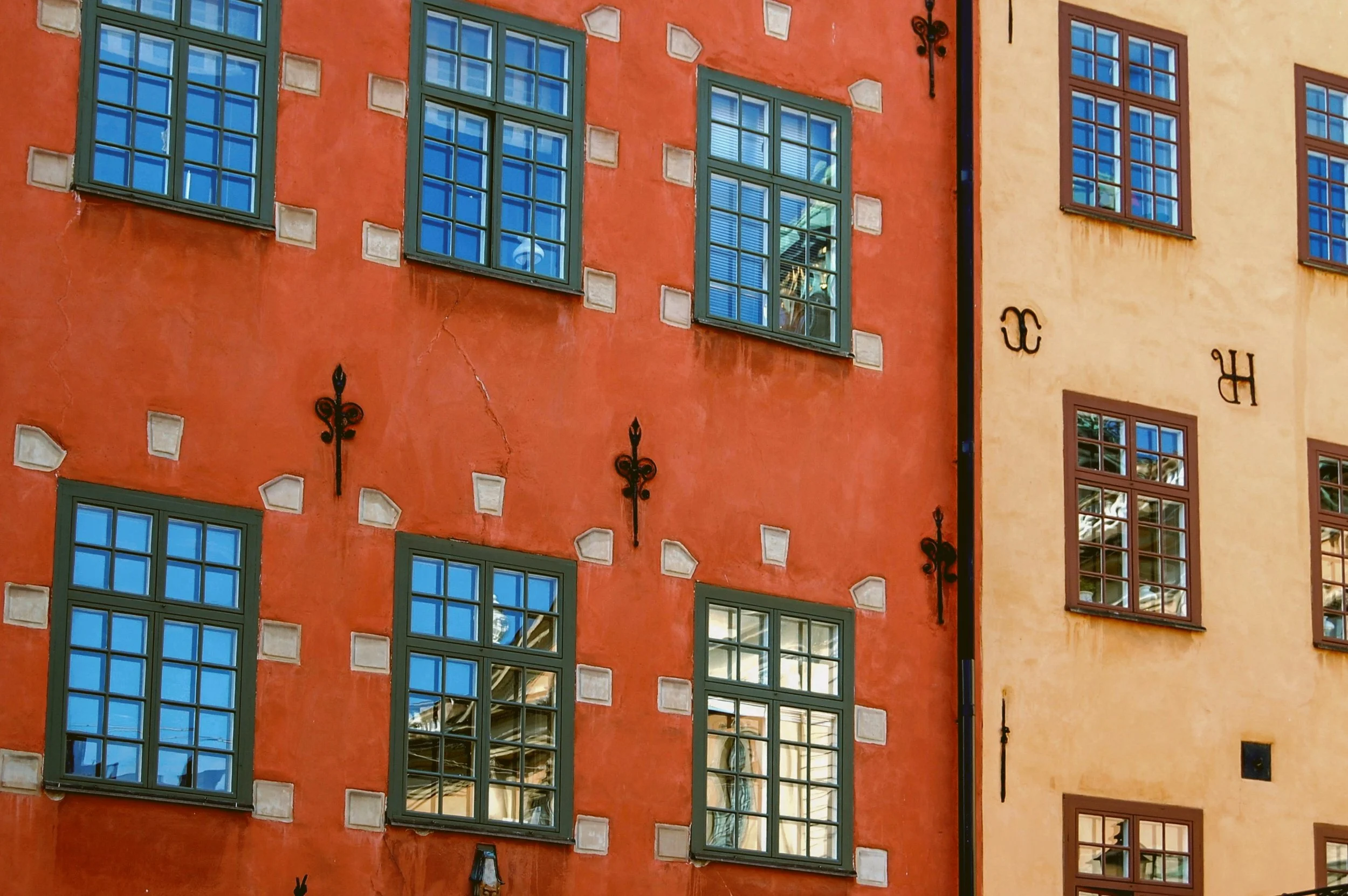
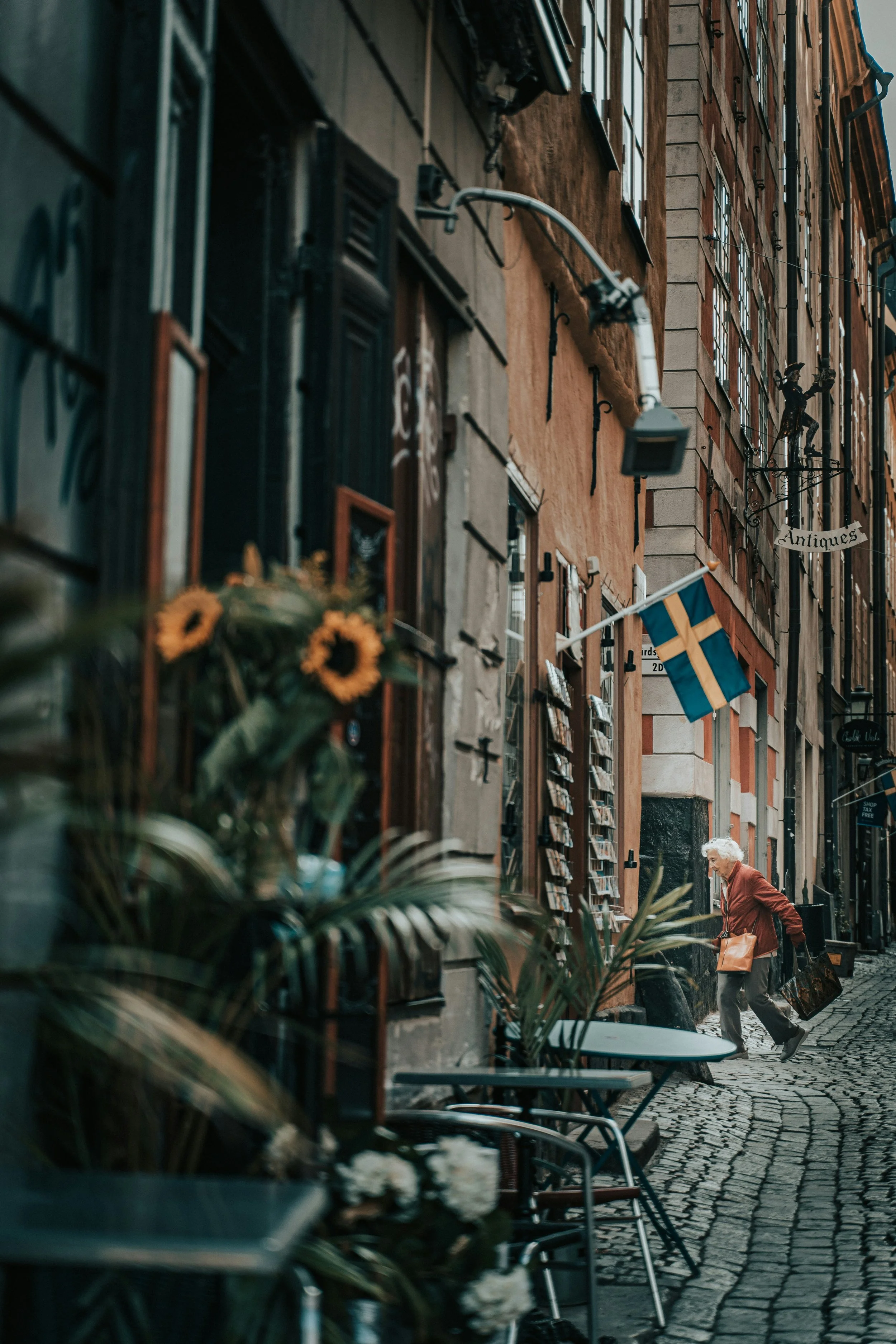
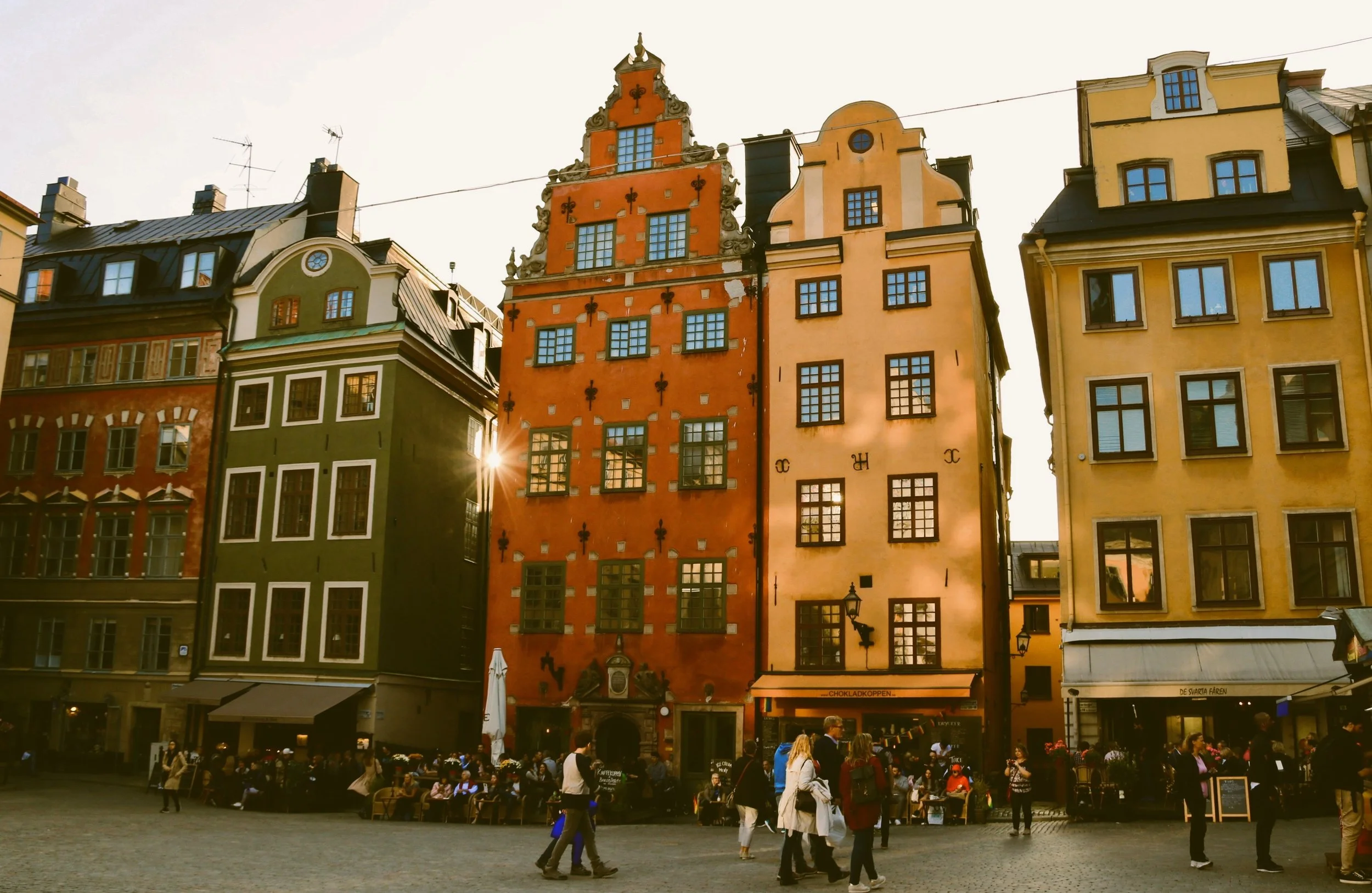
It's compact enough to cover in an afternoon and dense enough that most people rush it, ticking off the postcard shot in Stortorget and moving on. Slow down instead. The square itself carries more history than its colourful facades let on. The Royal Palace, just north, is still very much in use — not a museum pretending otherwise. And the streets branching off in every direction, some barely wide enough for one person, are where Gamla Stan stops performing for visitors and starts feeling like what it actually is: a medieval town that happened to survive, more or less intact, at the center of a modern capital that grew up all around it.
Start wherever you land. It's small enough that you can't really get it wrong.
stortorget
The photogenic square everyone comes for — those tilting, candy-colored merchant houses — sits on top of the worst thing that ever happened here. In November 1520, Denmark's King Christian II had roughly 80 to 100 Swedish nobles beheaded in this exact spot, over three days, after inviting them to a fake reconciliation banquet. It backfired spectacularly: the son of one victim, Gustav Vasa, used the outrage to lead a revolt and become Sweden's first independent king. No plaque mentions any of it — the old stock exchange, now the Nobel Museum, is the closest thing to a marker. Most people photograph the facades and walk on, which is fine — just know what the cobblestones are sitting on.
THE royal palace
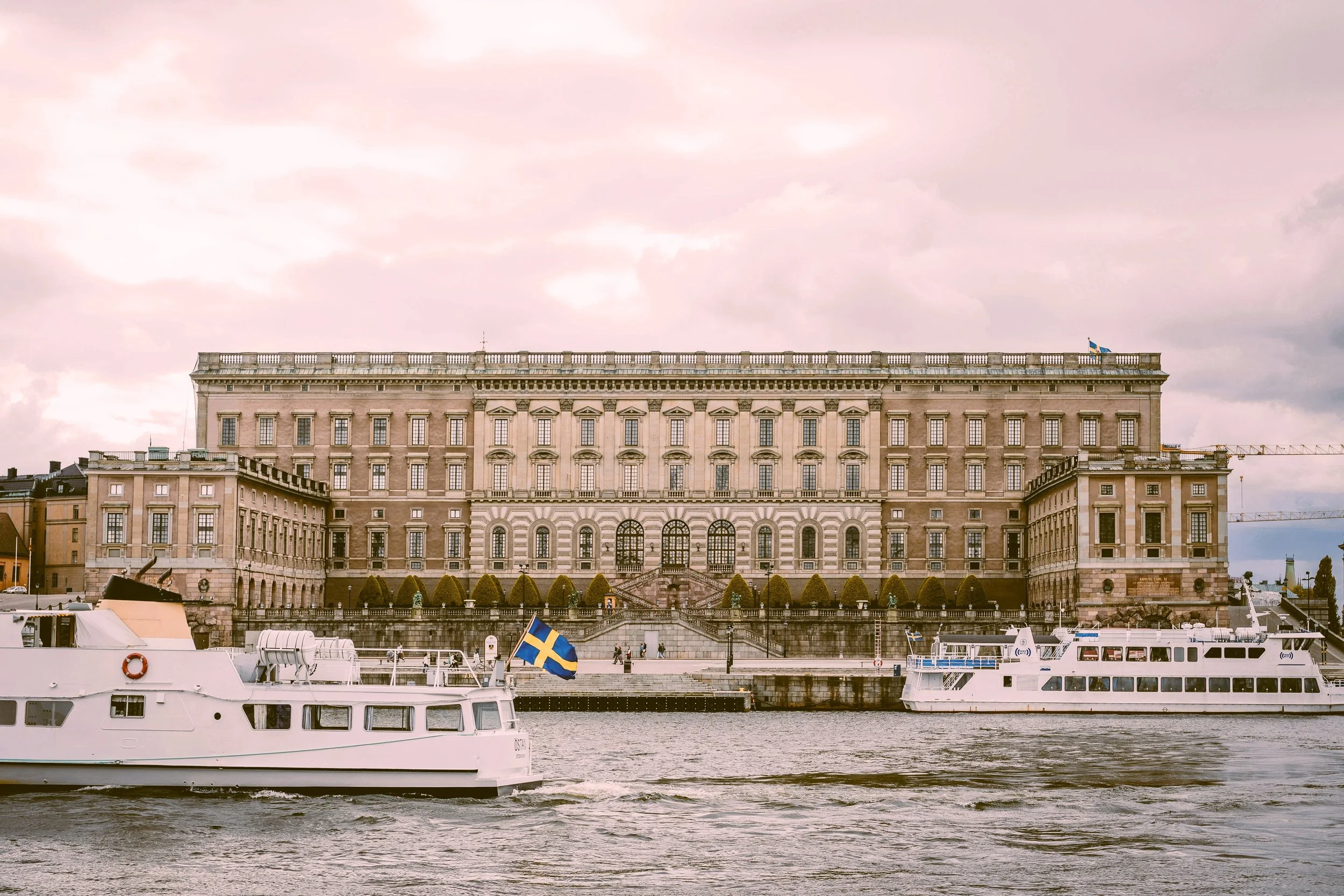
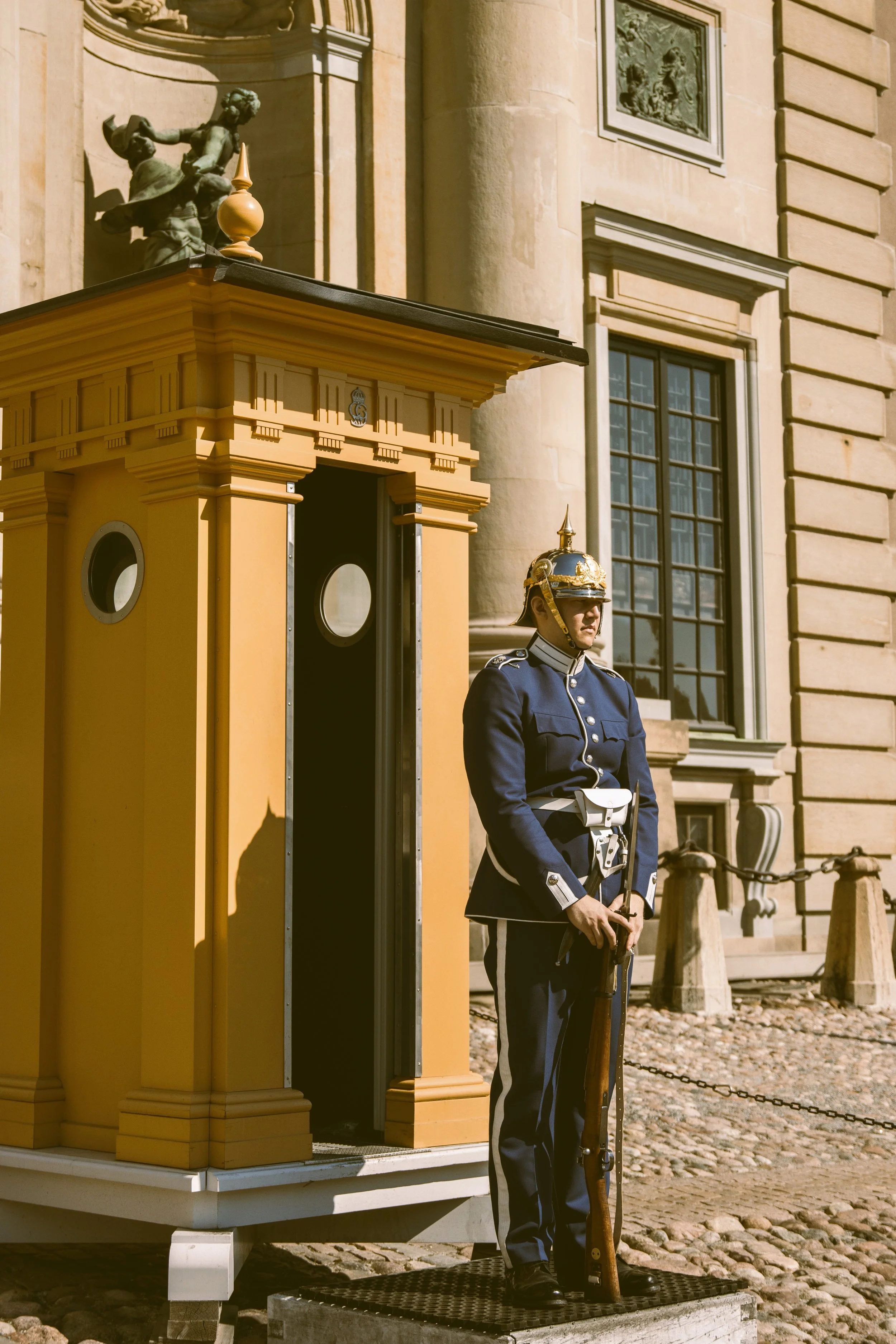
This isn't where the King actually lives — that's Drottningholm, out on the western edge of the city — but it's where he works, along with roughly 200 members of the Court, in more than 600 rooms above the ruins of the medieval castle that burned down in 1697. The Changing of the Guard happens most days around 12:15, free, in the outer courtyard, and it's genuinely worth timing your visit around rather than stumbling into by accident. Inside, skip trying to see all five museums — the Treasury alone, with Gustav Vasa's sword and the crown jewels, earns the ticket price on its own. [Skip the line, book ahead →]
BOOK A GAMLA STAN WALKING TOUR
Narrow streets, centuries of layered history — a guided walk makes sense of it fast.
[Find tickets →]
THE NARROW STREETS
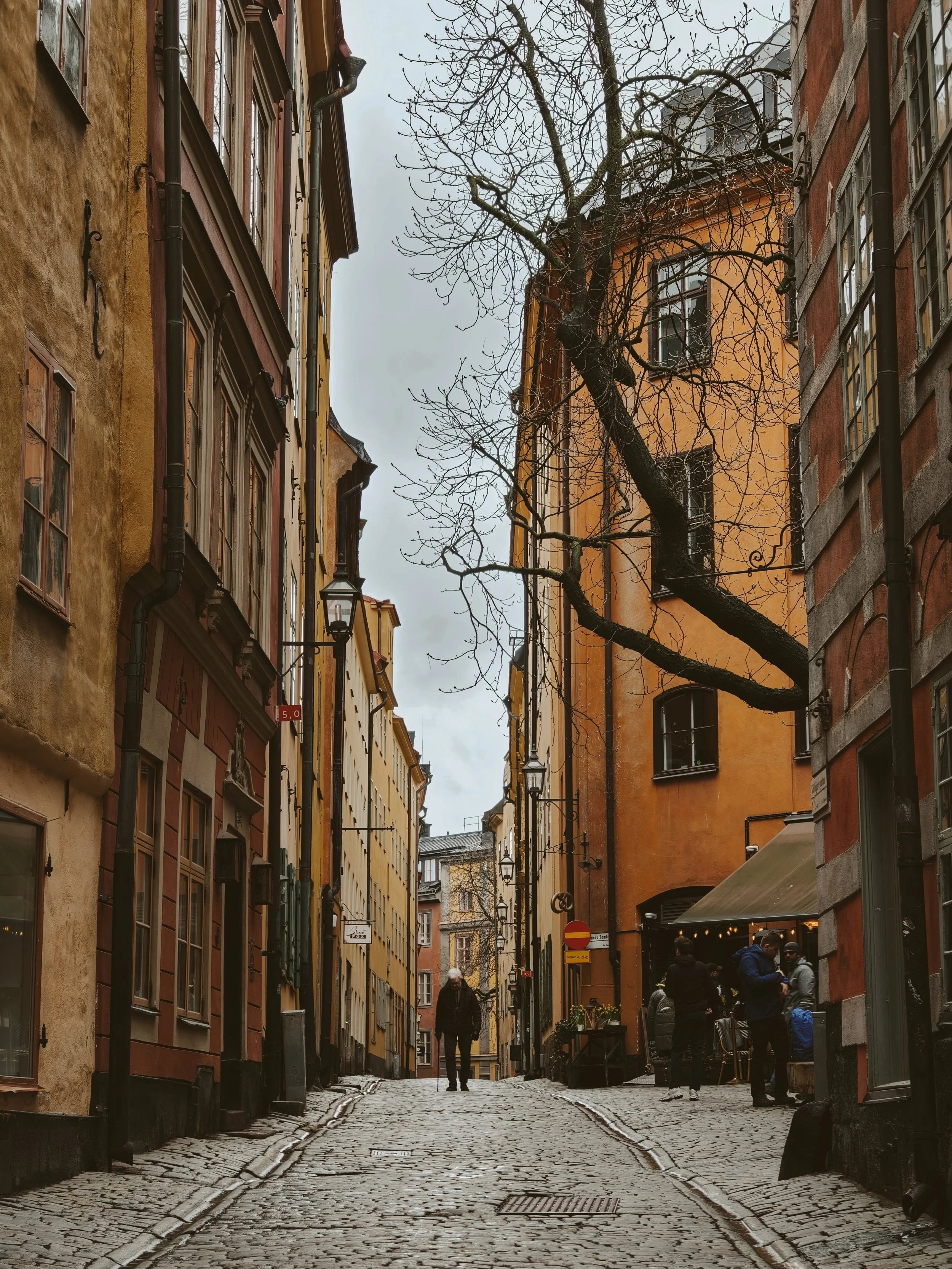
The real reason to come to Gamla Stan isn't any single building — it's the narrow lanes threading between the two main streets, Västerlånggatan and Prästgatan, cutting across the island every few steps. Duck off either one at random and you'll hit Mårten Trotzigs Gränd, Stockholm's narrowest alley, 90 centimetres of stone steps squeezed between two walls a 16th-century iron merchant once owned. Go early, before the tour groups find it.
Storkyrkan, the cathedral, sits quietly in the middle of all this doing the least self-promotion of anything in the neighbourhood — Stockholm's oldest building, coronations and royal weddings still held inside, and a 15th-century wooden sculpture of St George slaying the dragon that's worth the five minutes alone. No queue, no crowd. Most people walk straight past the door.