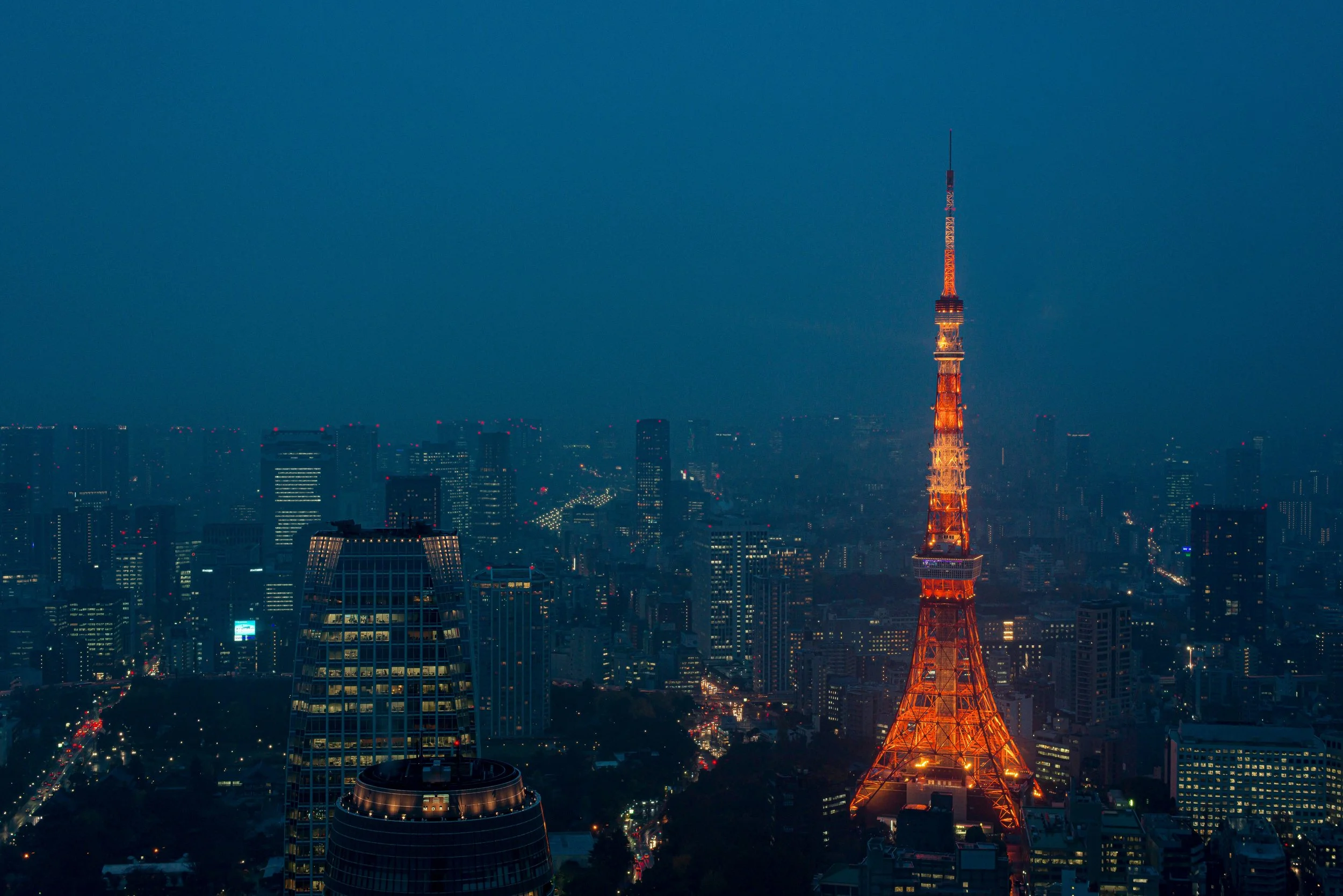
NEON TOKYO
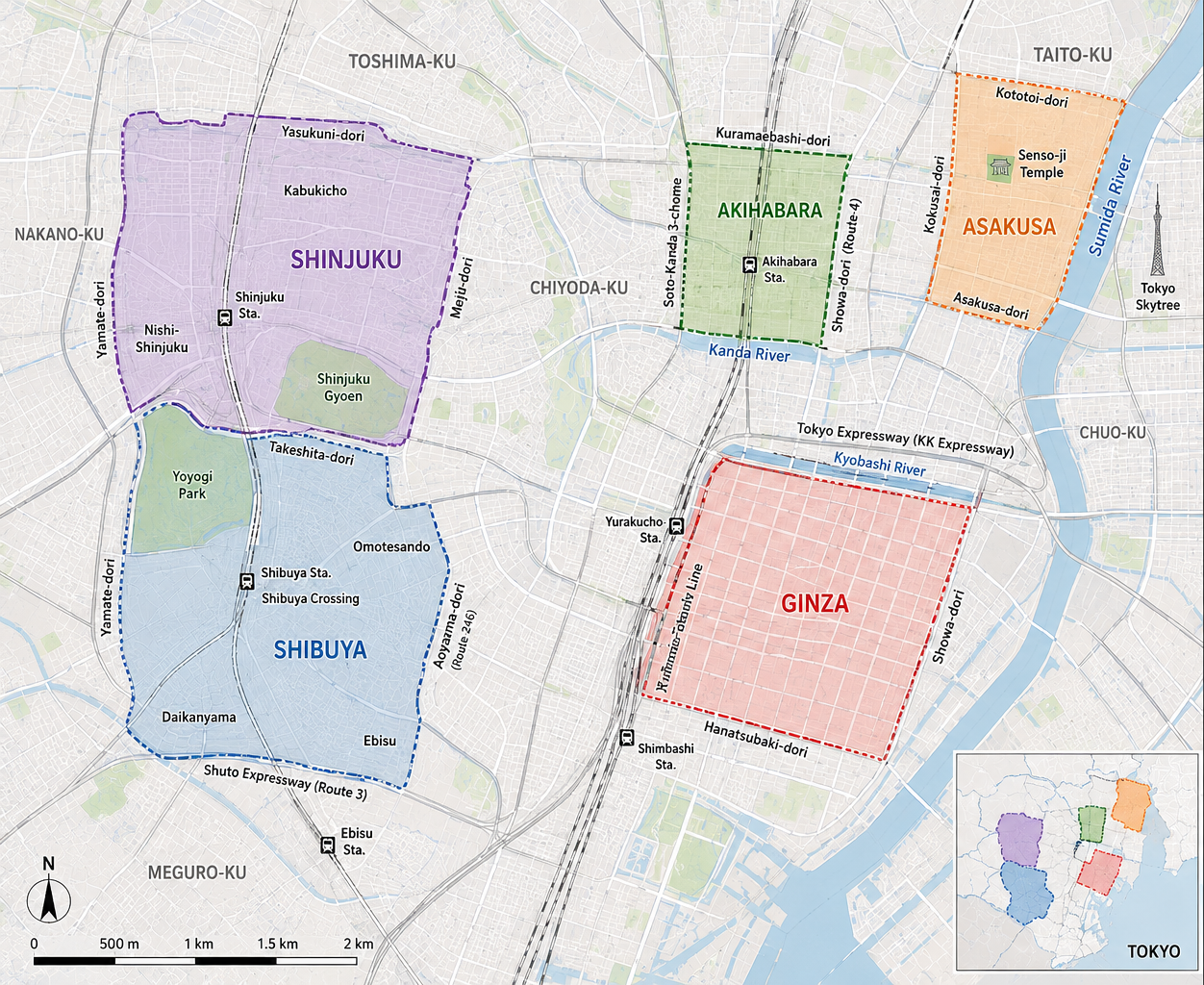
No city sells its own image harder than Tokyo does after dark. Every postcard, every film still, every establishing shot of "the future" borrows the same ingredients: neon stacked twelve stories high, a crossing swallowing thousands of people at once, screens the size of buildings selling things nobody in the crowd is actually looking to buy. It's spectacle, and it knows it.
What the postcards leave out is how ordinary all of it feels once you're standing inside it. The same salaryman crossing Shibuya Scramble at rush hour has done it ten thousand times before. The vending machine humming on a residential corner at 2am, selling hot coffee and cold tea with equal indifference, isn't a photo opportunity to the person actually buying from it — it's just Tuesday.
This is a city that industrialized convenience and spectacle at the same scale it industrialized everything else, and somehow never let either one curdle into cynicism. Three districts carry most of the weight: Shinjuku, built for excess, Shibuya, built for youth, and Ginza, which has been quietly expensive since before neon existed. Between them, and in the machines humming on every street corner, is as good an introduction to modern Japan as any shrine.
SHINJUKU
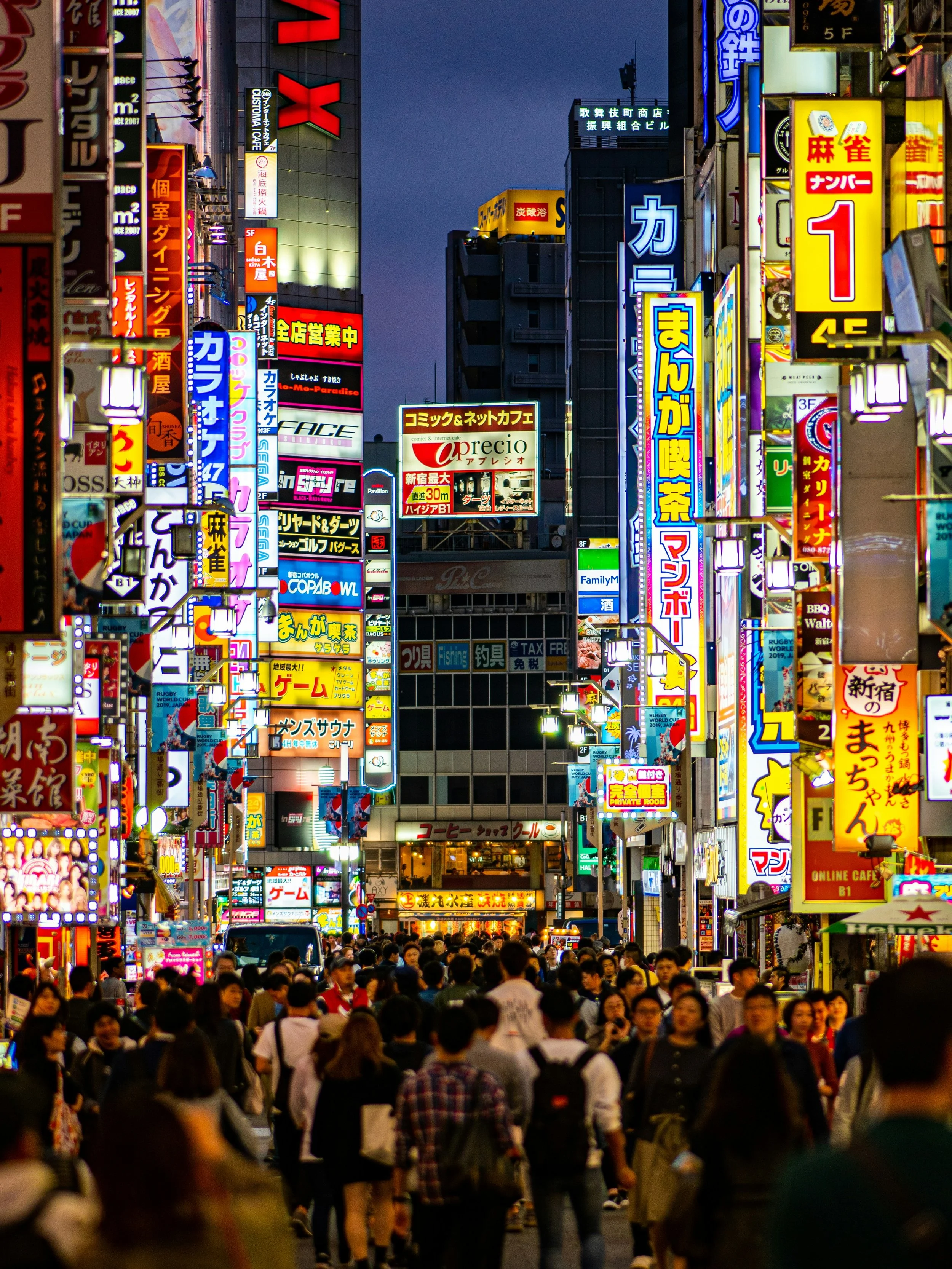
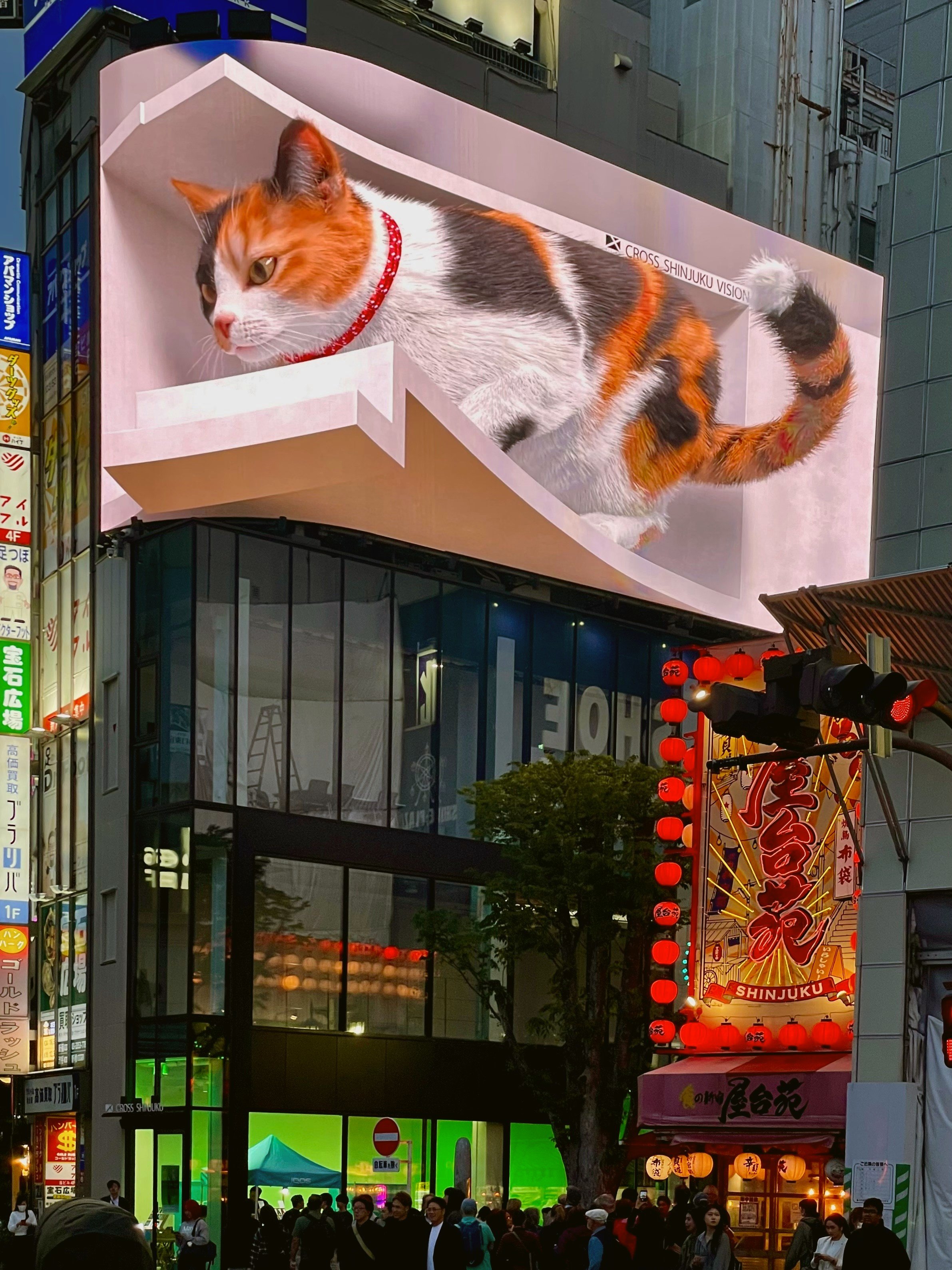
Tokyo's most overwhelming district by design — the world's busiest train station sits at its center, funneling over three million people a day into a grid of department stores, love hotels, and Kabukicho, the neon-drenched entertainment quarter that never quite decided whether it's respectable. Golden Gai, a few streets over, is the deliberate opposite: a maze of alleyways barely wide enough for two people, packed with over 200 tiny bars, most seating six customers at most, many with a strict locals-only unwritten rule. Above it all, the government's twin-towered headquarters offers a free observation deck — one of the only ways to see the whole neon sprawl from above without paying for the privilege.
shibuya
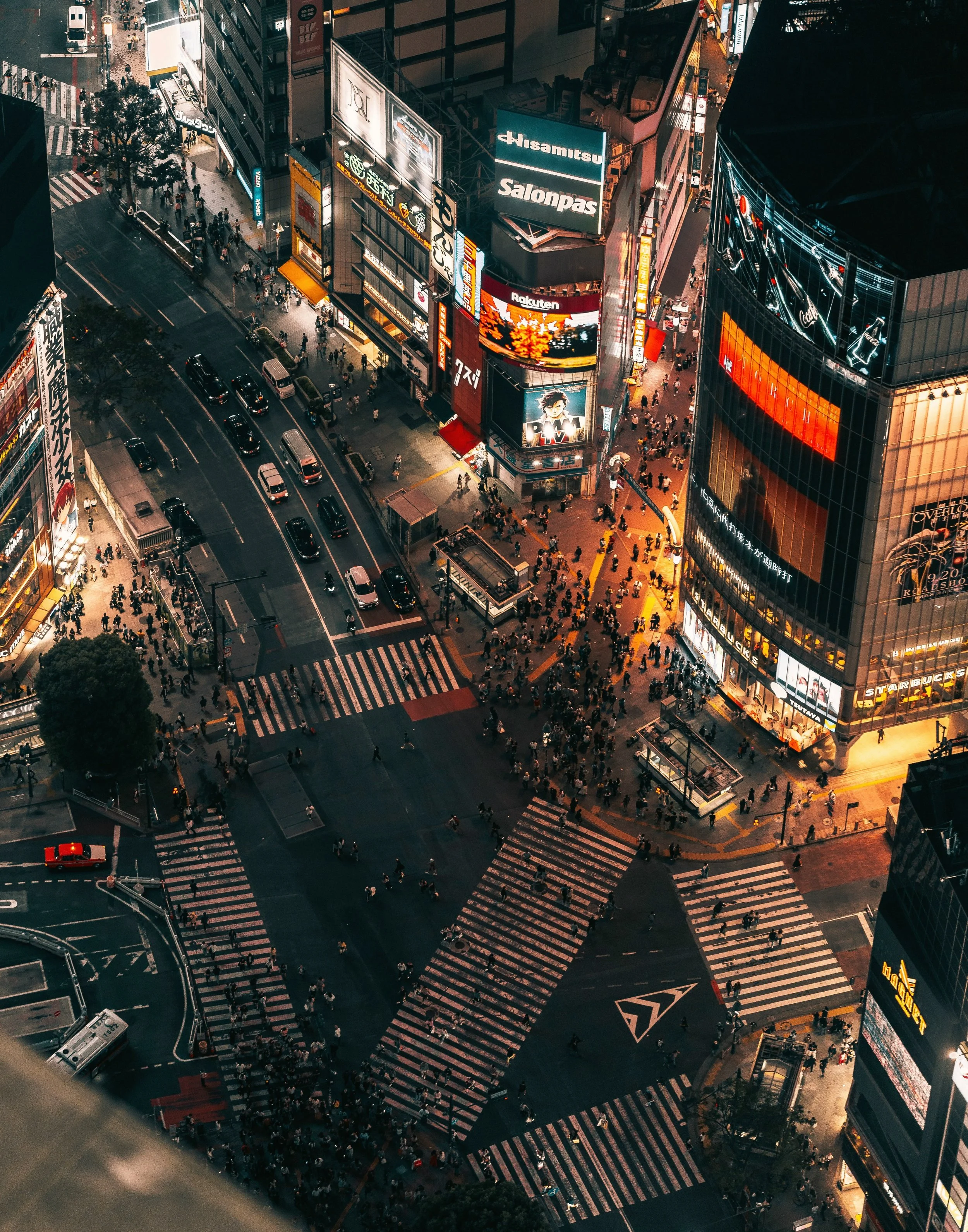
This is where Tokyo performs youth culture at full volume. The Scramble Crossing outside the station moves up to 3,000 people every time the lights change, an unchoreographed crowd that somehow never collides. Above it, screens the size of apartment buildings sell sneakers and idol groups to teenagers who set half the country's fashion trends from these same streets. Loyal to the end, a bronze statue of Hachiko — the dog who kept returning to the station for nine years after his owner died — still marks the most common meeting point in the city, proof that even Tokyo's most maximalist district has room for one quiet, devoted story.
To see it all at once, go up. Shibuya Sky, an open-air rooftop 229 meters above the station, looks straight down on the Scramble and the lanes of Center Gai beyond it, with nothing between you and the crowd but a pane of glass at the edge. It opened in 2019 and is connected directly to the station, so there's no excuse not to. Book a timed ticket ahead; when the online slots sell out, the counter can't sell you one either.
GINZA
Long before neon existed, Ginza was already Tokyo's most expensive address — a silver-mint district turned into the city's first Western-style shopping street in the 1870s, and it's stayed exclusive ever since.
Flagship stores from Chanel to Mikimoto sit behind facades that treat architecture as advertising, department stores run multi-storey basements dedicated entirely to food, and on weekend afternoons the main avenue closes to traffic altogether, turning the whole district into a pedestrian promenade. It's the version of neon Tokyo that whispers instead of shouts.
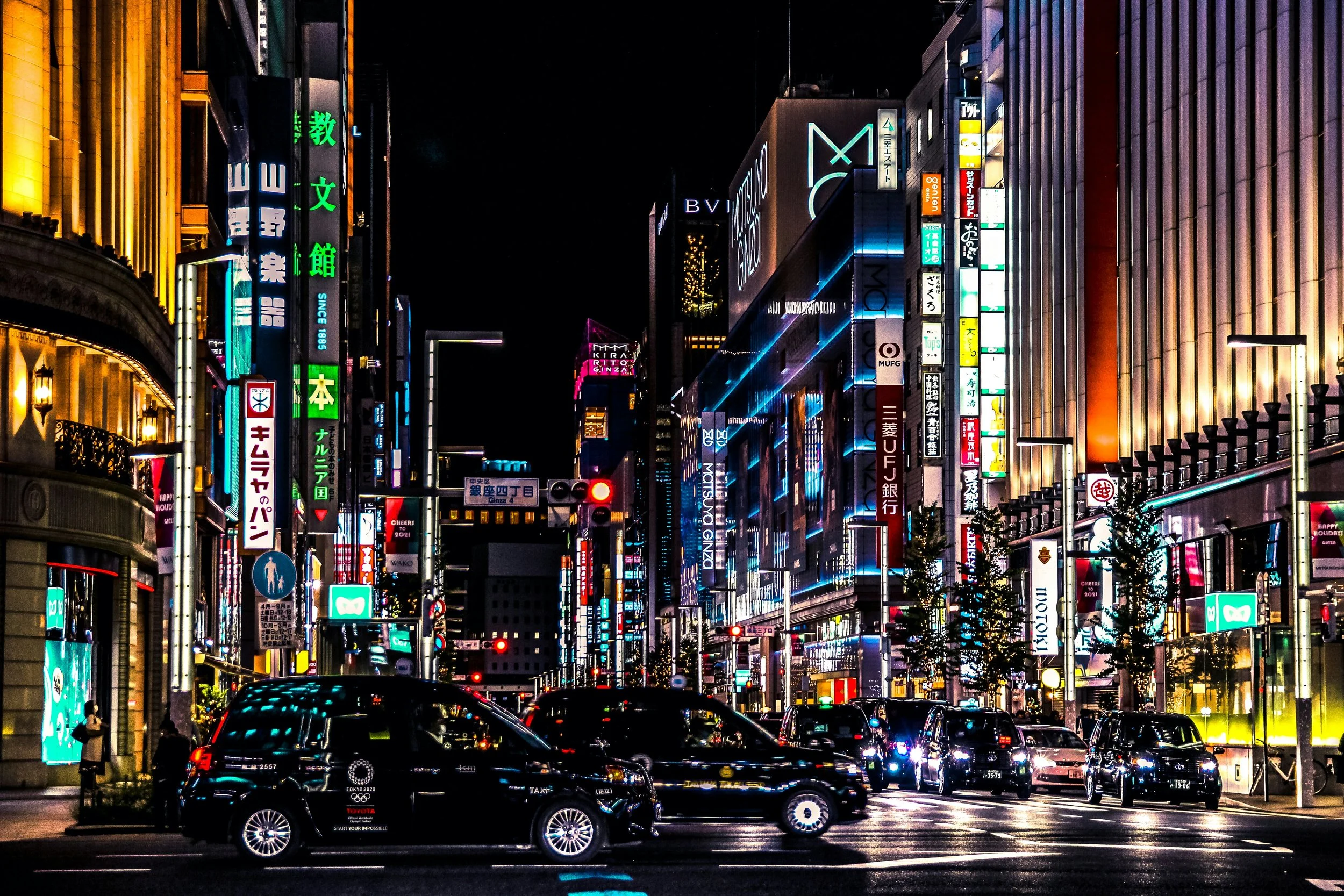
Two landmarks do most of the orienting in Ginza. At the 4-chome crossing, the clock tower of the Wako building, completed in 1932 and standing through the war, is Ginza's unofficial symbol. A few blocks east, the Kabukiza theatre has staged kabuki since 1889, and you don't have to sit through a full program: single-act tickets go on sale the day of the performance, from around ¥1,000.
tOKYO, IN MINIATURE
Three small things that explain the whole city better than any skyline ever could.
GAcHAPON
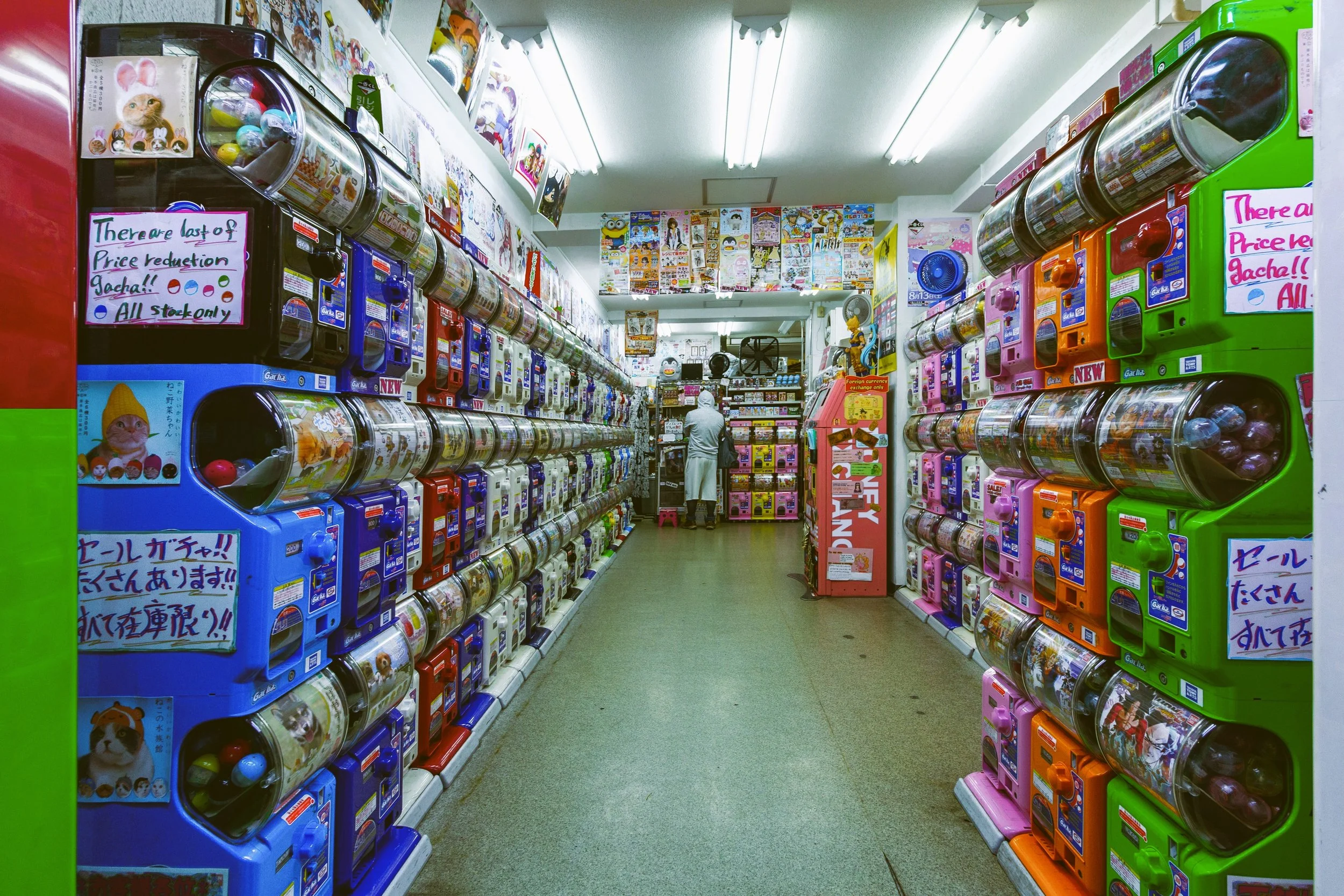
Capsule-toy machines, found on street corners, in train stations and shopping malls across the city, some stocking thousands of different toys under one roof. A coin-operated hobby taken exactly as seriously by grown adults as by the children they're ostensibly for.
vending machines
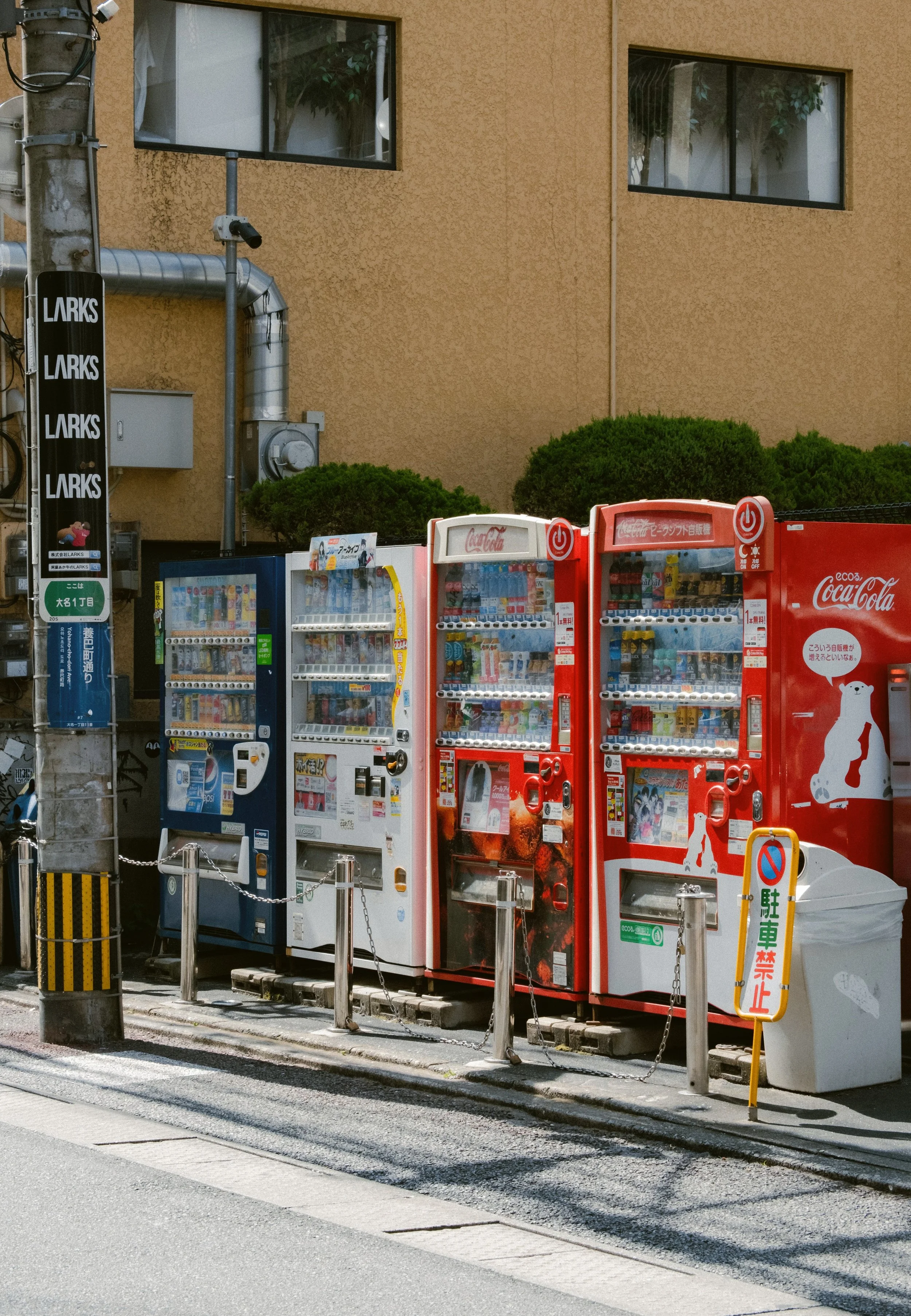
Tokyo streets are lined with them, sometimes a dozen to a single block, dispensing hot coffee, cold tea, and the occasional umbrella with the same quiet reliability, day or night, rain or shine.
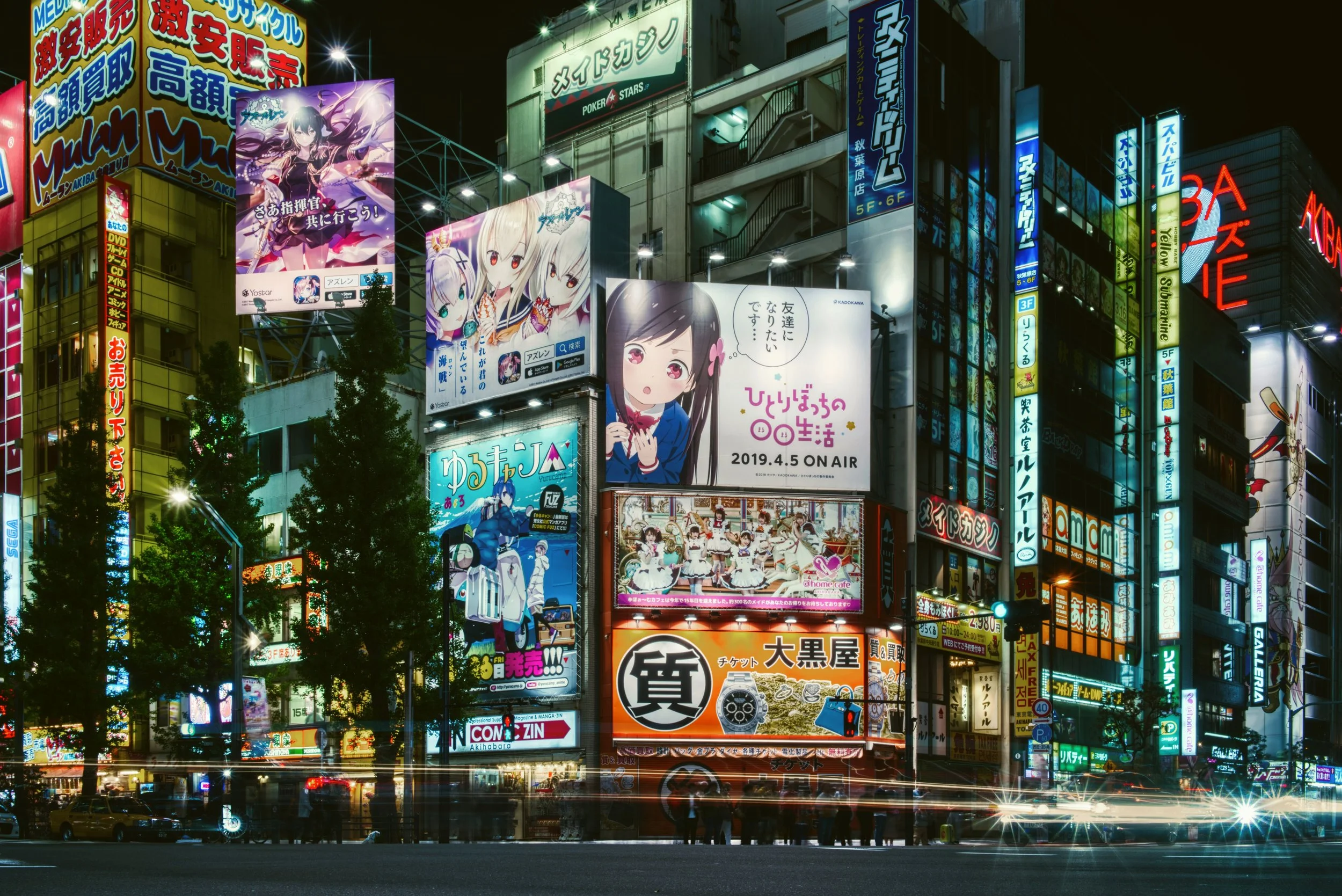
AKIHABARA
Tokyo's anime, manga and electronics district, where multi-storey stores sell everything from vintage game consoles to maid café flyers, and the neon gets, somehow, even louder than Shinjuku's.
BOOK A NEON TOKYO WALKING TOUR
Tokyo's neighborhoods each run on their own logic — a walking tour is the fastest way to actually understand the city instead of just passing through it.
[Book tour →]