THE CITY BOWL AND v&A waterfront
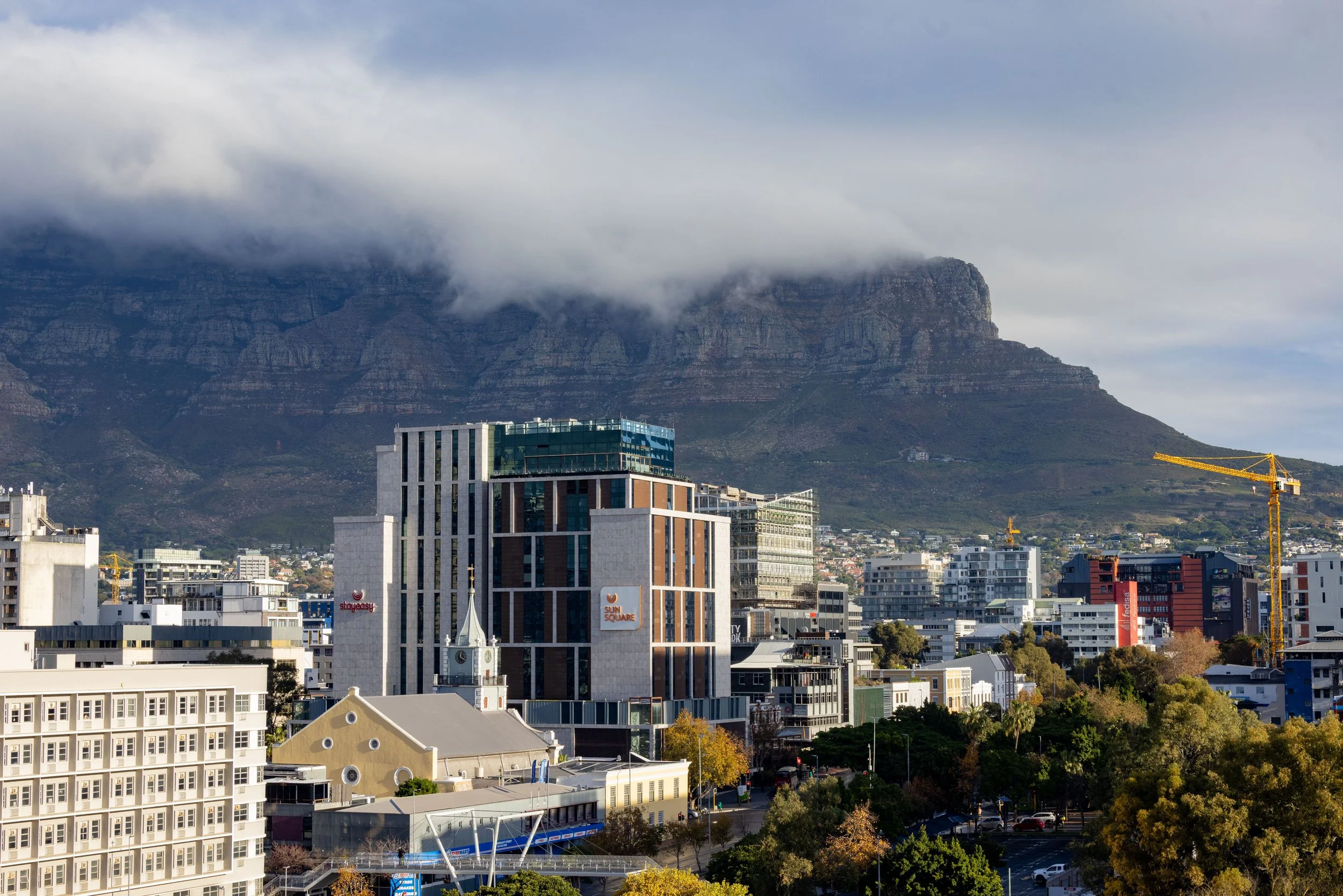
The name of City Bowl makes sense the moment you see it from above. Table Mountain on one side, Lion's Head and Signal Hill on the other, the bay closing the circle at the bottom, and the Old City sitting in the middle like something poured into a bowl. Up close, it's smaller than you'd think. Most of what matters fits into a long day on foot.
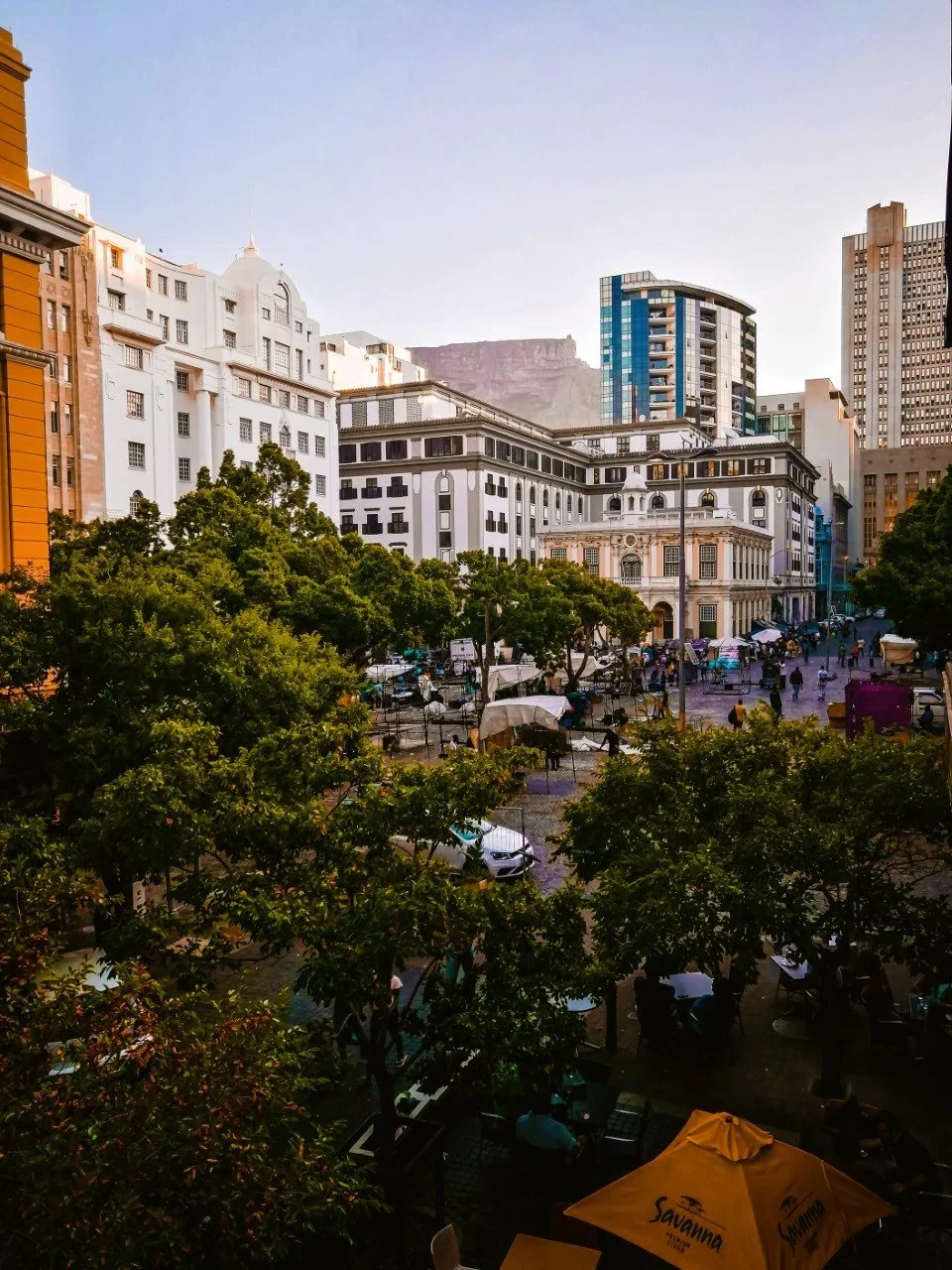
This is where Cape Town keeps its memory, and not all of it is comfortable. Three and a half centuries of Dutch, British and apartheid history are stacked on top of each other here, sometimes on the same street. You'll walk past grand Victorian facades, a fort, a church that became a museum, and then turn a corner into a row of coffee shops full of people on laptops. The city doesn't make a big deal of the contrast. It just carries on.
At noon (except Sundays and public holidays), a cannon fires from Signal Hill. Everyone jumps the first time.
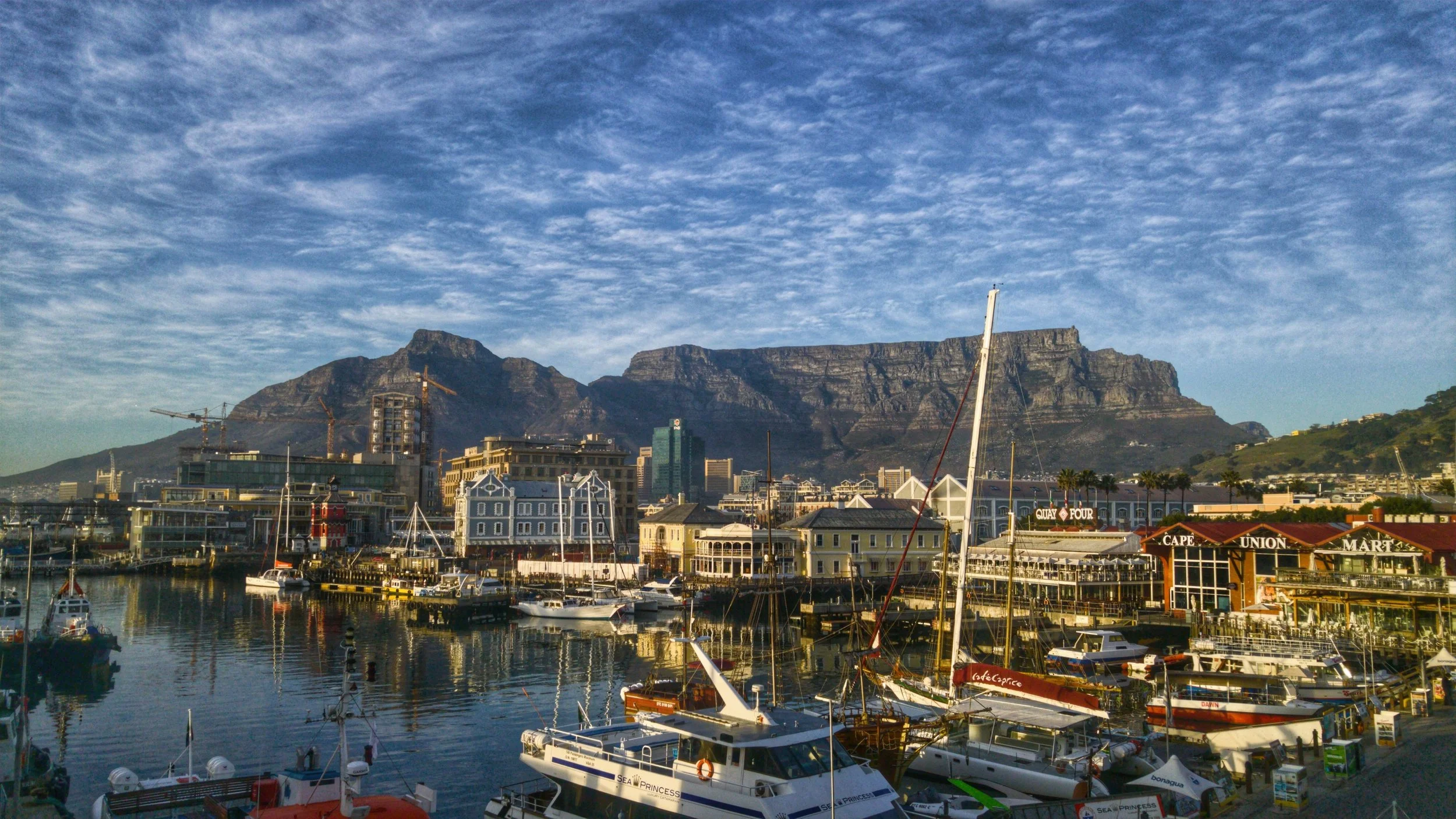
By late afternoon, the wind usually picks up and the whole city seems to drift toward the V&A Waterfront. The V&A is for Victoria and Alfred: the queen, and the son who tipped the first load of rock into the harbor in 1860. Yes, it's polished, and yes, there's a mall. But it's still a working port, with tugboats coming and going, seals asleep on the jetties and Table Mountain filling the view behind you. Grab a table facing the water and stay for the sunset. The harbor is where the day was always going to end.
COMPANY’S GARDEN AND THE OLD CITY
The Company's Garden began life as a grocery list. In the 1650s the Dutch East India Company needed fresh vegetables for ships rounding the Cape, so they dug beds at the foot of the mountain and got planting. The cabbages are gone. What's left is the city's favorite shortcut: oak avenues, a rose garden, office workers eating lunch on the benches and a population of grey squirrels with no sense of personal space. Cecil Rhodes brought them over from America. Of all the things he left behind, they're the least controversial.
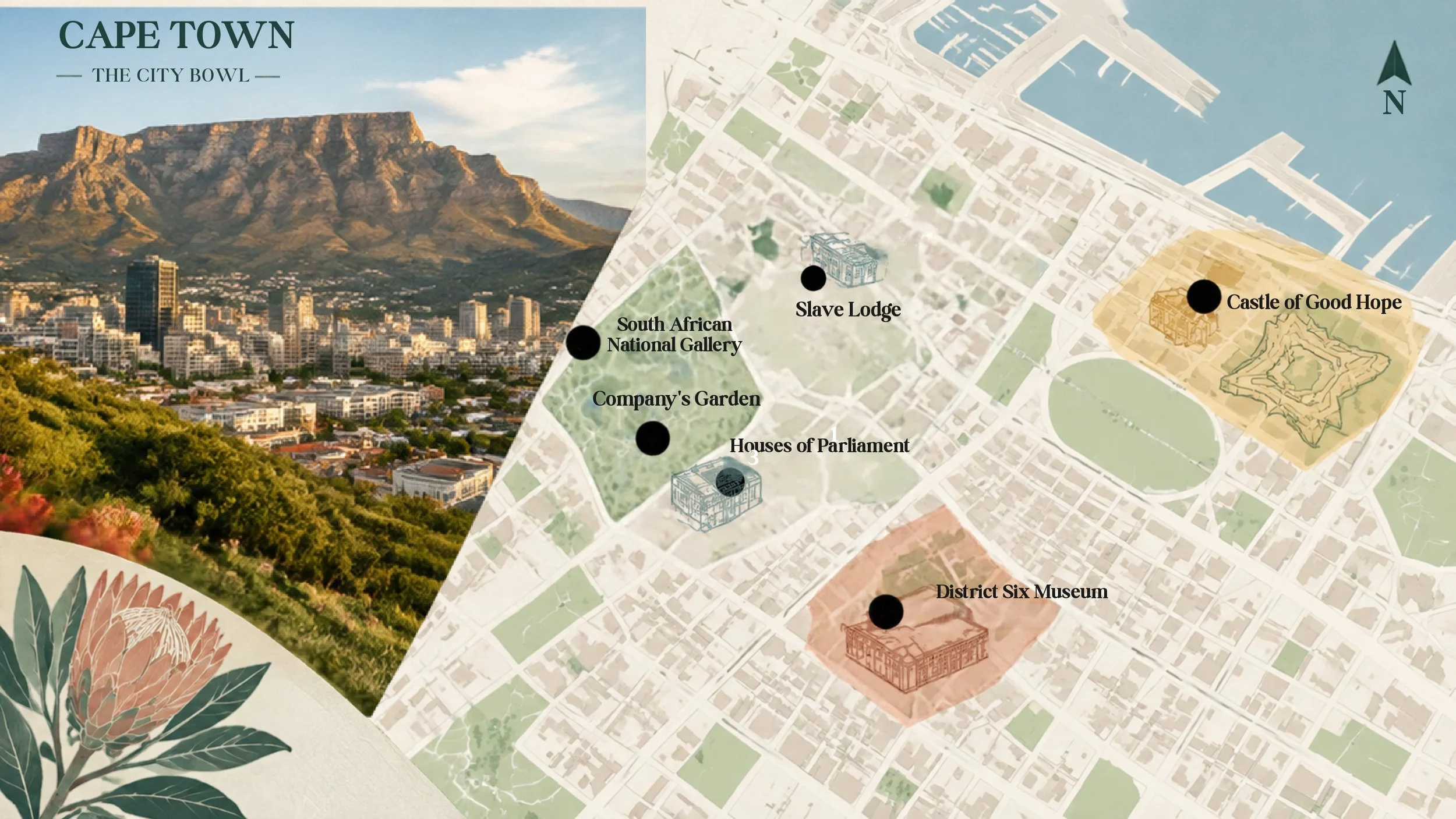
Walk the main avenue and the old city lines up on both sides. Parliament, white and stately, behind its railings. The South African National Gallery, small enough to see in an hour and better than you'd expect. And the Slave Lodge, where enslaved people owned by the Company lived for more than 130 years. It's the building that explains the garden, and the one most people skip. Don't.
A few blocks east, the Castle of Good Hope looks like it was drawn with a ruler. Five bastions, thick walls, built in the 1660s and 70s, the oldest colonial building in the country. The army still has offices inside, which gives the place a strange, lived-in feel.
Finish at the District Six Museum. In 1966 the apartheid government declared this mixed, noisy, much-loved neighborhood "whites only" and bulldozed it. Some 60,000 people were moved out. Inside, former residents have written their names on a huge floor map, right where their homes used to stand. If it stays with you (it will), read Richard Rive's 'Buckingham Palace', District Six from our Bookshelf. It's funny, which somehow makes it hurt more.
bree street & kloof street
If the old city is where Cape Town remembers, Bree Street is where it eats. Mornings start with a flat white at Rosetta, and by evening the same pavements are full of wine glasses. The Cape Heritage Hotel sits right in the middle of it, which is either very convenient or very dangerous, depending on your plans. One block over, The House of Machines on Shortmarket Street fixes motorbikes, pours coffee and mixes a serious cocktail, though not necessarily in that order.
Kloof Street climbs the slope toward the mountain, a little greener and a little more relaxed, with bookshops, bistros and the odd vintage store. Keep going up to Kloof Nek Road for a glass at Publik. They pour natural wine with zero fuss, and they're happy to talk you into something you've never heard of.
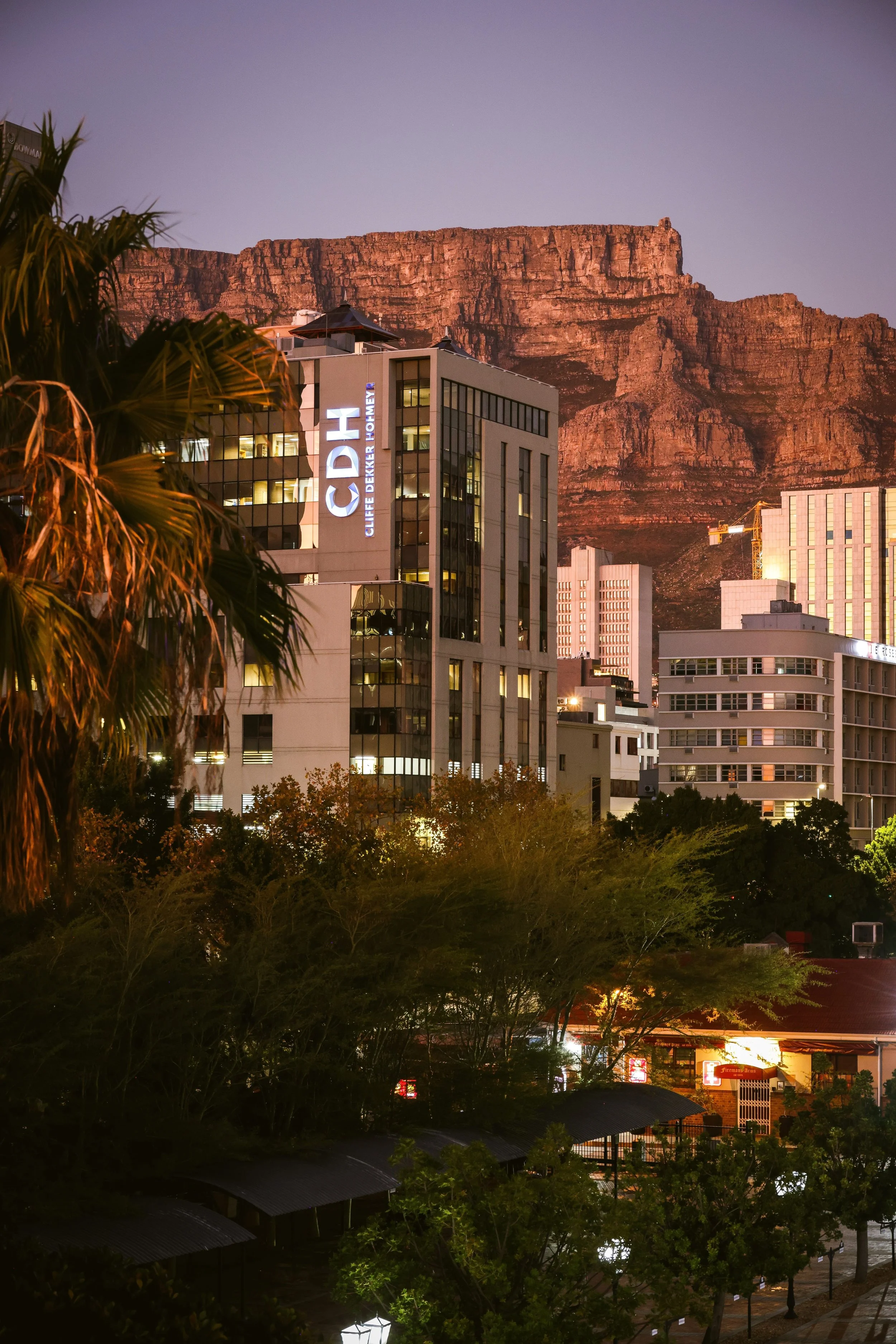
v&a waterfront
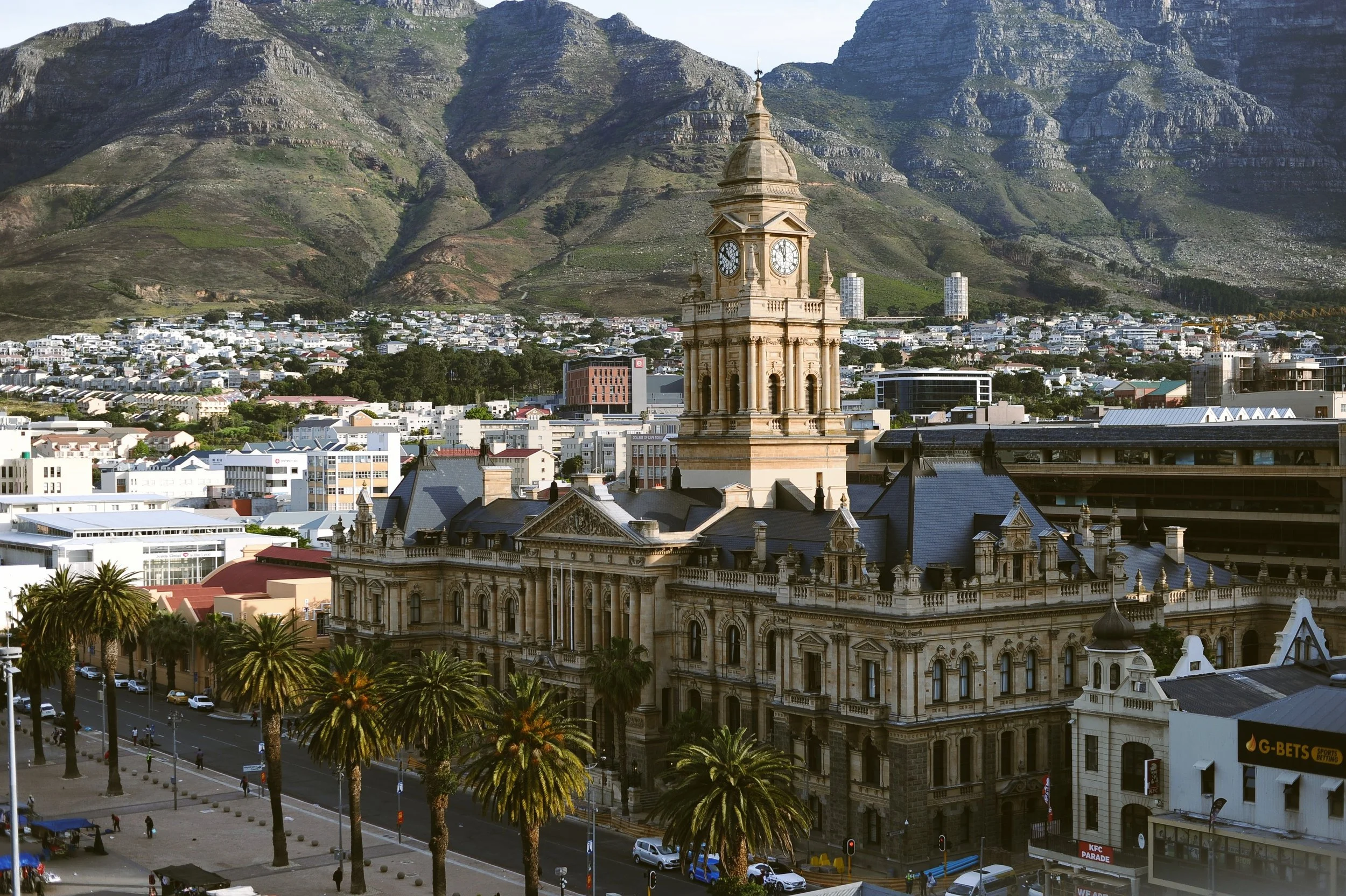
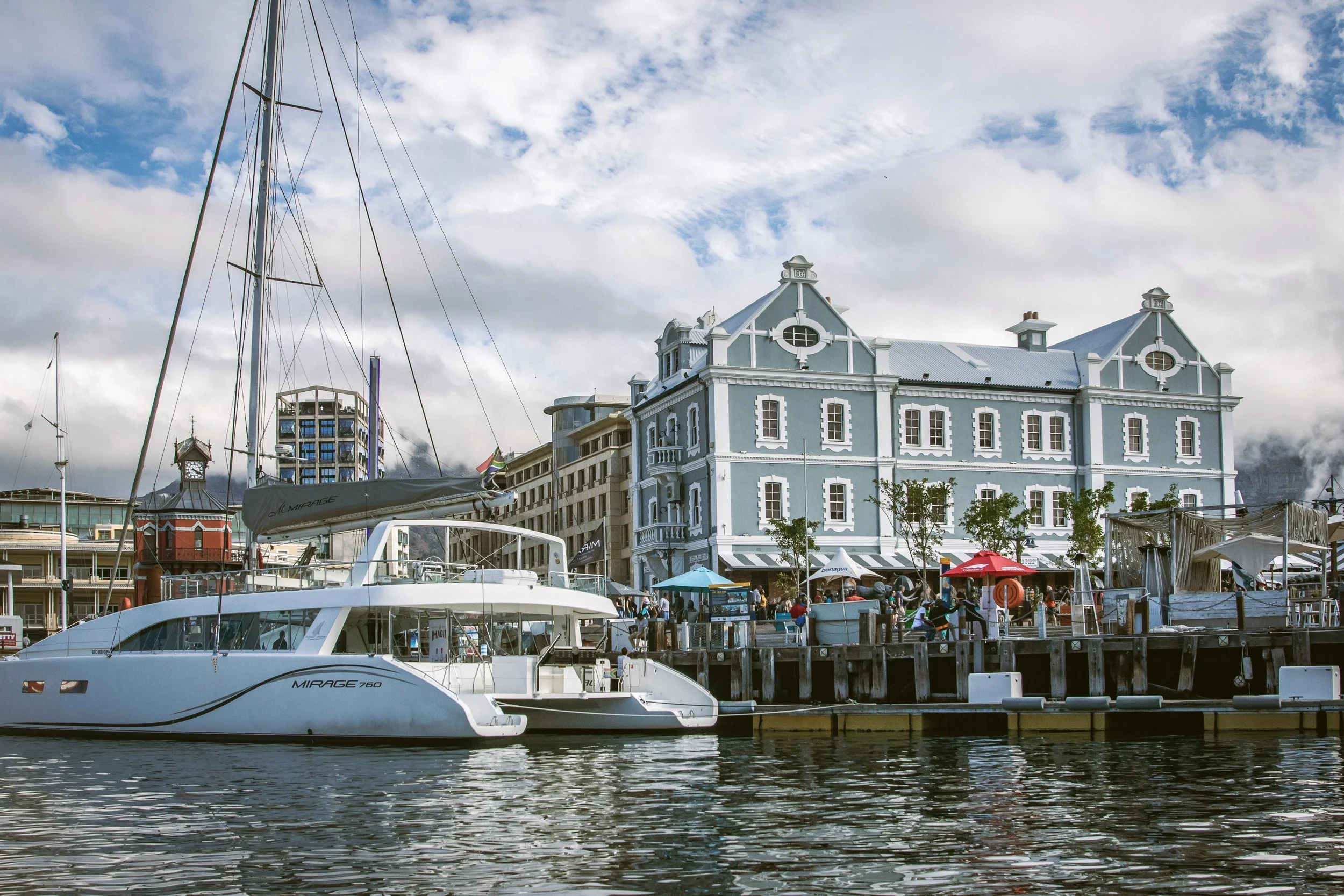
For most of the 20th century, the old harbor basins were all cranes, warehouses and fishing boats, and nobody went down there unless they had to. Then, in the late 1980s, the city decided to turn them into somewhere people would actually want to be. Today the V&A Waterfront is a small neighborhood of its own: restaurants, hotels, museums, a craft market, shops and marinas, all wrapped around a port that never stopped working. It's easy, safe and walkable, it stays lively after dark, and it's one of the most visited places in the country. Locals roll their eyes at it a little, then meet their friends there anyway.
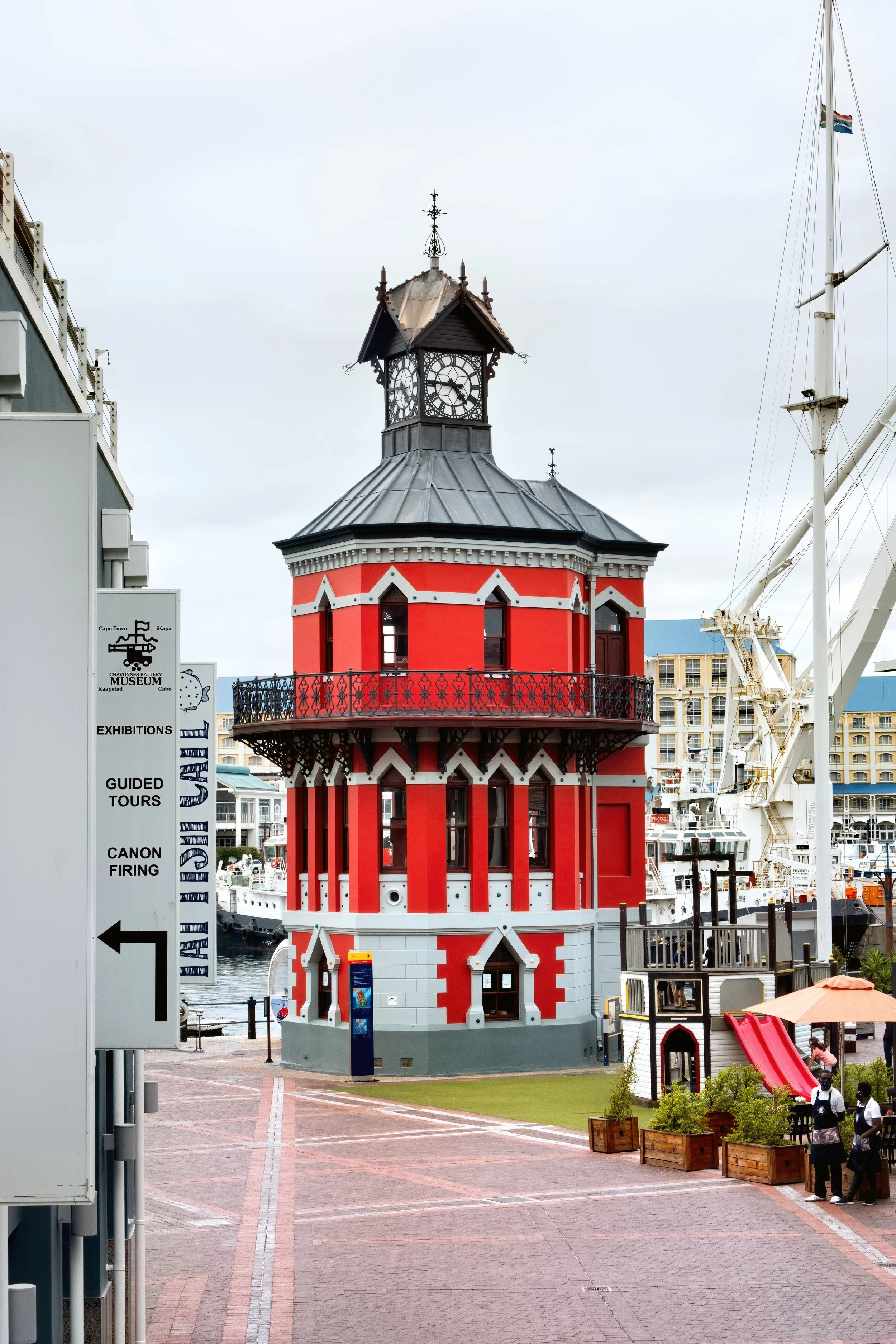
Start at the Clock Tower, the little red Gothic folly that once kept time for the port. Ferries to Robben Island leave from right next door, so this is also where a lot of very quiet boat rides begin.
Then walk over to the Silo District. Zeitz MOCAA lives inside a 1920s grain silo, and the architects carved the gallery out of the old concrete tubes like someone hollowing out a honeycomb. Even if contemporary art isn't your thing, go for the building alone.
Across the water, the Two Oceans Aquarium does a good job with sharks, penguins and a kelp forest that sways like it's listening to music. Great with kids, or on one of those days when the wind makes the mountain impossible.
This small-group tour packs the essentials into a single morning: the colored houses of Bo-Kaap, the story of District Six and the views from Table Mountain, with a guide who knows which detours are worth it. No more than twelve people, and someone else does the driving. The cable car ticket is extra, and worth every cent.