FISHERMAN’S BASTION & CASTLE HILL
Buda Castle Hill (Budai vár) rises steep and sudden above the river, and everything up there seems designed to be looked at from below, or to look down at everything else. It's Buda's medieval core, cobblestoned and largely car-free, home to a scatter of landmarks that somehow avoid feeling like a checklist.
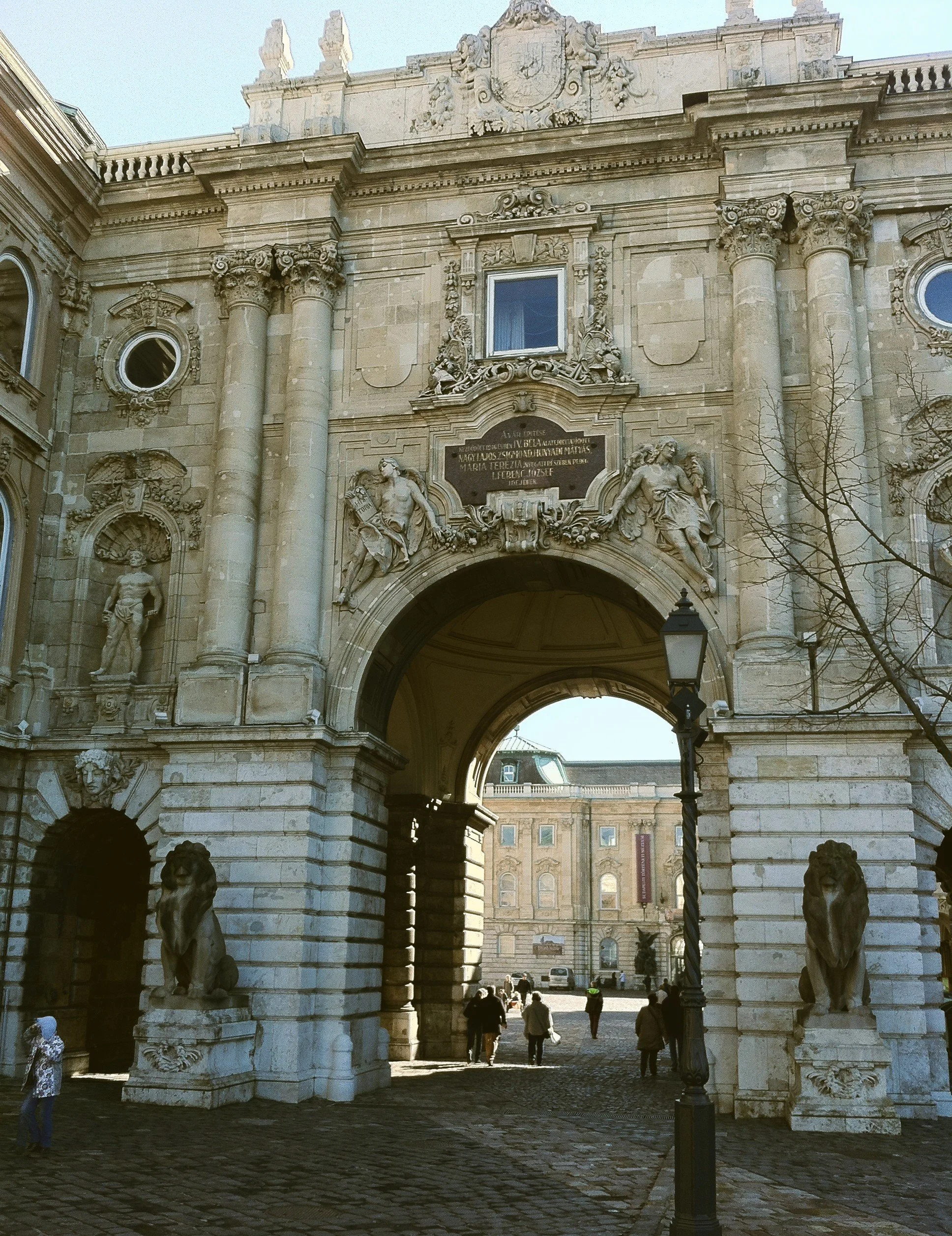
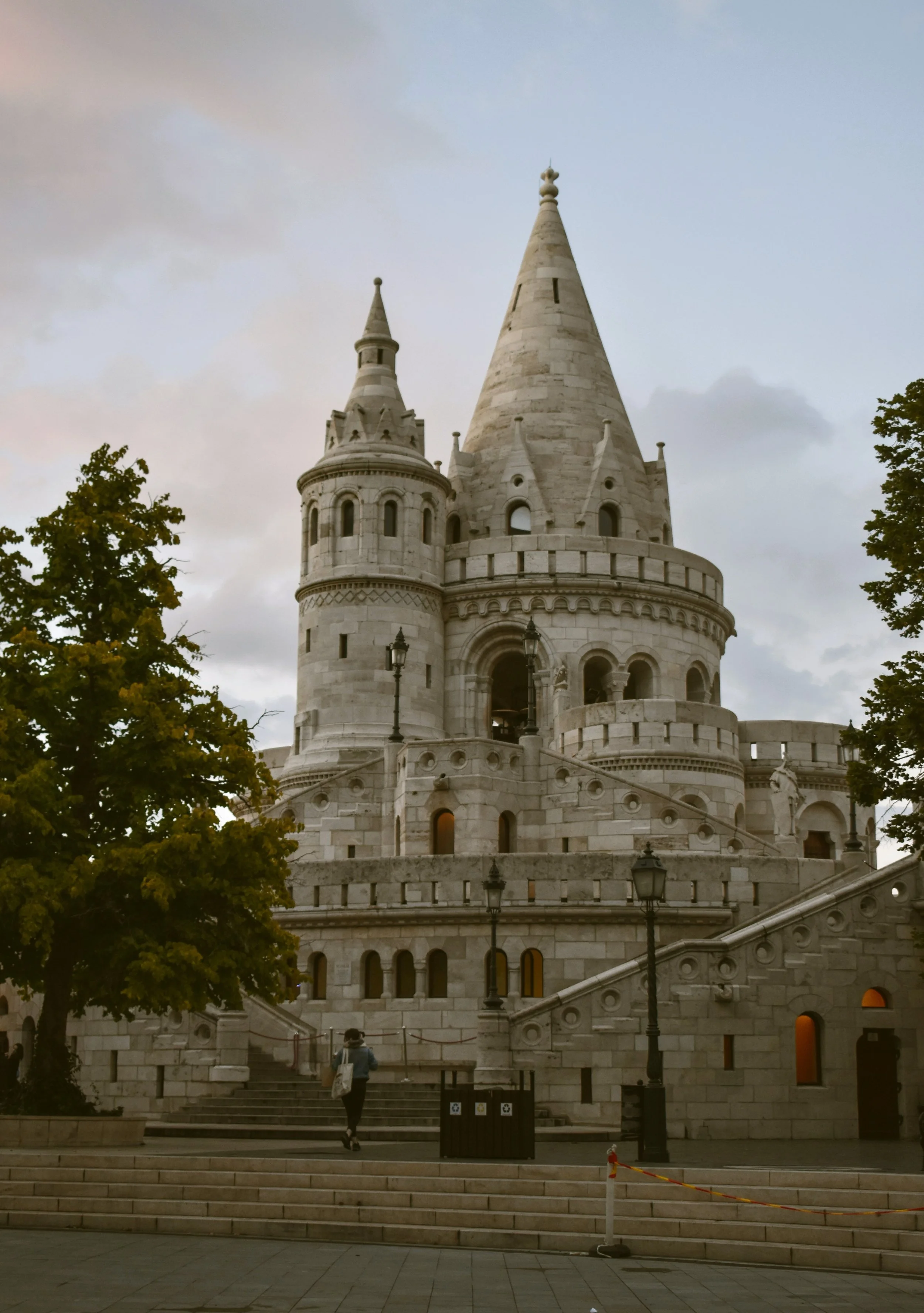
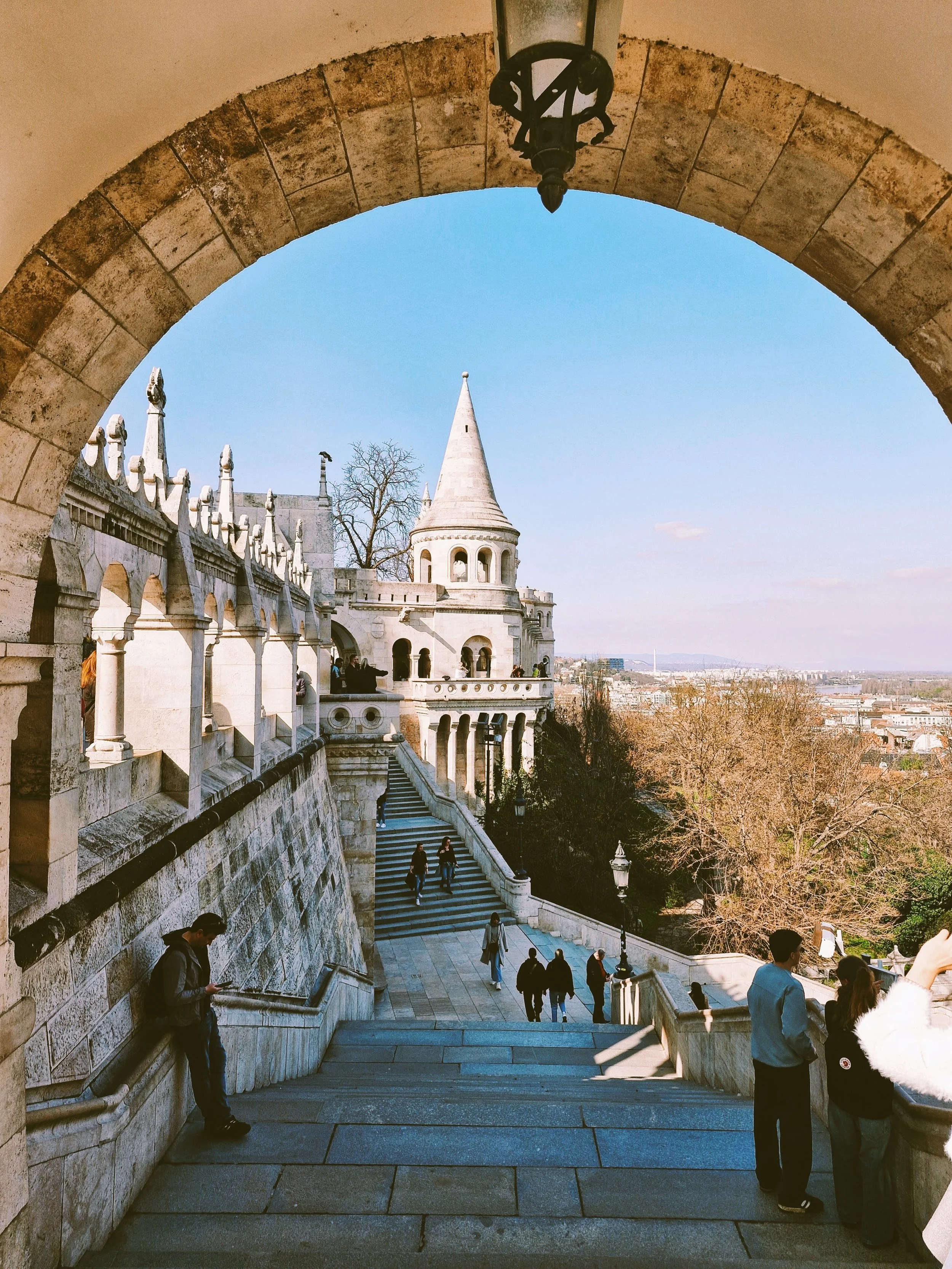
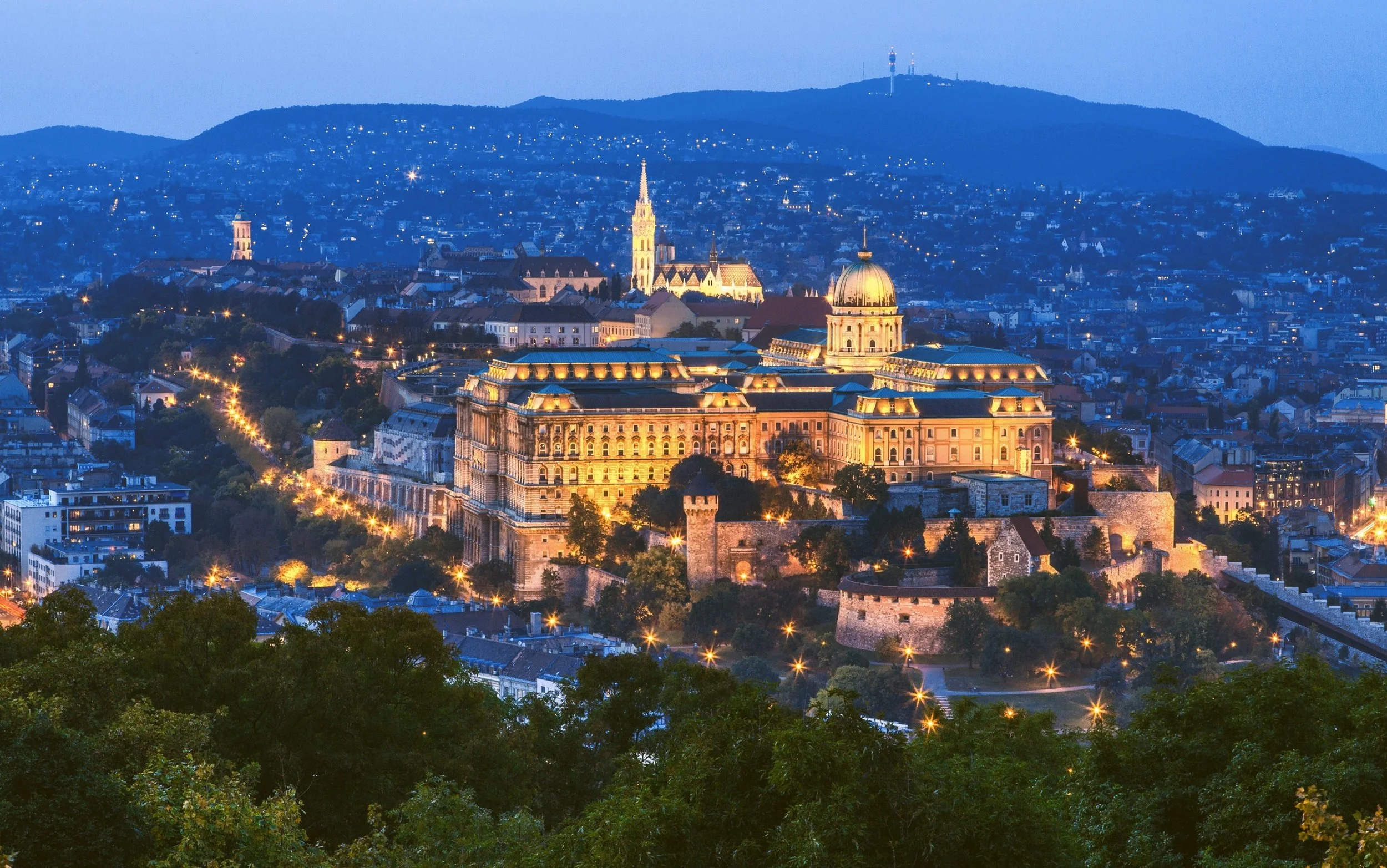
Fisherman's Bastion (Halászbástya) crowns the northern edge, a row of white turrets that look medieval and aren't, built purely for the view they frame rather than any defense they once provided. Beside it, Matthias Church lifts a roof of colored tiles into the skyline, close enough to touch from the Bastion's terraces. Further along sits Buda Castle itself, the sprawling palace complex that has burned, been rebuilt, and changed hands more times than most buildings survive.
Around them, the Castle District settles into something quieter: narrow streets, pastel facades, embassies tucked behind unmarked doors, locals who still live here despite the crowds arriving daily by funicular. It rewards slow walking more than any to-do list ever could.
Buda Castle began as an answer to the Mongols. The first fortress rose here in the years after they sacked the country in 1241, and the palace has been reinvented ever since; the last major destruction came in World War II. What stands today is mostly a 20th-century rebuild, wrapped around medieval fragments still buried underneath. It now holds the Hungarian National Gallery and the Budapest History Museum. Come at the end of the day, when the crowds thin and the Danube turns the color of pewter below the walls.
the fisherman’s bastion
Fisherman's Bastion isn't a fortress, whatever it looks like. Its seven white towers, each honoring one of the Magyar chieftains who founded Hungary in 895, were an architect's love letter to a legend, all romance and no battlements. Beside it, a bronze King Stephen sits on his horse, facing the same skyline everyone comes here for: Pest, flat and pale, stretched out across the river.
MATTHIAS CHURCH
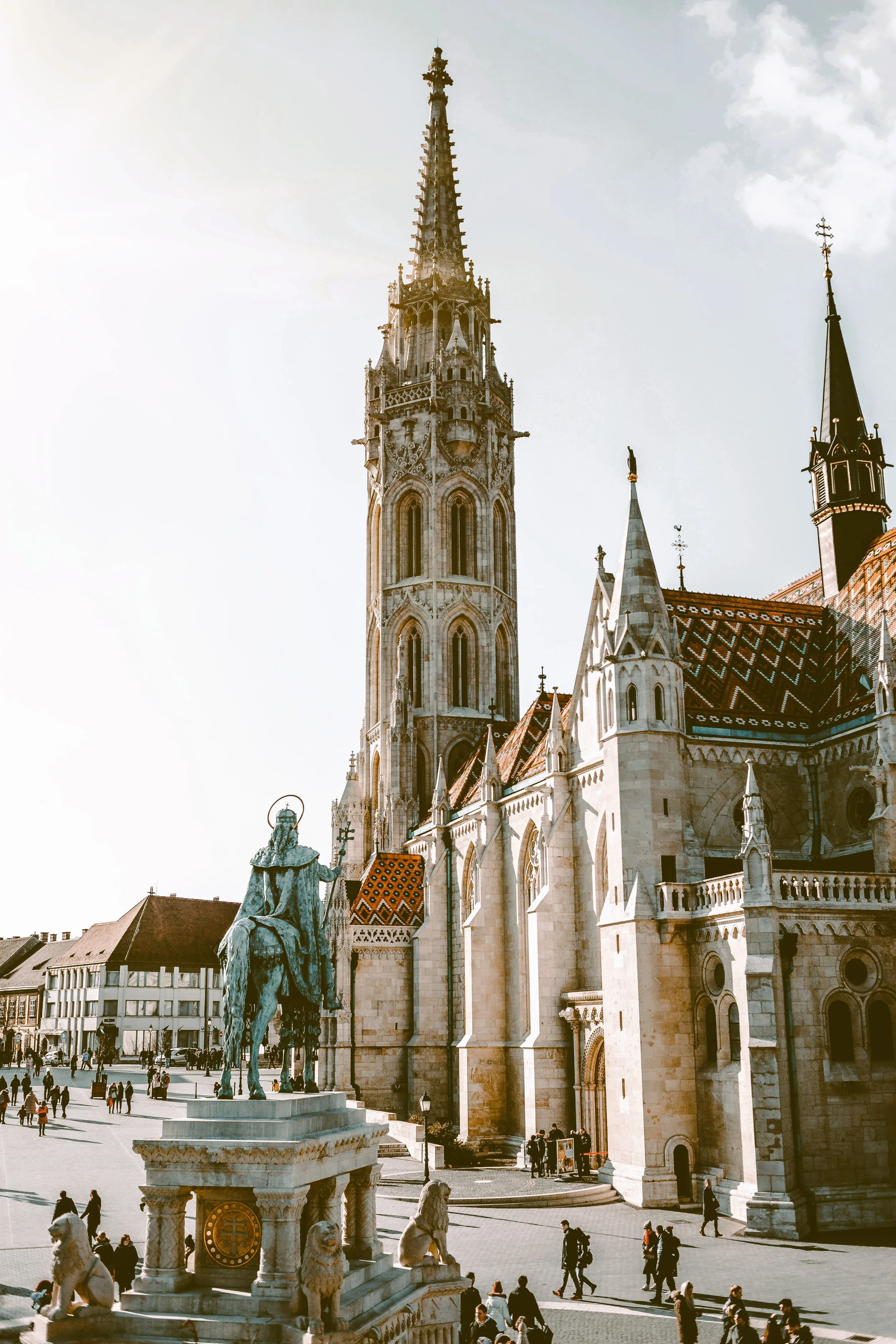
Matthias Church has spent 700 years being other things. Built in the 13th century, it became a mosque for nearly 150 years under Ottoman rule, then hosted Hungary's last two royal coronations, most memorably Franz Joseph and Sisi in 1867. Its diamond-patterned roof of colored Zsolnay tiles, roughly 150,000 of them, wasn't part of the original design at all; it was added centuries later, in the same years and by the same architect as Fisherman's Bastion. Inside, painted patterns rebuilt from medieval fragments cover every wall and pillar, and they would look out of place anywhere else in the city, and somehow don't here.
BUDA CASTLE
PLAN YOUR VISIT
Matthias Church and the upper terraces of Fisherman's Bastion both charge admission, though the lower bastion stays free. [Book Matthias Church tickets →]
Inside Buda Castle, the Hungarian National Gallery holds Hungary's national art collection, while the Budapest History Museum digs into what came before the current building. [Book National Gallery tickets →] · [Book History Museum tickets →]