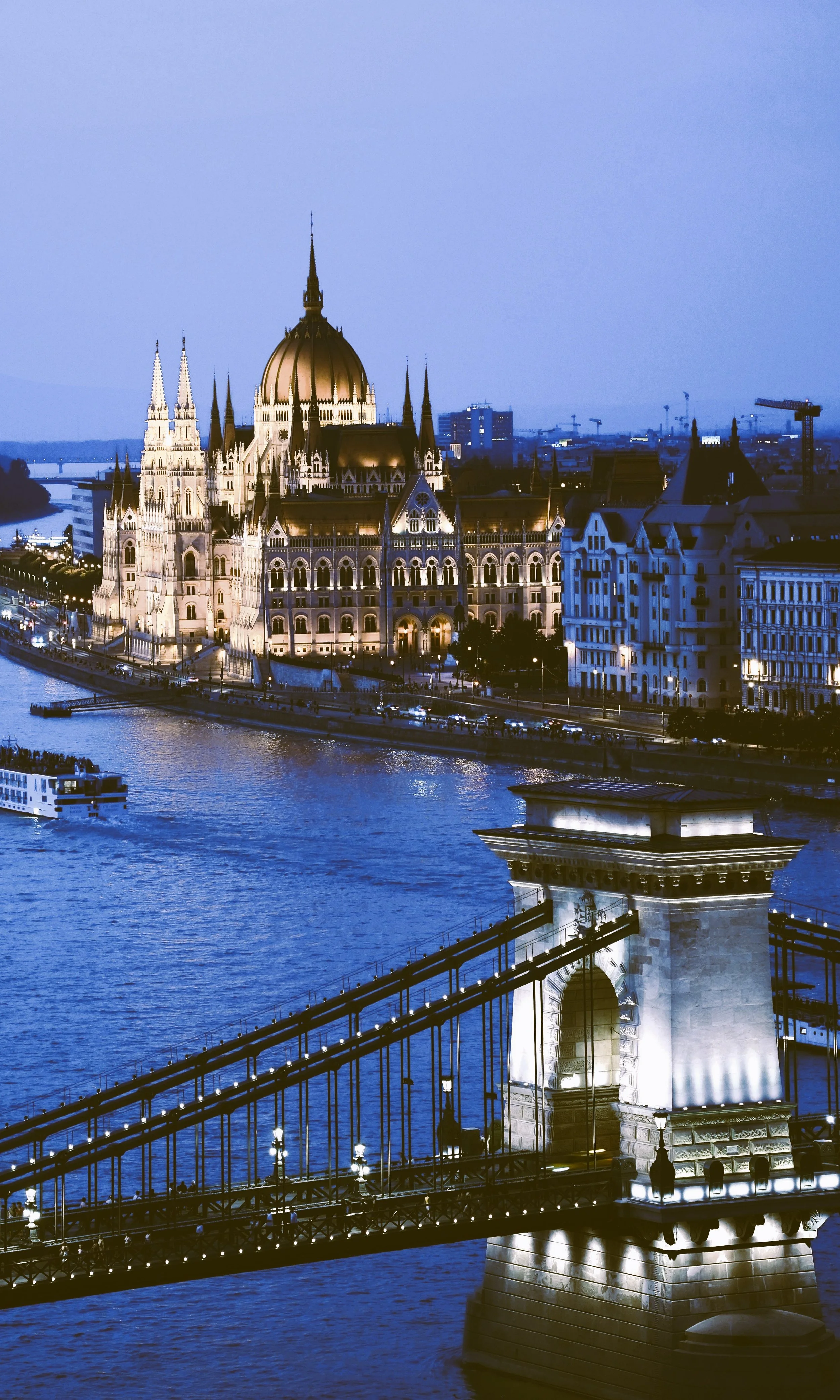
THE PARLIAMENT & PEST
The Hungarian Parliament sits on the Pest side of the river, and it announces itself the way a capital building should: enormous, domed, impossible to miss from either bank. Nearly two decades in the making, it's still the largest building in the country — built at a moment when a young nation wanted no doubt left about its ambitions. But the building is only the beginning of the story Pest tells here.
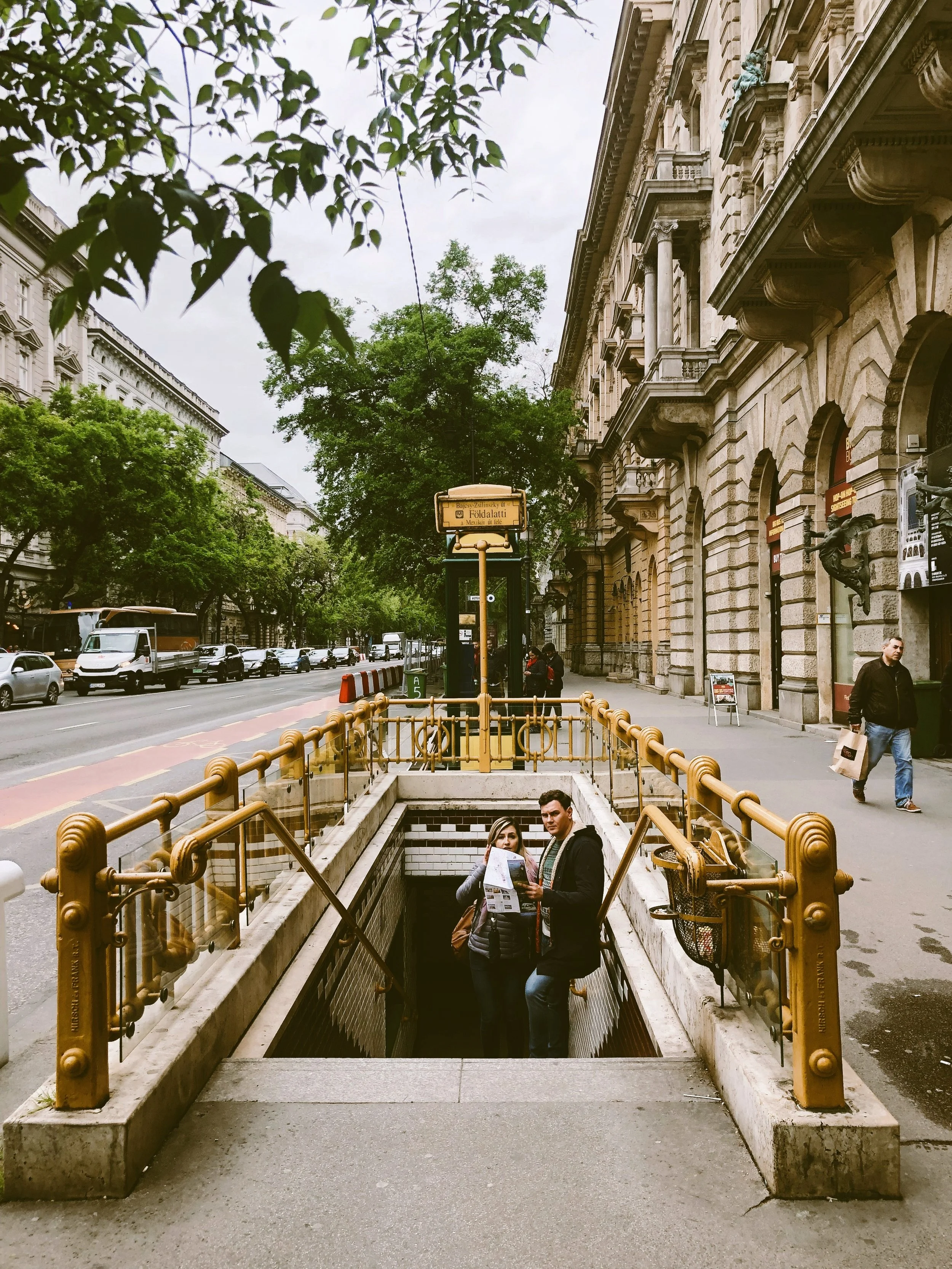
Behind it runs Andrássy Avenue, a straight boulevard lined with grand facades, listed as a UNESCO World Heritage Site alongside the modest little metro line humming beneath it, the Földalatti — continental Europe's first, older than most of what still runs under Paris or Berlin.
Andrássy Avenue doesn't wander. It moves in one direction, past opera houses and embassies and at least one building with a darker second act, until it opens into Városliget, the City Park, where Pest finally allows itself some green space and a little irony, with a castle that is younger than it looks.
Follow the line from the Parliament to the park, and you're tracing the spine Pest was built around.
andrássy avenue
Andrássy Avenue runs dead straight for two and a half kilometers, from the city center out to Városliget, and it was built to be walked, not rushed. Neo-Renaissance mansions line the route, their facades catching the late afternoon light, alongside the grand Hungarian State Opera House and the House of Terror, once headquarters to two successive secret police forces and now a museum that most visitors, hurrying toward the park, walk straight past without ever noticing what happened inside.
ST. STEPHEN’S BASILICA
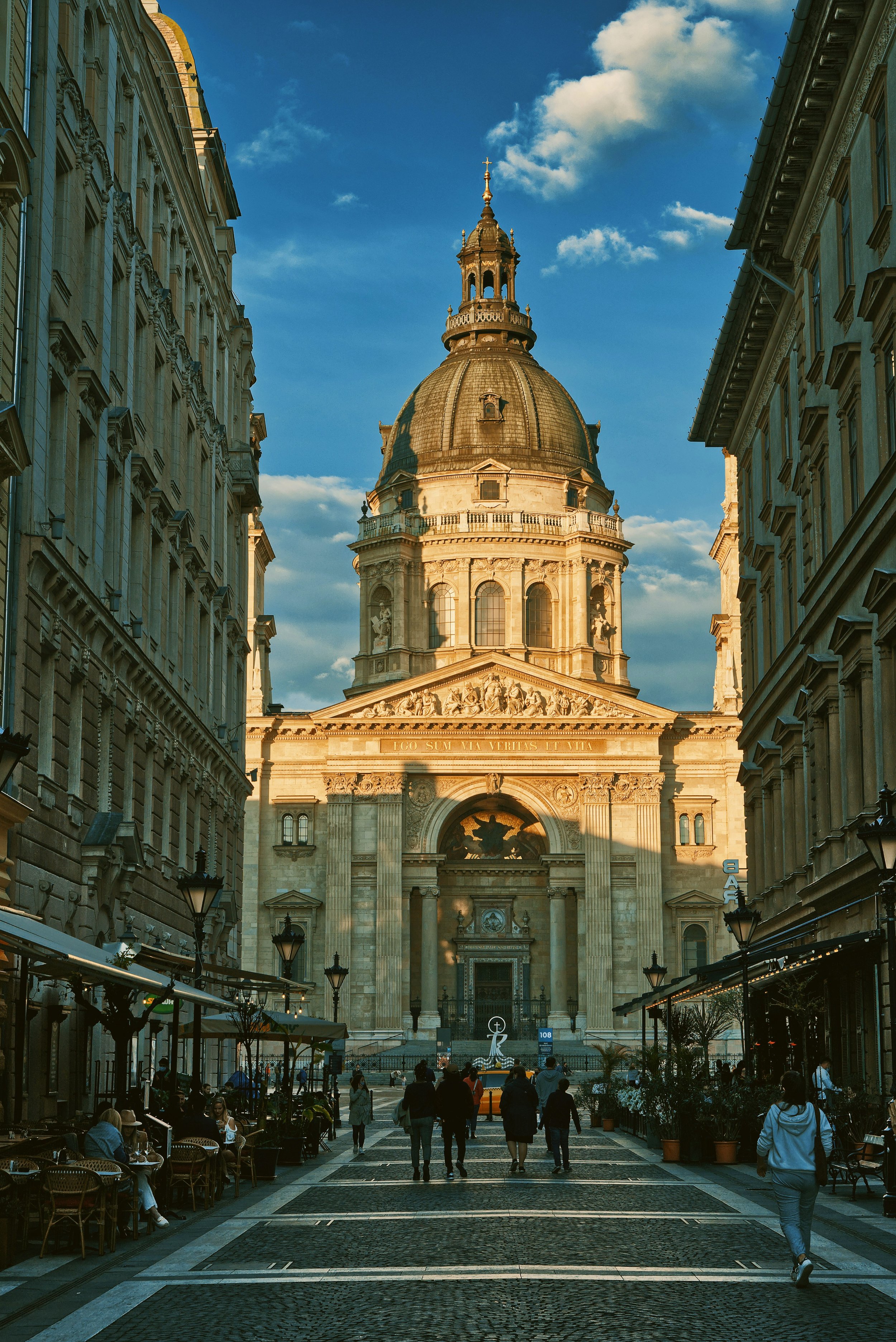
The dome sits at exactly 96 meters — the same height as Parliament, down to the meter, by deliberate agreement, so neither building could claim to sit above the other. That's Budapest in one architectural decision: grandeur, but negotiated.
Inside, past the marble and the gilding nobody quite needs, there's a small chapel to the right of the altar with a glass case. Drop a coin in the slot and a light comes on for about thirty seconds, illuminating what's inside: the mummified right hand of King Stephen, dead since 1038, paraded through the streets every August 20th like nothing about that sentence is strange. It is, a little. Go anyway.
Skip the elevator if your knees allow it — the staircase up to the terrace is the better version of this visit, not the church hall below, however loudly the queue outside suggests otherwise. From the top: Parliament, the Danube, Buda Castle, all at once, no ticket line up here to ruin it. [Skip the ticket line →].
THE CITY PARK (VÁROSLIGET)
Andrássy Avenue ends where the city allows itself to breathe. Városliget, the City Park, opens up with a boating lake that freezes into an ice rink come winter, a zoo older than most in Europe, the Neo-Baroque yellow palace of the Széchenyi Thermal Baths, where the steam rises year-round, and Vajdahunyad Castle, built for the 1896 millennium celebrations to look centuries older than it actually is, a kind of architectural joke that most visitors take completely seriously.
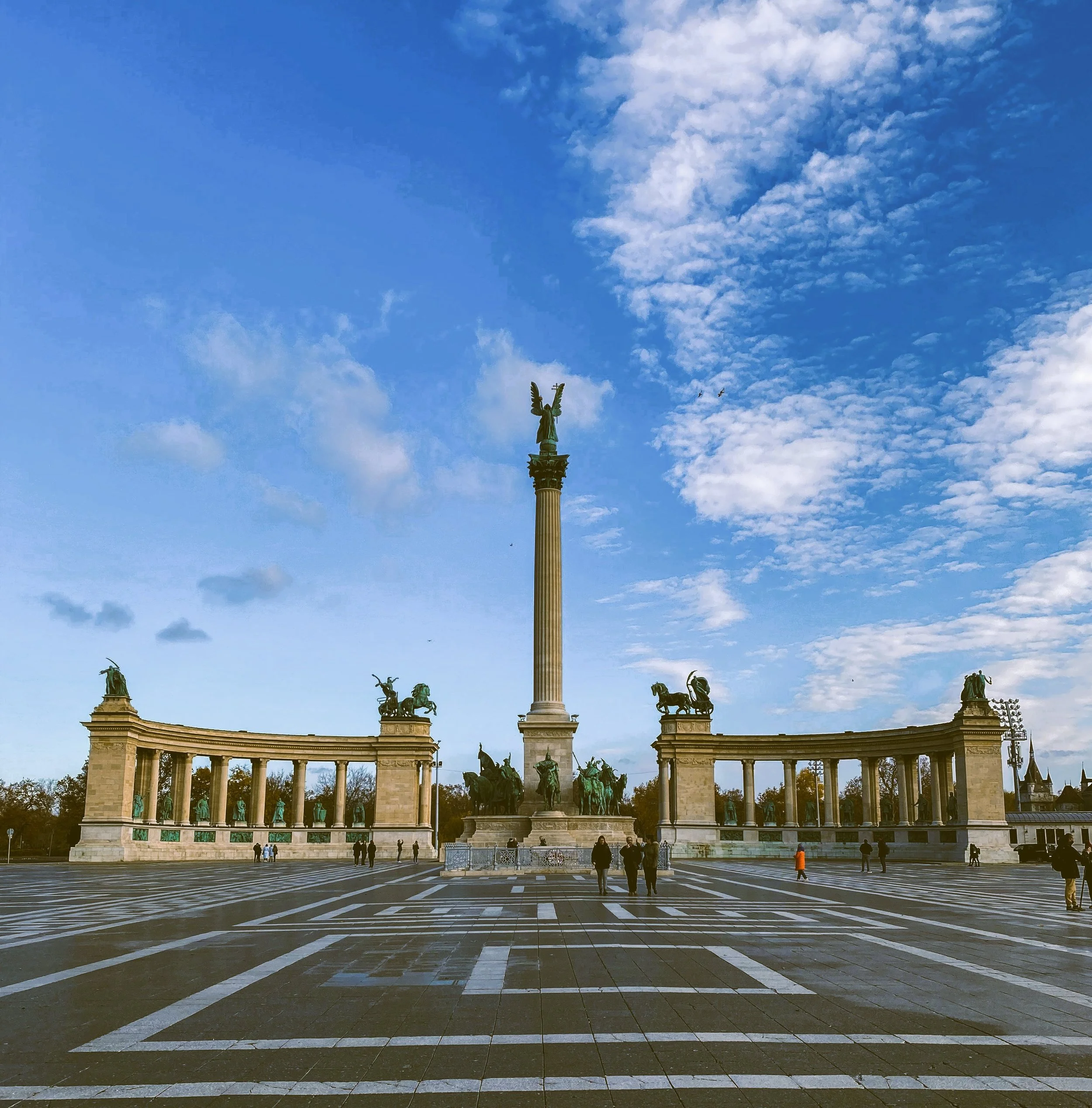
At its entrance stands Heroes' Square (Hősök tere), anchored by the Millennium Monument and its ring of statues honoring the seven Magyar chieftains who founded Hungary. It's grand in the way only a 19th-century capital trying to prove itself could manage, all columns and bronze figures staring down the avenue they guard. Beyond it, the park itself feels almost like relief, the one place in central Pest where nothing is trying quite so hard.
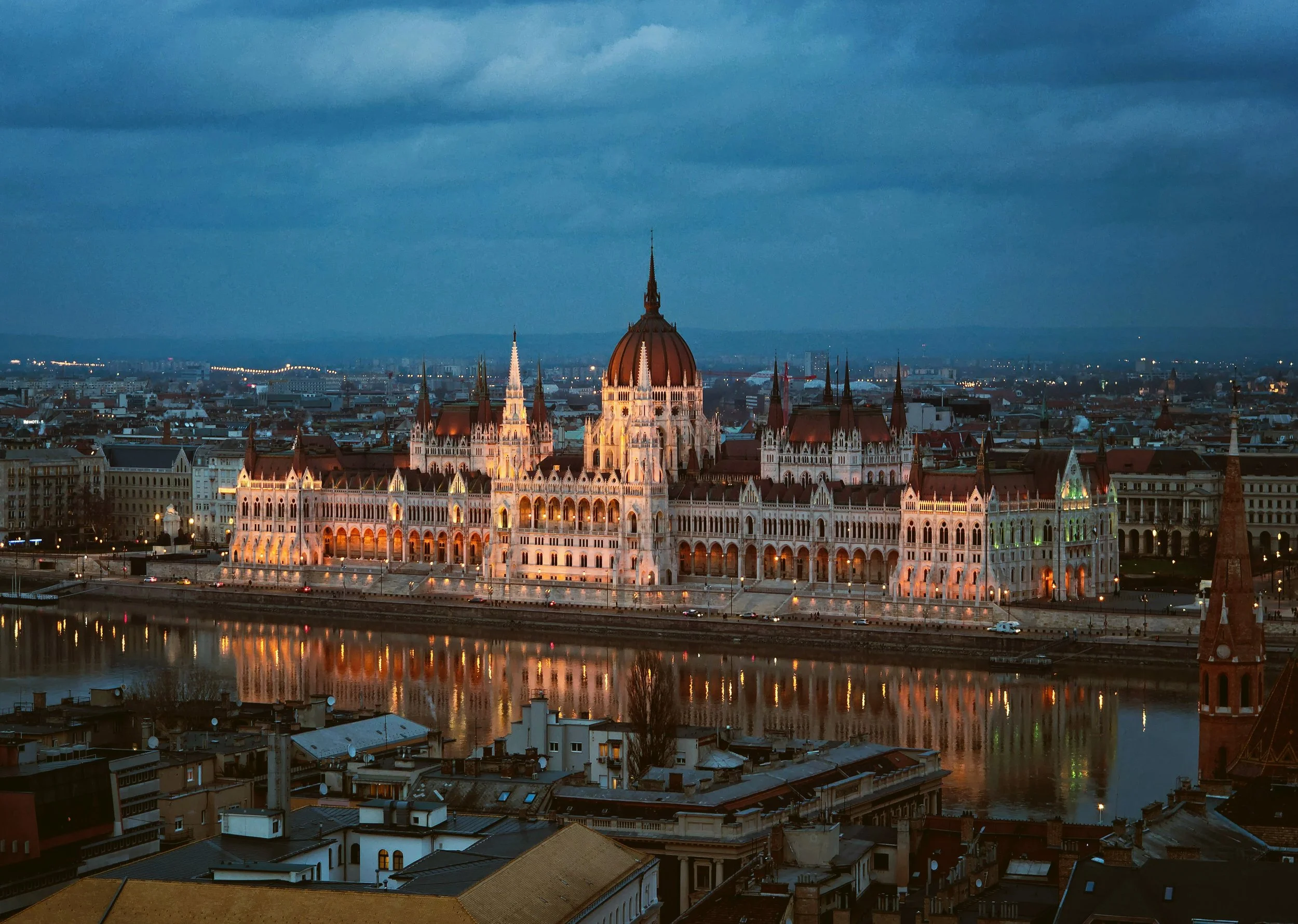
the hungarian parliament
The Hungarian Parliament took nearly two decades to build, finished in 1904, and remains the largest building in the country. Inside, the Holy Crown of Hungary sits under permanent guard, moved here in 2000 after decades in various vaults and, briefly, a U.S. Army depot. The interior can only be seen on a guided tour, no independent entry allowed, and tickets sell out days ahead in high season. Walk the riverside path at dusk, when the building turns gold under floodlights and doubles itself in the water, and it's easy to forget it was built for bureaucrats, not for beauty. [Book a Parliament tour →]
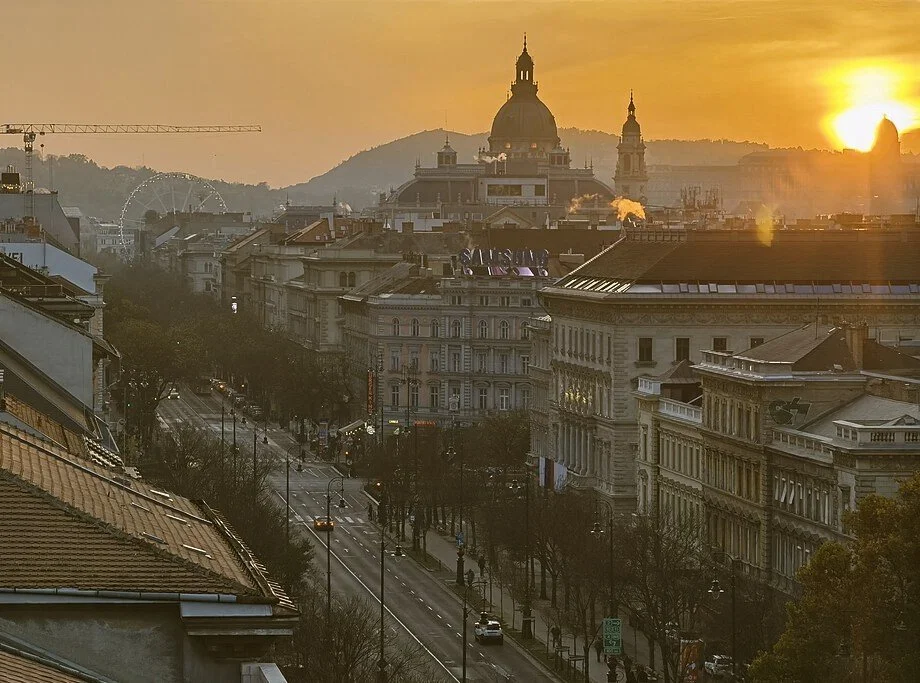
Photo: Random photos 1989 · CC BY-SA 4.0 · Cropped & editedBeneath the avenue runs the Földalatti metro line, the first electrified underground on the European continent, opened in 1896 — just six years after London's own deep-level tube, and still carrying passengers today. The original wooden carriages are long gone, but the stations still carry a certain old-world charm, tiled and compact, built for a shorter, gentler century. Together, avenue and metro were listed as a single UNESCO World Heritage Site, an unusual case of a street and the tunnel running beneath it sharing equal historical billing.
Heroes’ Square