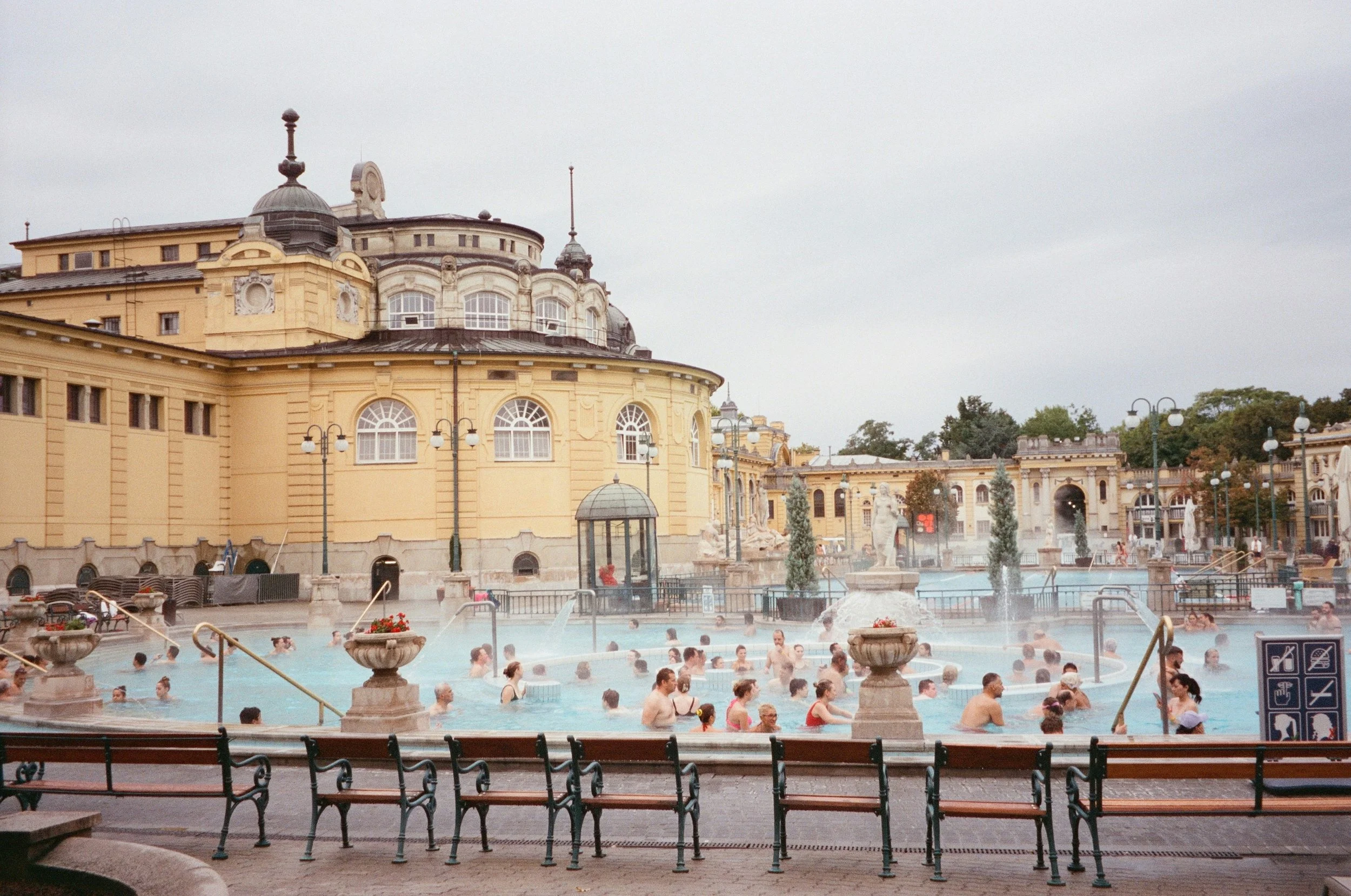
the thermal baths
Budapest sits on top of more than a hundred thermal springs, and the city has never quite gotten over it. Bathing here isn't a spa treatment added to a holiday — it's closer to a civic ritual, one the Romans started and the Ottomans continued.
Széchenyi is the one everyone means when they say "the baths": a canary-yellow Neo-Baroque palace built around outdoor pools that steam even in January, where old men play chess in the water, as if nothing else in the city needs their attention. Go early, before the crowds arrive.
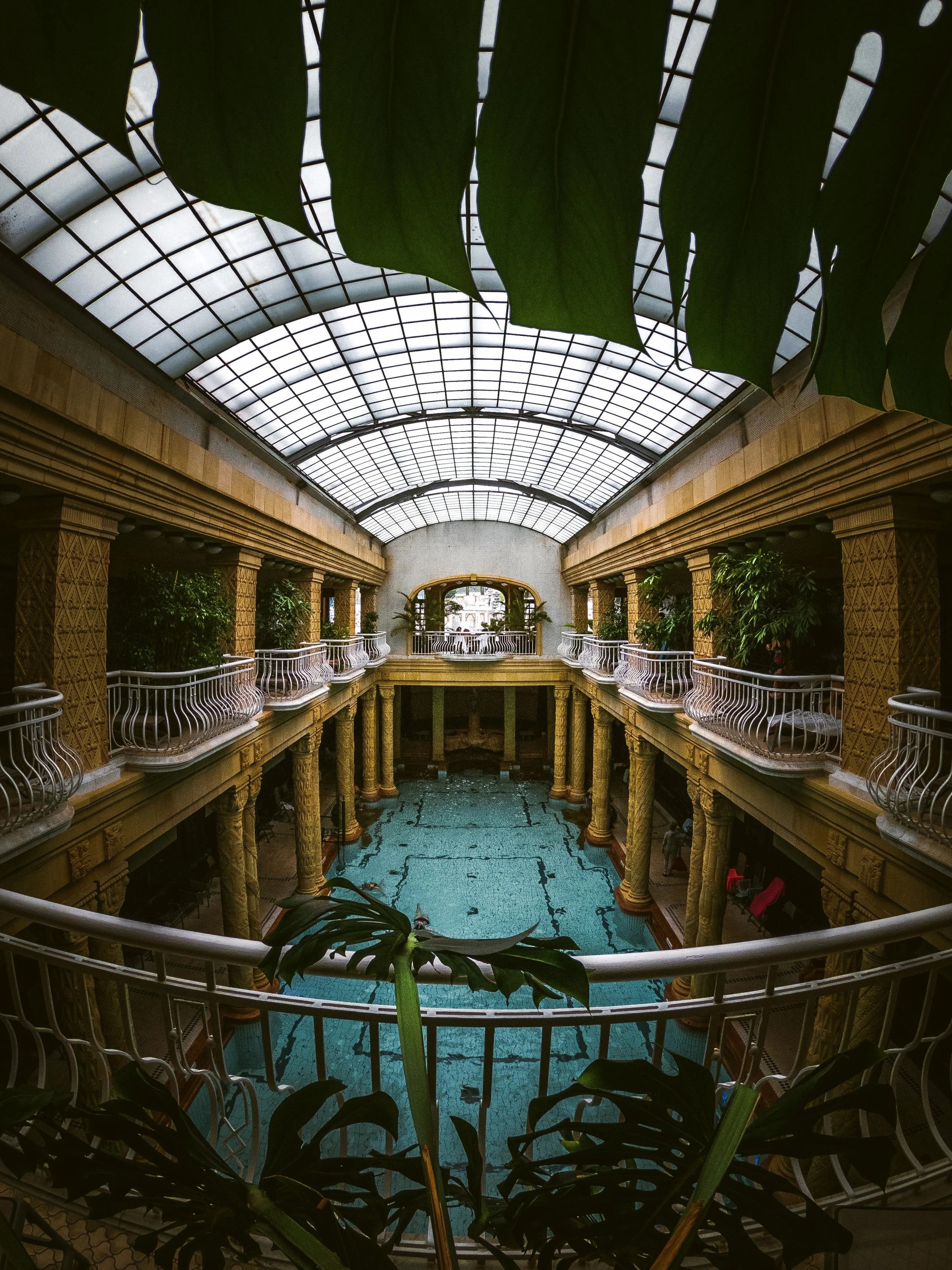
For something quieter, Gellért trades the theater for Art Nouveau calm — mosaic tiles, soft light, an indoor pool that feels more like a small cathedral. Rudas, the oldest of the three, keeps its Ottoman dome — go at night, when the rooftop pool looks out over a city that seems to have forgotten you're there.
None of them are secrets. If you want one, locals will point you toward Lukács instead — unglamorous, walls plastered with thank-you plaques from cured patients, more regulars than tourists — or Veli Bej, among the oldest of them all, small enough to cap at eighty people and quiet enough that most visitors never hear of it.
All are still worth it. Bring your own towel, book Széchenyi ahead on weekends, and don't rush. Two hours minimum, or don't bother.

SZÉCHENYI
Sixteen pools, one grand courtyard, and a crowd that somehow never feels like a crowd. Széchenyi is the largest thermal bath complex in Europe, and easily Budapest's most theatrical — Neo-Baroque towers, statues watching from above, water warm enough to make winter feel optional. Regulars claim their usual corner and stay for hours, newspaper in hand, half-submerged, in no rush at all. It's not a quick stop. It's an entire afternoon, gladly lost. Best booked in advance.
Állatkerti krt. 9-11, 1146 Budapest - DISTRICT XIV
rudas
Almost four centuries older than the others, its octagonal pool sits beneath the original Turkish dome, daylight filtering through small star-shaped openings in shafts of green and gold. For decades, entry was restricted to men only, card games included — mixed hours now open it to everyone, though the older ritual still lingers in the air. The rooftop terrace, a later addition, is the real reward. Worth booking ahead.
Döbrentei tér 9, 1013 Budapest - DISTRICT I
veli bej
Among the oldest Budapest baths, and the one almost nobody photographs. Built in 1574–75 by Sokollu Mustafa Pasha, Veli Bej is one of the few of Buda's original Ottoman baths still running as it was meant to — no theatrics, no Instagram queue, just a domed octagonal pool of 36°C thermal water. It belongs to a hospital, not the city's spa network, which is exactly why it stayed quiet — though quiet has a ceiling: capacity caps at 80 people, and once it's full, you wait outside until someone leaves. Come at opening, or accept the wait as part of the ritual.
Árpád fejedelem útja 7, 1023 Budapest - DISTRICT II
Photo Christo · CC BY-SA 4.0 · Cropped & editedGELLÉRT
Where Széchenyi performs, Gellért whispers. The same thermal water, filtered through Art Nouveau stained glass and blue-green ceramic tiles instead of open sky — the effect is closer to stepping into a private chapel than a public bath. Built in 1918, attached to the hotel of the same name (soon to be a Mandarin Oriental), it still moves at the pace of a place that has never needed to prove anything. Slightly fewer crowds, lower voices, longer silences... in theory.
Kelenhegyi út 4, 1118 Budapest - DISTRICT XI
Currently closed for renovation
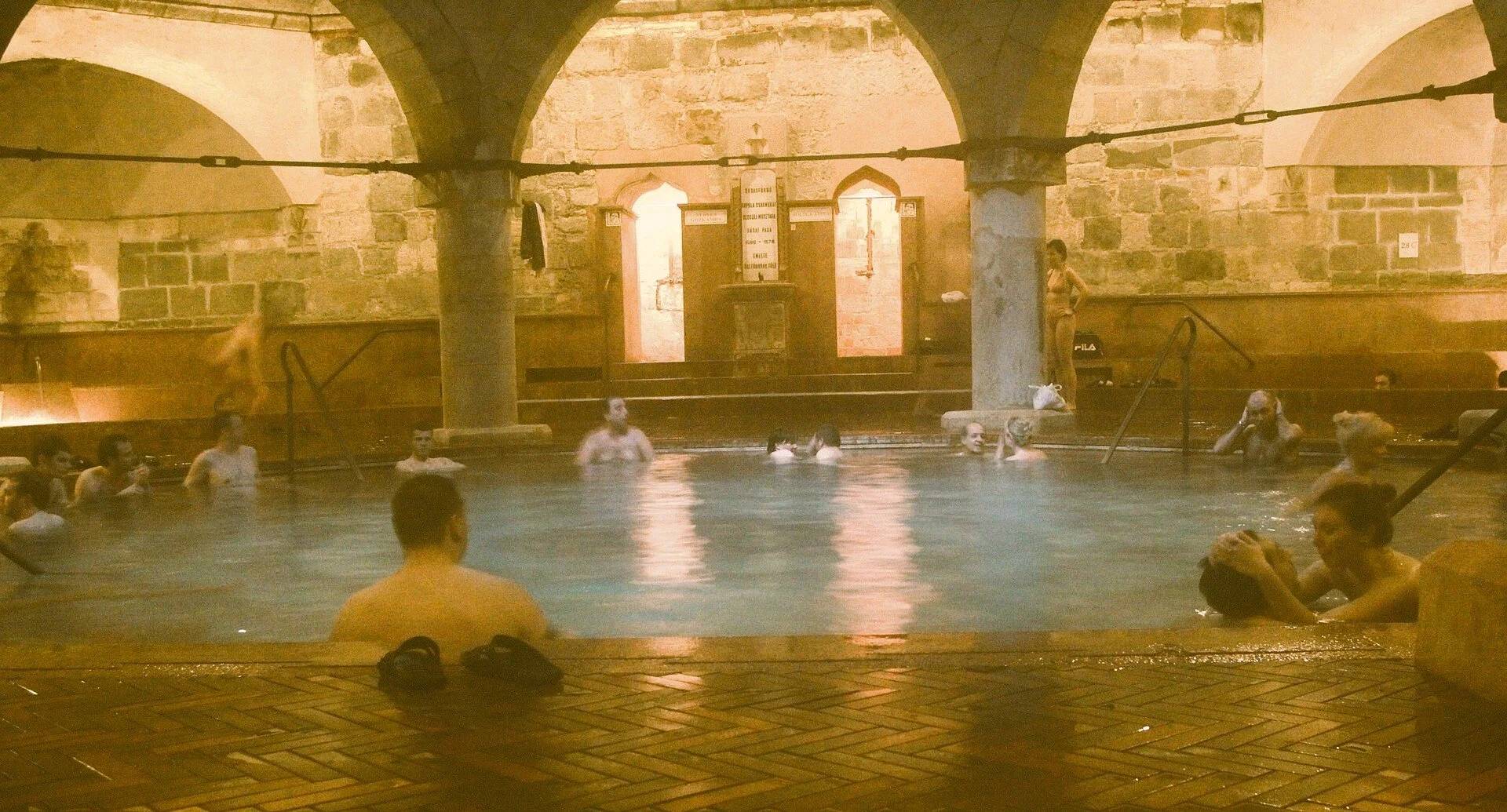
Photo Guillaume Baviere · CC BY 2.0 · Edited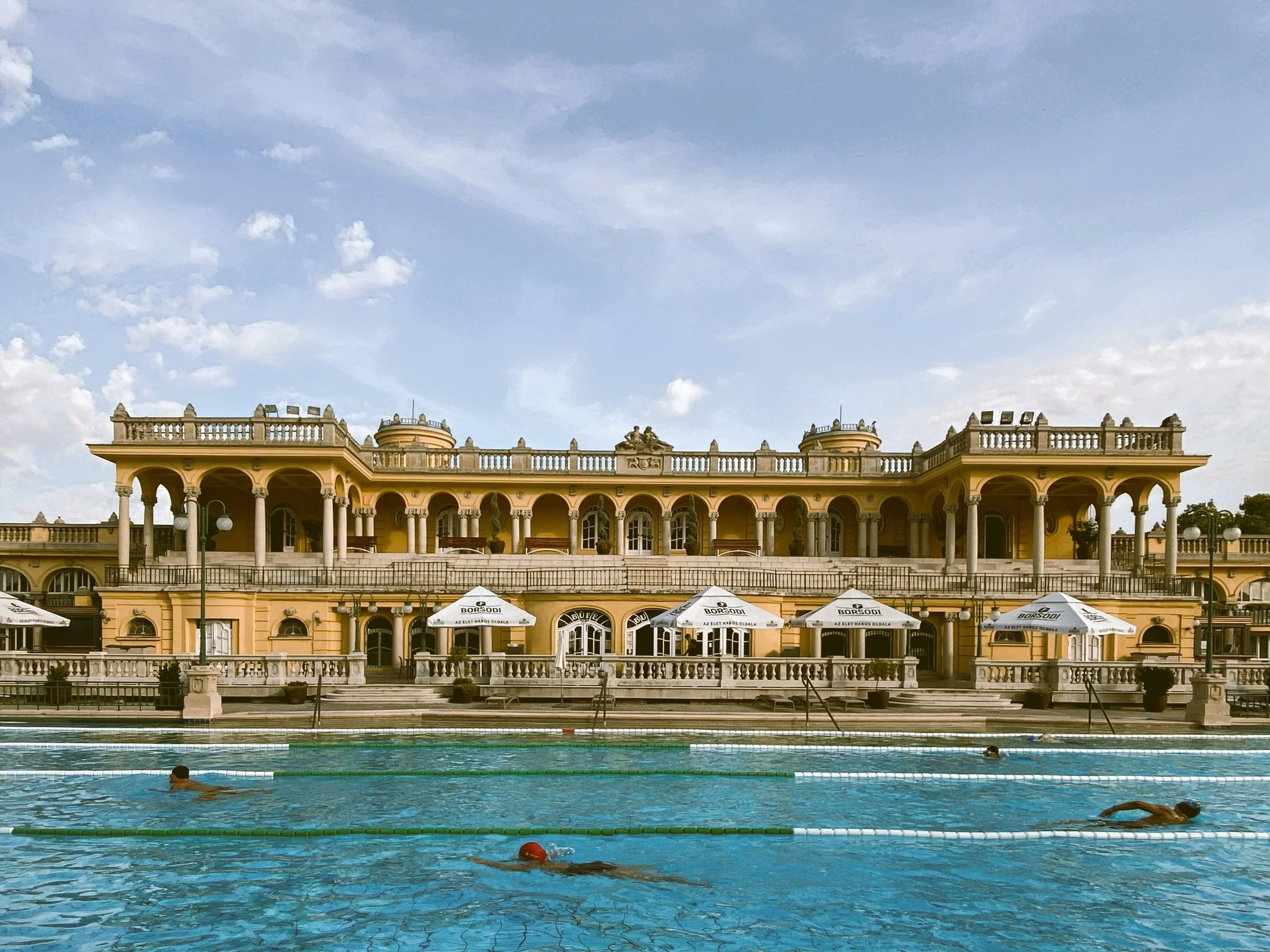
LUKÁCS
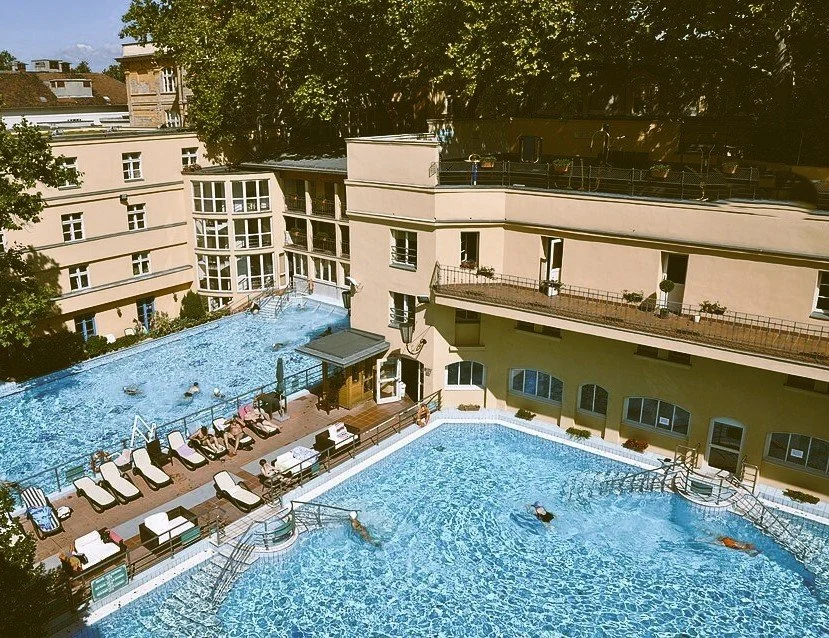
No gold, no crowds, no performance — Lukács has always worked, not posed. Under the plane trees in its courtyard, marble plaques line the walls by the hundreds, left over a century by people crediting these waters with actual cures. Writers and poets once made it their second office, arguing over coffee between soaks. Locals still outnumber tourists by far. Come for the quiet conviction that something here genuinely works. Worth booking ahead.
Frankel Leó út 25-29, 1023 Budapest - DISTRICT II

Photo Christo · CC BY-SA 4.0 · editedBOOK YOUR VISIT
Skip the ticket line and pick your session in advance — Széchenyi and Rudas sell out fast on weekends.
[Find tickets →]