THE DANUBE
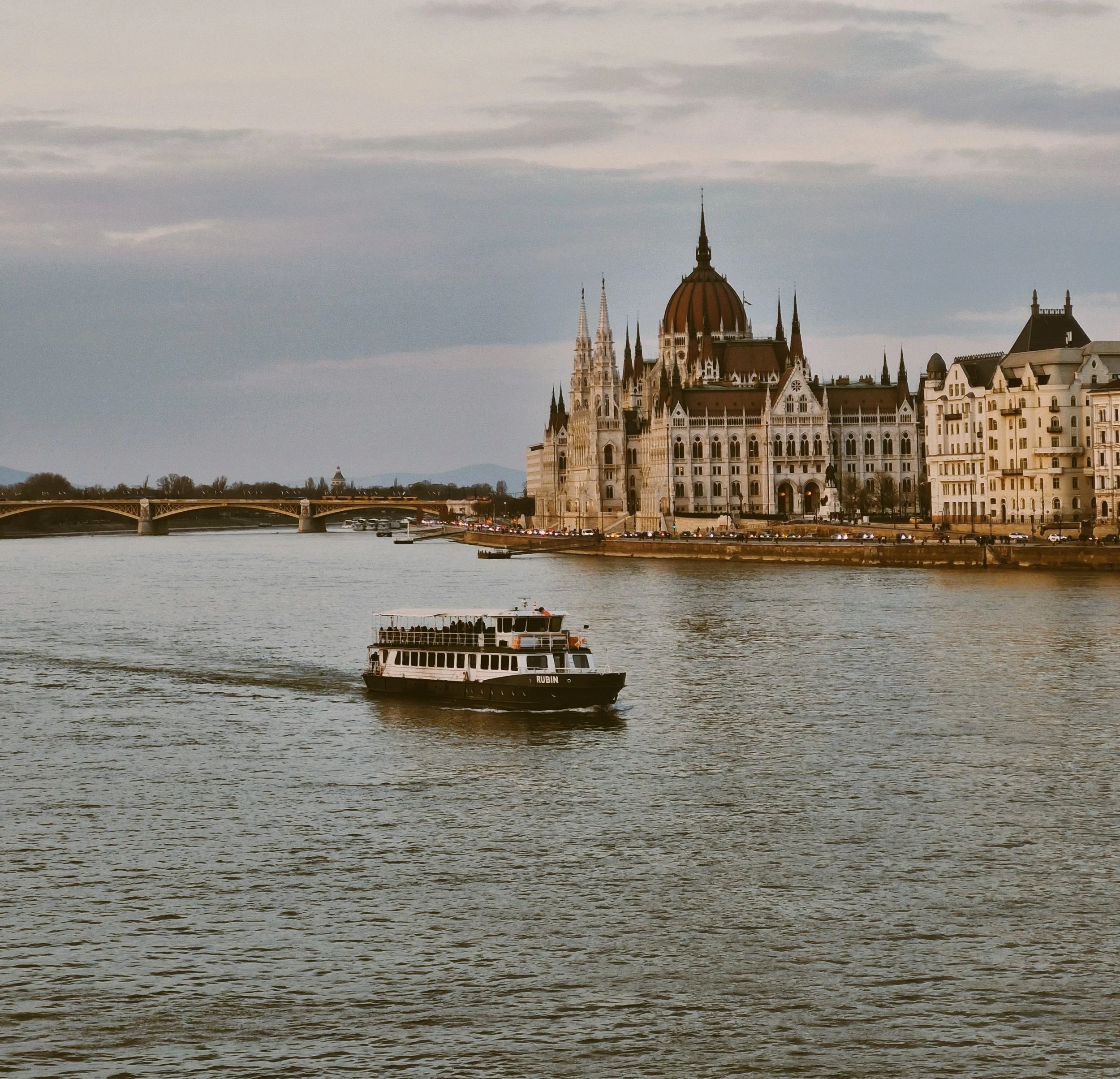
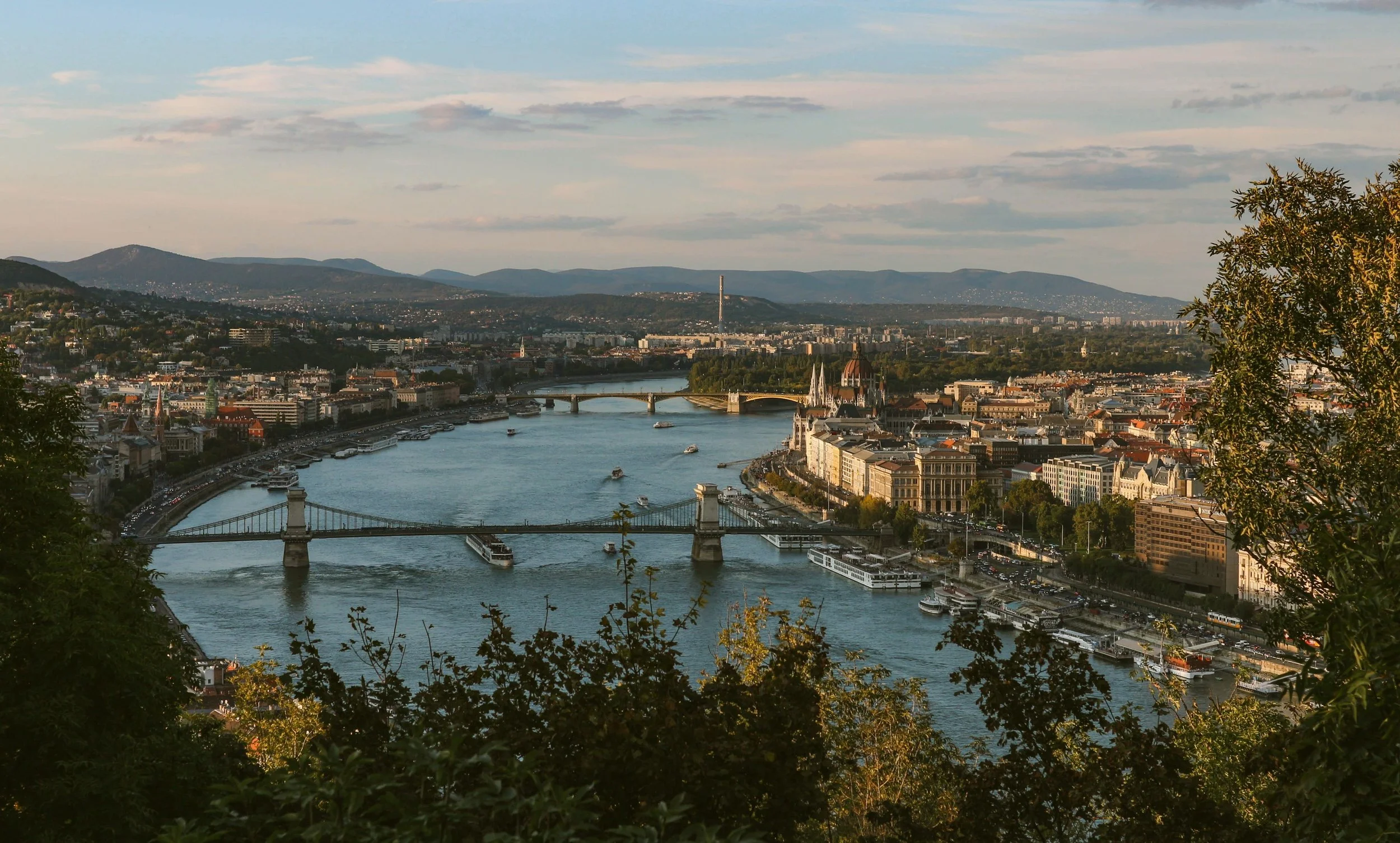
The Danube is what gives Budapest its shape. It cuts the city into two personalities: Buda, climbing the hills with its castle and quiet streets, and Pest, flat and loud on the opposite bank. Everything else in the city arranges itself around that division, and around the water itself.
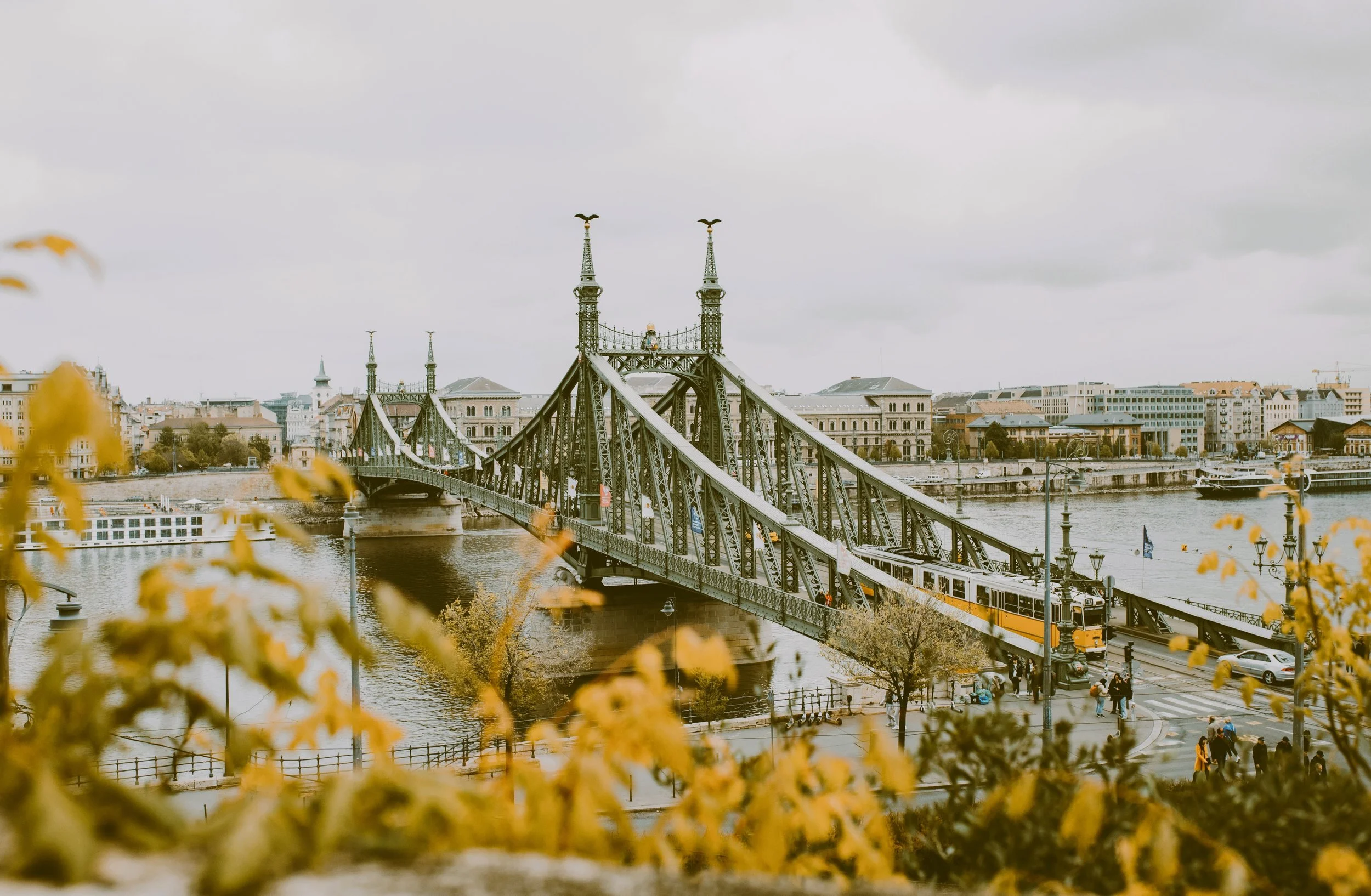
Four central bridges cross it, each with its own character. Széchenyi Lánchíd, the Chain Bridge, is the one everyone photographs, lit up at night like it knows it. Szabadság híd (Liberty Bridge), green and art nouveau, feels almost too delicate for the traffic it carries. Erzsébet híd (Elizabeth Bridge) is younger and whiter, built to replace the one the city lost. Margit híd (Margaret Bridge) bends slightly in the middle; it's the only one that does.
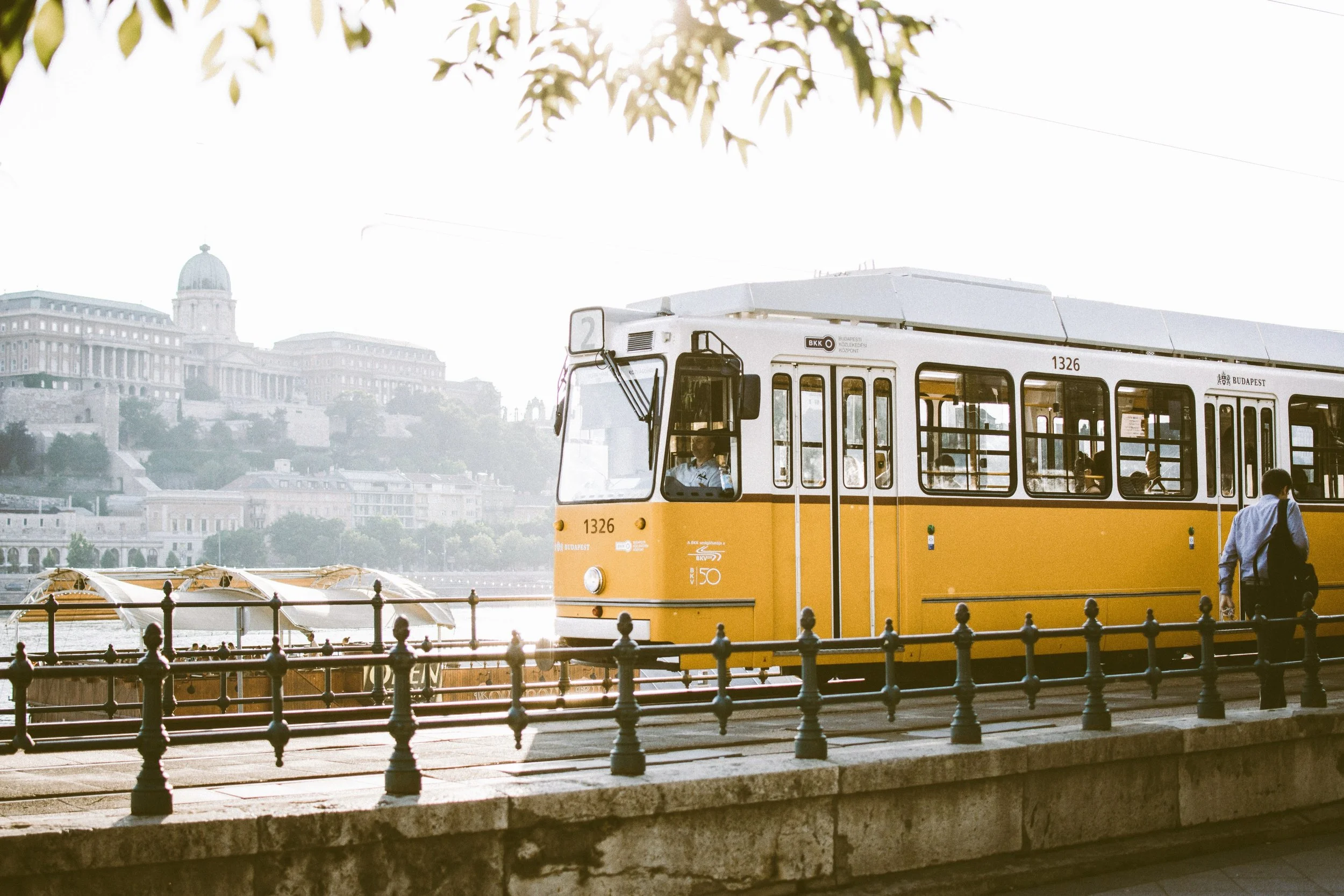
The river rewards patience more than speed. Tram 2 runs along the Pest embankment, and for the price of a single fare, it becomes the cheapest sightseeing tour in the city: the Castle District, the Parliament building, and the water itself, all on your right.
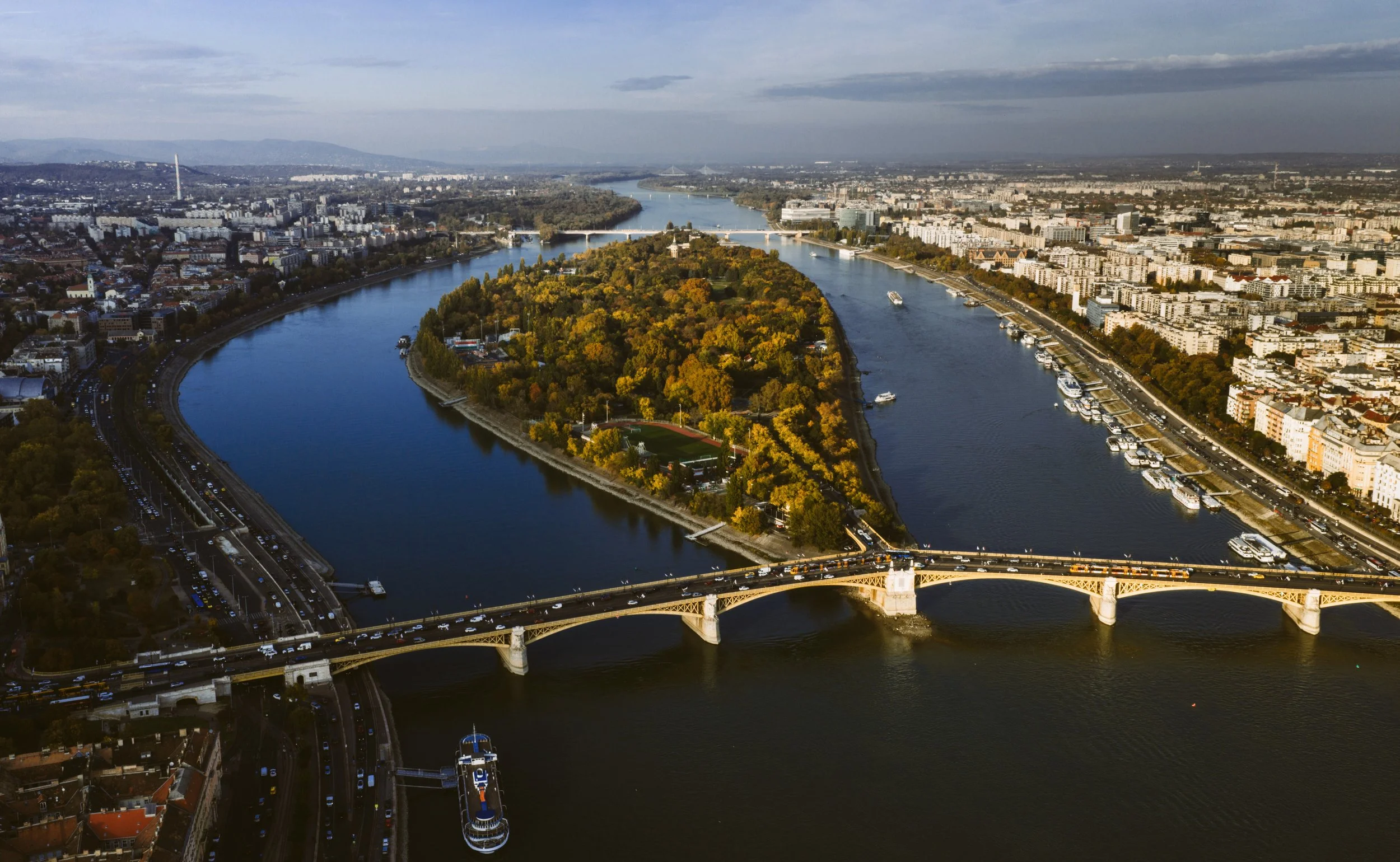
Further north, the Danube splits around Margaret Island, where the river seems to slow down, and the city with it.
Szabadság híd (Liberty Bridge)
TRAM nO. 2
National Geographic once placed it among the ten best tram rides on the planet, which is the kind of claim that sounds like marketing until you actually take the ride. No commentary, no stop for photos, same yellow carriages used on any ordinary commuter line in the city. Locals ride it to get to work.
It runs along the Pest embankment for about twenty minutes, and for the price of a single ticket, you get the Castle District, Fisherman's Bastion and the Parliament sliding by on the right, best caught in the last light of the afternoon.
BRIDGES OF BUDAPEST
Lánchíd (Chain Bridge) — Financed by Count István Széchenyi, who once spent a week stranded by a frozen, bridgeless river. Its stone lions are famously said to have no tongues; the sculptor spent years denying it.
Szabadság híd (Liberty Bridge) — Emperor Franz Joseph hammered in the final rivet at its 1896 opening. Blown up by retreating German troops in 1945, it was the first bridge in the city to be rebuilt, reopening in 1946 under its new name, Liberty. In summer, selected weekends traffic see traffic give way to locals and picnic blankets beneath the turul birds.
Erzsébet híd (Elizabeth Bridge) — The original, named after the beloved Empress Elisabeth, was once the world’s largest chain bridge. It didn't survive the war; its replacement shares little but the name.
Margit híd (Margaret Bridge) — French engineer Ernest Goüin gave it a 30-degree bend to match the river’s current, not the island beside it. Decades later, that angle proved useful when a spur to the island was added.
MARGARET ISLAND
Margaret Island (Margitsziget) is named after a 13th-century princess sent to a convent here as a child, after her father promised this in exchange for victory in battle. Cars are not allowed, except for a few service vehicles, which is rare for land this close to the center of a capital city. Locals come for the shaded running track, the musical fountain that draws a crowd at dusk, and the thermal pools at each end of the island. It's less a landmark than a mood, the place Budapest goes when it wants to stop performing for anyone.
SEE IT FROM THE WATER - Boat Cruise
Some cities are better read from the water than the shore. A Danube evening cruise slides you under all four central bridges, past the illuminated Parliament and Buda Castle, no map or schedule required, just the current doing the guiding. [Book a Danube cruise →]