THE RING (RINGSTRASSE)
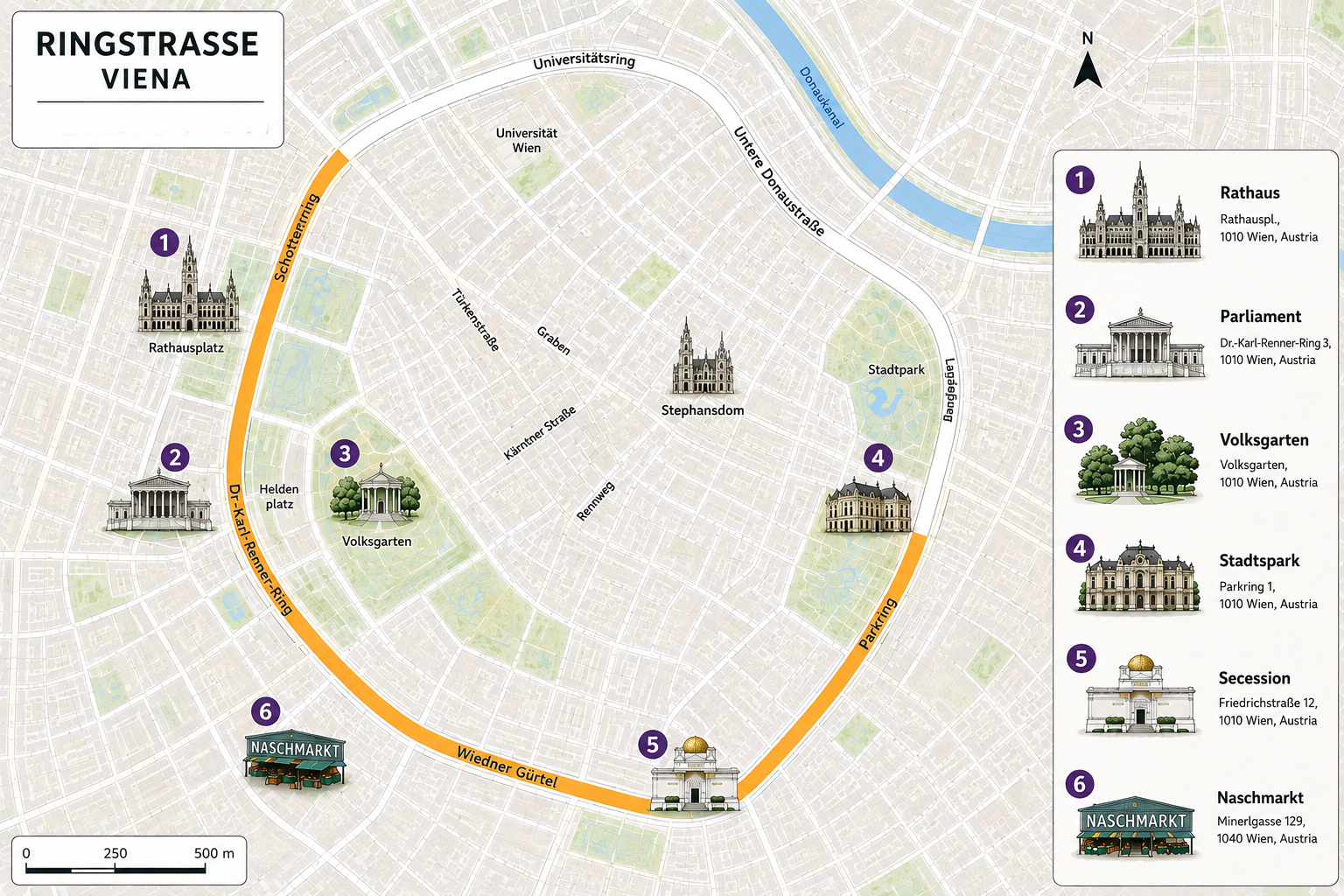
In December 1857, Emperor Franz Joseph signed a decree that opened with the words 'It is my will' — and Vienna's medieval walls came down. What replaced them wasn't just a road. It was a five-kilometer stage, a horseshoe around the old city, built specifically so the empire could show off everything it believed about itself: its power, its taste, its confidence that none of it would ever end.
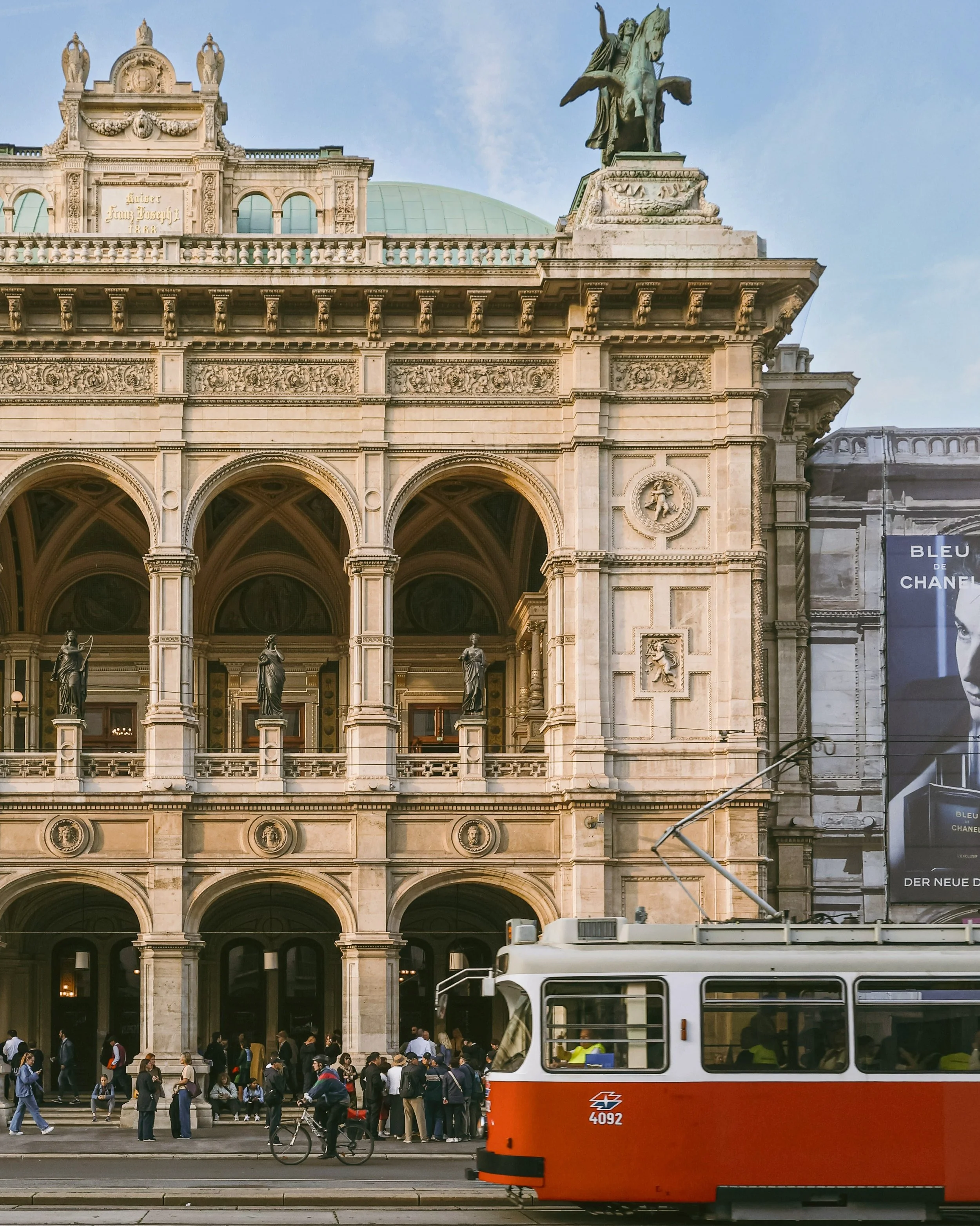
Fifty years and half a dozen architectural styles later, the Ringstrasse was done — Neo-Gothic town hall, Greek-revival parliament, museums dressed as palaces, all facing a boulevard wide enough for the haute bourgeoisie to parade in front of the aristocracy that used to ignore them. Freud, Klimt and Mahler all drank coffee somewhere along its length. A failed art student named Adolf Hitler spent years here too, painting postcards of buildings he couldn't get into art school to study.
None of that grandeur asks to be taken too seriously today — that's rather the point. Walk it slowly, and the story keeps changing every few hundred meters.
THE GRAND BOULEVARD
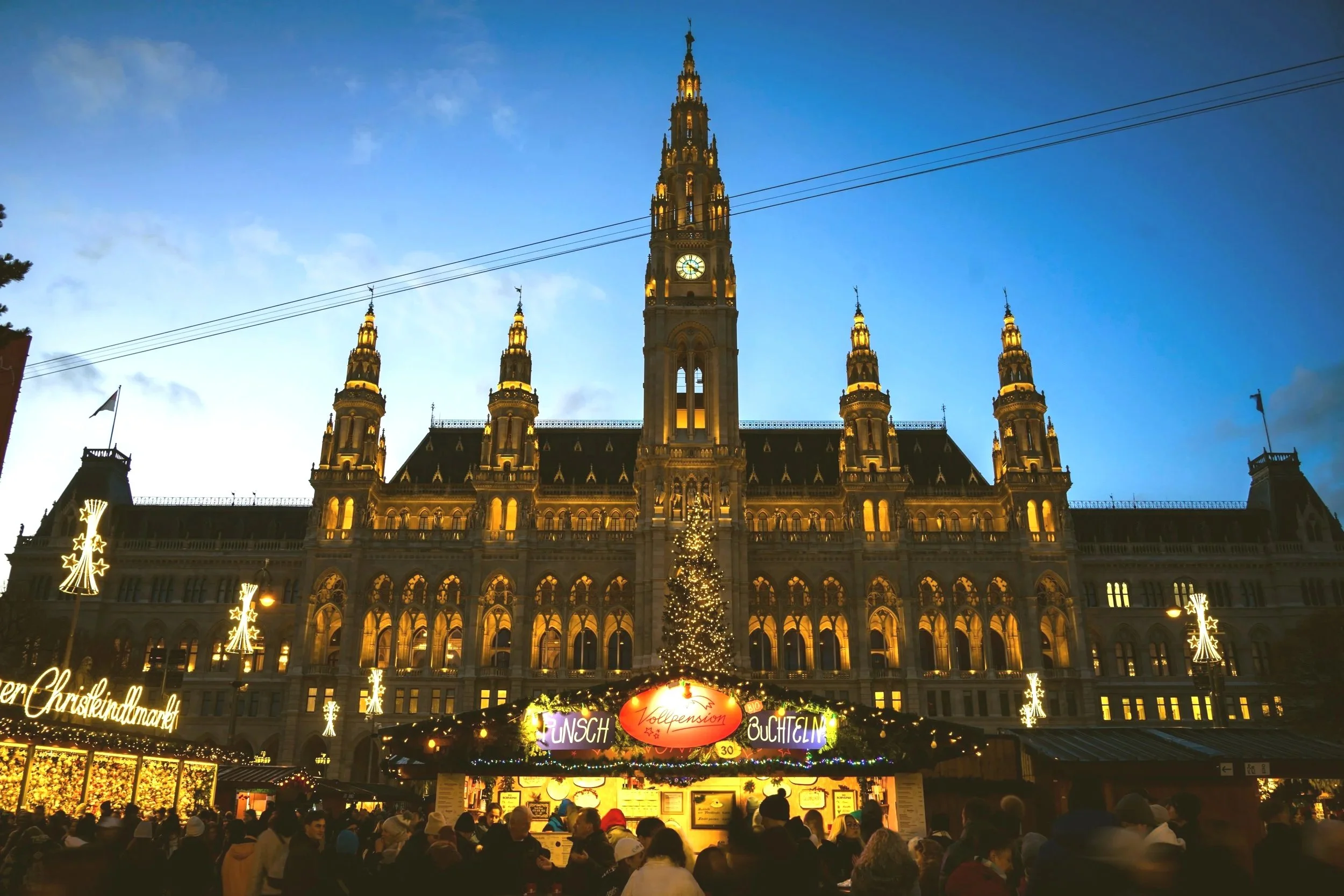
Start where the boulevard shows off hardest: the Rathaus, Vienna's neo-Gothic city hall, all spires and stone lace, finished in 1883 and still genuinely in use — no velvet ropes, just council business happening behind a facade that looks built for a coronation. Come winter, the square in front of it transforms into what CNN ranked the most beautiful Christmas market in the world, its park threaded with one of Europe's largest open-air ice rinks, weaving between the trees under fairy lights until the whole scene looks staged for a film.
Directly across the road, the Parliament goes the opposite direction entirely: Greek temple, not Gothic cathedral, fronted by the Pallas Athena fountain — a deliberate nod to ancient Athens as the birthplace of democracy, an ideal the empire itself never quite lived up to.
Between the two grand buildings sits the Volksgarten, the "People's Garden," opened in 1823 as Vienna's first public park, with a small Greek temple of its own and, later, a rose garden of more than 3,000 bushes — proof that even Vienna's green spaces couldn't resist a classical reference. Follow the Ring further around and it opens into the Stadtpark, looser and less formal, home to the gilded statue of Johann Strauss II mid-waltz — the single most photographed monument in the city, and the closest thing Vienna has to a mascot.
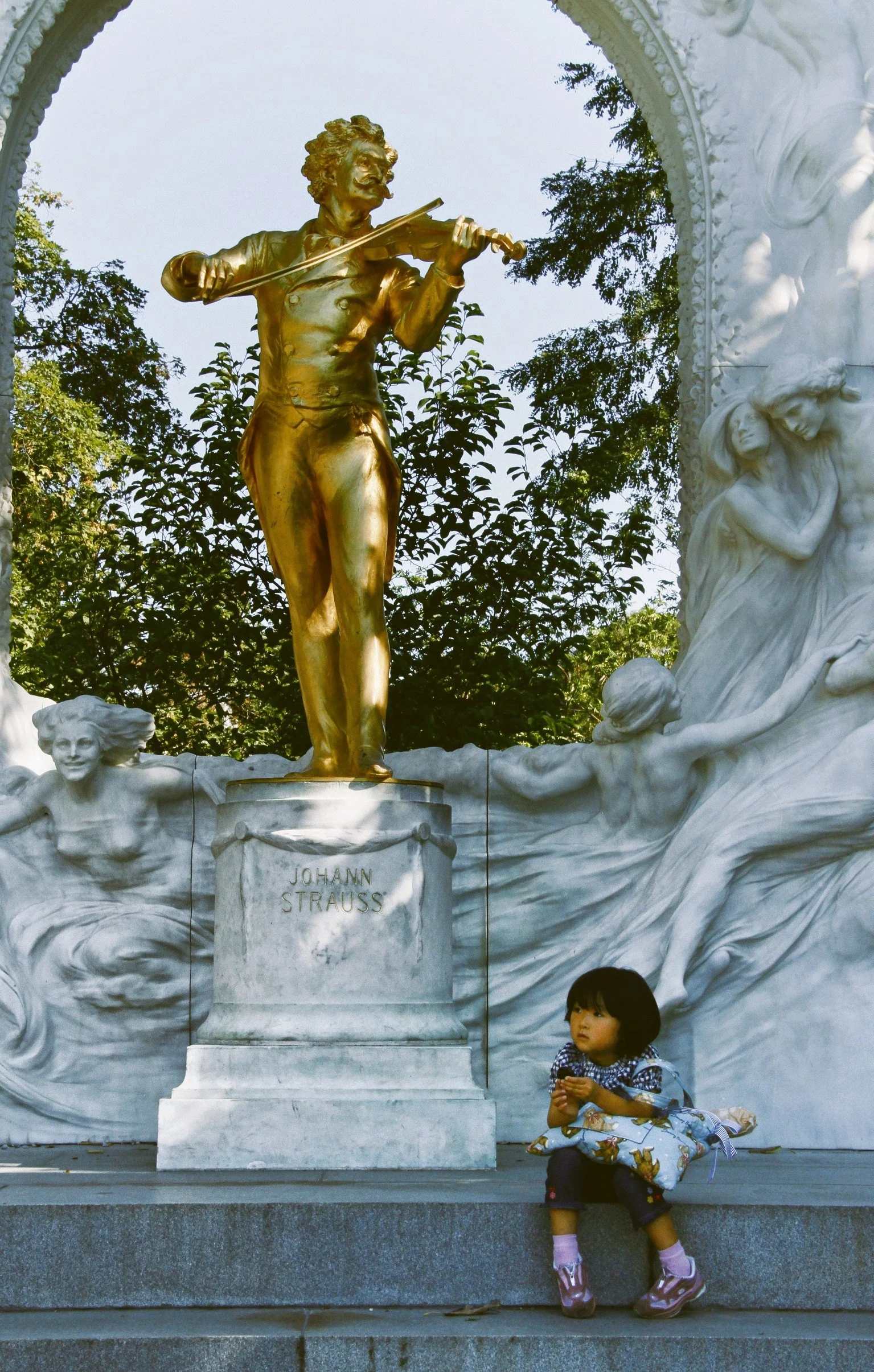
Stadtpark
NASCHMARKT
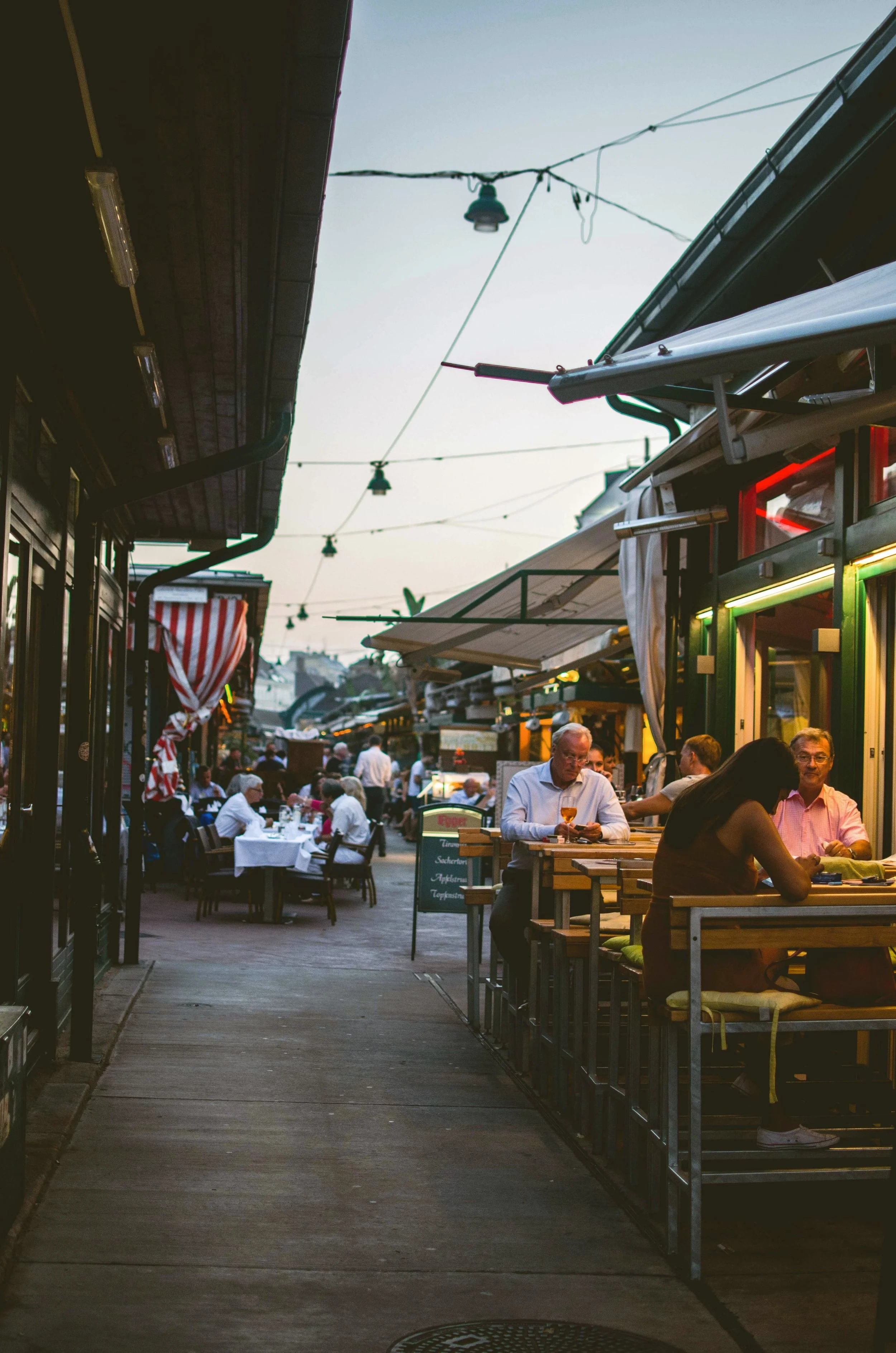
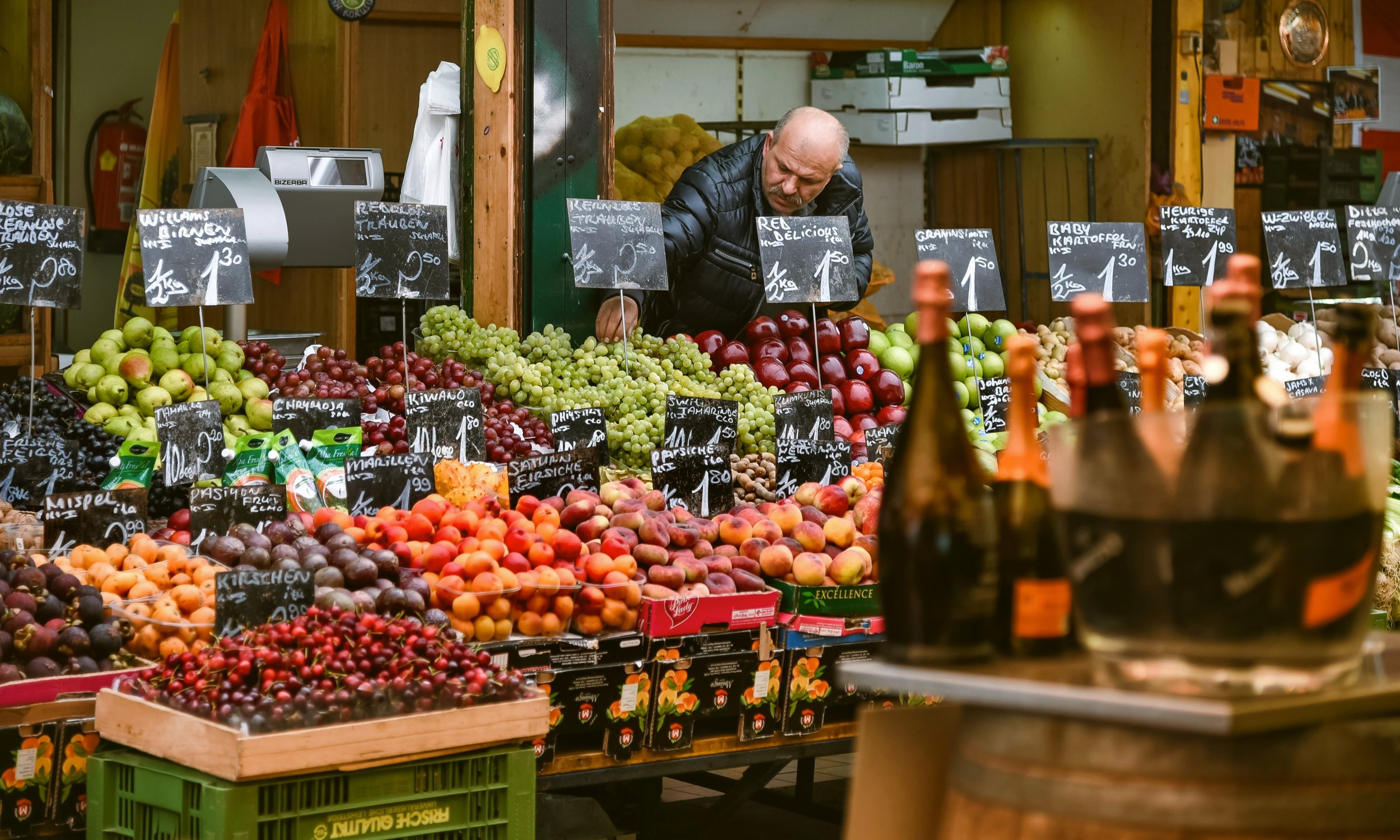
Step off the Ring just south and the grandeur drops away entirely: the Naschmarkt has been Vienna's market since the 16th century, nearly a mile of stalls selling produce, spices, cheese and street food shoulder to shoulder, loud in a way nothing else on this list is. Saturdays bring the flea market tacked onto its western end — genuine junk beside genuine treasure, haggling included. It's less about any single stall and more about the density of it all: a reminder that imperial Vienna needed to eat, same as everyone else, and this is where it always came to do it.
SECESSION
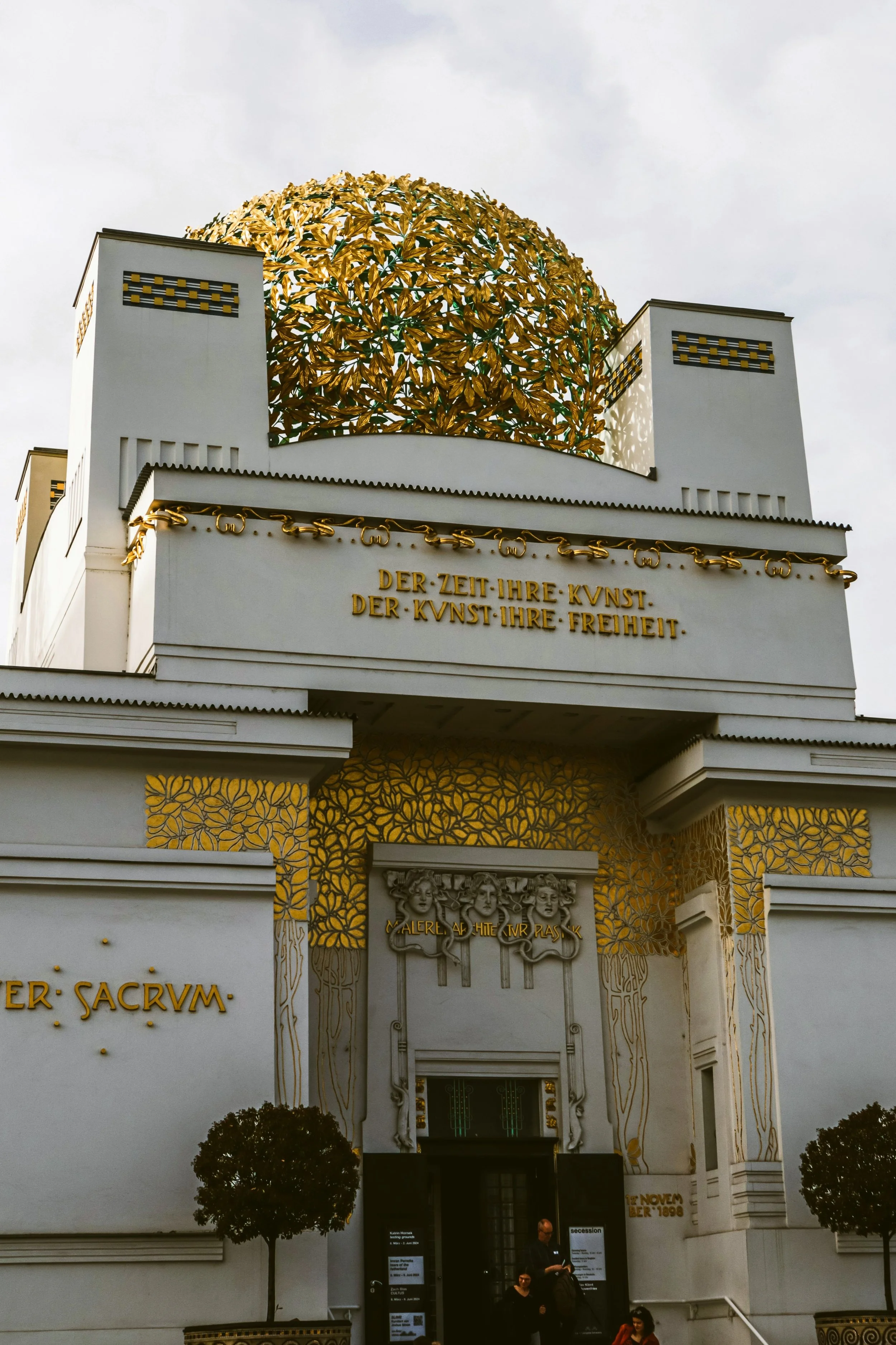
Just beside the Naschmarkt stands one of the strangest buildings just off the Ring: the Secession, built in 1897-98 by a group of artists — Klimt among them — who'd split from Vienna's official art establishment and wanted a headquarters that proved it. Olbrich gave them a building shaped like an argument: blank white cube, gilded laurel-leaf dome nicknamed the "golden cabbage," and a motto cut in gold letters over the door — to every age its art, to art its freedom. Downstairs, Klimt's Beethoven Frieze still runs the length of a room built specifically to hold it. It's imperial Vienna's one moment of open rebellion, hiding in plain sight beside all that empire. [Skip the line, book ahead →]
Rathaus