suMO
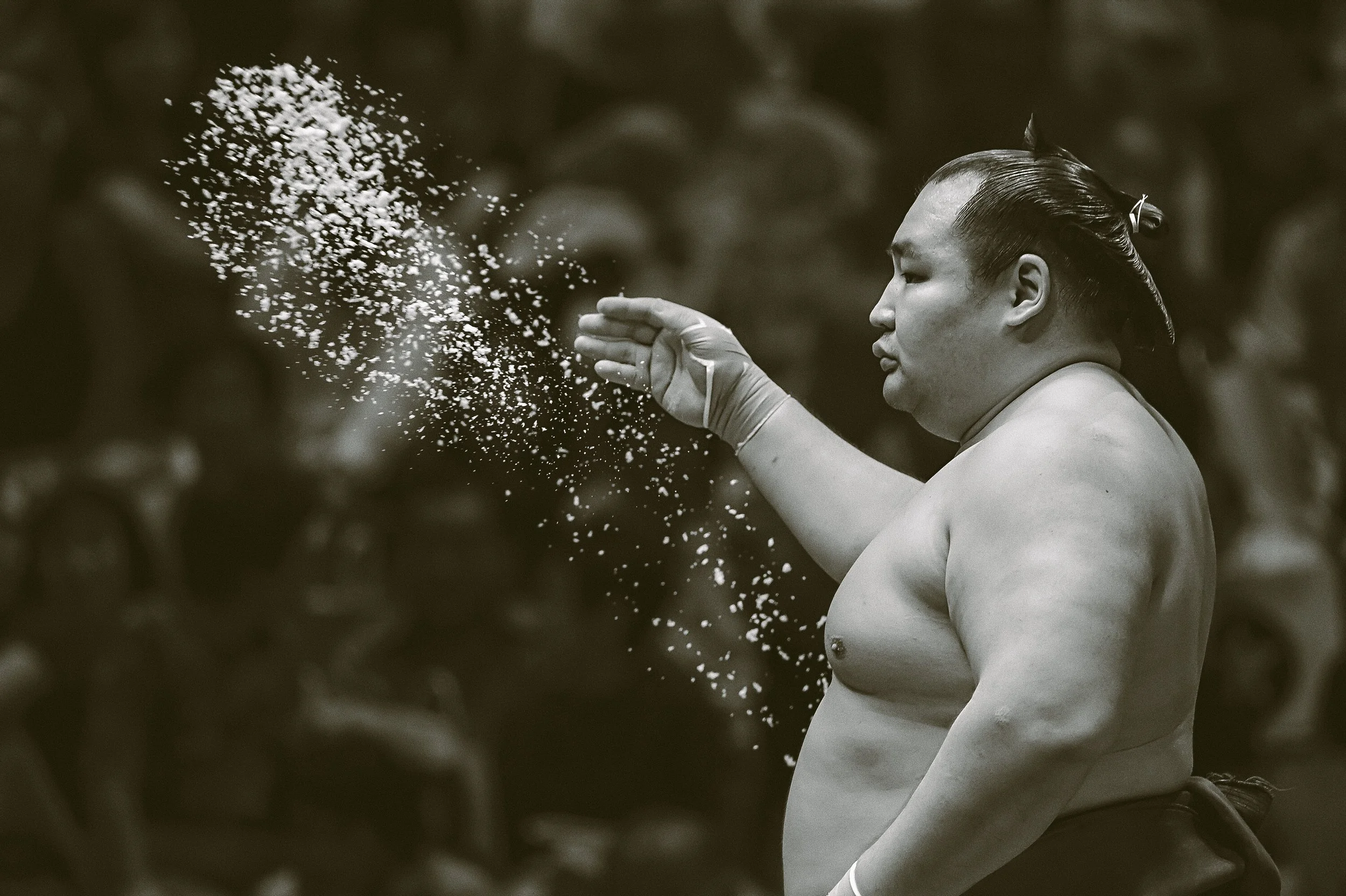
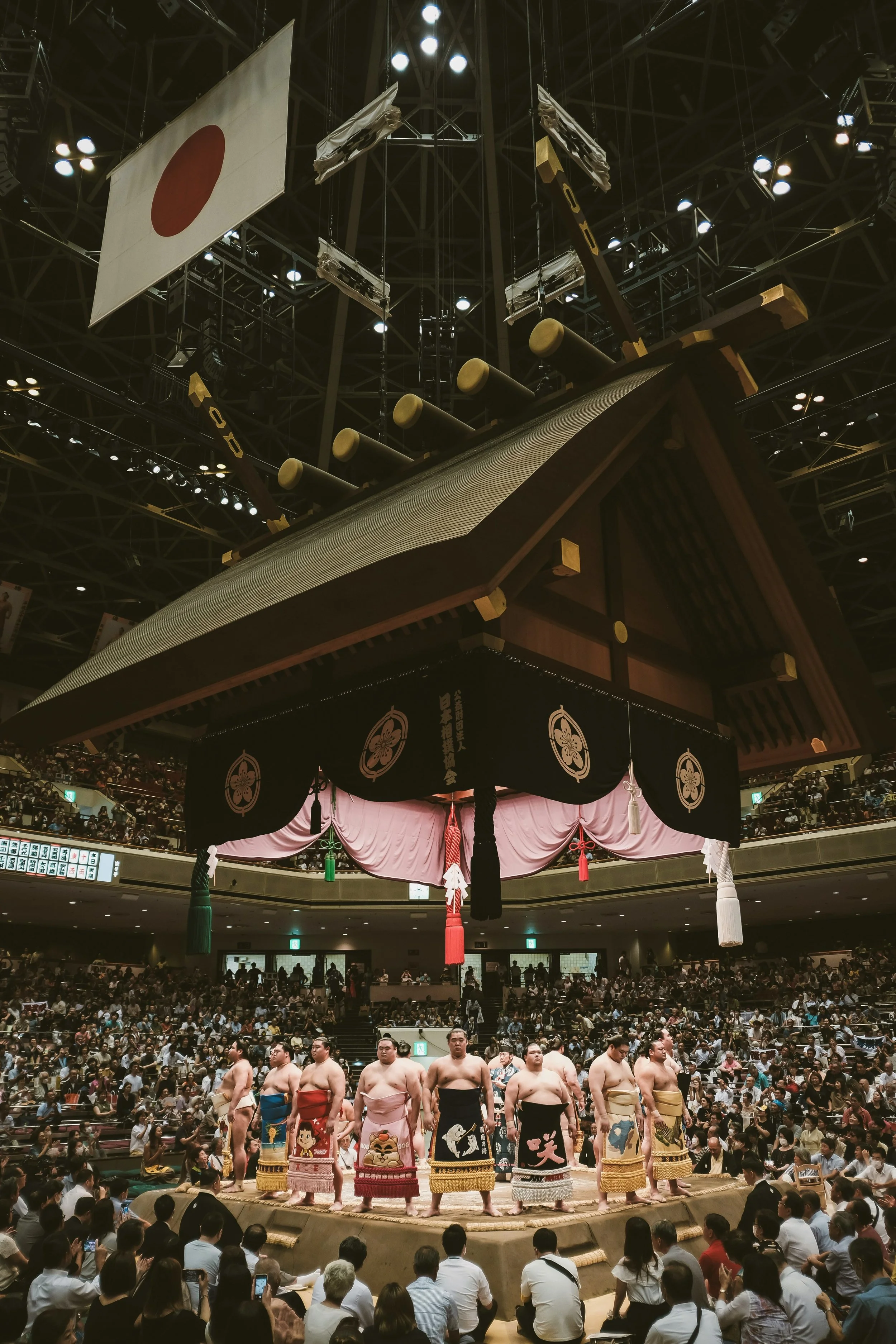
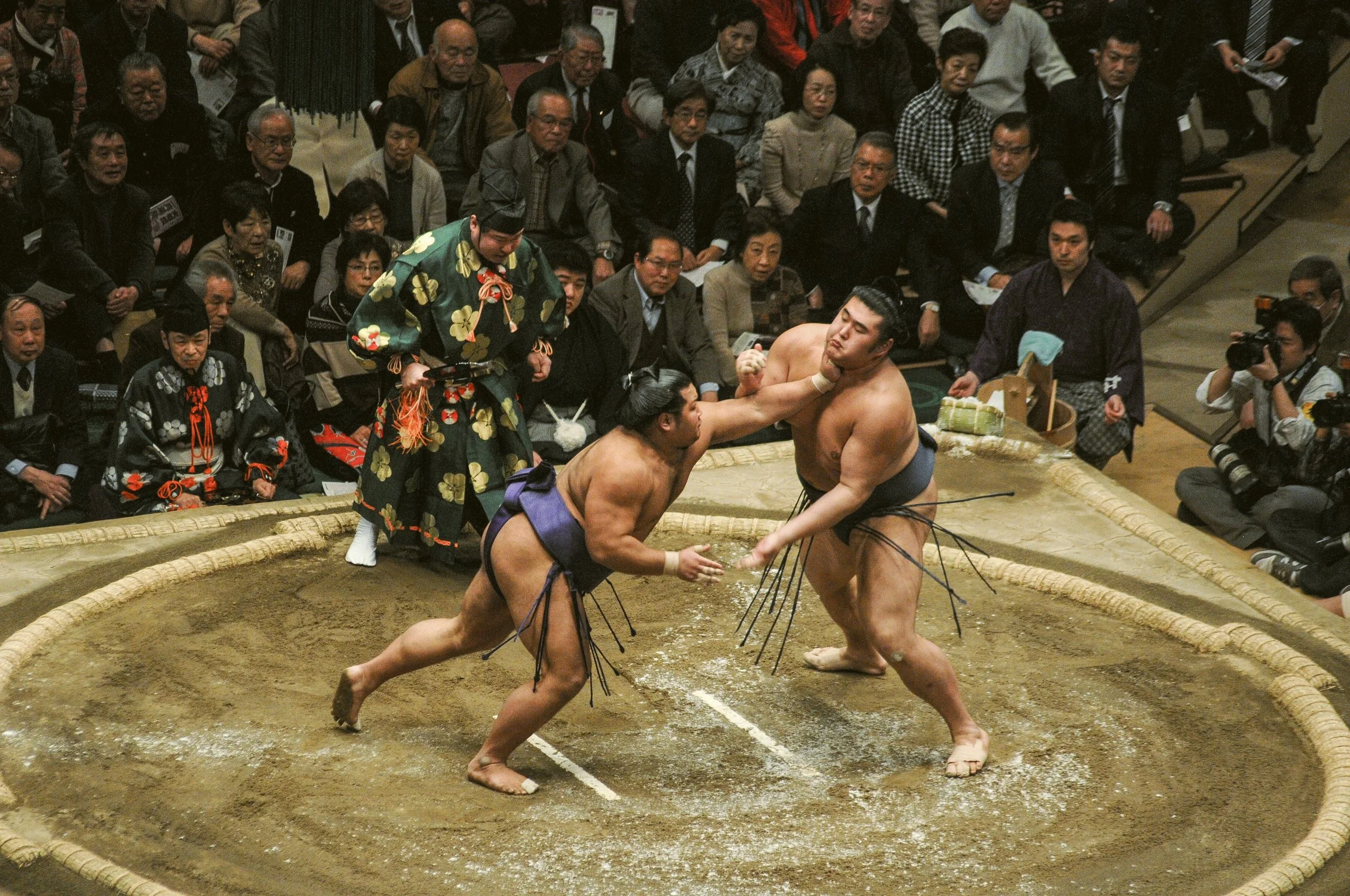
Two men, each well over 150 kilos, crouch behind a pair of chalk lines, stare at each other for what feels like an eternity, and collide with a force that sounds like a car crash. The match itself is usually over in seconds. Everything before it — the salt thrown to purify the ring, the ceremonial stomping, the psychological standoff called shikiri — is what actually takes the time, and it's not decoration. Sumo grew out of Shinto harvest rituals over a thousand years ago, and the dohyō, the clay ring itself, is still treated as sacred ground. Women, notably, are still barred from stepping onto it.
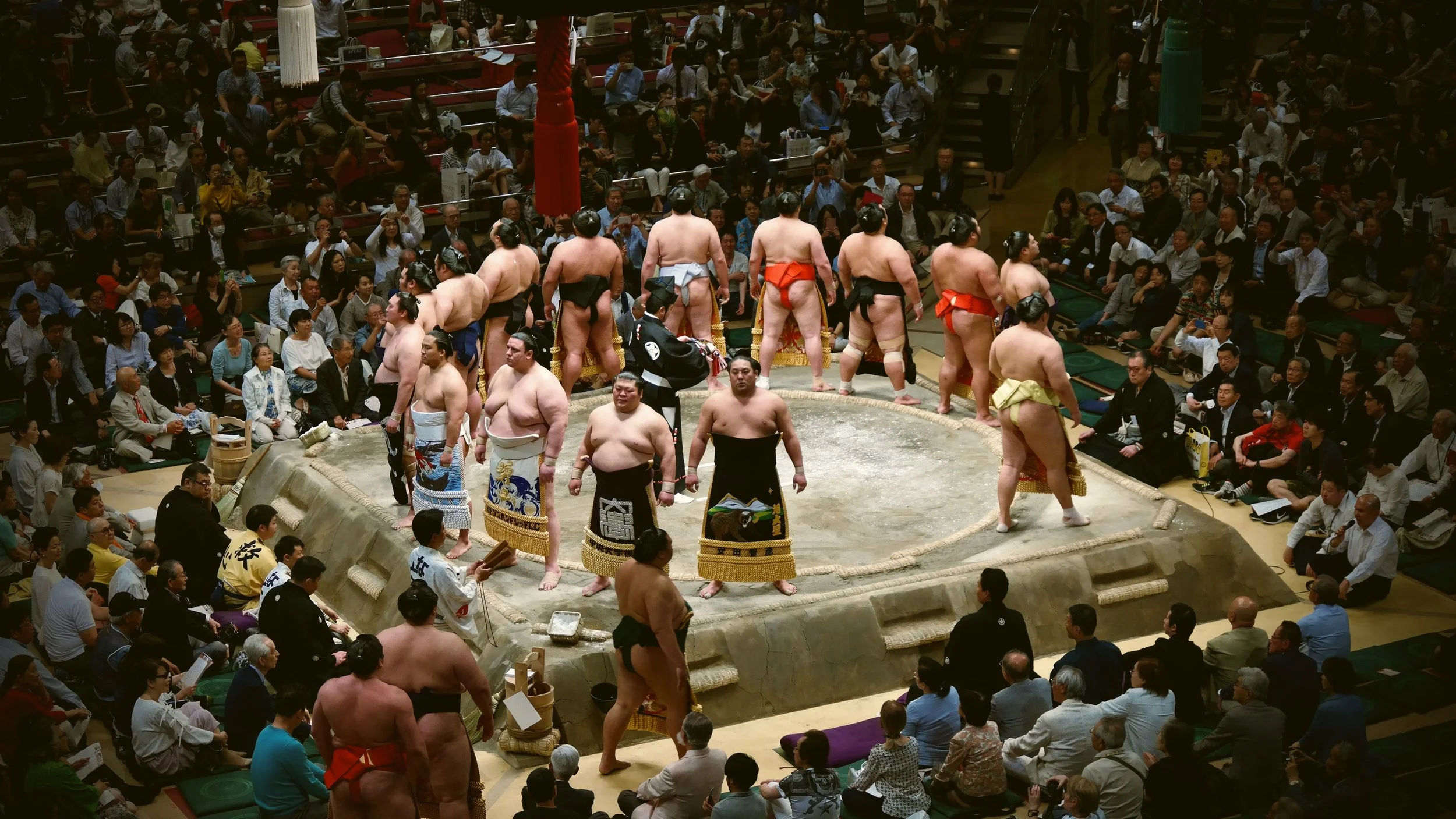
It embodies exactly what Japan tends to value out loud: discipline, hierarchy, and a stoicism that borders on the religious. The wrestlers, called rikishi, live communally in stables under a master's absolute authority, training and eating and sleeping under one roof for years. And for a sport built so tightly around Japanese identity, it's had an oddly international streak at the very top — Hawaiian-born and Mongolian-born wrestlers have both held sumo's highest rank, occasionally to the discomfort of the association that governs it. Only six tournaments happen anywhere in Japan each year. Three of them happen in Tokyo.
The reaction to foreign dominance says as much about Japan as the sport itself — pride mixed with unease, especially when Mongolian wrestlers hold the sport's most sacred rank year after year. In 2025, after years of Mongolian dominance, Ōnosato became the first Japanese-born grand champion in eight years, and the fastest promoted since the six-tournament calendar began in 1958. Sumo, more than most sports, doubles as a running argument about what the country is willing to call its own.
SUMO LEGENDS
TAIHO — 32 championships between 1960 and 1971, yokozuna (grand champion) at just 21. So beloved that "the Giants, Taiho and tamagoyaki" (the baseball team, the sumo wrestler and the rolled omelet) became postwar Japan's shorthand for what children loved best. Still the emotional benchmark against which every Japanese-born wrestler gets measured.
CHIYONOFUJI — Nicknamed "The Wolf," relatively small for the sport at 126 kilos but strong enough to leave bruises on opponents' arms with his grip alone. 31 championships through the 1980s, proof that technique beats size.
AKEBONO — Hawaiian-born, the first foreign-born wrestler ever to reach yokozuna, in 1993. His promotion opened the door to a generation of foreign wrestlers, and the sport later capped each stable at one.
ASASHORYU — Mongolia's first yokozuna, and the only wrestler in history to win all six tournaments in a single calendar year. As polarizing outside the ring as he was dominant inside it.
HAKUHO — By almost every measurable record — 45 championships, 1,187 career wins, 16 perfect tournaments — the greatest to ever step into the dohyō (sumo ring). Mongolian-born, later naturalized as Japanese, he left the sumo association in 2025 after a bullying scandal closed his stable
HOW TO WATCH A MATCH
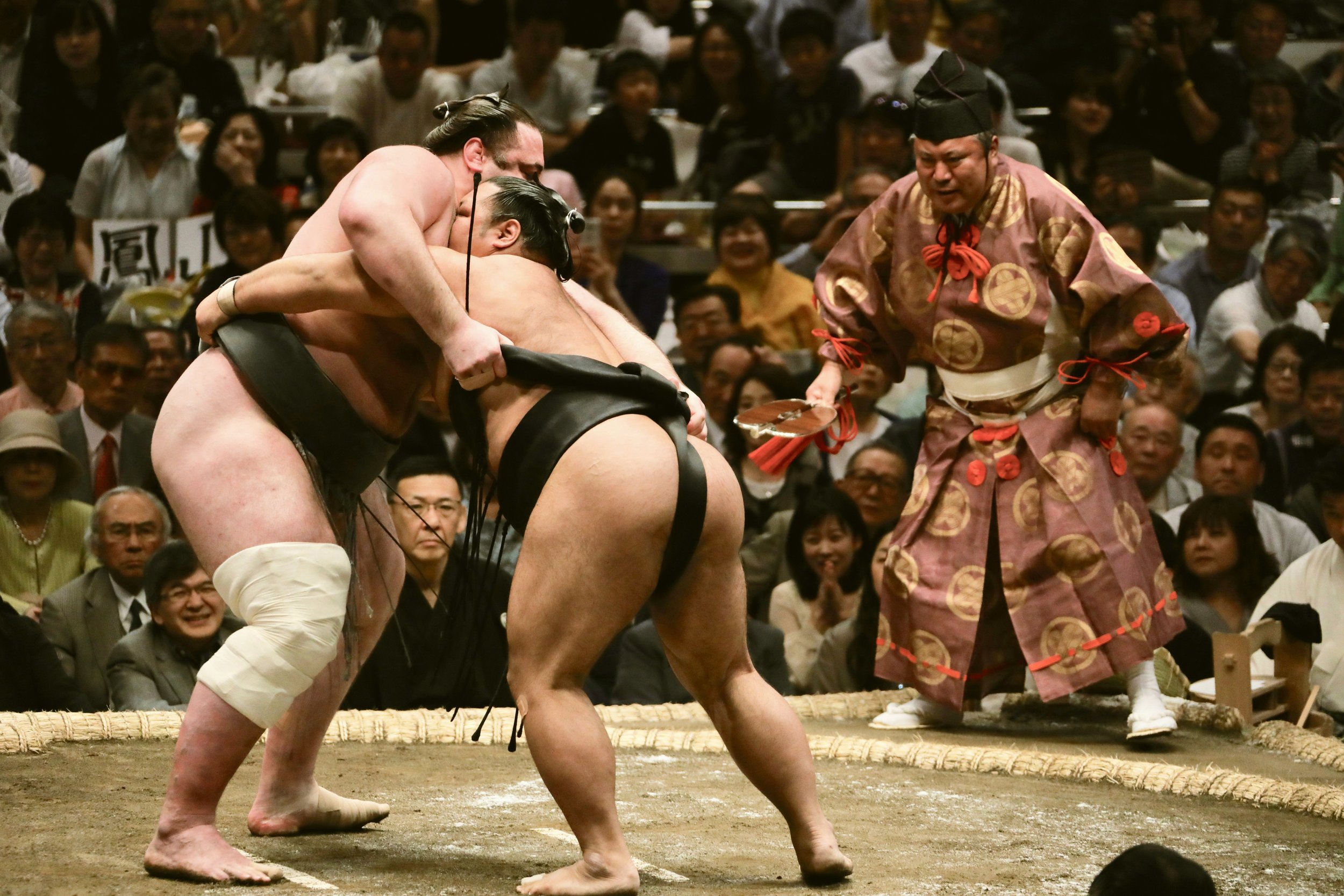
Ignore the ritual for a moment and the rules genuinely are this simple: win by forcing your opponent out of the ring, or by making any part of his body other than the soles of his feet touch the ground. That's it. No points, no rounds, and most bouts are over in under ten seconds.
A few things worth knowing before you're sitting in the arena:
The dohyō — A raised clay ring, about 4.55 meters across, with straw bales marking the boundary. One toe over the line ends it.
Tachi-ai — The initial charge. Both wrestlers must touch both fists to the ground at the same moment before they're allowed to launch — timing this well often decides the whole match.
Kinjite — Eight forbidden moves, including punching with a closed fist, hair-pulling, and eye-gouging. Everything else — slapping, tripping, grabbing the belt — is fair game.
Yokozuna — The highest rank, held for life once earned, and treated with something close to reverence. There's rarely more than one or two active at any given time.
The tournament format — Fifteen days straight, one bout per wrestler per day. The wrestler with the best overall record at the end wins the Emperor's Cup.
SEE IT LIVE
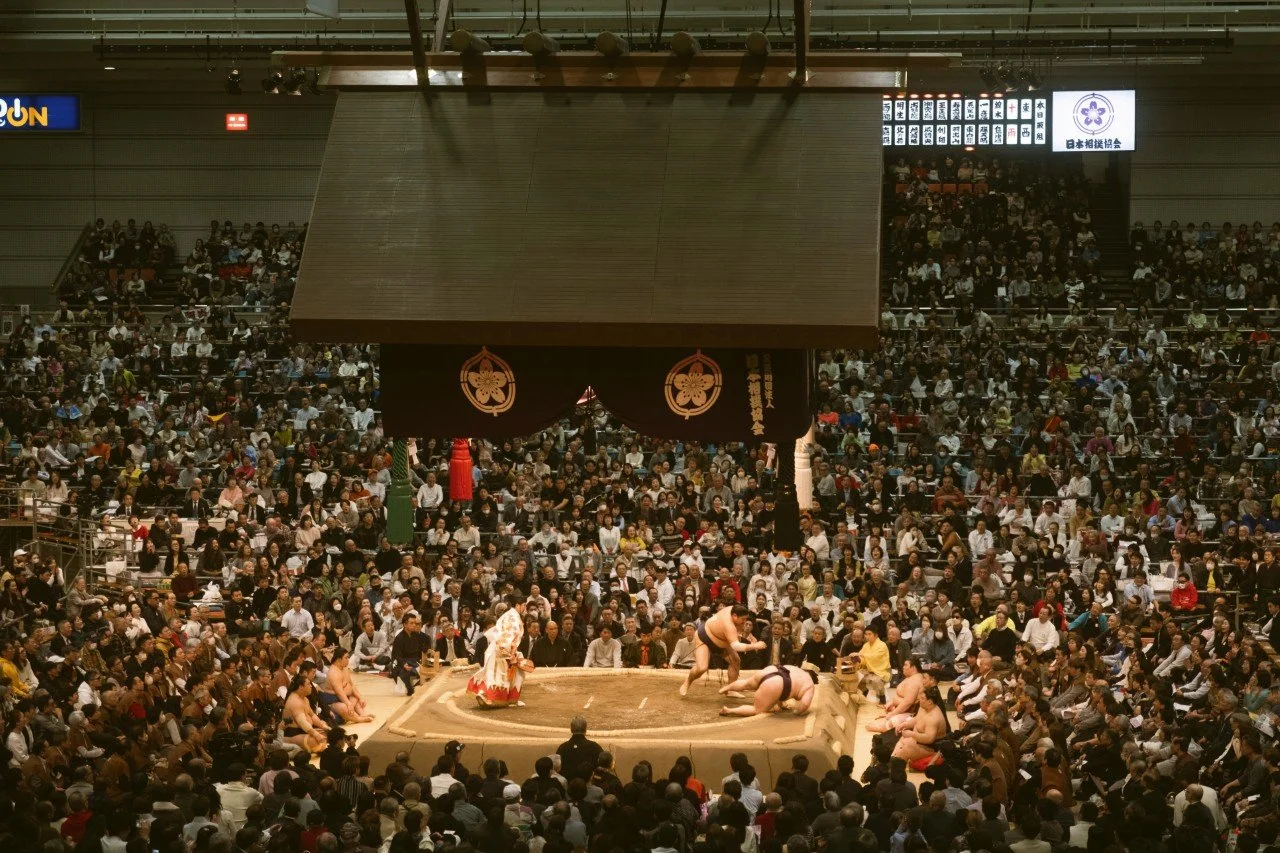
Six tournaments happen in Japan each year — three of them right here in Tokyo, at the Ryogoku Kokugikan. Book ahead if your dates line up; if they don't, a morning stable visit gets you just as close. [Book sumo tournament tickets →]