sacred tokyo
Japan has two religions, and most Japanese people practice both without ever really deciding which one they believe. Shinto came first — an animist faith with no founder, no single sacred text, and gods, kami, living in waterfalls, ancient trees, and mountains rather than in any one temple. Buddhism arrived later, in the sixth century, imported from the mainland, and instead of replacing Shinto, after a short, bloody dispute among the court clans, it moved in alongside it. A Japanese couple might marry in a Shinto ceremony and be buried according to Buddhist rites, seeing no contradiction whatsoever in either choice.
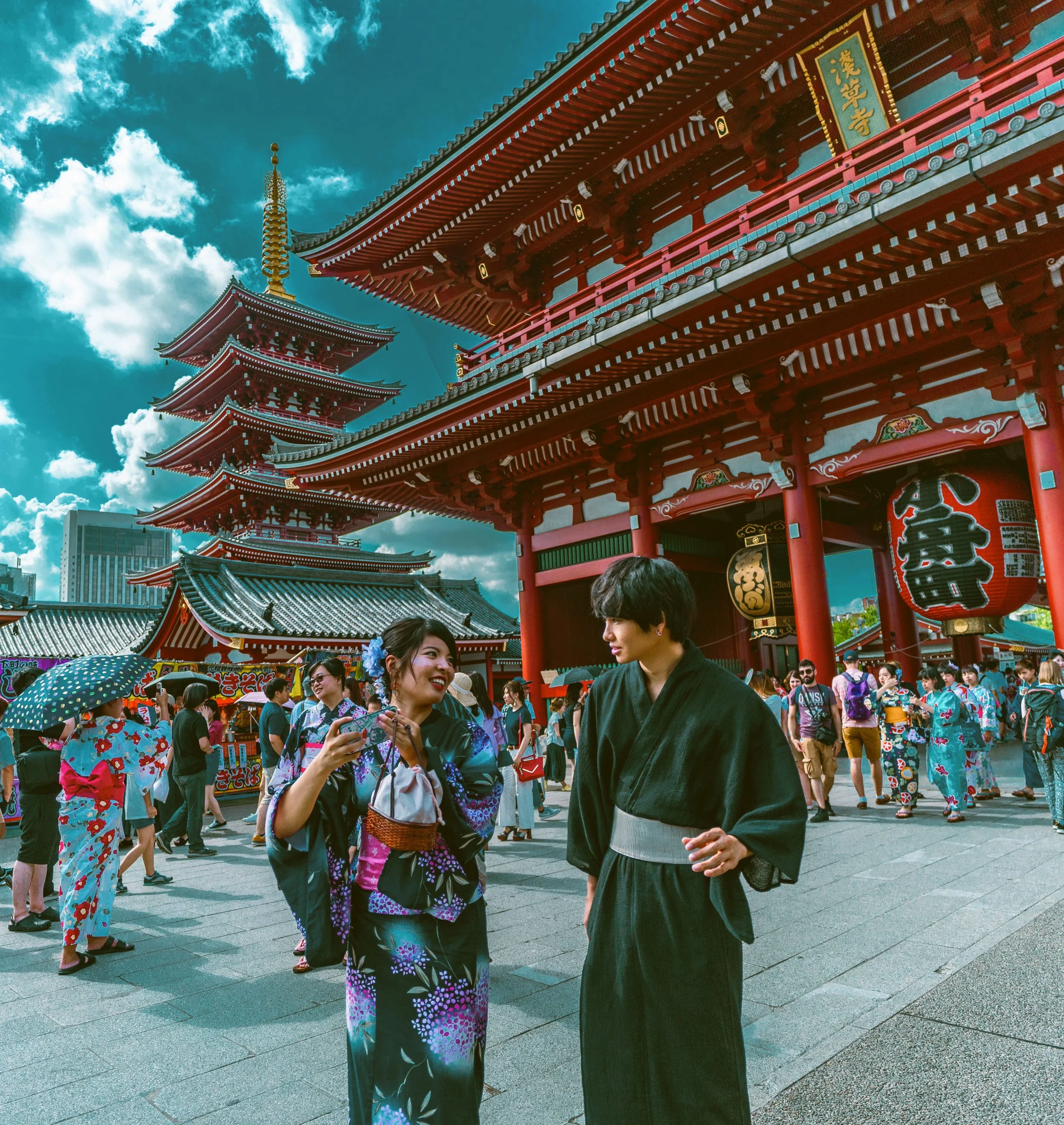
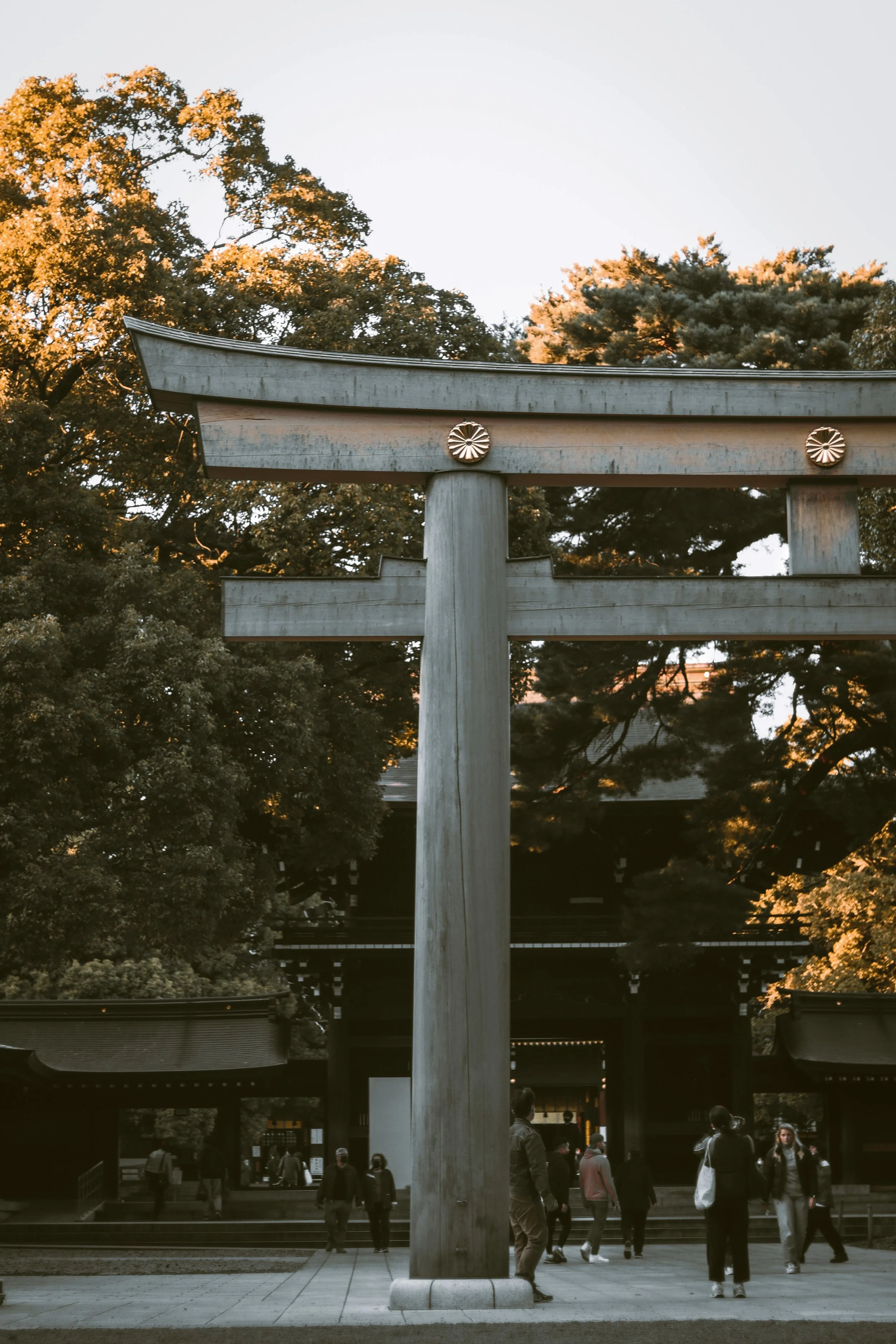
Tokyo carries both traditions in its two most visited sacred sites, standing in obvious contrast to one another. One, Meiji Jingu, is barely a century old and made almost entirely from trees planted by hand. The other, Sensō-ji, has stood, in some form, since the seventh century, through fire, earthquake and war, and still draws more visitors than almost anywhere else in the city.
Neither asks for reverent silence or a dress code. Both simply expect you to notice you've stepped into somewhere different.
SHINTO
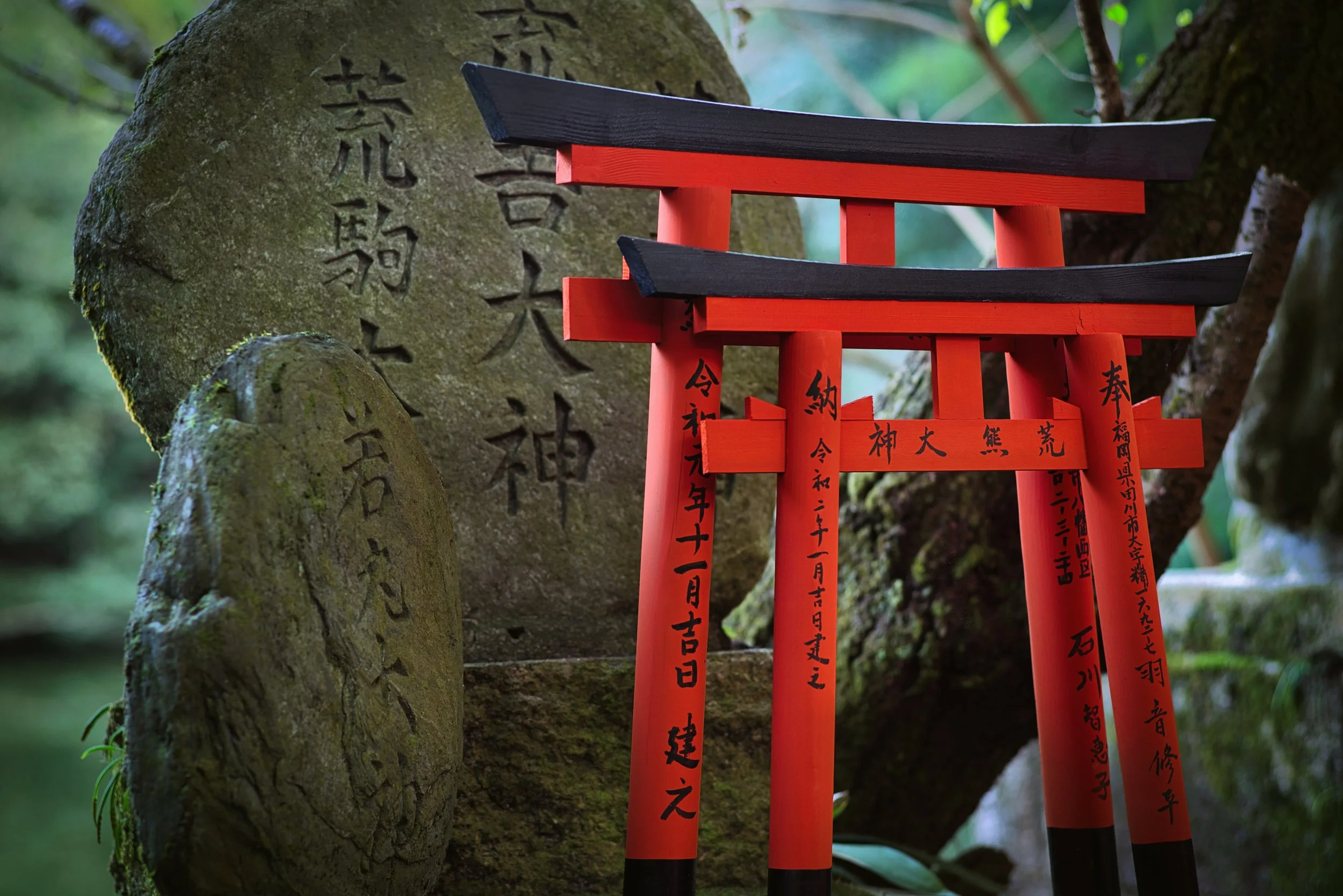
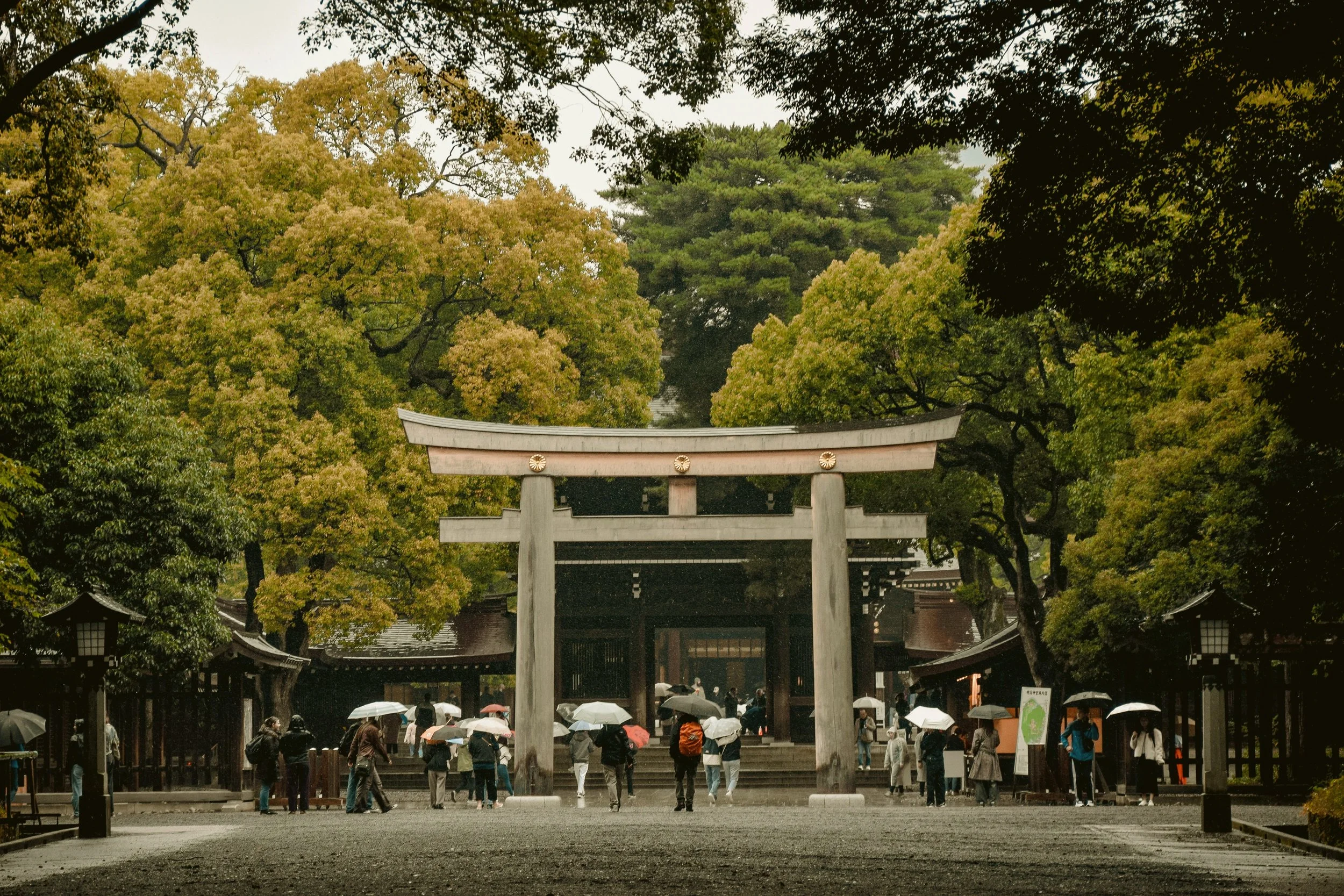
Japan's native faith, older than recorded history and without a single founder or holy book. Its gods, kami, inhabit nature itself — rivers, rocks, trees, ancestors — and its shrines (jinja) exist to honor them, marked by a torii gate at the entrance. Shinto has no real concept of sin, only purification, which is why visitors wash their hands before approaching.
buddhism
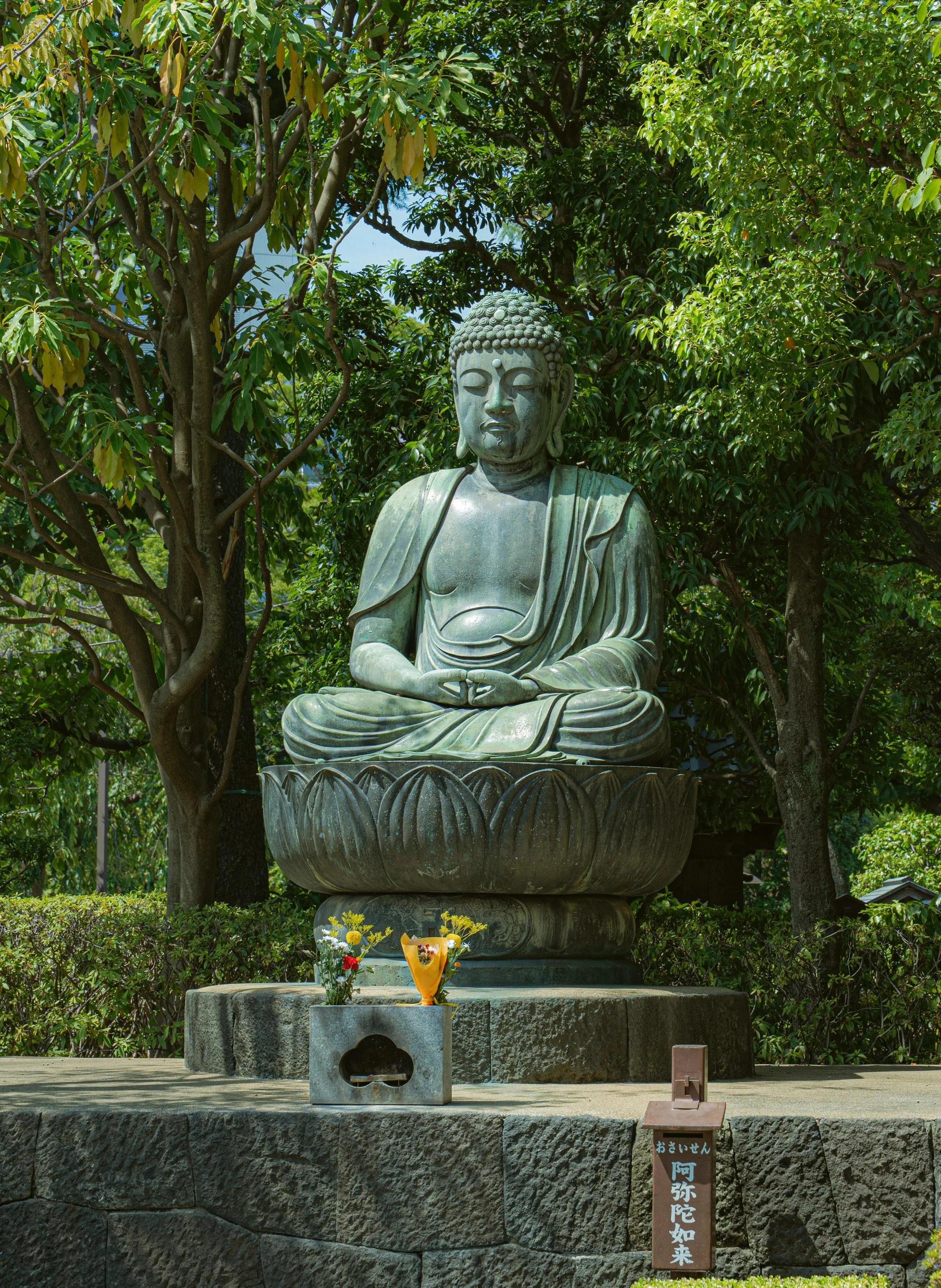
Arrived from China and Korea in the 6th century and never left, settling into temples (tera) rather than shrines. It brought Japan its philosophy of impermanence, its funeral rites, and its incense — the fragrant smoke visitors waft over themselves at Sensō-ji, believed to carry healing to whatever it touches. Many Japanese homes still keep a small Buddhist altar for the family dead.
SENSō-JI
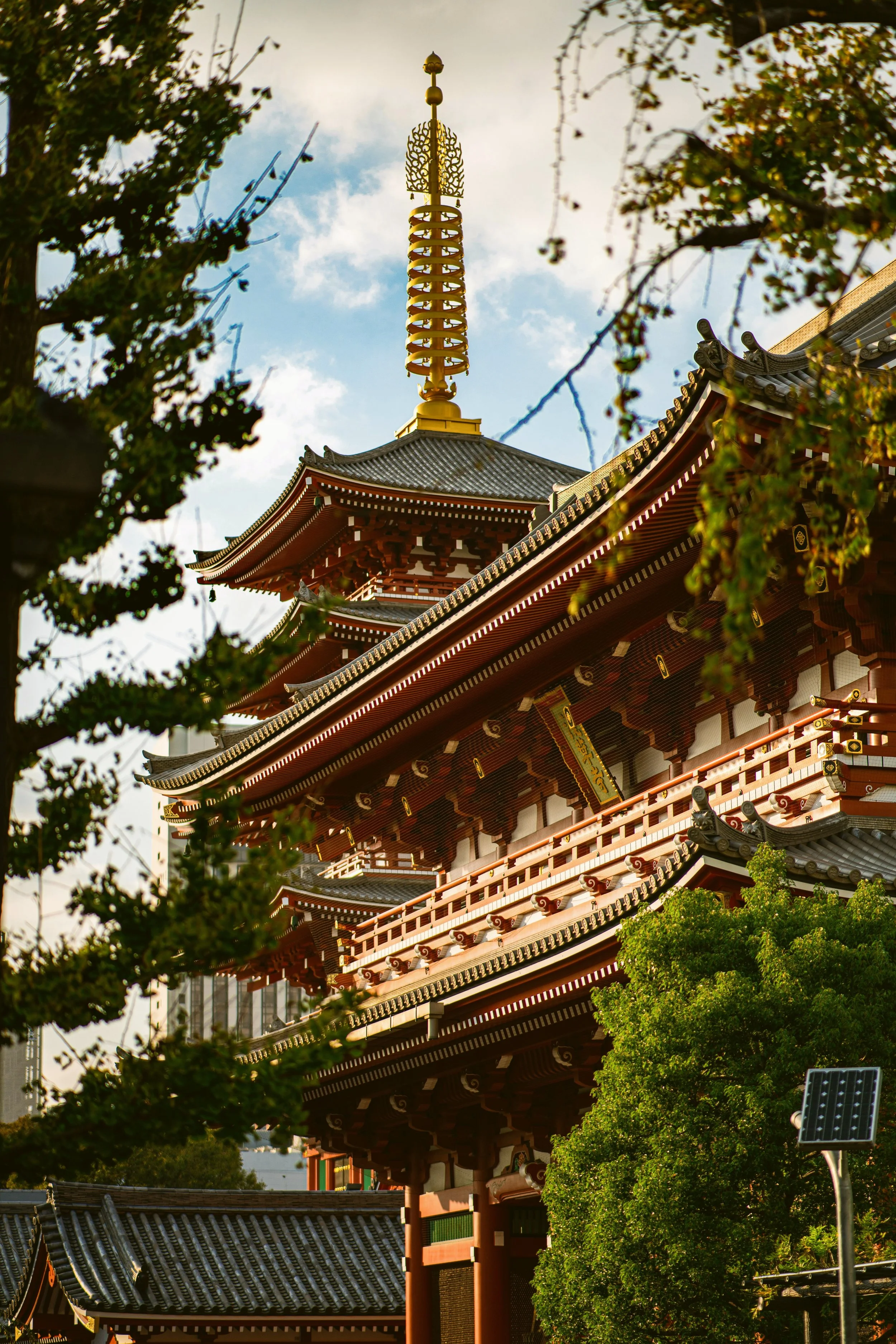
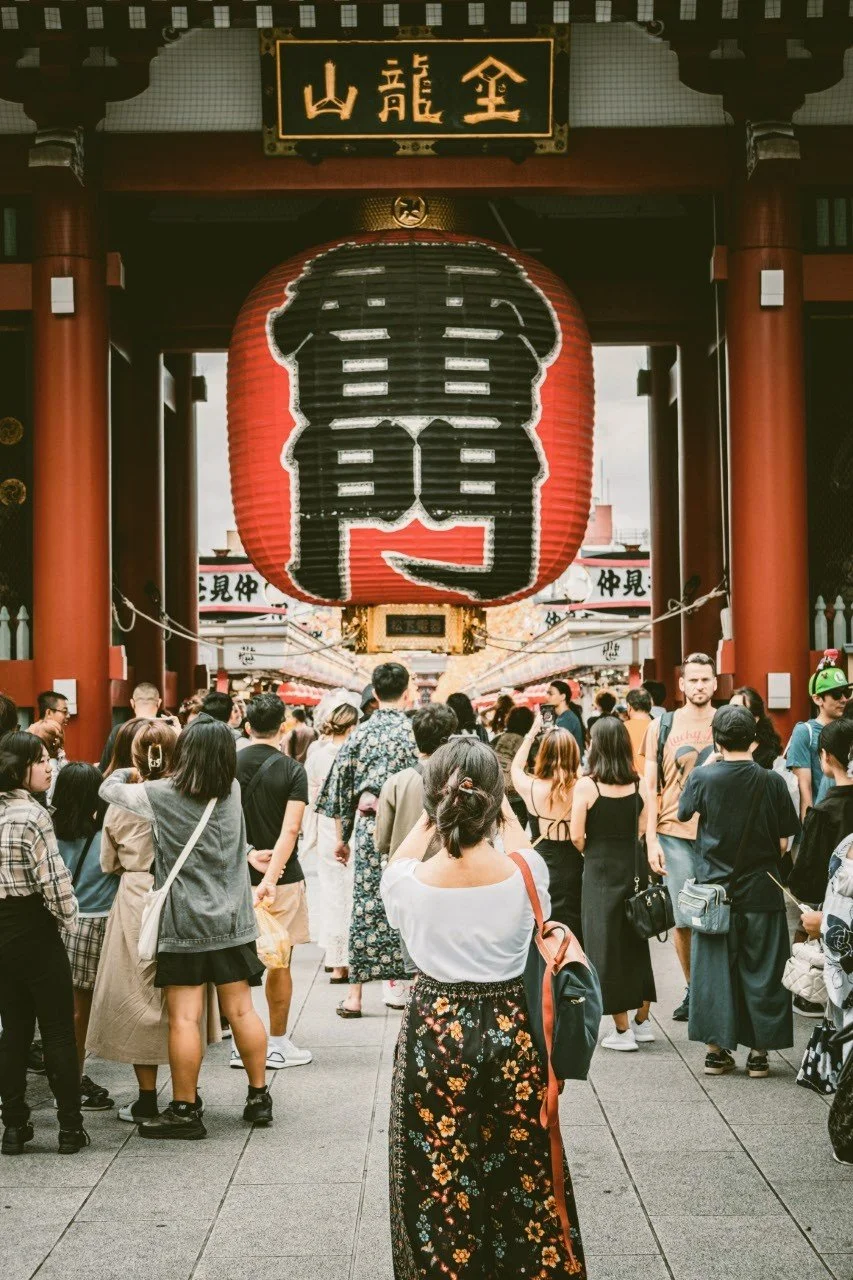
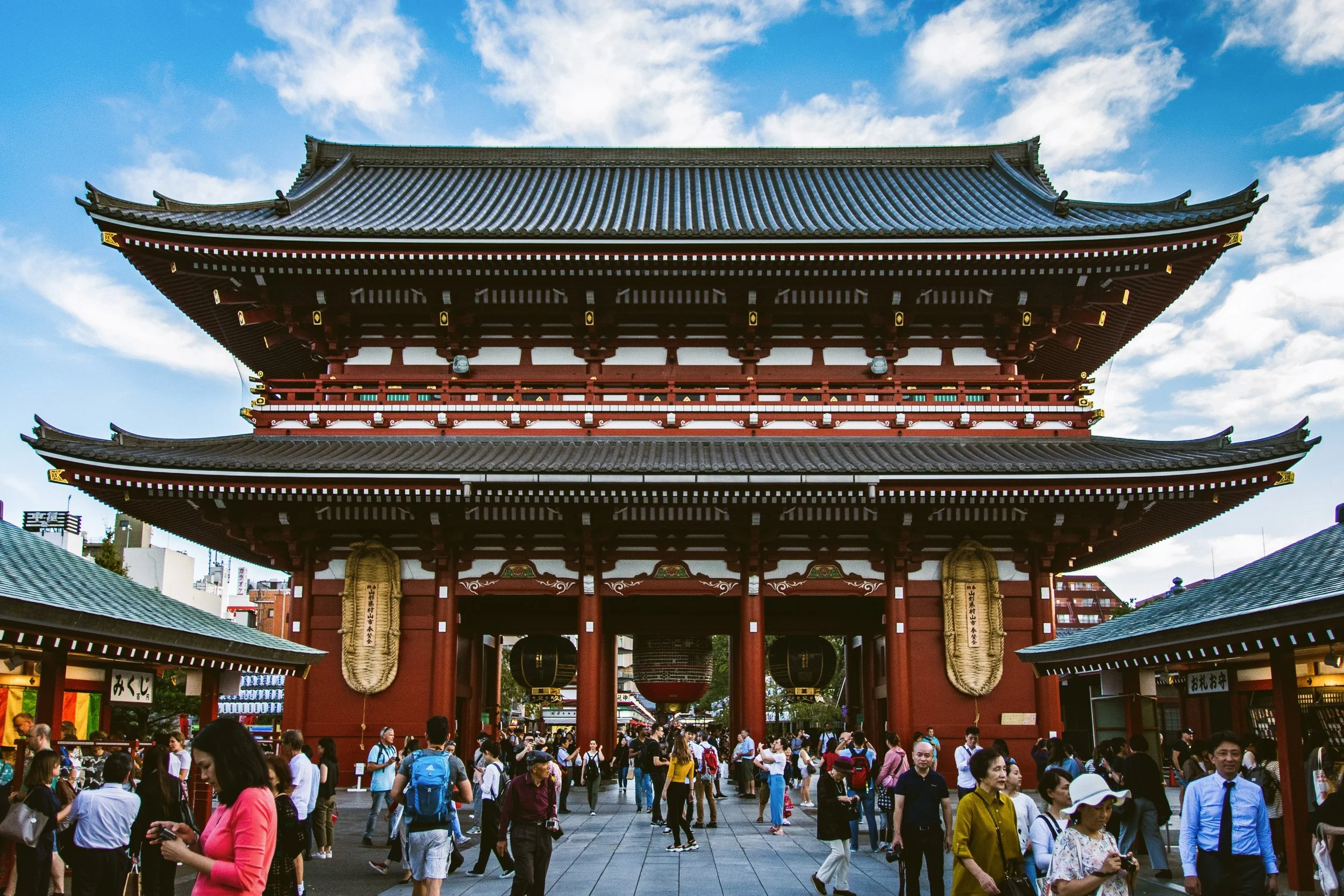
Tokyo's oldest Buddhist temple, with roots stretching back to 645, built after legend says two fishermen pulled a golden statue of the goddess Kannon from the Sumida River. What survives today isn't original — much of it burned in the 1945 firebombing and was rebuilt by 1958 — but the atmosphere hasn't dimmed. The Kaminarimon, or Thunder Gate, hangs a paper lantern nearly four meters tall, leading onto Nakamise-dori, a shopping street selling snacks and souvenirs to pilgrims for centuries before "souvenir" was even the word for it. Wave the incense smoke over yourself at the bronze burner outside — legend says it heals whatever ails you.
SHRINE & TEMPLE ETIQUETTE
At a Shinto shrine, purify your hands at the temizuya before approaching — left hand first, then right, never drinking straight from the ladle. At the altar, the etiquette is two bows, two claps, one final bow. Buddhist temples work differently: press your palms together and bow once, no clapping involved. Photography is usually fine outside, but avoid it inside the main halls of either — a quick glance at what everyone else is doing will tell you if it's welcome.
MEIJI JINGU
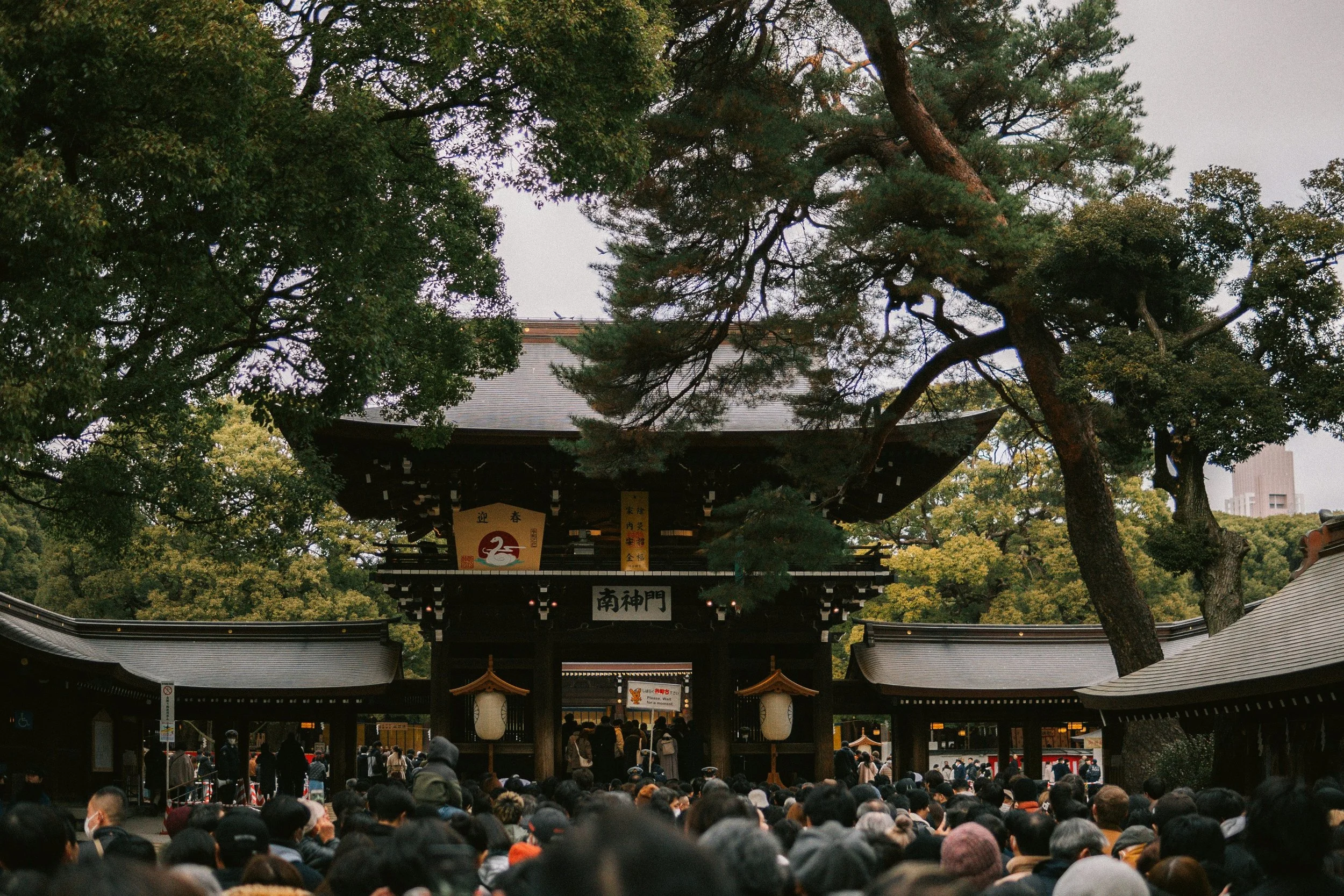
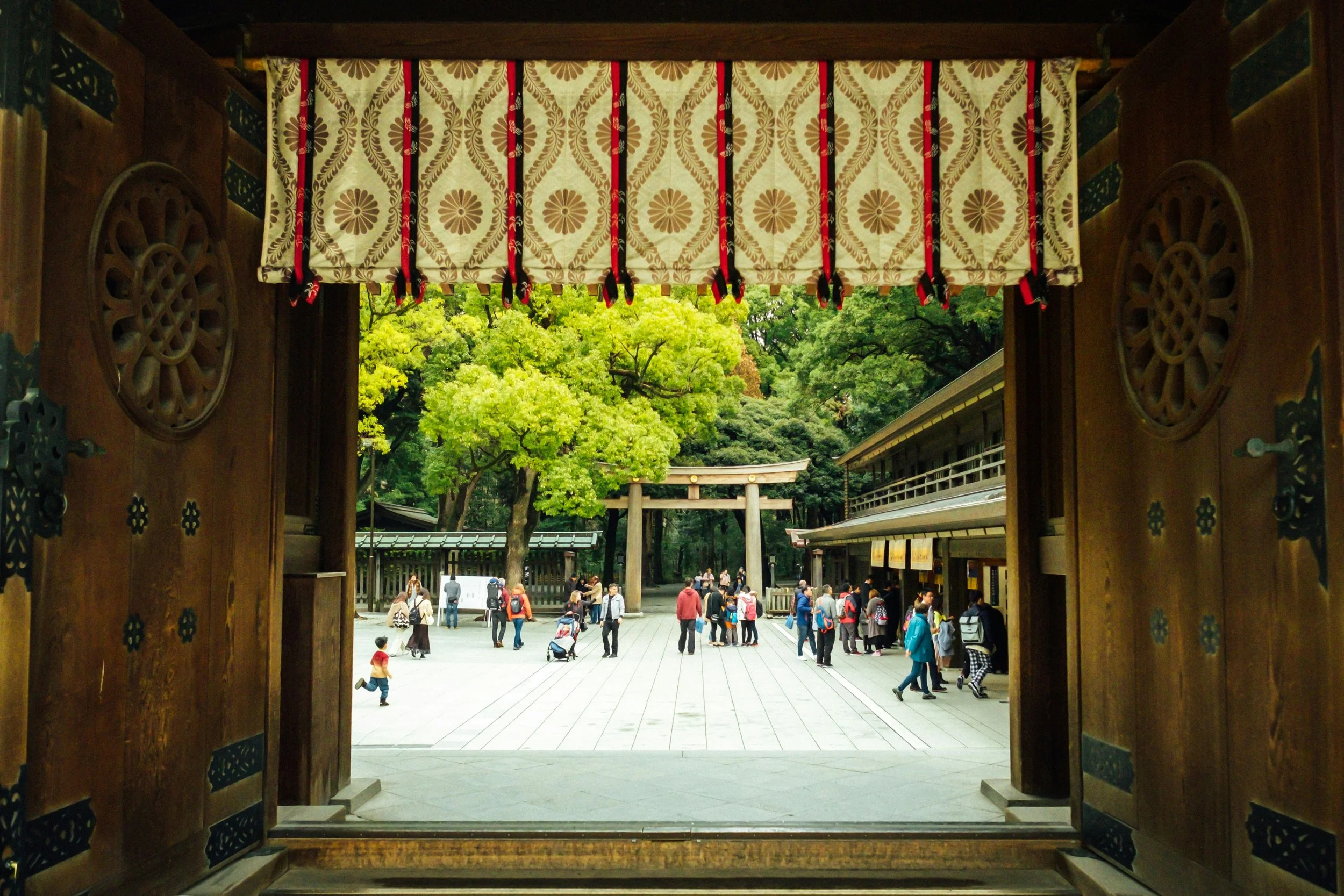
Barely a century old, and entirely man-made — which somehow makes it more remarkable, not less. In 1920, some 100,000 trees were donated from every prefecture in Japan and planted by 110,000 volunteers to build, from nothing, an "eternal forest" around this Shinto shrine dedicated to Emperor Meiji, the ruler who dragged Japan out of feudal isolation and into the modern world. That forest has grown wild enough now to genuinely muffle Shibuya's roar just minutes away. The shrine itself, rebuilt after wartime bombing, is deliberately understated — plain wood and copper, with almost no gilding — a quiet counterpoint to the emperor's enormous historical weight.
BOOK A TEMPLE TOUR
Sensō-ji draws crowds by mid-morning, and Meiji Shrine sits inside a forest most visitors rush through — both worth a guide who explains what you're actually looking at.
[Find Sensō-ji tour →]
[Find Meiji Shrine tour →]