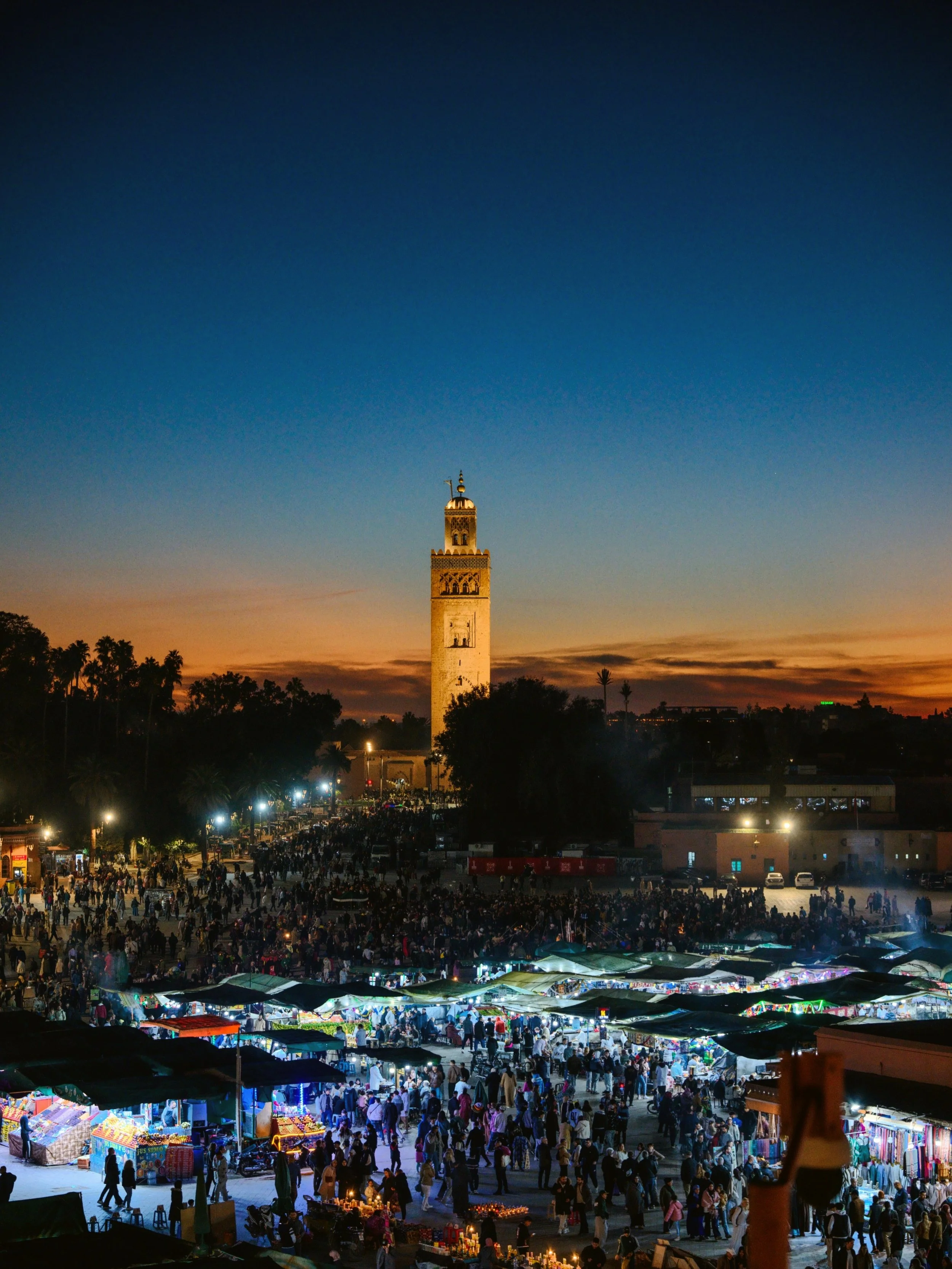
DJEMAA EL-FNA
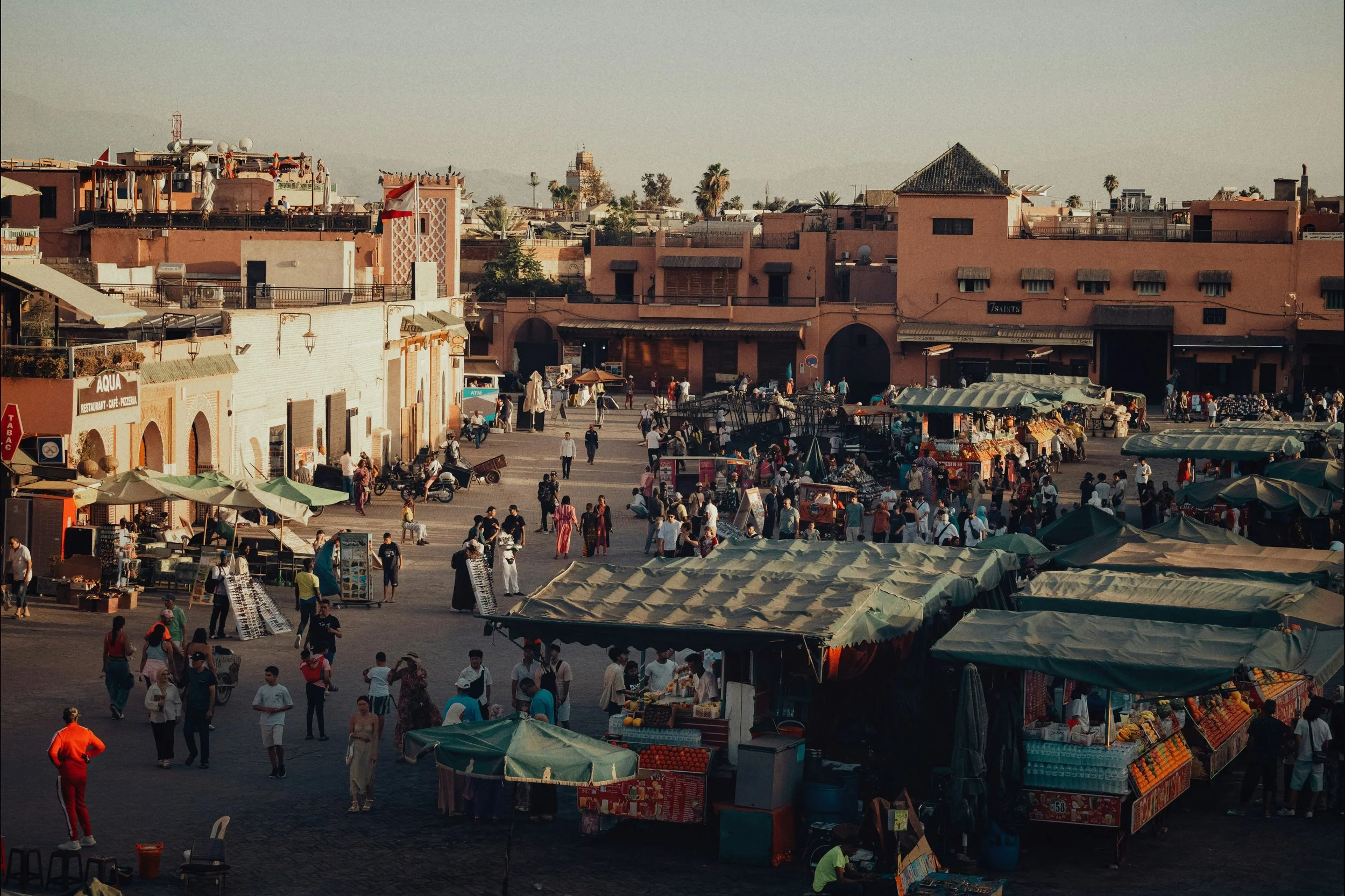
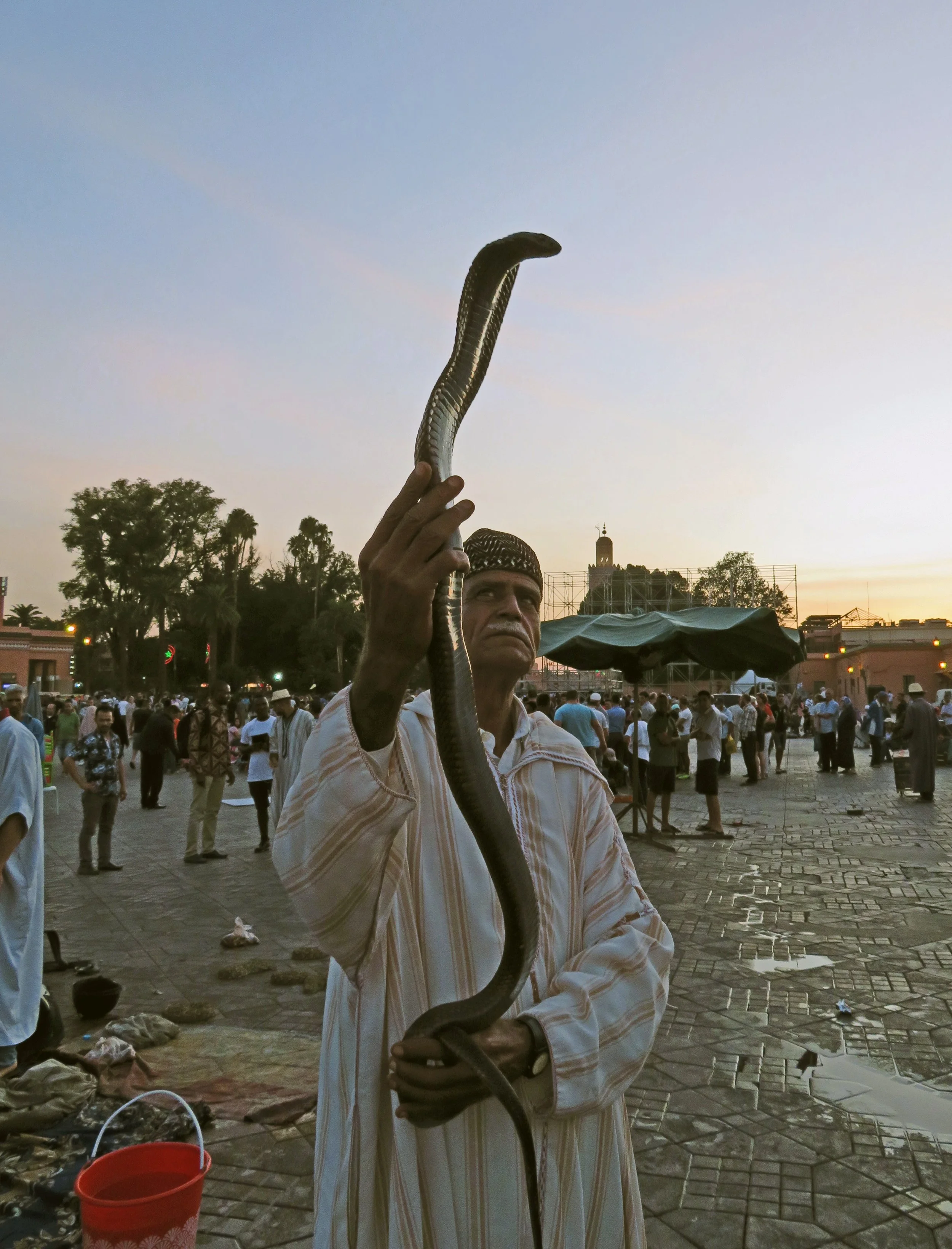
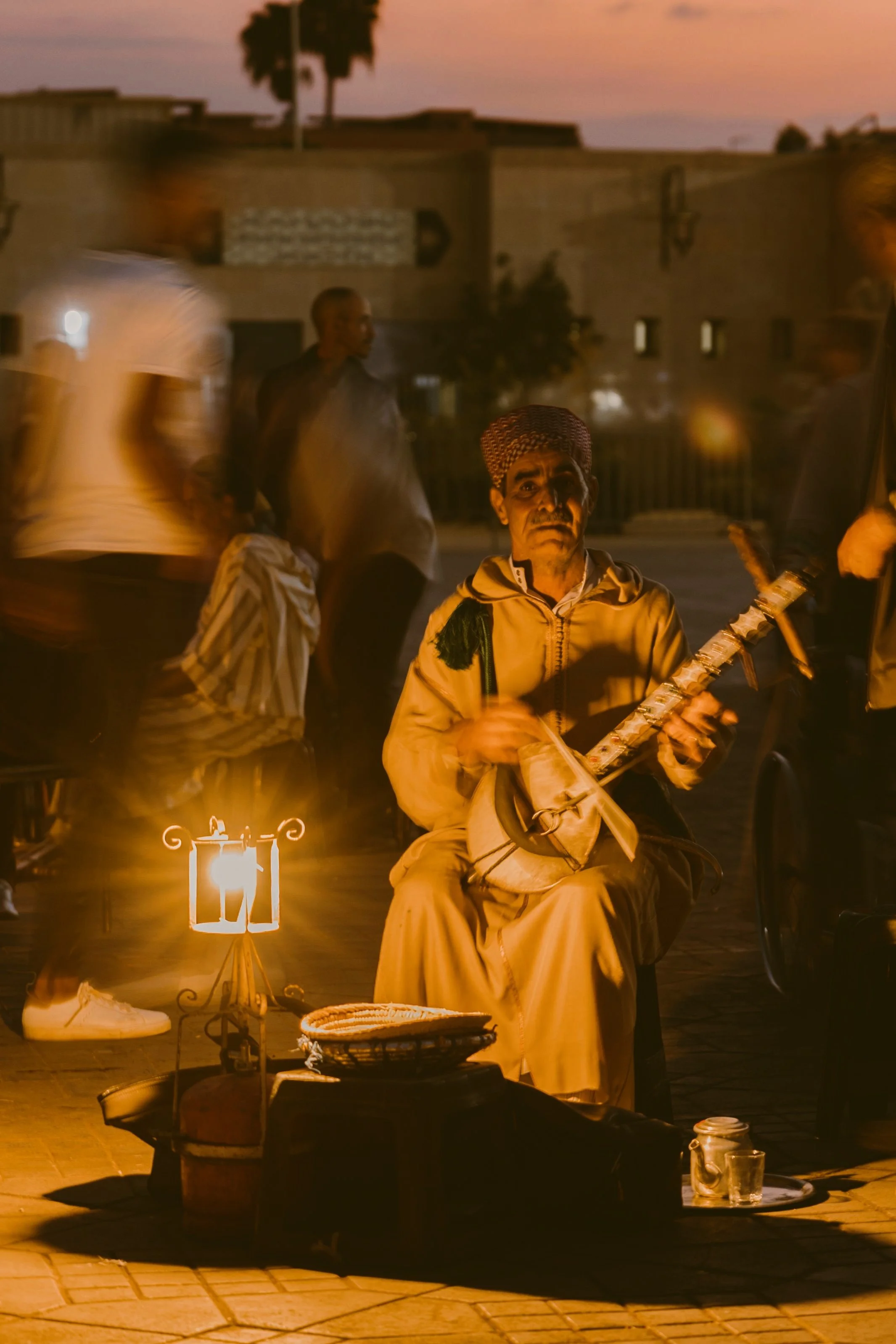
There's no version of this square that stays still long enough to photograph properly. By mid-morning it's snake charmers, henna artists working fast on outstretched arms, a few juice stalls selling the same fresh orange juice at wildly different prices depending on who's asking. By early evening, all of that clears out, and an entirely different plaza sets up in its place — dozens of numbered food stalls, smoke rising, the last handful of traditional Moroccan storytellers still working the crowd in Arabic, a dying art most visitors won't understand a word of and should watch anyway.
In 2001, UNESCO proclaimed Djemaa El-Fna one of the first 'Masterpieces of the Oral and Intangible Heritage of Humanity', and in 2008 it was inscribed on its Intangible Cultural Heritage list — not for a building, but for the human activity happening on top of the ground. It's worth remembering when the crowds and the hustle start to feel like too much: this chaos is, technically, a protected cultural treasure.
The Koutoubia Mosque's minaret watches over all of it — still the tallest thing in the medina at 77 meters, whichever direction you're facing.
the SQUARE, DAY & NIGHT
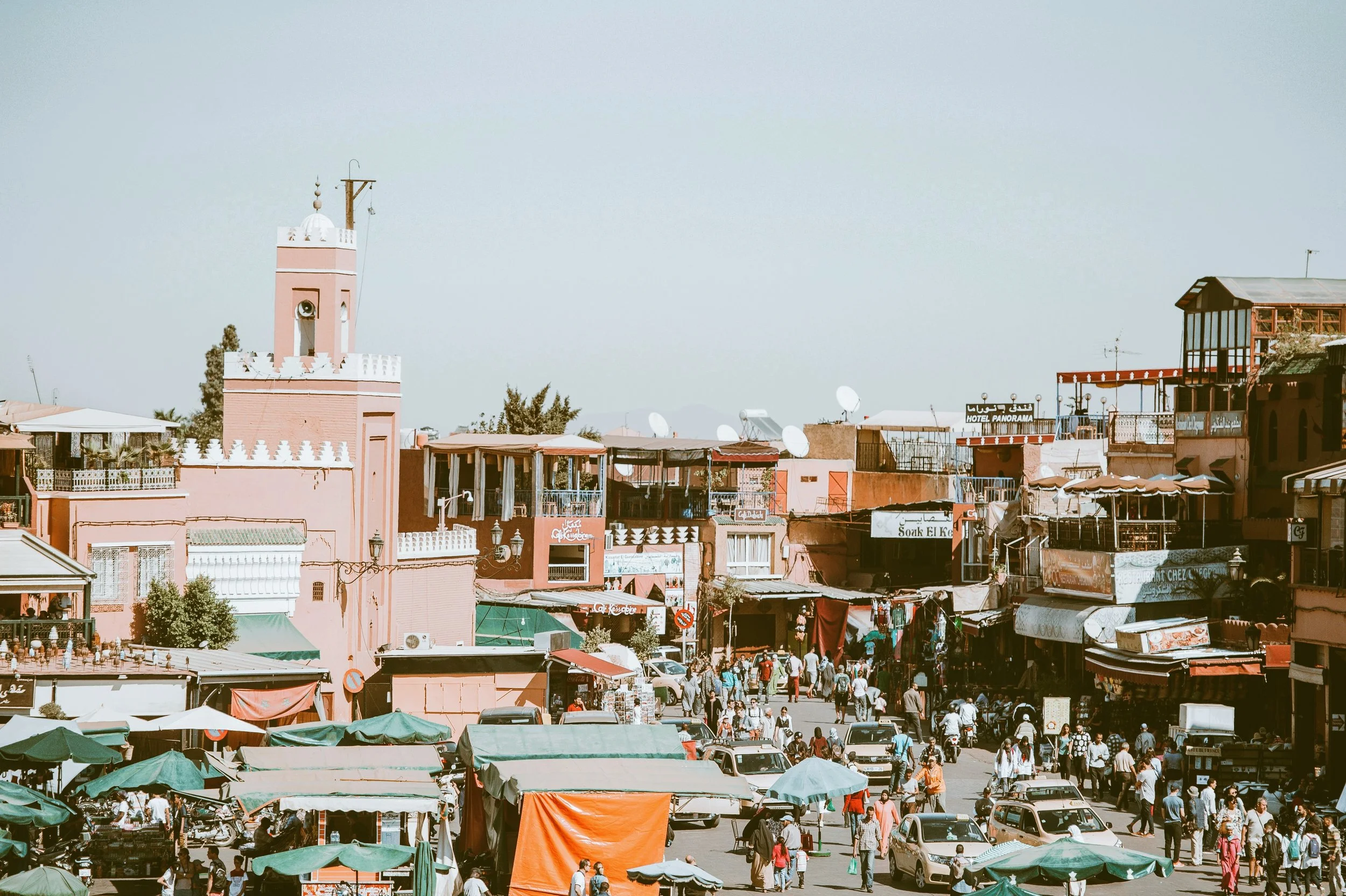
Morning through afternoon belongs to snake charmers and henna artists working the edges of the square, calling out to anyone who slows down. Agree on a price before anything touches your skin or a snake lands on your shoulder — both come with a bill afterward if you don't. Skip "black henna," too; it sometimes contains a chemical that can burn.
Come back after sunset and it's a different place entirely. The daytime crowd clears out, smoke rises, and dozens of numbered food stalls set up, each specializing hard — one does only snail soup, another only sardines. Follow the longest local queue, not the loudest English-speaking tout.
Watch for a ring of onlookers gathered around a single voice. That's a storyteller, and words and gesture are all the performance needs — the oral tradition at the heart of the square's UNESCO listing, kept alive only for as long as someone stops to listen.
ROOFTOP TEA
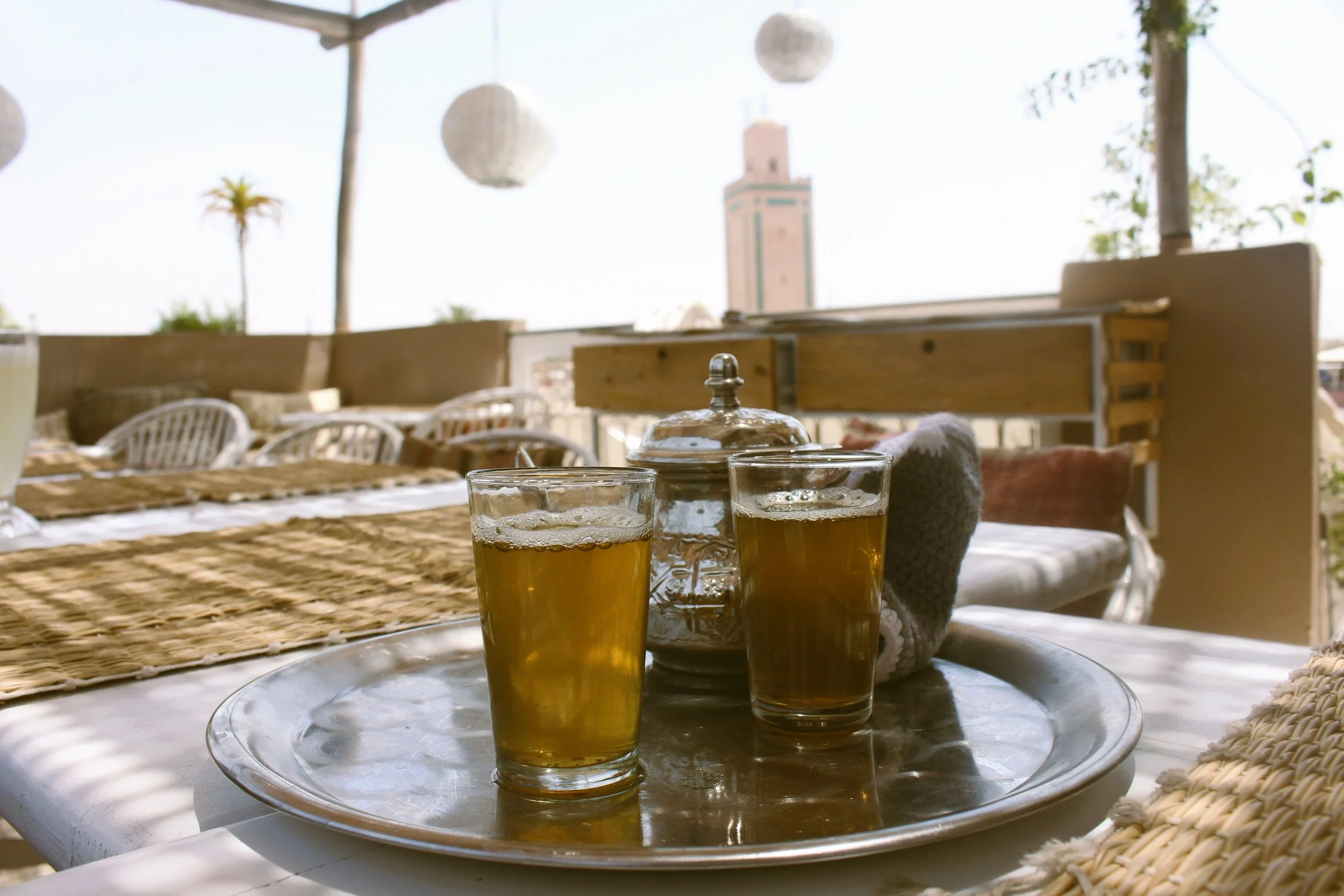
Once you've walked the square at ground level, the second half of understanding it happens from above. Several cafés and restaurants ring the plaza with rooftop terraces built almost entirely for this one purpose — mint tea, poured from a height to build the foam, while the chaos below turns into something closer to music than noise.
Go right around sunset, when the call to prayer overlaps with the drummers and the first smoke starts rising off the food stalls. Terraces fill fast, so claim a spot fifteen minutes early rather than scrambling once the light changes. Nowhere else in Marrakesh compresses the whole city into one view quite this well.
the practical bit
Come at least twice — once by day, once after dark, since the square genuinely functions as two different places. Keep small bills on you; nobody selling juice or henna here seems to have change for anything larger, and that's rarely an accident.
If a snake charmer places anything on you, or a henna artist starts before you've agreed a price, that's your cue to negotiate hard or walk away — both are common enough that locals barely notice them anymore. And watch your bag more than you would elsewhere in the medina; it's not dangerous, just crowded enough that pickpockets work it like a day job.
BOOK A DJEMAA EL-FNA & MEDINA WALKING TOUR
The square costs nothing to see. What's worth paying for is someone who can actually navigate what's behind it.
[Find a Djemaa El-Fna & Medina tour →]