THE SULTAN’S CITY
Every empire needs somewhere to show off, and somewhere to disappear. Marrakesh has both, built centuries apart by rulers who never quite trusted the ones who came before them.
One sultan built a palace so lavish that gold from Timbuktu supposedly covered the ceilings — and within a century, a rival dynasty had stripped it down to the mud-brick bones you see today, hauling the marble off to decorate a different city entirely. His tomb, a few hundred meters away, survived only because the man who tore down everything else was too superstitious to touch a grave. It stayed sealed more than two centuries, forgotten so thoroughly that nobody alive remembered it existed until a French pilot spotted something strange from the air in 1917.
Elsewhere in the medina: a vizier who wanted a palace fit for a king he wasn't, a religious school built to house nearly a thousand students in near-total silence, and a 12th-century tower that quietly decided what every mosque in Morocco and southern Spain would look like for the next 800 years.
This is Marrakesh's power, laid out in stone and mostly still standing.
El Badi Palace
el badi PALACE & the saadian tombs
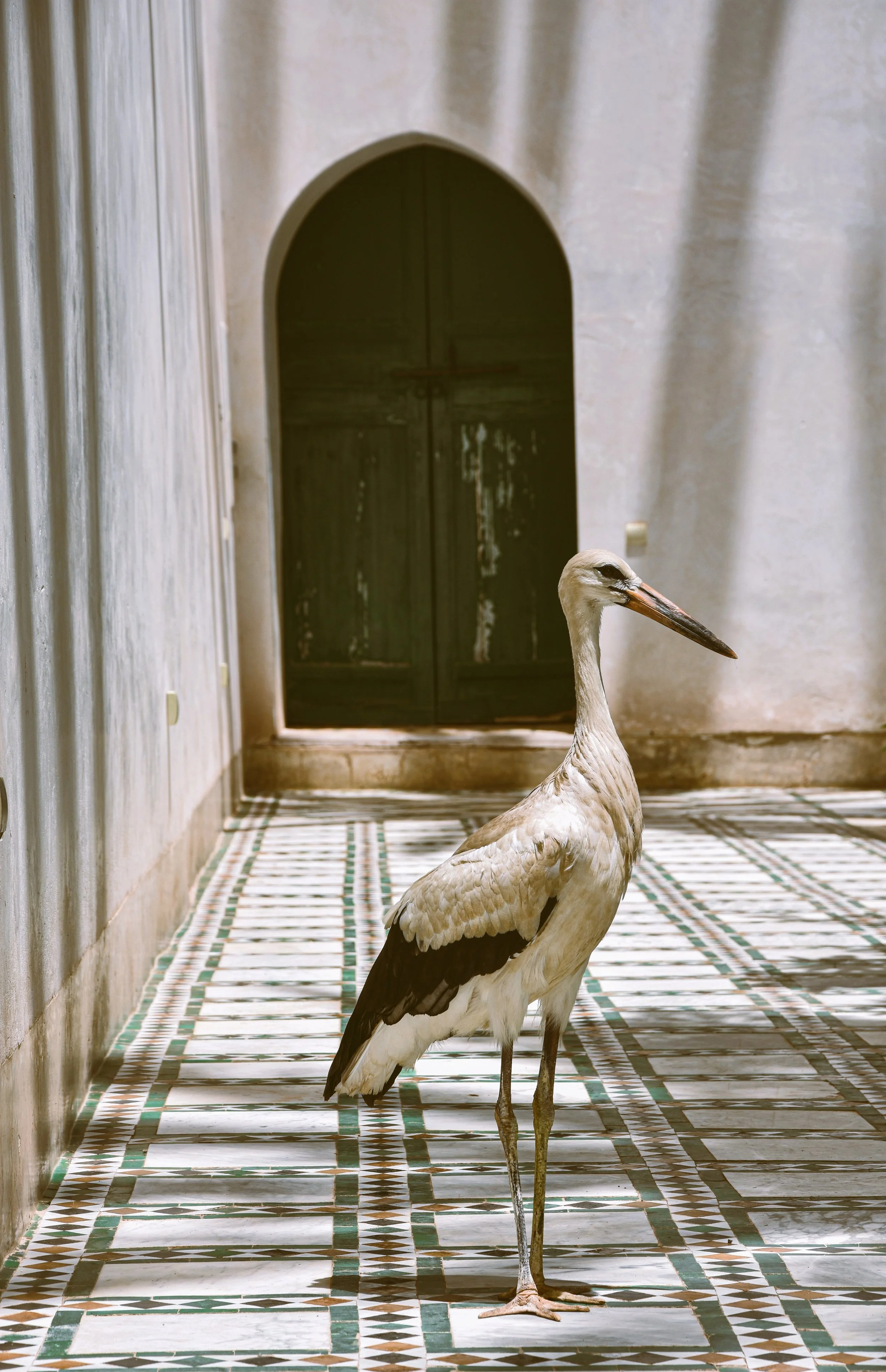
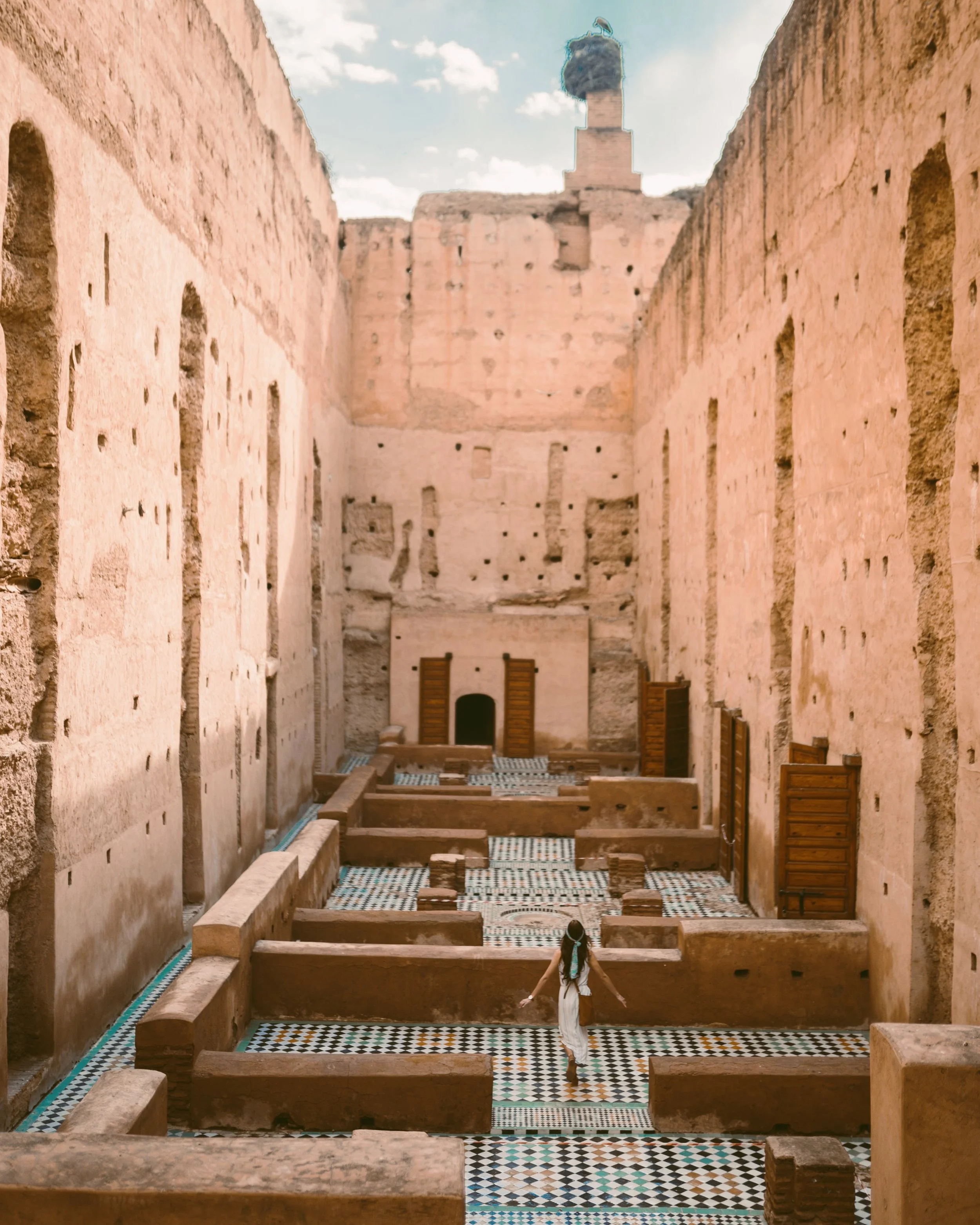
Ahmad al-Mansur built El Badi Palace to be looked at — gold ceilings, a sunken garden, pools big enough to reflect the whole facade. The ransom paid by Portugal after the Battle of the Three Kings, plus sugar and Sudanese gold, paid for most of it. Within a hundred years, a rival sultan gutted the entire palace, stripping the marble and hauling it off to decorate his own capital elsewhere. What's left is mostly mud-brick skeleton, storks nesting on the ruined walls.
His tomb — part of a much larger royal necropolis for the entire Saadi dynasty, the one that gives these tombs their name — oddly survived intact. The same demolition-minded sultan sealed it shut instead of destroying it — too wary of tearing into consecrated ground. It sat forgotten for more than two centuries, until a French aerial survey in 1917 spotted something under the rubble that shouldn't have been there.
BAHIA PALACE
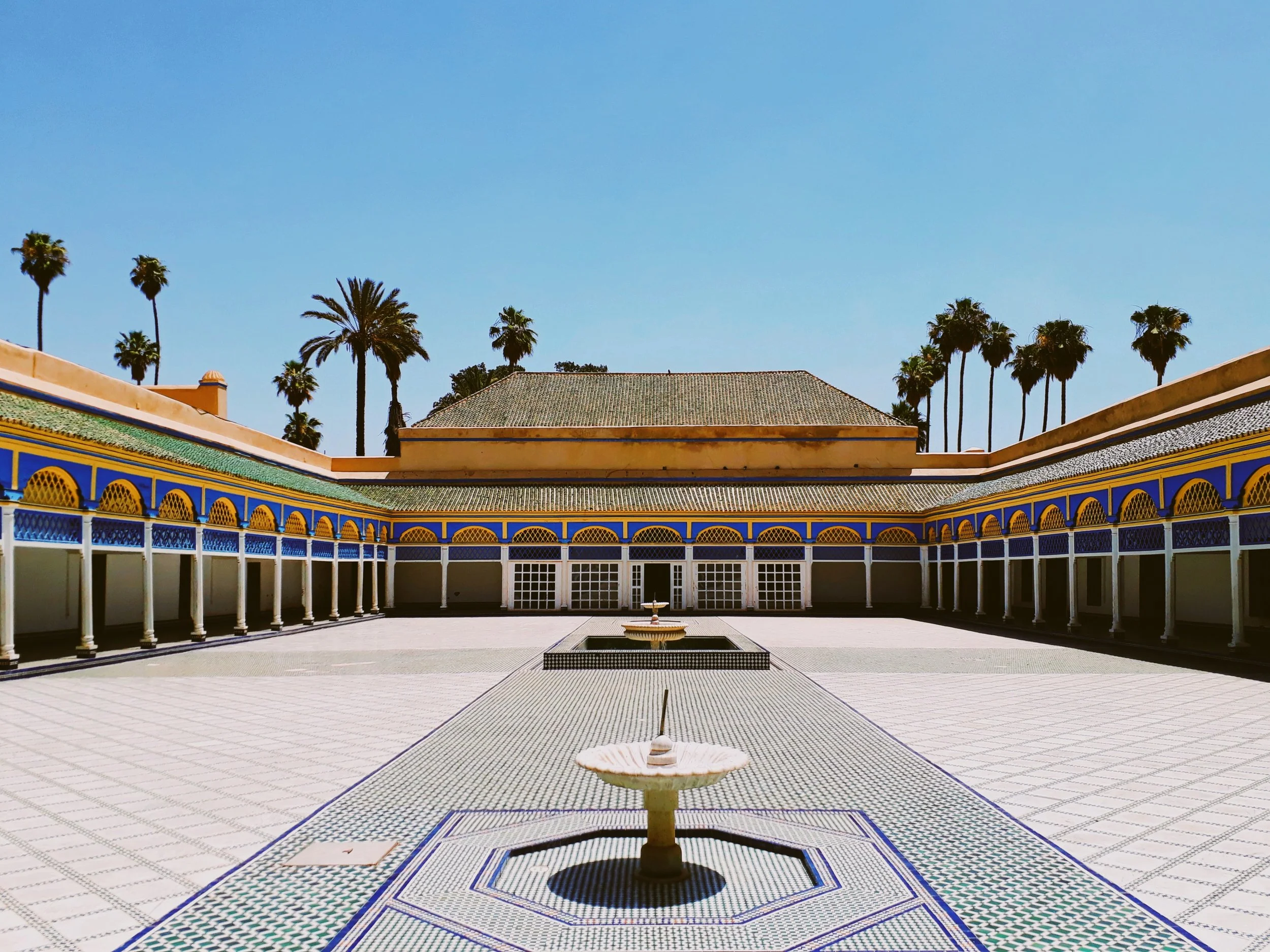
Begun in the 1860s by Si Moussa, a former slave who rose to grand vizier, and expanded in the 1890s by his son Ba Ahmed into a palace meant to outshine any other in Morocco.
It worked. Courtyards drip with carved cedar and zellige tilework, and the private quarters once housed four wives and dozens of concubines, each with rooms scaled to reflect exactly how much favor she currently held. The writer Edith Wharton, who stayed here during the Protectorate years, called it 'the loveliest and most fantastic of Moroccan palaces'. Walk it slowly — the whole place was designed to overwhelm, one courtyard at a time, and it still does the job.
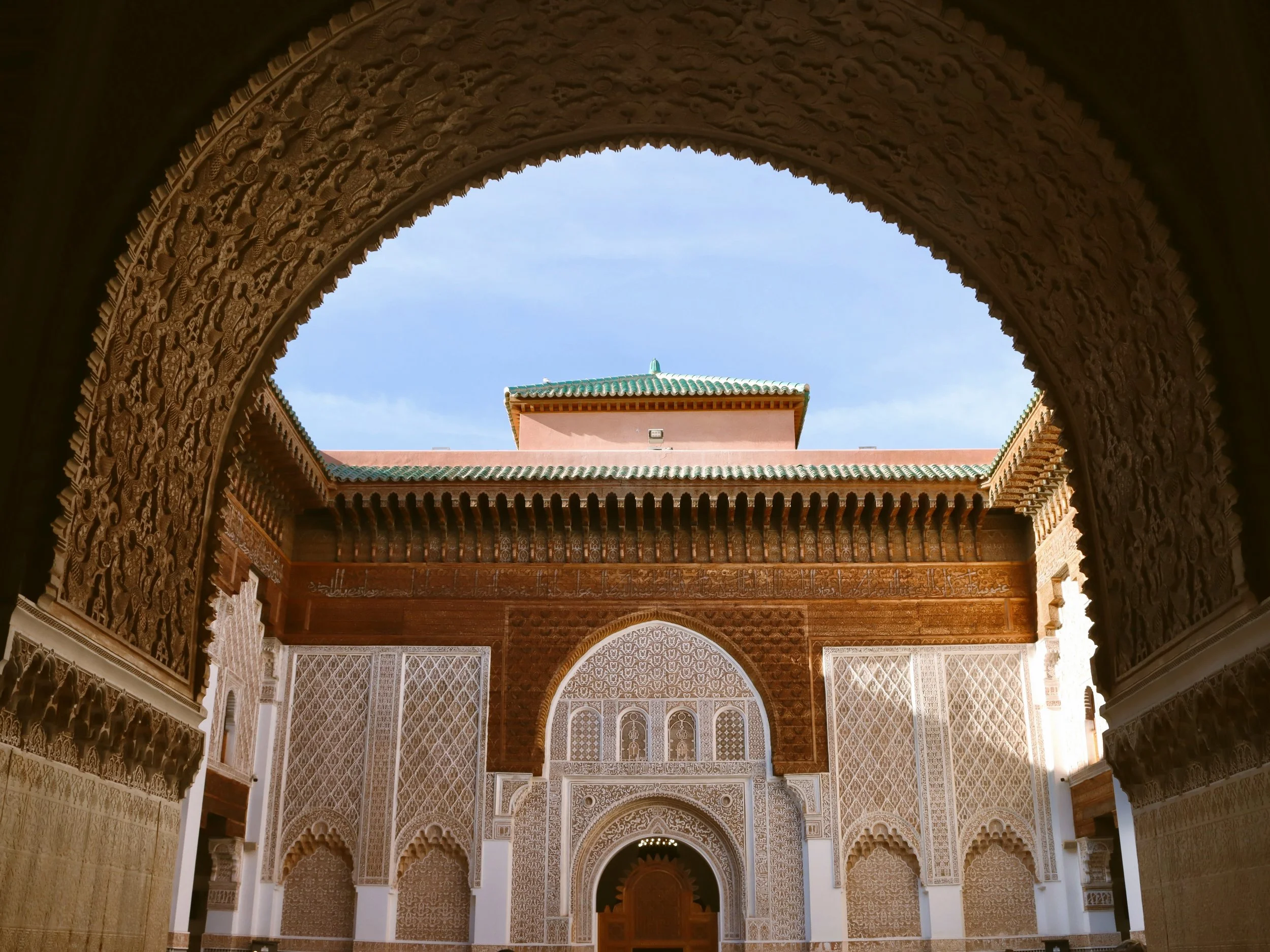
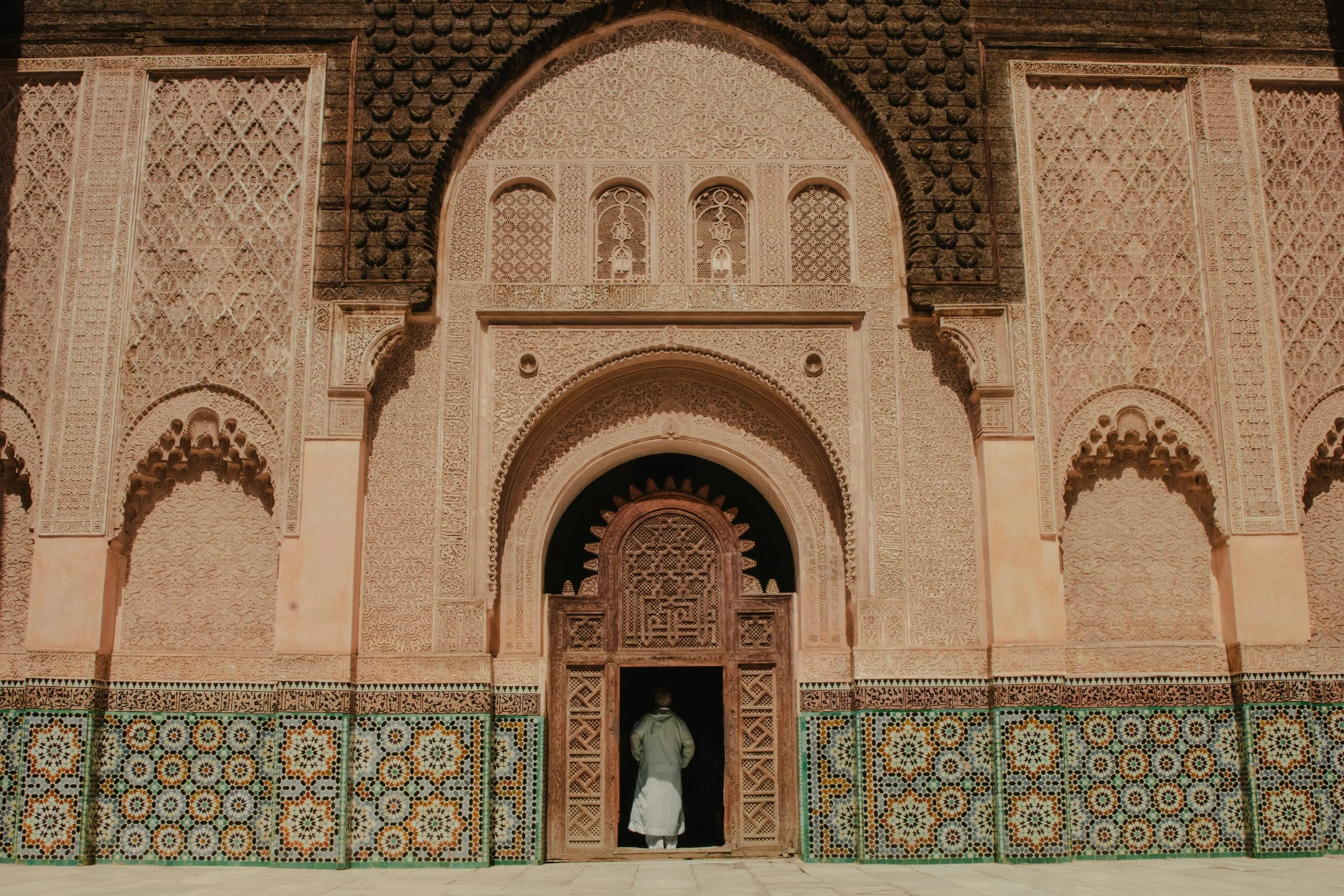
Medersa ben youssef
At its peak, this was the largest Islamic school in North Africa — nearly 900 students living in cells stacked two and three stories around a single courtyard, studying in near-total silence for years at a stretch.
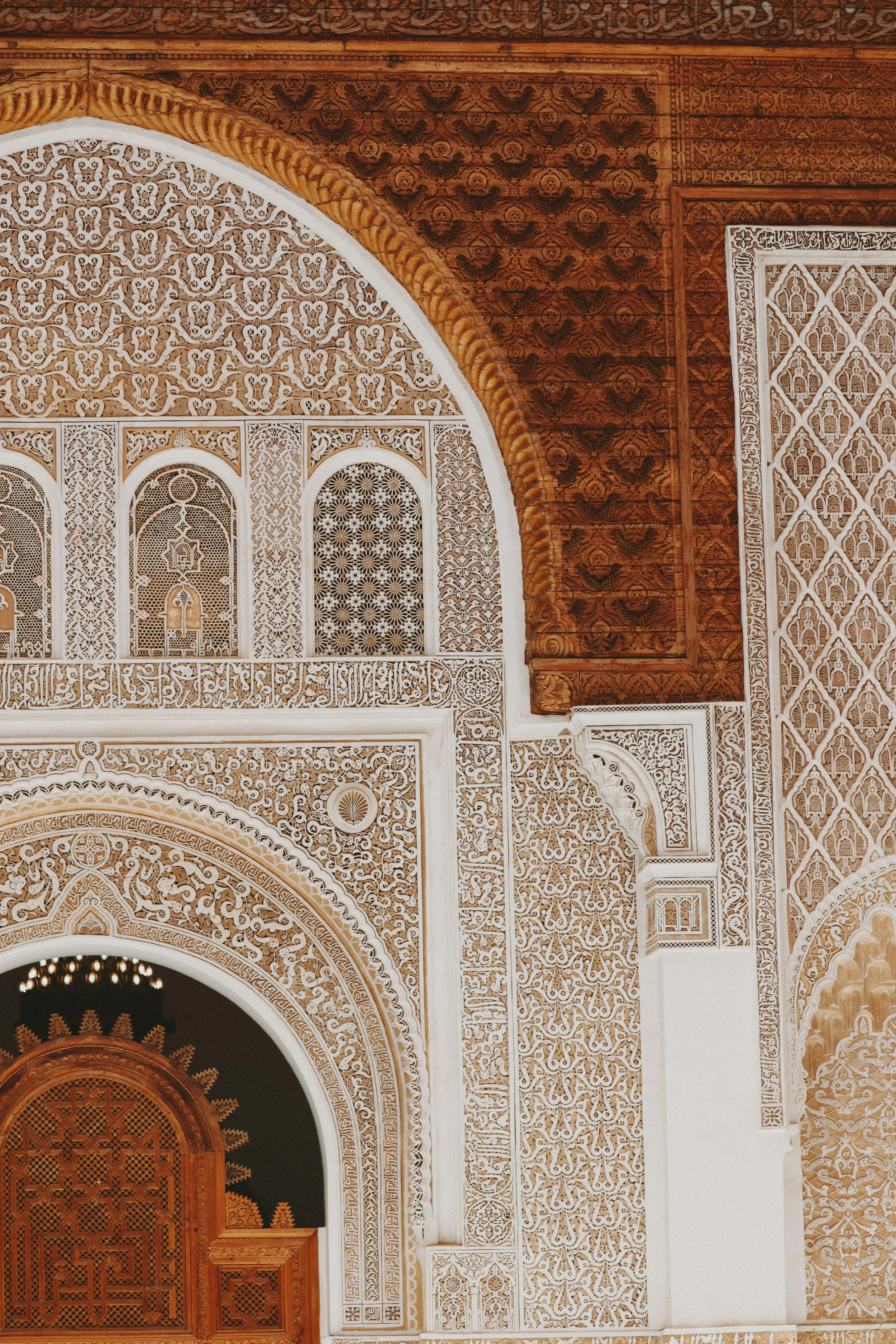
The architecture reflects that discipline. No gold, no sprawling gardens, just carved stucco and zellige repeating in patterns precise enough to make Bahia Palace look almost undisciplined by comparison. Students slept in rooms barely large enough to lie down in. The courtyard, by contrast, feels enormous — proof that restraint, done well, can be its own kind of grandeur.
the koutoubia
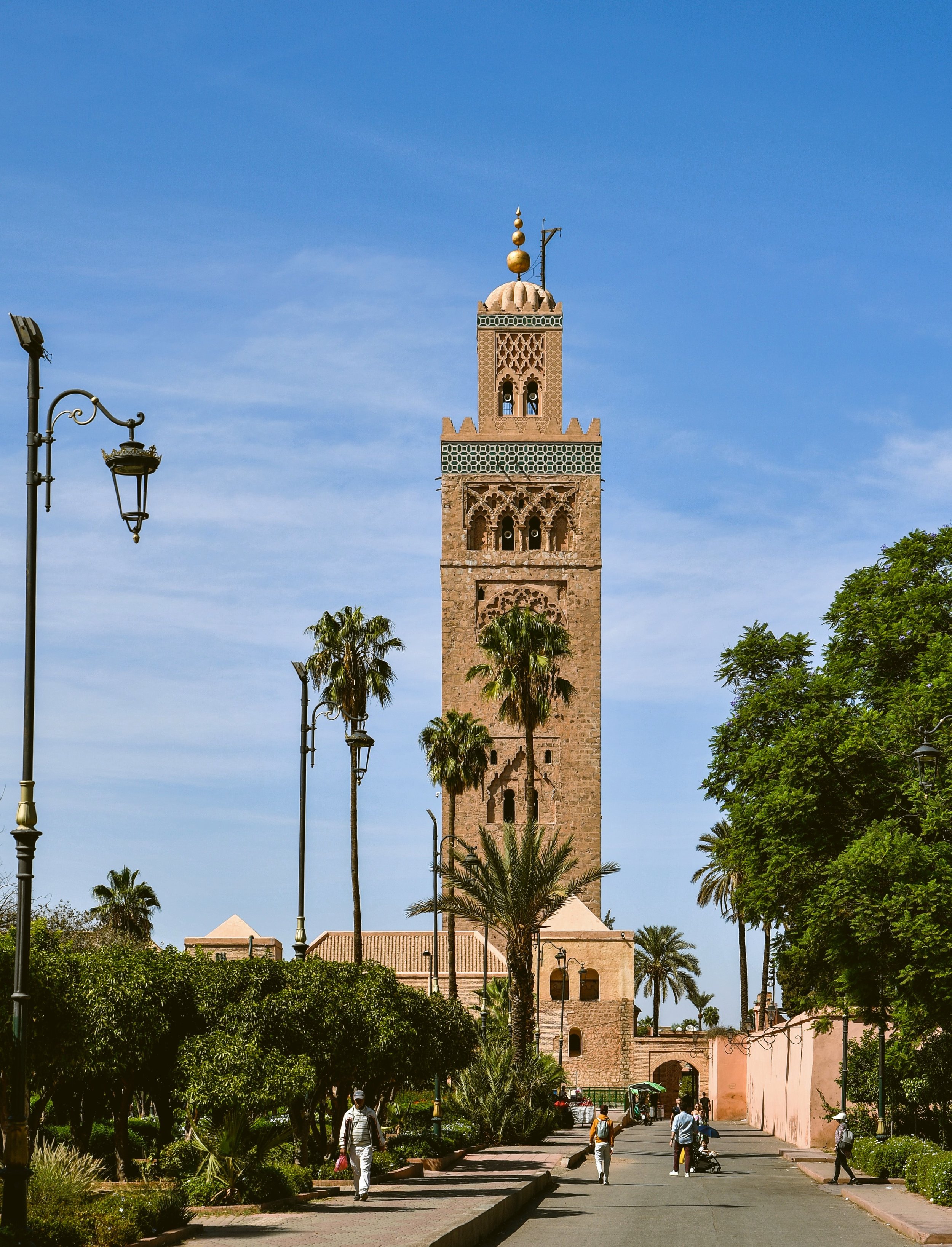
It dominates the medina skyline at 77 meters — nothing here has outgrown it, so wherever you are, there's a good chance you can see it without looking for it.
Built in the 12th century by the Almohads, its design didn't stay local. The same proportions and detailing turned up decades later in Seville's Giralda and Rabat's Hassan Tower — three minarets, one architectural bloodline, spread across an empire that once stretched from Spain to the Sahara. All three share the same DNA: a square base, a ratio of height to width the Almohads clearly settled on and never abandoned, and geometric brickwork instead of the ornate carving found elsewhere in the medina.
You can't go inside unless you're Muslim, but the gardens around the base are open to everyone, and they're worth the short walk regardless — especially around sunset, when the call to prayer sounds from the minaret and the whole square in front of it briefly stops what it's doing to listen.
TICKETS & TOURS
Each site charges its own entry — El Badi, the Saadian Tombs, Bahia Palace, and Ben Youssef Medersa aren't bundled together, so buying ahead saves you four separate queues in four different corners of the medina. A combined skip-the-line pass covers all four and is worth it if you're doing this Essential in one day rather than spreading it out.
Prefer context over signage? None of these sites have much posted information once you're inside. A guided walking tour of the four fills in what the plaques don't — particularly useful at the Saadian Tombs, which has very little signage explaining who's buried where.