BARRIOS
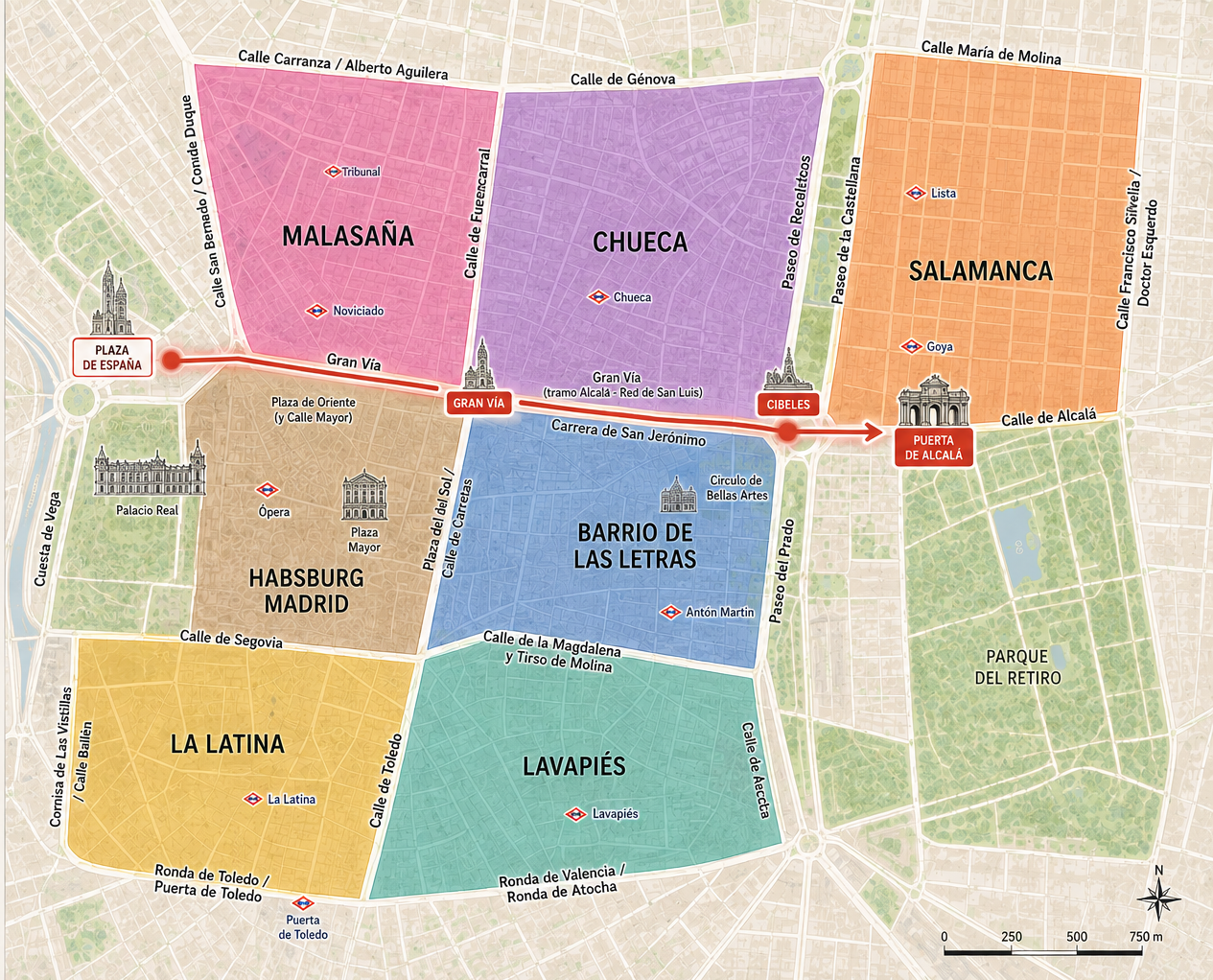
Ask a Madrileño where to go and you'll get a neighborhood, not a landmark. That's the thing outsiders miss: Madrid isn't one city wearing different outfits — it's six or seven cities that happen to share a metro map. Cross from Malasaña into Salamanca and the shift isn't cosmetic. The volume changes. The shoes people wear change. Even the pace of walking changes.
This is why Habsburg Madrid gets its own chapter elsewhere, while this one goes after the Madrid residents actually live in — the Sunday quiet of La Latina before the bars open, the particular defiance still humming through Chueca, the six languages you'll hear in Lavapiés before nine in the morning, the unhurried, bookish air of the Barrio de las Letras, where Cervantes is buried two streets from where he lived.
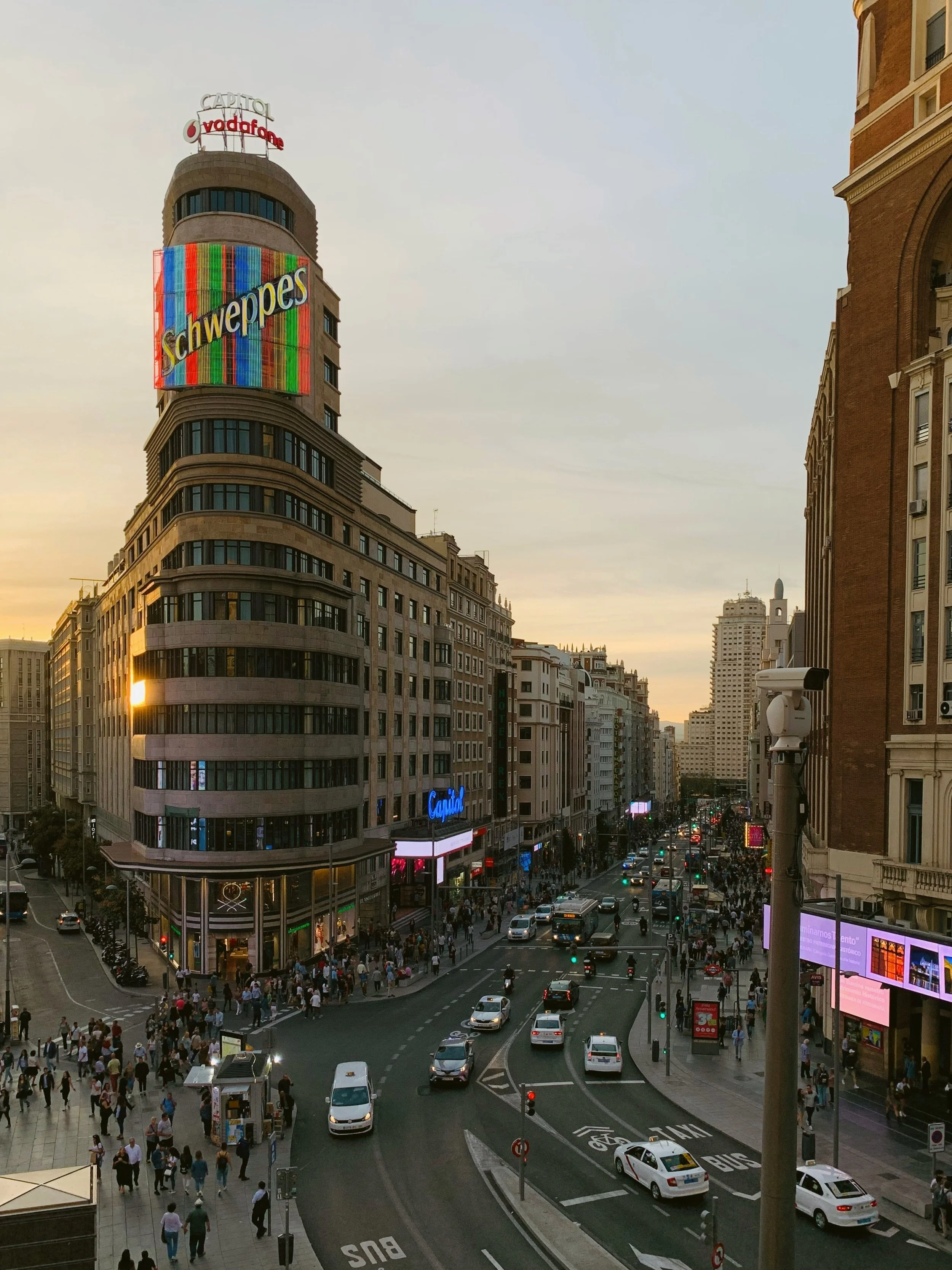
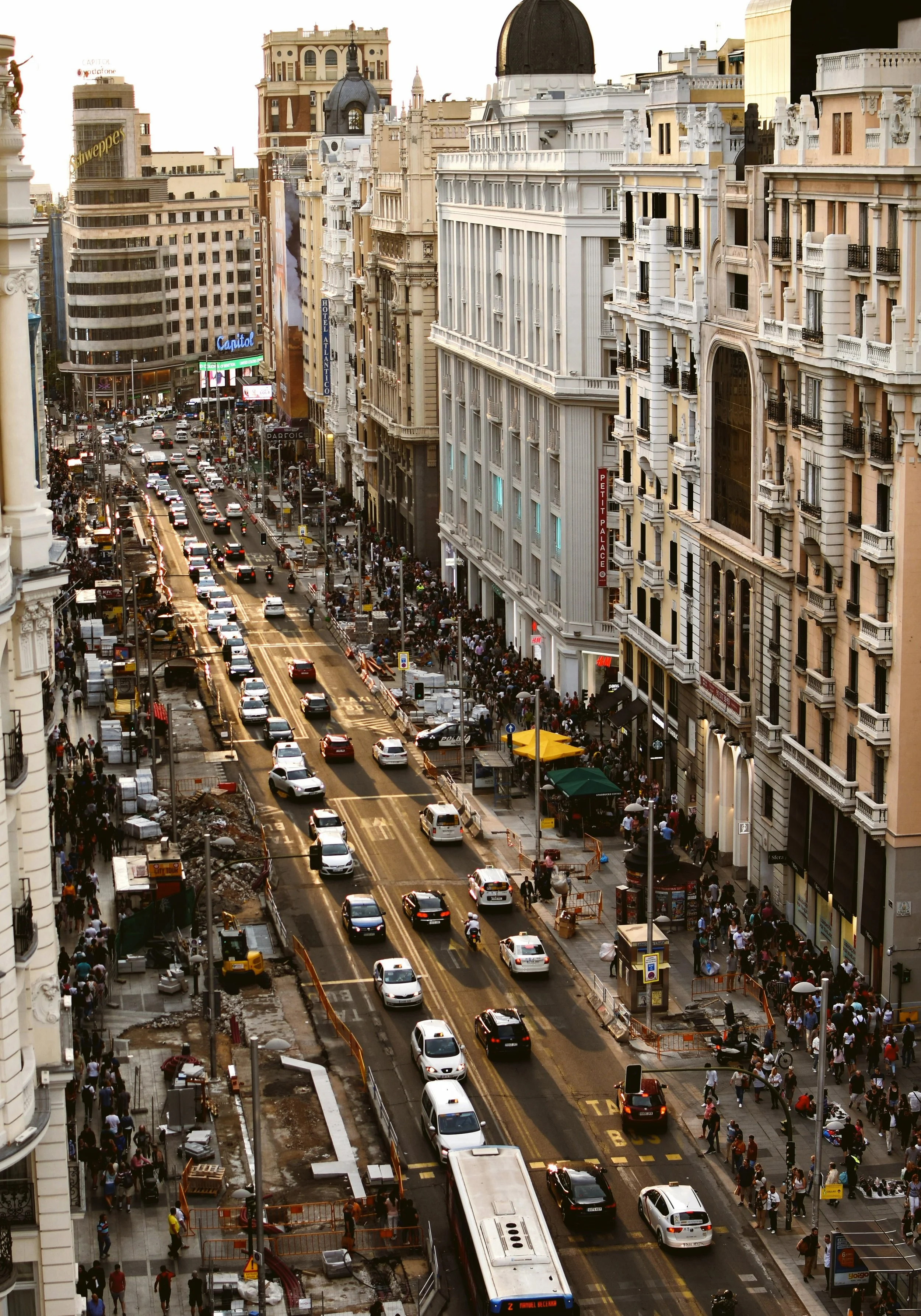
And then there's the exception that proves the rule: the Eje, the grand spine running from Plaza de España through Gran Vía to Cibeles and Puerta de Alcalá. It isn't a neighborhood — it's the avenue that stitches all these separate Madrids together, and walking it end to end is its own kind of introduction to the city.
Seven pieces, none of them agreeing with each other. Read them as a set, not a checklist.
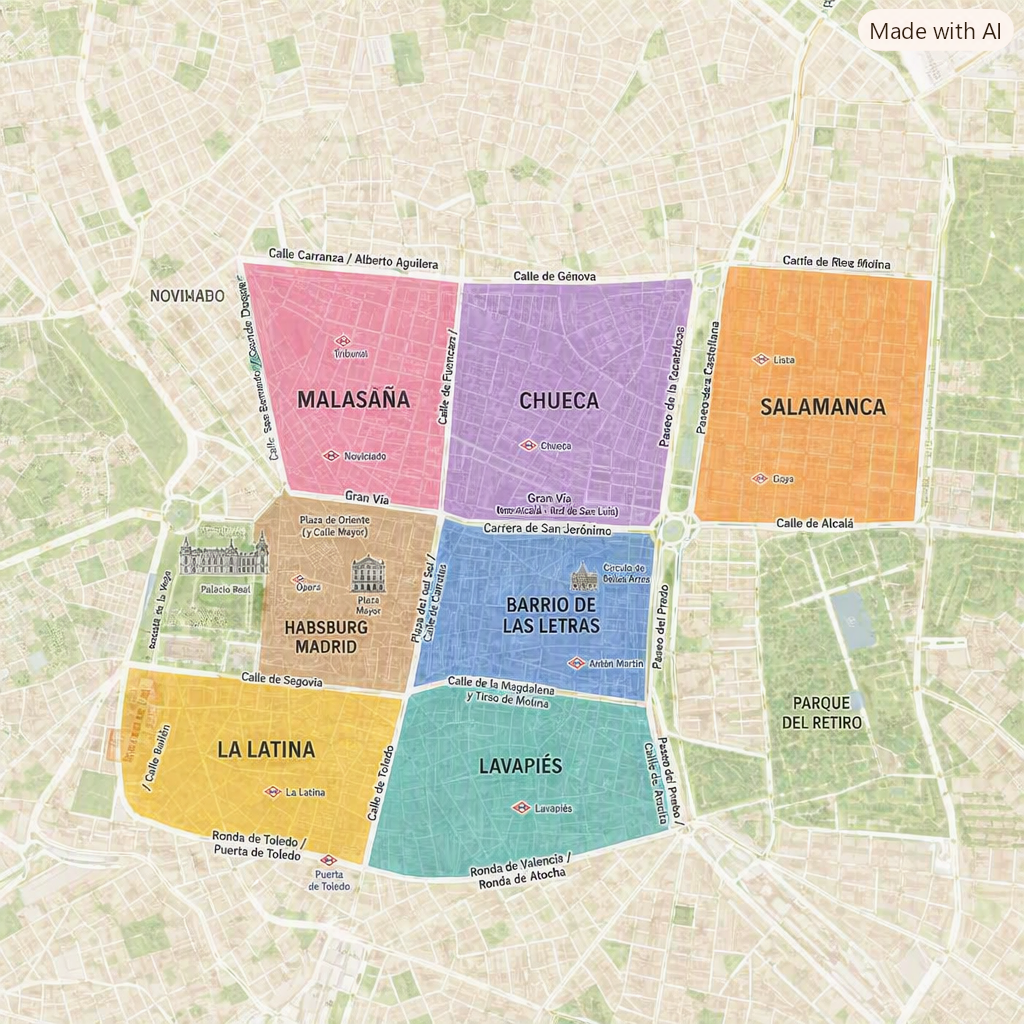
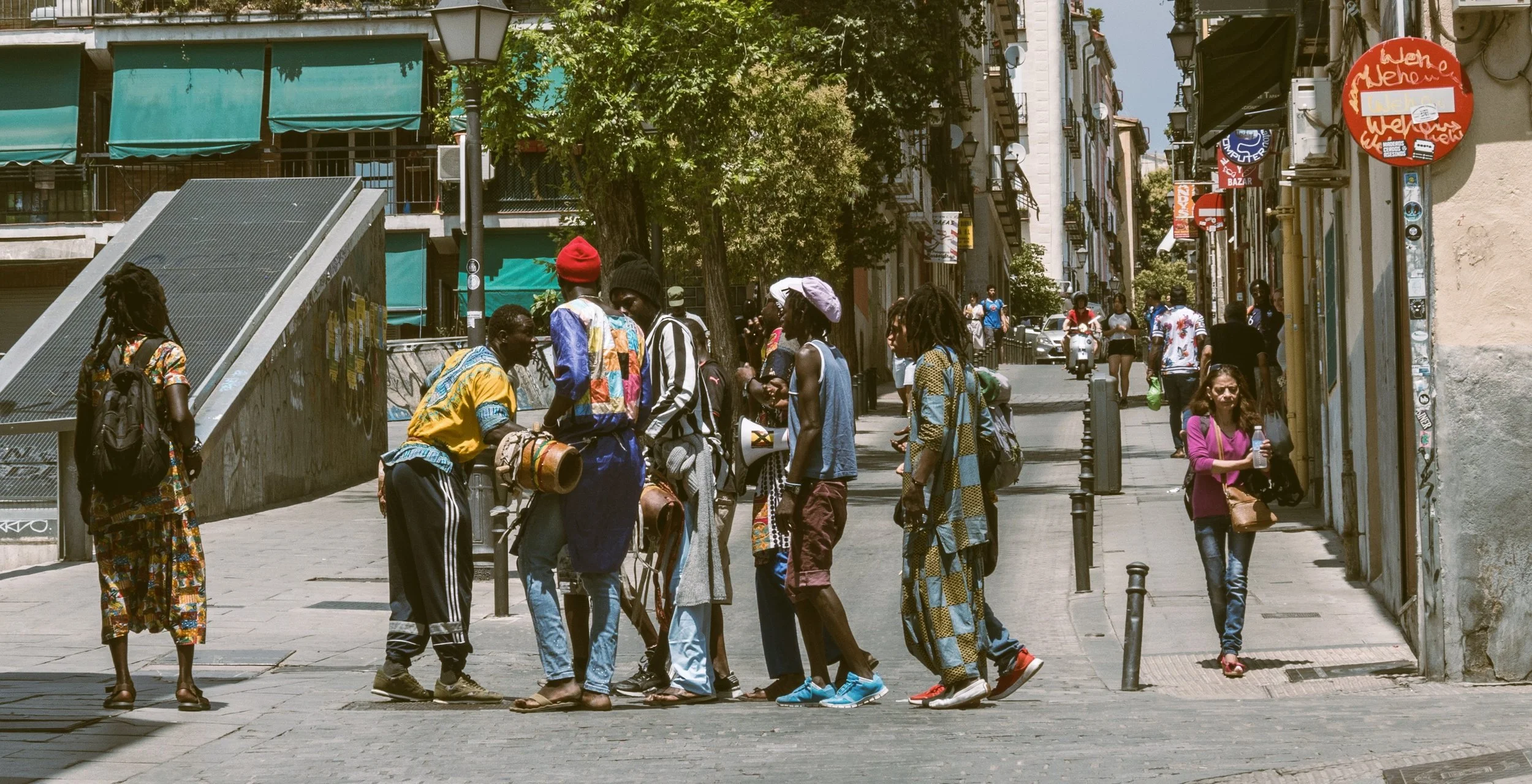
LAVAPIÉS is the loudest argument against Madrid ever being just one thing. Bangladeshi grocers, Senegalese barbershops, a Chinese bazaar, and a corrala courtyard from the 1800s all share the same few blocks, sloping downhill toward nothing in particular. It's the city's most multicultural corner by a wide margin, and it wears that fact without any of the self-conscious "diversity" branding you'd get elsewhere — this is just what the neighborhood has always done with new arrivals, going back over a century.
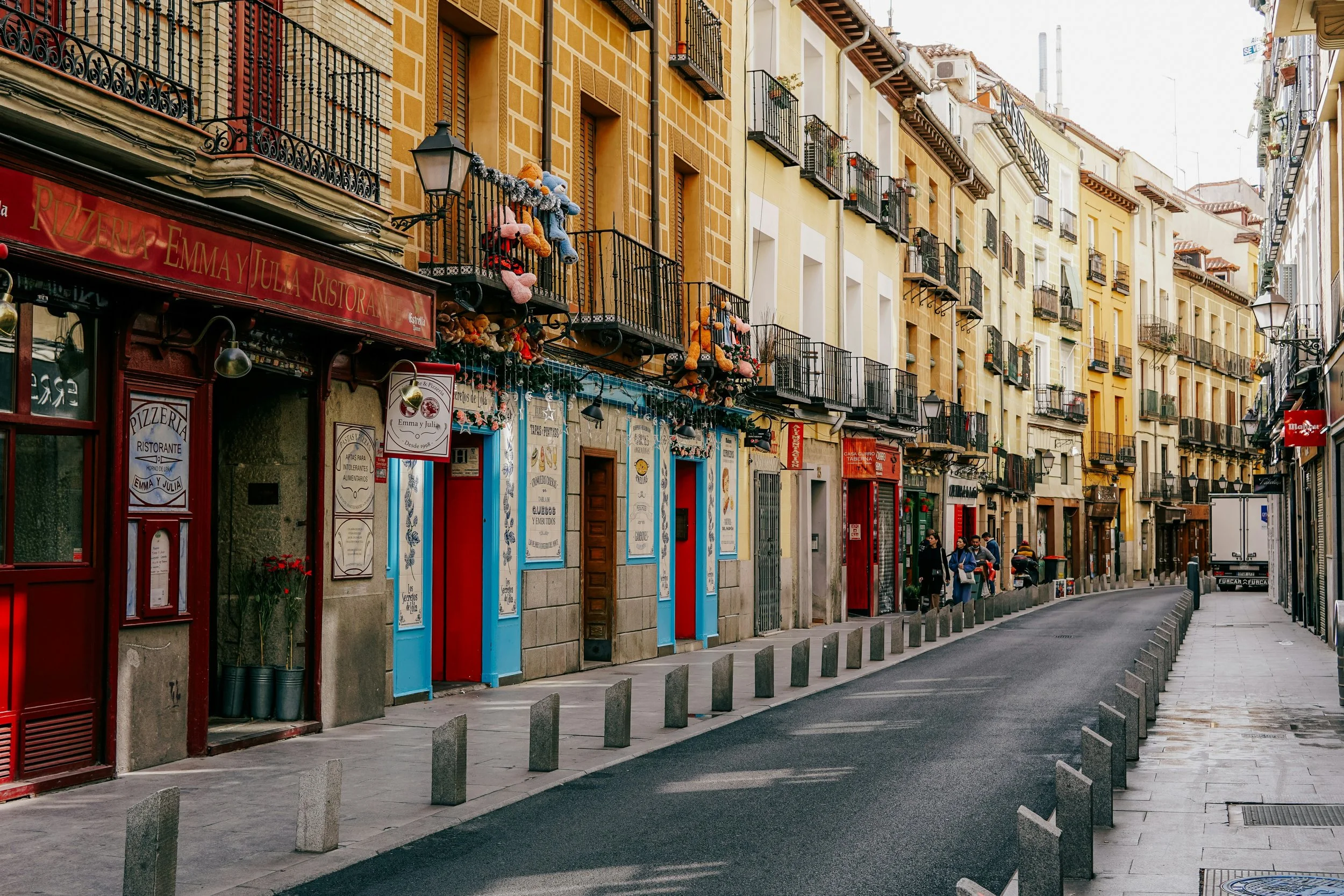
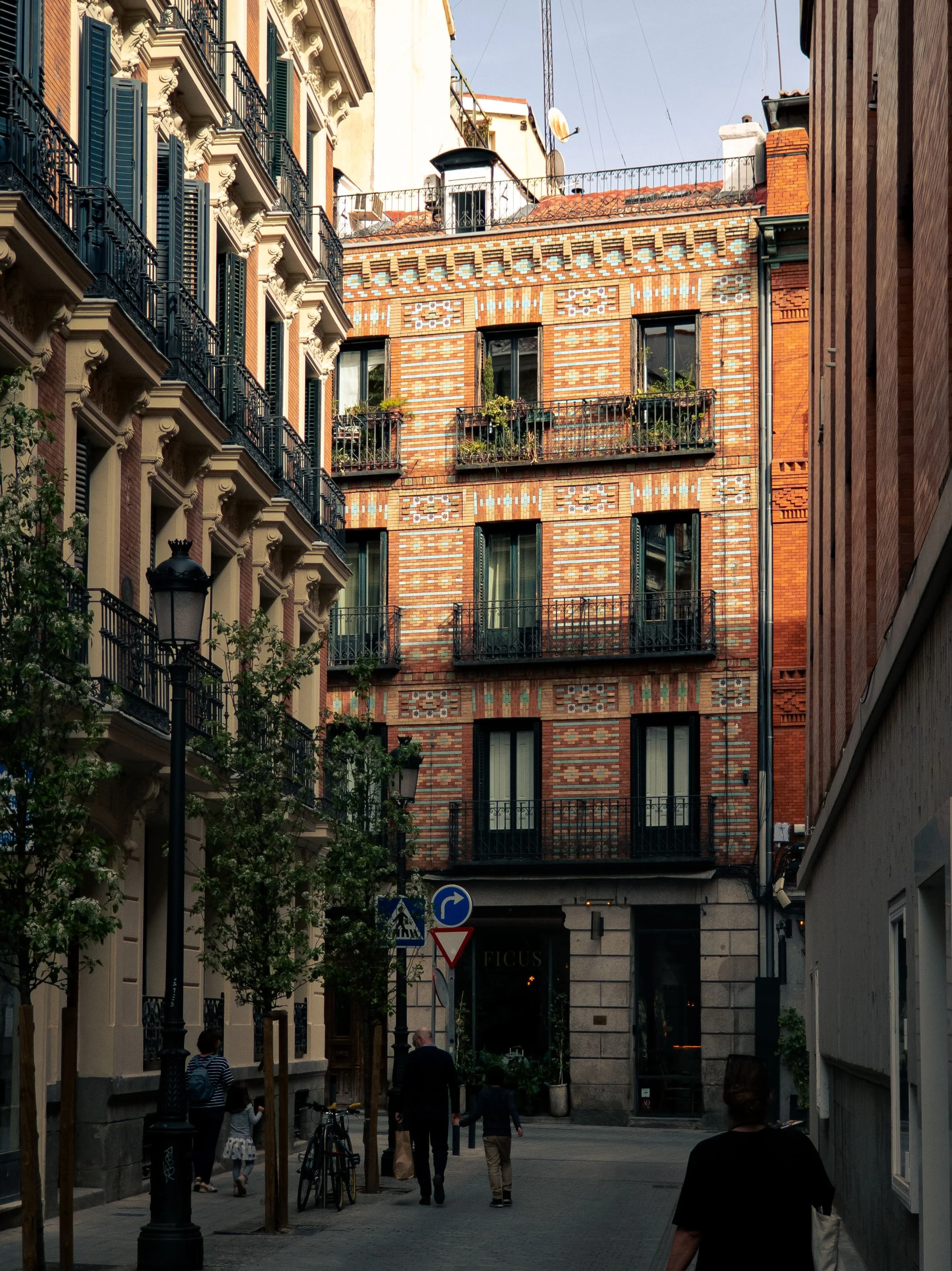
MALASAÑA was the epicenter of the Movida Madrileña, the explosion of music, art and general defiance that hit Madrid in the years after Franco's death in 1975. Four decades on, the vintage shops and record stores have mostly replaced the punk clubs, but the restlessness never quite left — Plaza del Dos de Mayo still fills every night with people who look like they haven't decided whether they're twenty-two or forty-five, and honestly, neither have you by the second drink.
CHUECA, just east, tells the other half of that same 1980s story. Written off as a slum through the '70s, it became — through the LGBTQ+ community that moved in when nobody else would, opened the bars nobody else wanted to run, and never left — one of Europe's great gay neighborhoods. Berkana, Spain's first LGBTQ+ bookstore, opened here in 1993 and is still going. Madrid Pride now fills these same streets with two or three million people every summer, and the terraces around Plaza de Chueca stay just as full on any random Tuesday.
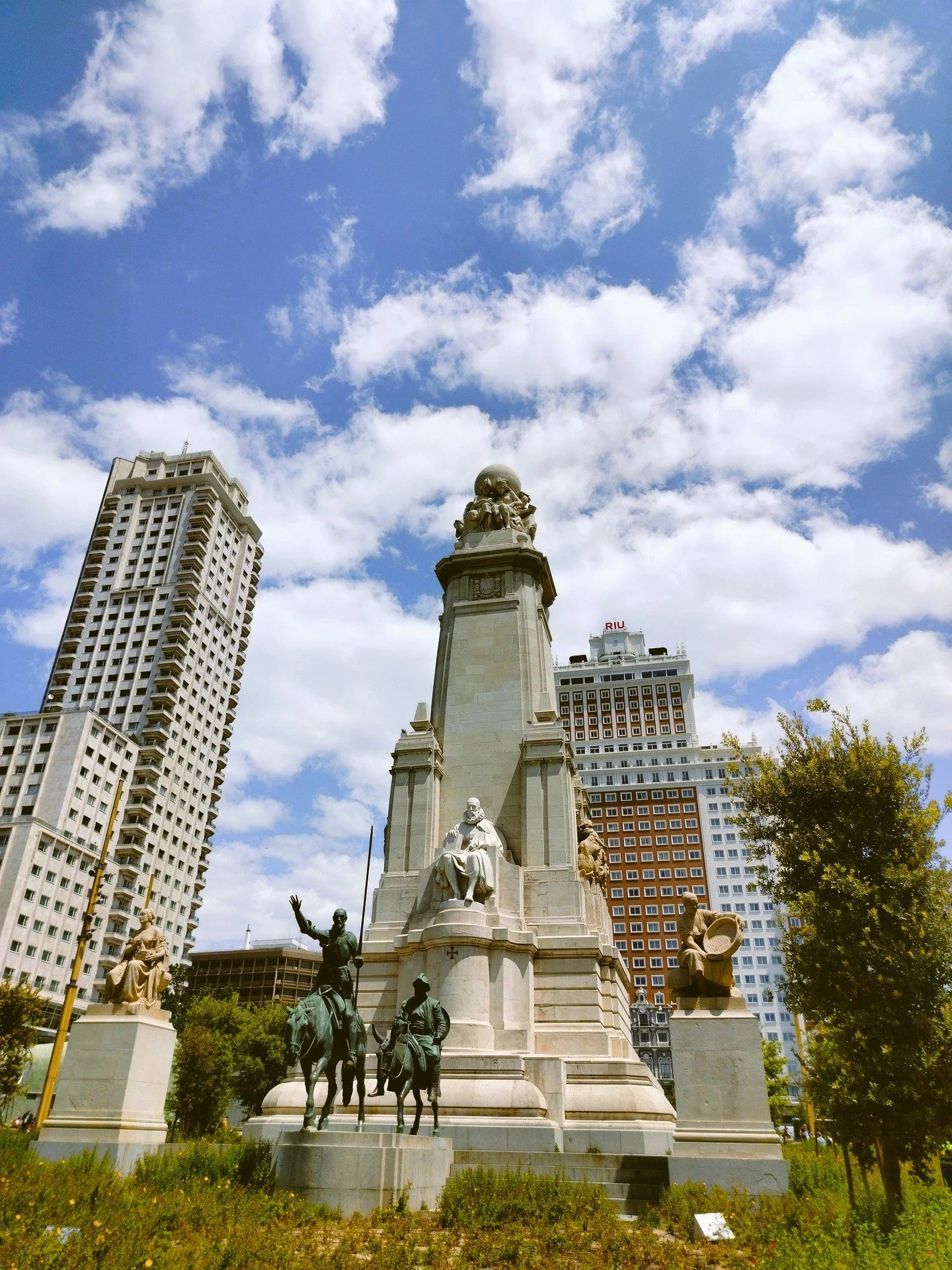
Plaza de España
Gran Vía
SIX MADRIDS
Lavapiés — Madrid's most multicultural corner, loud, unpolished, and proud of staying that way.
La Latina — Steep medieval streets, tapas bars shoulder to shoulder, at their best on a Sunday.
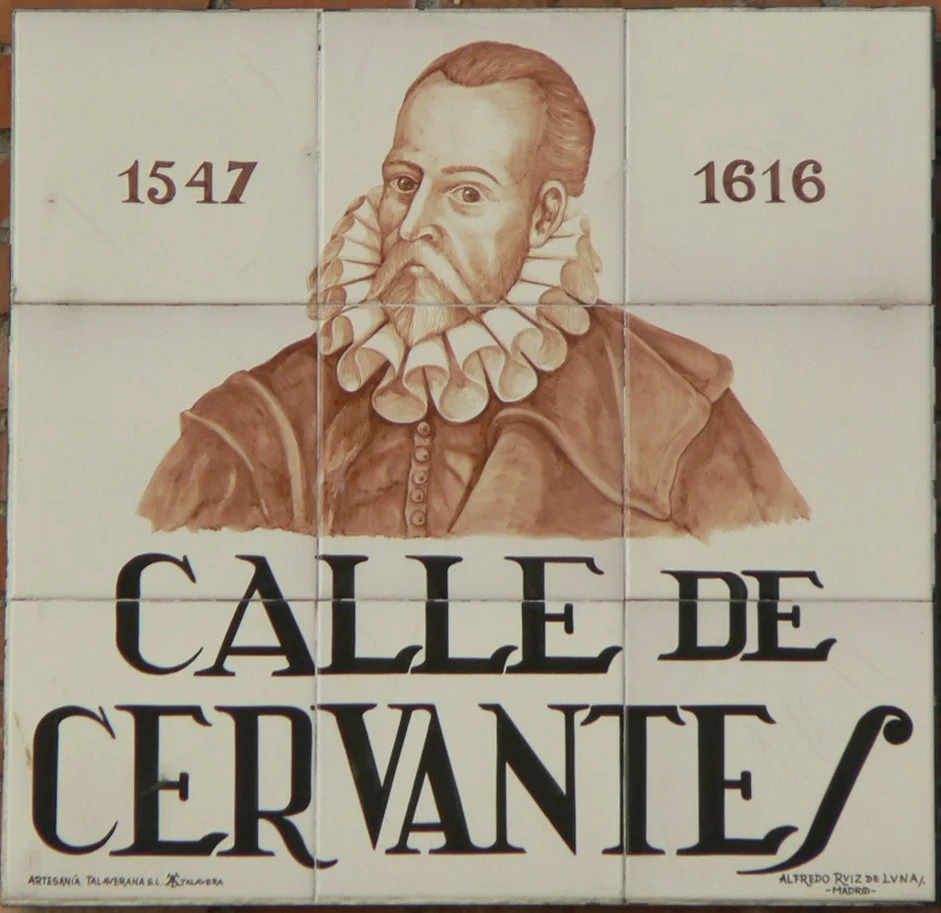
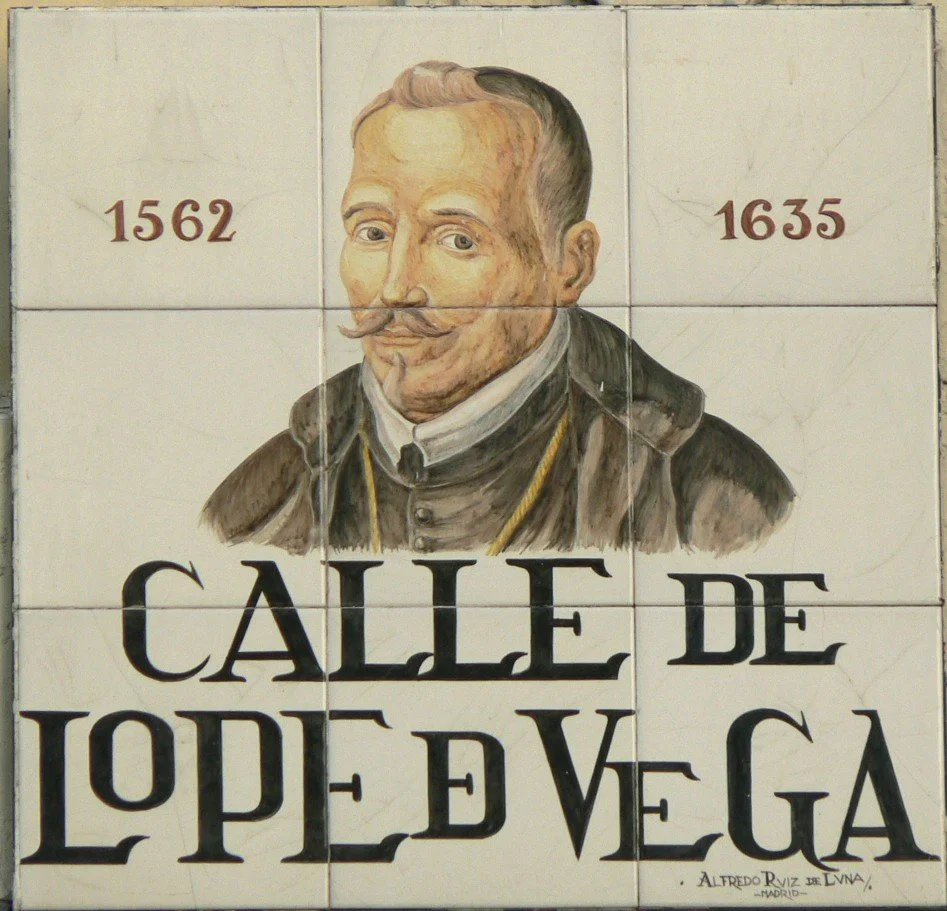
Barrio de las Letras — The old literary quarter, where Cervantes and Lope de Vega once lived streets apart.
Malasaña — Vintage shops, indie bars, and the restless energy of a neighborhood that never quite grew up.
Chueca — Madrid's LGBTQ+ heart, colorful and unapologetic, with some of the city's best terraces.
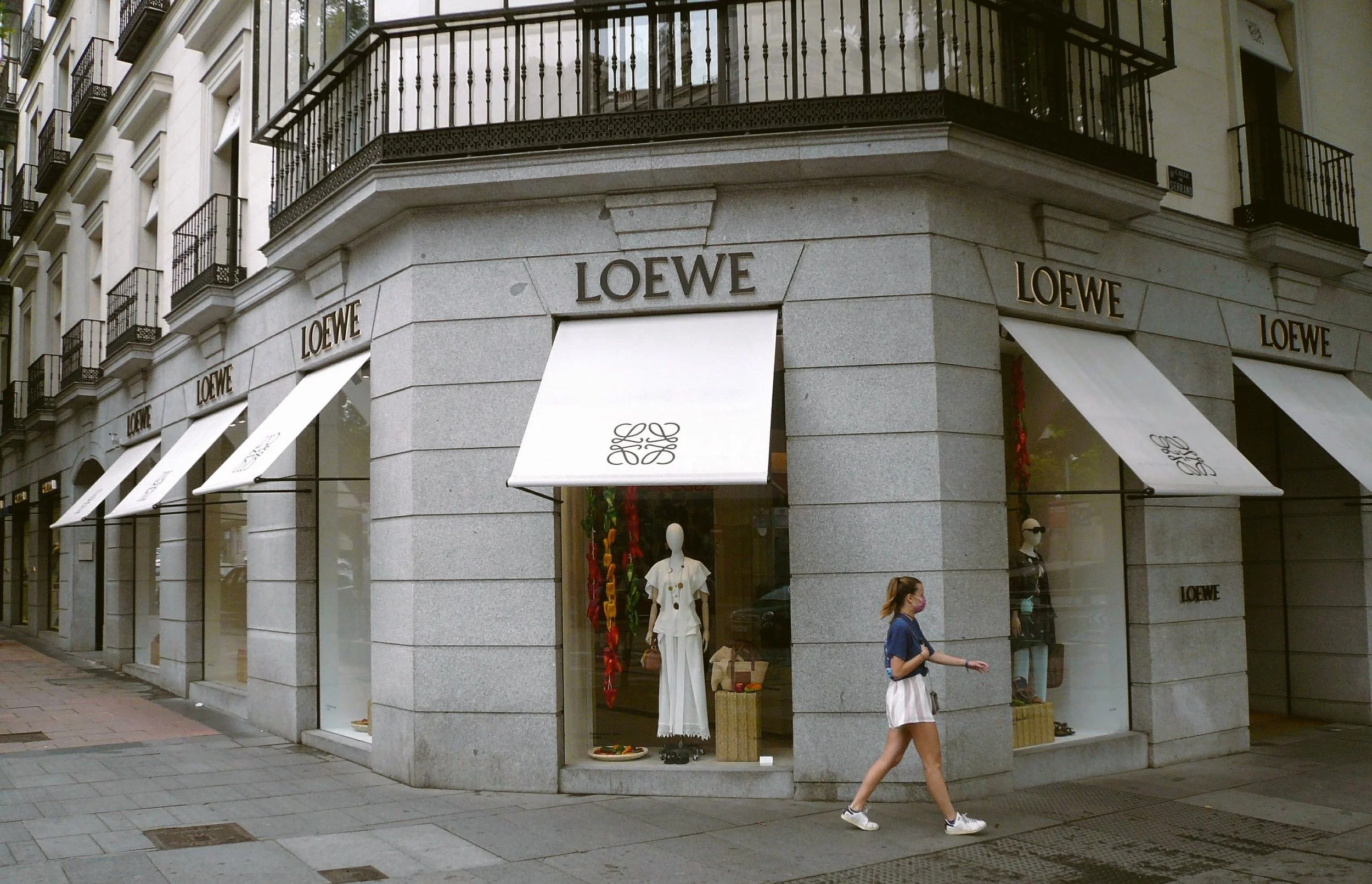
Salamanca — Wide boulevards, high-end boutiques, and Madrid dressed in its most polished version.
LA LATINA climbs the hill just west of Lavapiés, and does its best work on a Sunday, when El Rastro — Madrid's flea market since the 1740s — spills down Calle de la Ribera de Curtidores and every bar on Cava Baja fills with people who technically came for the antiques and stayed for the vermouth. Medieval streets, steep enough to make you earn the tapas at the top.
BARRIO DE LAS LETRAS takes its name seriously — literally. Cervantes lived and died here in 1616, buried a few streets from where he wrote, and Lope de Vega's house still stands on the street ironically named after his old rival. Their words are set in bronze along Calle de las Huertas, underfoot, easy to miss if you're not looking down. Most people aren't. They're too busy finding a table on Plaza de Santa Ana.
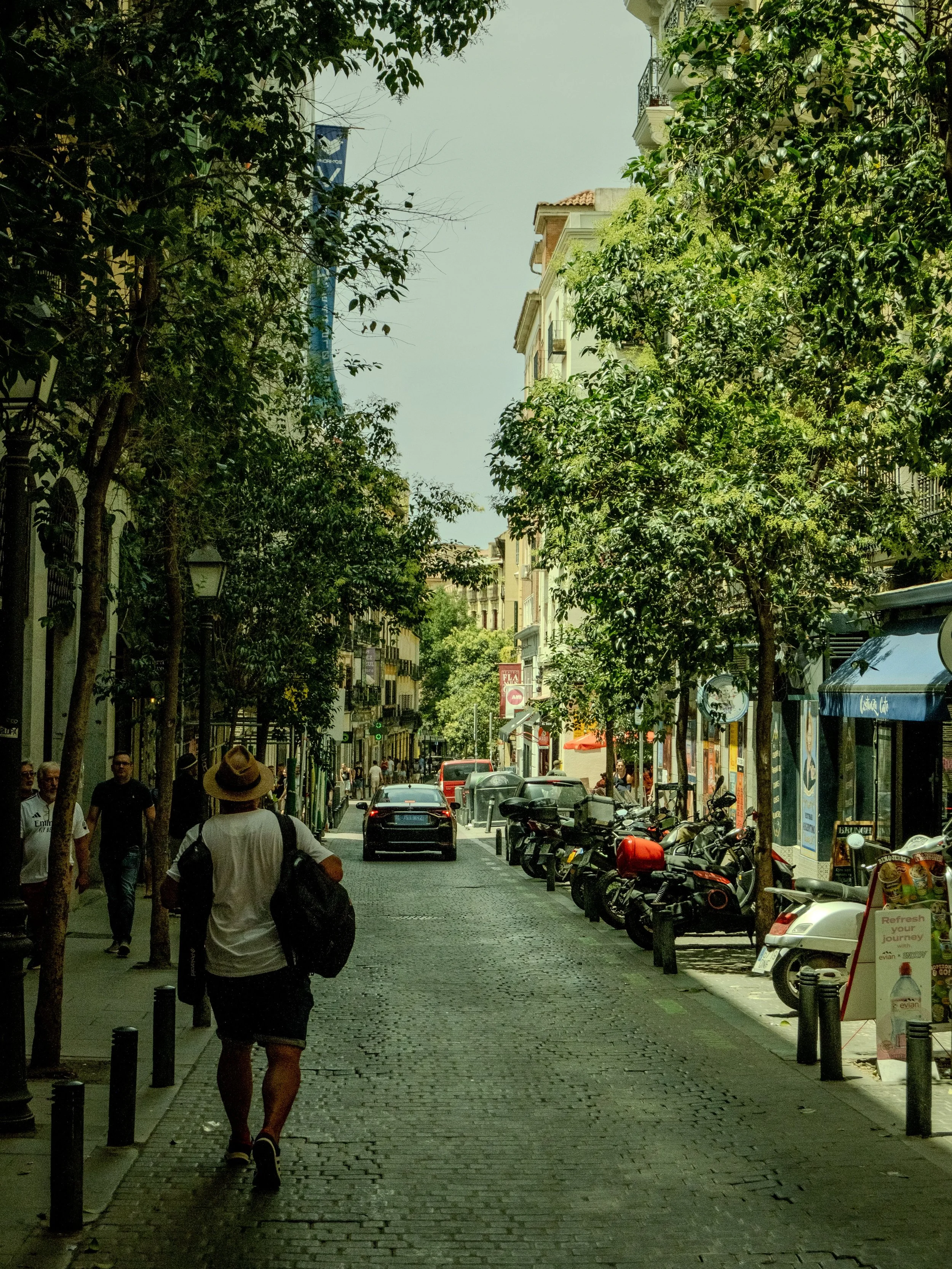
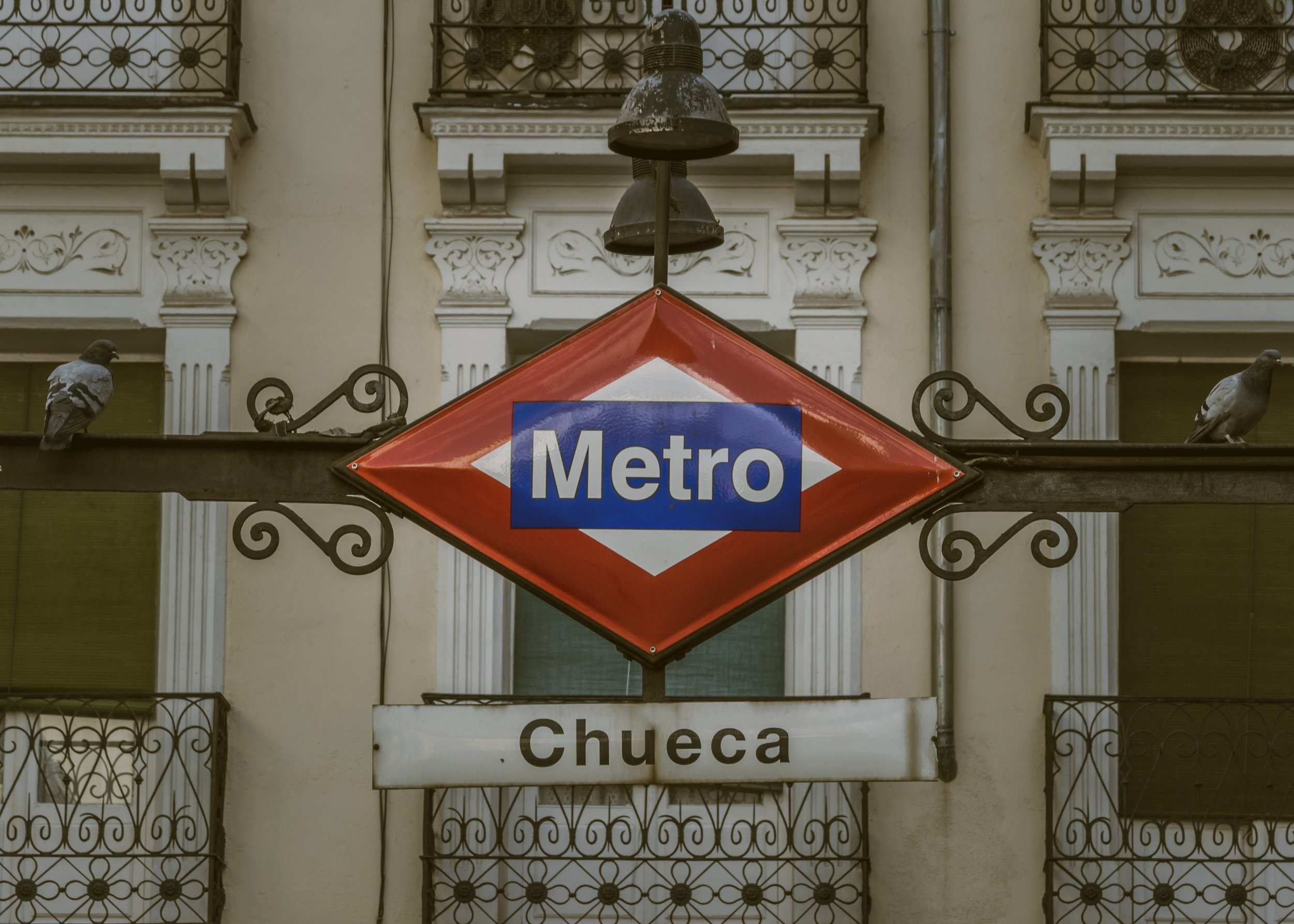
Photo: “Chueca” by Frank, CC BY-ND 2.0SALAMANCA, finally, is what Madrid looks like when it stops improvising. Laid out in a strict 19th-century grid for the city's rising bourgeoisie, it's wide boulevards, wrought-iron balconies, and Serrano street's flagship stores lined up like they're posing for a photo nobody asked them to take. Less charming than the other five, on purpose — Salamanca was never trying to be charming. It was trying to be correct, and still is.
THE SPINE OF MADRID:
PLAZA DE ESPAÑA - GRAN VÍA - CIBELES - PUERTA DE ALCALÁ
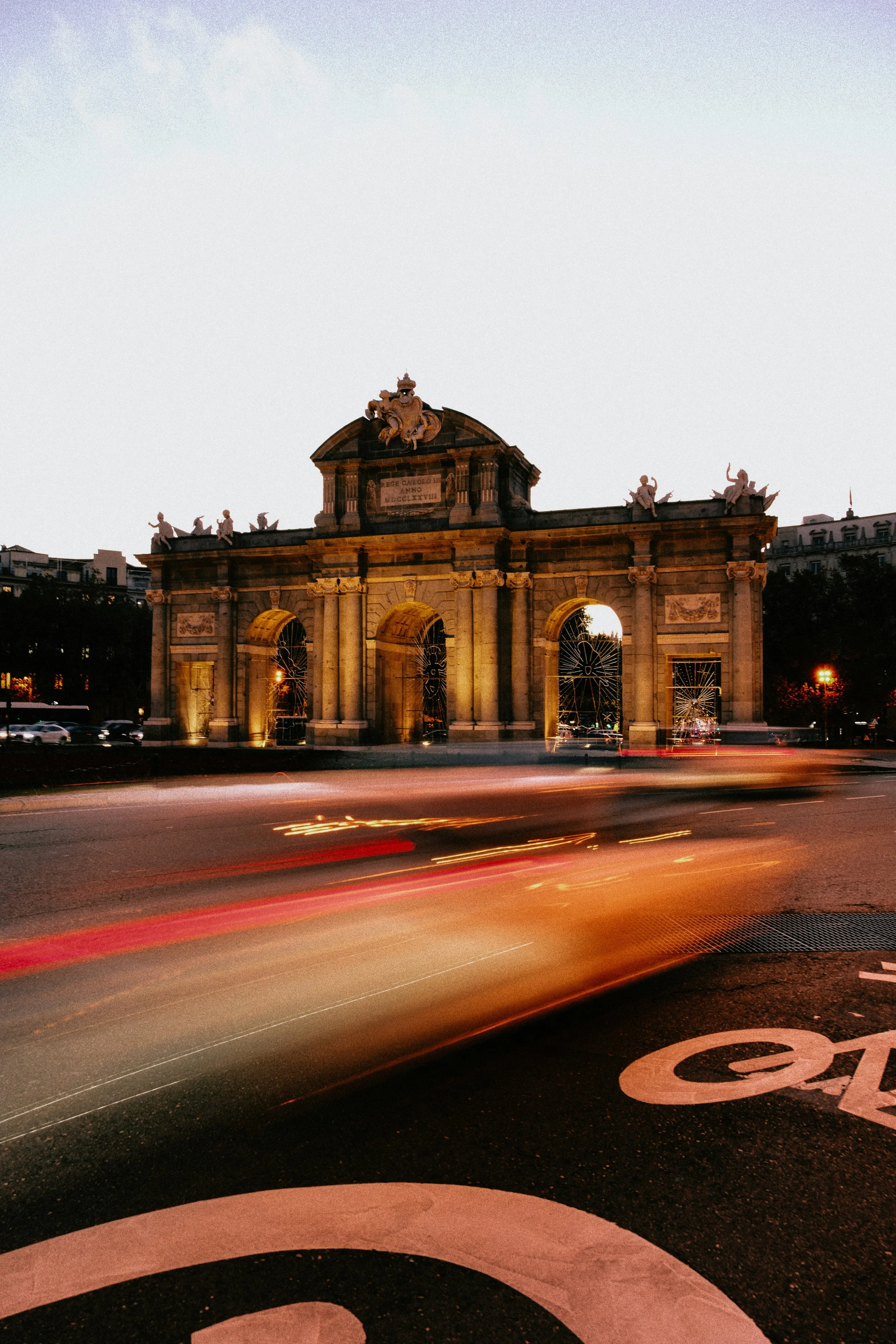
One straight walk connects four different centuries of the city. Start at Plaza de España, cut through Gran Vía's neon and noise, cross Cibeles with its fountain and post-office-turned-palace, and end at Puerta de Alcalá, standing alone in its roundabout like nobody told it the city grew around it. Forty minutes on foot. No detours needed — the street does the work for you.
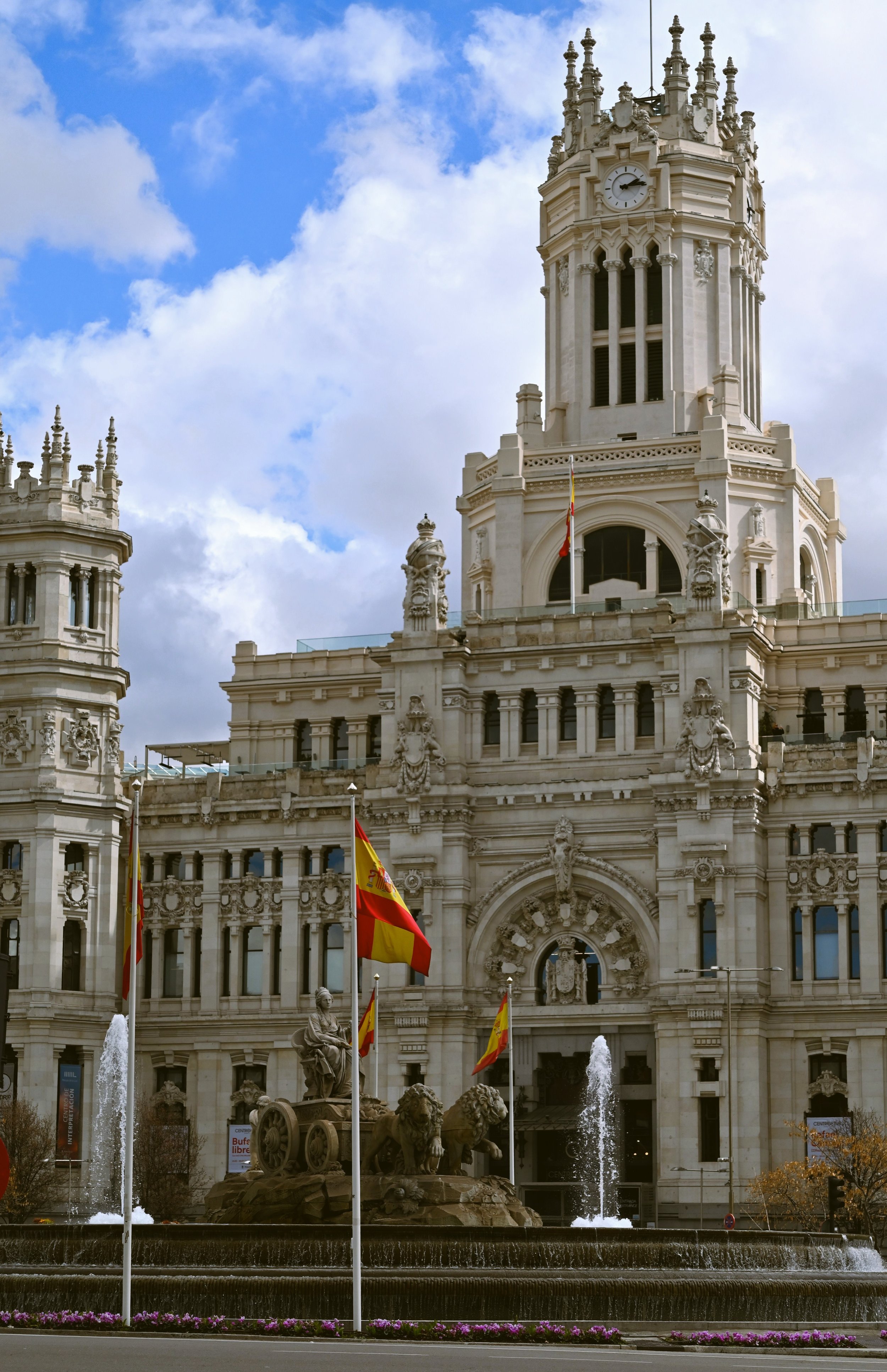
Cibeles
Puerta de Alcalá