THE VILLAGES
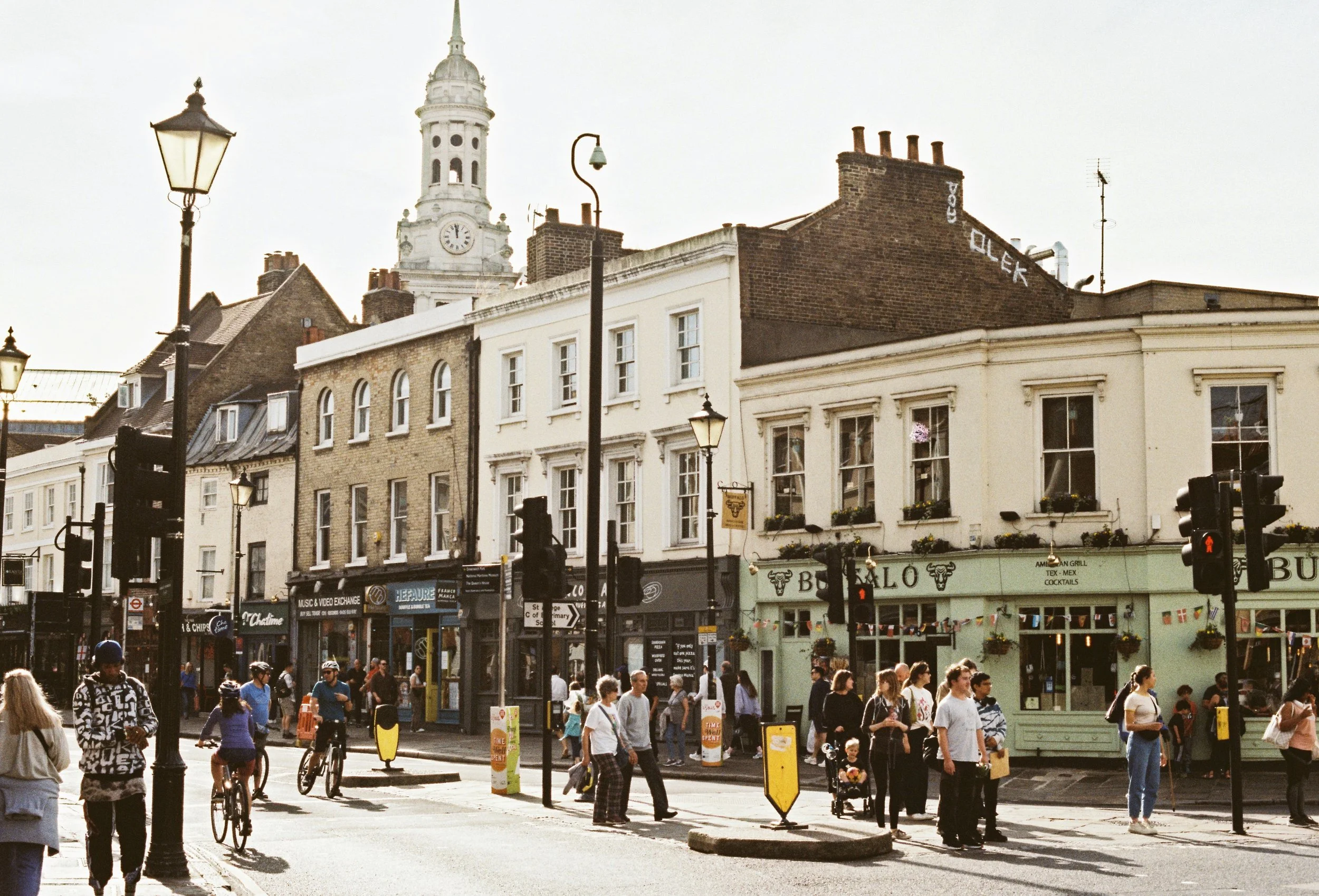
Say you're "from London" and watch a local's face — they'll wait for the real answer. Nobody here actually identifies with the whole city; they belong to a specific patch of it, Greenwich or Hackney or Peckham, defended with a loyalty that borders on tribal. That's because London never really became one city. It absorbed dozens of separate villages as it grew outward over centuries, and most of them never quite let go of their own identity in the process. Cross from one into the next and the change is real, not cosmetic — different architecture, different pace, sometimes a different accent within a twenty-minute walk.
This is the part of London that never makes the postcards, because postcards need a single, obvious subject, and nothing about this city works that way. What follows are seven of these villages, each with a character distinct enough that you could spend a whole day in just one and leave with a completely different impression of London than the person who spent theirs in the next one over.
None of them are the "real" London. All of them are.
You'll feel it most on the Overground, London's most underrated train line, which loops through half of these villages without ever going near a tourist landmark. Get off at the wrong stop on purpose sometimes — wander for twenty minutes with no destination in mind, and you'll usually find whatever makes that particular corner of the city tick, long before any guidebook gets around to explaining it.
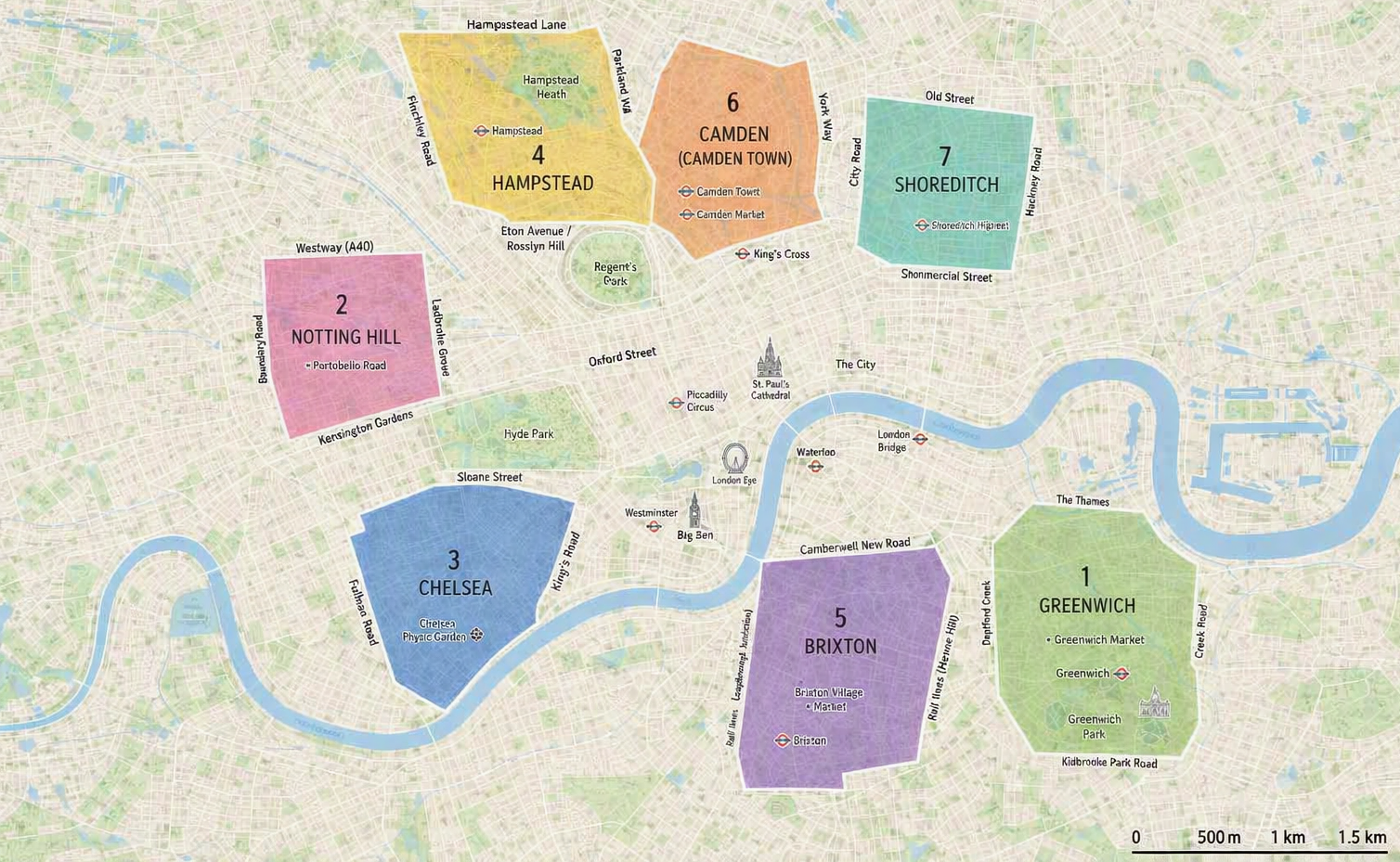
These seven aren't the only villages worth knowing. They're simply the ones that, together, come closest to explaining what London actually is.
GREENWICH
Maritime history and the Prime Meridian itself — Royal Observatory, the Cutty Sark, and a park sloping down to the Thames. The one village on this list that quietly reminds you the world sets its clocks by this exact hill.
NOTTING HILL
Pastel townhouses, Portobello Road on a Saturday, and a carnival every August that turns the whole neighborhood into Europe's biggest street party. Old money and Caribbean carnival culture, somehow sharing the same postcode without friction.
CHELSEA
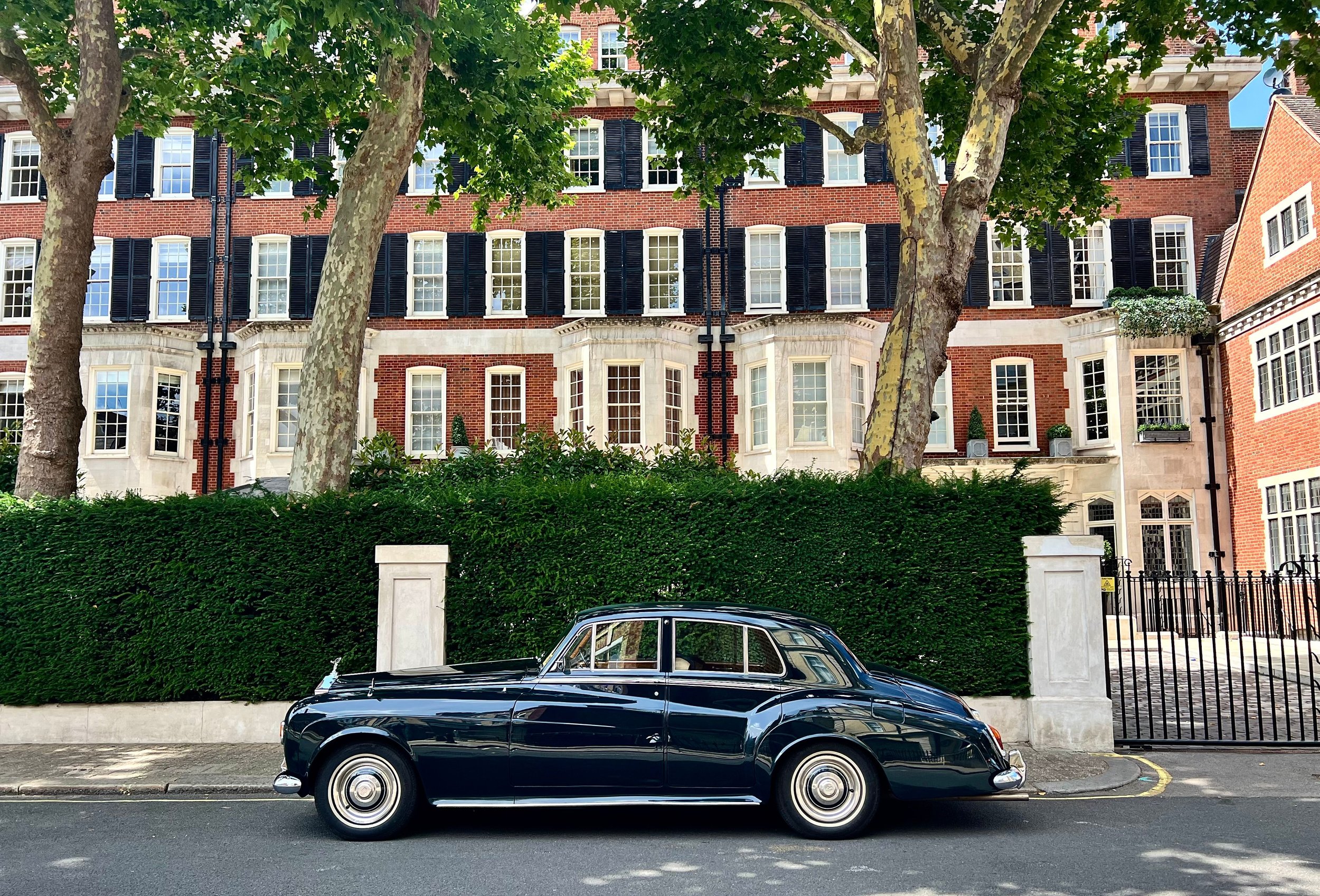
The old bohemian riverside village, now London wealth at its most understated — King's Road, the Chelsea Flower Show, a version of money that's inherited rather than new and rarely announces itself.
HAMPSTEAD
Literary, leafy, genuinely villagey — cobbled lanes, wild swimming ponds on the Heath, and a pub scene where poets and playwrights have been quietly drinking for three centuries. Still feels like a market town that got swallowed whole.
BRIXTON
The beating heart of Black British culture in London — Brixton Market's food stalls, a mural for the local kid who became David Bowie, and music spilling out of doorways that never quite stops.
CAMDEN
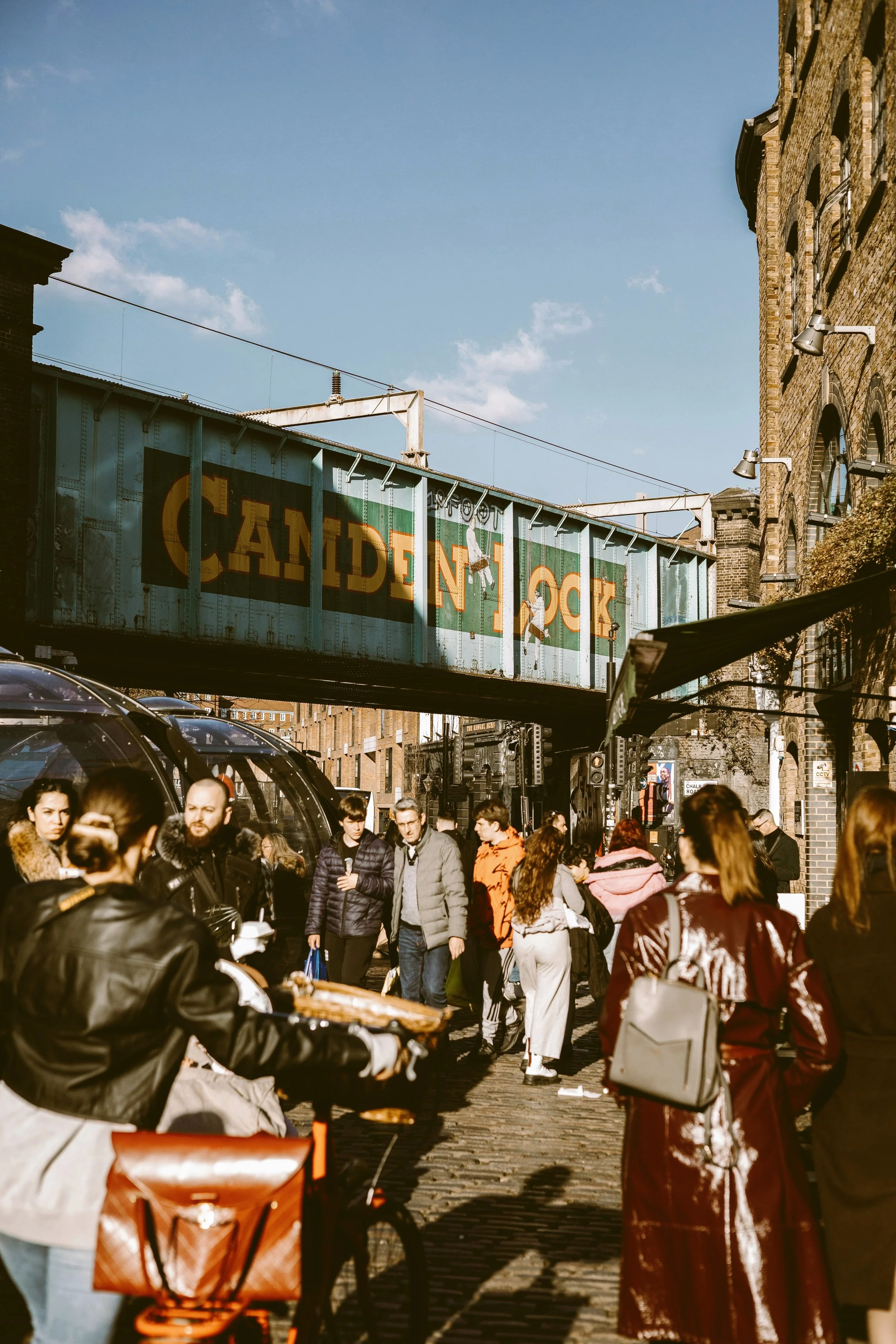
Punk broke here in 1976, and the market still hasn't entirely calmed down — Regent's Canal, Stables Market's old horse tunnels, and enough band history per square foot to fill a documentary.
SHOREDITCH
Victorian warehouses turned into galleries, tech offices, and some of the city's best food — built on the bones of what was, within living memory, one of London's poorest districts.
Chelsea
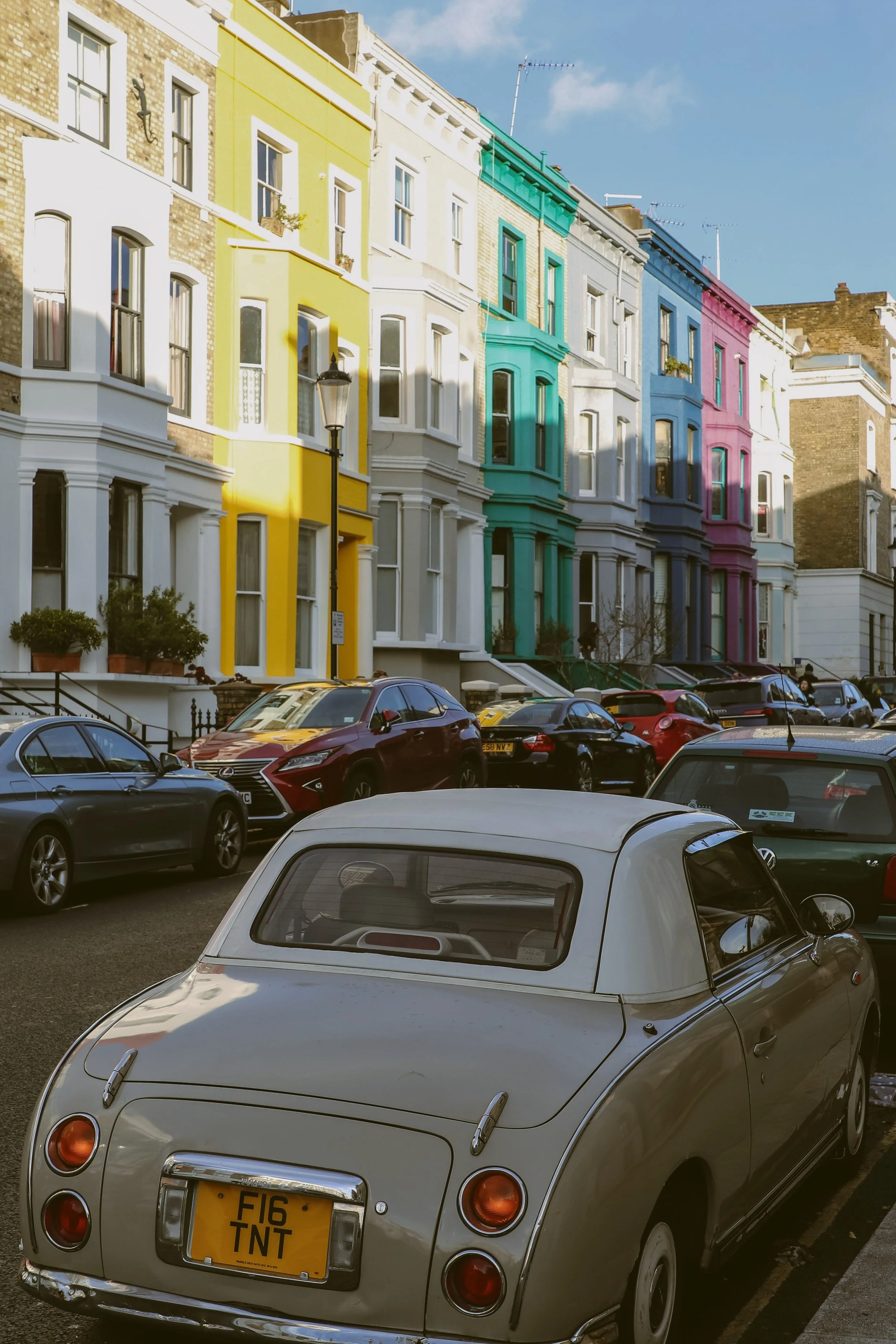
Notting Hill
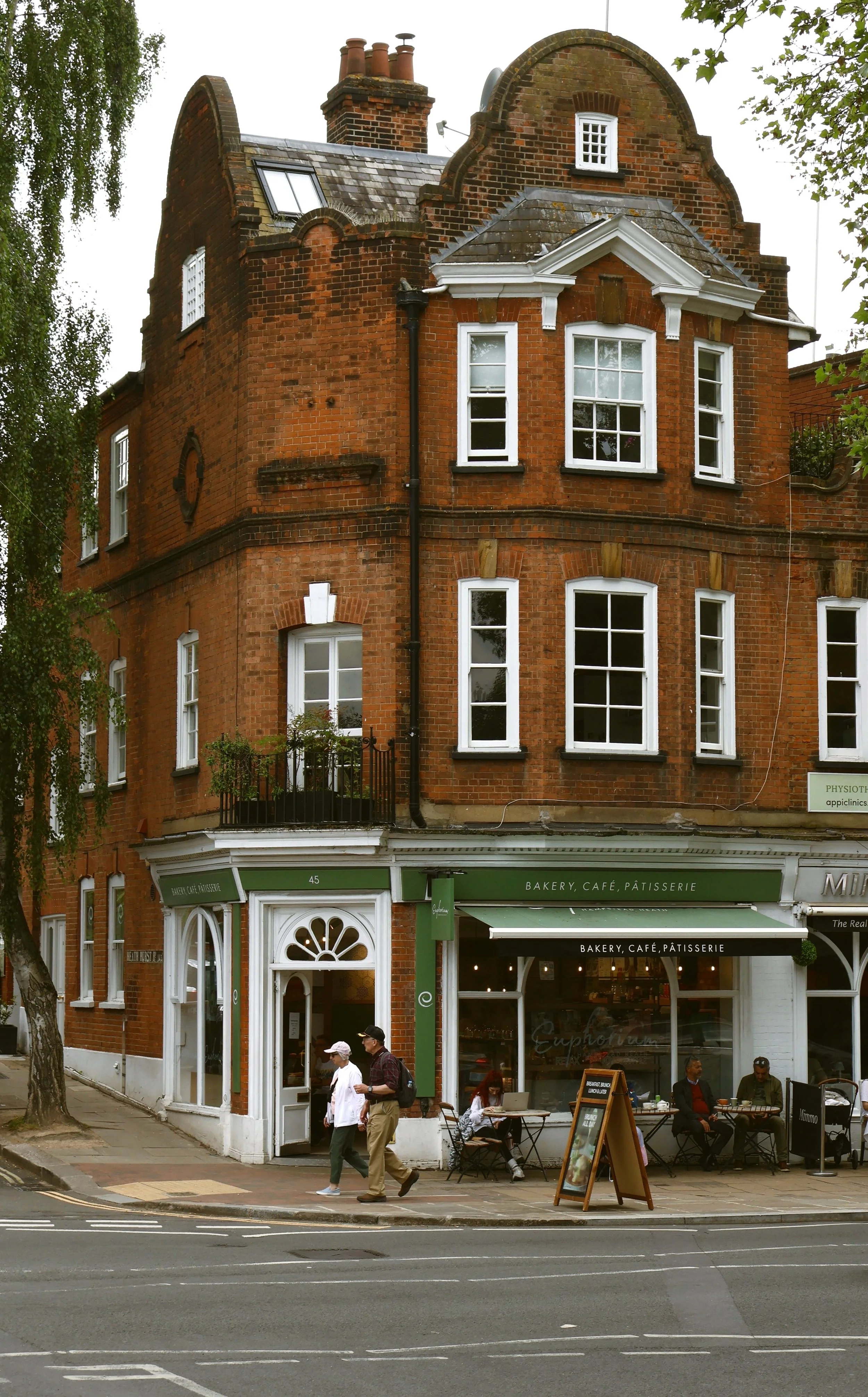
Hampstead
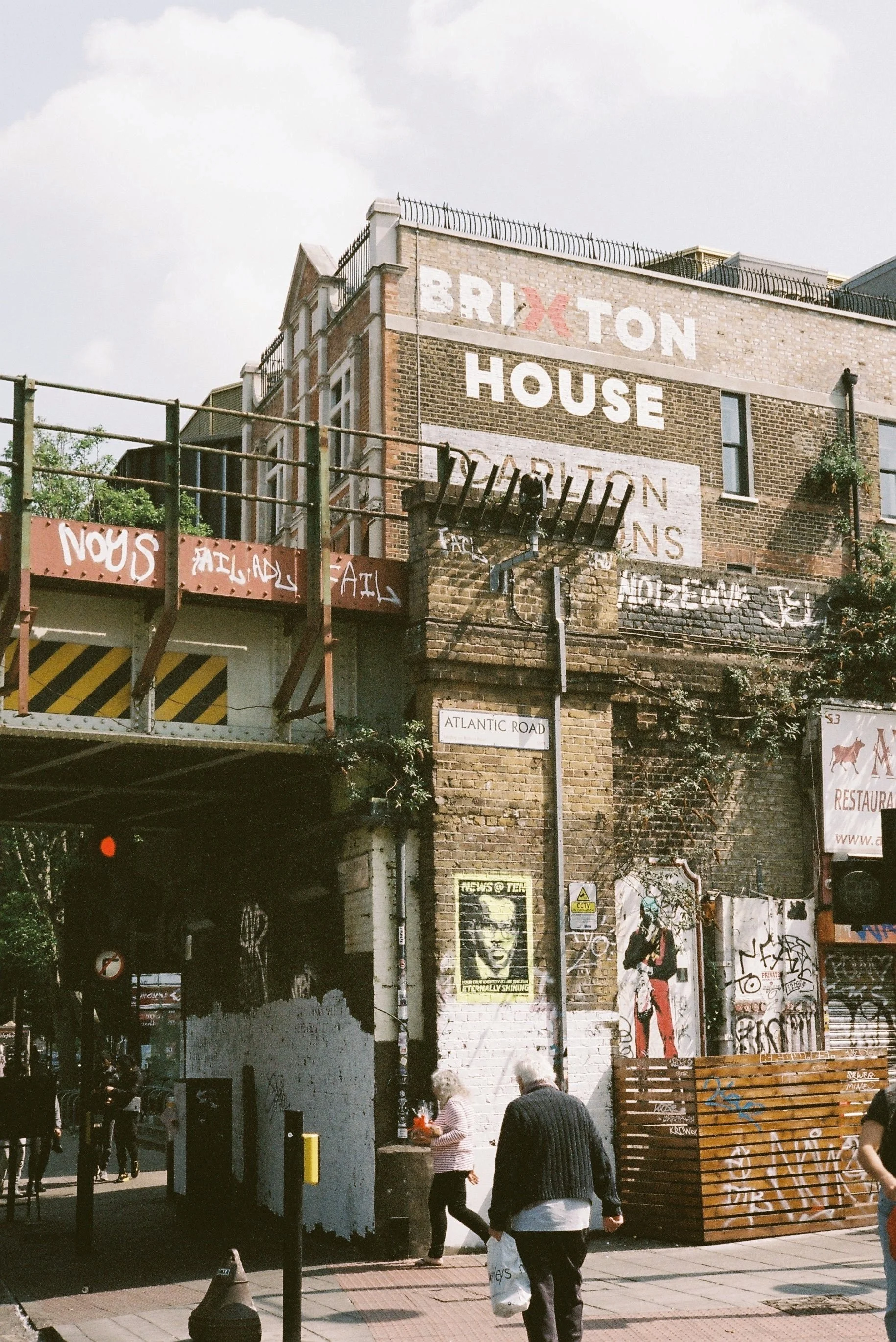
Brixton
Greenwich