THE OLD TOWN & GRAN VÍA
Bilbao has two centers, and they've never quite agreed on which one is in charge. They sit on opposite banks of the river, a short bridge apart, and crossing from one to the other feels a bit like changing centuries.
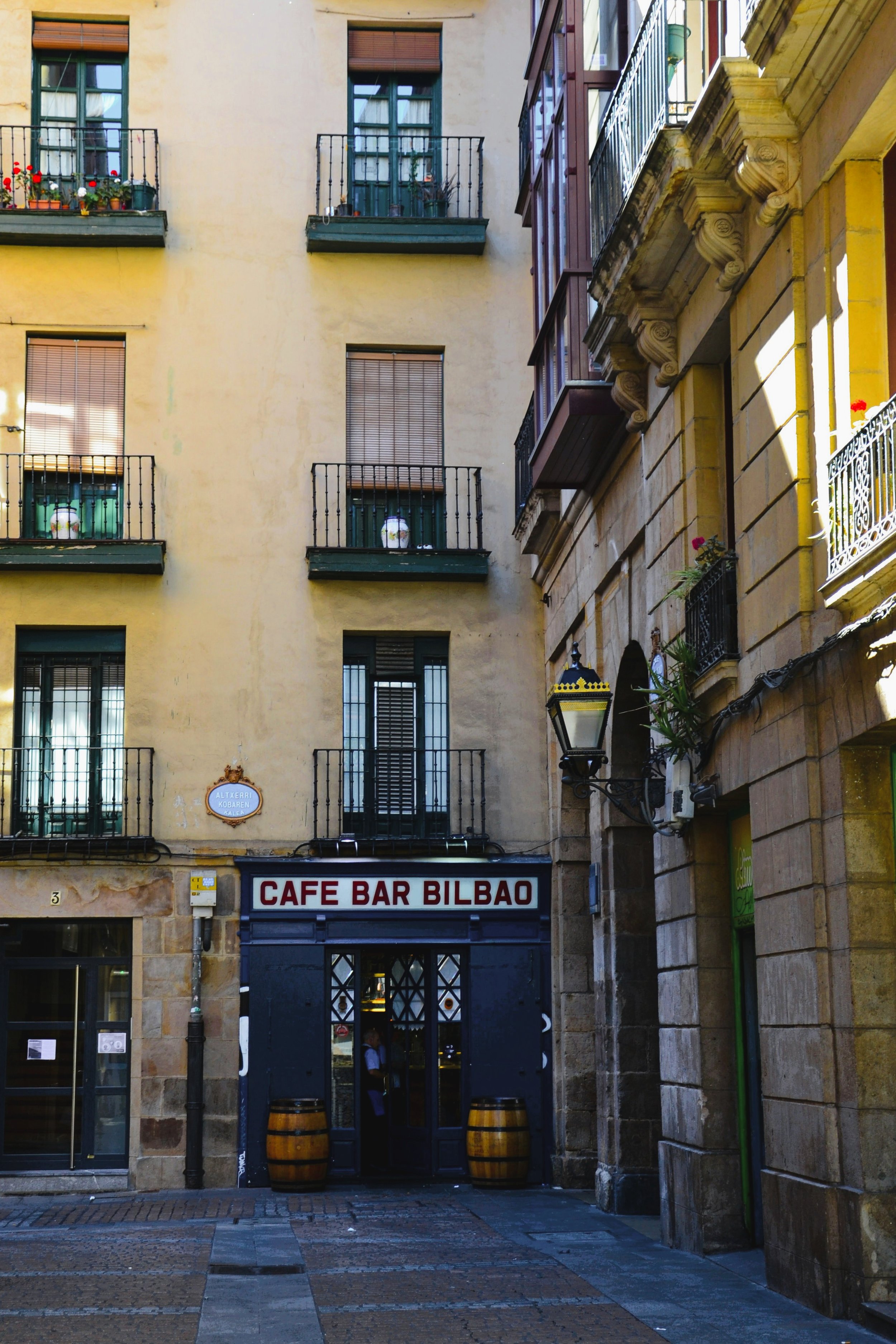
On one side is the old town, where the city began: a tight knot of narrow streets, wooden balconies and shop signs that haven't changed since your grandparents' time. People still do their shopping here, argue in doorways and stop for a drink at the same bar they've been going to for forty years. It's small, a little chaotic and very hard to leave.
Then, in the late nineteenth century, Bilbao got rich. Iron, ships and banks paid for a brand new city on the other bank, with wide avenues, grand facades and squares built to be seen in. The money has calmed down since, but the swagger hasn't.
You need both to understand the place. The old town tells you who the Bilbaínos are. The new one shows you who they wanted to be.
Spend a morning on each side. Wear comfortable shoes, and pack an umbrella.
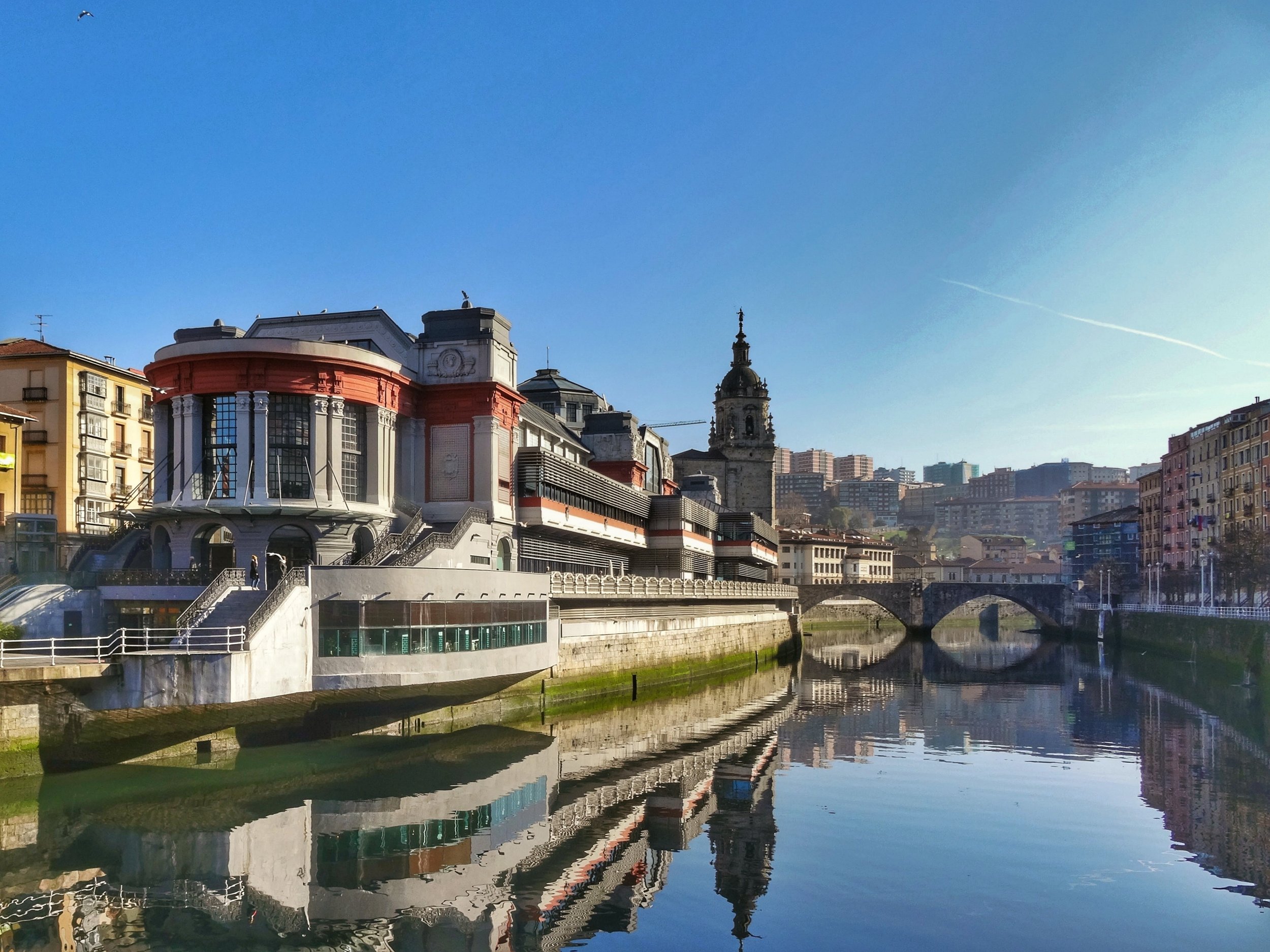
Down by the river, the Mercado de la Ribera is often called the largest covered market in Europe. Downstairs, it's fish, meat and vegetables; upstairs, people eat and drink. Next to it stands the Teatro Arriaga, all columns and curves, built in 1890 to look like a smaller cousin of the Paris Opéra. Cross the bridge in front of it and you're in another city.
THE OLD TOWN
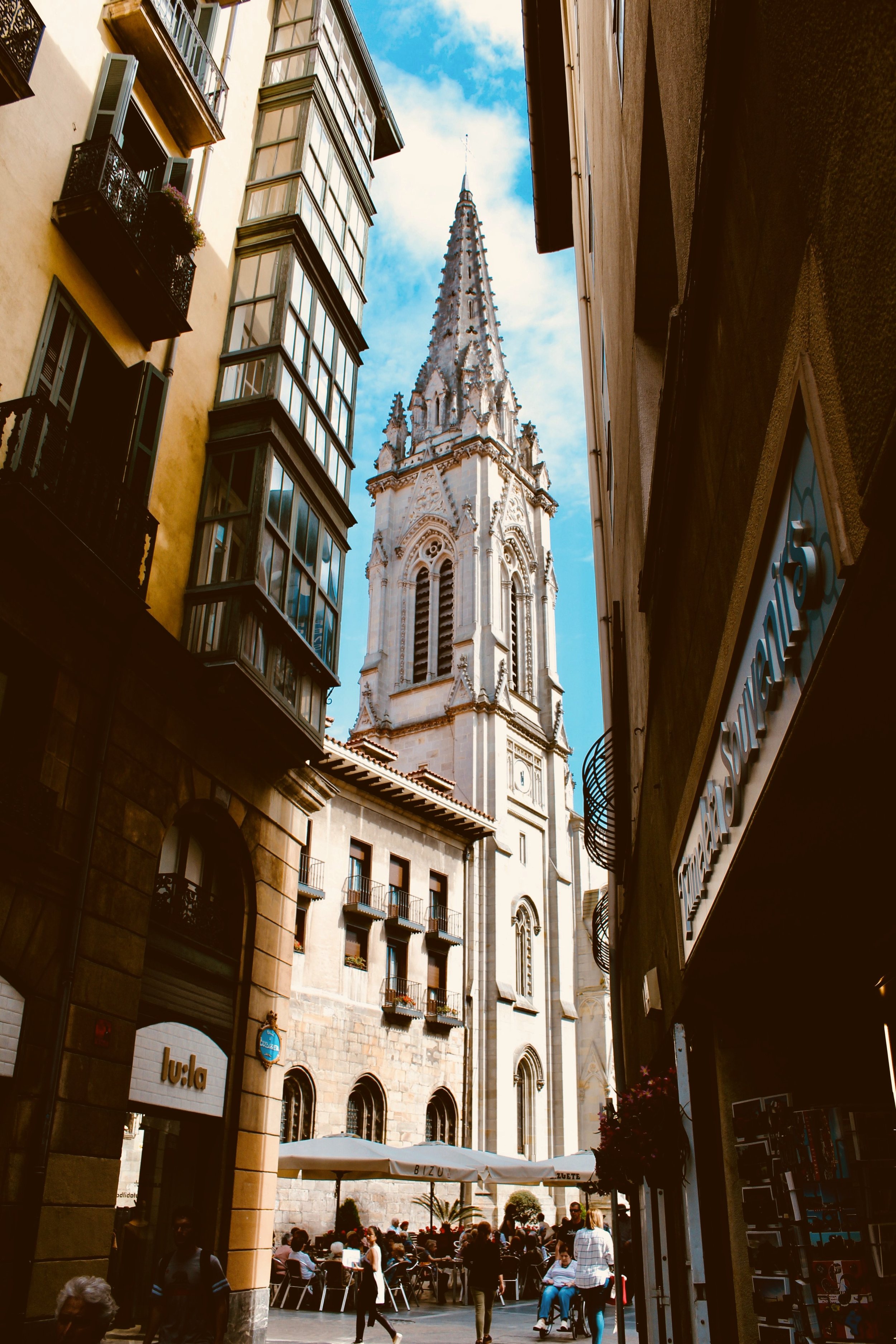
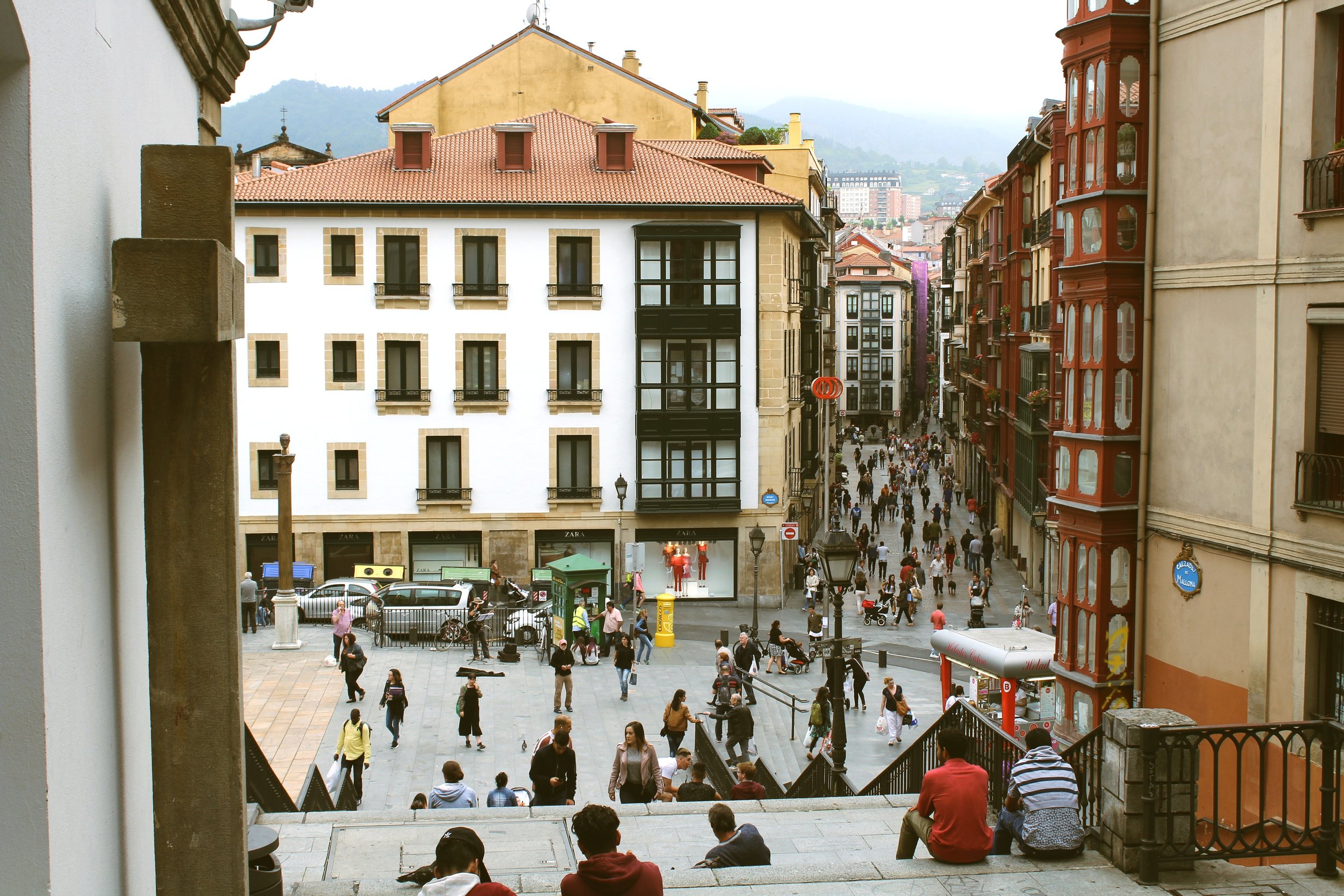
Bilbao started out in 1300 as just three streets by the river. Four more were added, and those seven, the Siete Calles, are still the heart of the old town. Wander them without a plan: shoe shops, old haberdasheries, bakeries and bars squeezed into ground floors, with the Gothic cathedral of Santiago tucked in the middle, a stop for pilgrims on the northern route to Santiago de Compostela.
A few steps away, Plaza Nueva is the old town's living room, a neoclassical square ringed with arches and bars. On Sunday mornings it fills with stamp and coin collectors, haggling over tiny things with great seriousness. Most of those bars are about pintxos, and they get their own chapter.
Catedral de Santiago
Mercado de la Ribera
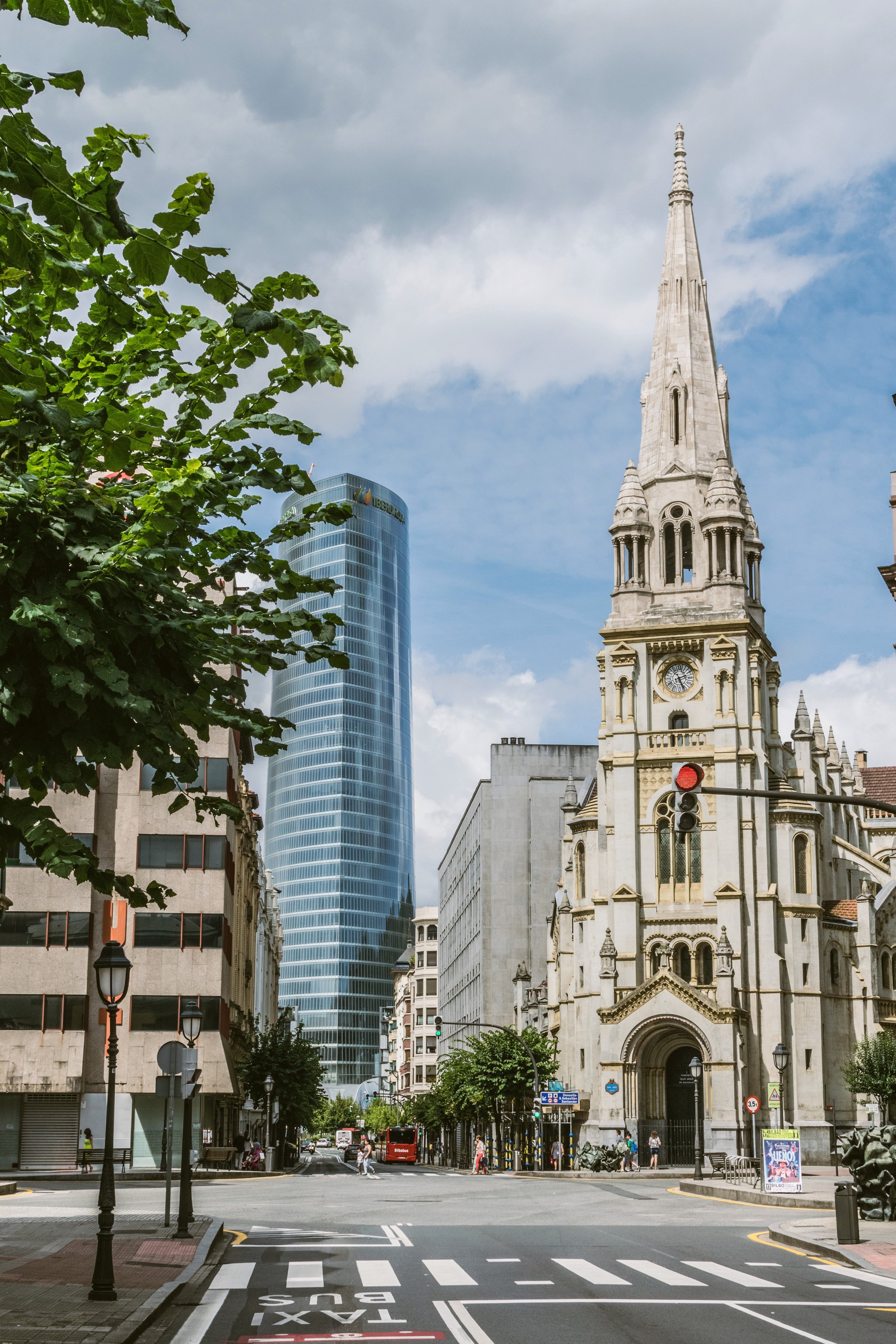
San José church
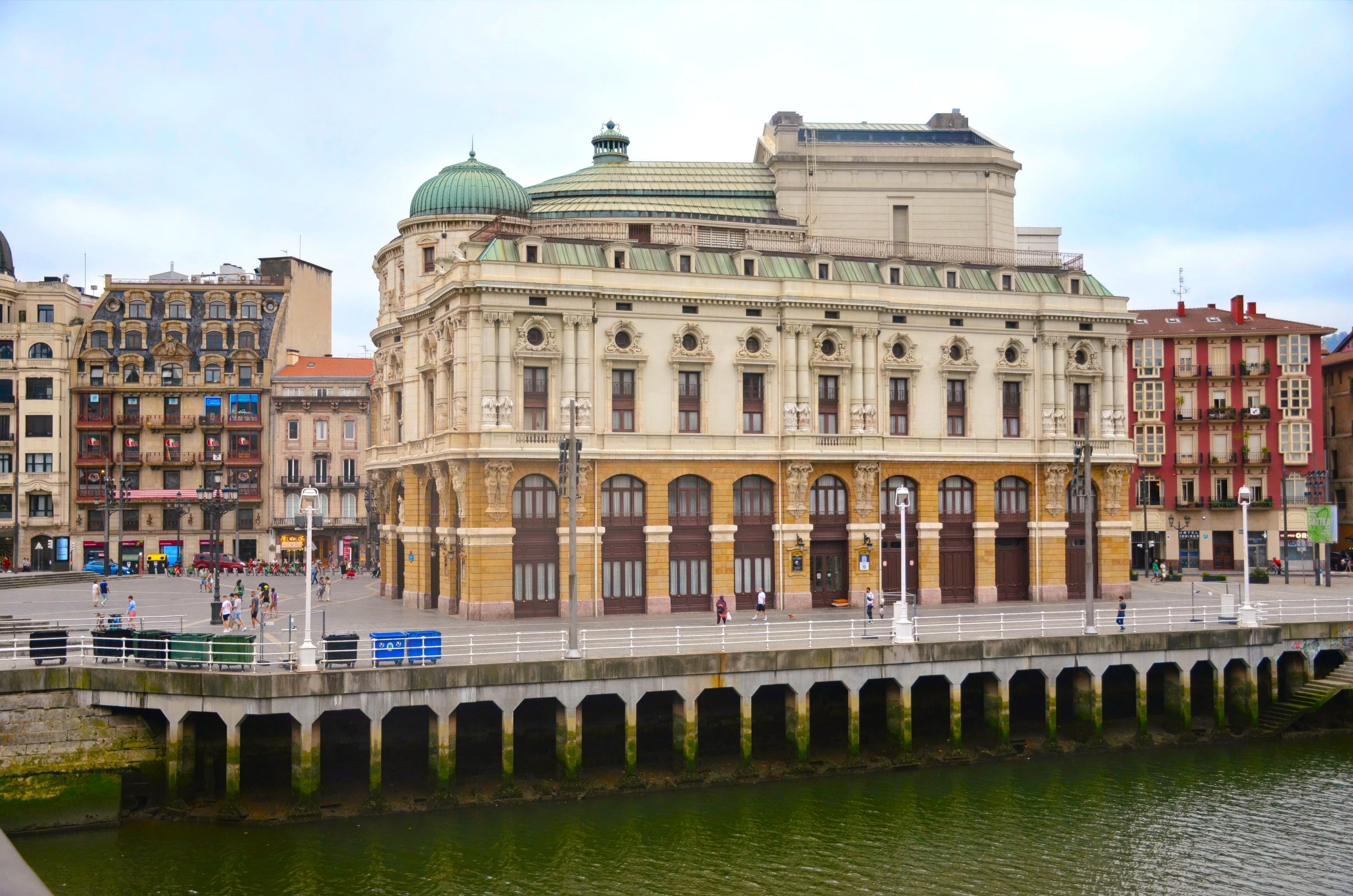
Teatro Arriaga
GRAN VÍA & ENSANCHE
Cross the El Arenal bridge and the streets suddenly get wider. Welcome to the Ensanche, the new town that Bilbao's money built.
From Plaza Circular, where a statue of the city's founder keeps an eye on the traffic, Gran Vía runs straight through the center: department stores, grand banks and the Palacio de la Diputación, which looks more like a palace than an office. Halfway along, it crosses Plaza Moyúa-Eliptikoa, the oval square at the heart of it all, with the old Hotel Carlton on one side. That first stretch is the one worth walking.
Now for the surprise. A couple of blocks away, Azkuna Zentroa was once the city's wine warehouse. Philippe Starck turned it into a cultural center, held it up with 43 columns, each one different, and put a glass-bottomed pool on the roof. Look up and you'll see people swimming over your head.
And if you have an hour left, the Fine Arts Museum is a short walk away.
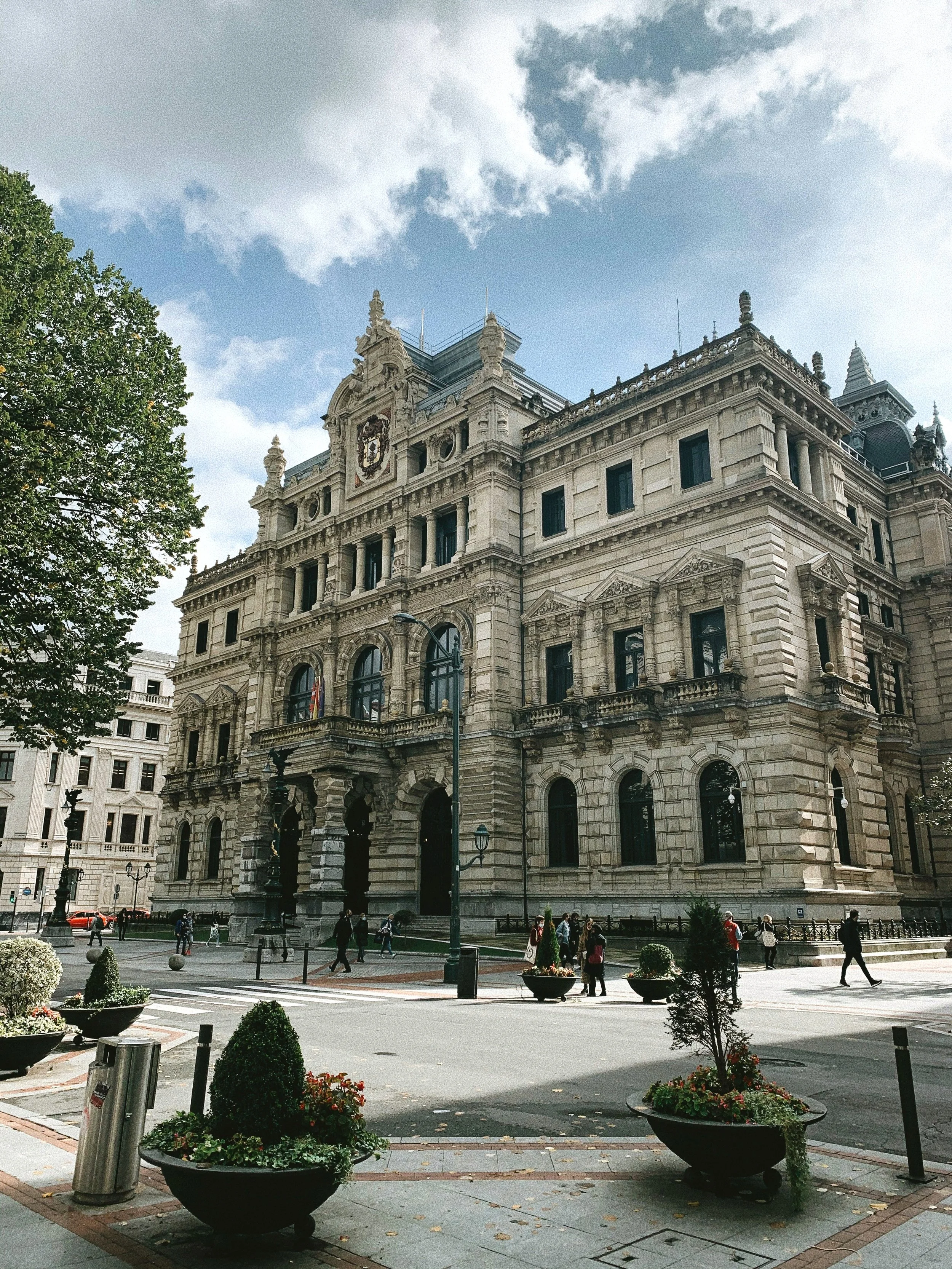
Diputación Palace
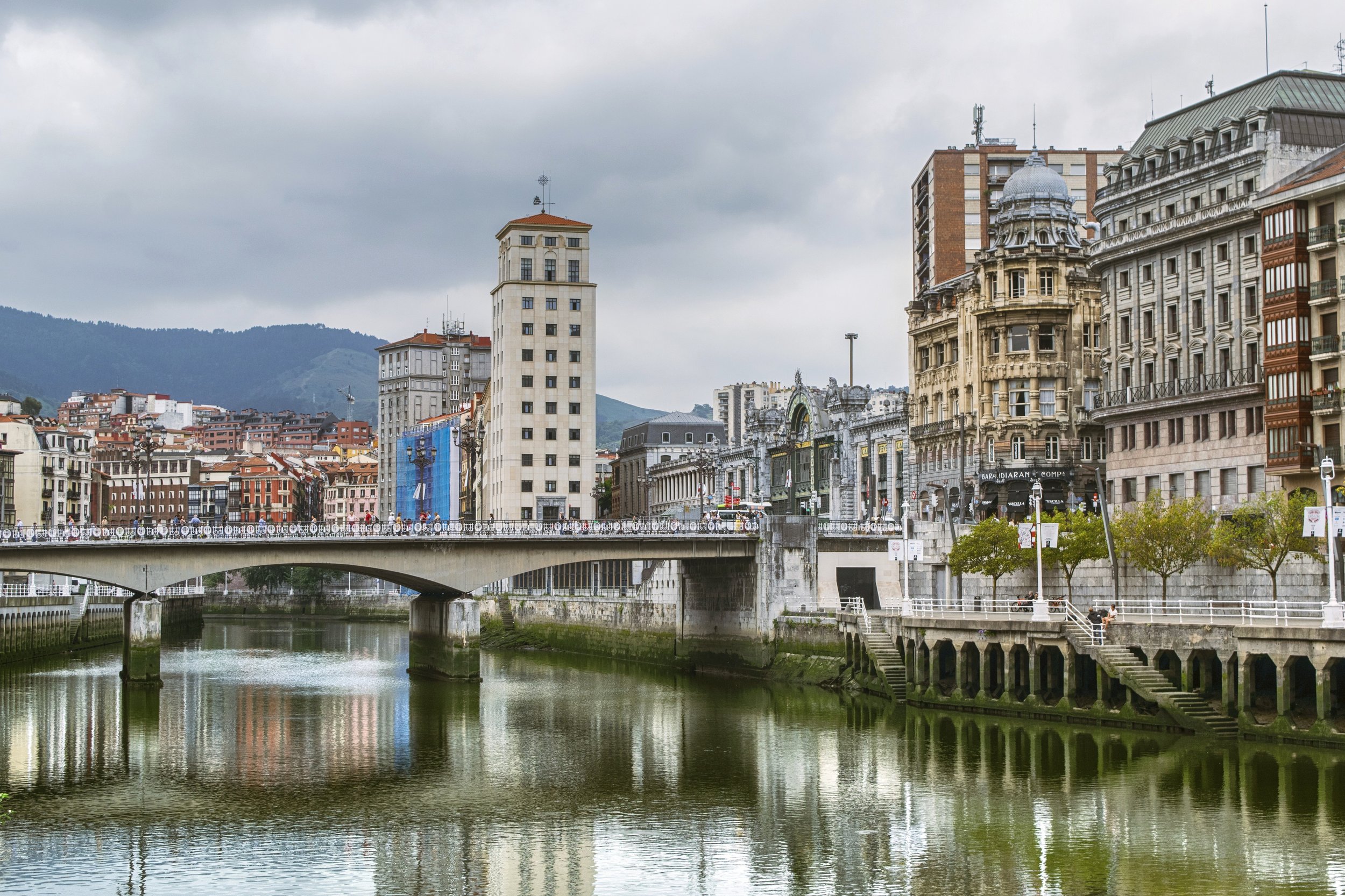
Puente de El Arenal
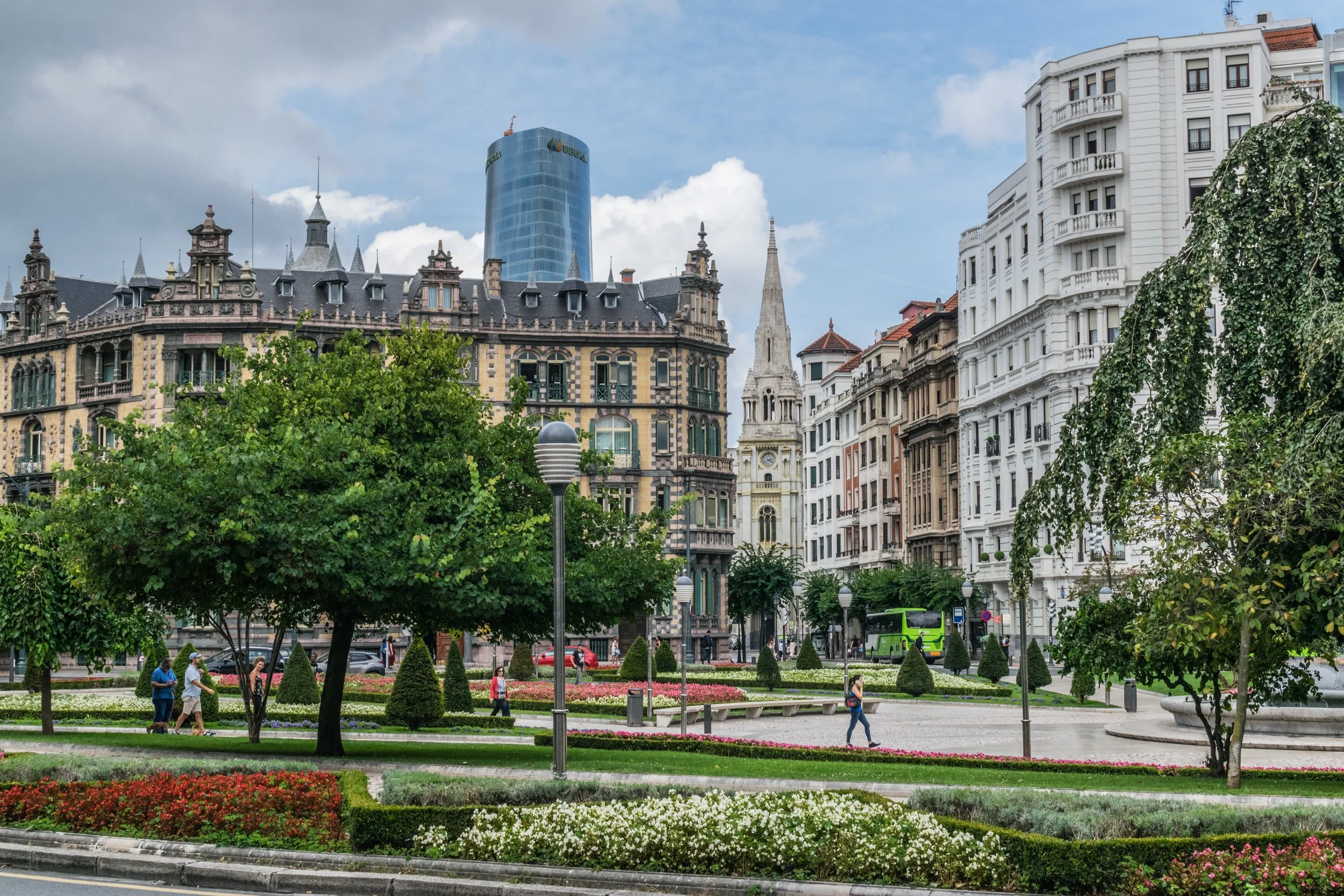
Plaza Moyúa - Eliptikoa
Two hours, ten people at most and a local guide who knows which doorway hides which story. The walk starts in front of the Teatro Arriaga and winds through the old town, Plaza Nueva and La Ribera market before crossing over to Gran Vía. Mornings or afternoons, in English or Spanish. Comfortable shoes recommended.