THE GUGGENHEIM
For most of the twentieth century, the river was where Bilbao made its money. Iron ore went out, ships came in, and the banks were lined with shipyards, cranes and blast furnaces working day and night. Nobody walked along it for fun. You went there to work, and you came home smelling of it.
Then, in the 1980s, the industry started to close down, and the city had to decide what it wanted to be next. The answer, which plenty of locals thought was madness at the time, was a museum. A very strange, very shiny one, built on an old dockside plot and opened in 1997. People laughed, argued about the cost and complained in the bars. Then the visitors started arriving, and they kept coming.
It worked better than anyone expected. Urban planners around the world still talk about the "Bilbao effect," and cities from Abu Dhabi to Paris have tried to copy it. Few have managed it, maybe because a building alone was never the whole trick.
The real change is easier to see on a Sunday morning: families on bikes, runners, old men arguing on benches, couples sharing a coffee on the grass, all along a river that used to be off-limits. Bilbao didn't just get a museum. It got its riverside back.
Start at the museum, of course. Then keep walking. The river will do the rest.
the BUILDING
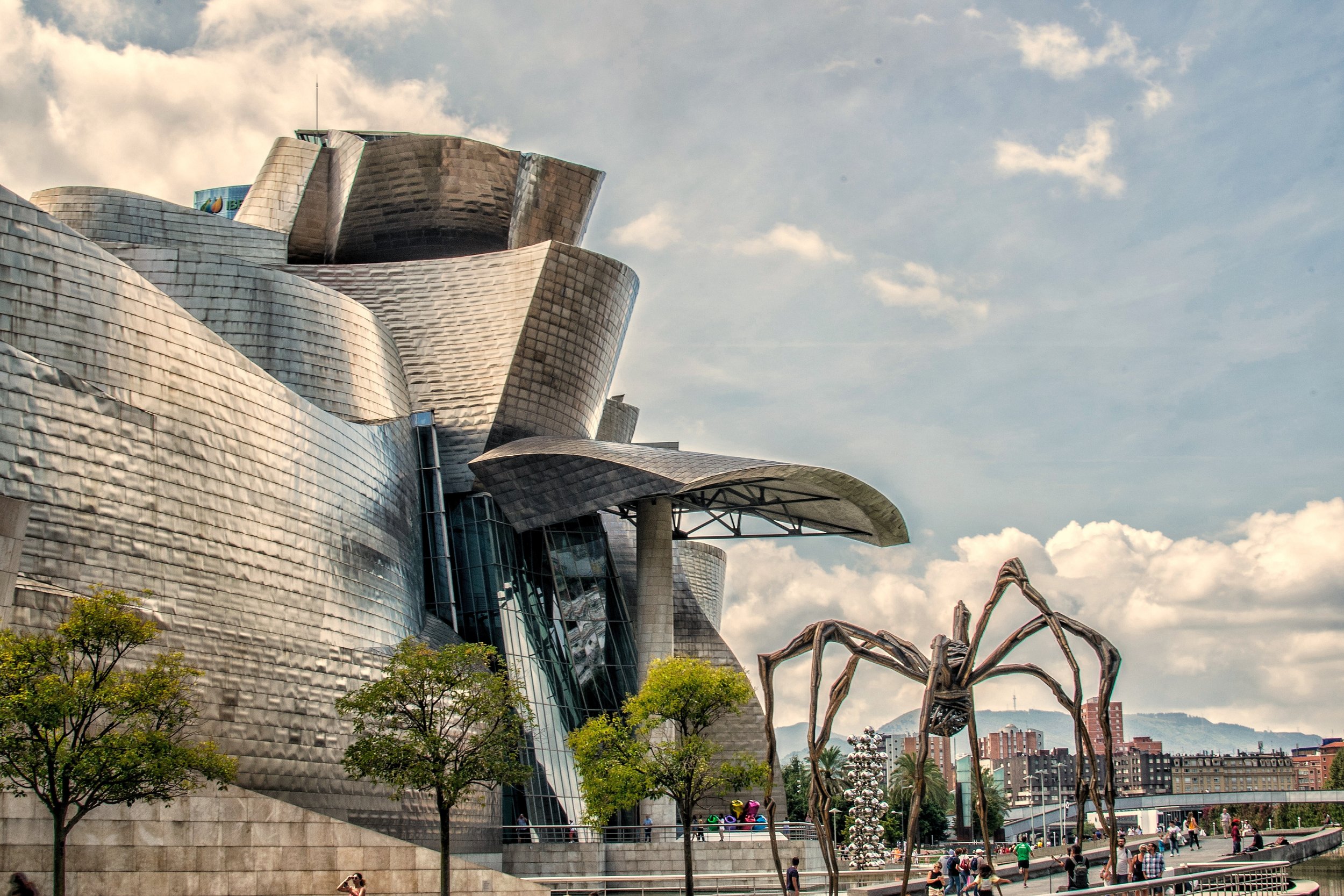
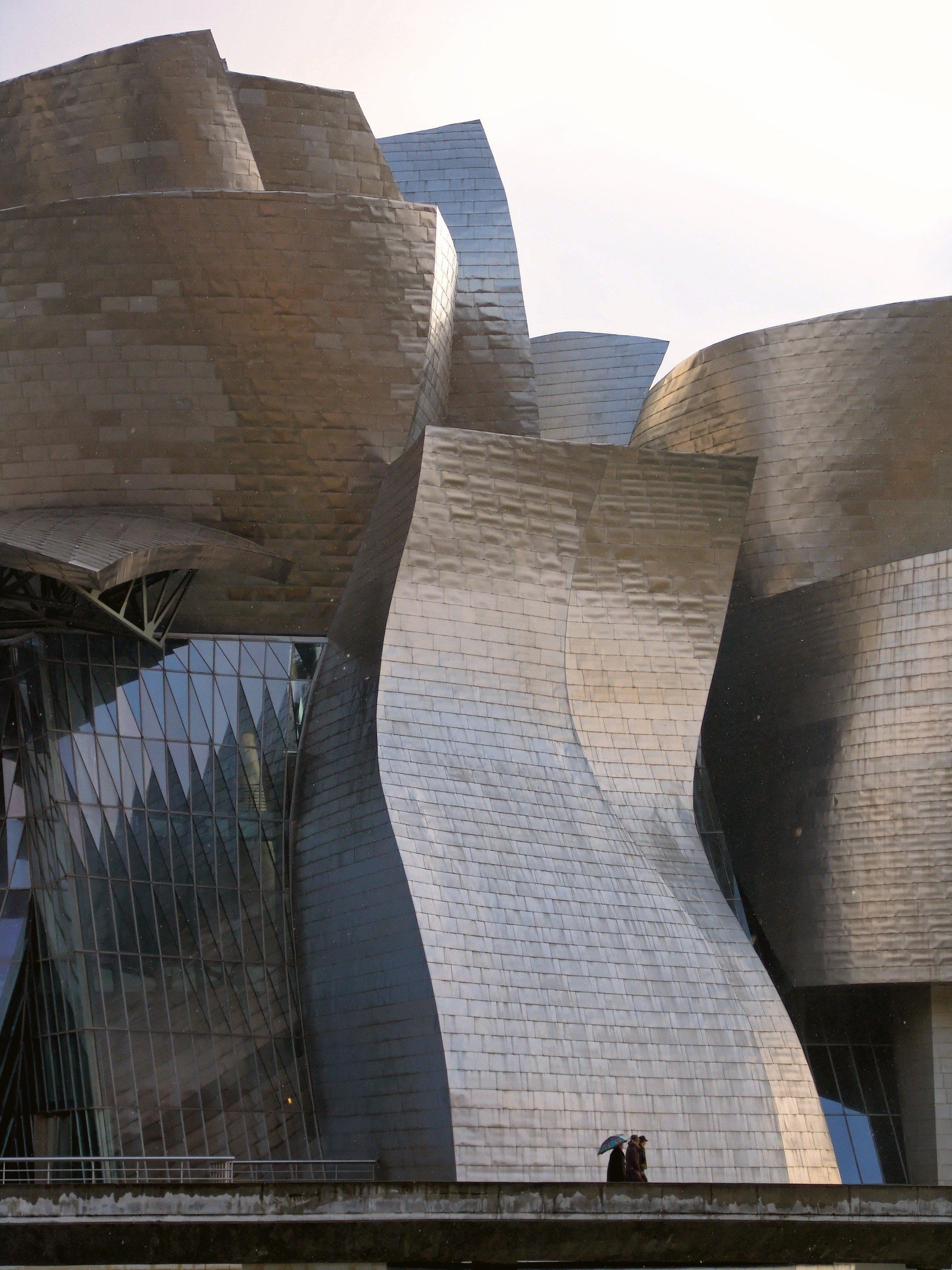
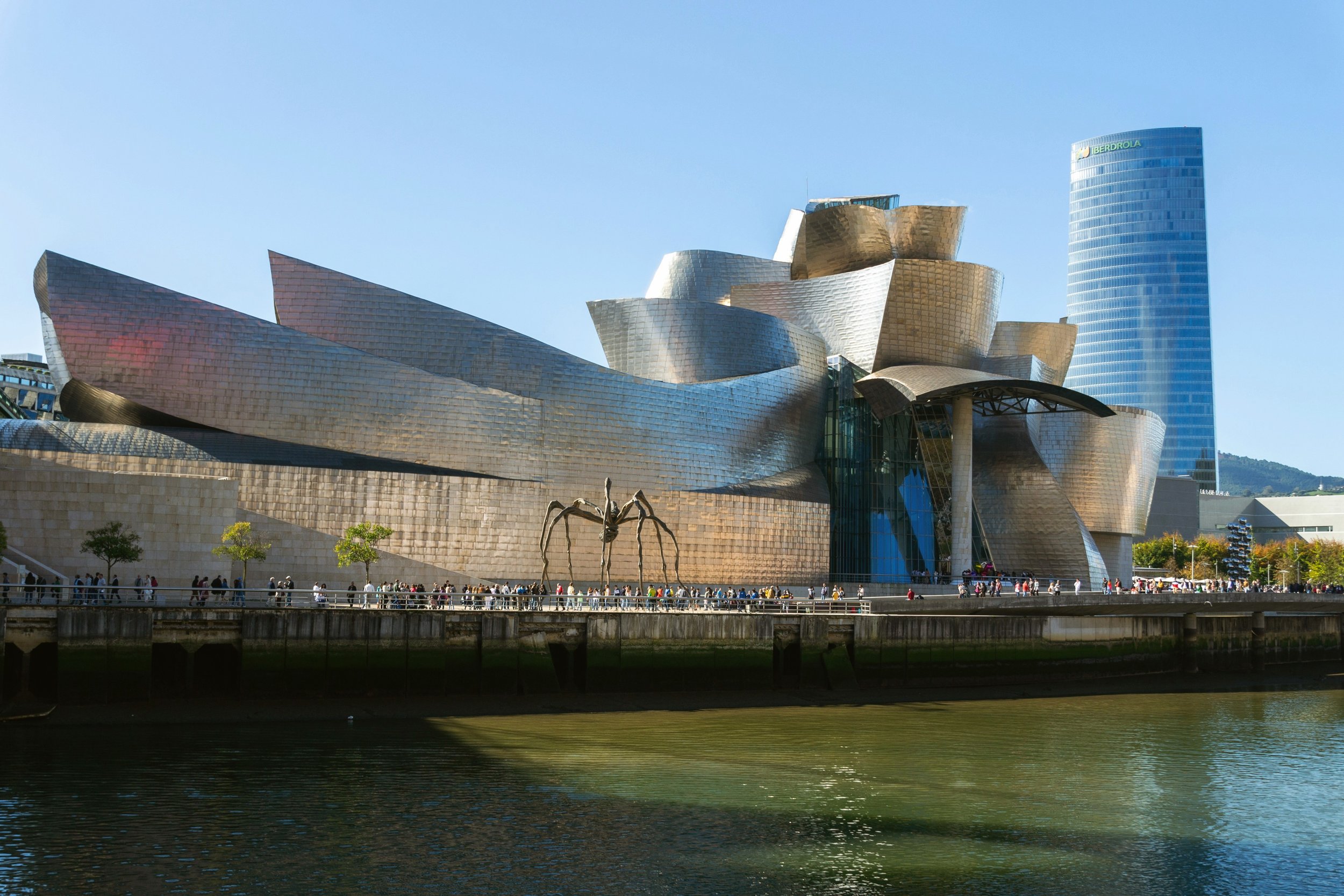
Frank Gehry covered it in thin sheets of titanium, curved every wall he could and left the right angles for the offices. From some sides it looks like a ship, which makes sense on a river that built them for a century. From others it looks like a fish, Gehry's favorite shape. On a grey day it turns silver. When the sun comes out, it glows almost gold. Same building, different mood, sometimes within the same hour.
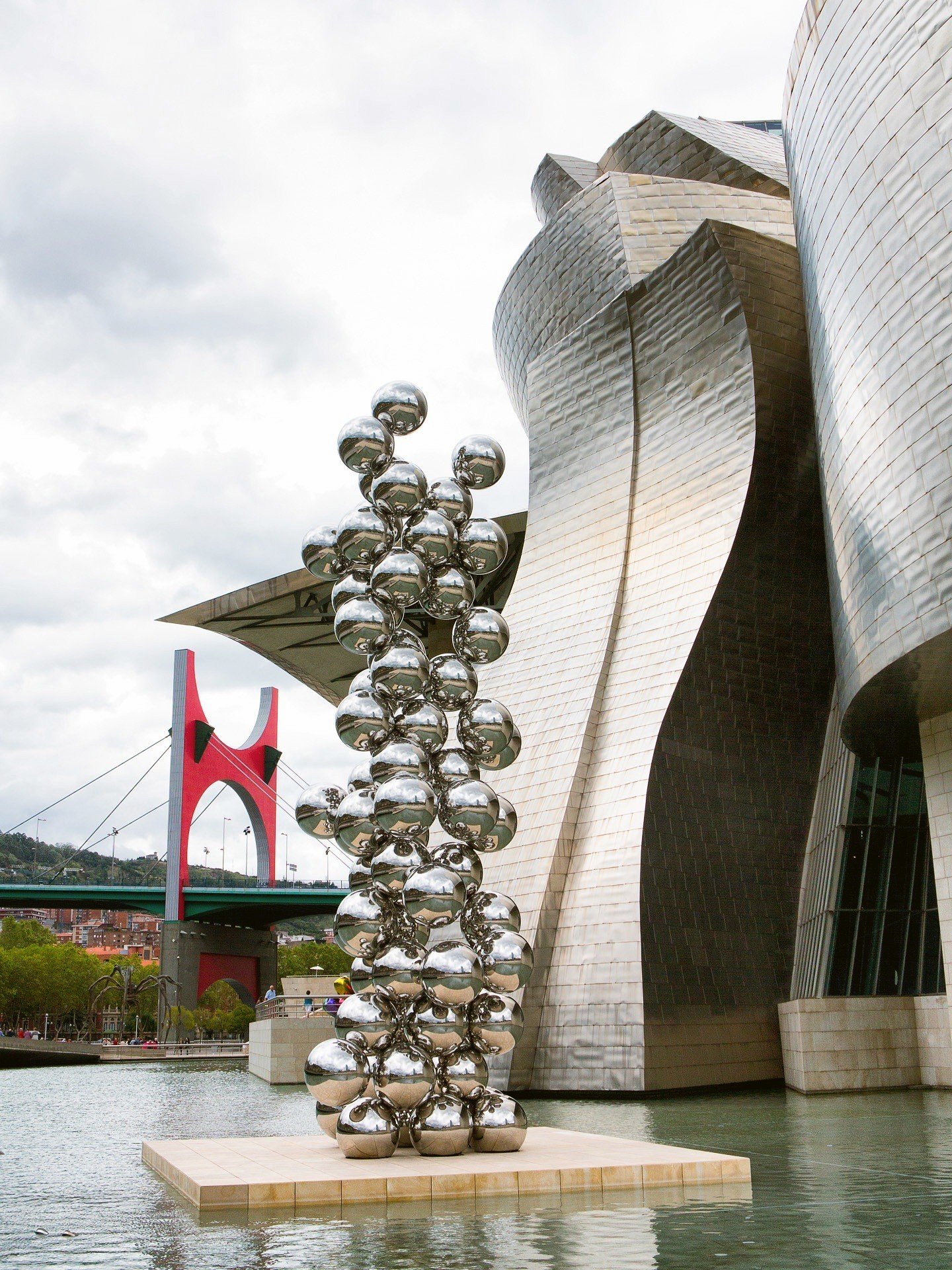
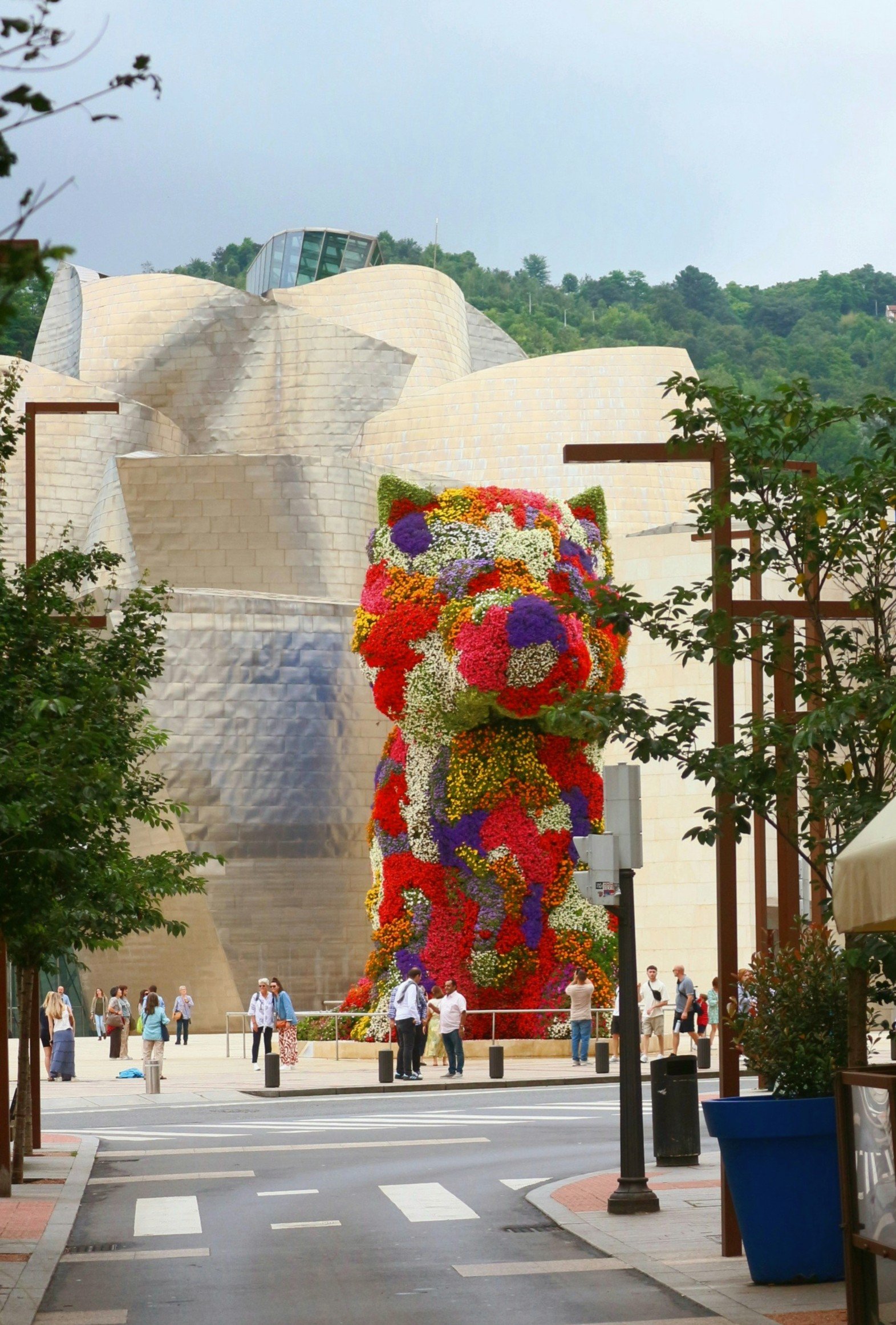
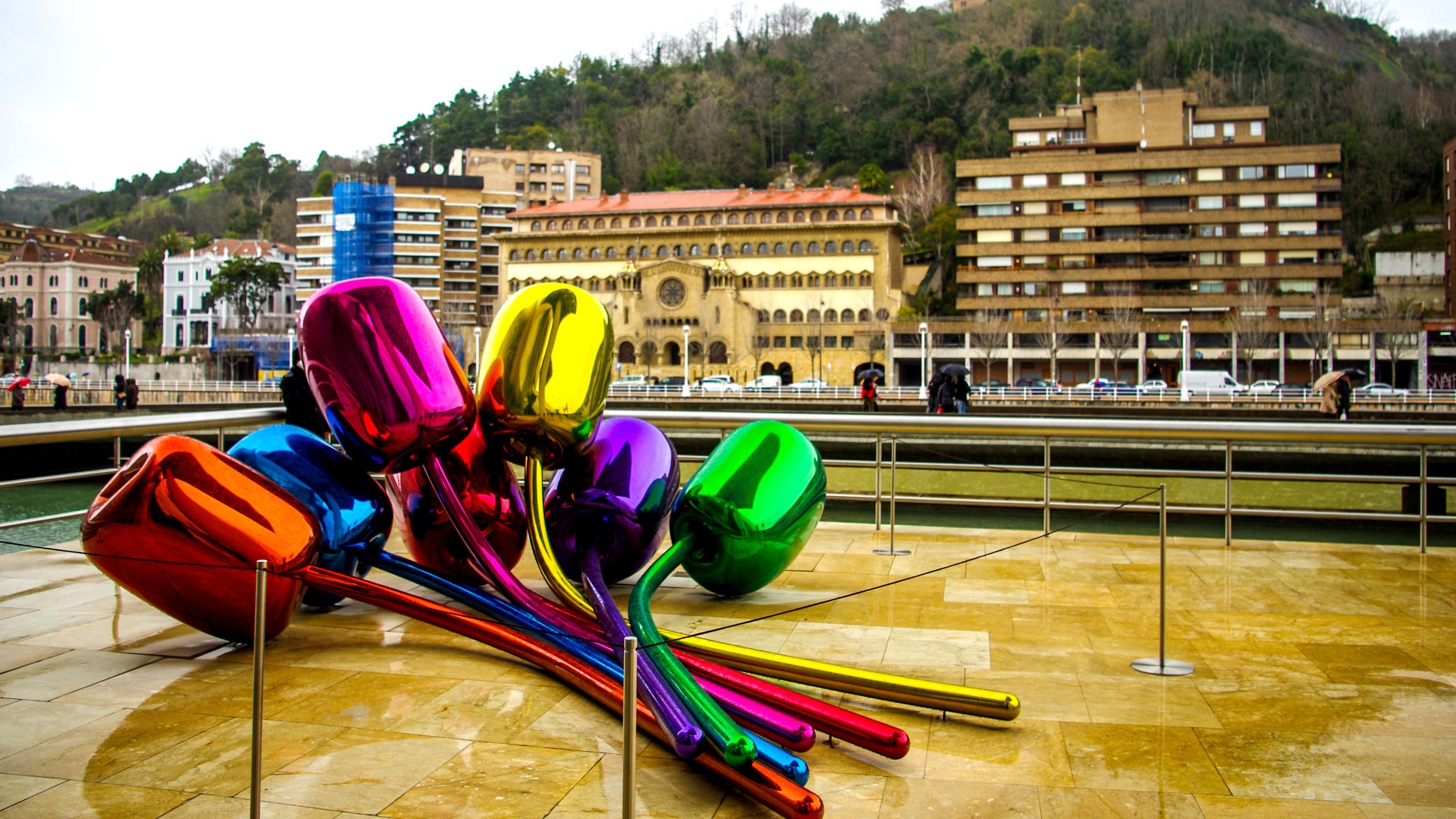
Half the show is outside, and it's free. Puppy, Jeff Koons's giant West Highland terrier, guards the entrance in a coat of living flowers, replanted twice a year. Koons is back on the terrace by the water with Tulips, a bunch of balloon-like flowers in shiny, candy-colored steel. On the river side, Louise Bourgeois's Maman, a bronze spider taller than a house, stands over the water with a sac of marble eggs under her belly. Anish Kapoor's stack of silver spheres reflects everything around it, and every so often Fujiko Nakaya's fog sculpture rises from the pond and swallows the whole terrace in mist.
Before you go in, walk all the way around it. Then cross the Pedro Arrupe footbridge to the Deusto side and look back. That's the view Gehry designed for, and it's better than any photo you've seen.
INSIDE THE MUSEUM
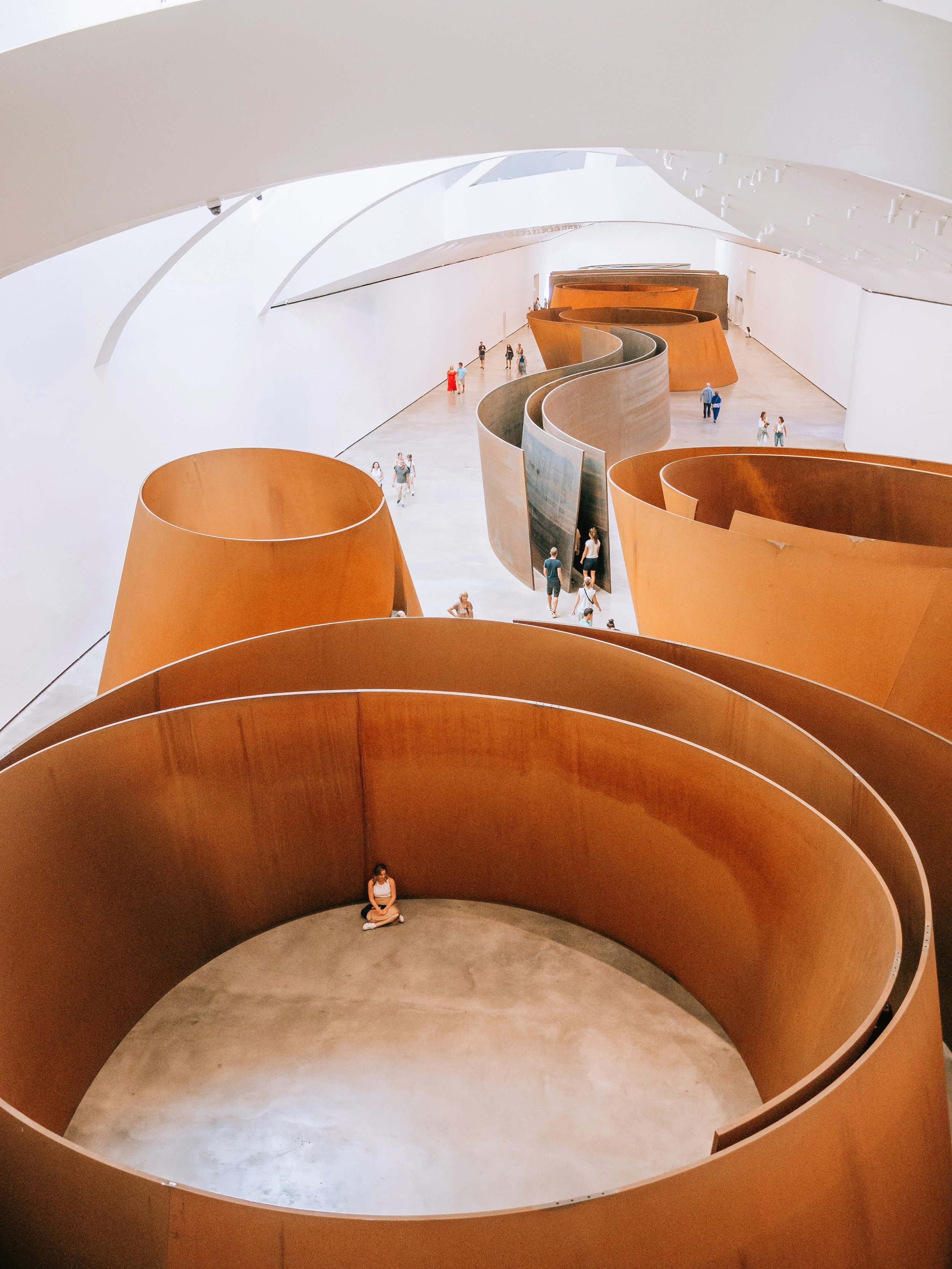
Step inside and look up first. The atrium soars about fifty meters, all curving glass and stone. This is a museum of modern and contemporary art, and it gets straight to the point: head to the long gallery on the ground floor for Richard Serra's The Matter of Time: eight huge sculptures in rusted steel that you don't look at so much as walk through. The walls lean in, open out, close in again. Kids love it. So do most adults, quietly.
The rest of the museum changes with the temporary exhibitions, which can be brilliant or baffling, sometimes both at once. There's no big permanent collection to fall back on, so check what's on before you go.
Good to Know
Give it two to three hours. Book online, arrive when the doors open at ten and do Serra first, before the groups arrive. Take the audio guide: it's good, and it explains the building as well as the art.
THE FINE ARTS MUSEUM
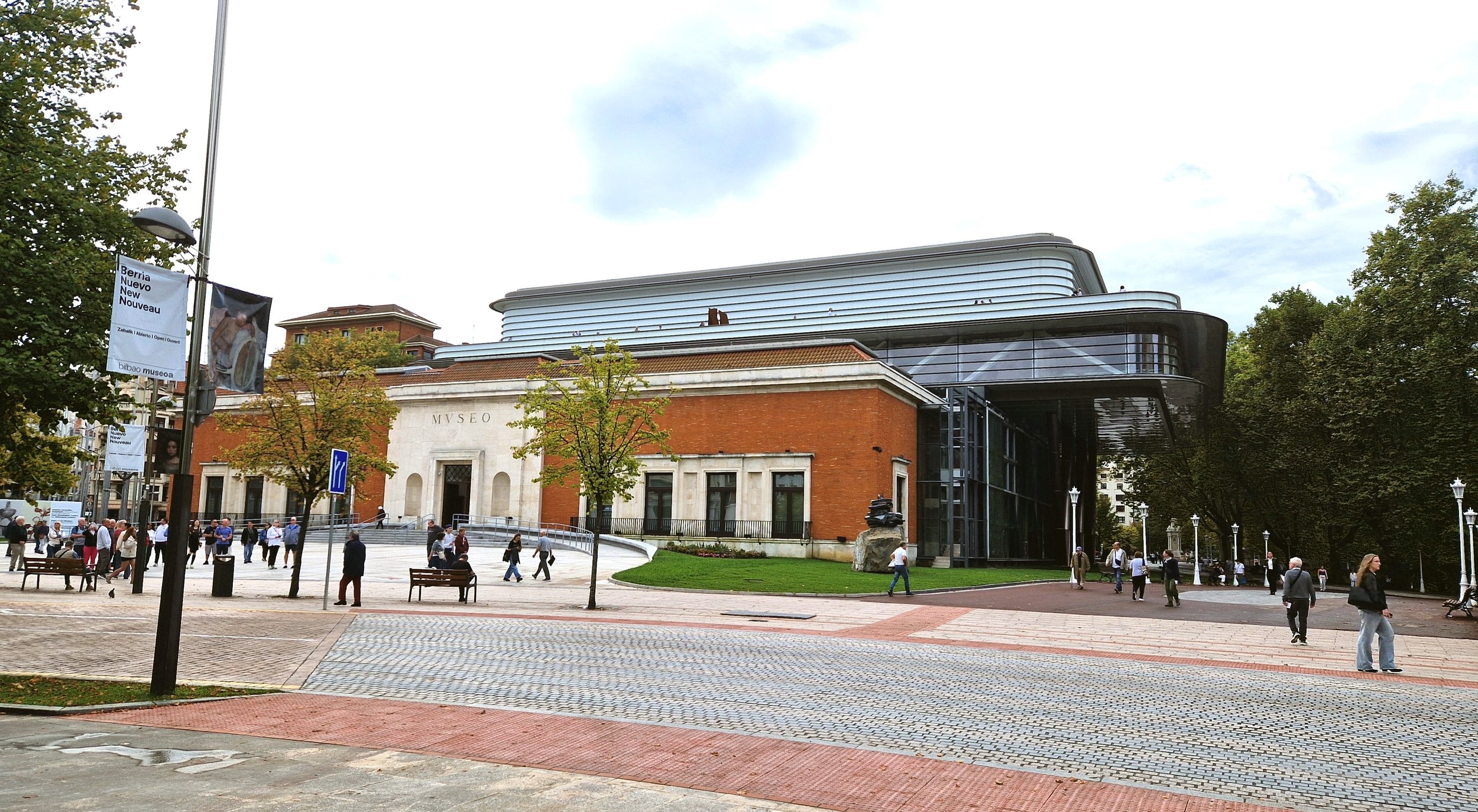
Five minutes away, on the edge of Doña Casilda park, is the museum most visitors miss, and Bilbaínos would quite like to keep it that way. The Bilbao Fine Arts Museum is the Guggenheim's quiet opposite: El Greco, Goya and Zurbarán on one floor, the great Basque painters on another, and plenty of room to look without anyone's elbow in your ribs.
It has just had a makeover, too. In October 2026 it reopened after an expansion by Norman Foster, with a glass gallery floating above the old buildings, a covered atrium and a terrace for sculpture.
If the Guggenheim shows you where Bilbao is going, this is where you see where it came from. Go in the afternoon, when the light comes through the park.
ALONG THE RIVER
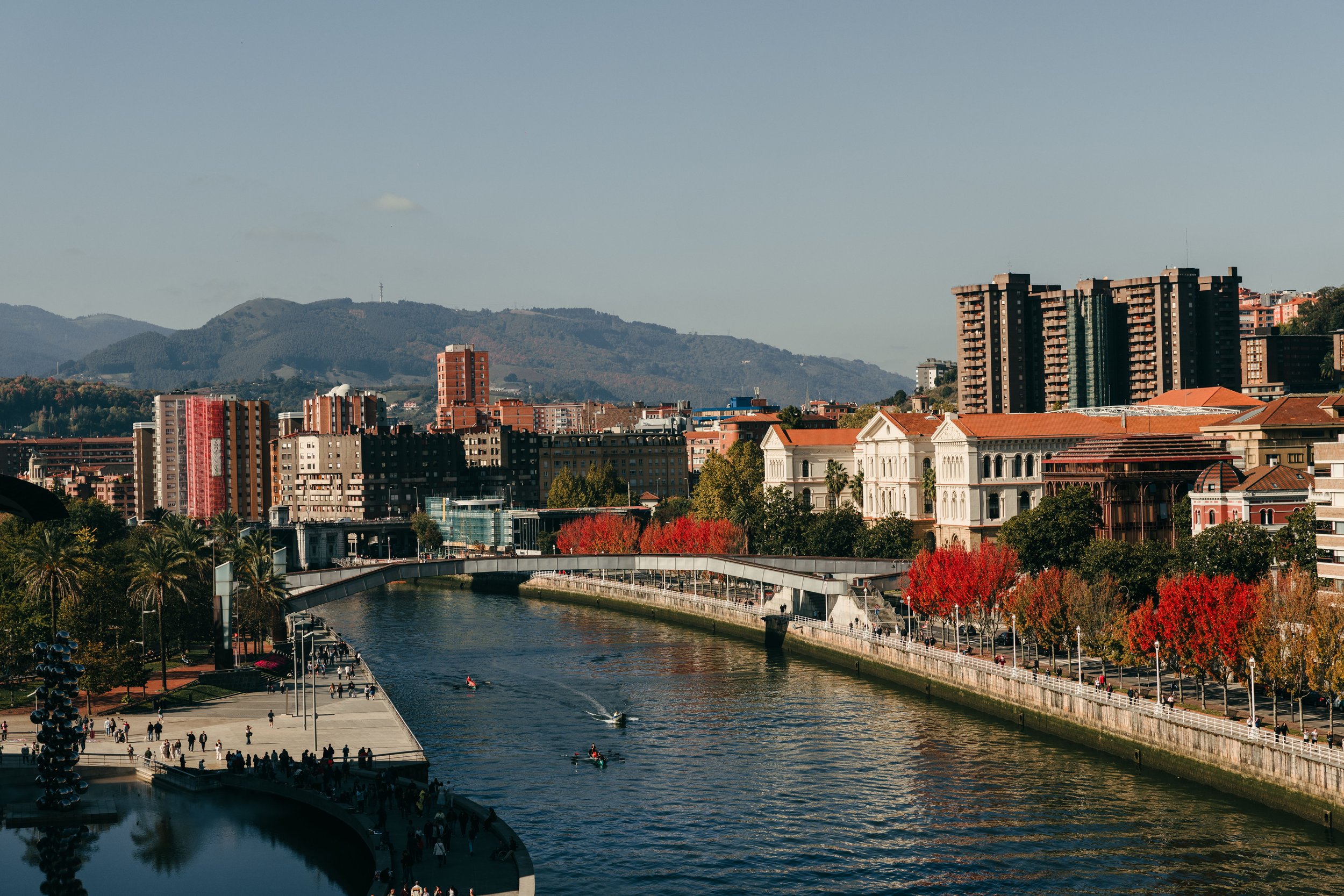
Leave the museum and turn downriver. This stretch, Abandoibarra riverfront, used to be docks and rail yards. Now it's lawns, benches and people jogging past with their dogs.
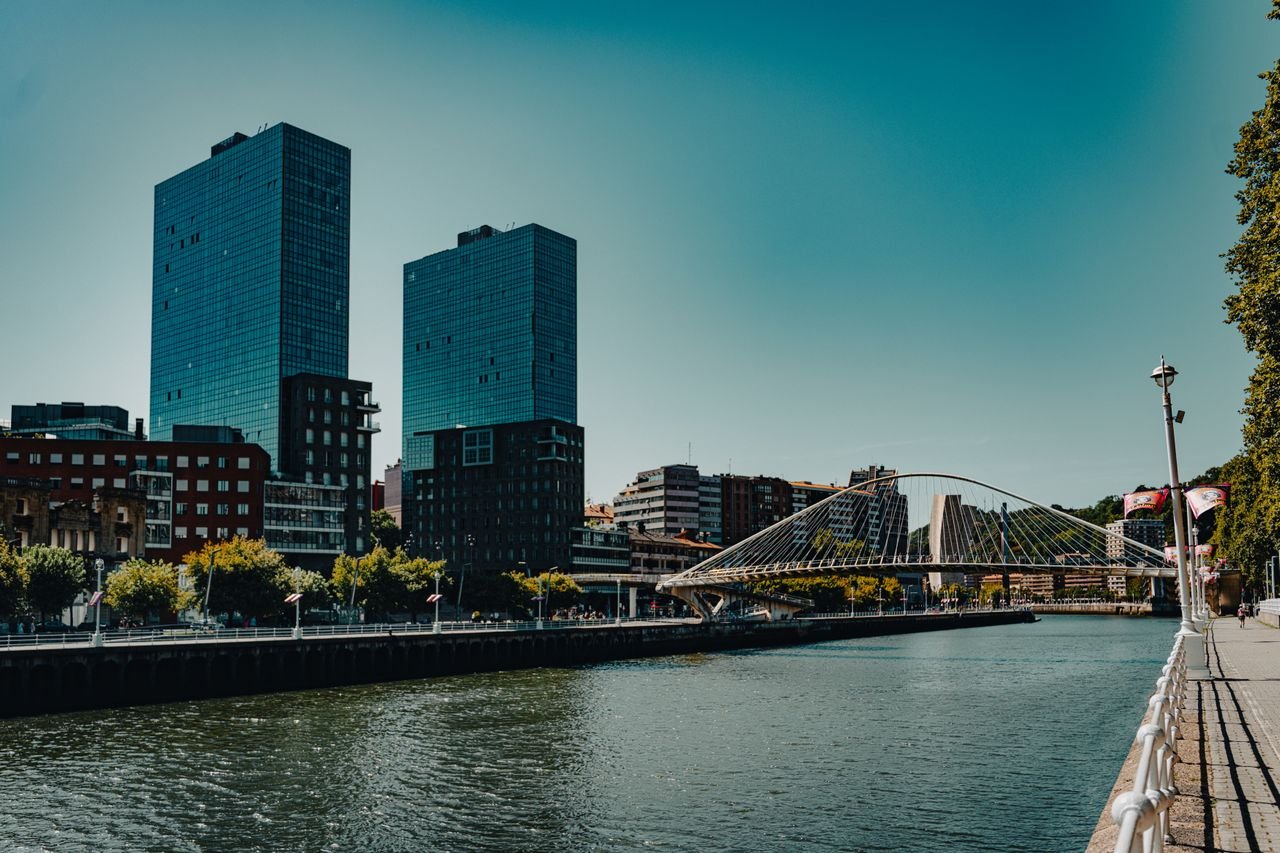
Keep walking and the city's story lines up along the water. The glass Iberdrola Tower, the tallest in the Basque Country. The Euskalduna Palace, built on the old shipyard and shaped like a ship still being made. And at the end, the Maritime Museum, where a big red crane called the Carola still stands guard. Locals are oddly fond of it.
Then there are the bridges. Bilbao has a lot of them, and two are worth a closer look. La Salve, next to the Guggenheim, wears a giant red arch by the artist Daniel Buren. Upriver, Calatrava's white Zubizuri curves over the water like a sail. It looks lovely. It's also famously slippery in the rain, which is why someone eventually laid a grey mat down the middle.
For the best view of all of it, get on the water.
THE GUGGENHEIM with A GUIDE - Book tickets
Start outside, with someone who knows the stories: why Gehry shaped the building the way he did, how Puppy keeps its flowers and what Maman is doing by the river. Then your ticket takes you inside to explore the museum at your own pace, Serra's steel and all. The best of both, in one morning.