WAT ARUN & THE CHAO PHRAYA RIVER
In 1767, with Ayutthaya fallen, a general named Taksin reached this bend in the Chao Phraya just as the sky went pink. He took it as a sign. The ruined shrine standing here got a new name that morning — Wat Chaeng, the Temple of Dawn — and for a few years, before the Emerald Buddha crossed the river to its current home in the Grand Palace, this is where it sat.
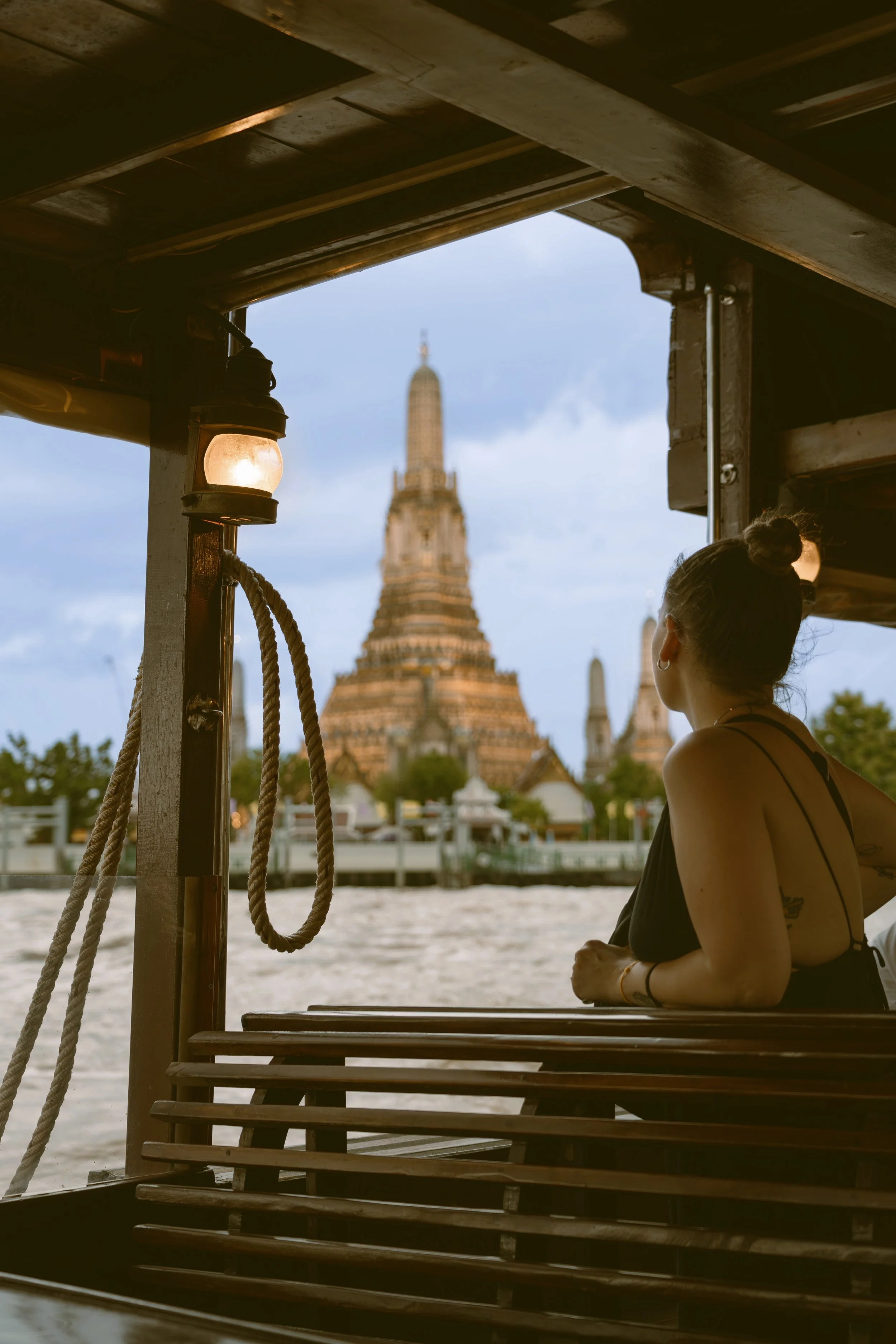
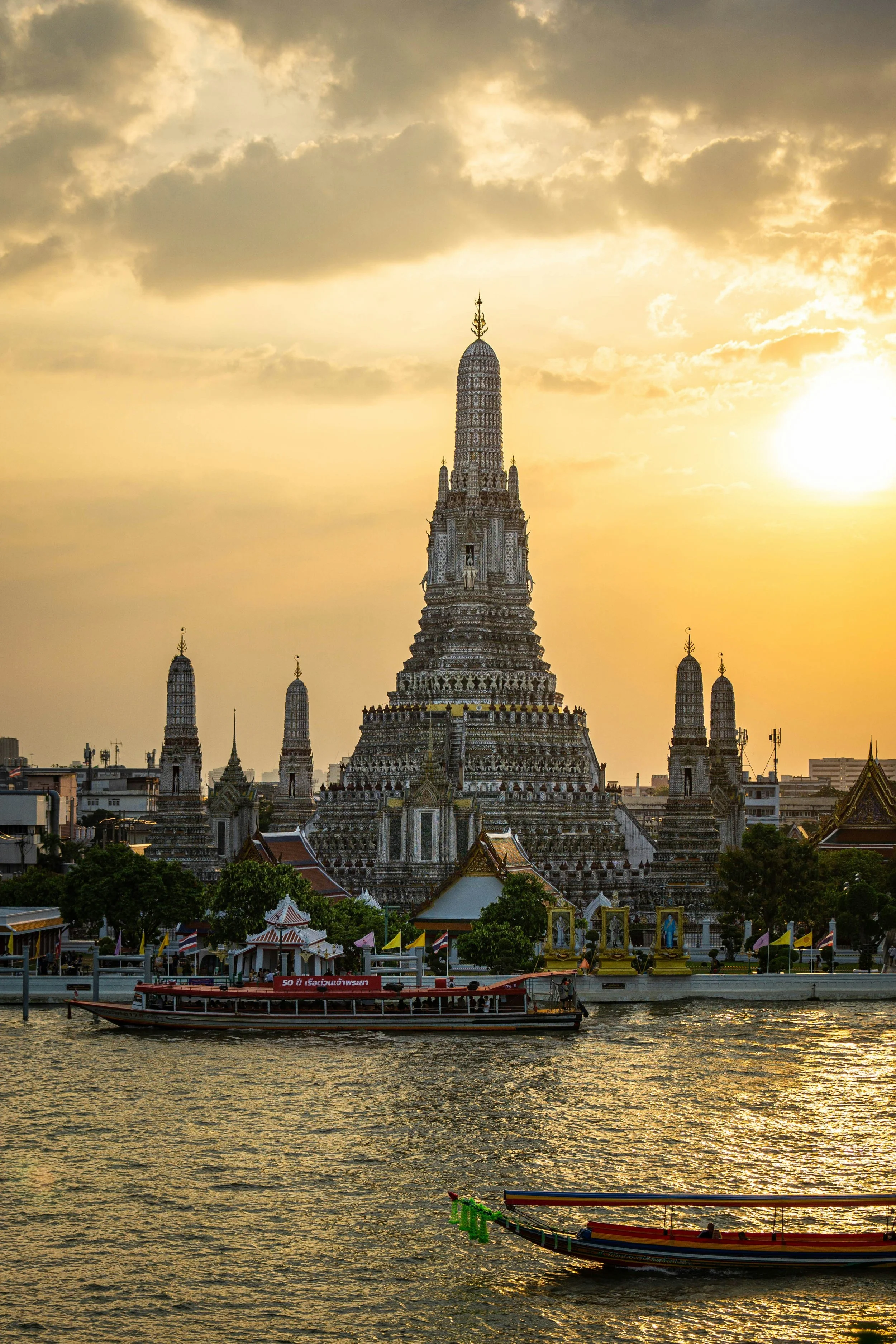
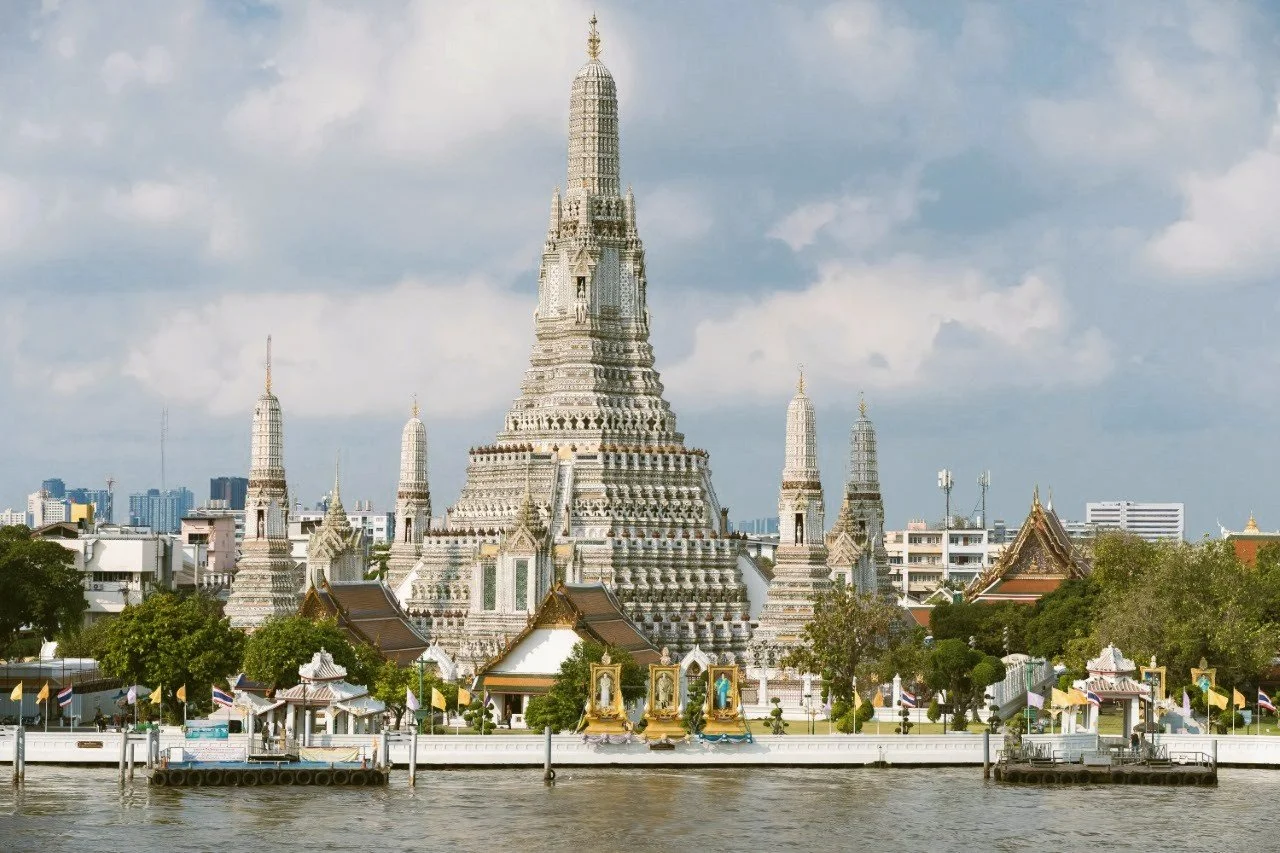
What Taksin named at sunrise, later kings spent decades turning into the strangest, most beautiful tower in Bangkok. The prang that dominates the skyline today isn't marble or gold — look closer and it's thousands of pieces of broken Chinese porcelain, plates and bowls that arrived in the city as ballast in the hulls of trading ships, pressed into the plaster by hand. It's a monument built, quite literally, from the river's own traffic.
You can't understand one without the other. Wat Arun is what the Chao Phraya made possible — a temple built from cargo, in a spot chosen because a general happened to be sailing past at the right hour.
The Chao Phraya Express Boat is the clearest proof the river still runs the city — thousands of Bangkokians ride it to work every morning, numbered piers and all, the way any other city treats a subway line. Long-tail boats cut across constantly, their car-engine motors unmistakable.
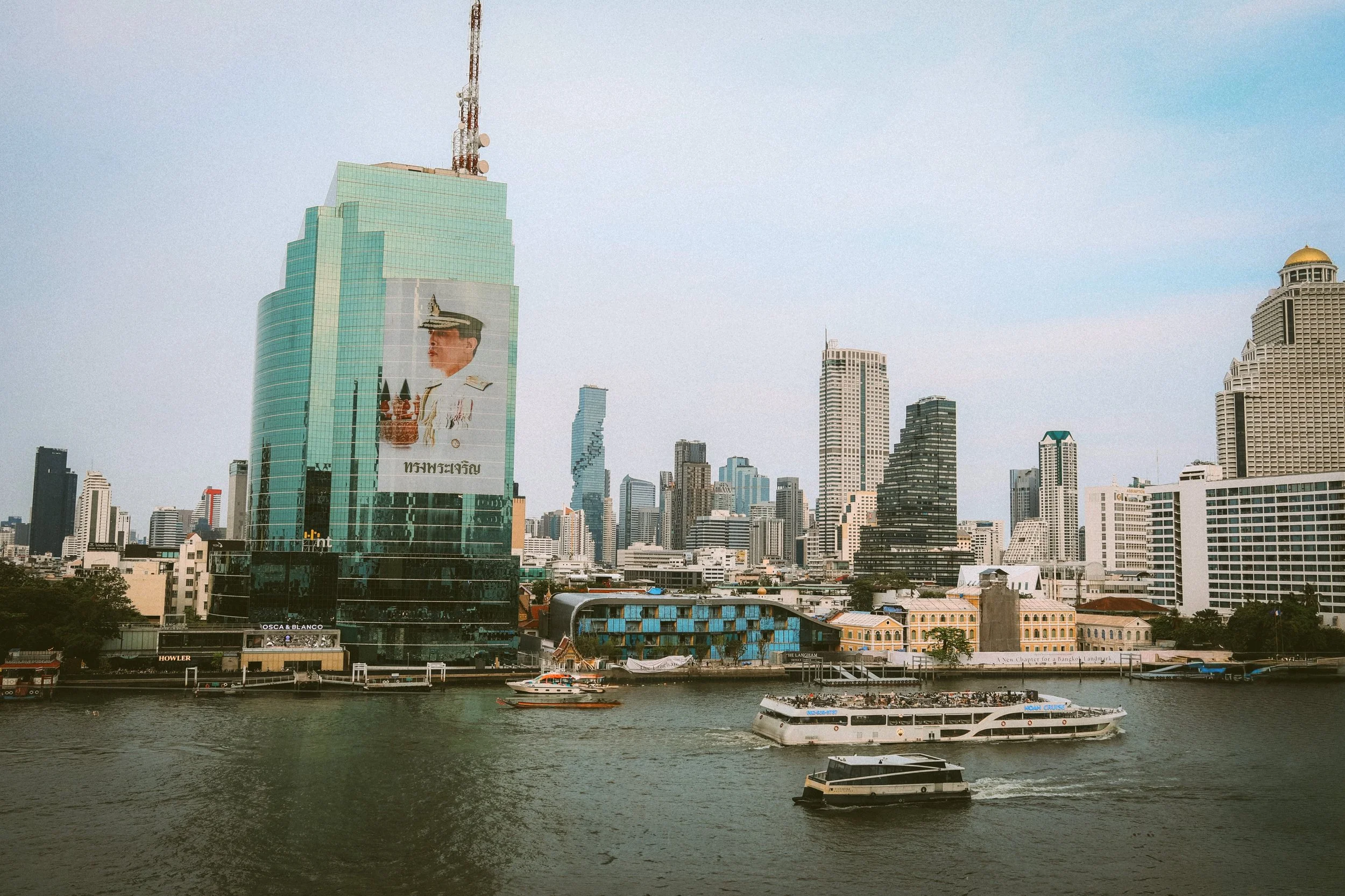
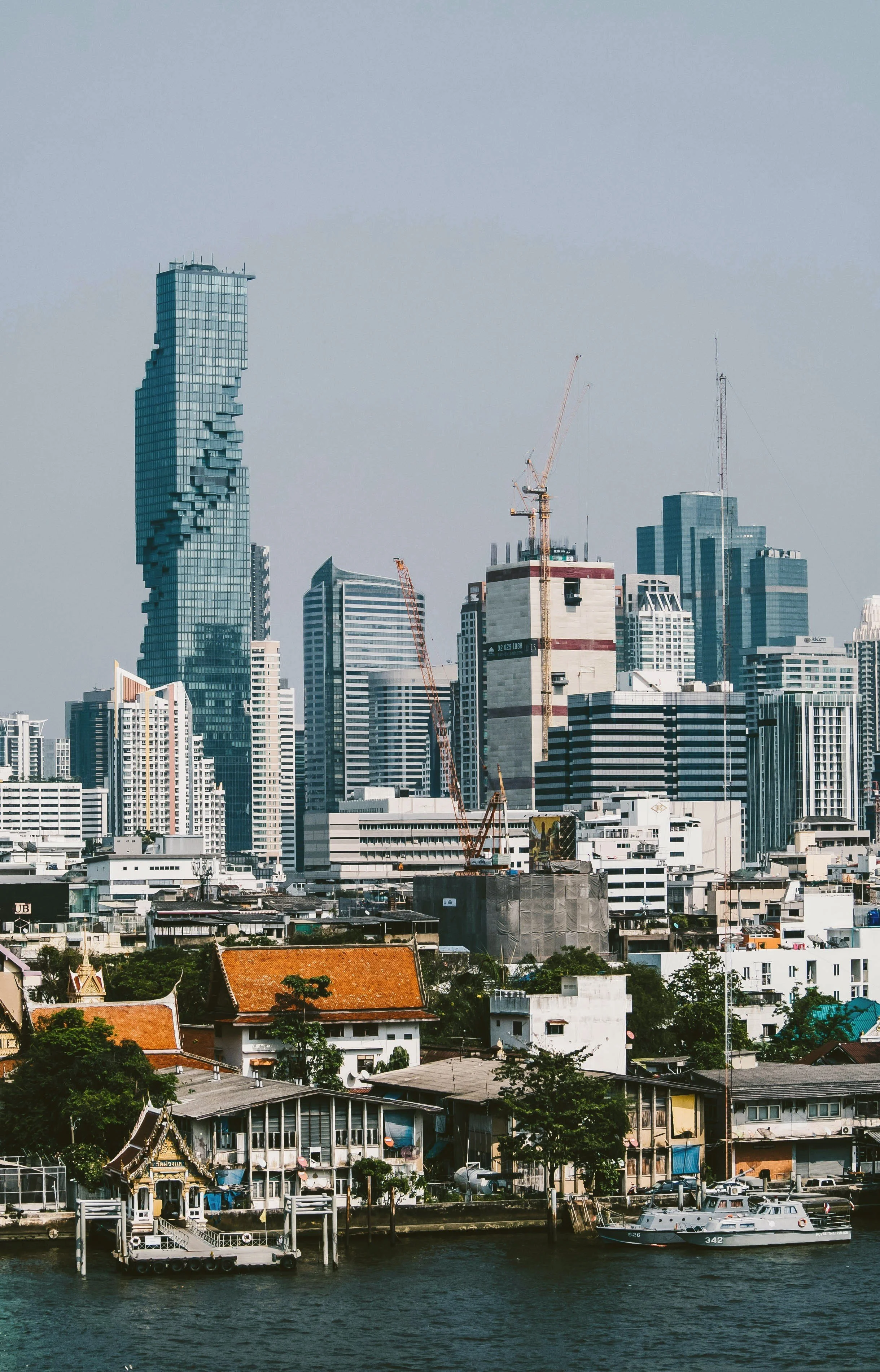
Look downstream and the contrast tells its own story: centuries-old temples on one bank, ICONSIAM's glass towers on the other. Most sunset buffet cruises sold along the water are overcrowded and forgettable — but a smaller, well-run dinner cruise, or even a short Express Boat ride at golden hour, gets you the same skyline without the compromise.
WAT ARUN
Climb the steep steps up the central prang — there's a handrail on one side only, so take your time — and the reward is the same view Taksin must have had in mind: the Grand Palace and Wat Pho laid out across the water, close enough to touch, far enough to actually see them as a whole. At roughly 70 meters, it's not the tallest thing in Bangkok anymore, but it might be the only one built to be looked at from a boat.
Up close, the porcelain is the real story. Every surface is covered in broken plates and cups arranged into flowers and mythical figures, unmatched patterns pressed together because that's simply what the ships brought in. Four smaller prangs surround the main tower, each guarded by the wind god Phra Phai, and inside the ordination hall a golden Buddha sits under murals most visitors walk straight past on their way back outside.
Go at opening or in the last hour before closing. Midday turns the climb into a queue in direct sun, and the porcelain — the entire reason to come — only really catches fire in low light, when the whole tower turns pink and gold exactly the way it did for a general looking for a sign.

PLAN YOUR VISIT
Wat Arun is open daily, roughly 8am–6pm (last entry around 5:30pm), with the central prang closing to climbers slightly earlier. Entry runs 200 THB. The cheapest way there is the BTS to Saphan Taksin, then the Chao Phraya Express Boat to Tha Tien, followed by a short cross-river ferry (a few baht, a few minutes). Confirm current hours and fares before you go.
Book your Wat Arun ticket ↗
via GetYourGuide
Book a Chao Phraya river cruise ↗
via GetYourGuide