GRAND PALACE & WAT PHO
Bangkok was born twice in the same afternoon, in a sense — once as a seat of power, once as a place of worship, and the two sit close enough to visit both before lunch. In 1782, King Rama I crossed the river from Thonburi and staked out a new capital, building a palace to hold the throne and a temple, right next door, to hold everything the throne couldn't. That temple was already old by then. Wat Pho predates the city itself, its roots reaching back to the Ayutthaya era, long before Rama I ever laid a brick of the Grand Palace.
So this isn't really one essential with two stops. It's the same argument told twice — what a kingdom needs to survive is never just a crown. It needs somewhere sacred to answer to. The Emerald Buddha sits behind gold and ceremony inside the palace walls; five minutes away, a reclining Buddha twice the length of a tennis court lies in gold leaf, unbothered by any of it. Visit them in the same morning, and you're not sightseeing. You're walking through the two halves of how Bangkok justified itself from day one.
THE GRAND PALACE
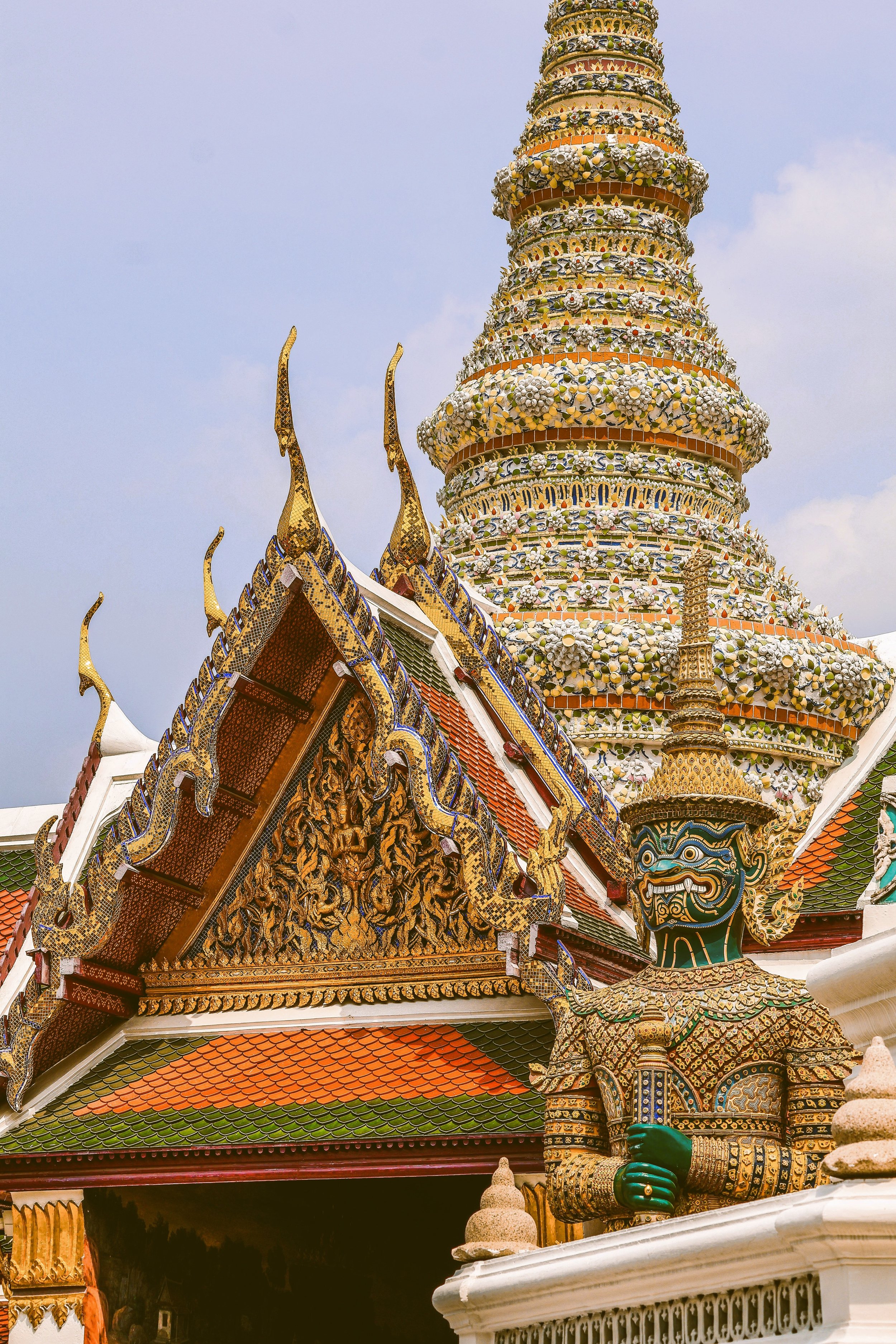
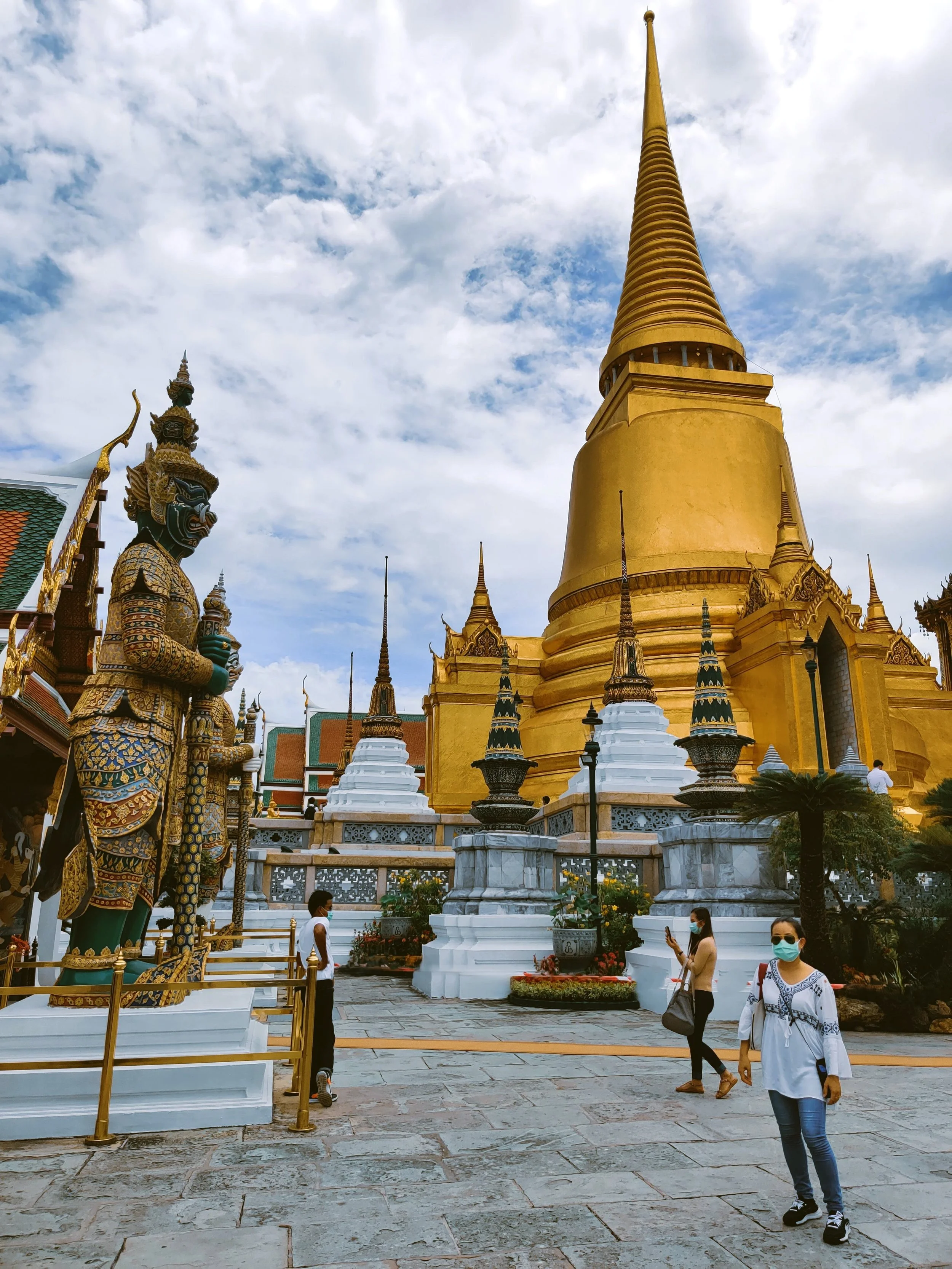
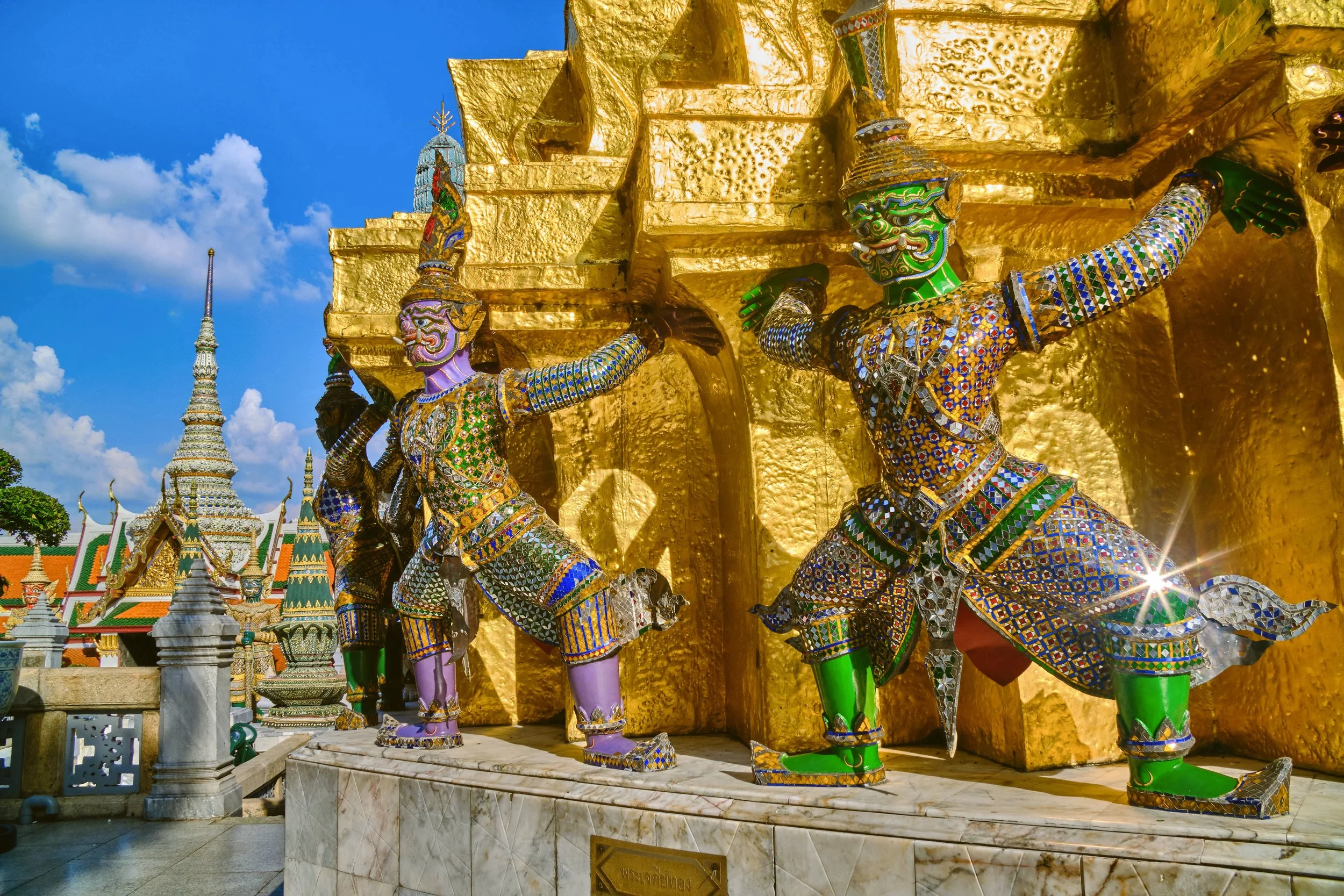
For 150 years, this was the literal address of the Thai monarchy — not a museum piece, a working seat of power, and in some ceremonial sense it still is. Rama I built it to look the part: gold spires, a maze of throne halls, murals stretching over two kilometers depicting the entire Ramakien epic. Every inch of it was designed to say the same thing to anyone who walked through the gate: this kingdom is here to stay.
THE TEMPLE OF THE EMERALD BUDDHA (WAT PHRA KAEW)
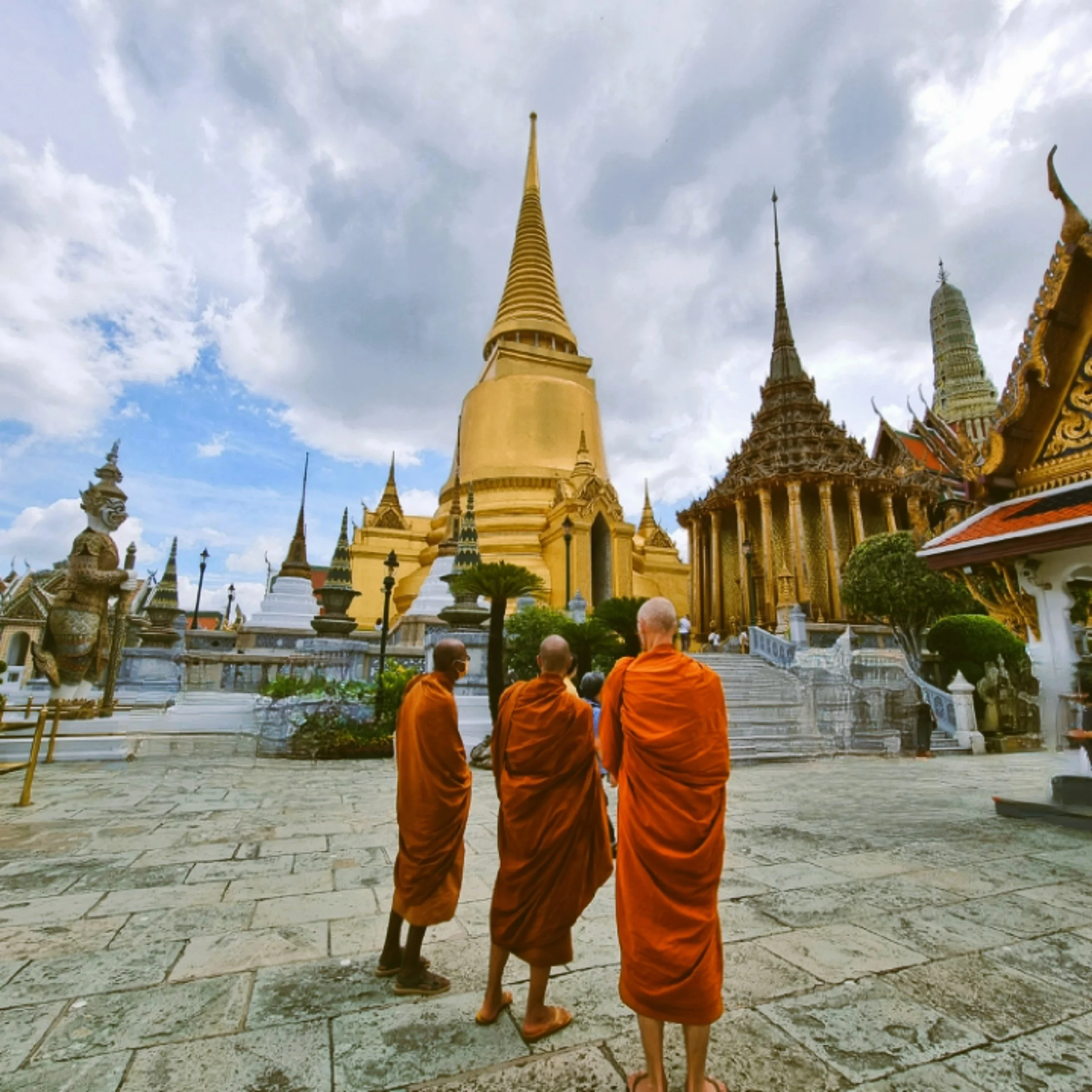
Inside Wat Phra Kaew, the temple within the palace walls, sits the object the whole country still answers to — the Emerald Buddha, carved from a single block of jade and first recorded in Chiang Rai in 1434, its exact origins still debated by historians. Only the King is permitted to touch it, and three times a year, he's the one who changes its robes for the season. No photographs are allowed inside the hall. Some things here are still not for sale.
None of this comes cheap or quiet, though. The dress code is the strictest in the city — shoulders and knees covered, no exceptions, no matter how hot the morning gets — and by mid-morning the palace fills with enough tour groups to make the throne halls feel more like a queue than a monument. Go right at opening, before the buses arrive, and the difference is night and day.
wat pho
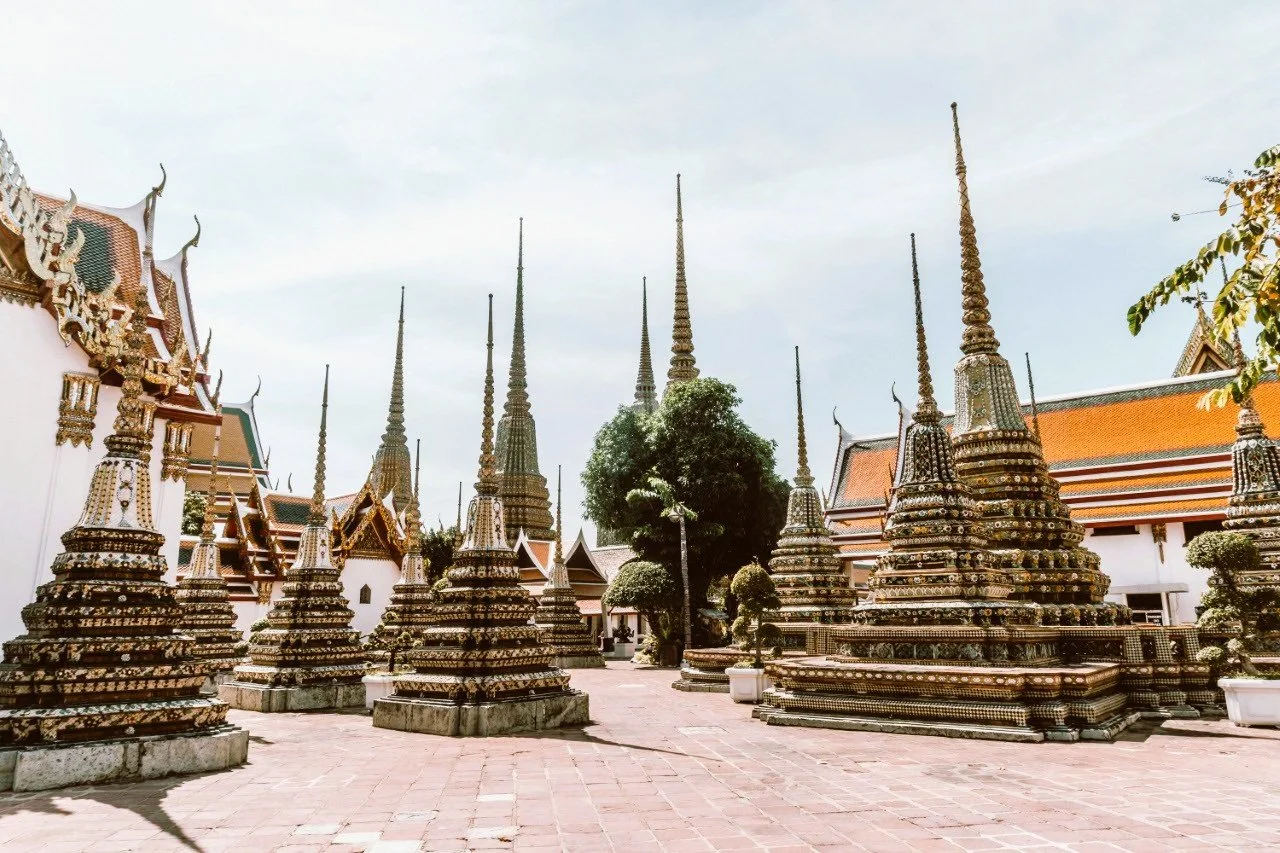
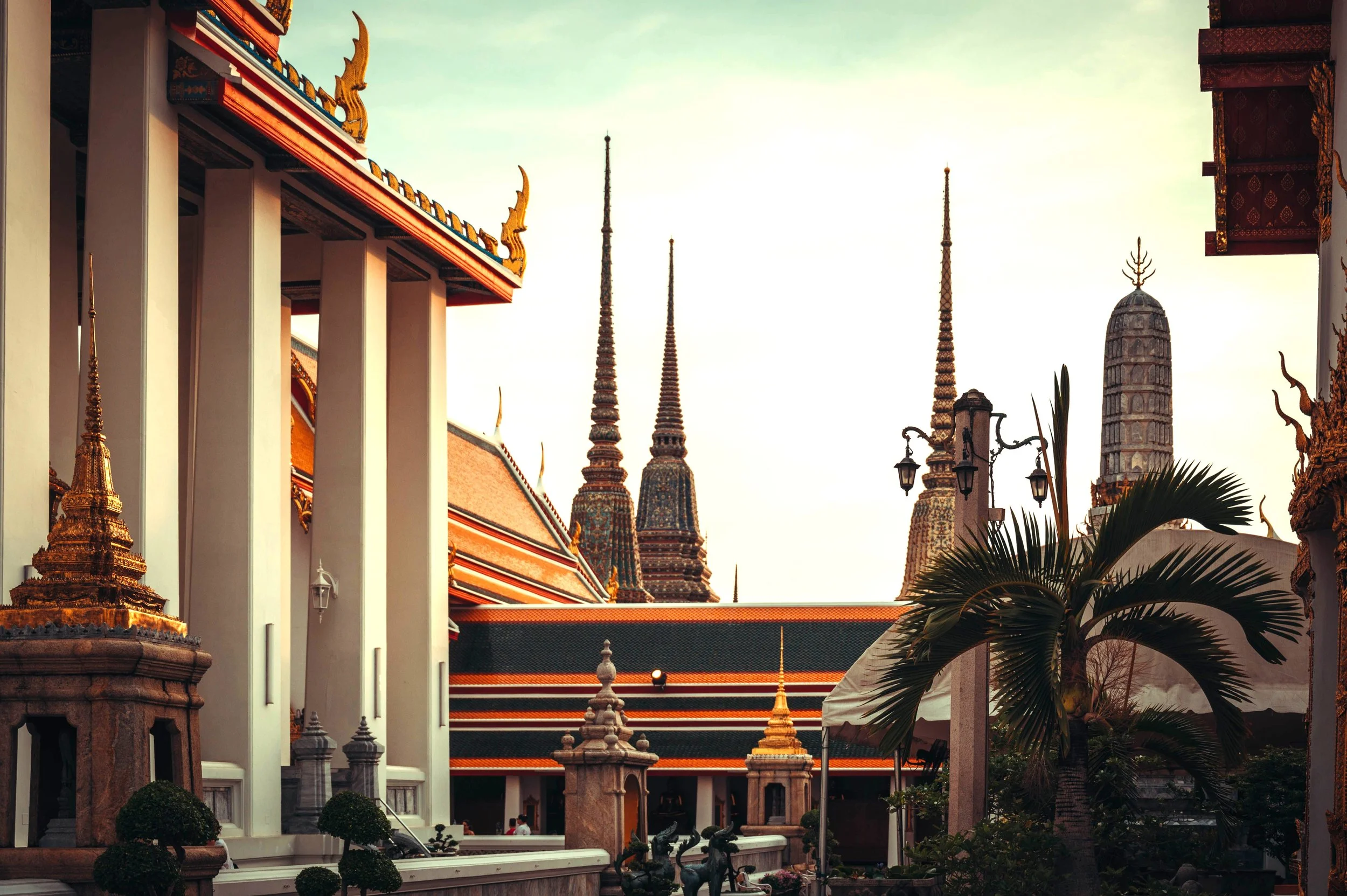
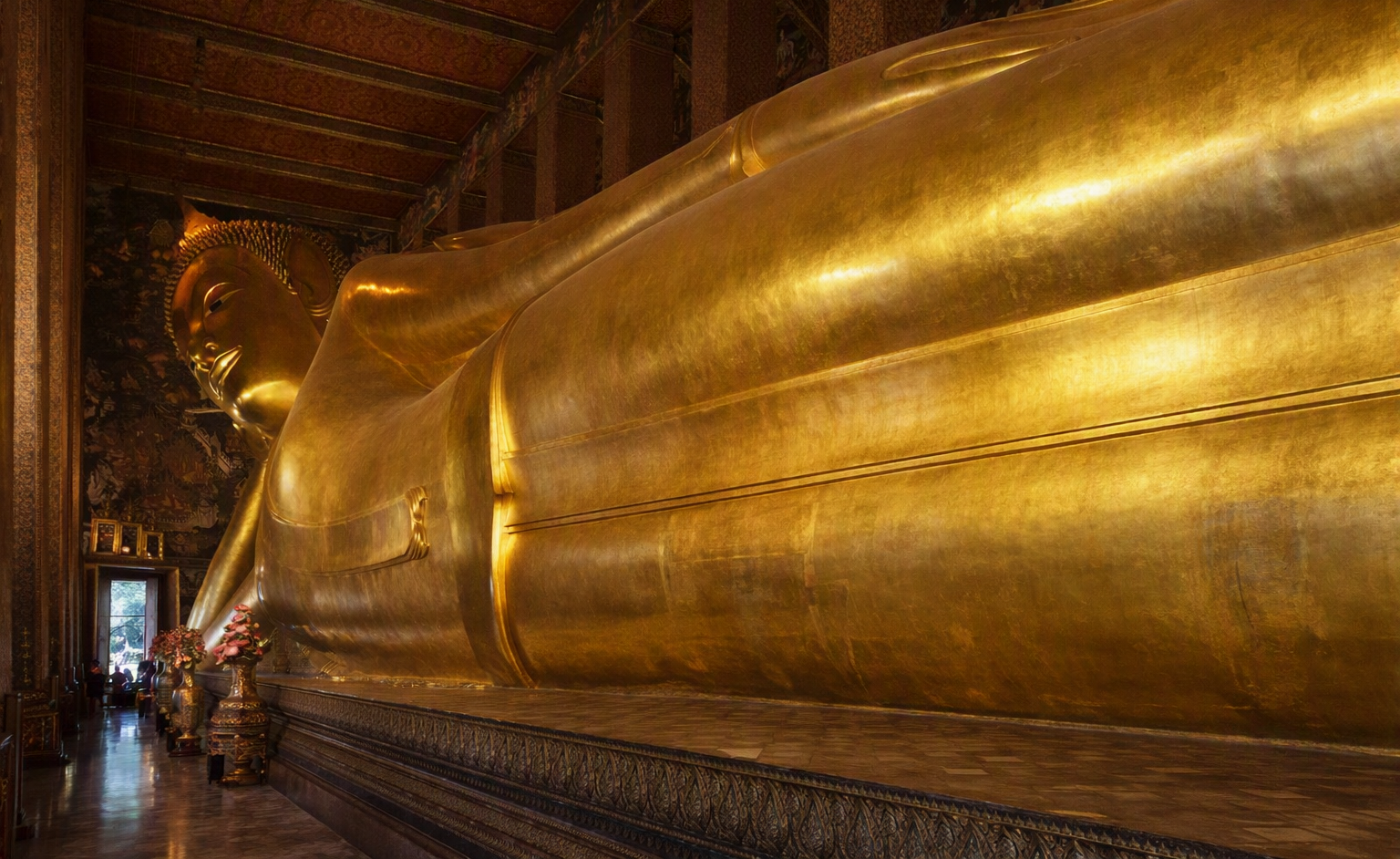
Walk five minutes south and the register changes completely. Where the Palace performs grandeur, Wat Pho just settles into it — older, quieter, less concerned with being looked at. The reclining Buddha at its center is 46 meters long, gold leaf from end to end, its feet inlaid with mother-of-pearl in 108 patterns representing the auspicious signs of the Buddha. It depicts the moment of death, of achieving Nirvana — which may explain why the whole hall feels less like a spectacle and more like a held breath.
What the postcards leave out is that Wat Pho used to be Thailand's first public university, and its legacy survives in the stone inscriptions still lining its walls — medicine, astrology, massage, all preserved here centuries before anyone called it a school. That last one stuck: Wat Pho remains the spiritual headquarters of traditional Thai massage, and its on-site school has trained practitioners since 1955.
Come for the Buddha, but don't leave without the massage — it's the one place in Bangkok where getting one isn't a tourist indulgence, it's closer to visiting the source.
PLAN YOUR VISIT
Open daily, roughly 8:30am–3:30pm for the Grand Palace (ticket sales stop around 3pm), and 8am–6:30pm for Wat Pho. The Grand Palace ticket runs 500 THB and also covers same-day entry to Wat Phra Kaew; Wat Pho is a separate 300 THB. Strict dress code at both — shoulders and knees covered, closed-toe shoes. Confirm current hours and prices before you go — ceremonies can close sections of the Palace without notice.
Book skip-the-line tickets for the Grand Palace ↗
via GetYourGuide
Book a combined Grand Palace + Wat Pho tour ↗
via GetYourGuide