OLD TOWN (INNERE STADT)
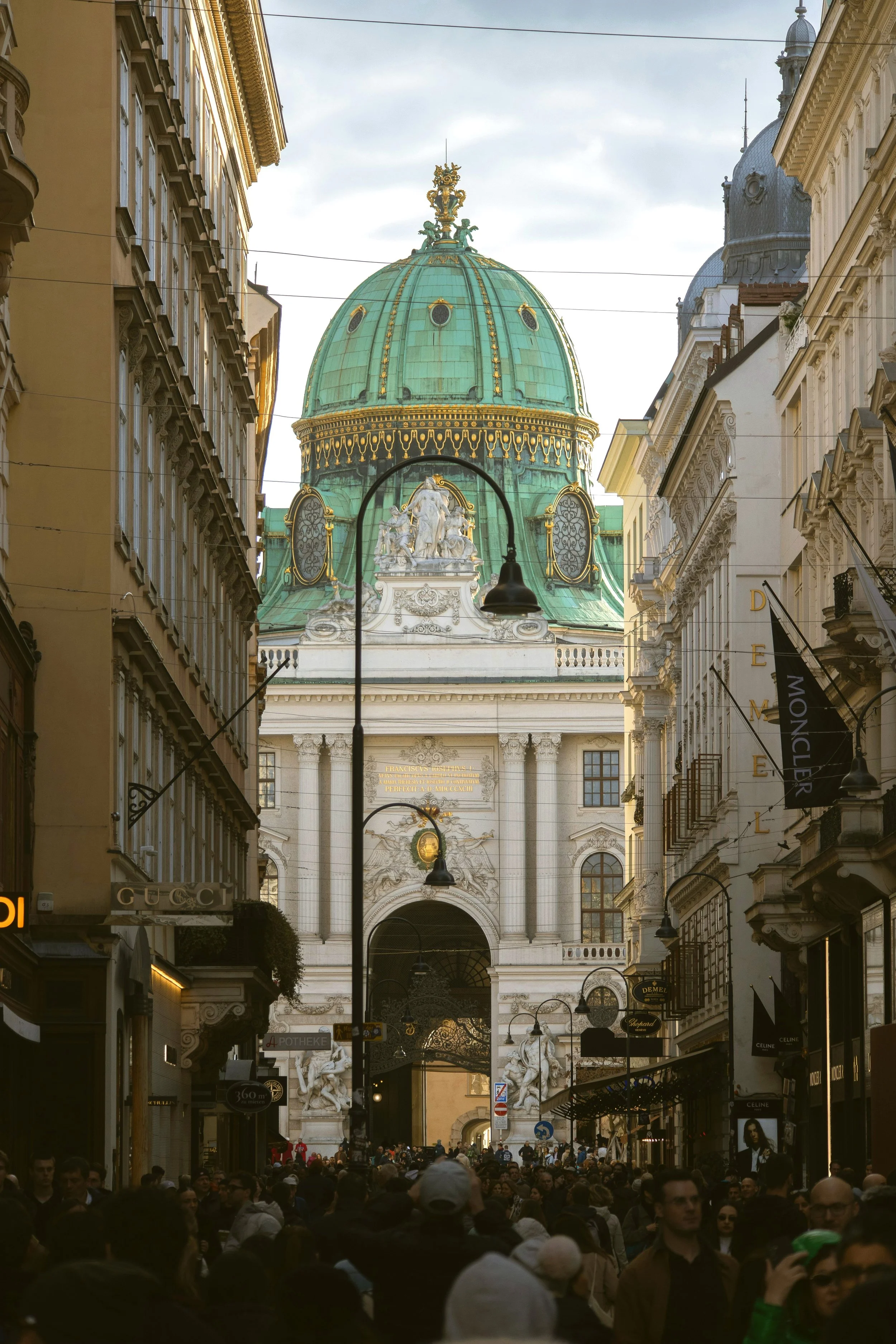
Everything in Vienna technically starts here. The Innere Stadt is the original city — the compact core the Romans first fortified, the Habsburgs later ringed with walls, and the Ringstrasse eventually replaced with grand boulevards once those walls came down. Walk it today and you're tracing nearly a thousand years of layered history in the space of less than three square kilometers: Gothic spires next to Baroque plague columns, imperial confectioners next to Chanel, cobblestone alleys that haven't moved since the Middle Ages running straight into pedestrianized shopping streets thick with tourists and locals alike.
At its center, quite literally, stands St Stephen's Cathedral — the one building every Viennese uses to orient themselves, visible from half the city, older than most of the empire it eventually came to symbolise. Everything else in the Innere Stadt radiates outward from it, in ways both physical and emotional.
This isn't a museum piece. People live here, shop here, meet for coffee here every single day. Start at the cathedral, then let the streets pull you in whichever direction feels right.
ST. STEPHEN’S CATHEDRAL
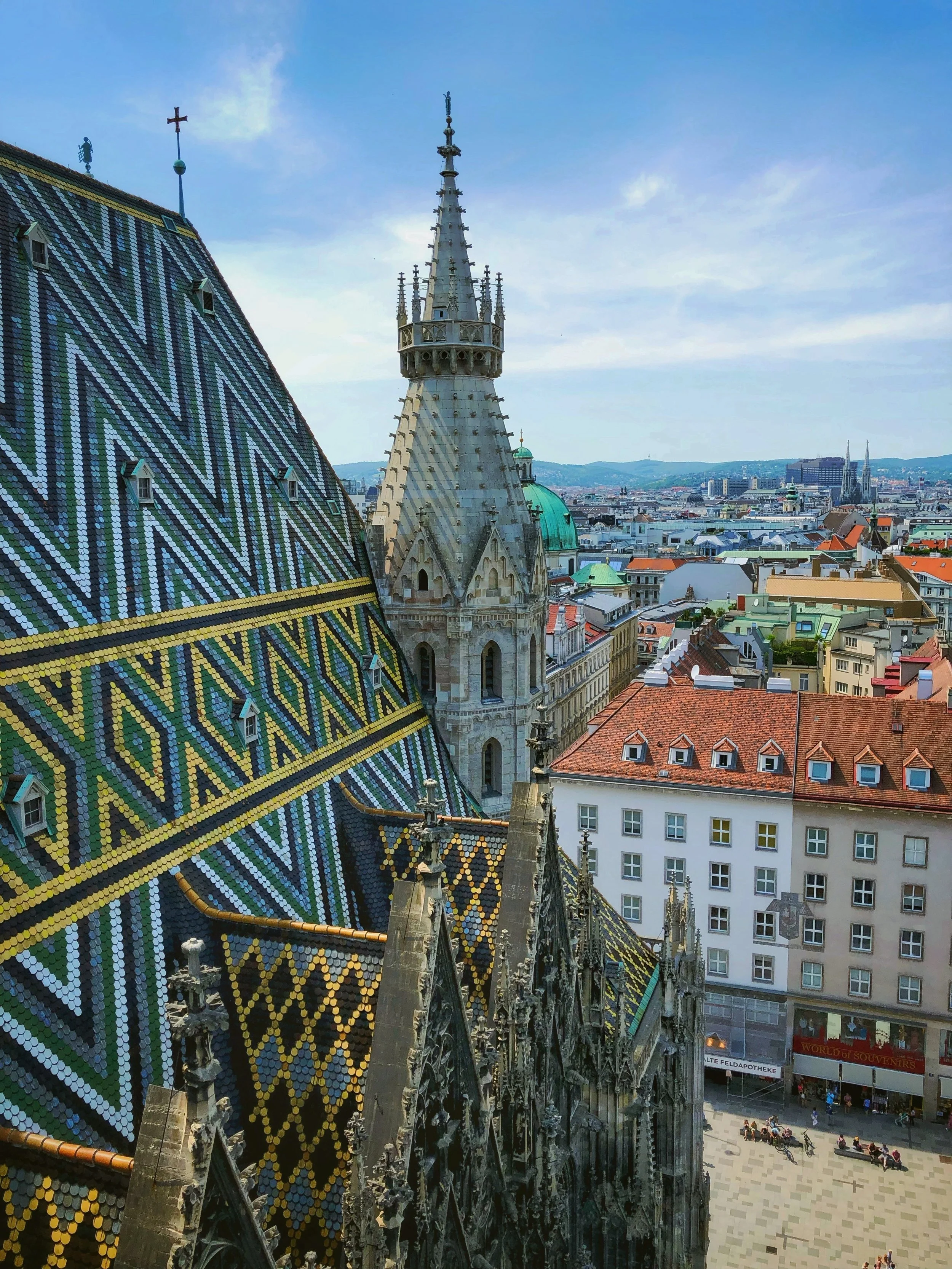
Locals call it "Steffl" — the 136-meter tower that's ruled Vienna's skyline since 1433. The roof alone is worth the neck strain: 230,000 glazed tiles forming a double-headed Habsburg eagle on one side, rebuilt tile by tile after fire gutted the cathedral in the final days of the Second World War.
Climb the South Tower for the view, or take the lift up the North Tower to stand beside the Pummerin — Austria's largest bell, the sound every Austrian associates with midnight on New Year's Eve. Mozart was married here, and buried from here a few years later. [Skip the line, book ahead →]
GRABEN & KÄRNTNER STRASSE
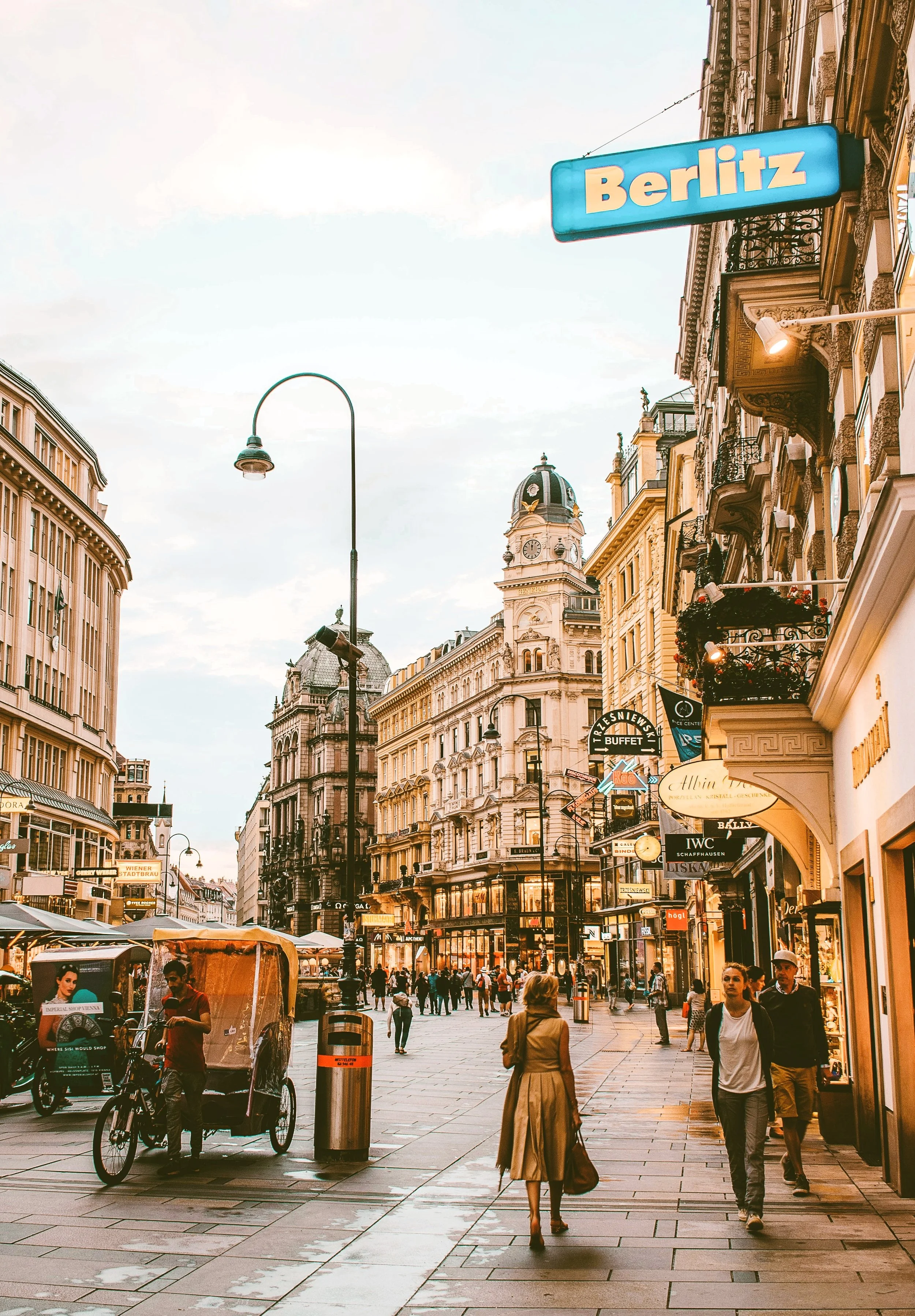
Graben means "ditch" — the old moat of the Roman camp that once stood here, filled in centuries ago and built over almost immediately. What's left is one of Europe's most elegant streets: grand façades on either side, and at its centre, the gilded Baroque explosion of the Pestsäule (Plague column), raised by Emperor Leopold I after the plague of 1679.
At the far end of Kohlmarkt, on Michaelerplatz, the mood shifts — the Looshaus stands there, so plainly modern in 1910 that Emperor Franz Joseph reportedly kept his curtains shut rather than look at it. Continue onto Kärntner Straße, running south toward the Opera, and the city turns louder, busier, more teenager than tourist.
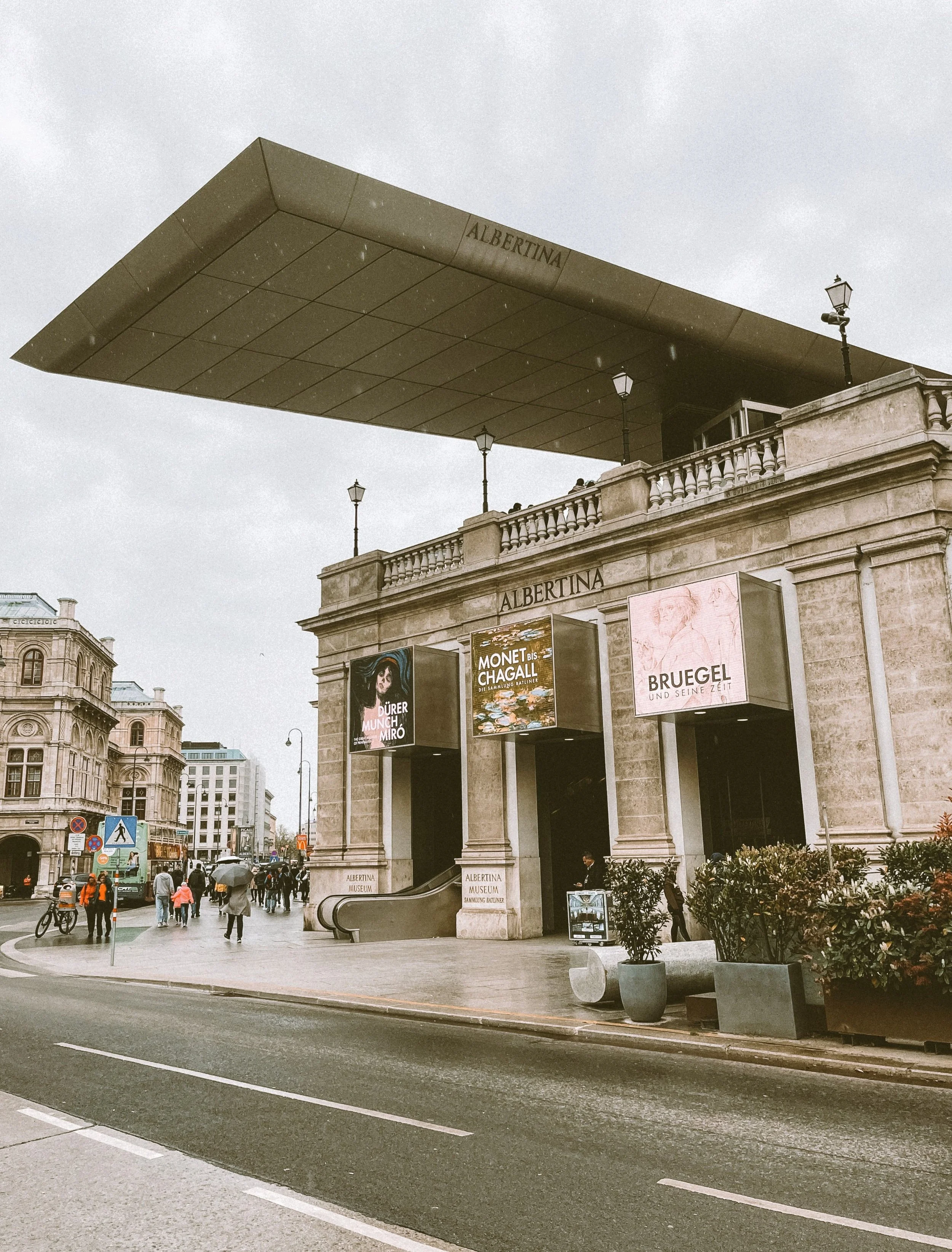
ALBERTINA MUSEUM
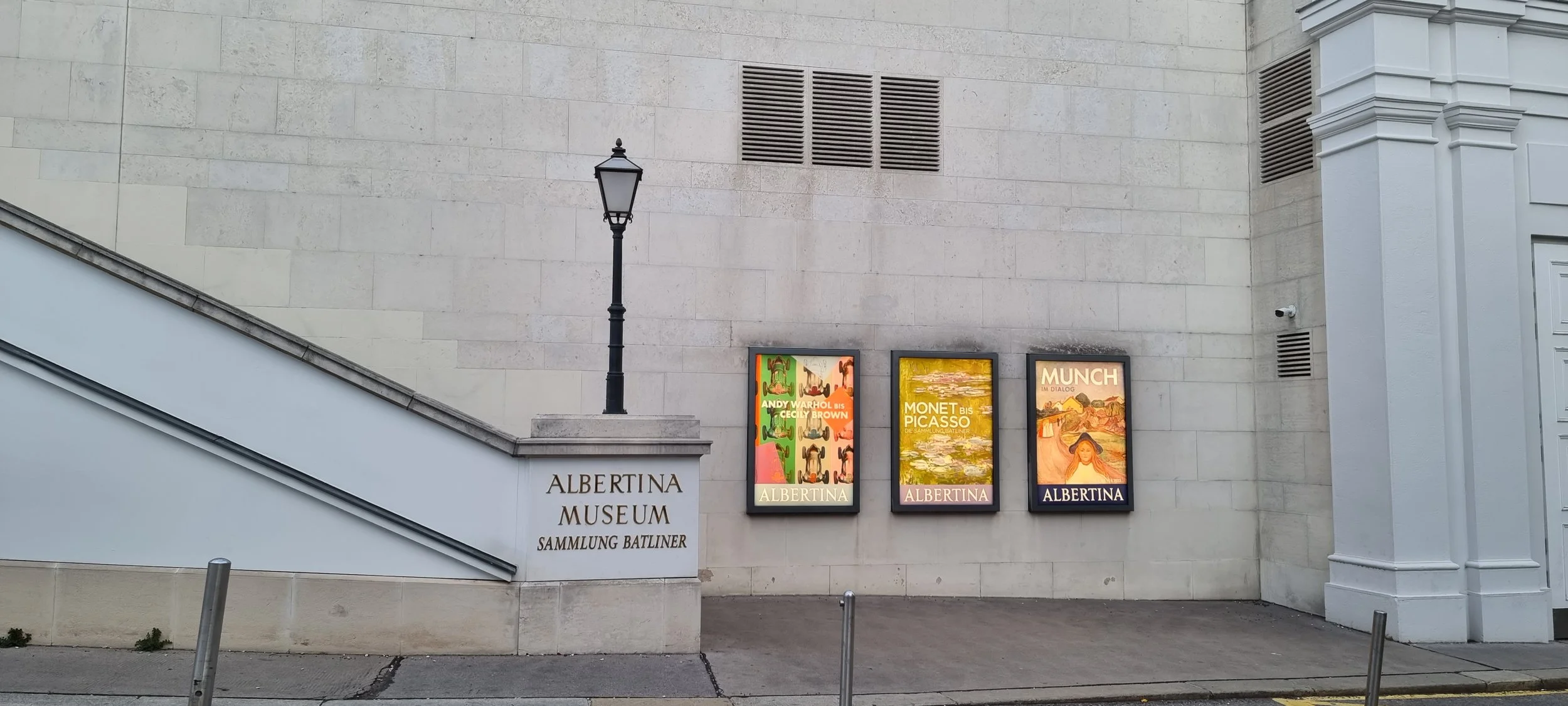
Sitting on the last remaining stretch of Vienna's old fortress walls, this was once the largest Habsburg residential palace — twenty ceremonial staterooms in Neoclassical yellow, green and turquoise, restored after the war to look as they did in Archduke Karl's day. Above them, one of the largest graphic art collections on Earth: over a million prints, 60,000 drawings, Dürer's Hare among them, shown only now and then, alongside Klimt, Schiele, Monet and Picasso rotating through the galleries upstairs. Started in 1776 by a duke with unusually good taste, it's grown into something that rewards both the visitor chasing famous names and the one who'd rather get lost in the print room for an hour. [Skip the line, book ahead →]
two viennese classics
Two absolute Viennese classics and two things Vienna refuses to let go of — one you eat, one you ride.
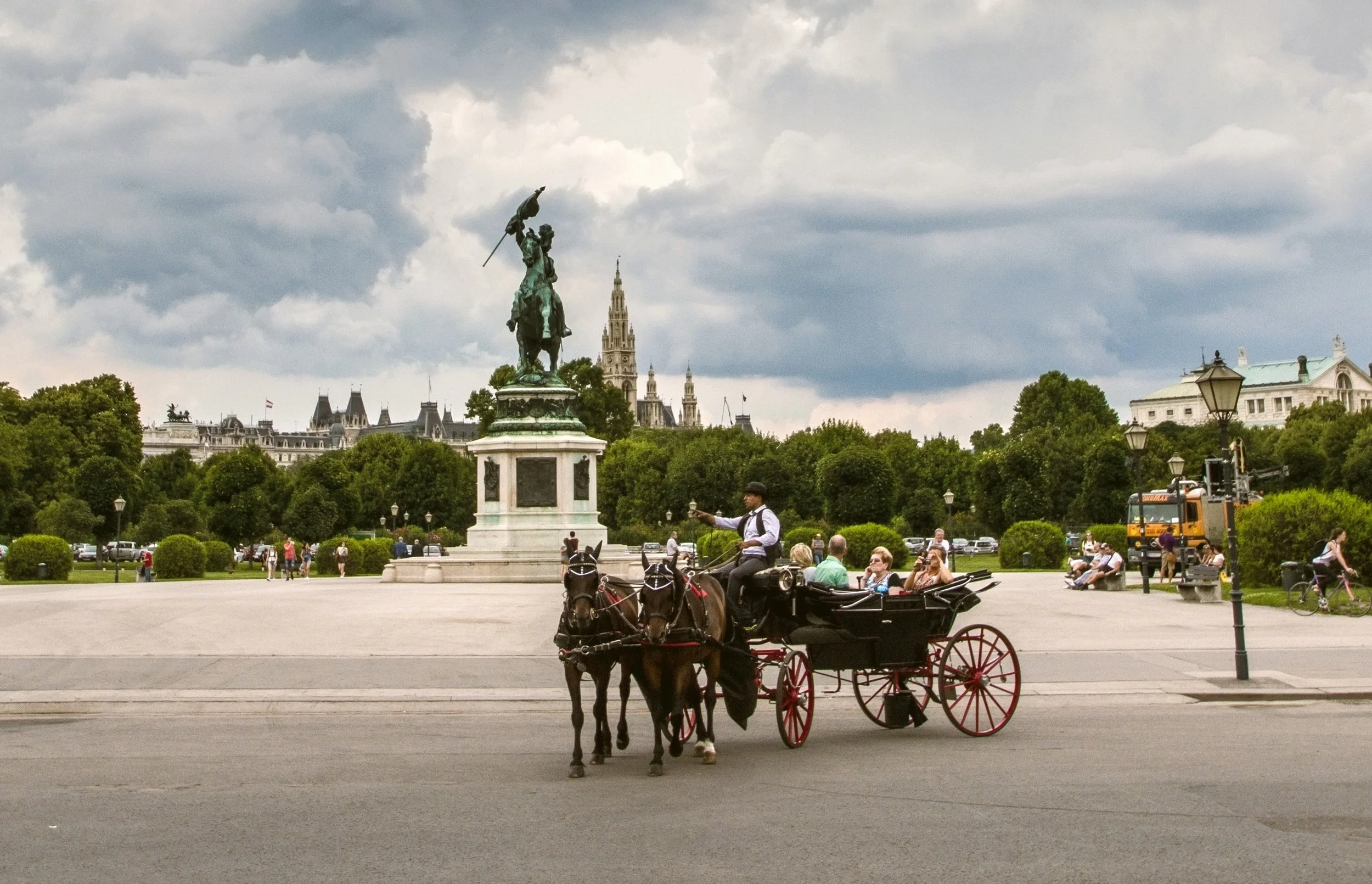
FIAKER
You'll hear them before you see them — hooves on cobblestone, threading through Stephansplatz and Michaelerplatz since the 17th century. The name actually comes from Paris, borrowed from an inn called Hôtel de Saint-Fiacre, though Vienna made the tradition entirely its own. At their peak in the 1800s, over a thousand of these two-horse carriages worked the city, coachmen doubling as unofficial singers for anyone who'd tip for it. Today they're strictly regulated, still licensed, still standing at the same handful of squares. A short loop through the Innere Stadt runs about twenty minutes — touristy, undeniably, but rarely does a cliché come with this much actual history behind it. [Book a Fiaker ride →]
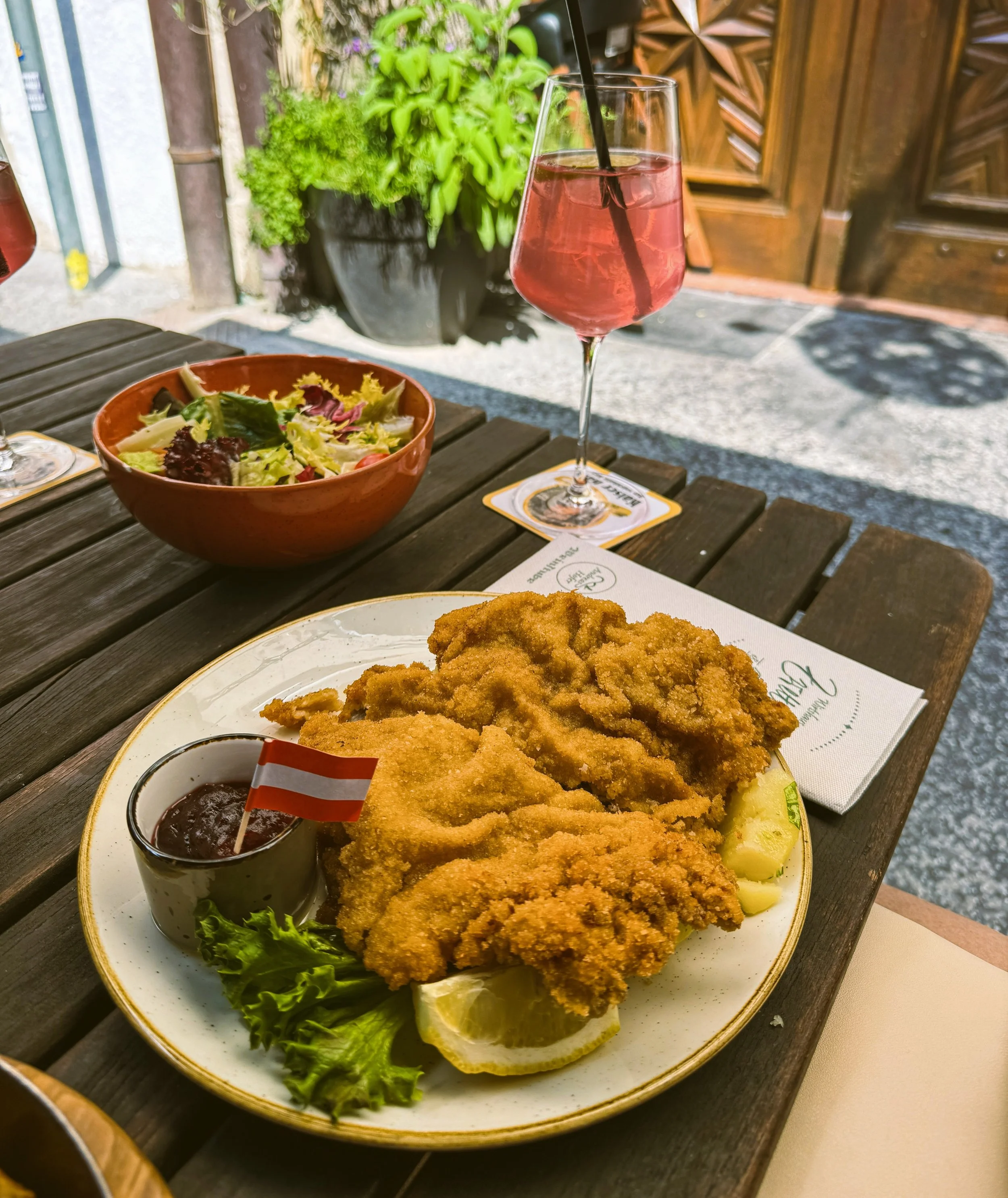
schnitzel
Where it came from is genuinely disputed — the popular legend has a field marshal bringing it from Milan in the 1850s, though the first Viennese recipe dates from 1831 — but Vienna claimed it so thoroughly that "Wiener Schnitzel" is now a legally protected term, and only veal, pounded thin and fried, gets to wear the name. Everything else, pork included, has to settle for "Schnitzel Wiener Art." The real thing puffs up in the pan into little golden waves, crisp enough to hear from the next table, with nothing more than a lemon wedge and a scoop of potato salad alongside. Every Beisl in the Innere Stadt has an opinion on the definitive version. None of them agree, and that's rather the point. Try Reinthaler’s Beisl if you want a serious contender.
PLAN YOUR VISIT
St. Stephen's Cathedral gets crowded fast, and the Albertina's queue moves slowly — both worth booking ahead if you don't want to lose the morning to lines.
[Find St. Stephen's Cathedral tickets →]
[Find Albertina Museum tickets →]