HEURIGER CULTURE
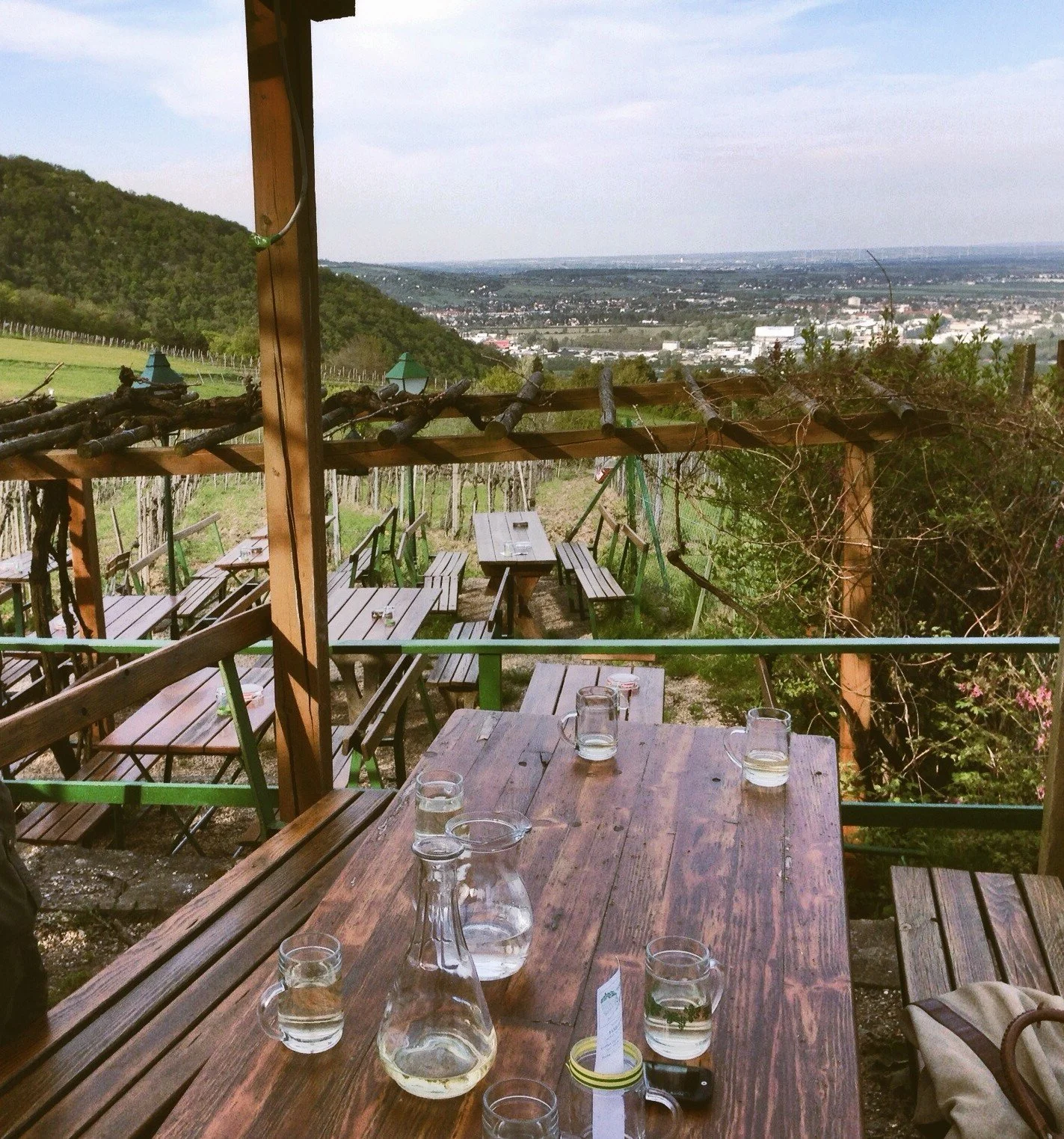
Vienna is the only major capital in the world with significant working vineyards inside its own limits — not a curiosity on the outskirts, but nearly 600 hectares folded into the hills at the city's edge, close enough that a tram gets you there. What grows on those hills gets sold in a heuriger (HOY-rig-er) — a wine tavern, though that translation undersells it. The word comes from heurig, "this year's," because a heuriger traditionally serves the winemaker's own harvest, from that same season, and nothing else.
The tradition dates back to 1784, when Emperor Joseph II decreed that any winegrower could sell their own wine and food directly from the property, without needing a formal licence. Two and a half centuries later, that decree is still shaping how Vienna spends its evenings: long wooden tables, a self-service buffet of cold cuts and cheese, and a pine branch hanging over the door — the old signal, still used today, that a tavern is currently open and pouring.
It isn't a museum piece. It's simply where Viennese families have always gone on a warm evening, and still do.
The wine itself rarely leaves the city to be exported — most of it is young, light, and meant to be drunk within the year, not aged or admired. The signature pour is Gemischter Satz, a field blend of up to twenty grape varieties planted and harvested together, a genuinely Viennese specialty found almost nowhere else.
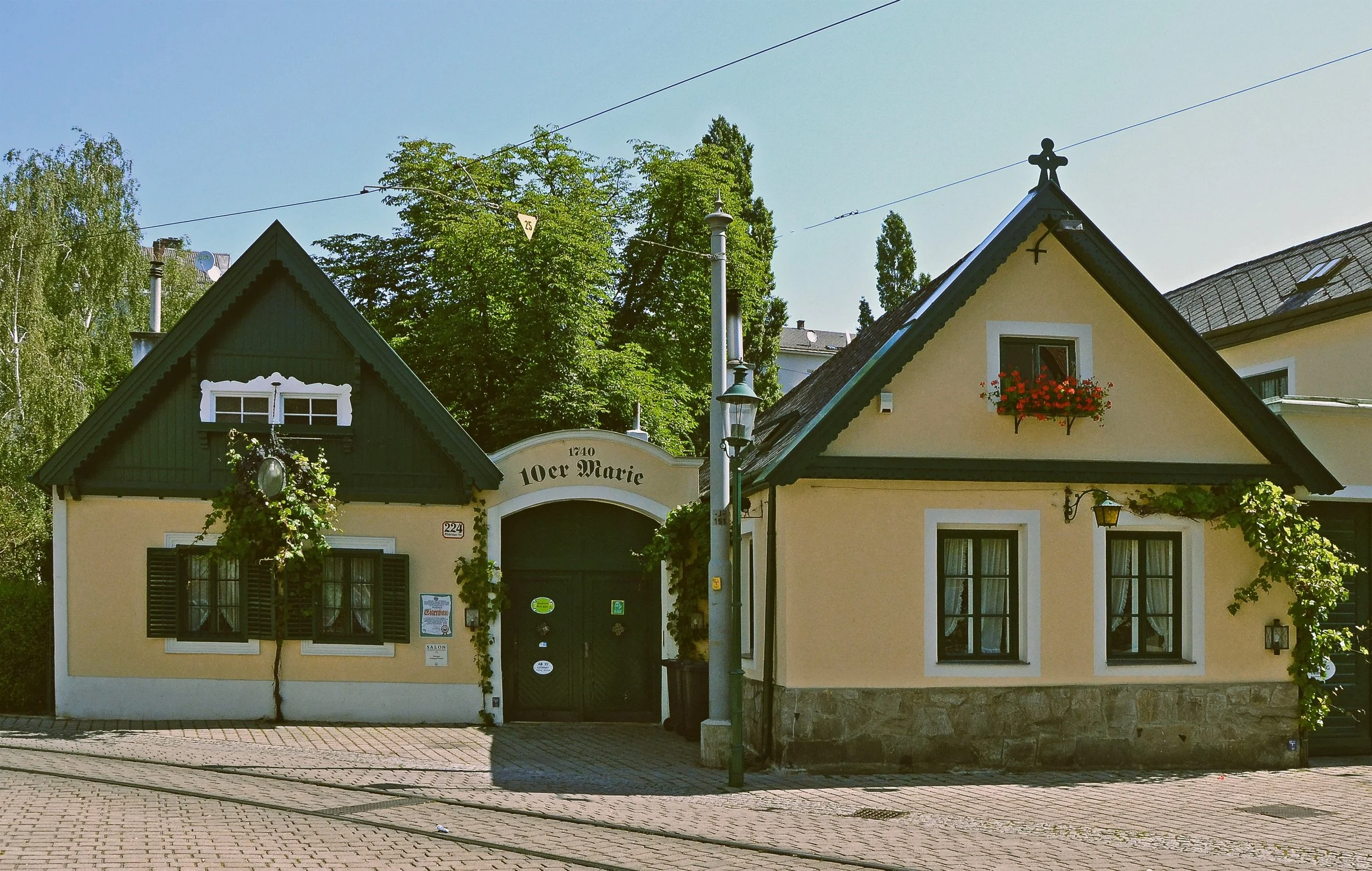
Photo: HeinzLW, CC BY-SA 3.0 AT - edited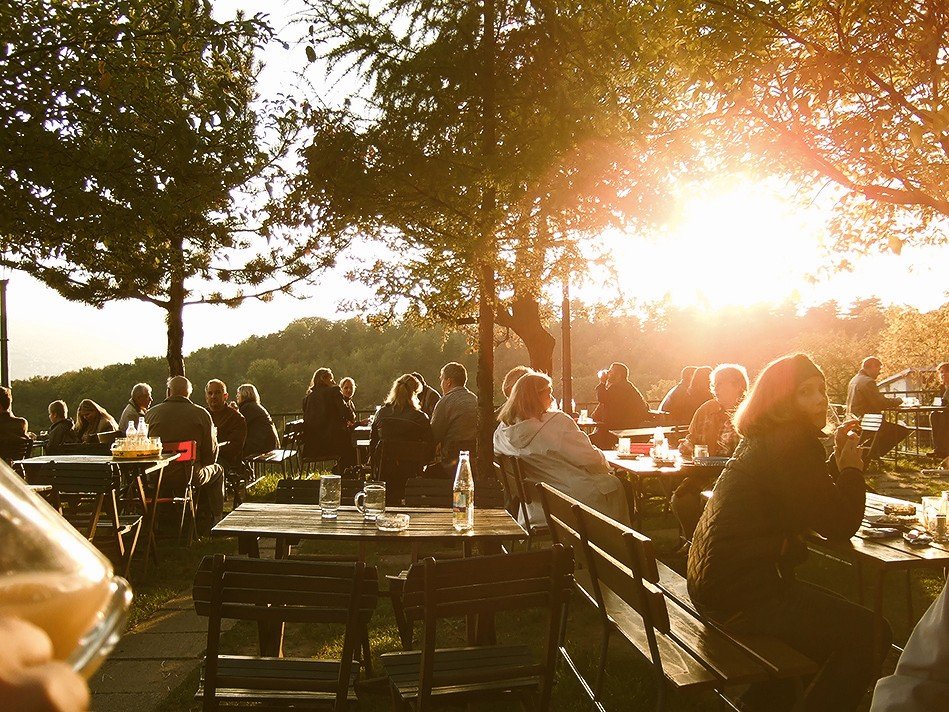
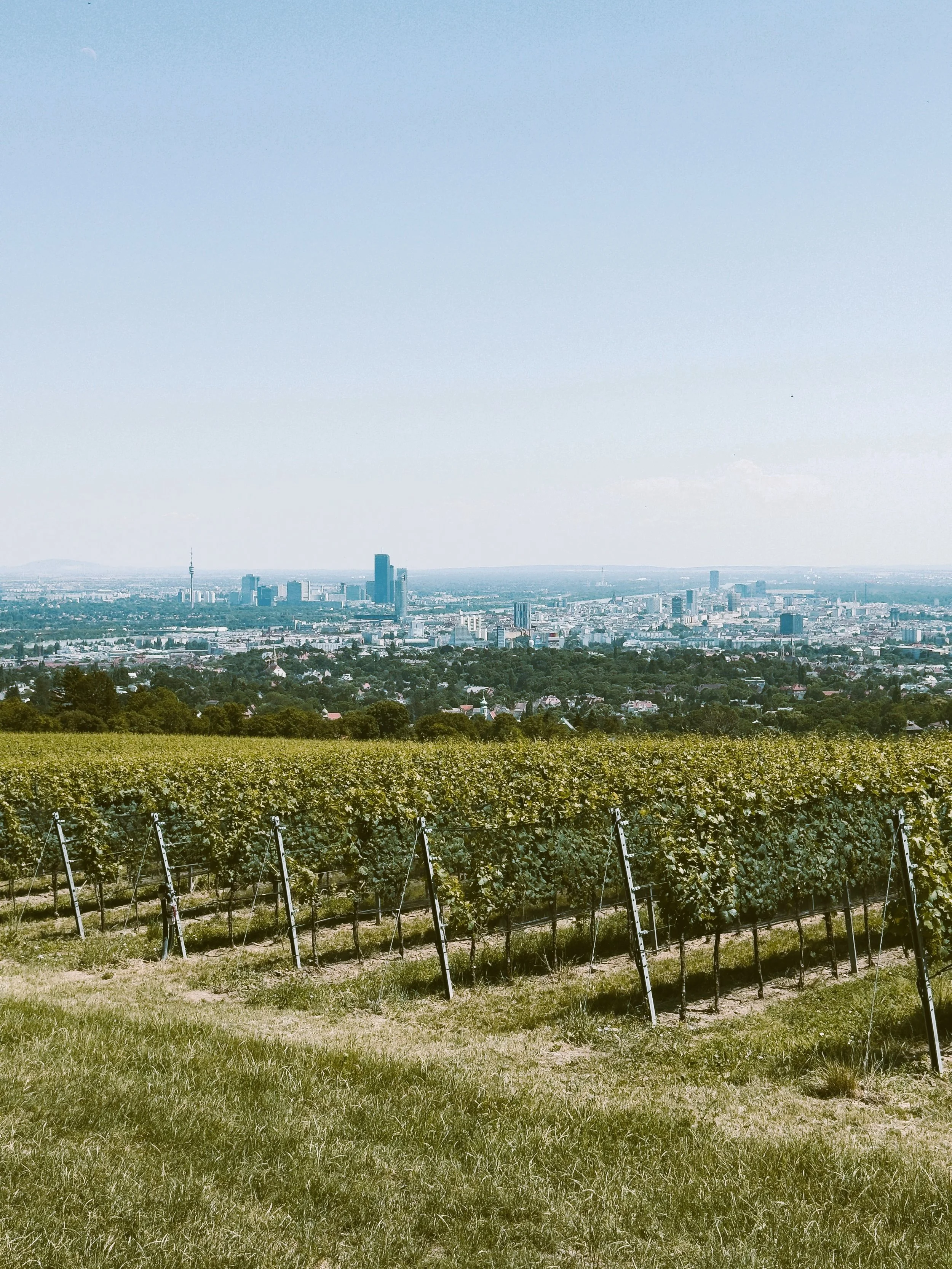
Photo: Oleg Sidorenko , CC BY 2.0 - editedCome in early autumn and the wine on offer changes entirely: Sturm, the barely-fermented "storm" wine, cloudy and deceptively sweet, sold only for a few weeks a year. Locals treat it with real caution — it's stronger than it tastes, and the hangover has a reputation of its own.
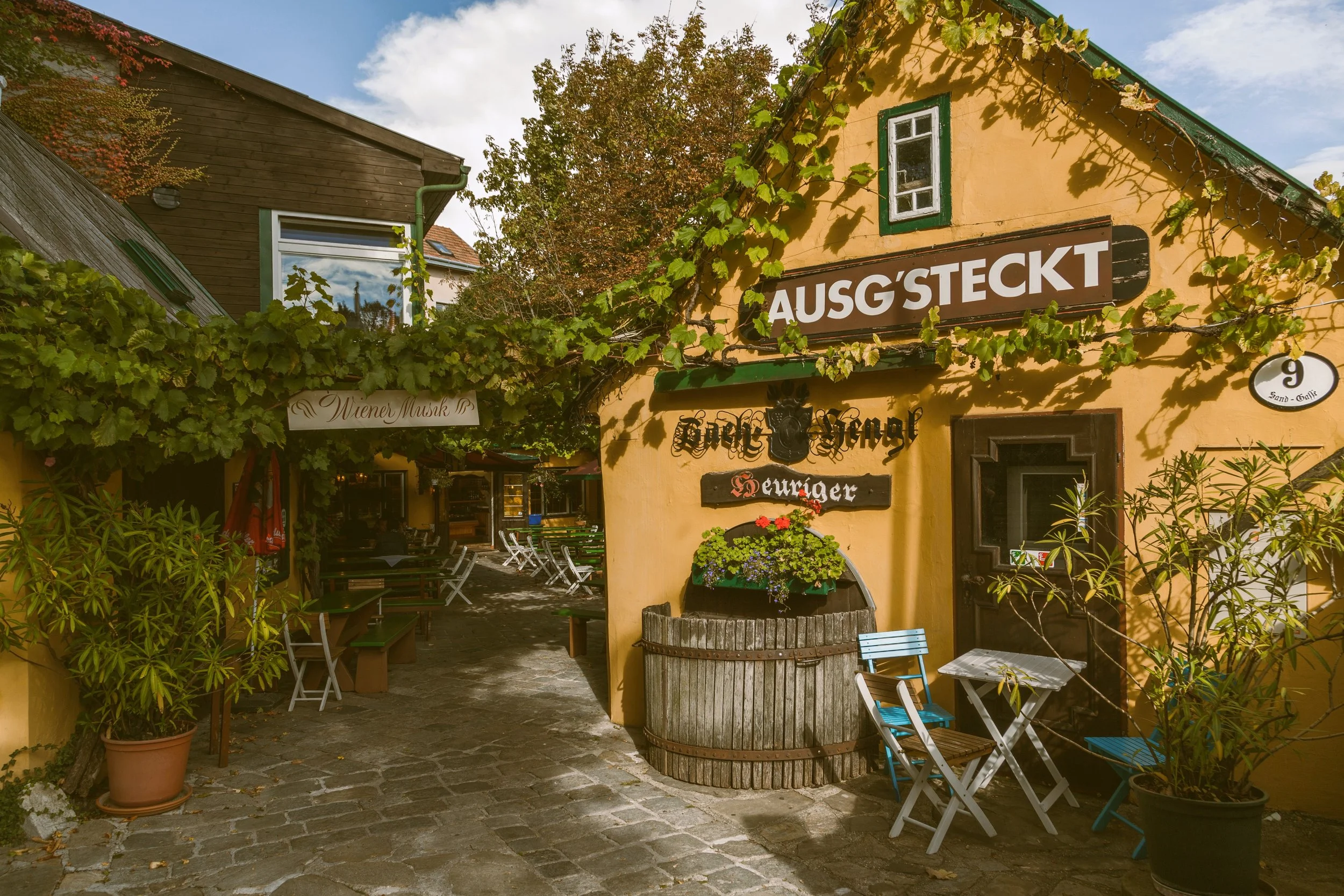
Heuriger Alter Bach-Hengl
Photo: Otto Domes, CC BY-SA 4.0 - editedHEURIGER AREAS IN VIENNA
Grinzing & Nussdorf (northwest, the classic heuriger district)
The most famous and most visited — cobbled streets climbing the Kahlenberg and Nussberg hills, the postcard image most people already have in mind. This is where the choice of tavern matters most: several places here exist almost entirely for tour buses. You may like to try:
Mayer am Nussberg — high on the hillside, with panoramic views over the city and a genuinely local atmosphere despite the area's reputation; the heuriger Viennese themselves tend to recommend over its more central neighbours.
Stammersdorf (north, less touristy)
The real alternative to Grinzing: the same vineyard hills, the same ritual, far fewer coach tours. Local critics tend to describe it as holding onto its authentic character better than its more famous neighbour.
Heuriger Wieninger — one of Vienna's most respected family wineries, several generations deep, consistently named among the city's best.
Neustift am Walde (northwest, the prettiest)
An almost intact vineyard village within city limits, heuriger gardens tucked between centuries-old houses — the choice for anyone after the most rural-feeling version of this experience without actually leaving Vienna.
Fuhrgassl-Huber — one of the largest and most established heuriger in the area, with a sprawling garden and a proper family atmosphere on weekends.
Ottakring (west, the oldest)
Less about hillside views, more about heritage: this is a working city district, not a vineyard village, and its heuriger reflect that — plainer, more urban, unmistakably local.
10er Marie — Vienna's oldest surviving heuriger, pouring since 1740. Long communal tables, a vine-covered courtyard, and a crowd that's barely changed character in generations.
Photo: Gustav Stehno, via Wikimedia Commons - edited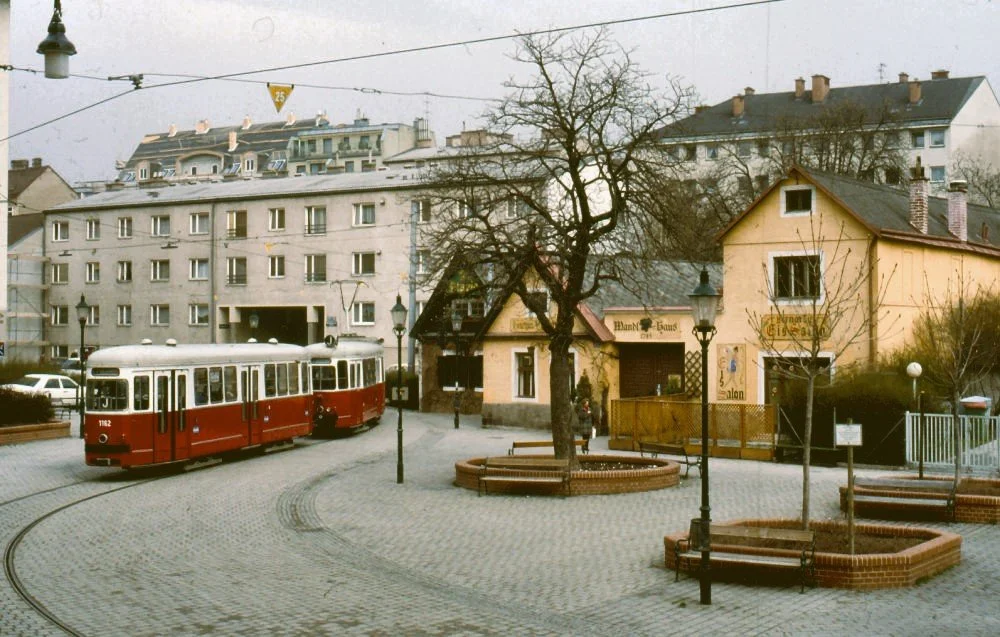
HEURIGER PRACTICAL GUIDE
How it works
Food here is self-service: you queue at the rustic buffet, point at the meats, spreads, and salads you want, and carry your plate back to the table. The wine, however, is brought to you by the waiter once you sit down. The key detail to look for on arrival is the Buschen—a bundle of pine branches or a straw wreath hung over the door. When displayed, it signals that the tavern is officially Ausg’steckt (open to pour this year’s harvest). It's a tradition dating back to 1784, when an imperial decree first granted winegrowers the right to serve their own production directly from their grounds.
How to get there
Tram 38 runs to Grinzing, tram 31 to Stammersdorf, bus 35A covers Neustift am Walde, and tram 2 or bus 46B to Ottakring — none of them more than 30-40 minutes from the center, wine included on arrival.