COFFEEHOUSE CULTURE
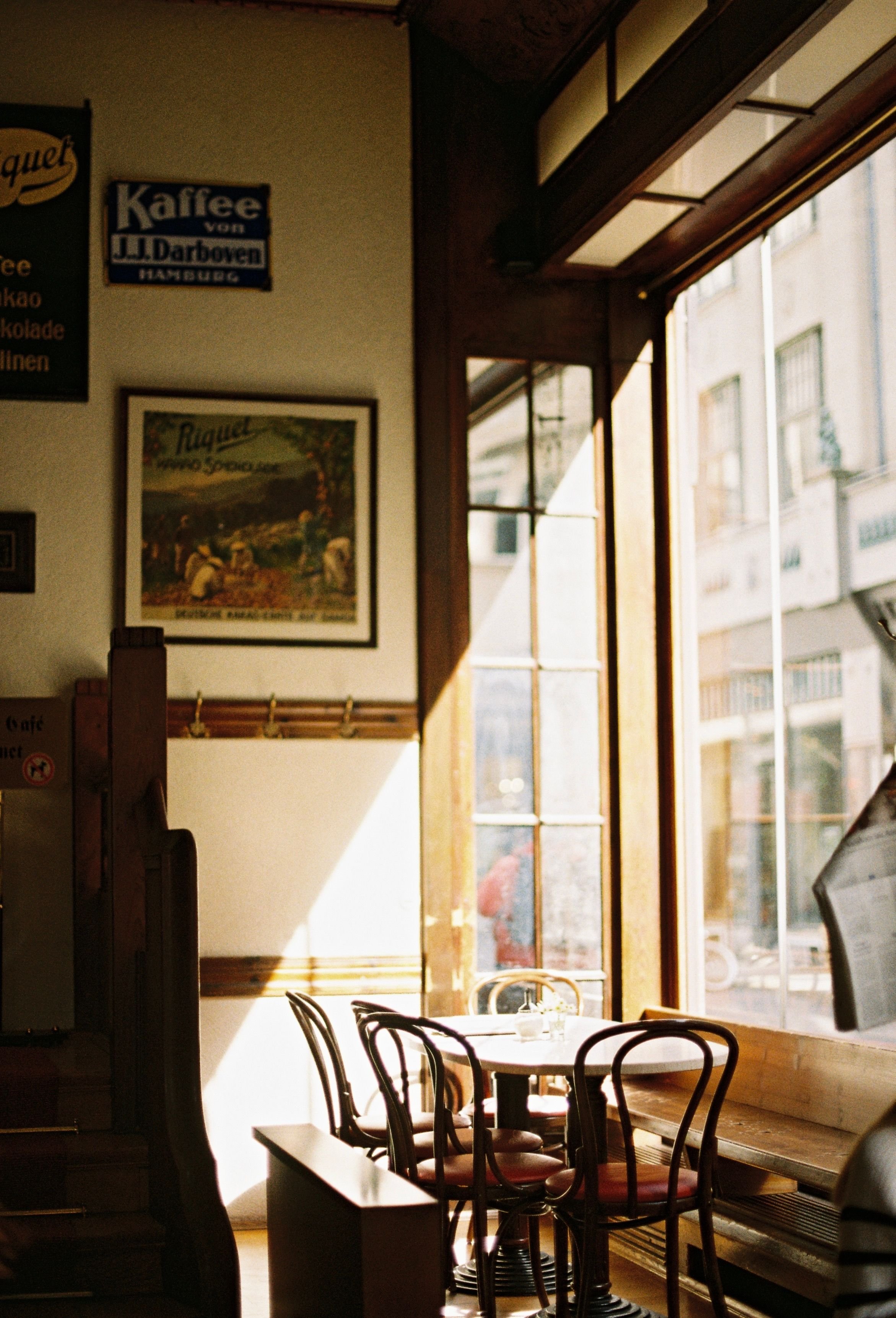
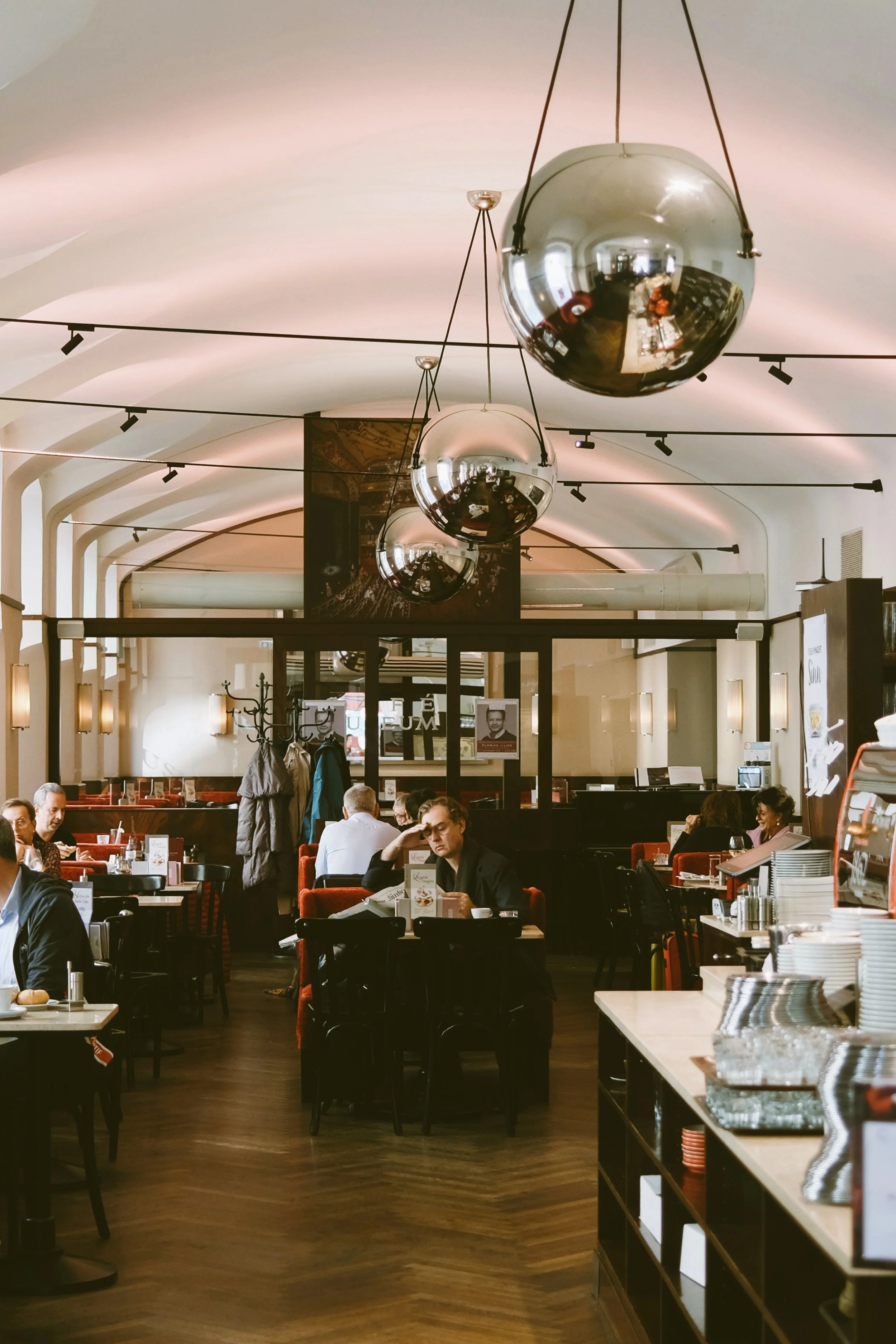
Order a coffee anywhere else in the world and you're paying for a drink. Order one in a Viennese coffeehouse and you're renting a room — for as long as you like, with nobody ever hovering to turn the table. That single unwritten rule, more than any recipe, is what Austria's UNESCO commission recognized in 2011 when it added Vienna's Kaffeehaus culture to the national inventory of intangible cultural heritage: not a drink, a way of using time.
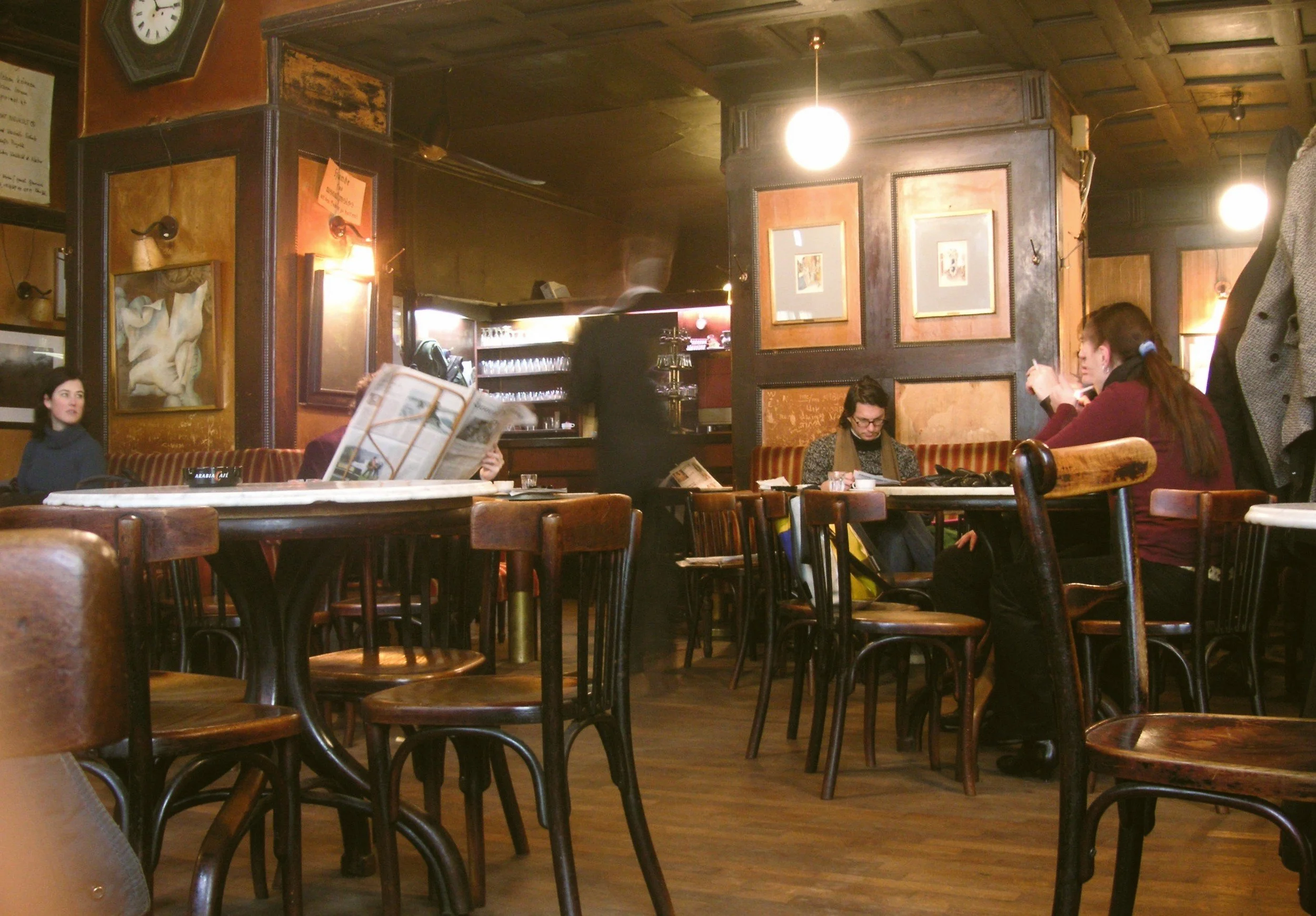
The ritual runs deeper than most visitors expect. Coffee arrives on a small silver tray, a glass of water always beside it, served by waiters in black waistcoats who address regulars by name and everyone else with old-world formality. Newspapers hang from wooden rods, free for anyone to read, in whichever language they happen to be printed. Stefan Zweig once called the coffeehouse "a democratic club, open to everyone for the price of a cheap cup of coffee" — and that description hasn't aged a day. Freud thought here. Trotsky played chess here. Nobody asked either of them to leave.
Each of Vienna's grand cafés has its own personality, shaped by whoever's stayed loyal to it over the decades — students and professors at one, politicians at another, artists and writers at a third. None of them are interchangeable, whatever the shared marble tables and Thonet chairs might suggest at first glance.
What follows are six rooms worth pulling up a chair in.
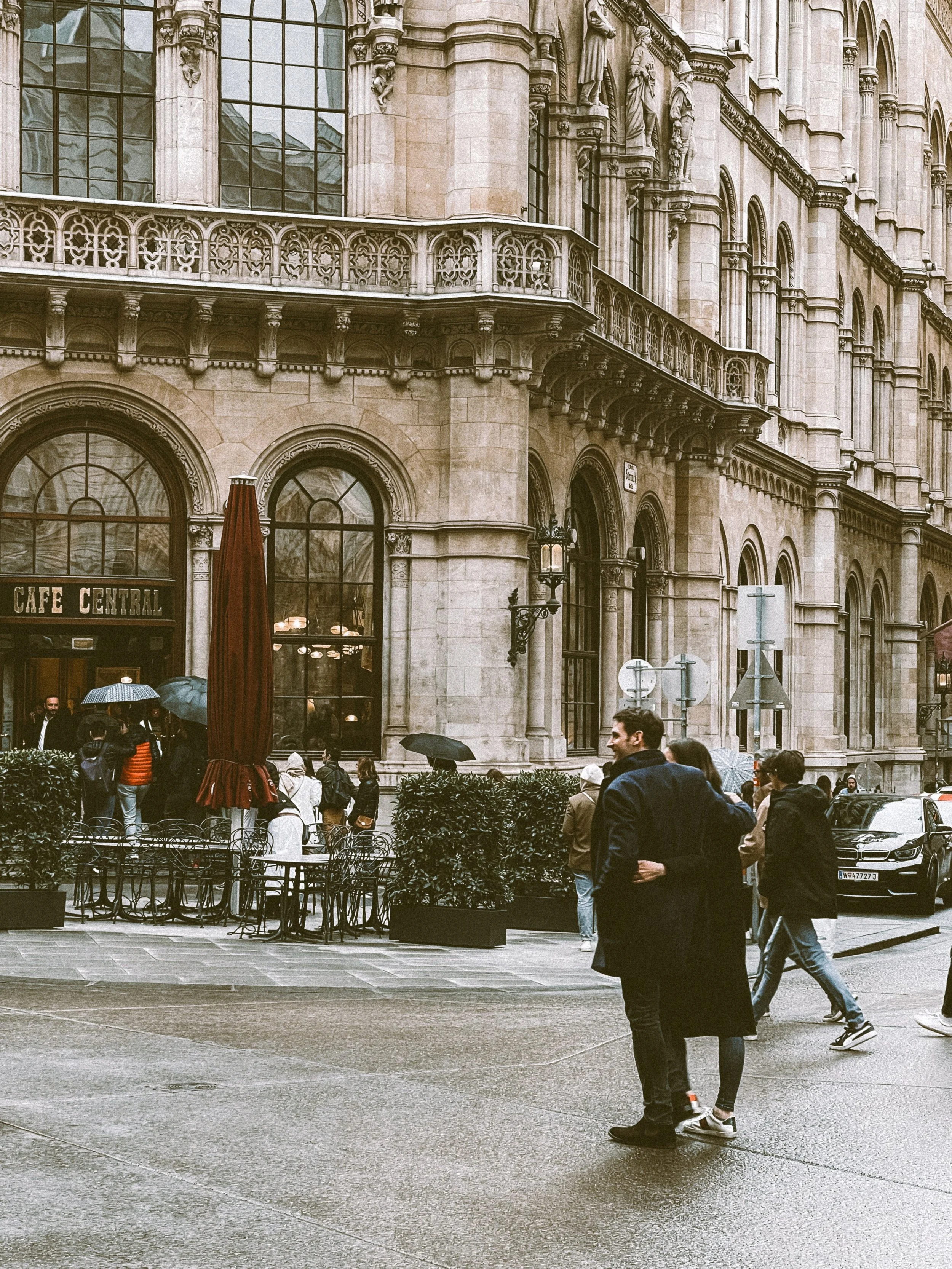
Vaulted ceilings, marble columns, and a life-sized statue of the poet Peter Altenberg permanently seated by the door — he essentially lived here. Trotsky reportedly played chess at these tables while planning a revolution; Freud came for the pastries more than the politics. It's the most photographed of Vienna's cafés now, and the queue outside proves it, but the grandeur underneath is entirely real.
Herrengasse 14, 1010 Vienna - OLD TOWN (INNERE STADT)
Wood paneling, marble counters, and a working billiard table that's been drawing the same crowd of students and regulars since 1880. Further from the tourist core than Central or Sacher, and the room feels it — genuinely local, unhurried, the closest thing to what a 19th-century Viennese coffeehouse actually felt like before anyone thought to photograph it.
Gumpendorfer Str. 11, 1060 Vienna - MARIAHILF
Small, dim, and still run by the family that opened it in 1939. This was the bohemian coffeehouse — writers and artists in the postwar decades, candlelight instead of chandeliers, and Buchteln, warm jam-filled yeast buns, served fresh only after ten at night. Less about seeing and being seen, more about disappearing into a corner table for hours.
Dorotheergasse 6, 1010 Vienna - OLD TOWN (INNERE STADT)
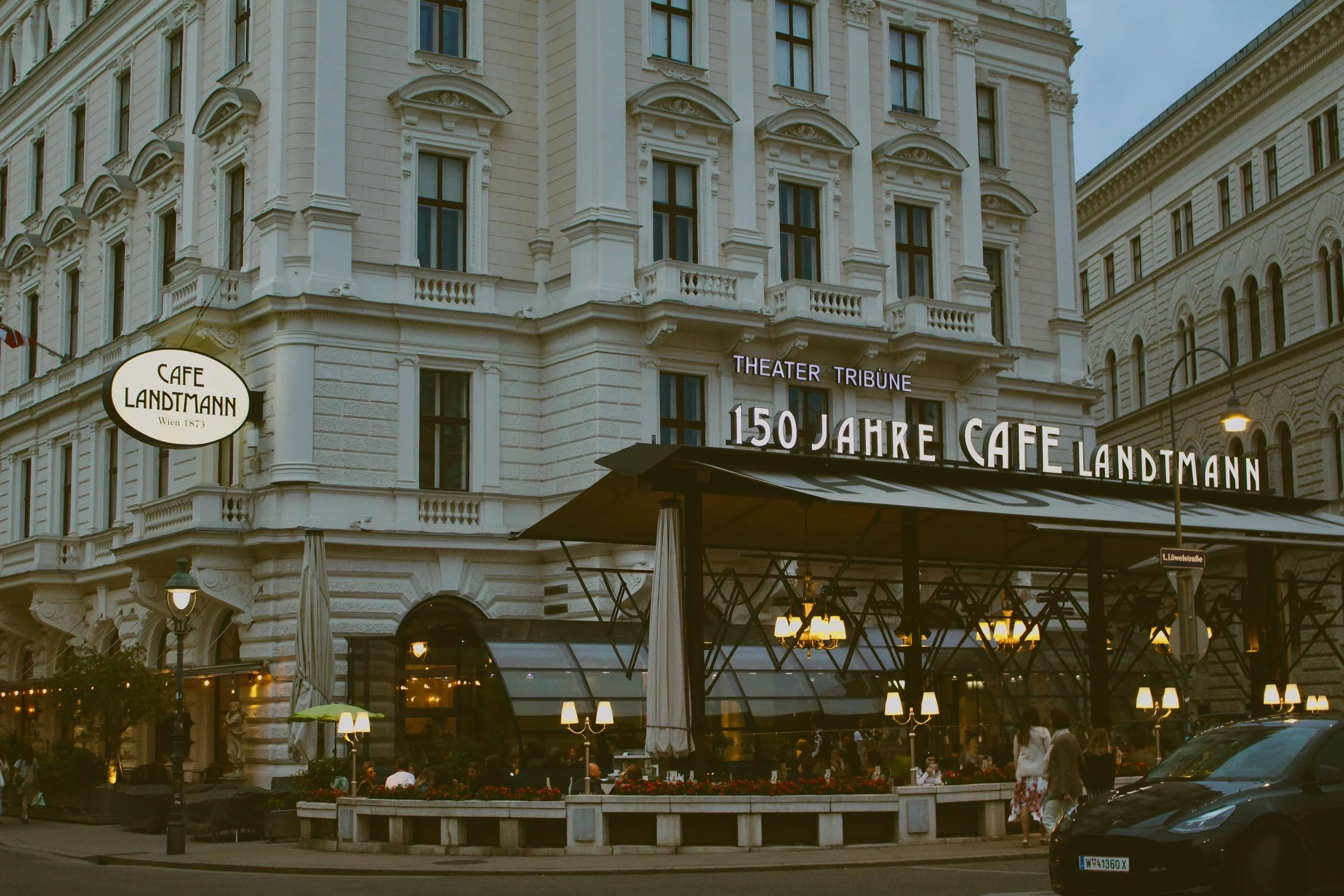
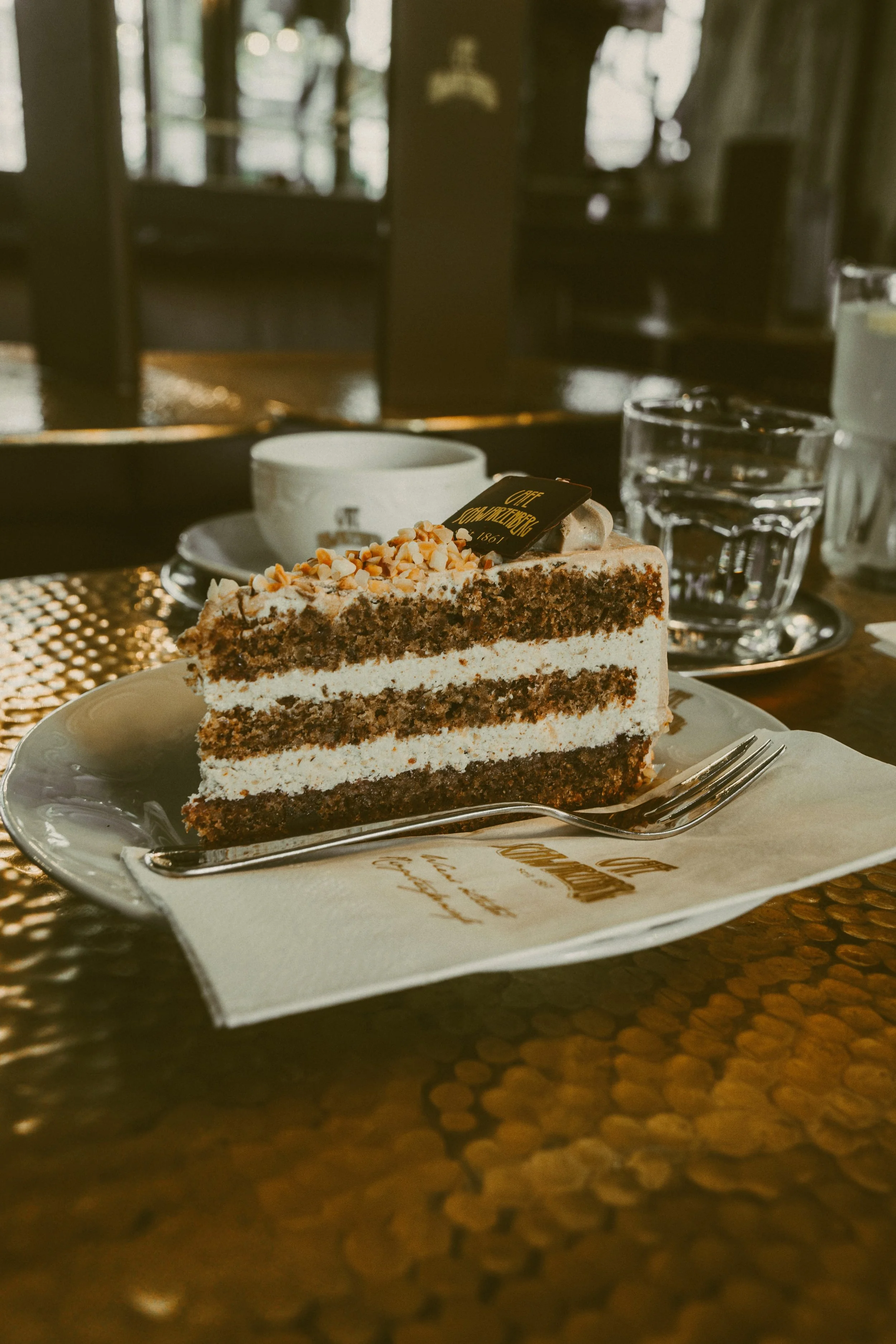
Opened in 1873 beside the Burgtheater, built deliberately to be the most elegant coffeehouse in the city — and it mostly still is. Politicians and actors take the same booths their predecessors did a century ago, under gilded mirrors and original imperial-era Thonet chairs. Order the Apfelstrudel; it's the one the regulars actually order.
Universitätsring 4, 1010 Vienna - RINGSTRASSE
Opened in 1910 and still wearing its Jugendstil interior: green velvet booths, wood paneling, a billiard table, and a preservation order that keeps it exactly as it was. One of the few grand cafés with genuinely lower prices and none of the queue.
Argentinierstraße 49, 1040 Vienna - WIEDEN
A short walk from the Rathaus and Parliament, Eiles has spent decades absorbing whoever's nearby — students, politicians, writers between rehearsals at the Josefstadt theatre up the street. Less about the architecture, more about who's sitting at the next table reading the day's papers, exactly as the coffeehouse was always meant to work.
Josefstädter Str. 2, 1080 Vienna - JOSEFSTADT
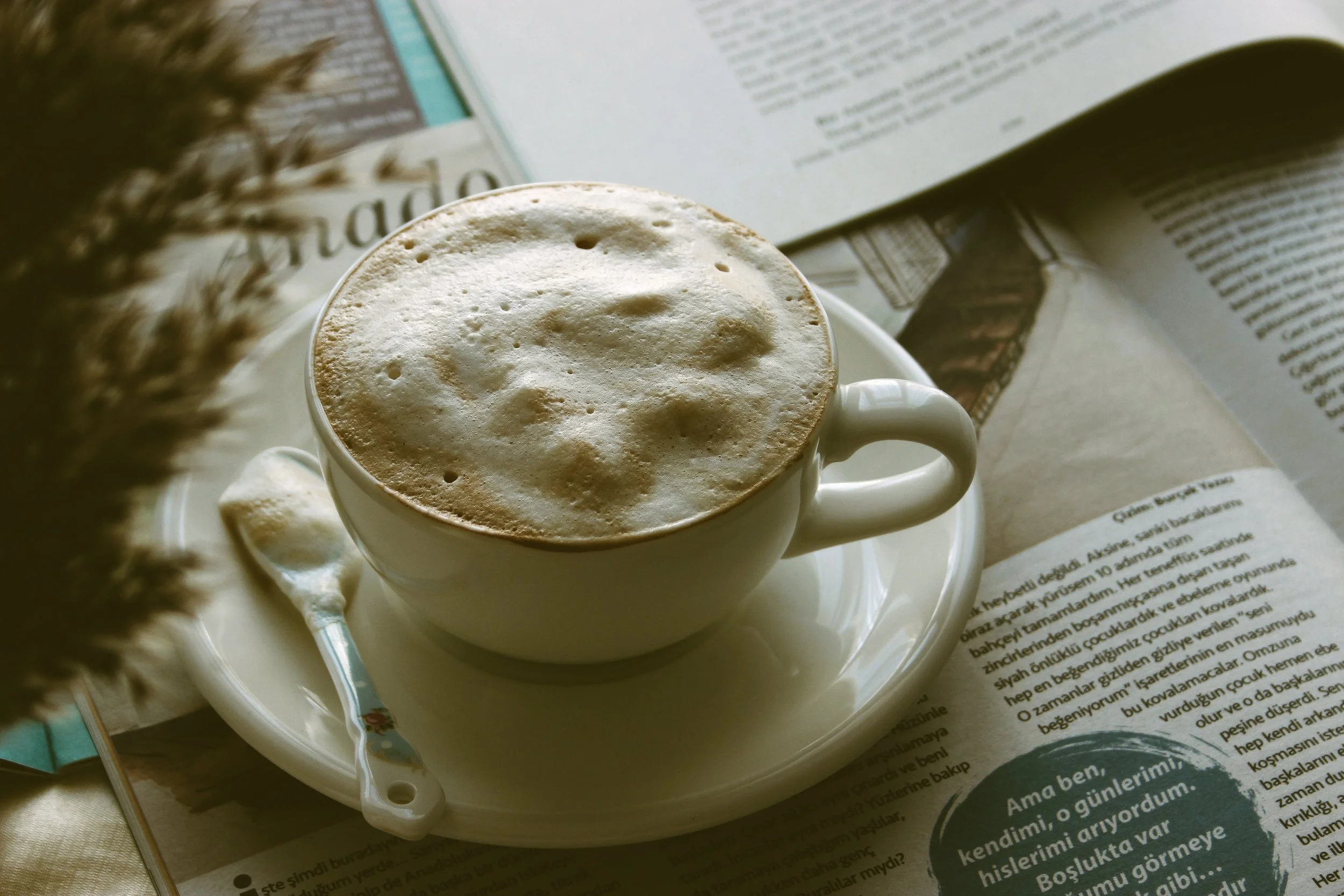
Melange
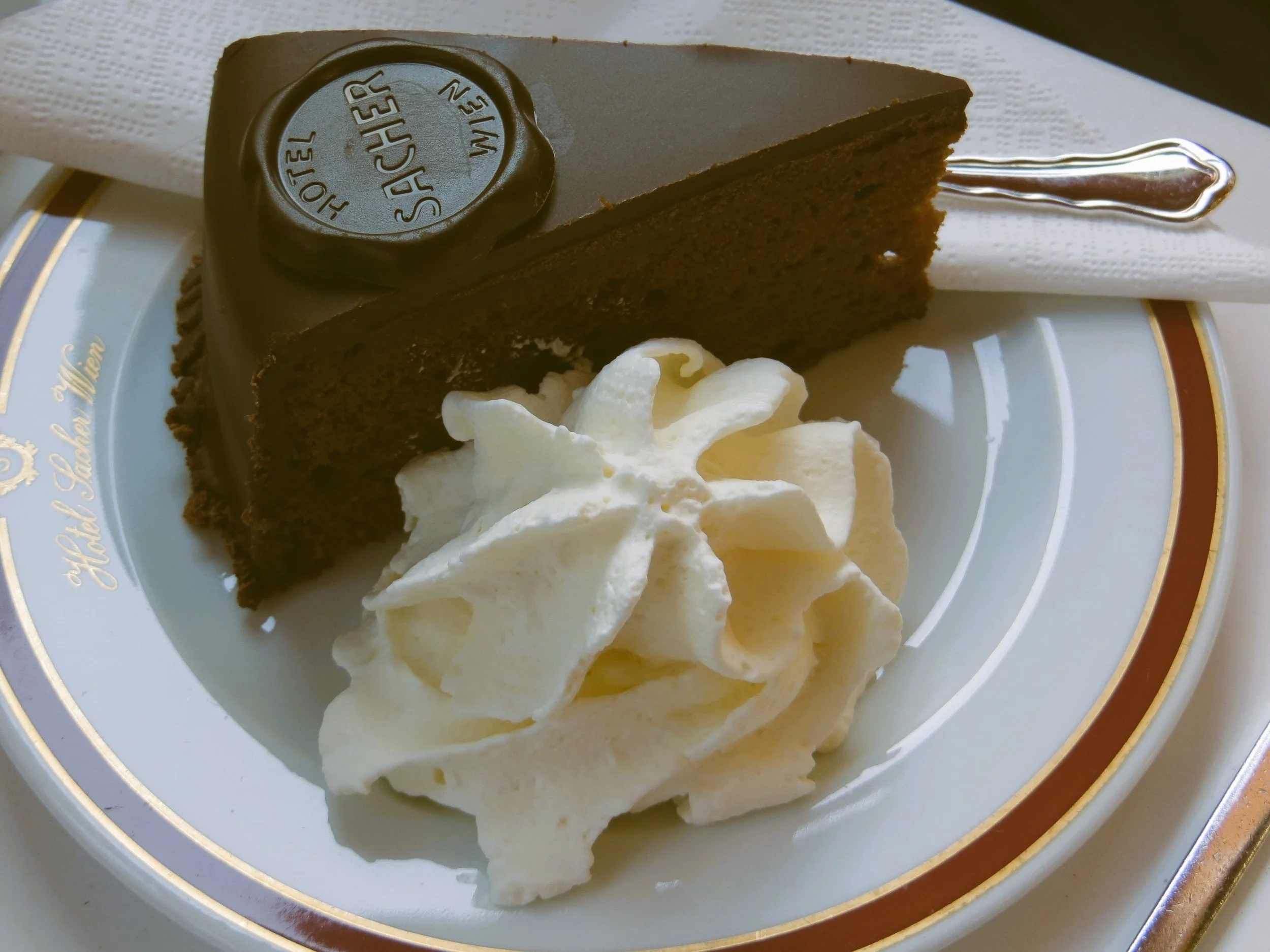
Sachertorte
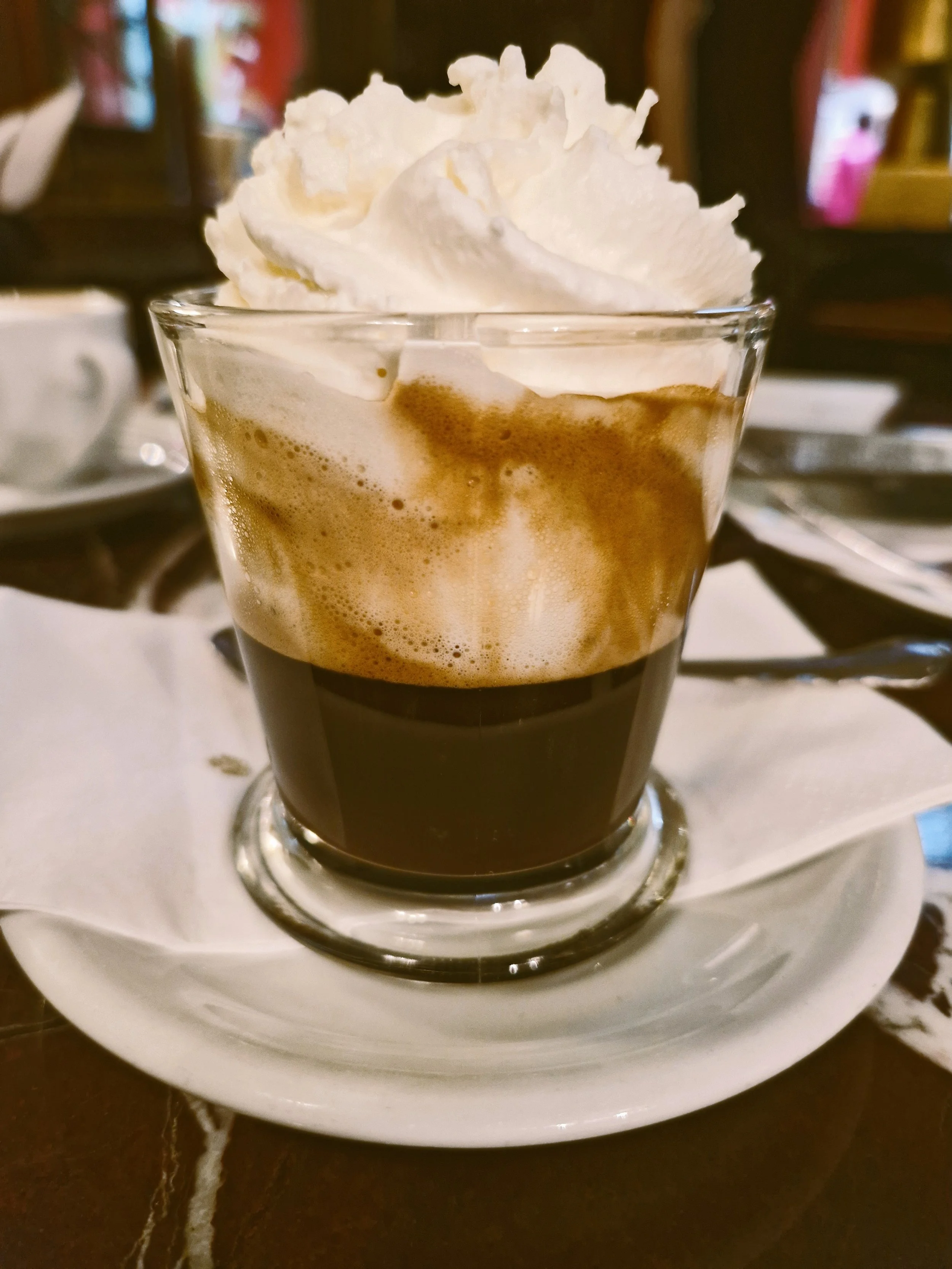
Photo: Geolina163, CC BY-SA 4.0 - edited Einspänner
QUICK VIENNESE COFFEEHOUSE GUIDE - What’s what
The Glass of Water - Arrives automatically with every coffee, no exceptions, no charge — not a courtesy so much as an unspoken rule of the house.
The Newspaper Rack - Wooden rods holding the day's papers, free for anyone to read, in whatever language they happen to be printed — the original reason nobody ever felt rushed to leave a Viennese coffeehouse.
Melange - Vienna's answer to a cappuccino — espresso topped with steamed milk and a light layer of foam, sometimes finished with a small dollop of whipped cream on top instead of stirred through.
Einspänner - A double espresso served in a glass with a generous crown of whipped cream, no spoon required — named, the story goes, after the coachmen who once drank it one-handed, reins in the other.
Verlängerter - Literally "lengthened" — a single espresso stretched with hot water, closer to an Americano, ordered by anyone who wants their coffee strong but not quite as concentrated as a straight Kleiner Schwarzer.
Sachertorte - Dense chocolate sponge, a thin layer of apricot jam, and a glossy chocolate glaze — invented in 1832 by a sixteen-year-old apprentice under pressure, and fought over by rival bakeries ever since.
Apfelstrudel - Paper-thin pastry wrapped around spiced apple, raisins, and breadcrumbs, served warm with a dusting of powdered sugar — the coffeehouse dessert locals actually order more often than the famous cake.
Café Hawelka
BOOK A VIENNESE COFFEEHOUSE TOUR
Freud, Trotsky, and half of Vienna's writers had their regular table somewhere in this city. A guide knows whose.
[Book tour →]