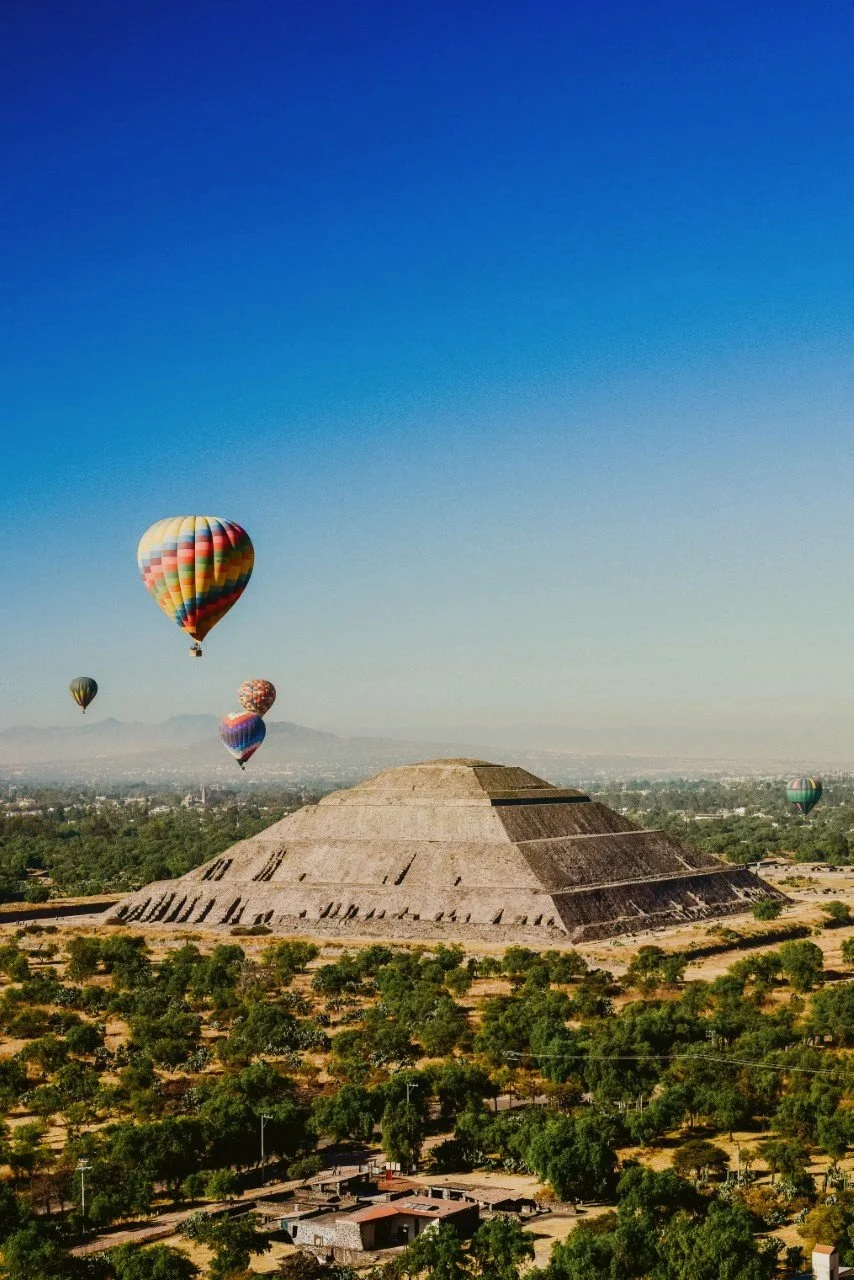
TEOTIHUACÁN
Nobody knows who built Teotihuacán. Not for certain, anyway. The city was already abandoned and in ruins by the time the Aztecs found it, centuries later — so they named it themselves, in Nahuatl: the place where men become gods. Whoever actually built it left no written record explaining who they were, which is unusual for a civilization that built on this scale.
And the scale is the whole point. At its peak, over 100,000 people lived here, making it one of the largest cities on Earth at the time — this wasn't a temple complex, it was a functioning metropolis with its own neighborhoods, workshops, and marketplaces, most of which is still unexcavated.
Technically, Teotihuacán isn't in Mexico City at all — it sits about 50 kilometers northeast, in the neighboring State of Mexico. But it's covered here for the obvious reason: it's close enough that no guide to this city would make sense without it. This is where Mexico City's story quietly begins, long before there was a Mexico City.
Give it most of a day. It's bigger, on foot, than it looks in photos.
The Calzada de los Muertos is the city's spine: a boulevard about 40 meters wide and 2.4 kilometers long, running from the Pirámide de la Luna in the north to the Ciudadela and the Temple of the Feathered Serpent in the south, and pointing straight at the sacred peak of Cerro Gordo. The Aztecs, arriving centuries later, took the platform mounds lining it for tombs and named it the Street of the Dead; most of them were in fact temples. Walk it slowly and the size of the place actually sinks in.
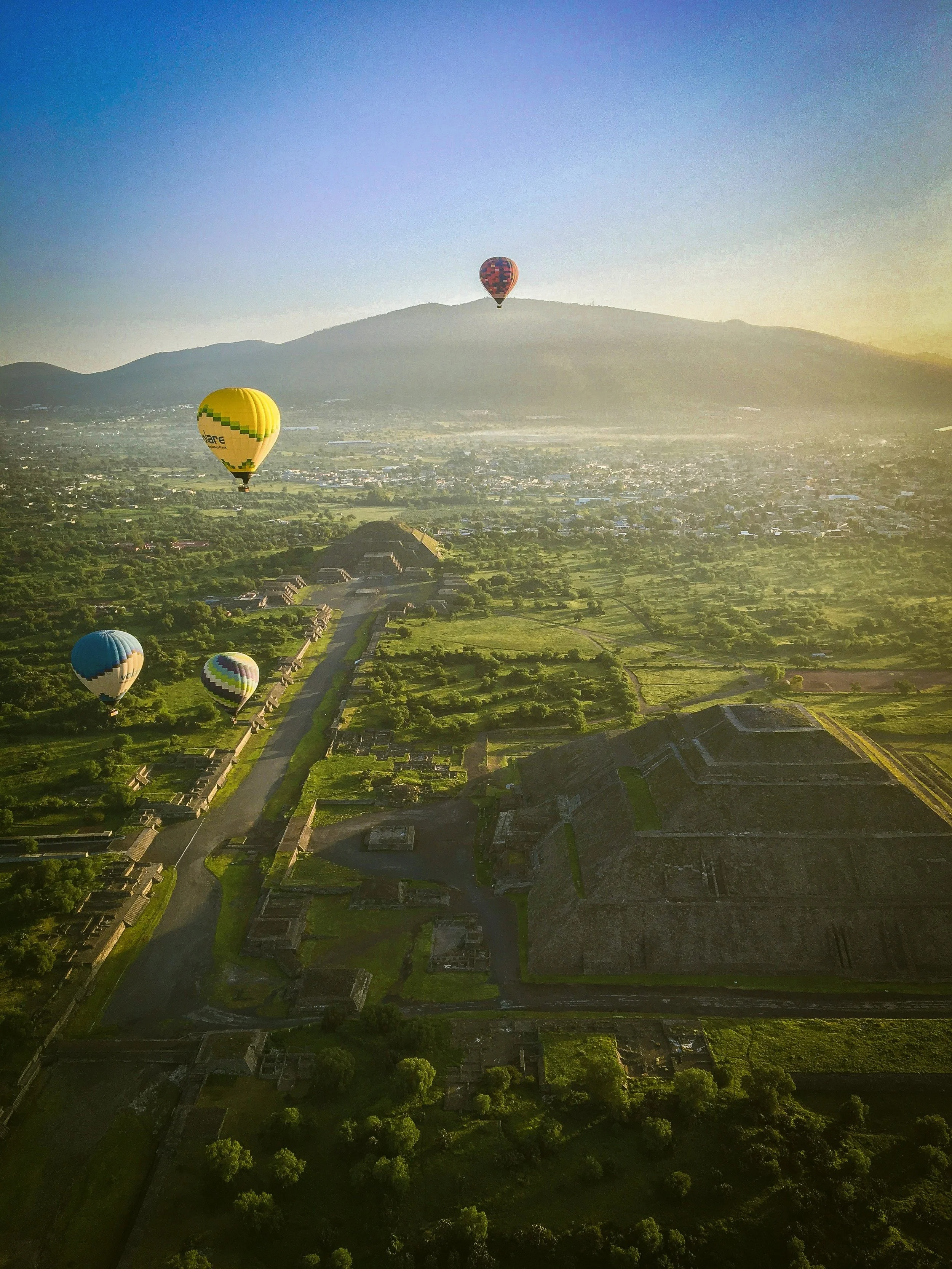
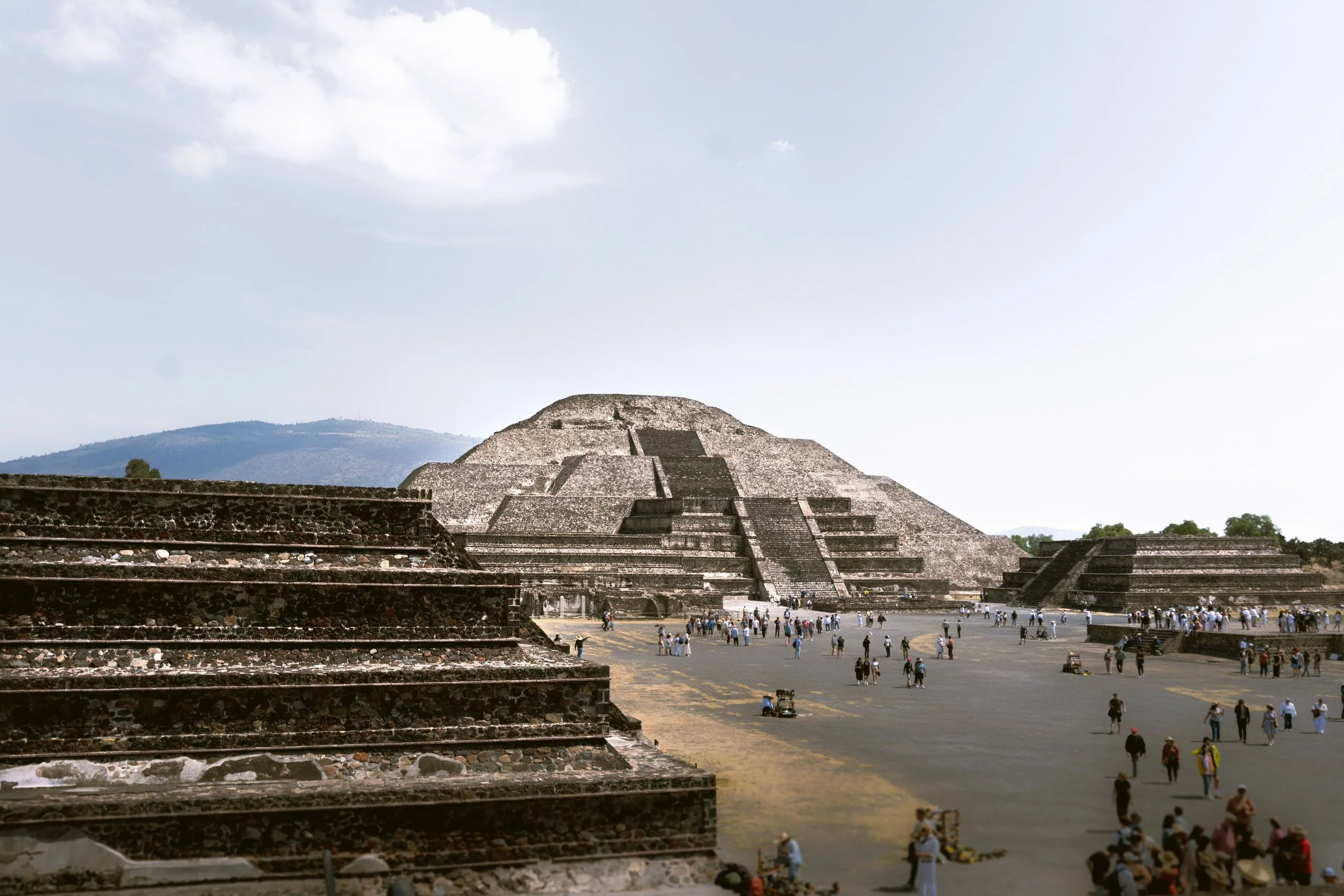
Midway along sits the Pirámide del Sol, the third-largest pyramid on Earth by base size, built directly over a cave the city's founders likely considered sacred. Climbing has been closed since 2020, but standing at its base is enough to make the scale sink in.
At the avenue's northern end, the Pirámide de la Luna is smaller but arguably better positioned: the plaza in front of it frames the Pirámide del Sol perfectly, which was almost certainly deliberate.
THE PRACTICAL BIT
Getting there: About 50 minutes from Mexico City by car, or a direct bus from Terminal Norte. A guided tour handles the transport and gets you in with someone who can actually explain what you're looking at — worth it here more than almost anywhere else on this list.
For something different: Sunrise hot air balloon rides float directly over the pyramids before the site opens to ground visitors. Not cheap, but it's the version of Teotihuacán most people never see.
One thing worth knowing: there's almost no shade anywhere on site. Go early — not just for the crowds, but because by midday there's nowhere to escape the sun, and walking the length of the Calzada in full midday heat is no joke.
Check the site's current climbing rules before you go; they've changed more than once since 2020.