THE historic center
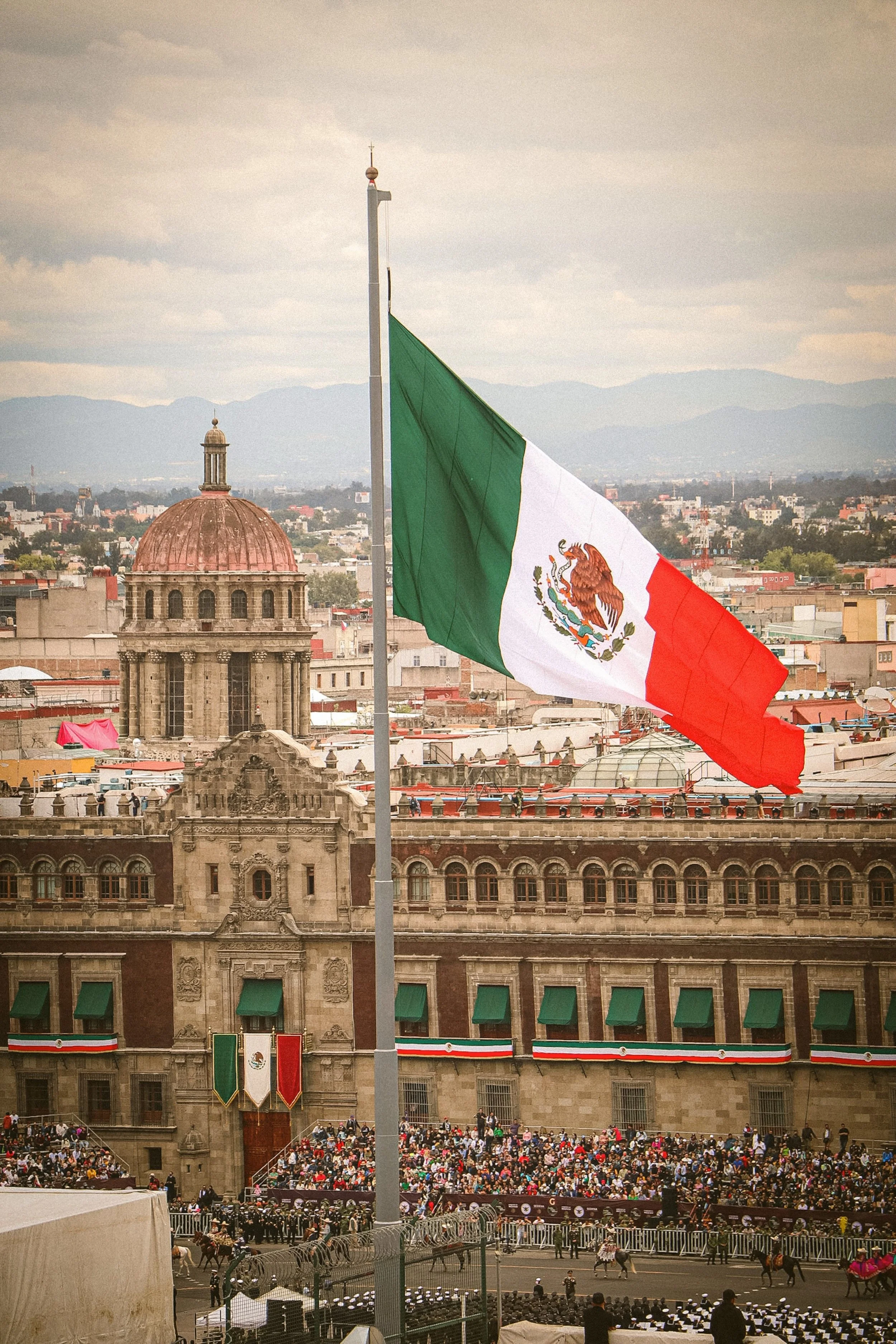
Everything in Mexico City eventually happened here first. The Aztecs built their capital on this exact spot; the Spanish tore it down and built on top, quite literally, using the same stones. Five centuries later, you can still read that stacking — plaza over temple, cathedral over pyramid, palace over palace — just by walking a few blocks in any direction.
This is the part of the city where nothing is subtle. The main square, the Zócalo, is one of the largest in the world. The murals inside the government buildings cover entire staircases with the whole of Mexican history, painted in reds and blacks you can see from across the room. Even the theater looks like it wandered in from another era, which it did.
But the Centro Histórico also rewards paying attention at street level — not just the monuments, but what's happening in their shadow: a scribe still typing letters for people who can't write their own, a colonial building that used to be someone's private mansion and is now free to walk into. Give this area half a day, minimum, and start early — the light is better and the crowds aren't yet.
Metropolitan Cathedral
the zócalo
Four layers of history sit on the same few hundred meters. The plaza itself — one of the largest public squares on Earth — was built directly over the ceremonial heart of Tenochtitlan, the Aztec capital the Spanish tore down and rebuilt with the same stones.
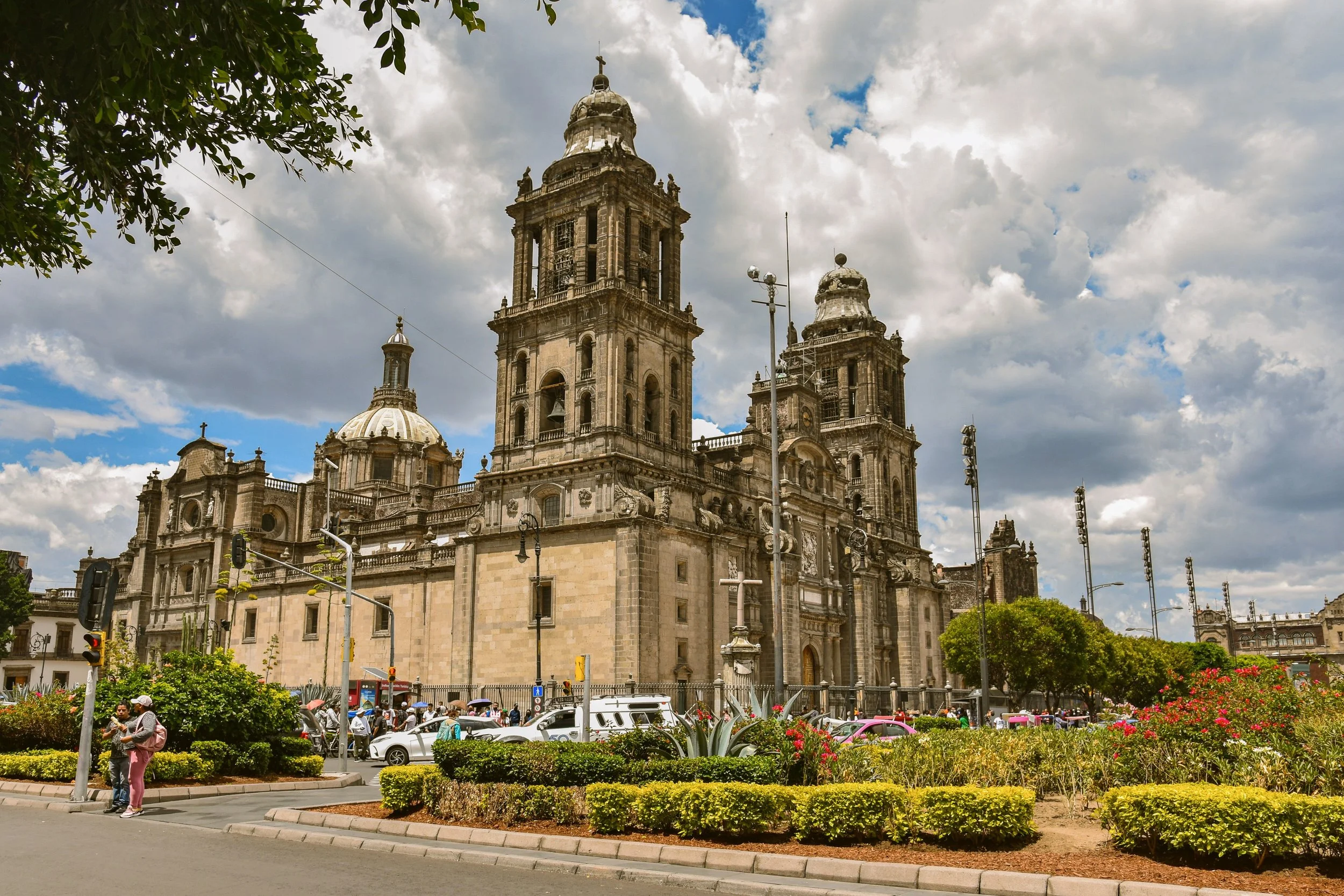
On the north side, the Metropolitan Cathedral has been under construction or repair since 1573, sinking unevenly into the old lakebed beneath it — some floors visibly slope. Step down into the Templo Mayor ruins next door, found by accident in 1978 when electrical workers hit a stone disc, and you're standing below street level in what was once the Aztecs' main temple.
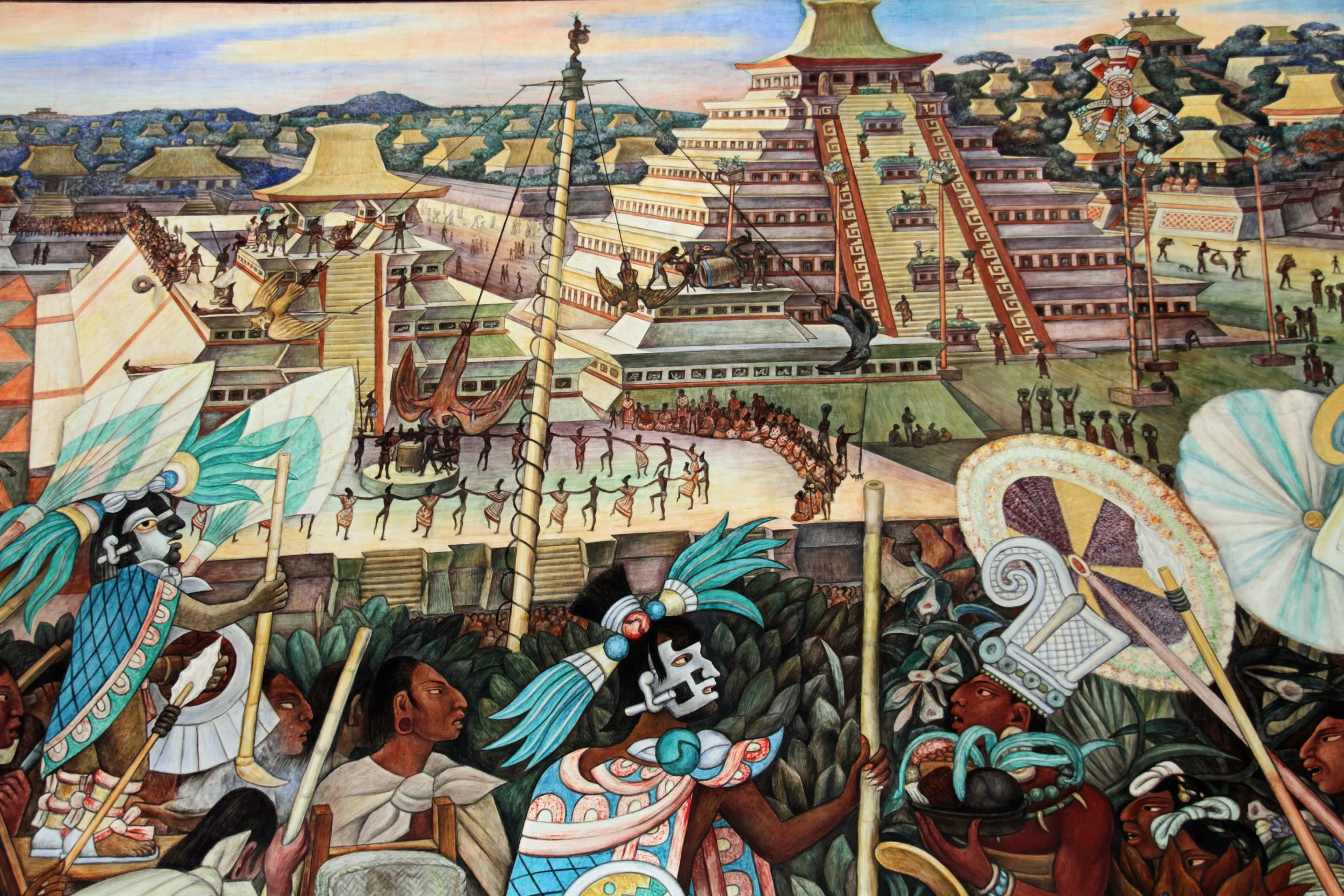
Then there's the National Palace, where Diego Rivera spent years covering a staircase with murals tracing Mexican history from conquest to revolution. Free to see, easy to walk past without realizing what you're looking at.
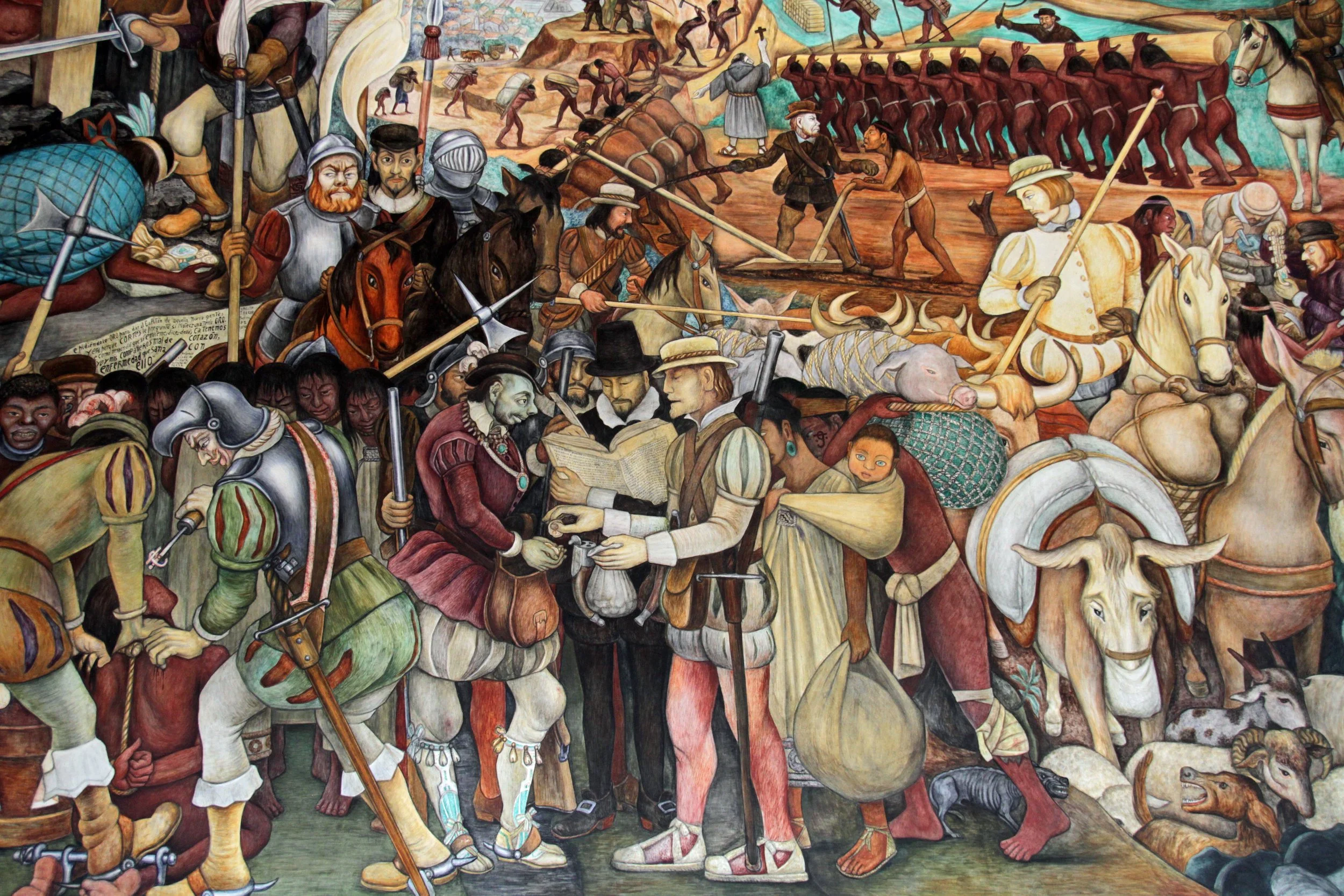
Diego Rivera paintings
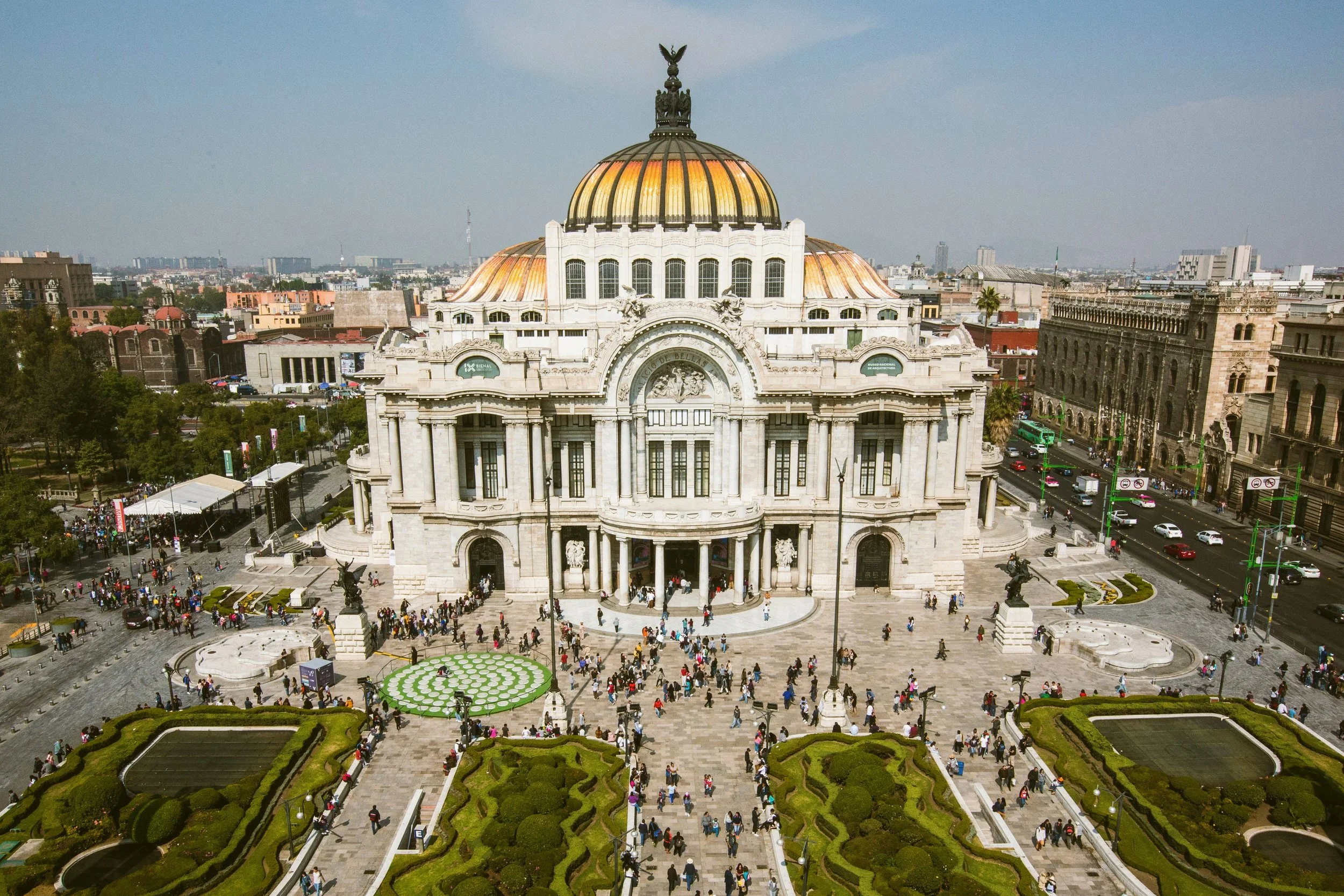
PALACIO DE BELLAS ARTES
From outside, it's white Carrara marble in an Art Nouveau style that took three decades to finish — construction kept stalling partly because the building itself was sinking into the soft ground beneath it, the same problem that plagues half the Centro Histórico. By the time it was completed, tastes had moved on, so the interior flips entirely to Art Deco.
The stage curtain is the real showstopper: nearly a million pieces of opal and colored glass forming a view of the Valle de México, still lowered before performances. Check the schedule for the Ballet Folklórico — even if dance isn't usually your thing, the building alone is worth the ticket. [Seats go fast, so book ahead]
CALLE MADERO
The pedestrian street connecting the Zócalo to Bellas Artes, worth slowing down for rather than treating as a corridor.
Start at the Casa de los Azulejos, a colonial palace wrapped in blue-and-white Talavera tile. The Sanborns restaurant inside is forgettable, but step in anyway for the Orozco mural climbing the staircase.
Further on, the Torre Latinoamericana breaks the colonial skyline — a 1956 skyscraper whose engineers solved earthquake-resistant construction on soft lakebed soil before almost anyone else tried. It's why the tower came through the 1985 earthquake essentially untouched while buildings around it collapsed. The viewing deck beats most rooftop bars in Roma or Condesa, at a fraction of the price. [skip-the-line tickets are worth it on weekends →]
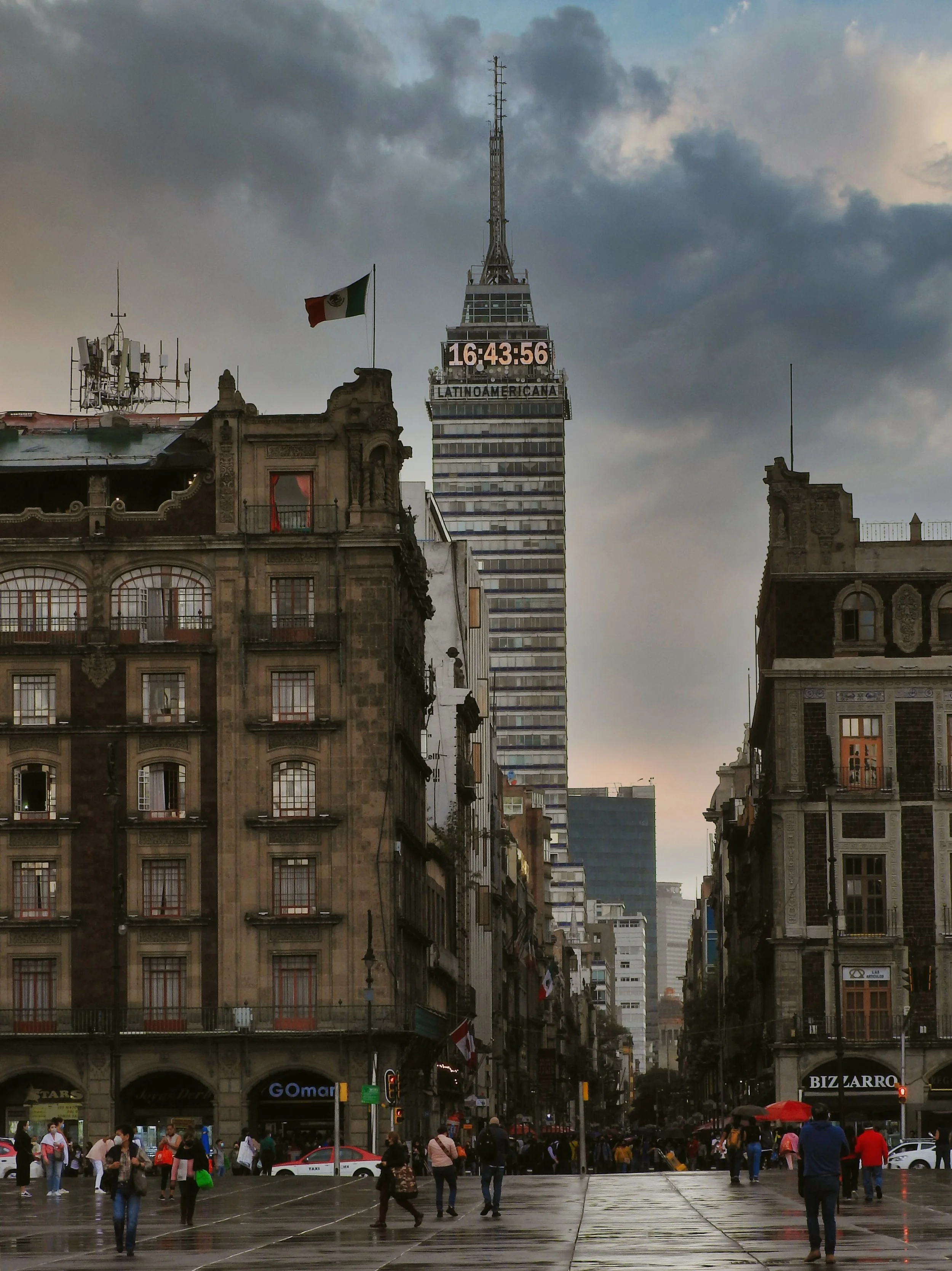
Torre Latinoamericana and Calle Madero
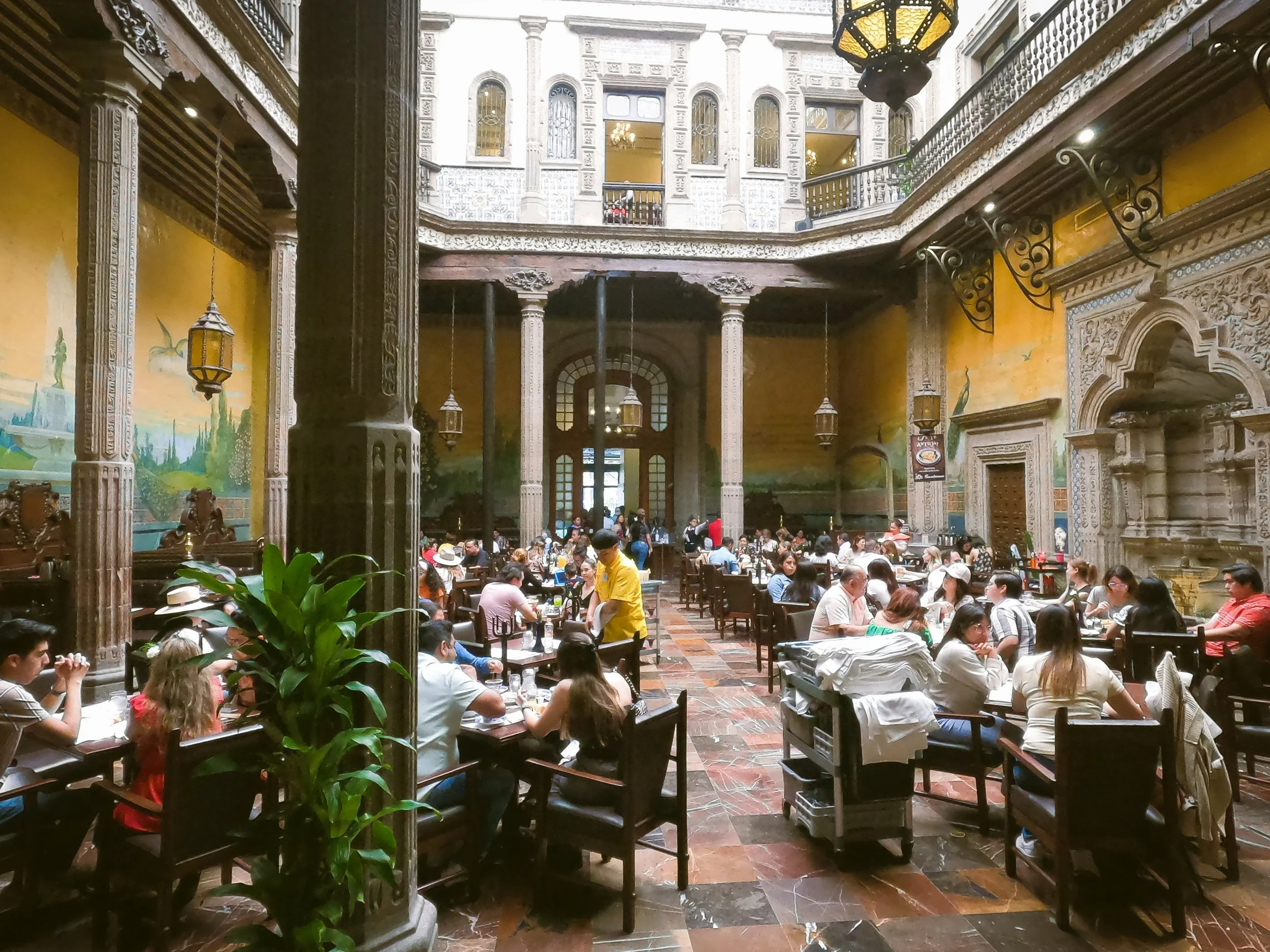
Casa de los Azulejos
Near the end of the street, duck into the Palacio de Iturbide — once a private mansion, briefly an imperial residence, now hosting free art exhibitions in rooms that still feel lived-in.
PLAZA SANTO DOMINGO
Three blocks north of the Zócalo, the Plaza de Santo Domingo is quieter and far less hectic. Under the arches on its west side, the Portal de los Evangelistas, public scribes still type letters, forms and love notes on old typewriters, a trade that has run here since the 19th century. The maroon-stone Baroque church of Santo Domingo dates from 1736, and the former Palace of the Inquisition beside it, where the tribunal sat for centuries, is now the Museum of Mexican Medicine.
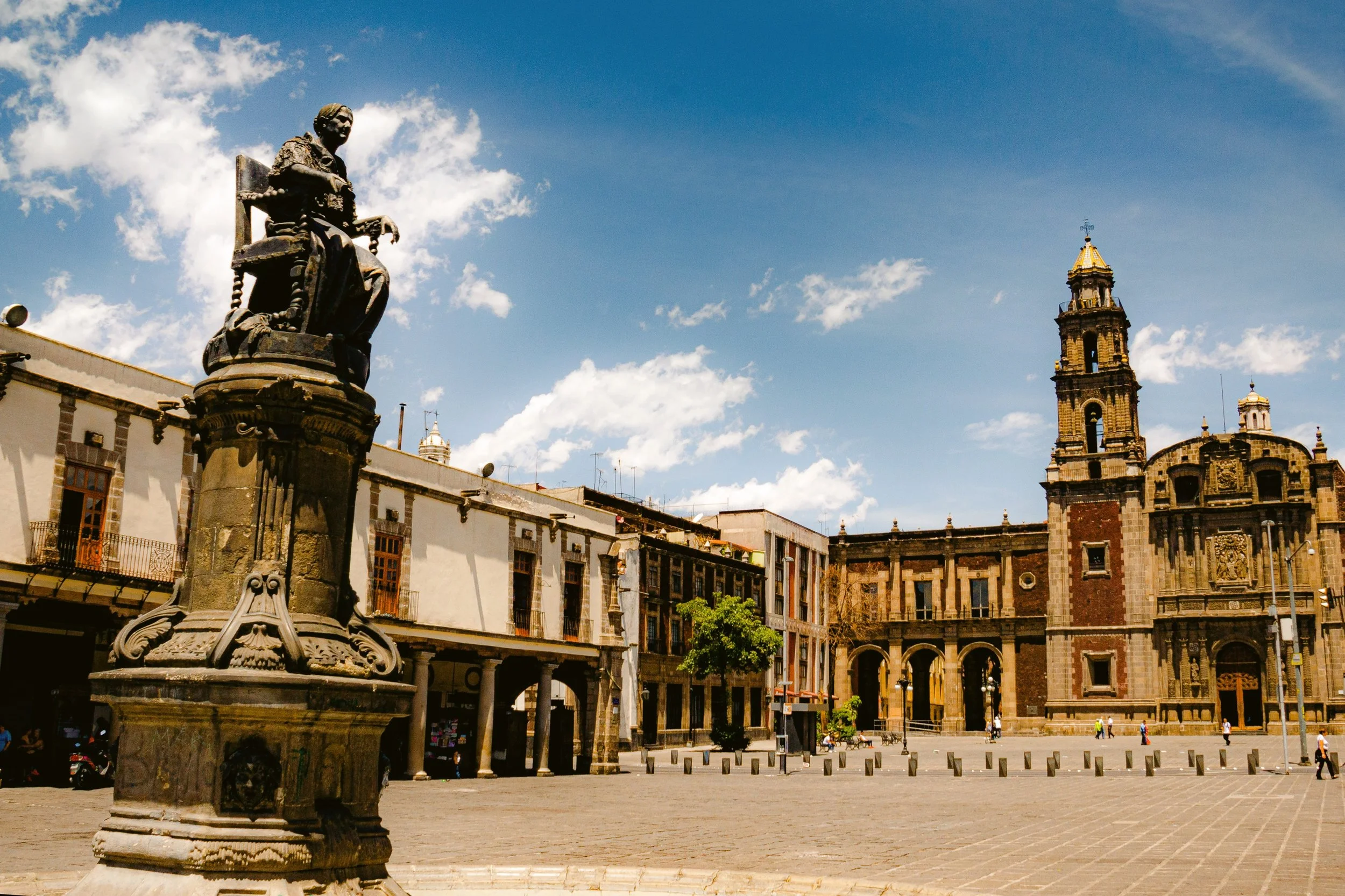
Plaza de Santo Domingo
GETTING THE MOST OUT OF THE CENTRO HISTÓRICO
This is a lot of history to cover on your own, and lines at the Templo Mayor museum can eat up an hour you didn't plan for. A guided walking tour covers the Zócalo, Templo Mayor and Palacio Nacional in a couple of hours with someone who actually knows which murals matter.