THE colonias
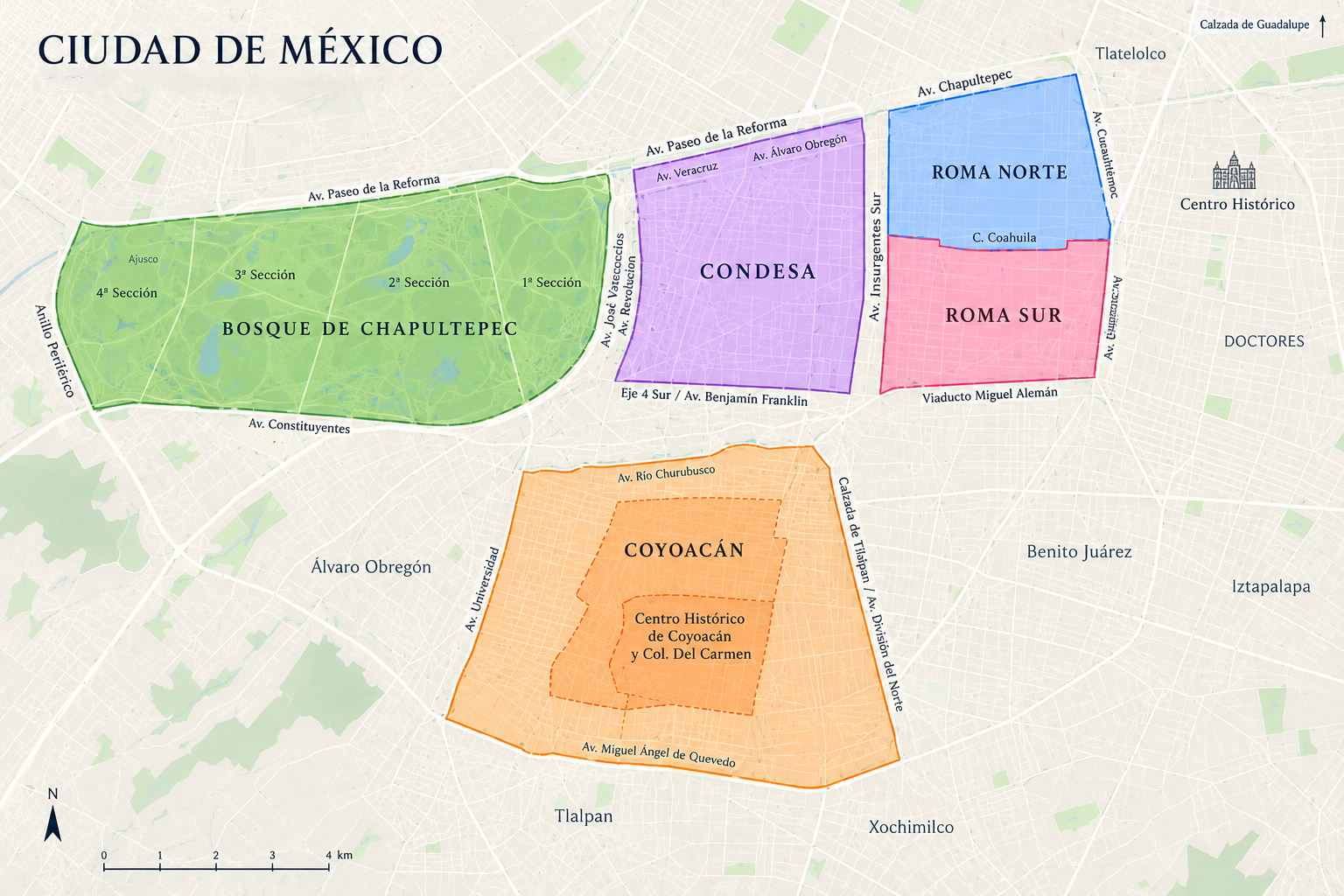
If the Centro Histórico is where Mexico City began, the colonias are where it actually lives now. This is a different register entirely — tree-lined streets instead of monuments, apartment balconies instead of palaces, a rhythm set by people running errands rather than tour groups following a flag.
Roma and Condesa get the most attention, and mostly deserve it: Art Nouveau buildings, some rebuilt after the 2017 earthquake cracked open half the neighborhood, galleries tucked into old garages, a park at the center of it all. Further south, Coyoacán moves at its own pace — cobblestone, colonial, and still shaped by the fact that Frida Kahlo and Diego Rivera lived and worked here. And to the north, Chapultepec is less a park than a small city of its own: a castle, a lake, one of the best anthropology museums anywhere. (There's also Polanco — polished, moneyed, worth knowing about if you're eating somewhere upscale, but it doesn't have much to do with the city this guide is interested in.)
None of this is hard to find. It's more that it rewards a slower kind of looking — sitting in a plaza longer than planned, wandering a street with no destination in mind. Give this section two full days if you can, not an afternoon.
roma & condesa
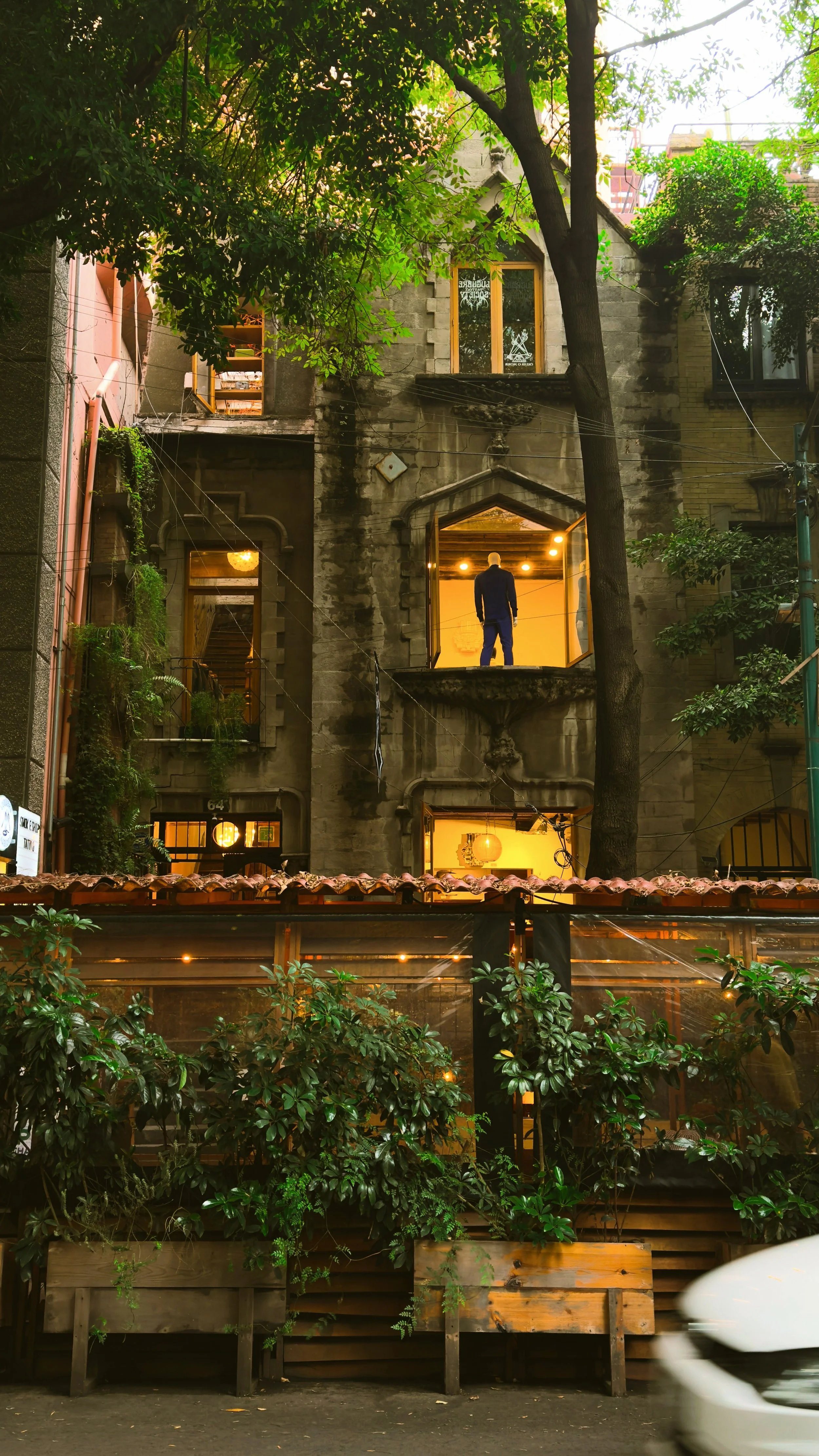
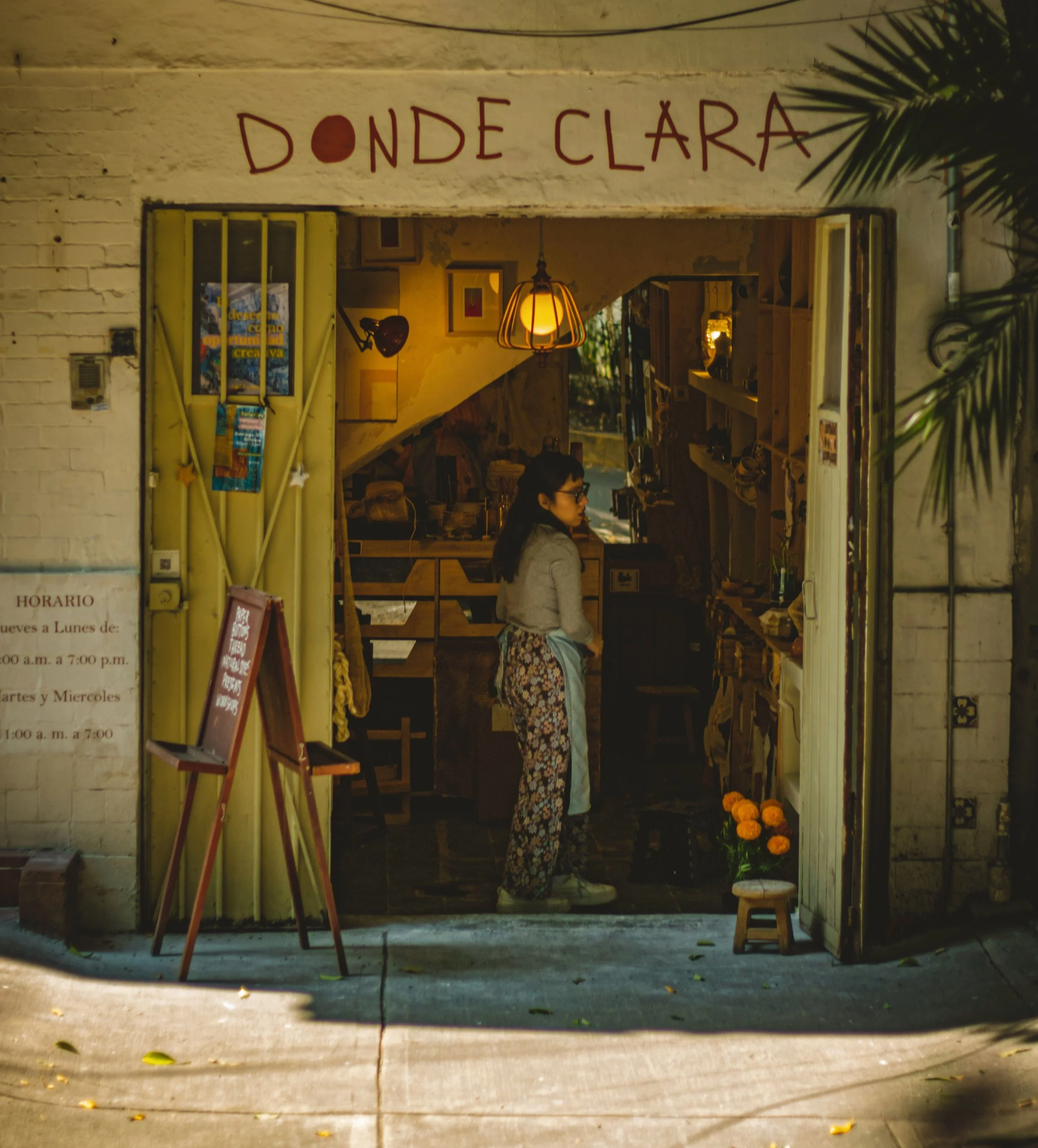
These two colonias blur into each other, but they have distinct personalities. Roma leans artistic and a little scruffy around the edges — galleries in converted garages, Art Nouveau buildings, some still bearing visible cracks from the 2017 earthquake that reshaped parts of the neighborhood. Condesa is calmer and greener, built around Parque México, an Art Deco park laid out in the 1920s on what used to be a racetrack.
Walk without a fixed plan here. The pleasure is architectural as much as anything — balconies, ironwork, the occasional building that's clearly seen better decades and is more interesting for it.
Condesa
Roma Norte


COYOACÁN
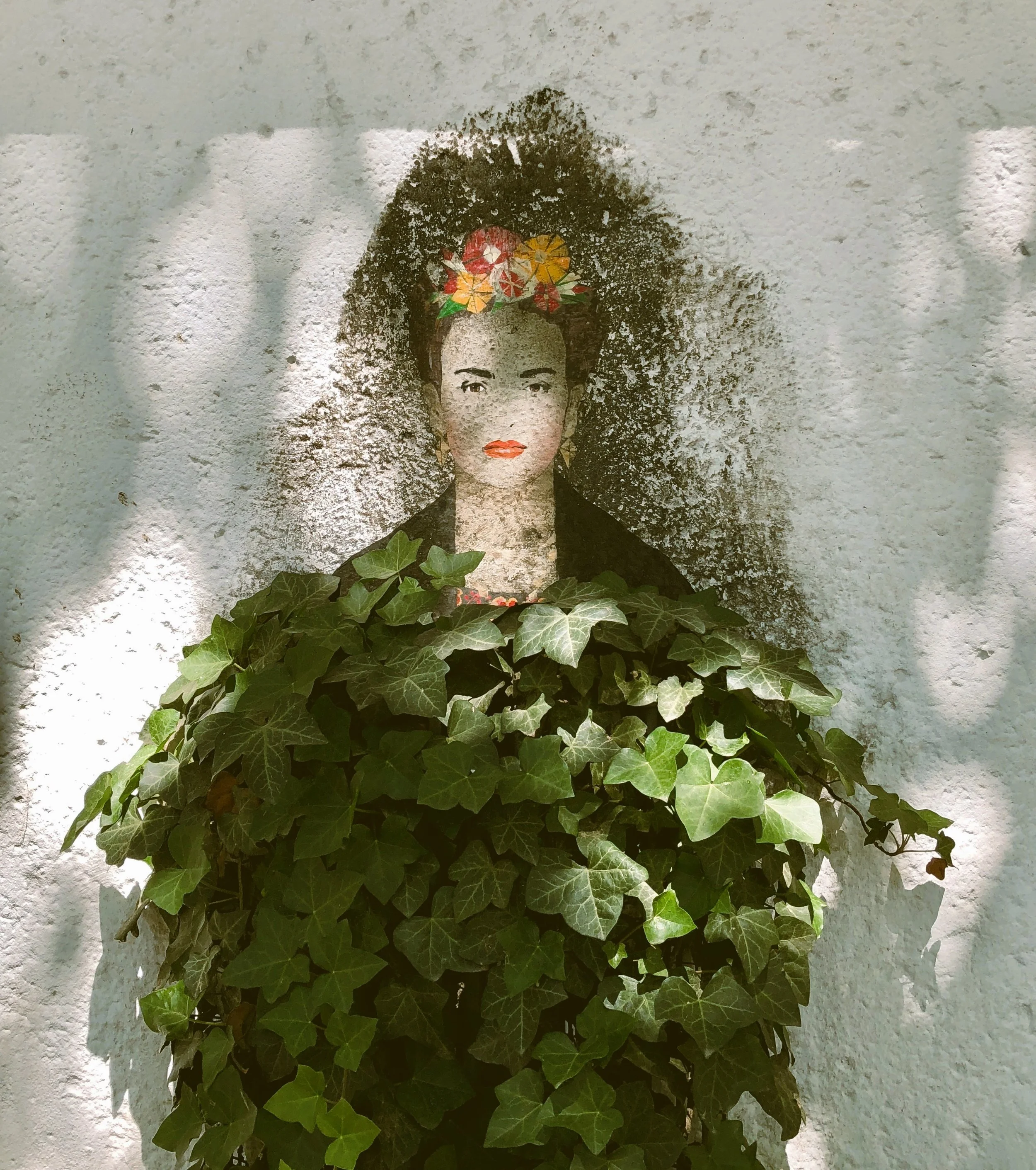
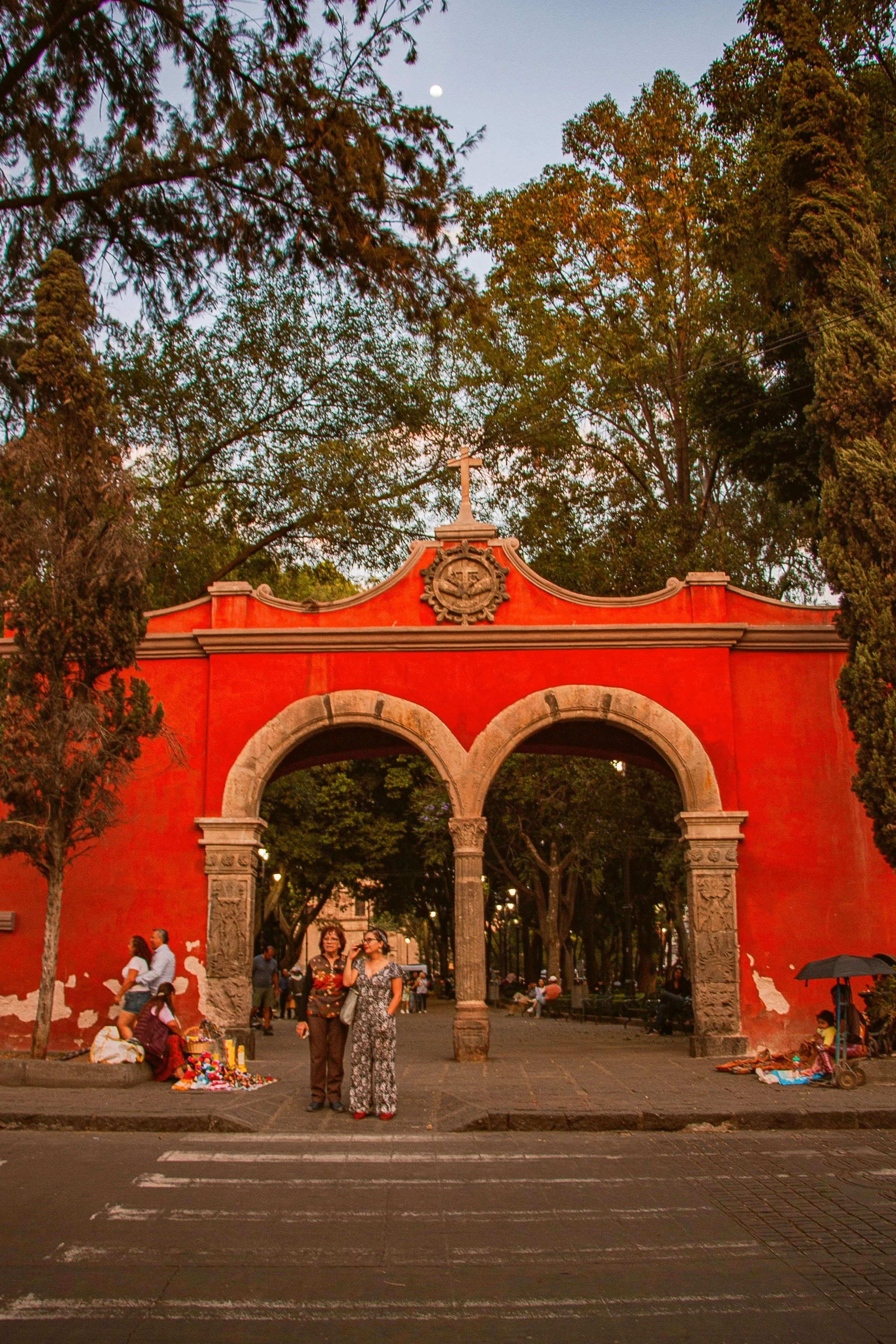
Coyoacán was its own town before Mexico City swallowed it, and it still feels that way — cobblestone streets, a proper town square, a pace nobody seems in a hurry to break. Casa Azul, Frida Kahlo's cobalt-blue childhood home, is the obvious draw, and it earns the crowds; her studio and personal belongings are still inside, largely untouched. Tickets are timed and sell out days ahead — book before you land.
But don't stop there. The Jardín Centenario and the Coyoacán market are where the neighborhood's actual social life happens — families, coyote-shaped fountains, corn on the stick — and they tell you more about the area than the museum alone ever could.
CHAPULTEPEC
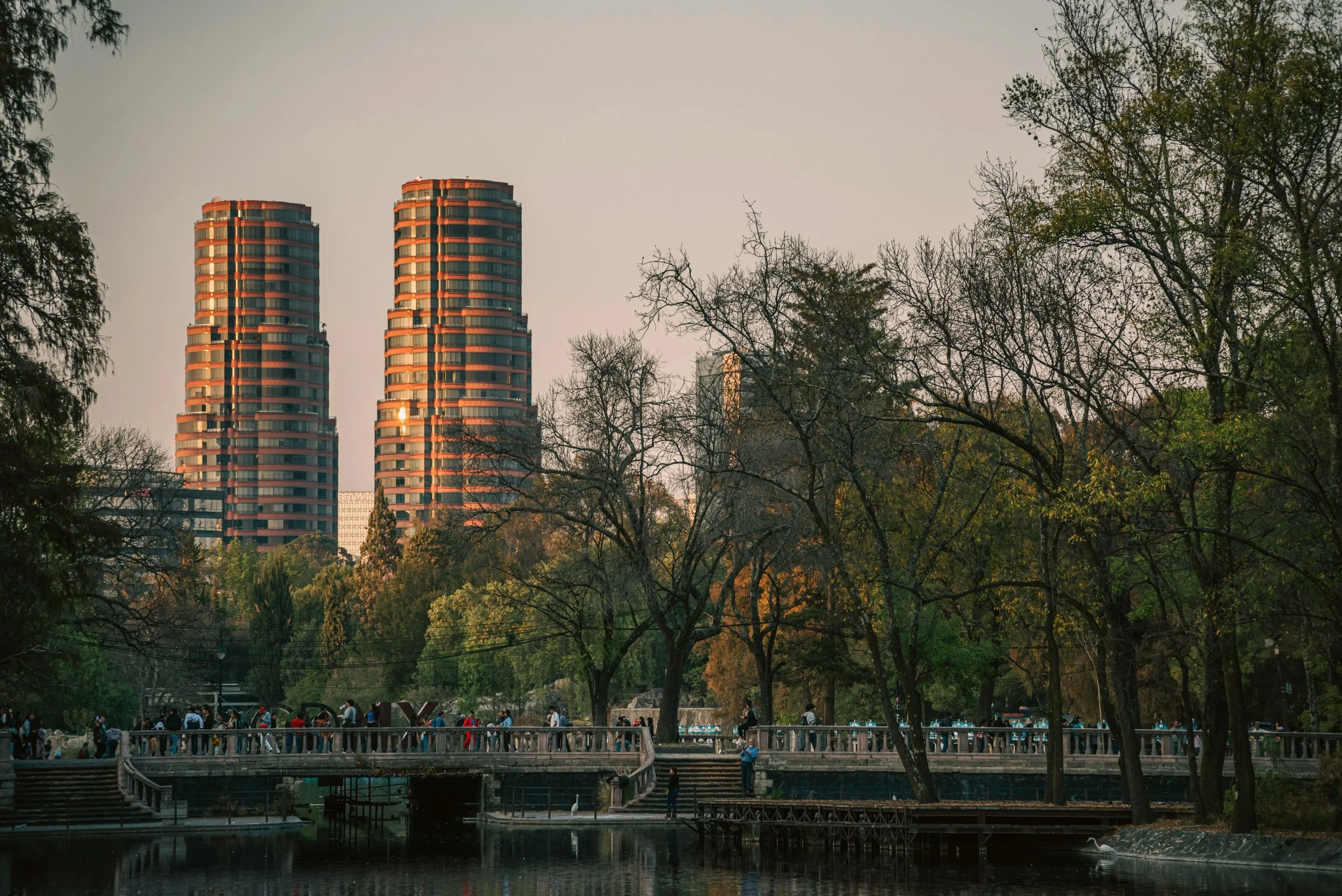
Chapultepec is bigger than it has any right to be — nearly double the size of Central Park — and it's less a park than a small city, with a castle, a zoo, three lakes, and more than one world-class museum inside its edges.
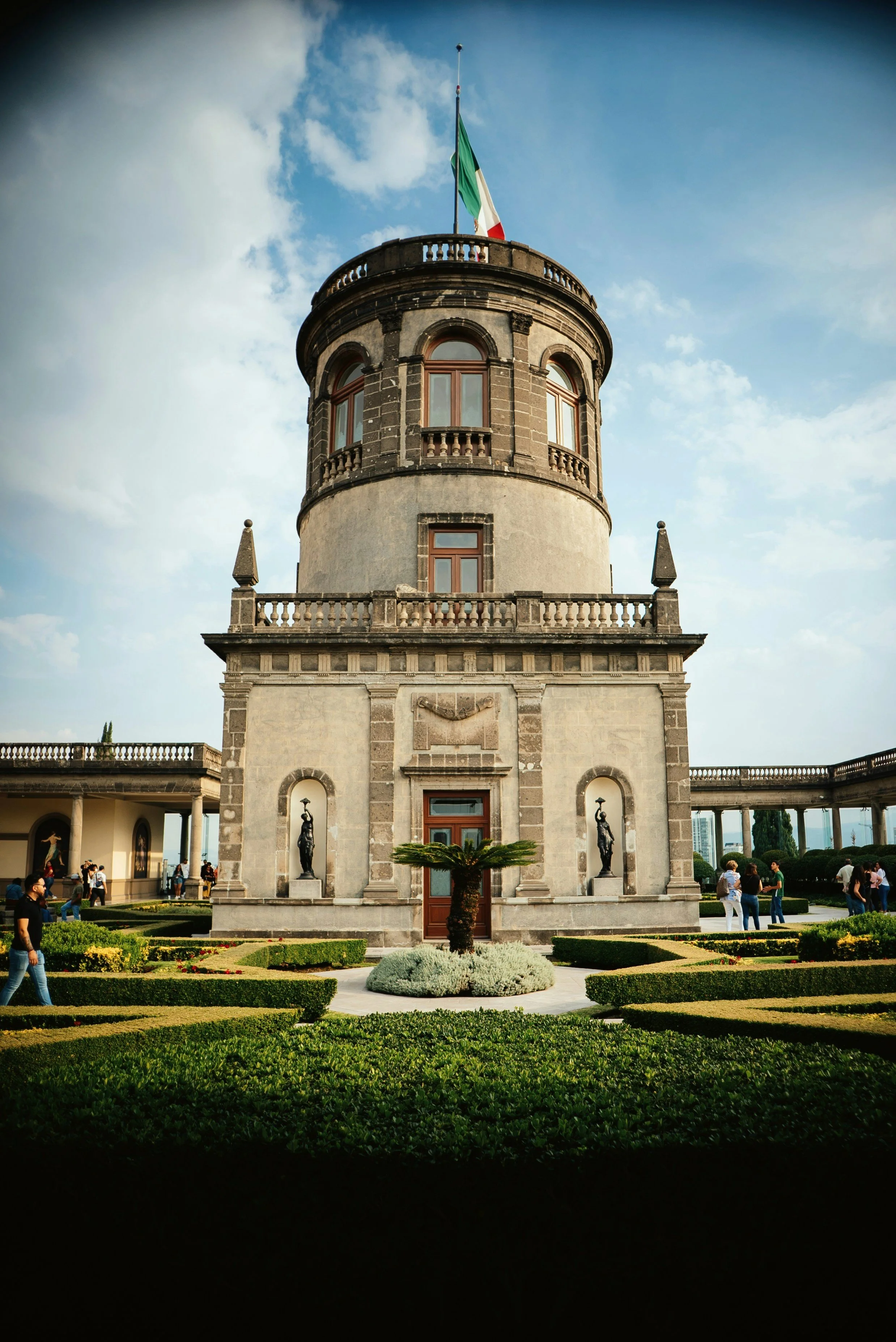
The Castillo de Chapultepec sits on the hill at its center, once home to Emperor Maximilian and later a string of Mexican presidents. Below it, the Museo Nacional de Antropología houses the country's most significant archaeological finds, including the Aztec Sun Stone — reason enough on its own for the trip. Skip-the-line tickets save you a genuinely long wait on weekends.
reforma & el ángel
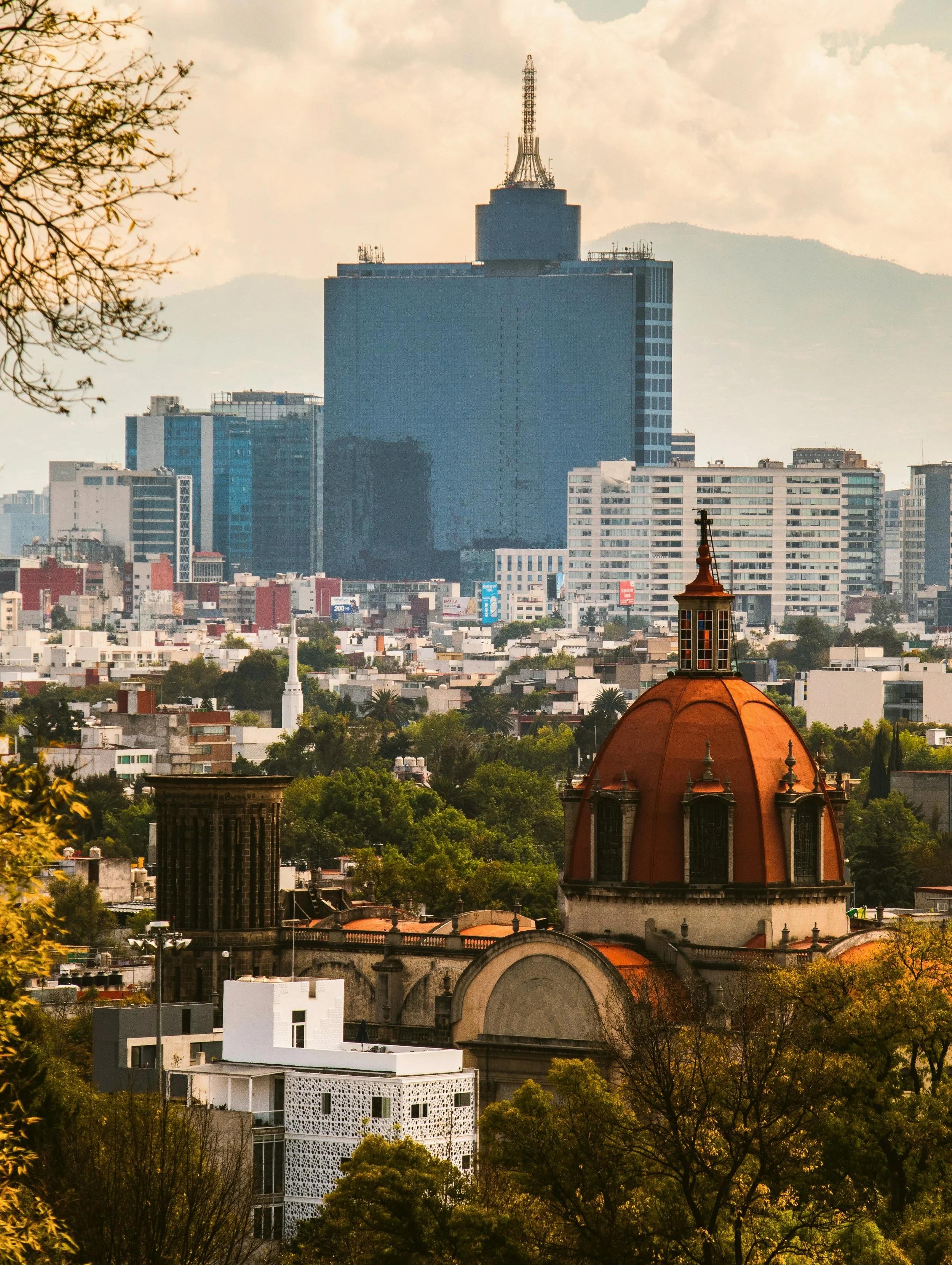
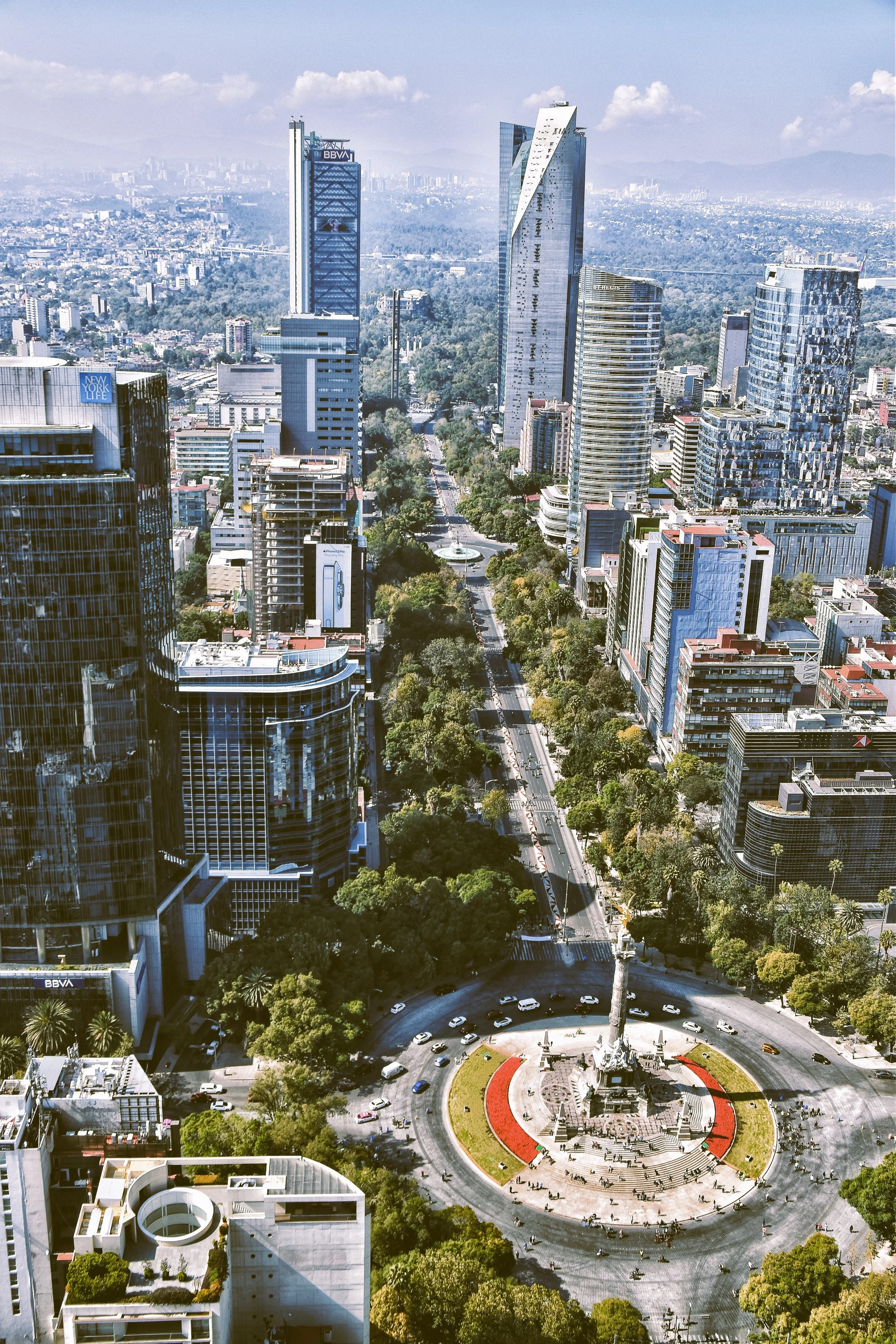
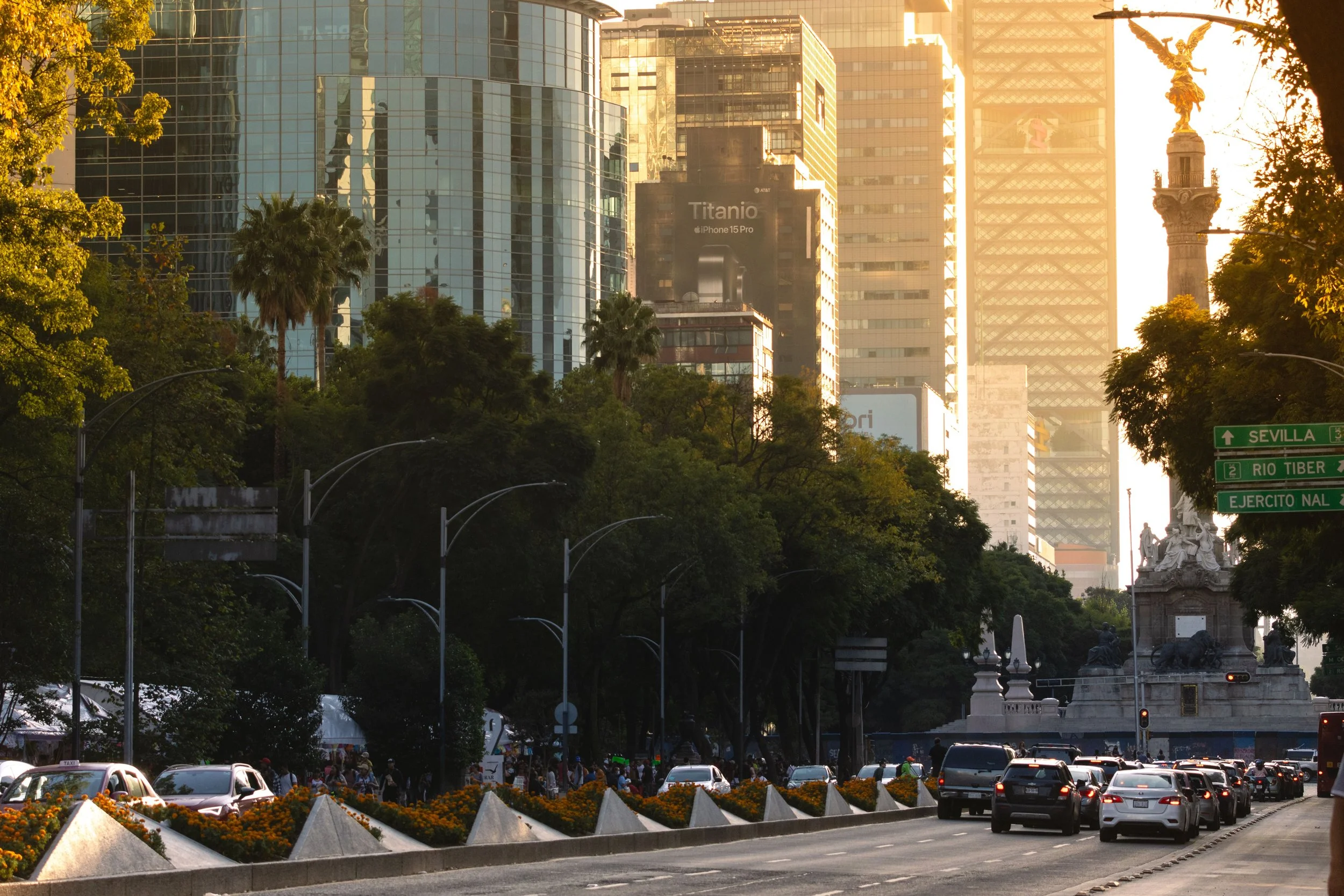
Paseo de la Reforma is the avenue that stitches this whole section together, cutting a straight diagonal from the edge of the Centro Histórico through Cuauhtémoc and along the northern flank of Chapultepec.
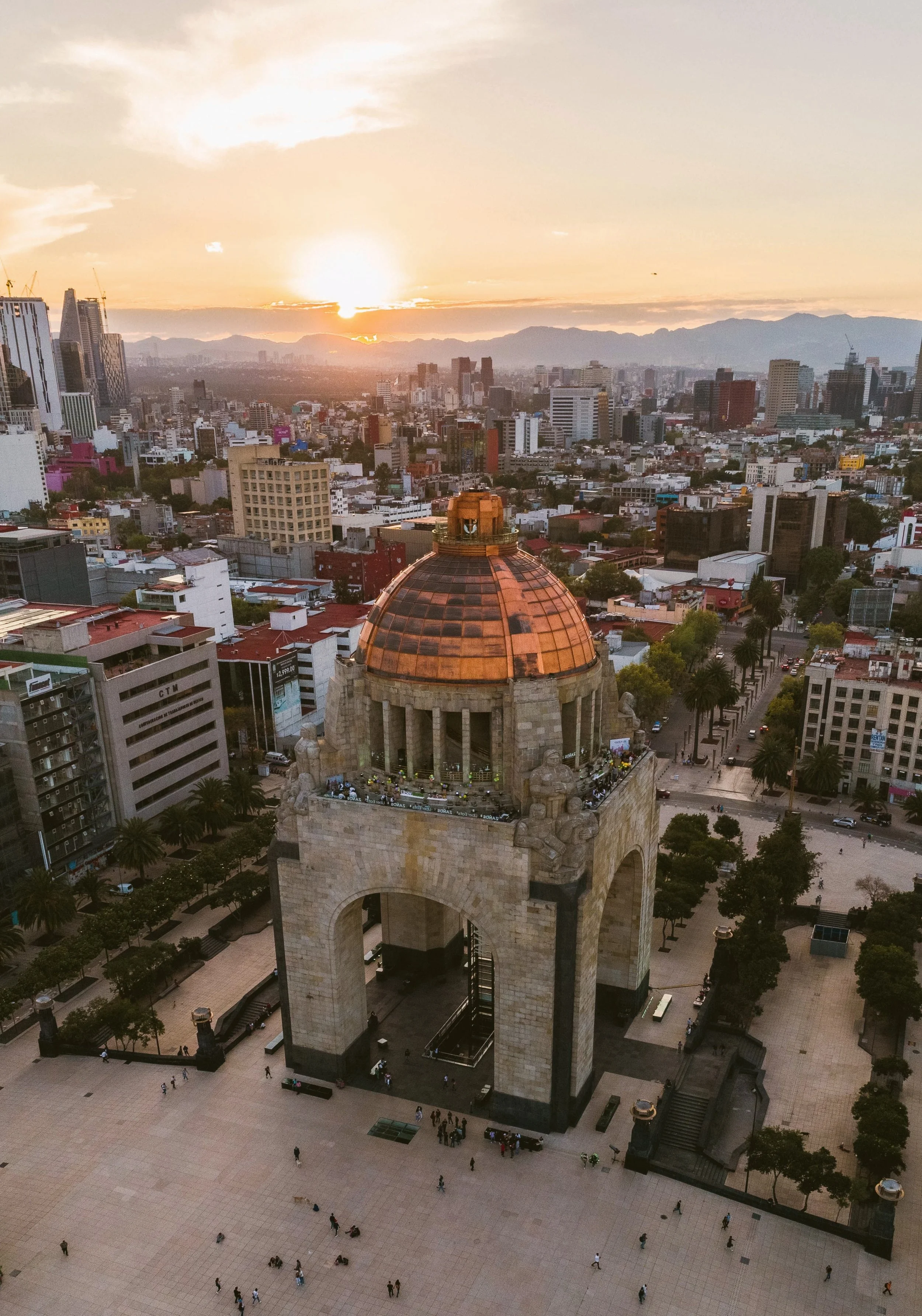
Near the Centro end, in the Tabacalera neighborhood, the Monumento a la Revolución rises over Plaza de la República — a structure originally meant to be Porfirio Díaz's Legislative Palace, interrupted by the very revolution it now commemorates. You can ride the elevator up to the viewing deck [Find Monumento a la Revolución tickets →]; inside the monument itself are the tombs of Pancho Villa, Madero, Carranza and other revolutionary leaders.
Further along, roughly halfway between the Centro and Chapultepec, stands El Ángel de la Independencia — a gilded column marking Mexico's 1810 independence and, for over a century, the city's default gathering point, for elections, football wins, protests, all of it. You don't need to plan a special stop for either. If you're walking or cycling Reforma toward Chapultepec, you'll pass right under both.
Paseo de la Reforma
Paseo de la Reforma
PLAN YOUR VISIT
Casa Azul sells out days ahead in high season, and the Anthropology Museum deserves more than a rushed hour — both worth booking before you land in Coyoacán or Chapultepec.
[Find Casa Azul tickets →]
[Find Museo Nacional de Antropología tickets →]
Parque de Chapultepec
Monumento a la Revolución