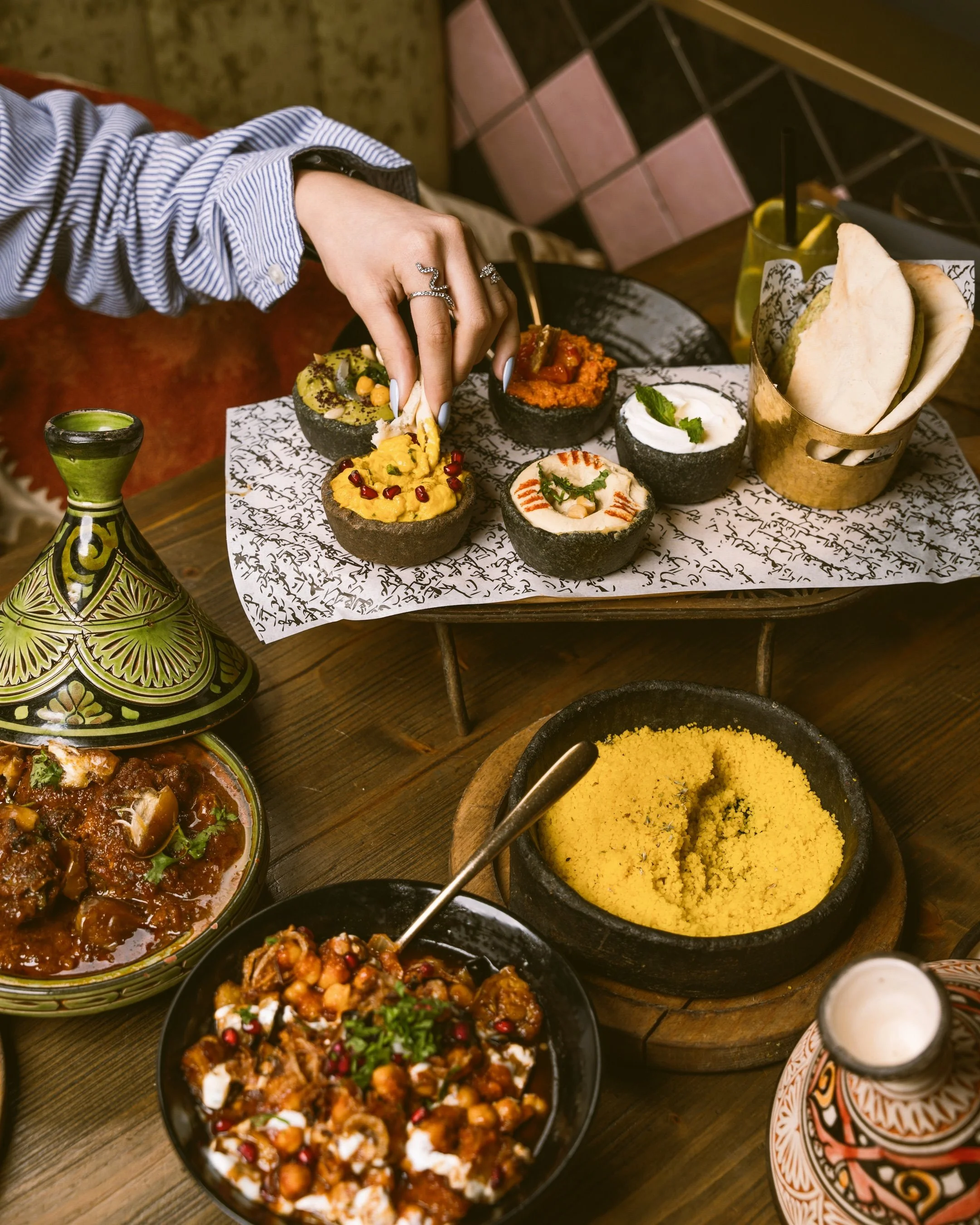
Nobody eats fast in Marrakesh, not really. Even the street stalls that feel rushed — steam, shouting, someone waving you over — are usually serving something that spent hours becoming what it is. A tagine simmers slowly enough that rushing it defeats the point. Couscous, in its proper form, is a Friday ritual, not a side dish. Even the tea takes its time, poured and re-poured until it's right.
This isn't a city that separates food from hospitality, either — the two are basically the same gesture. Order something, and portions arrive generous almost to a fault. Sit down near a stranger, and tea appears before conversation does. Marrakesh has its own culinary signature buried somewhere inside the broader Moroccan repertoire, too, cooked in a way you won't find quite the same in Fez or Casablanca.
What follows isn't an exhaustive list — Moroccan cuisine goes far deeper than five dishes and a drink. It's the handful of things actually worth knowing before you sit down at a table here, plus the one ritual you'll be offered so often that learning how to accept it properly matters more than any restaurant recommendation.
MARRAKEsH FLAVORS
the classics
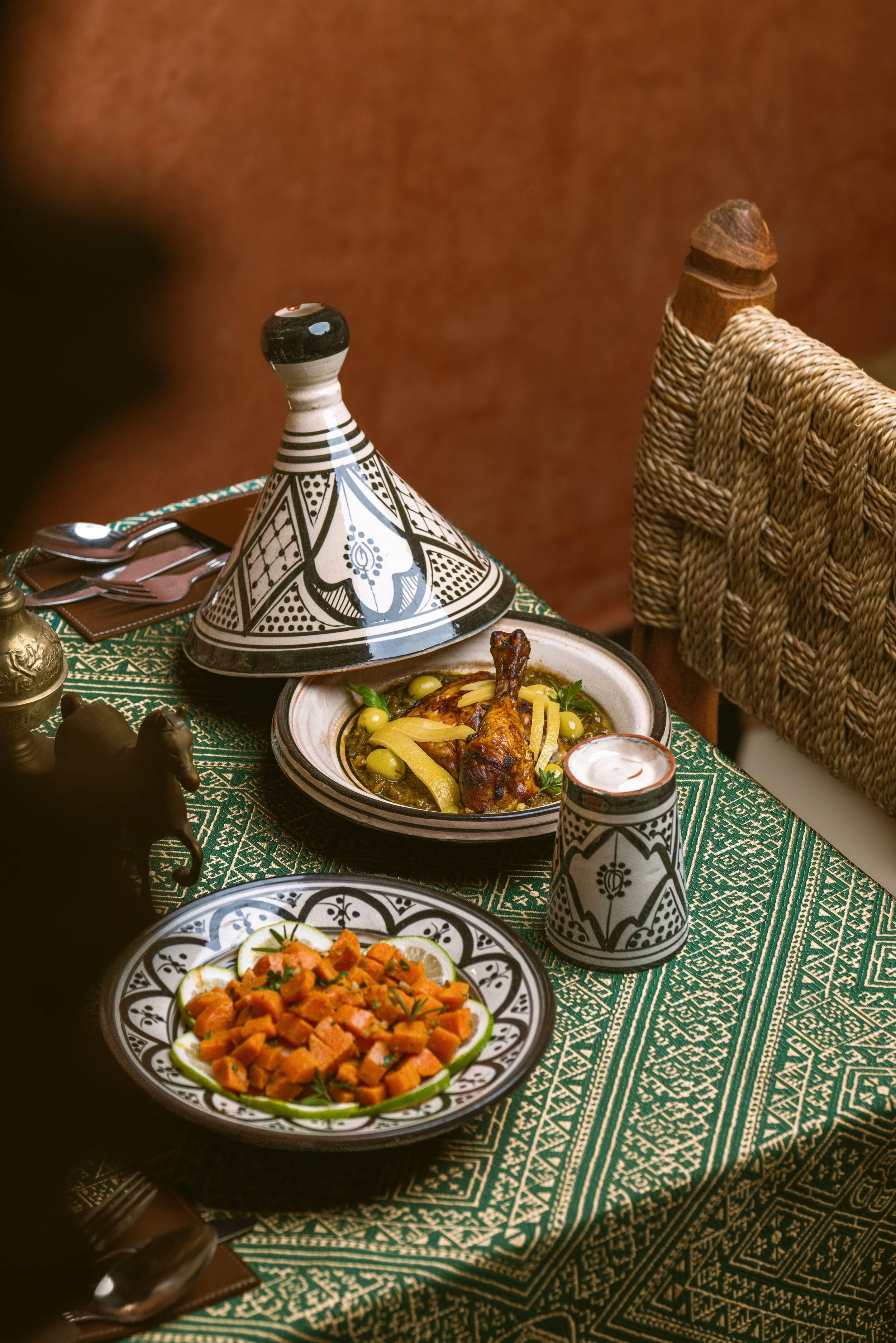
TAGINE comes first, always — named after the cone-shaped clay pot it's cooked in, not any single recipe. Chicken with preserved lemon and olives is the standard order; lamb with prunes and almonds is the one that surprises people expecting only savory flavors.
COUSCOUS, properly, is a Friday dish — a weekly ritual more than a daily one, traditionally served after prayers with seven vegetables piled over steamed semolina.
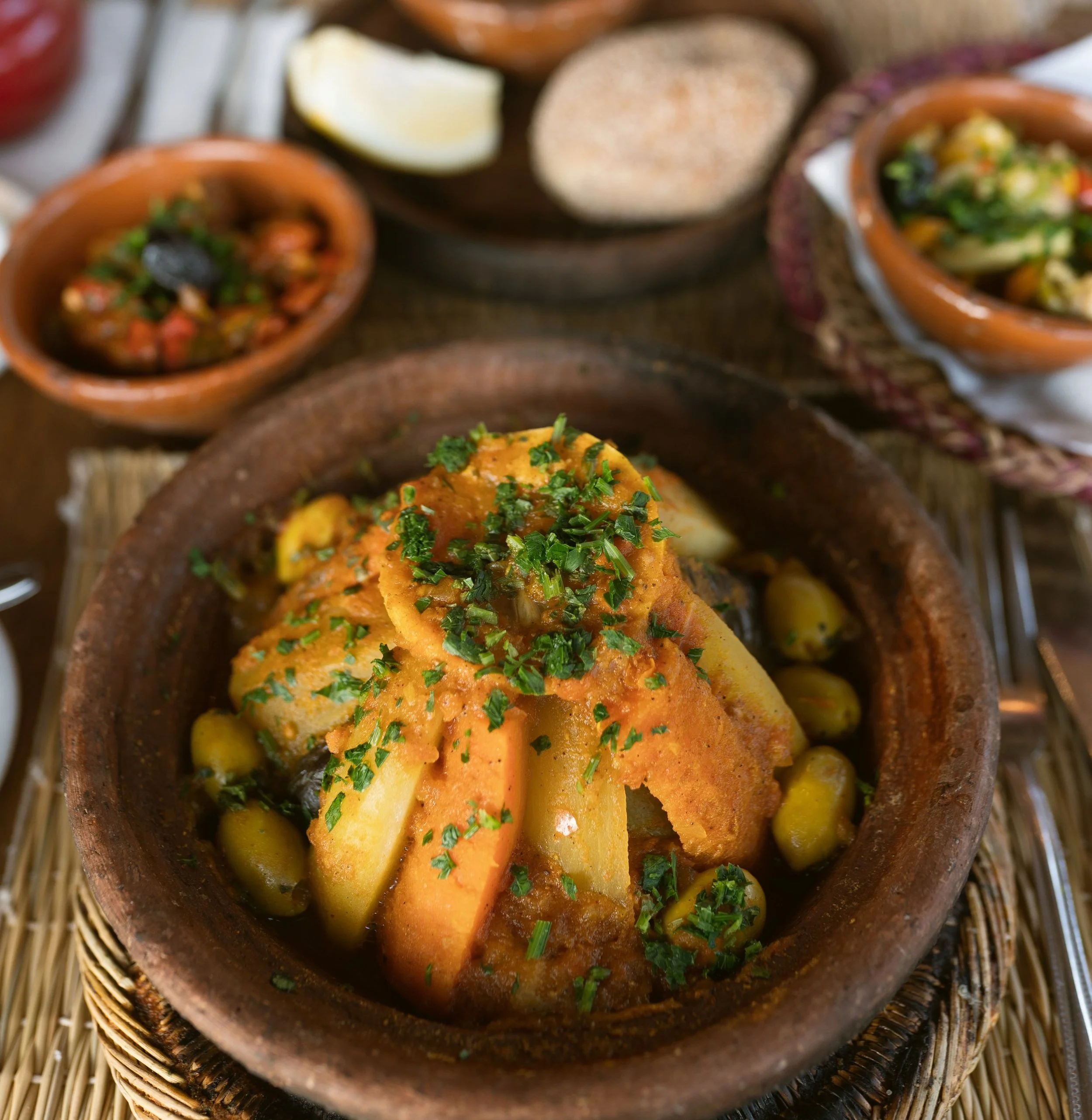
Tagine
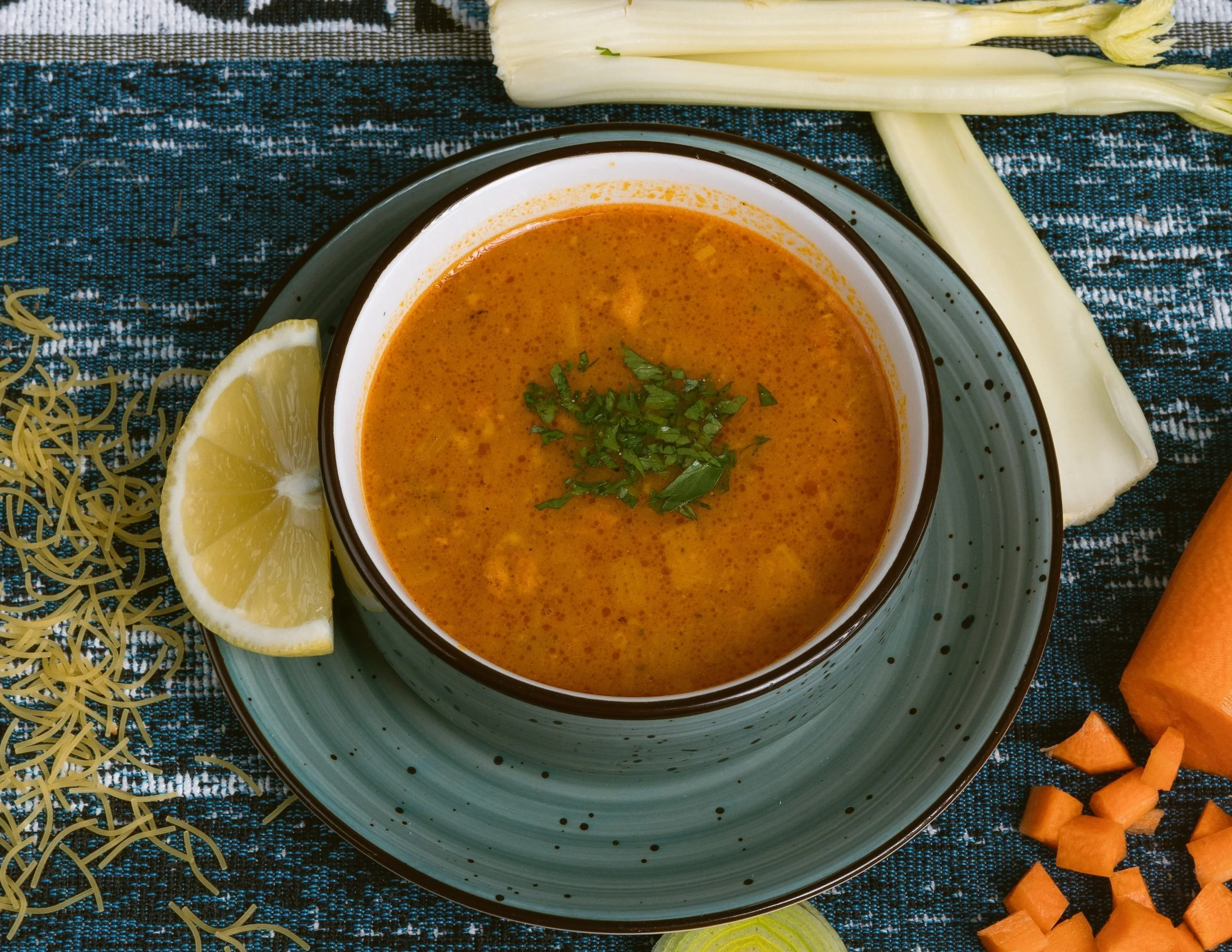
Harira
PASTILLA is the outlier: a flaky pastry pie, usually pigeon or chicken, dusted with cinnamon and sugar on top of savory meat. The sweet-salty combination throws off first-timers almost every time, and it's meant to.
HARIRA, a tomato-lentil soup, rounds things out — technically the dish that breaks the Ramadan fast, though it's served year-round at food stalls across the city.
tanjia, marrakesh’s own
This is the dish that separates knowing Marrakesh from just passing through it. TANJIA is lamb, slow-cooked for hours inside a sealed clay urn — traditionally not on a stove at all, but buried in the dying embers of the neighborhood hammam's furnace, using heat that would otherwise go to waste.
It's practically a Marrakesh exclusive; you won't find the same version anywhere else in Morocco. Bachelors historically made it more than families did, since it needed no attention once it went into the coals — a set-it-and-forget-it dish before anyone had a word for that. Order it at a restaurant that actually cooks it the slow way, not a shortcut version rushed out on a stovetop.
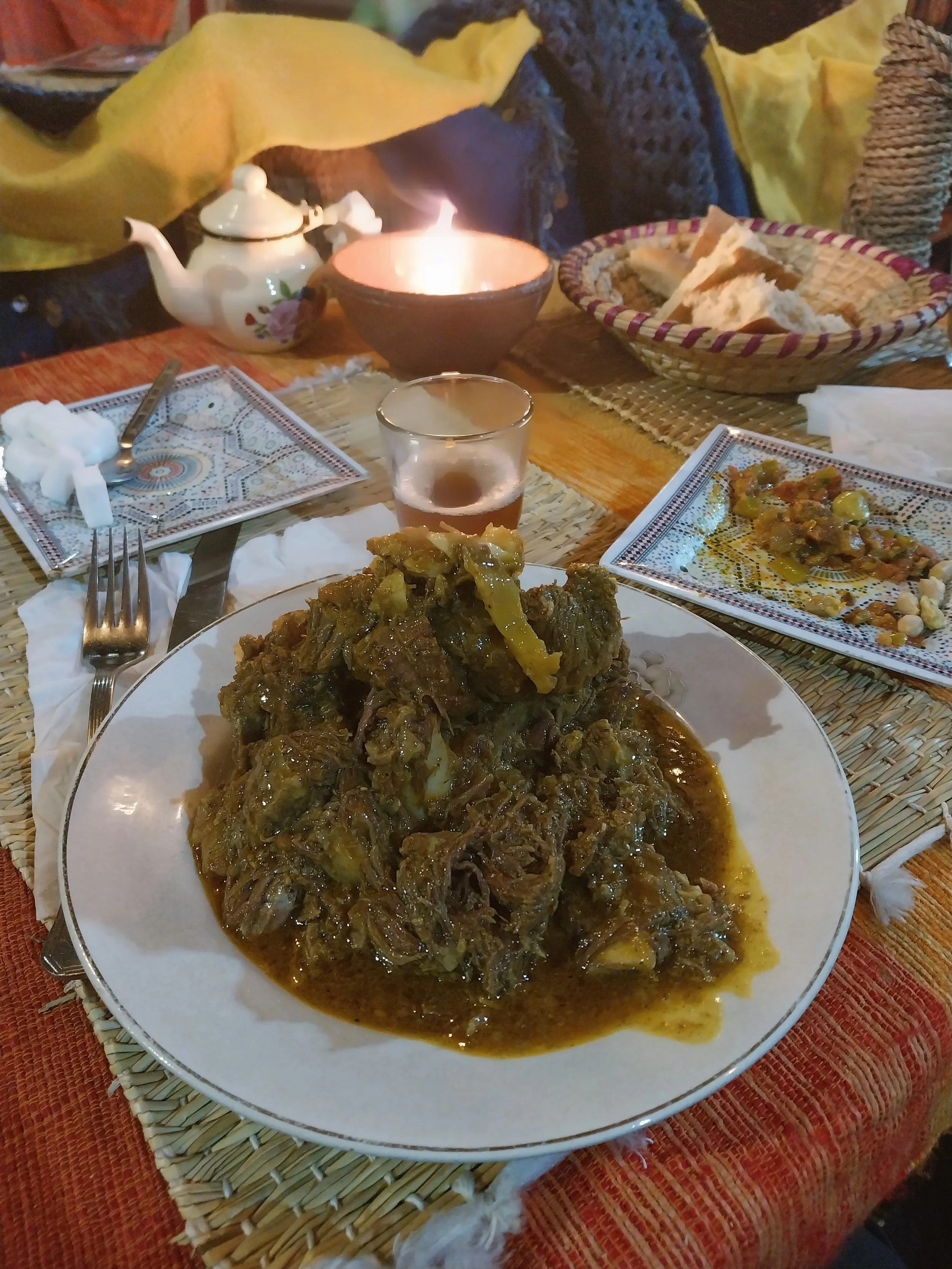
Photo: Draceane, CC BY-SA 4.0 - edited

LEARNING TO COOK IT
If tagine and tanjia have you curious about more than just eating them, a hands-on Moroccan cooking class usually starts with a market visit for ingredients and ends with the meal you just made — a few hours that explain more about Moroccan food than any menu could.
mint tea
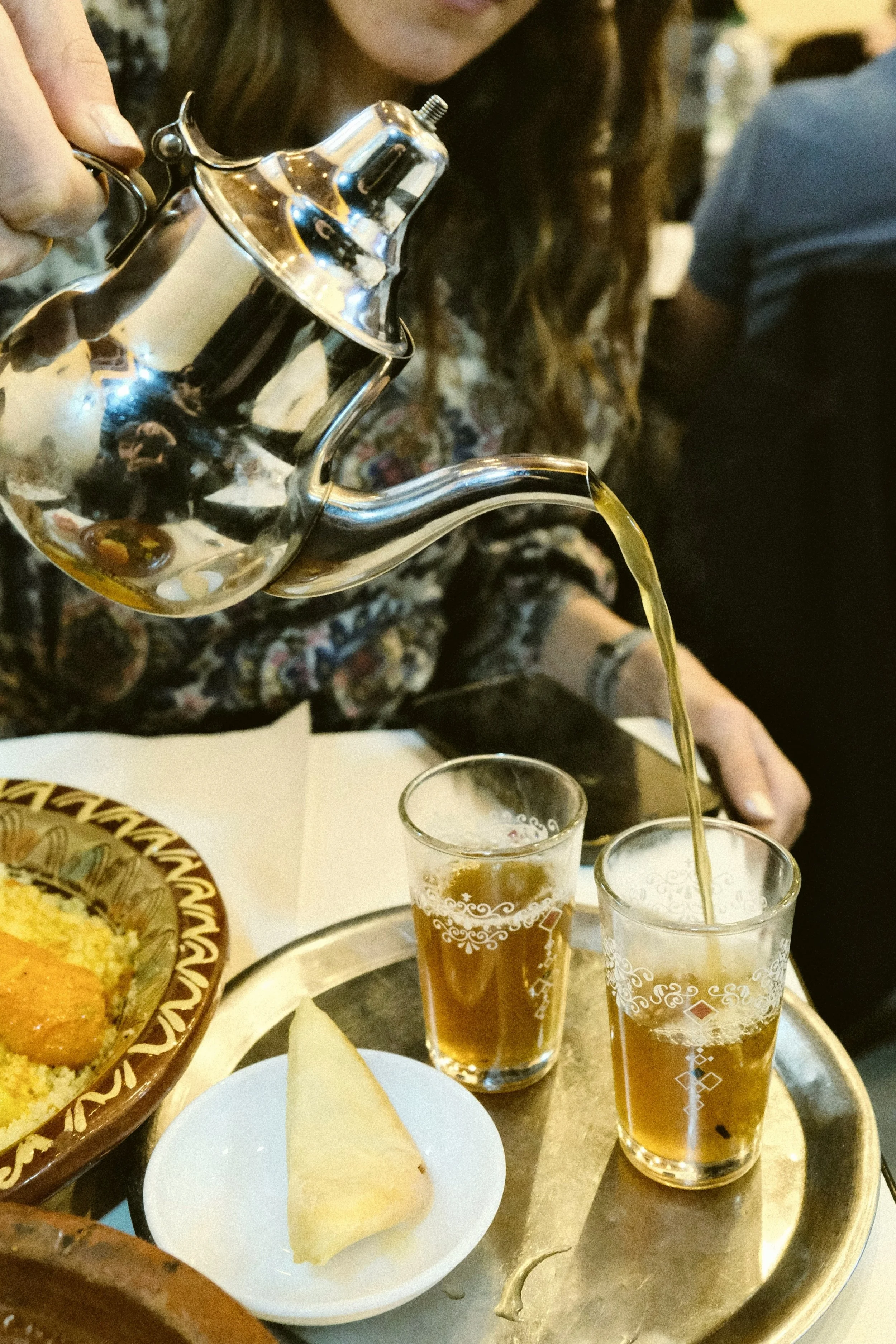
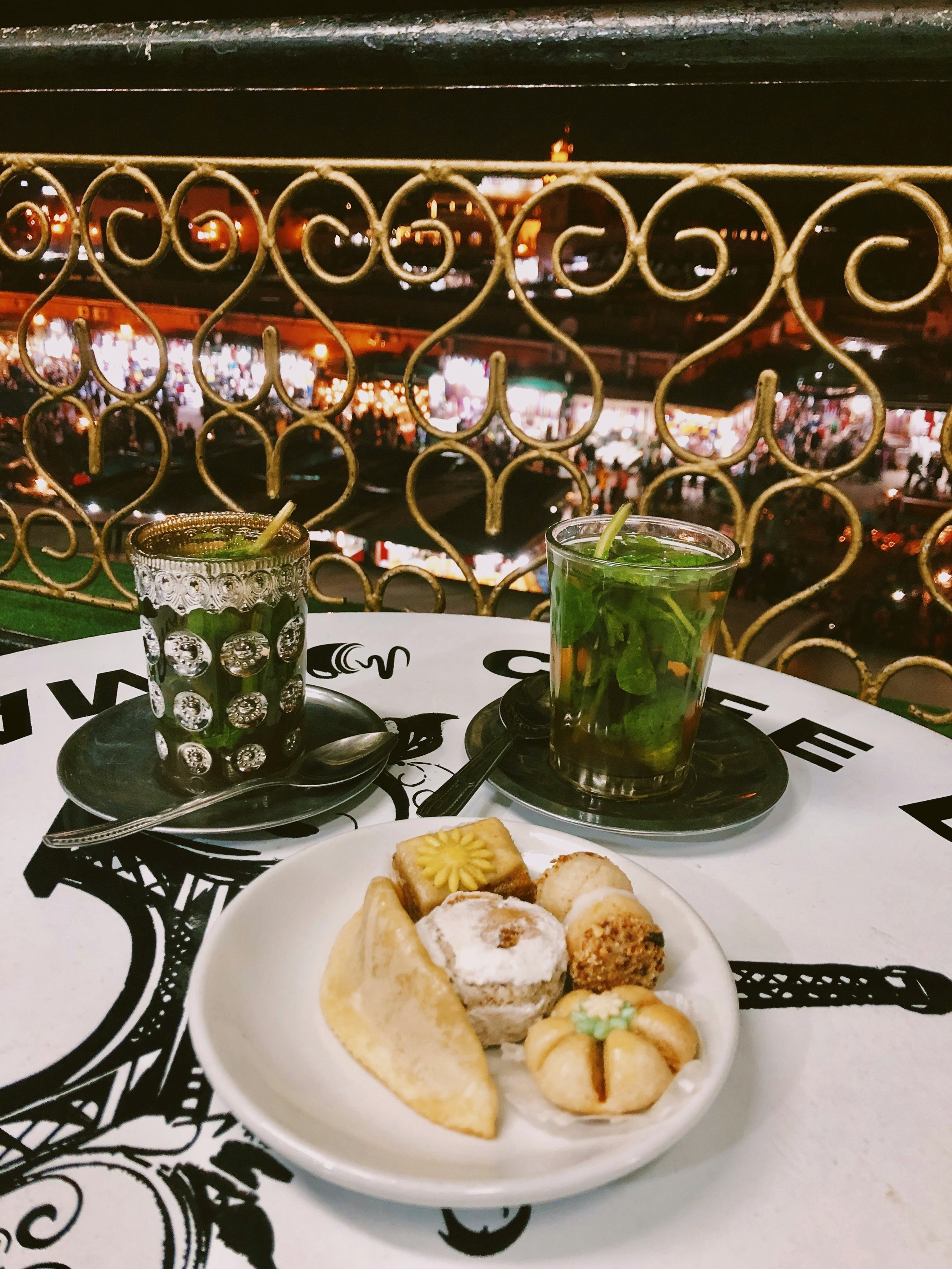
Mint tea here isn't a beverage so much as a greeting. It arrives before you've asked for anything, poured from a height of a foot or more — not showmanship, but a real technique that aerates the tea and builds the foam on top, which is considered part of getting it right.
Turning it down can read as mildly rude, so even a small polite sip goes further than a firm no. It's strong, sweet by default, and rarely offered without a reason — accepting it is often step one before any negotiation, invitation, or conversation actually begins.