RIADS & HAMMAMS
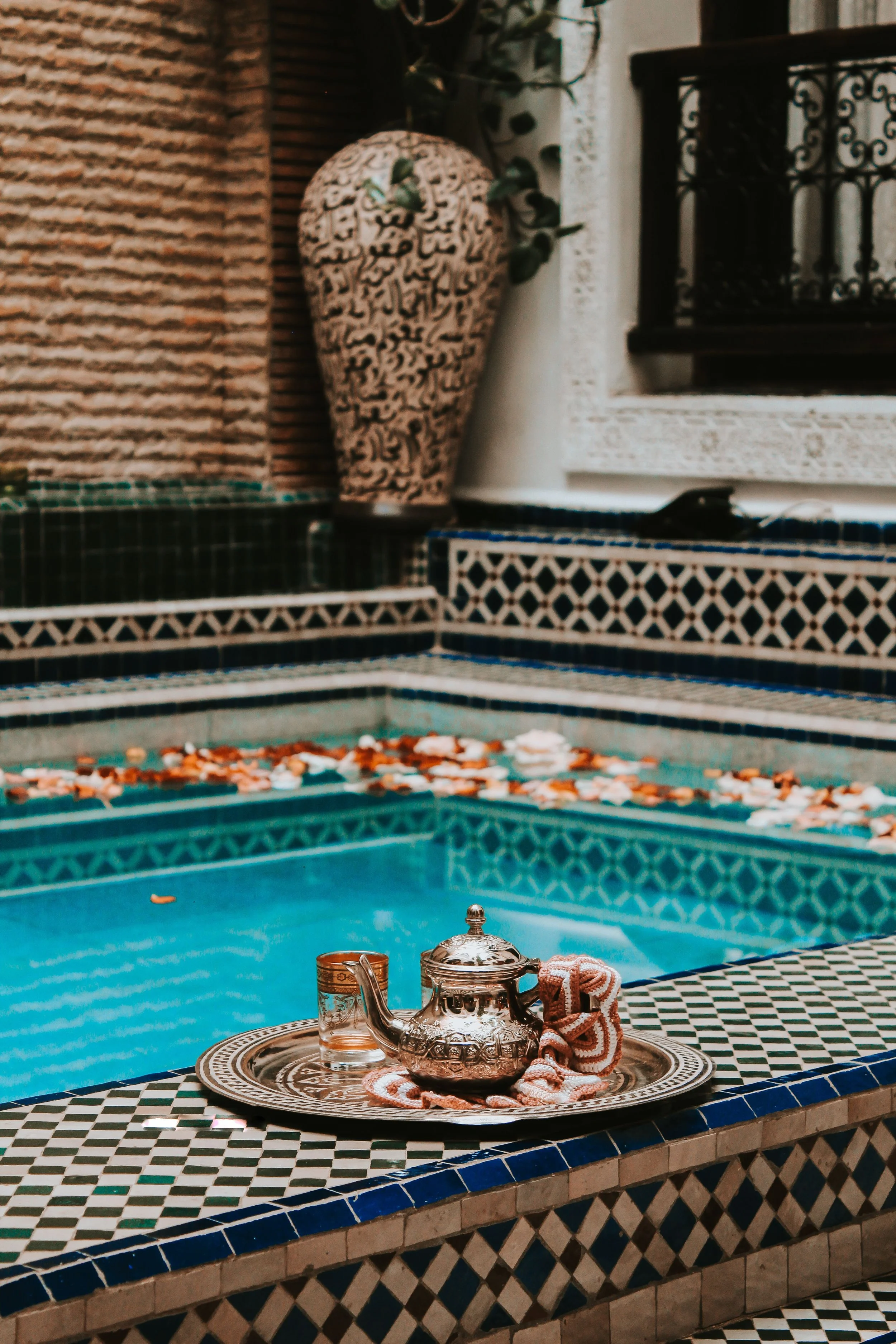
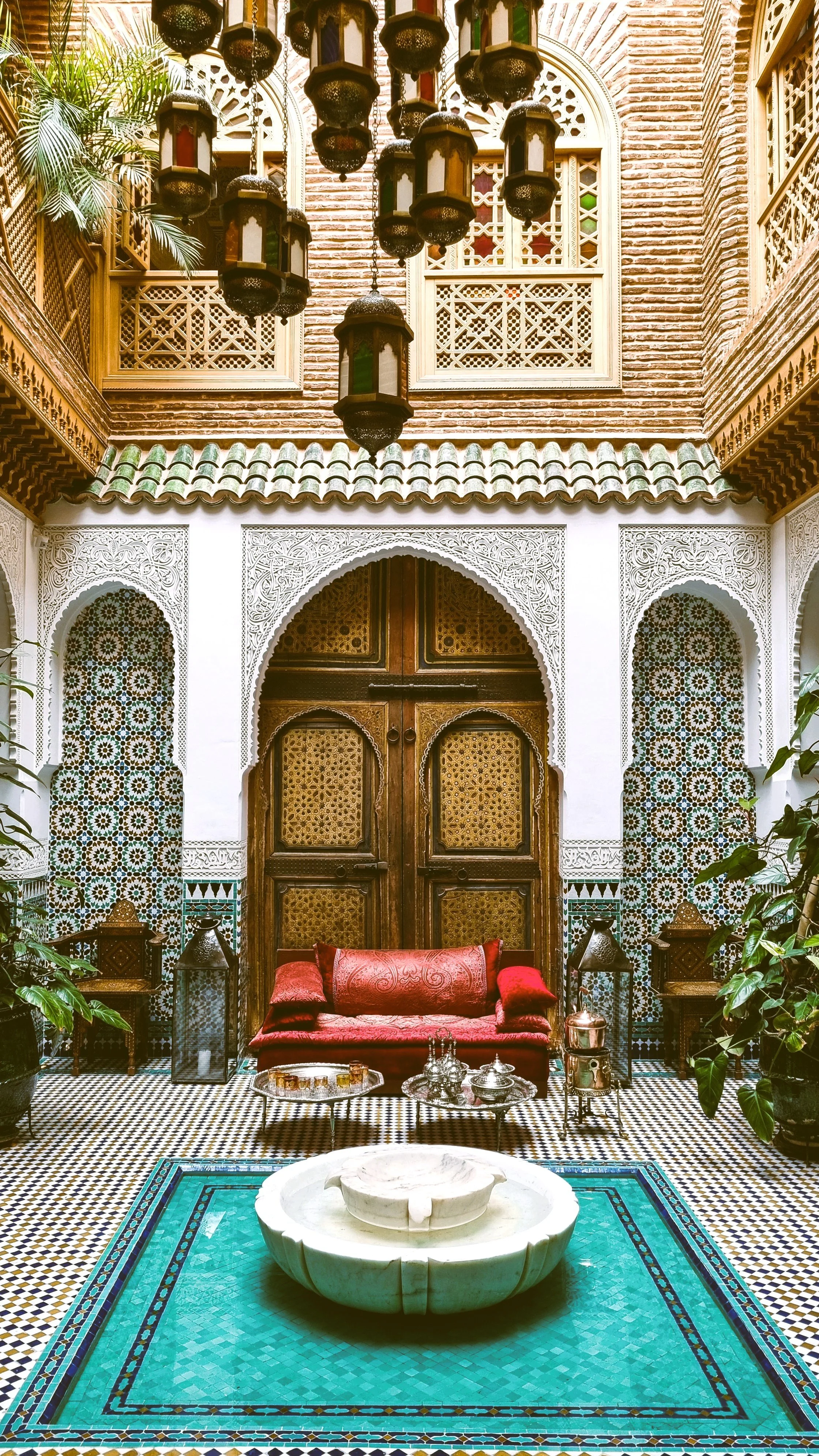
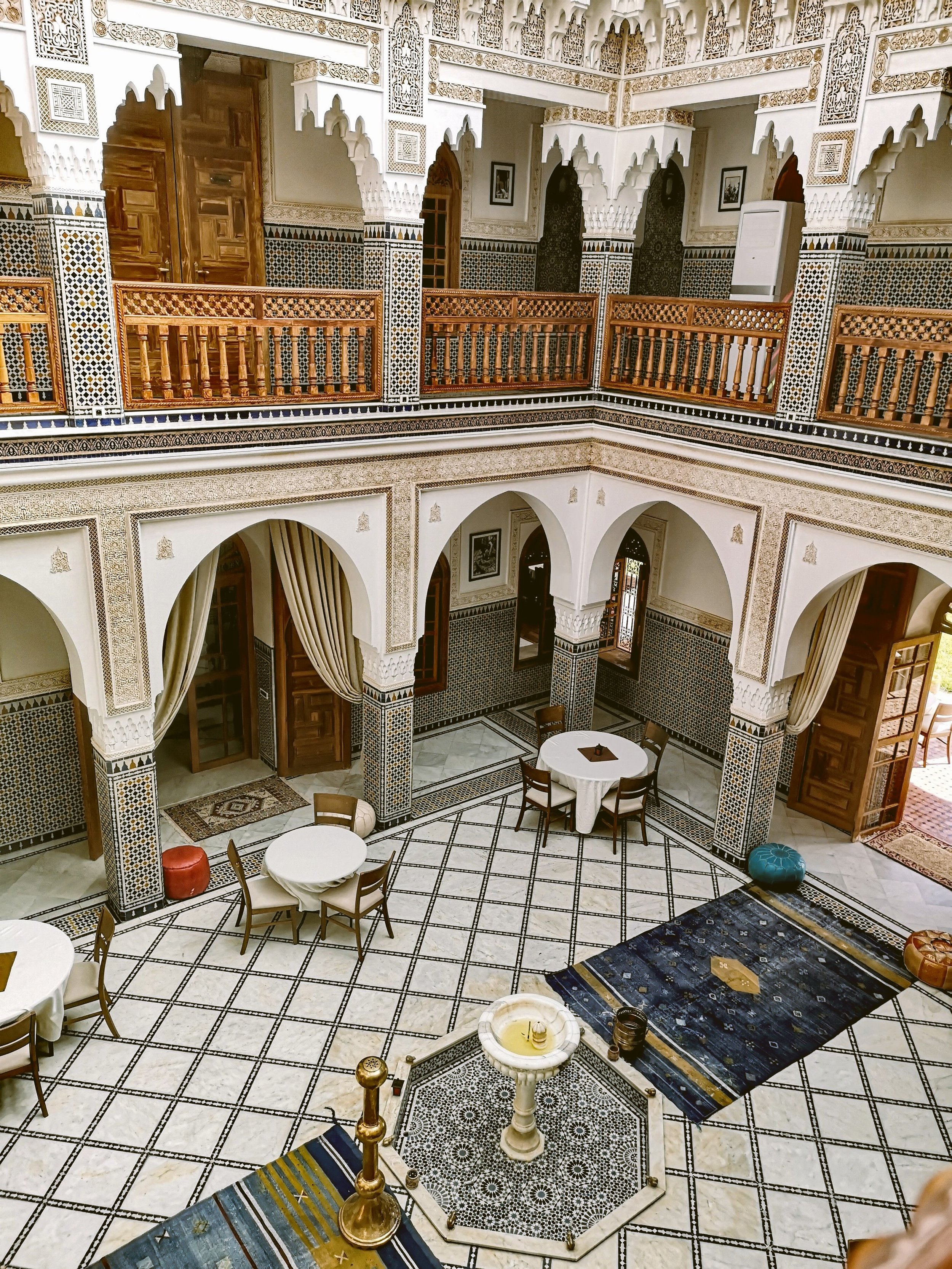
Walk the medina long enough and you'll notice something strange: almost none of it looks like anything from the street. Blank walls, a plain wooden door, maybe a knocker — and then you step inside and there's a courtyard, a fountain, orange trees, sometimes three stories of carved cedar balconies looking down on all of it. Marrakesh keeps its beauty indoors, deliberately, and has for centuries.
That instinct shows up twice here, in two very different rooms. One is where you sleep, a riad — a private world built around a quiet interior courtyard instead of a view. The other is a hammam, where the whole neighborhood used to wash, gossip, and unwind once a week, steam rising in a shared room that's seen the same ritual for generations, largely unbothered by the tourism happening a few streets over.
Both reward the same instinct: don't judge anything here by its front door. The city's real character sits behind it, not on display. Give yourself at least one night in a proper riad and one real hammam visit — not the five-star spa version, the actual neighborhood kind — and you'll understand something about Marrakesh that no monument quite explains.
RIAD
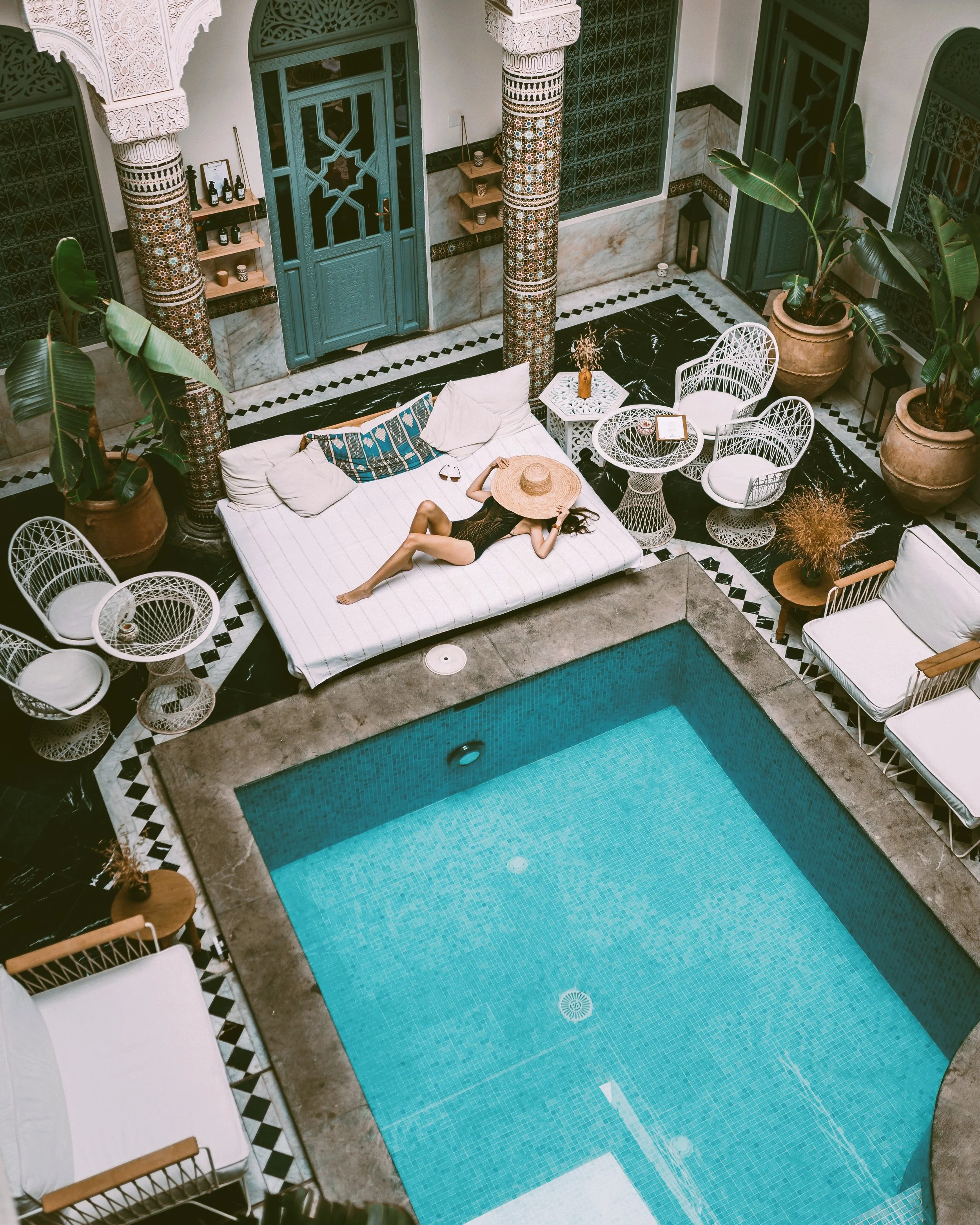
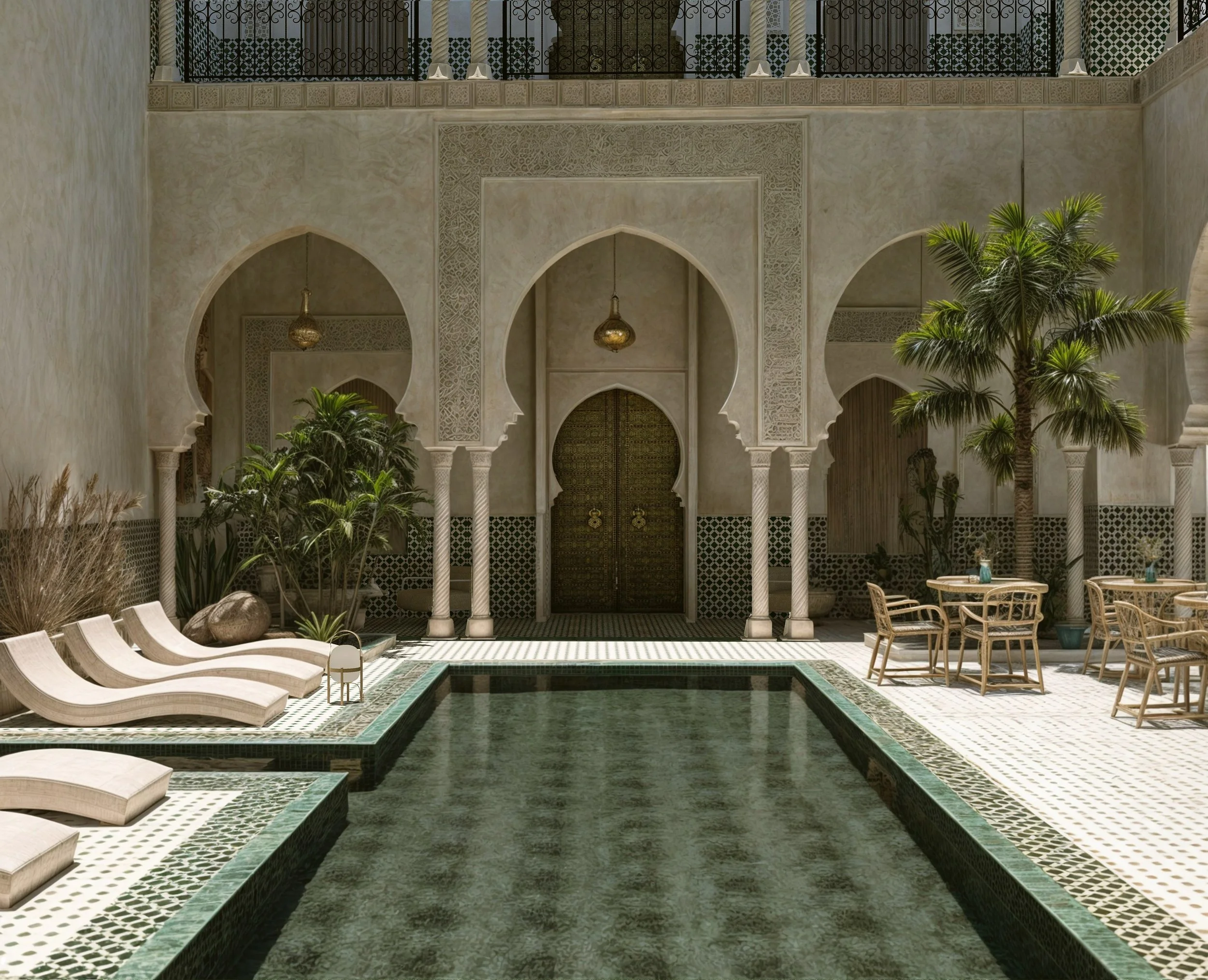
A riad is, technically, just a traditional house built around an interior courtyard — but the logic behind that design says more about the culture than the architecture itself. Islamic domestic tradition treats the home as private, so the beauty stays inward: blank facades outside, gardens, fountains, and carved plasterwork inside, visible only to family and guests.
Many of the medina's oldest riads belonged to wealthy merchant families, fell into disrepair through most of the 20th century as those families moved to newer neighborhoods, and have only been restored and reopened as guesthouses in the last two or three decades — which is why so many still feel like someone's actual home rather than a hotel built to look like one.
One practical note: staircases are often steep, narrow, and elevator-free. If you're traveling with heavy luggage or limited mobility, ask before booking.
HAMMAM
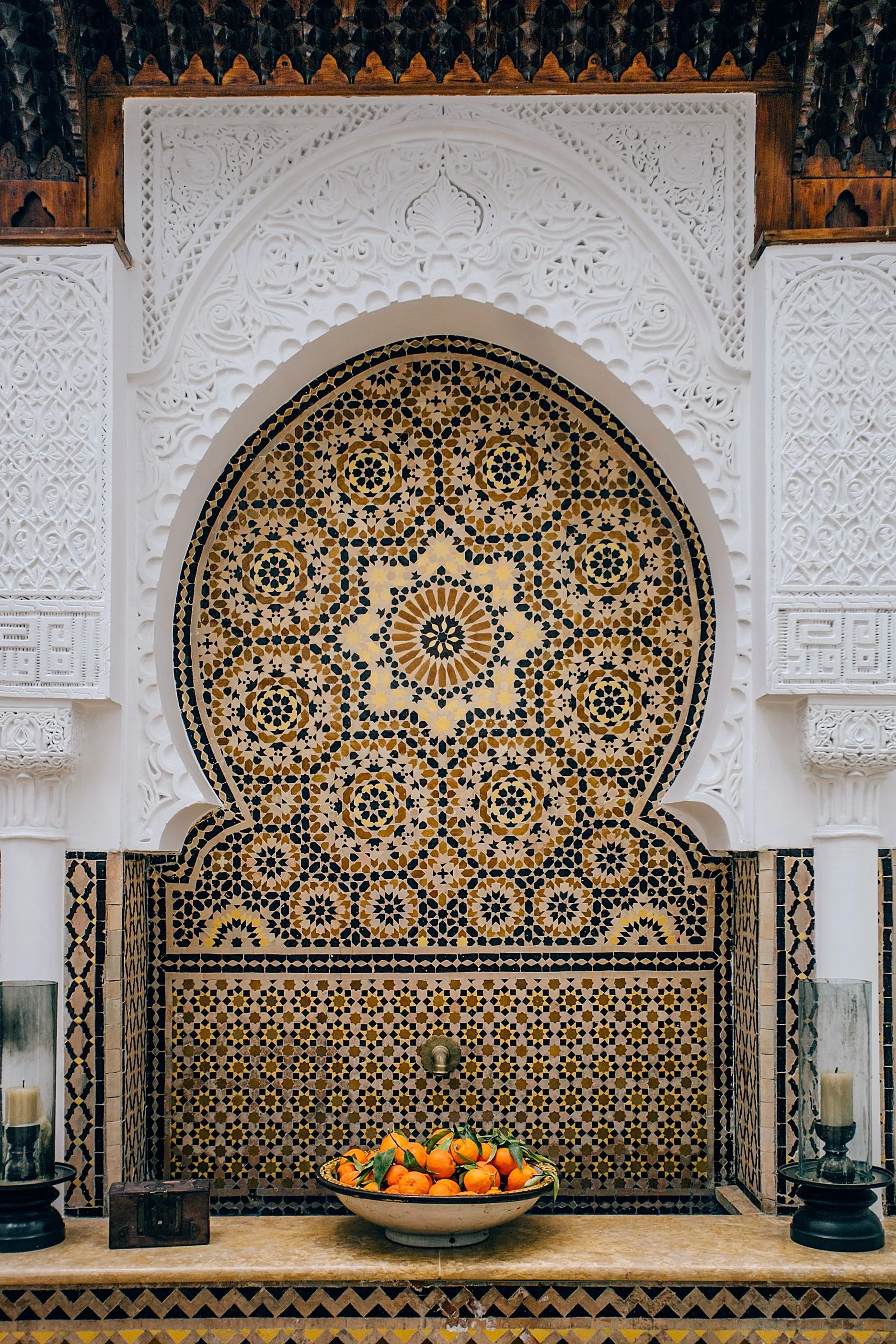
Every hammam in Marrakesh falls into one of two categories: traditional and public, or spa-style and private. It's worth knowing which one you're walking into before you do.
Traditional public hammams are cheap, unglamorous, and genuinely local — Hammam Mouassine, running since the 16th century, still has separate entrances for men and women and costs about 10 dirhams (a dollar) to enter, with the scrub extra. Bring your own black soap and exfoliating glove, or buy them at the door; expect steam, not luxury, and a scrub from an attendant who won't be gentle about it.
Spa-style hammams, like Hammam de la Rose, offer the same basic ritual with more comfort and less culture shock — private rooms, guided treatments, an easier entry point if the traditional version feels like too much on a first visit.
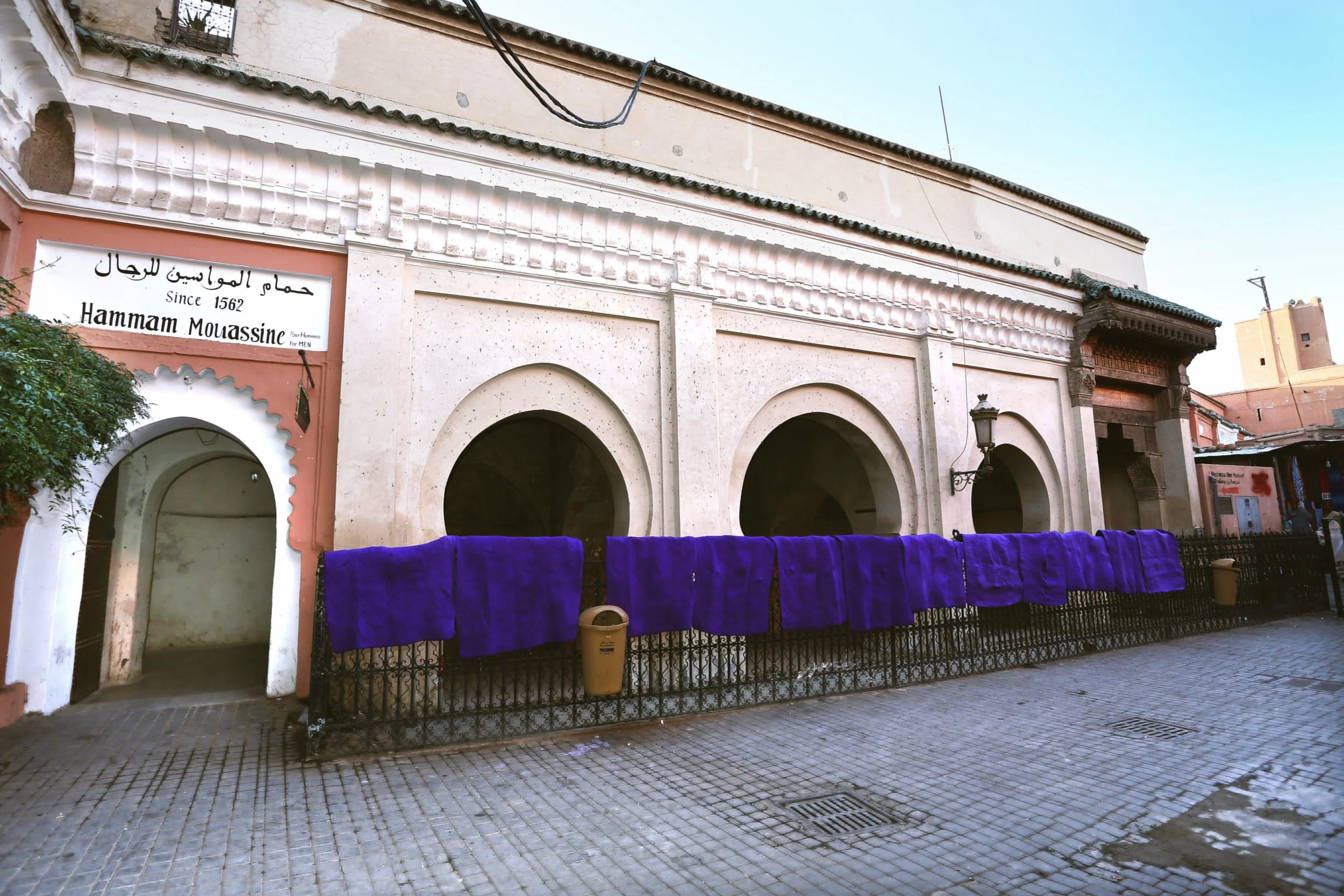
Hammam Mouassine
Photo: Tebbaa / CC BY-SA 4.0 - Edited
BOOKING A HAMMAM
Traditional public hammams don't take reservations — you just show up, pay at the door, and wait your turn if it's busy. Spa-style hammams do, and it's worth booking ahead for a good time slot. Hammam de la Rose is a reliable, well-reviewed option if you'd rather ease into the ritual than dive straight into the neighborhood version.