THE SOCIAL HOURS
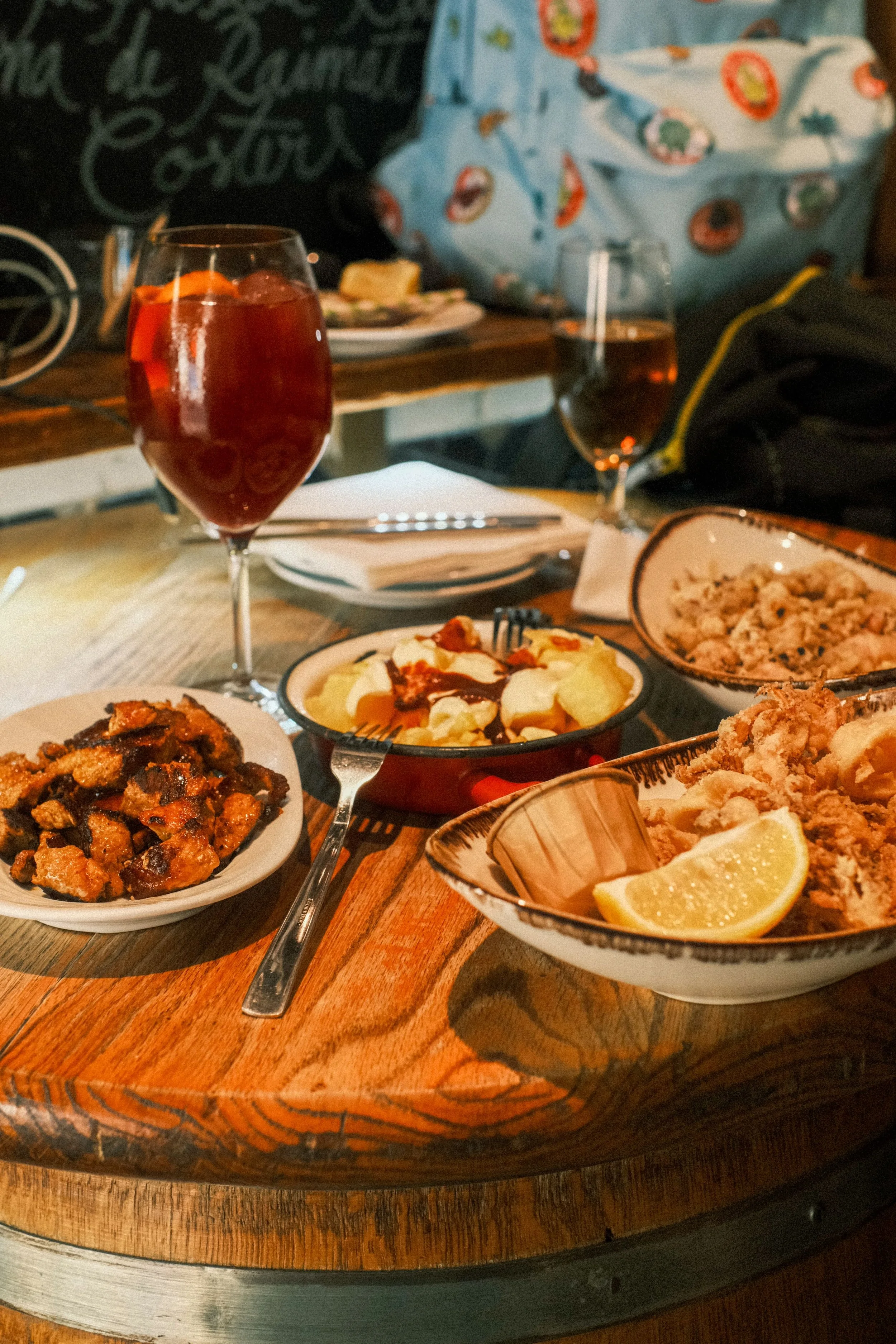
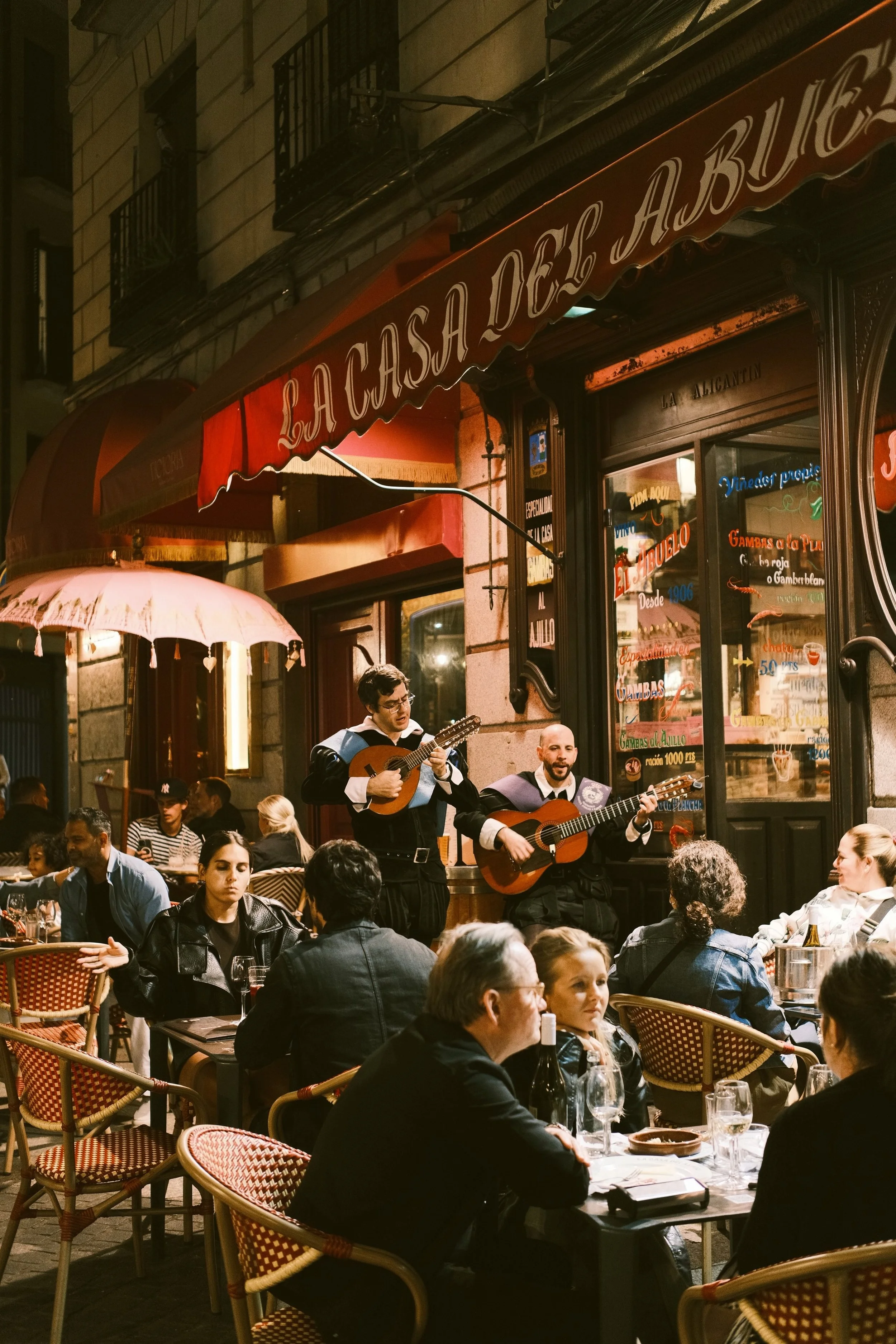
Most cities keep their social life indoors. Madrid moved it outside decades ago and never brought it back in. There's no real word in English for what happens here at eight in the evening — not "nightlife," which implies waiting for dark, and not "café culture," which sounds too polite for what's actually a full-contact sport of standing, talking, and drinking small glasses of beer at volume.
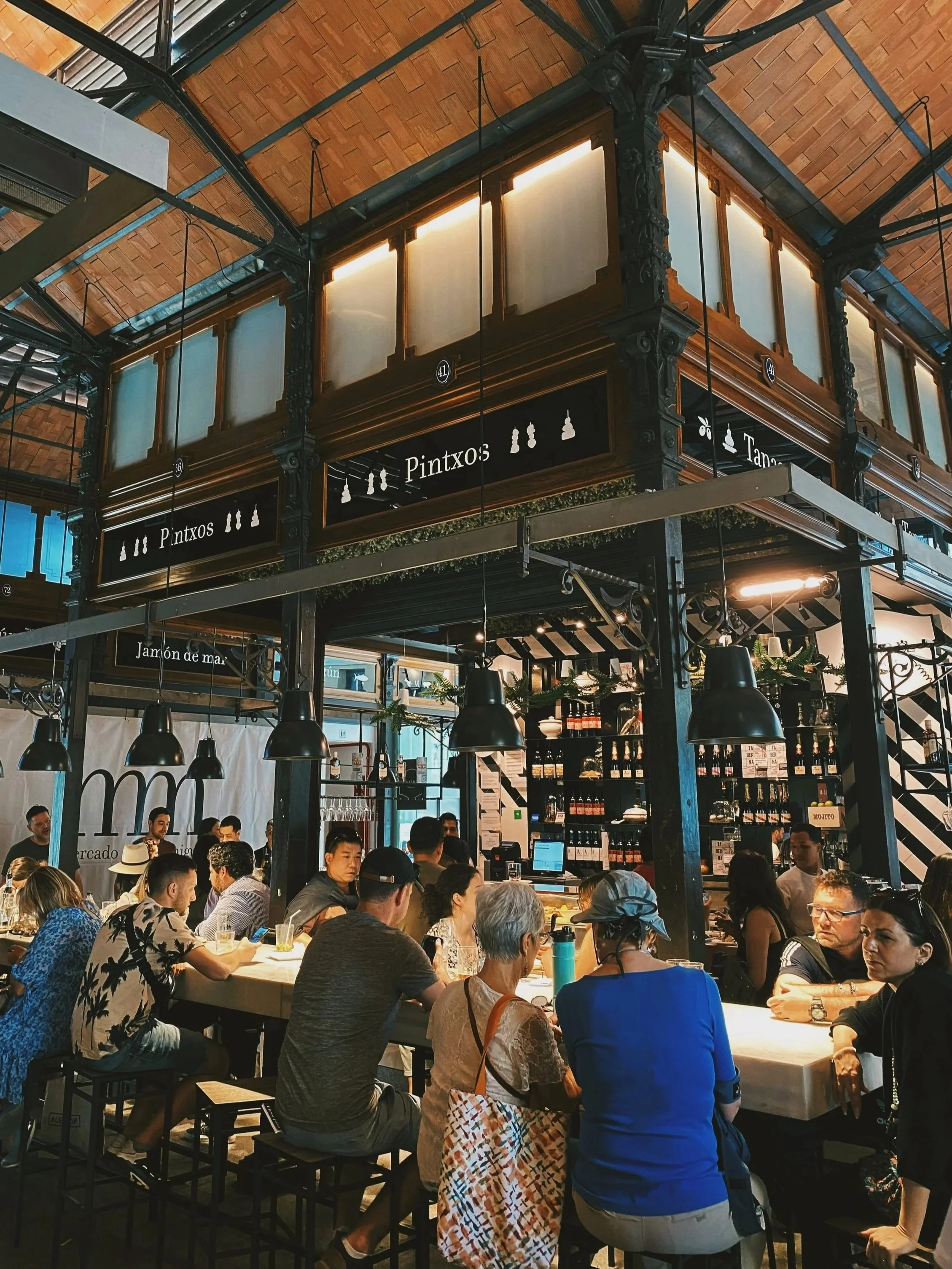
It happens in plazas that fill up without anyone deciding to meet there. It happens on streets too narrow for the crowd they hold. It happens in markets that stopped selling groceries years ago and started selling the experience of eating standing up, elbow to elbow with strangers.
This is the essential that has nothing to do with monuments and everything to do with why people who've lived here for twenty years still can't imagine leaving. Skip all of it and you'll have seen Madrid's postcards. Spend one evening properly lost between a plaza and the next bar, and you'll have understood the city.
Here's where to start.
Some of these are squares, some are markets, some are just streets that got too good at holding a crowd. None of them need an occasion — Tuesday works as well as Saturday. Go in whatever order the evening suggests, let one lead into the next, and don't plan too tightly. That's not how any of this is meant to be done.
Plaza del Dos de Mayo, Malasaña — the neighborhood's actual living room: a monument in the middle that nobody looks at, and locals on the ground with a beer, exactly as it's been for decades.
Plaza Olavide, Chamberí — a leafy square ringed by terraces, and arguably the best Spanish tortilla in the city — onion or no onion, pick a side.
Plaza de Chueca, Chueca —small, unpretentious, and the quiet heart of Madrid's LGBTQ+ community, where hard-won visibility now looks effortlessly ordinary.
Plaza de la Paja, La Latina — medieval and sloped, where the crowd thins just enough to actually hear the person next to you.
Plaza de San Ildefonso, Malasaña — the neighborhood at its most unfiltered: street musicians, strangers sharing floor space, terraces that never quite empty out.
Plaza de Santa Ana, Barrio de las Letras — Cervantes lived a block away, playwrights drank here, and the oldest theater in Madrid still frames the square — literary Madrid with a very full terrace.
Cava Baja and Cava Alta, La Latina — the densest run of taverns in the city, centuries old and still standing-room only on any given Tuesday.
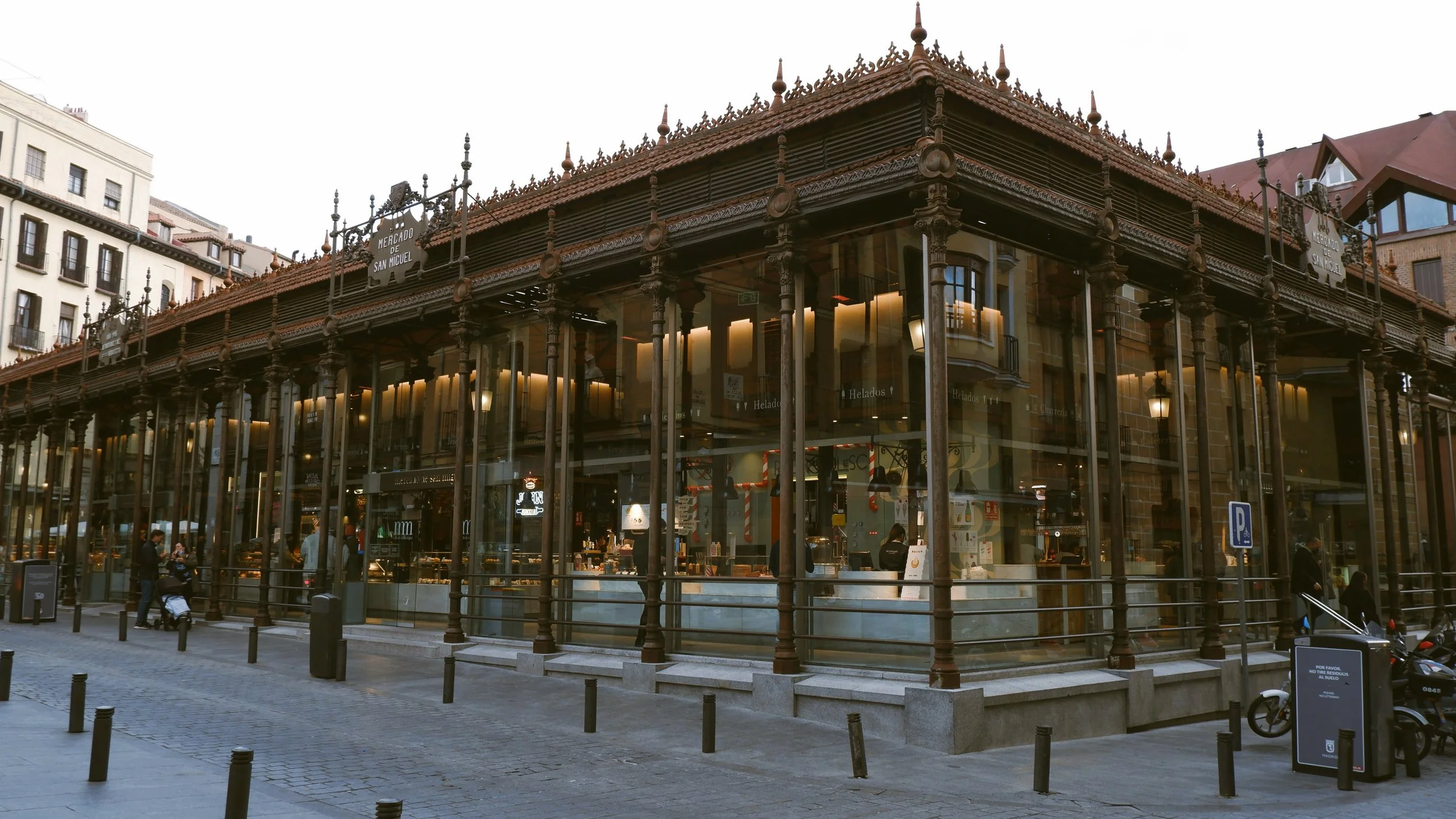
Mercado de San Miguel, Habsburg Madrid — beautiful glass-and-iron 1916 market, now closer to spectacle than grocery shop — go early, or go for the architecture alone.
Mercado de San Antón, Chueca — the neighborhood's answer to San Miguel, minus the crowds: gourmet stalls downstairs, a rooftop terrace above till late.
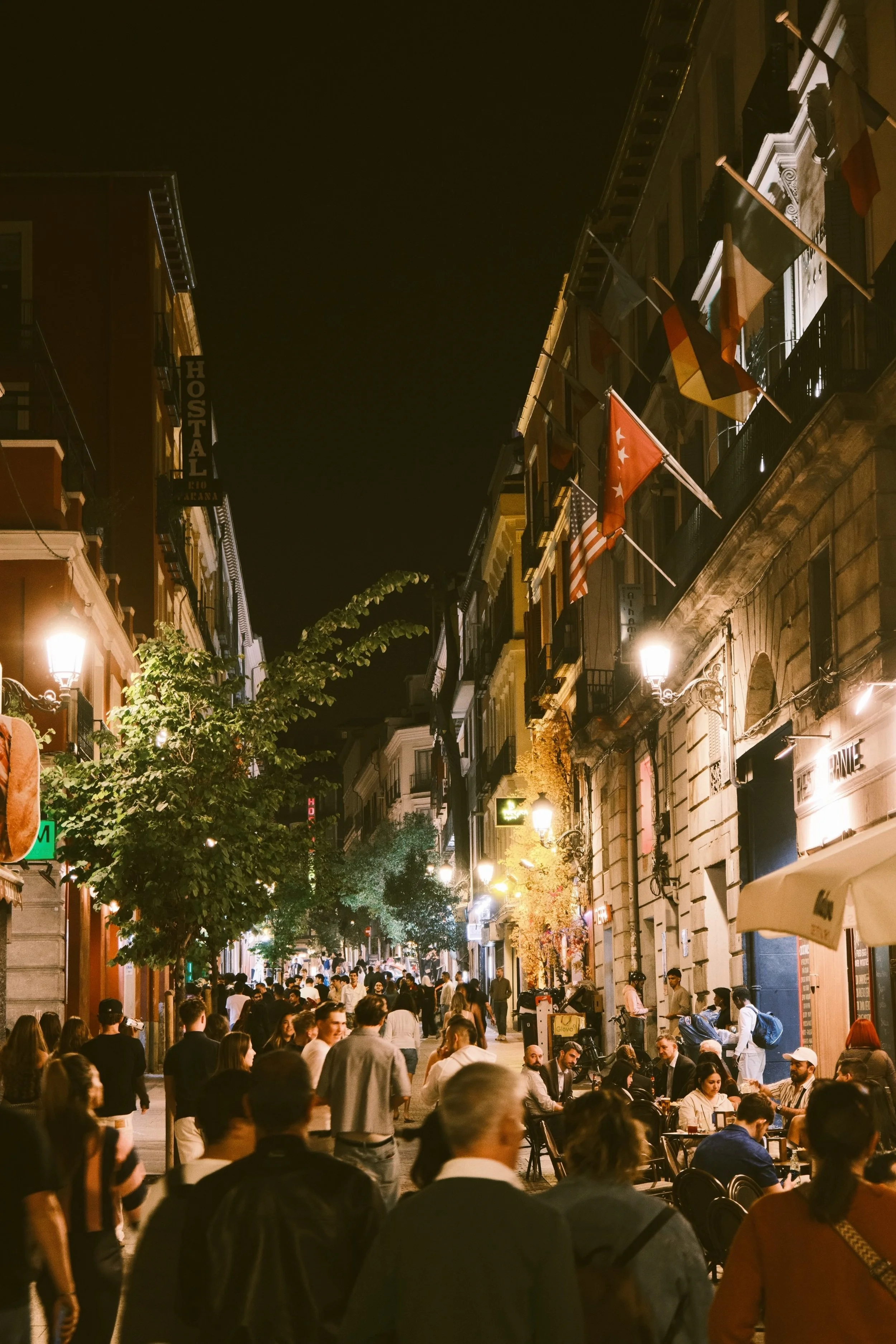
Calle de las Huertas, Barrio de las Letras — once the literary quarter, now a corridor of cocktail bars — cross it on a weekend and the crowd hasn't thinned in years.
Calle del Pez, Malasaña — a narrow strip crammed with bars on both sides, where the night gets louder the further down you walk.
Calle Ponzano, Chamberí — the neighborhood's tapeo mile, mostly locals, standing three-deep at the bar for wine and jamón after work.
Calle de la Palma, Malasaña — vintage racks by day, bar-hopping by night — the neighborhood's least self-conscious street, and better for it.
Calle Argumosa, Lavapiés — the neighborhood's terrace spine, unhurried and mixed, where the languages spill out onto the same stretch of pavement.
Calle del Espíritu Santo, Malasaña — the neighborhood slowed down: vintage shops, quiet cafés, exhaling after Calle del Pez.
Mercado de San Miguel
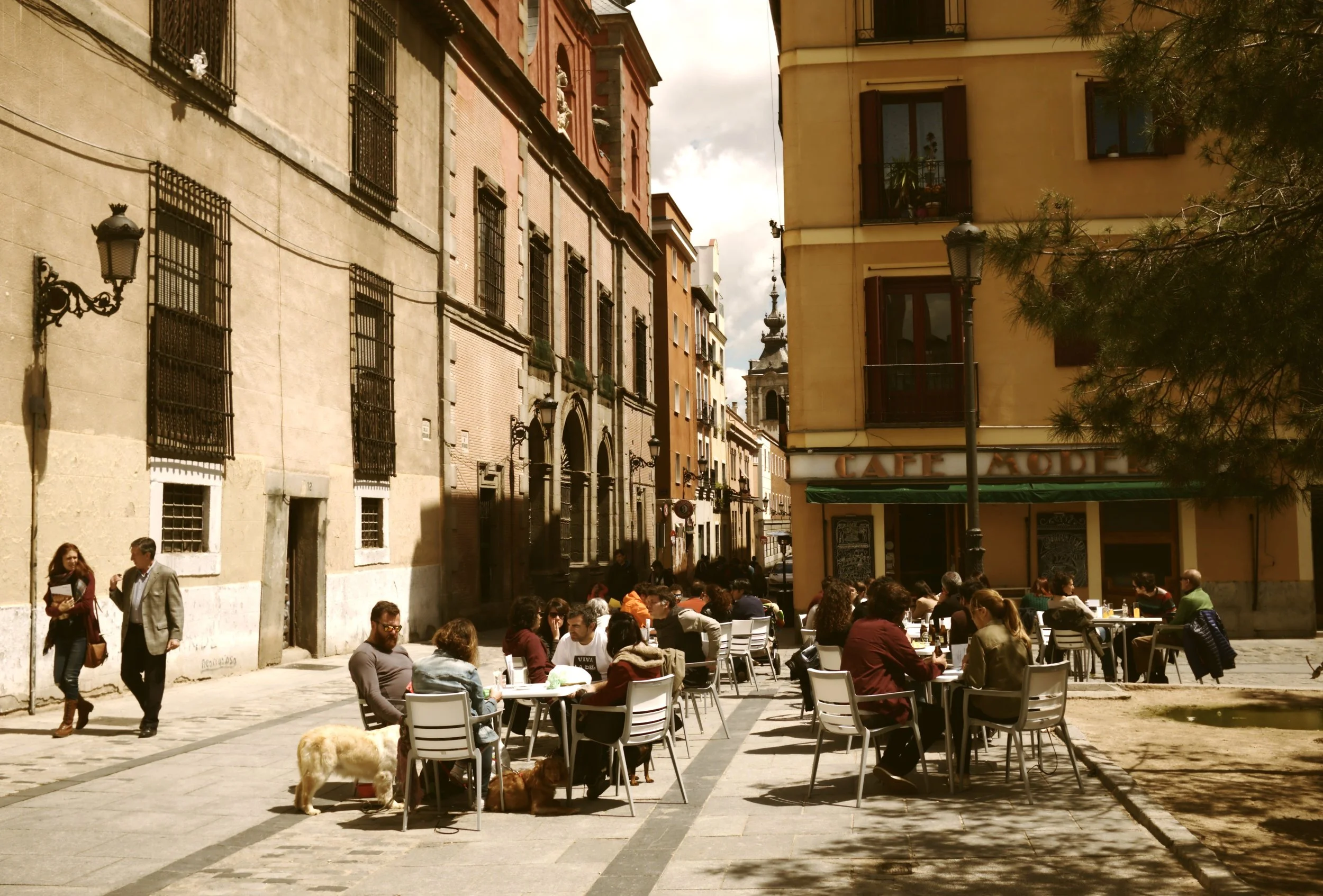
Plaza de las Comendadoras - Malasaña