paseo del prado
There's a stretch of Madrid, less than two kilometers long, that holds more important painting per square meter than almost anywhere else on Earth. Walk it in half an hour if you're in a hurry — you won't be. This is Paseo del Prado, one of Madrid's oldest boulevards, and locals call what sits along it the Triángulo del Arte for good reason: the Prado, the Thyssen-Bornemisza, and the Reina Sofía, three national museums standing within a fifteen-minute walk of one another, almost daring you to choose just one.
Each holds a different century hostage. The Prado starts with Velázquez and Goya, Las Meninas watching from a room that never quite empties. Across the boulevard, the Thyssen-Bornemisza picks up where the Prado's classicism runs out — Van Eyck, Caravaggio, Monet, Hopper, a private collection so complete it plugs almost every gap the other two leave open. Finish at the Reina Sofía, where Guernica hangs in a room people go quiet in without being told to, and twentieth-century Spain unravels in paint.
Eight hundred years of art history, one boulevard, whichever order you walk it in.
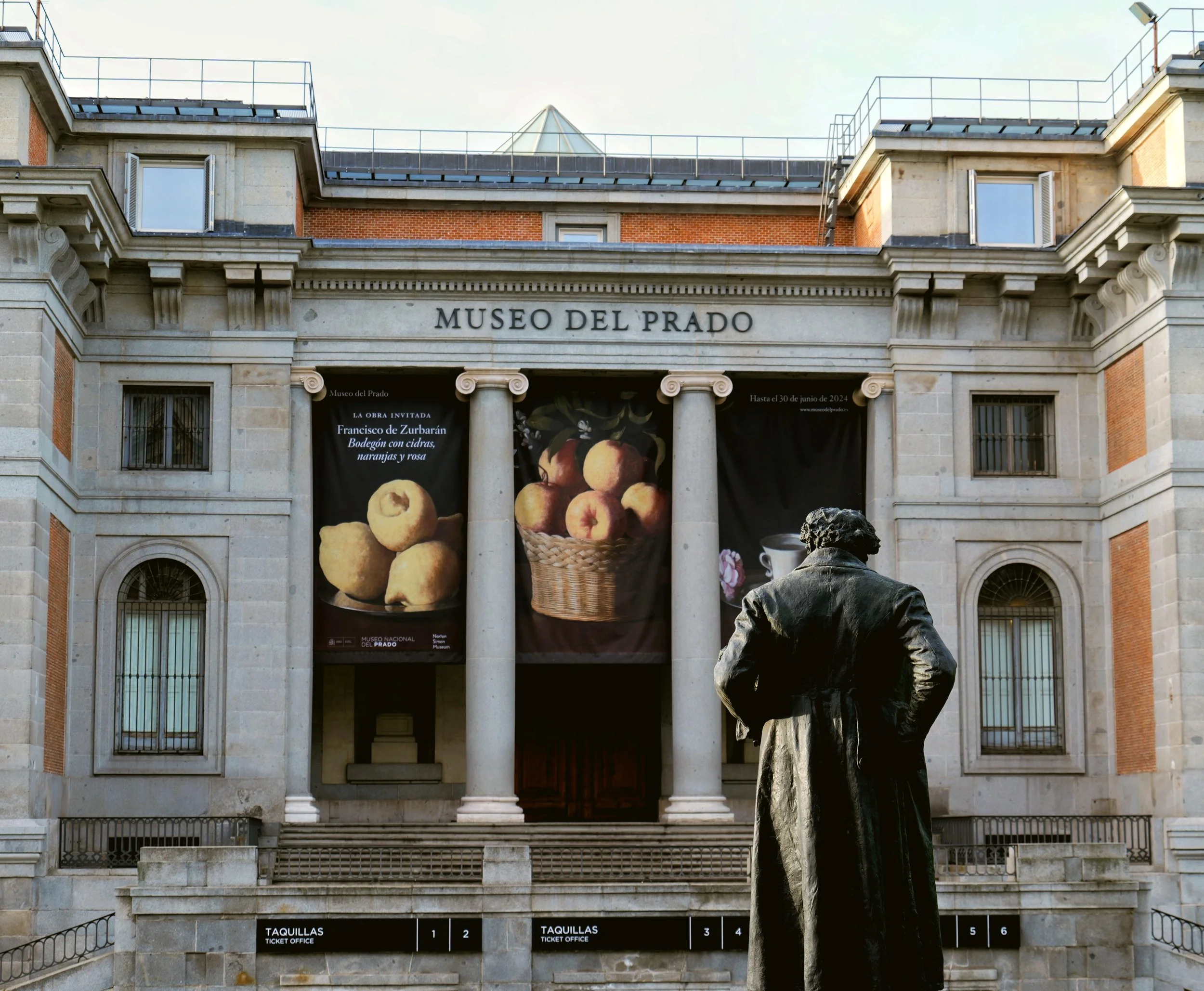
Walk further and Goya takes over almost an entire wing. Follow him from the light, flattering court portraits of his early career all the way to the Black Paintings — done straight onto the walls of his own house, near the end of his life, when his politics, his health, and possibly his mind had all turned dark together.
Bosch, El Greco, Titian, Rubens fill in the rest. Eight thousand works in total. You won't see them all, and three or four hours is genuinely plenty for a first visit — don't feel guilty about it.
Go early if you can, the Velázquez rooms fill up fast. [Skip the line, book ahead →]
MUSEO REINA SOFÍA
Before it held any art at all, this building spent two centuries as a hospital — Philip II founded it in the 16th century, and it kept treating patients until 1965. Little about its stern, neoclassical exterior warns you what waits inside: Spain's twentieth century, unfiltered and often uncomfortable.
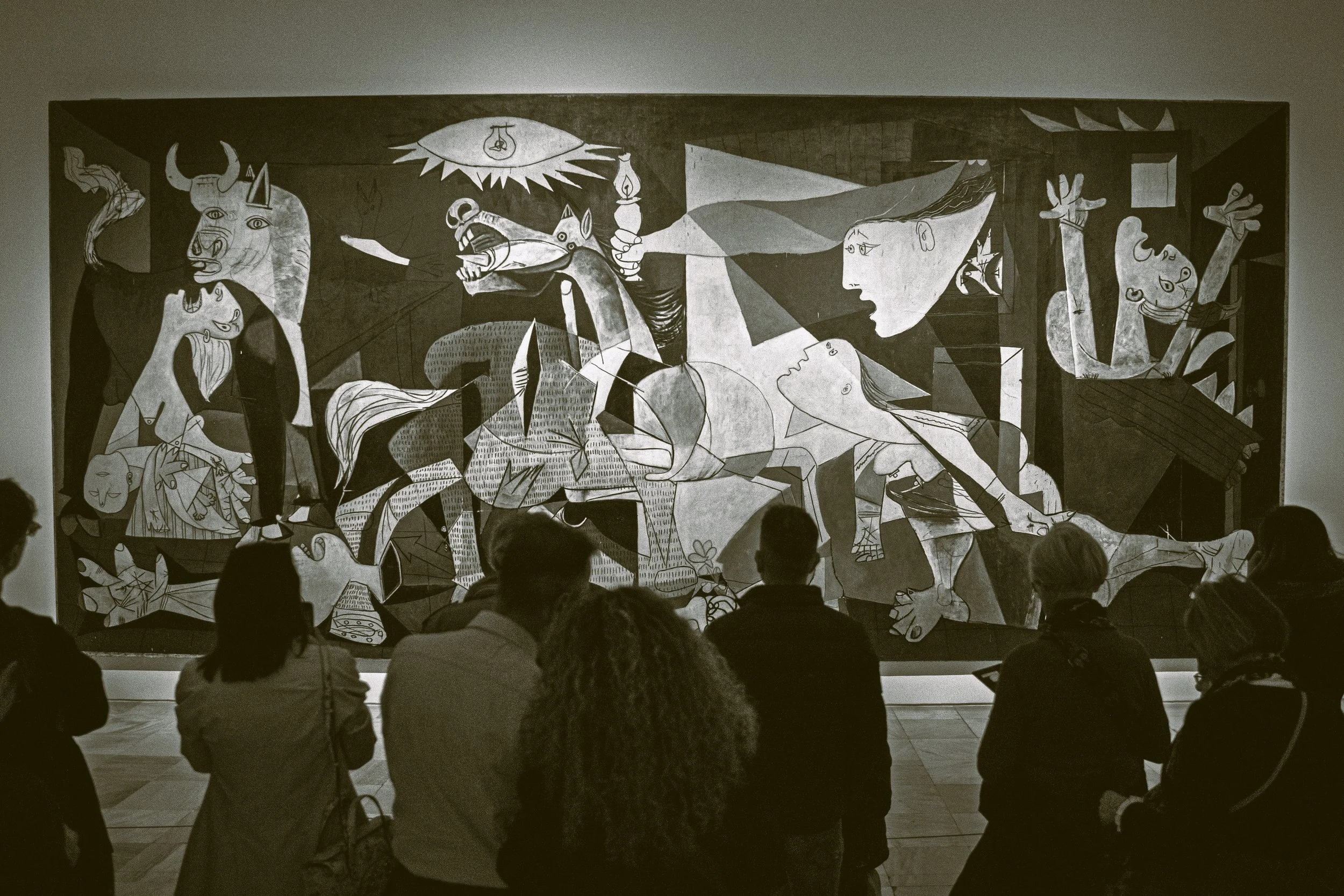
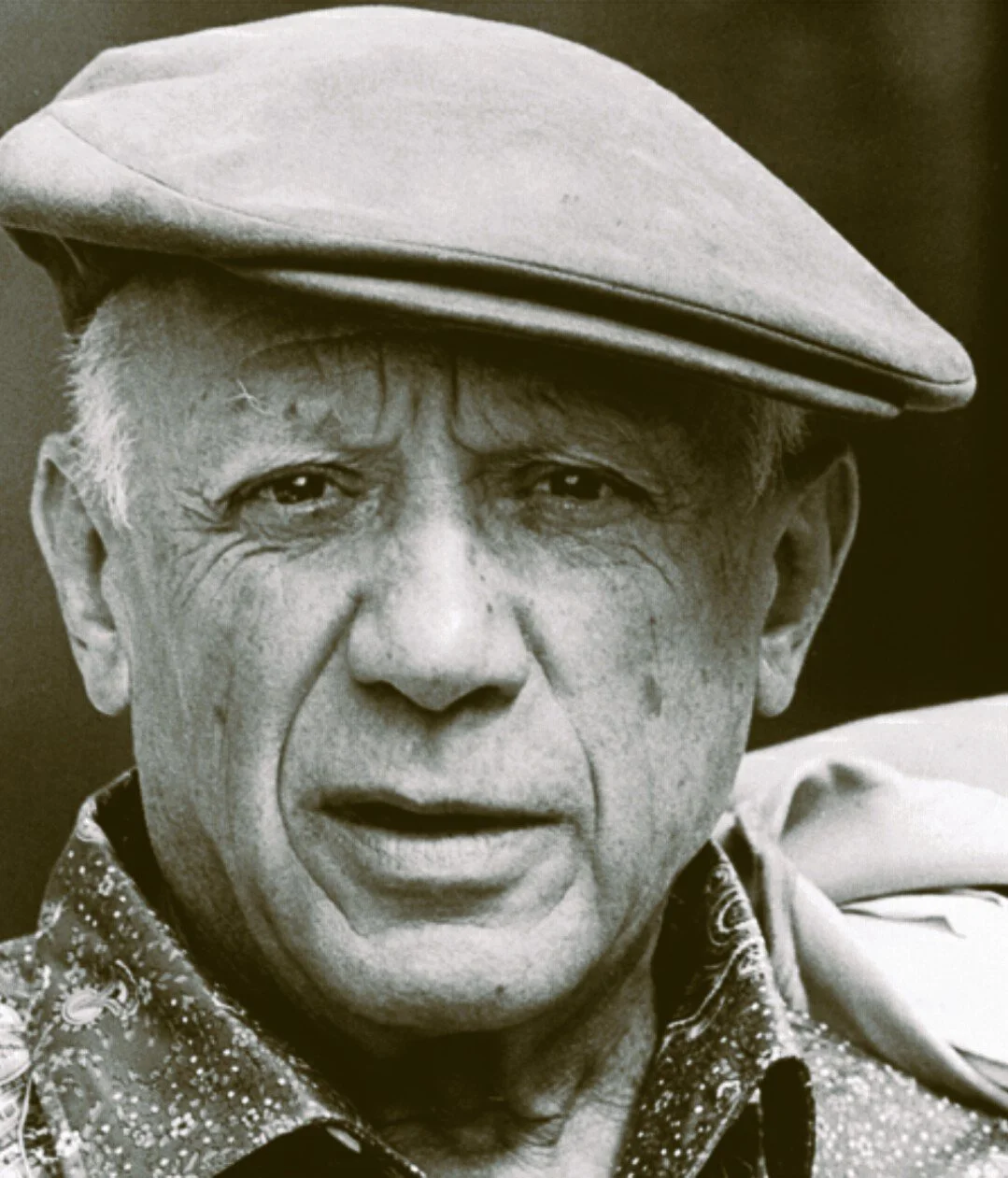
Guernica anchors it all. Picasso painted it in 1937, days after Nazi bombers leveled a Basque town at Franco's request, and it didn't reach Spain until 1981 — Picasso himself refused to let it return while the dictatorship lasted. Stand in front of it and the room tends to go quiet without anyone asking it to.
Around it: Dalí at his strangest, Miró, Juan Gris, decades of Spanish art wrestling with war, censorship, and everything after. Jean Nouvel's 2005 glass-and-steel extension wraps around the old hospital wards without apologizing for the contrast. Come for Guernica. Stay for how much makes more sense once you've seen it. [Skip the line, book ahead →]
MUSEO DEL PRADO
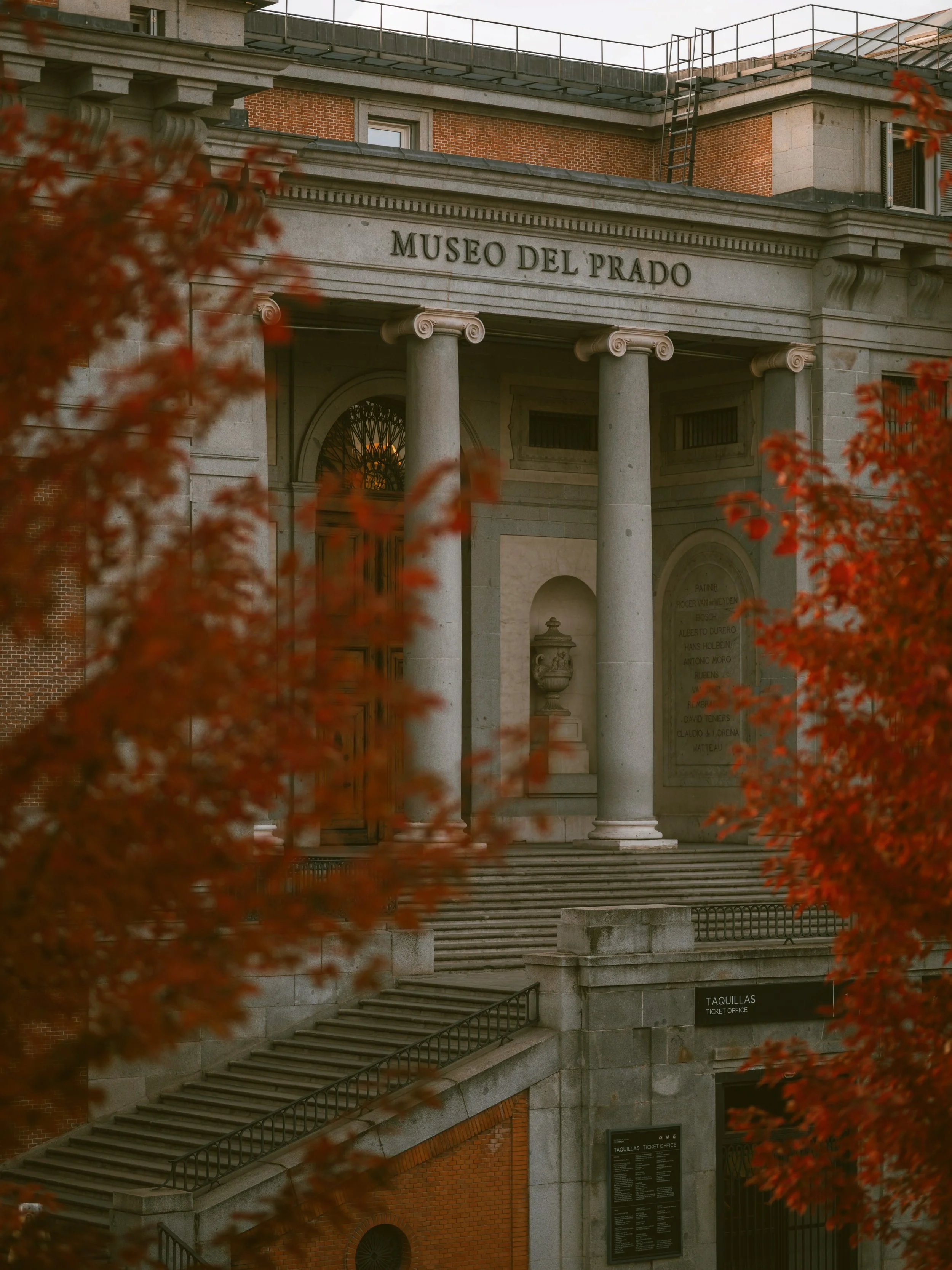
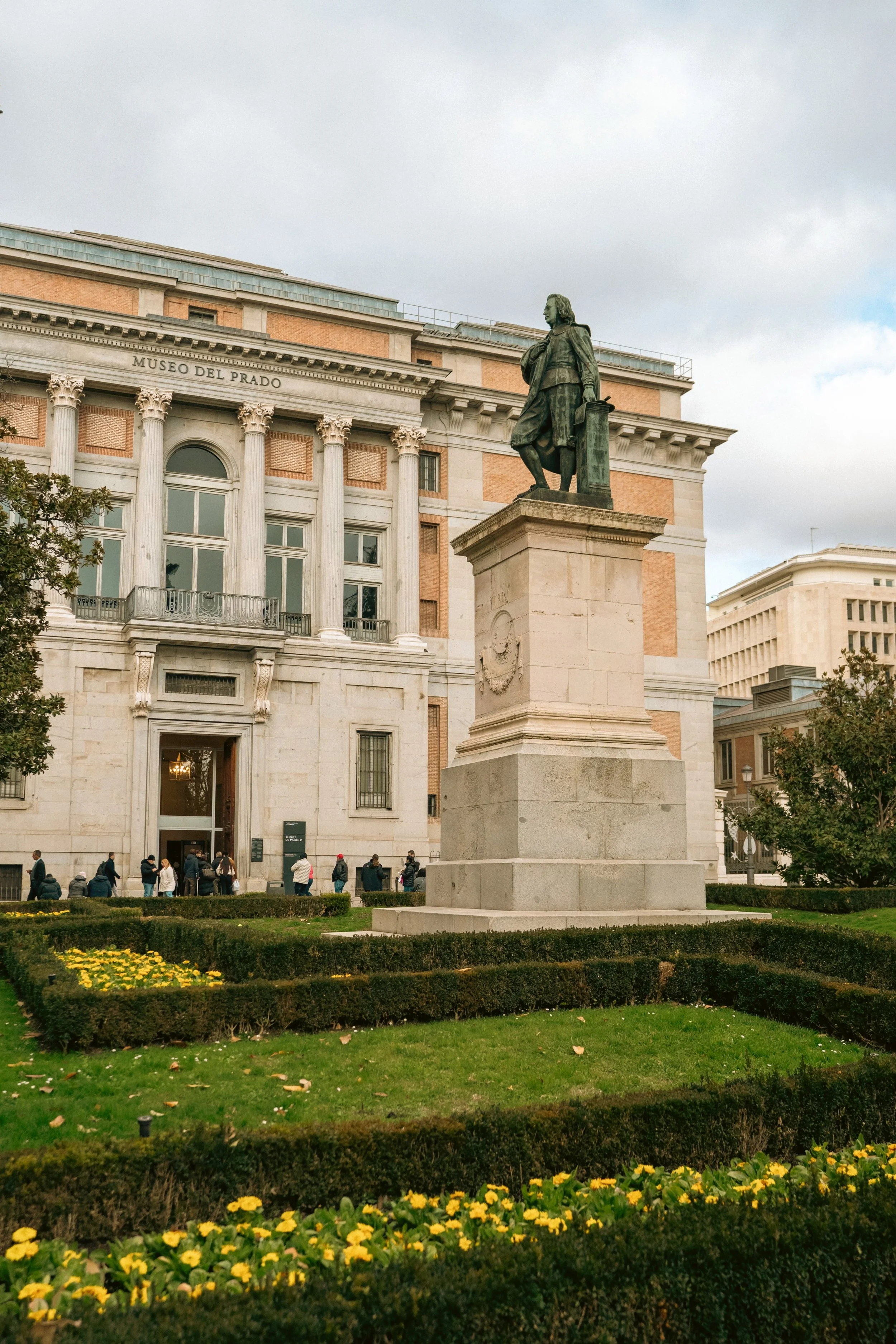
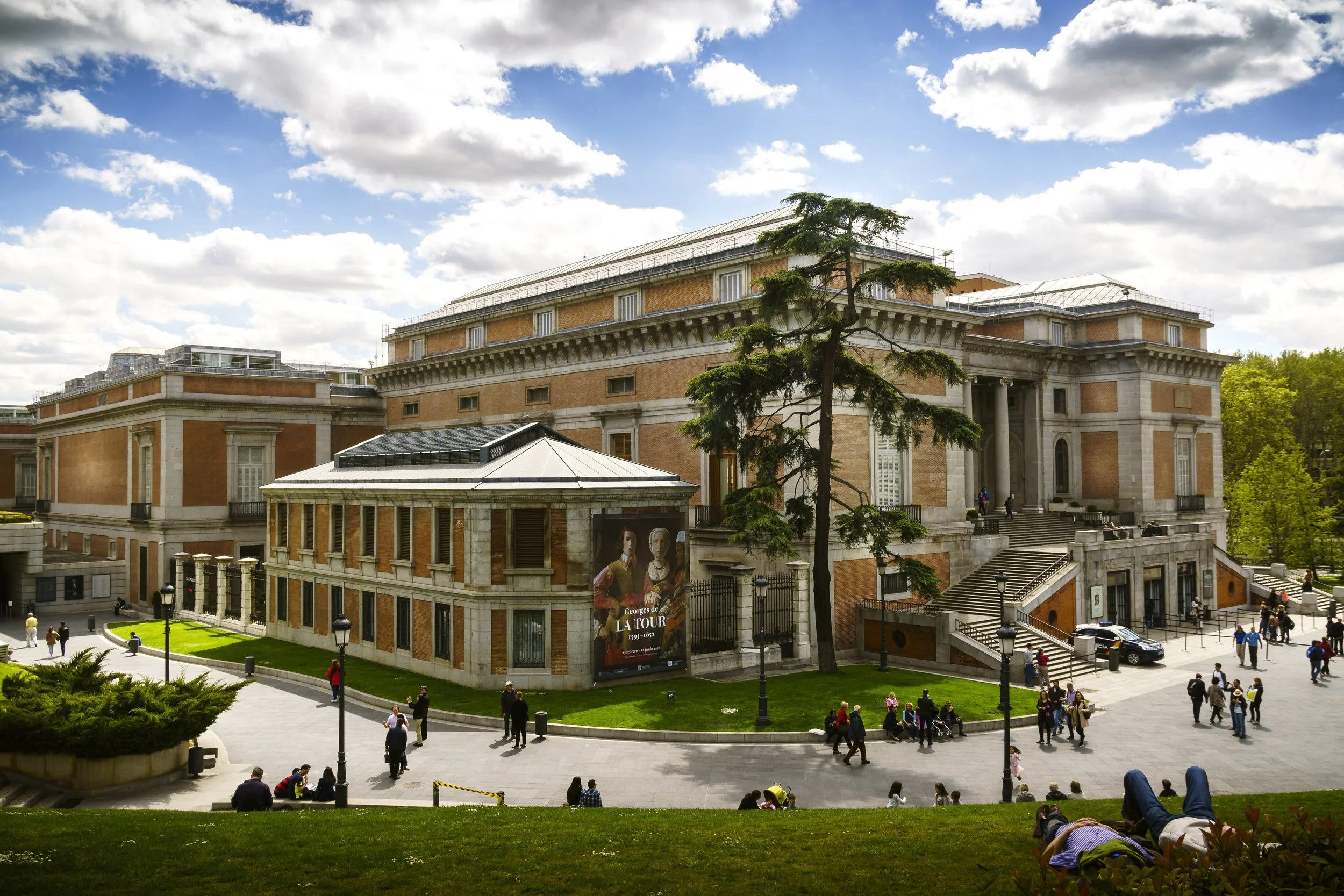
This building was never meant to hold a single painting. Commissioned by Charles III in 1785 as a museum of natural sciences, it sat empty and unfinished through war and occupation, until Spain's royal art collection claimed the space instead. It finally opened in 1819 with a few hundred canvases pulled from the palace walls — and hasn't stopped growing since.
At its center sits Las Meninas, Velázquez's strange, self-aware portrait of the royal court — a princess, her attendants, and the painter himself caught mid-brushstroke, watching you back. People have been writing entire books about its mirrors for three centuries and still haven't settled the argument.
Museo thyssen-bornemisza
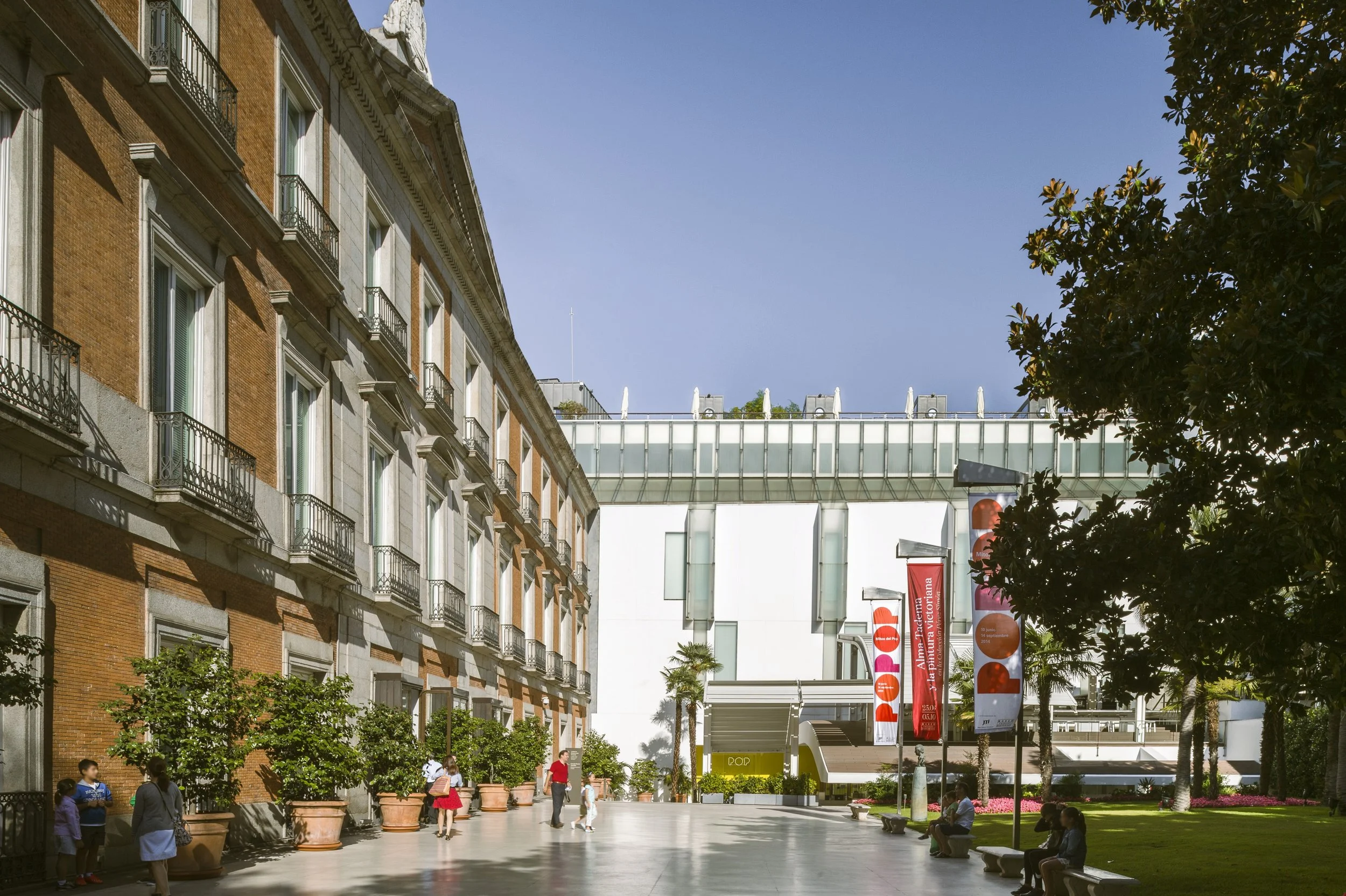
This one started as a rich man's hobby. August Thyssen bought a few Rodin sculptures in the 1900s; his grandson, Baron Hans Heinrich, spent the rest of the century turning that into one of the largest private art collections on Earth — Van Eyck, Caravaggio, Dürer, German Expressionists, Russian avant-garde, whatever he happened to want next. Spain landed it in 1992, largely thanks to his wife Carmen, a former Miss Spain who persuaded him to bring the collection here rather than let it scatter elsewhere — the government bought the core outright a year later for $350 million.
The result fills the gaps neither the Prado nor the Reina Sofía cover: French Impressionism, American painting, eight centuries in one continuous walk. Start with the Old Masters upstairs, end with Hopper and Pollock on the ground floor. [Skip the line, book ahead →]
THE TRIANGLE OF ART
Three museums, one ticket each, all within a fifteen-minute walk of each other.
[Museo del Prado →] Five centuries of European masters, Velázquez and Goya at the centre of it all.
[Museo Reina Sofía →] Spain's twentieth century, unfiltered — Guernica included.
[Museo Thyssen-Bornemisza →] The private collection that fills every gap the other two leave open.