THE JEWISH QUARTER
By the early 20th century, more than a fifth of Budapest's population was Jewish, and the Seventh District, Erzsébetváros, became the heart of that community. The area is compact enough to cover on foot in a morning, yet it holds far more than its size would suggest. Its history isn't kept in a single monument. It is spread across streets, courtyards and houses of prayer, and it reveals itself slowly, one doorway at a time.
The three synagogues are the clearest map. Dohány Street belongs to the Neolog branch, the Hungarian reform movement. Kazinczy street serves the Orthodox community, and Rumbach street was built for a smaller third congregation, the Status Quo. All three stand within a few minutes' walk of one another, which is why the streets still show how many different ways there were of being Jewish in this city.
Hungary's Jewish community, the largest in East Central Europe, still lives mostly in Budapest, and this quarter remains its most recognizable address. The sections below move from the community before 1944, through the ghetto and the synagogues, to the neighborhood as it lives today, and each can be read on its own.
the ghetto and the holocaust
In November 1944, with Soviet troops already approaching, Hungarian authorities under German occupation walled off part of District VII and forced roughly 70,000 people inside, a space built for a fraction of that number. Thousands died there that winter, from hunger and cold, before liberation came in January 1945. Not everyone sheltered behind those walls; thousands survived in an "international ghetto" of protected houses in District XIII, set up by neutral diplomats, above all Swiss consul Carl Lutz and Swedish diplomat Raoul Wallenberg, who issued protective papers. Wallenberg was last seen in Soviet custody in January 1945.
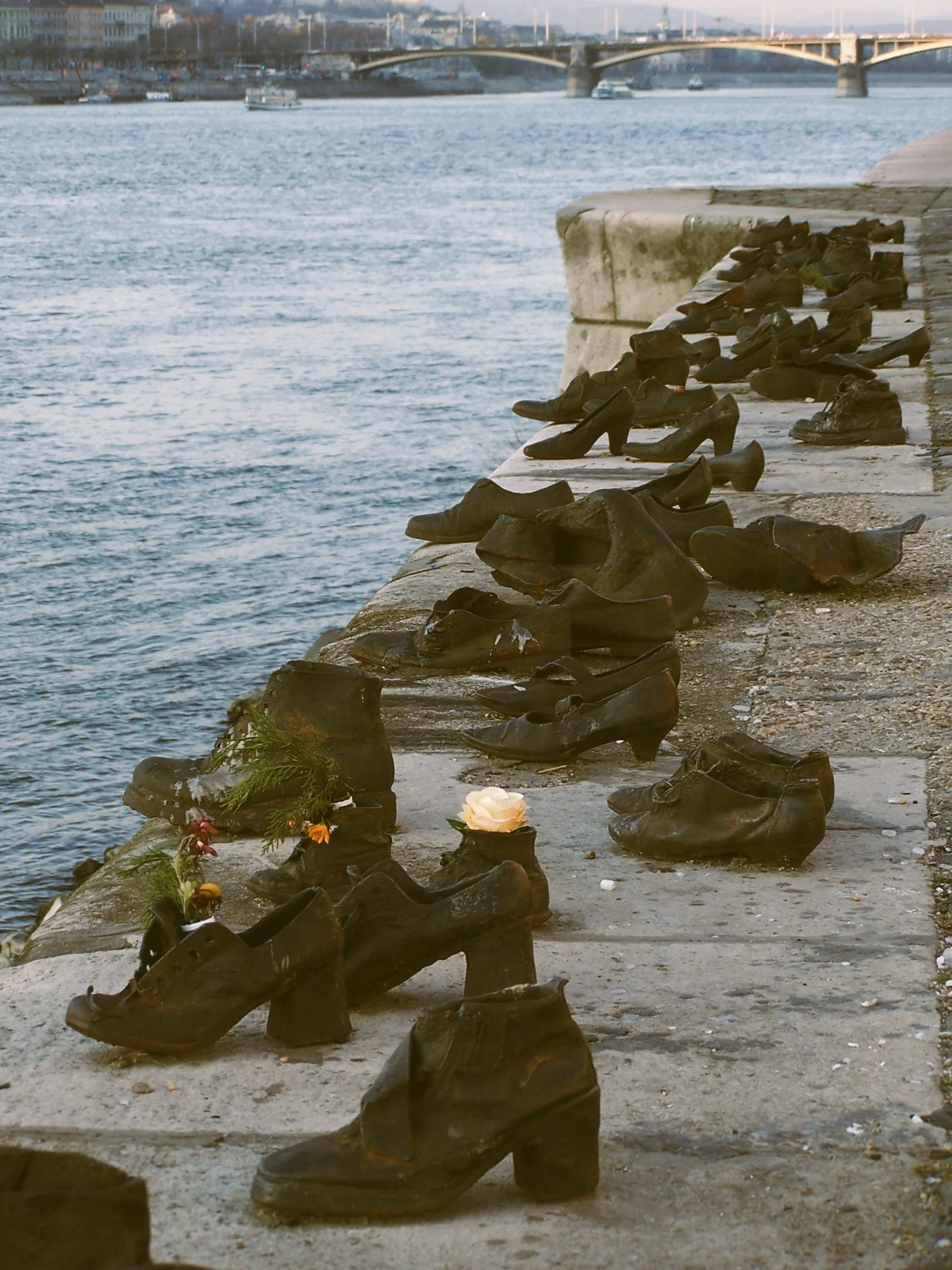
Along the Danube, members of the fascist Arrow Cross Party shot Jewish residents directly into the river, ordering them to remove their shoes first so they could be resold. A row of iron shoes on the bank now marks the spot, easy to miss unless you know to look down.
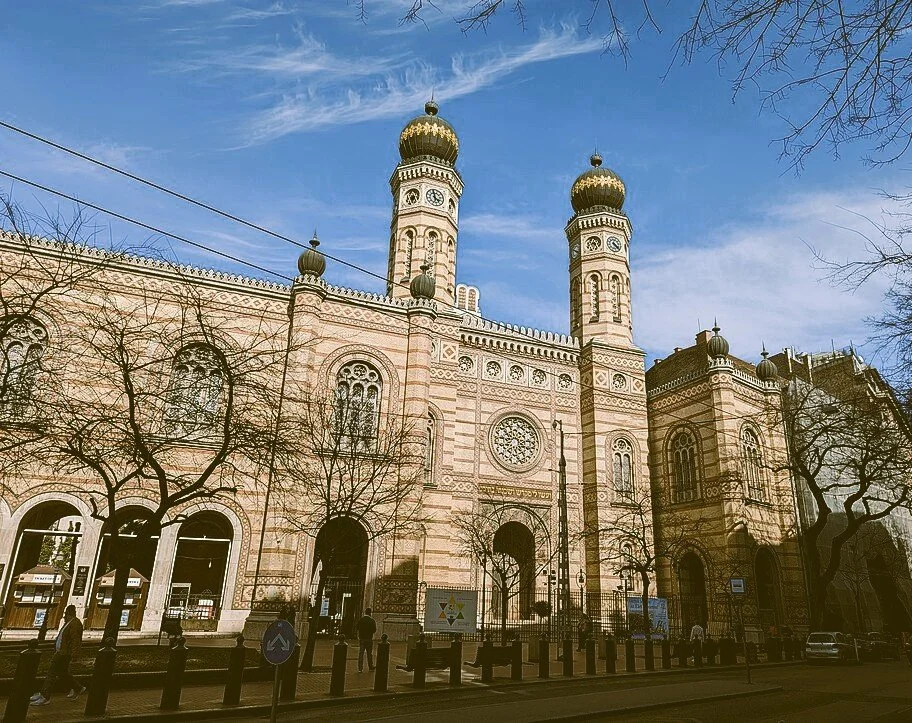
Photo: Daniel · CC BY 2.0 · Cropped & editedRumbach STREET and Kazinczy STREET SYNAGOGUES
Rumbach Street Synagogue sits a block from its more famous neighbor, and for decades that meant neglect: it stood half-ruined and closed to the public for most of the late twentieth century. Designed by Otto Wagner in a Moorish style closer to the Alhambra than to anything else in the district, it reopened only in 2021 after a long restoration. What's left is smaller and quieter than Dohány Street, an interior worth seeing precisely because so few visitors bother to check. [Book Rumbach Street Synagogue tickets →]
Kazinczy Street Synagogue, tucked inside a courtyard in the Orthodox Quarter, is the one still in regular religious use. Built in 1913 in an Art Nouveau style unusual for a synagogue anywhere, it forms part of a small complex that once held a kosher butcher, a mikveh, and a school, the everyday infrastructure of a functioning community rather than a monument to one. Come on a Friday evening and there's a real chance the courtyard will be busy with people arriving for Shabbat.
JEWISH BUDAPEST BEFORE 1944
Budapest's Jewish community had produced Nobel laureates, industrialists, and more than half the city's doctors and lawyers, professions once closed to them until an 1867 emancipation law opened them all at once. The result was a boom generation: grand apartment blocks rose around what's now the Jewish Quarter, built by architects and financed by bankers who happened to be Jewish, without anyone needing to say so. Coffeehouses filled with writers debating in Hungarian, not Yiddish; this was a community that saw itself simply as Budapest.
DOHÁNY STREET SYNAGOGUE
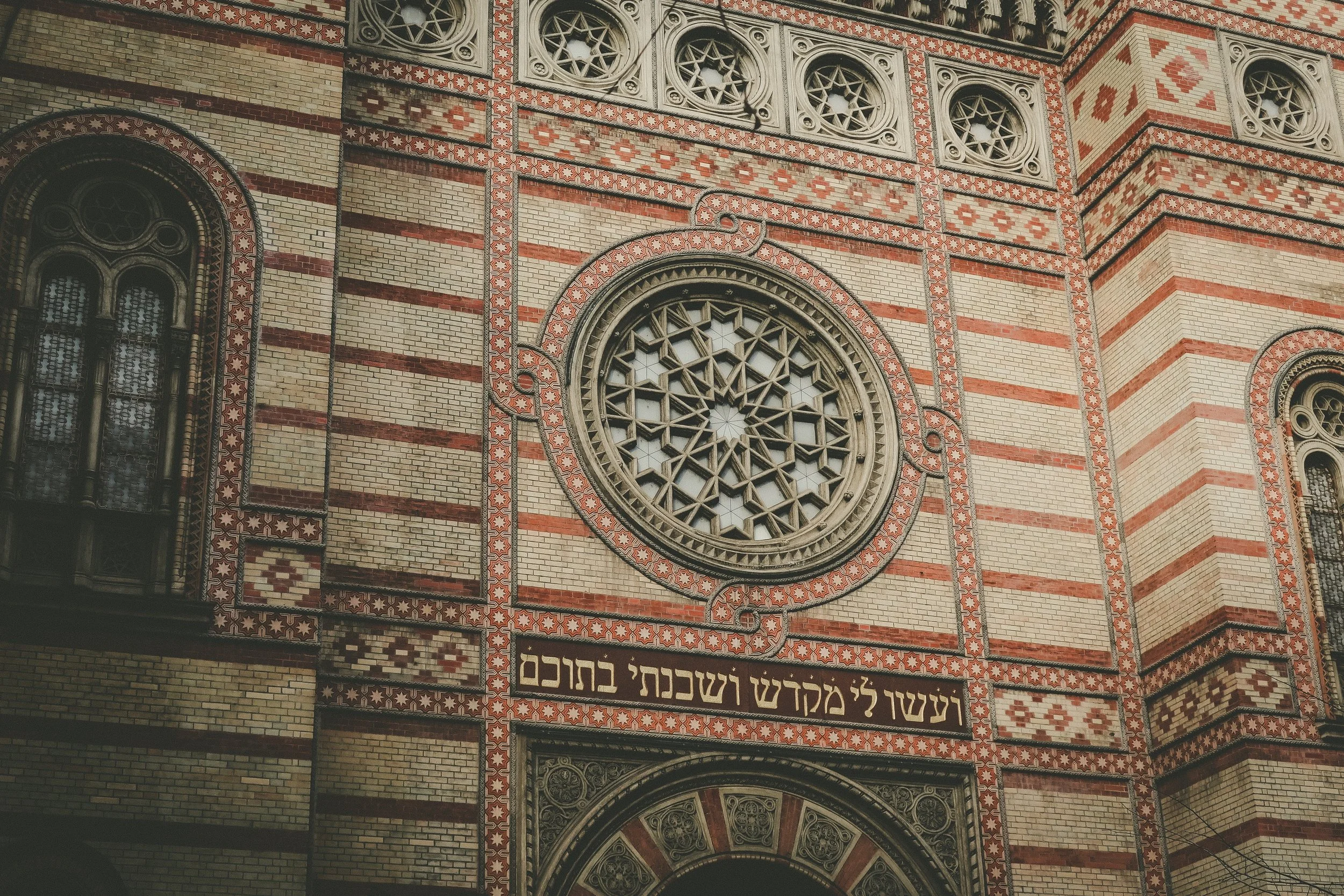
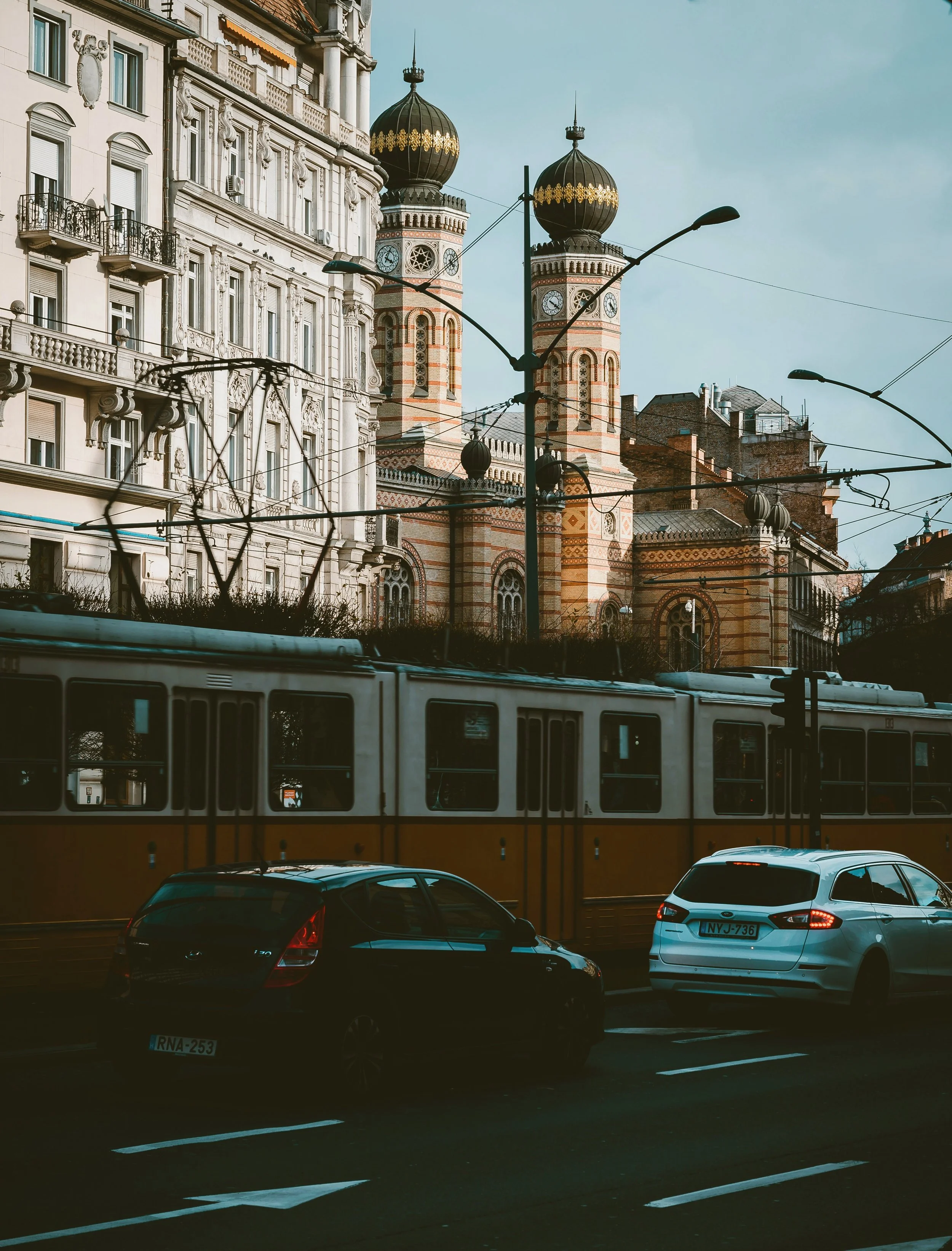
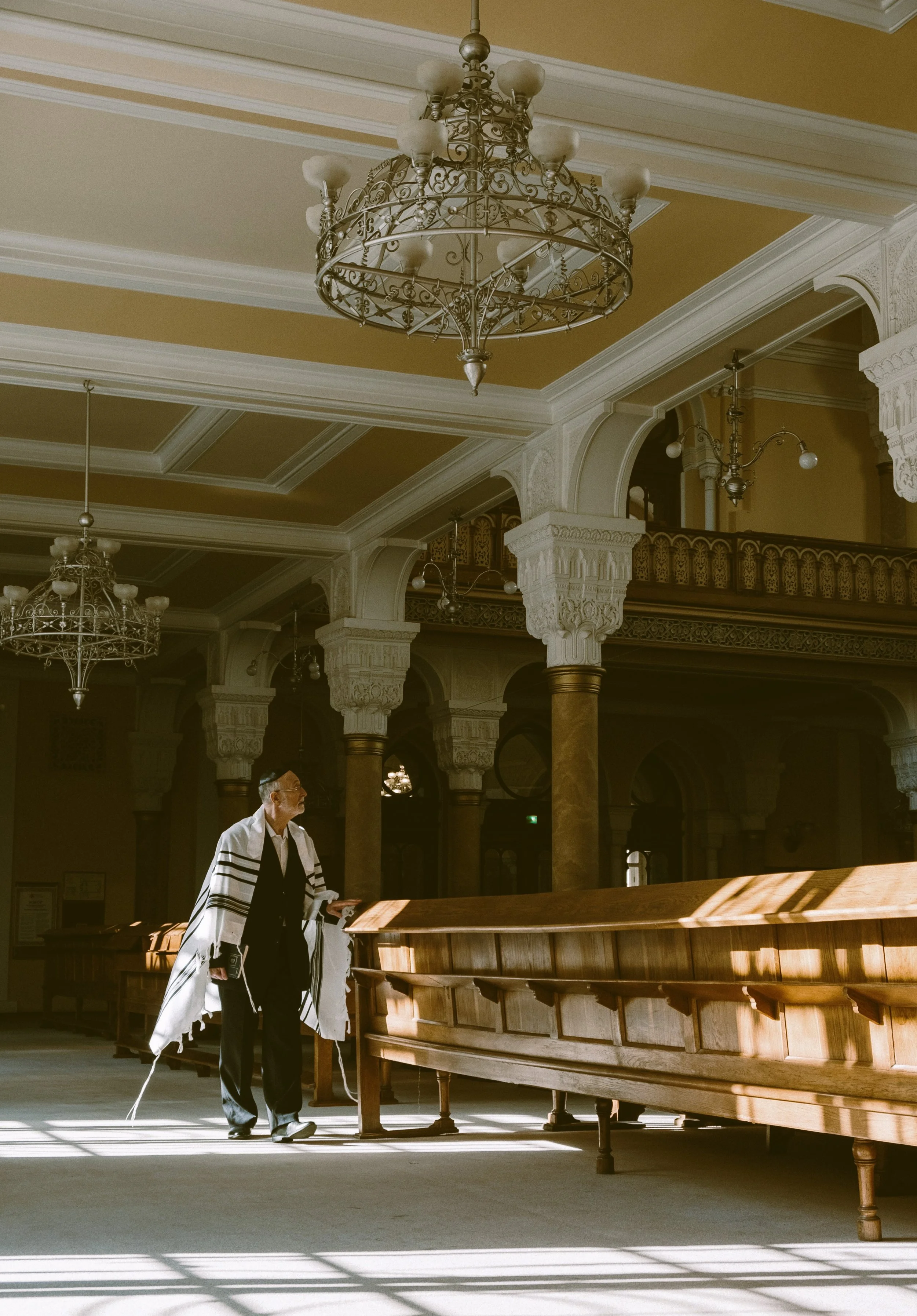
Two onion-domed towers rise over Dohány Street, framing an entrance that looks more like Moorish Spain than Pest. That was deliberate: when the architect Ludwig Förster designed Europe's largest synagogue in the 1850s, he drew on Moorish forms, arguing no distinctly Jewish architectural style existed to draw from instead. The result seats 3,000, and its organ, once played by Liszt himself, still performs.
Next door, a plaque marks where Theodor Herzl, founder of modern Zionism, was born in 1860, in the synagogue's shadow. Behind the building, a metal willow tree lists Holocaust victims leaf by leaf, funded decades later by actor Tony Curtis, whose father emigrated from Hungary.
As an active synagogue, the complex closes early on Fridays, remains closed on Saturdays for Shabbat, reopening Sunday morning. [Book Dohány Synagogue tickets →]
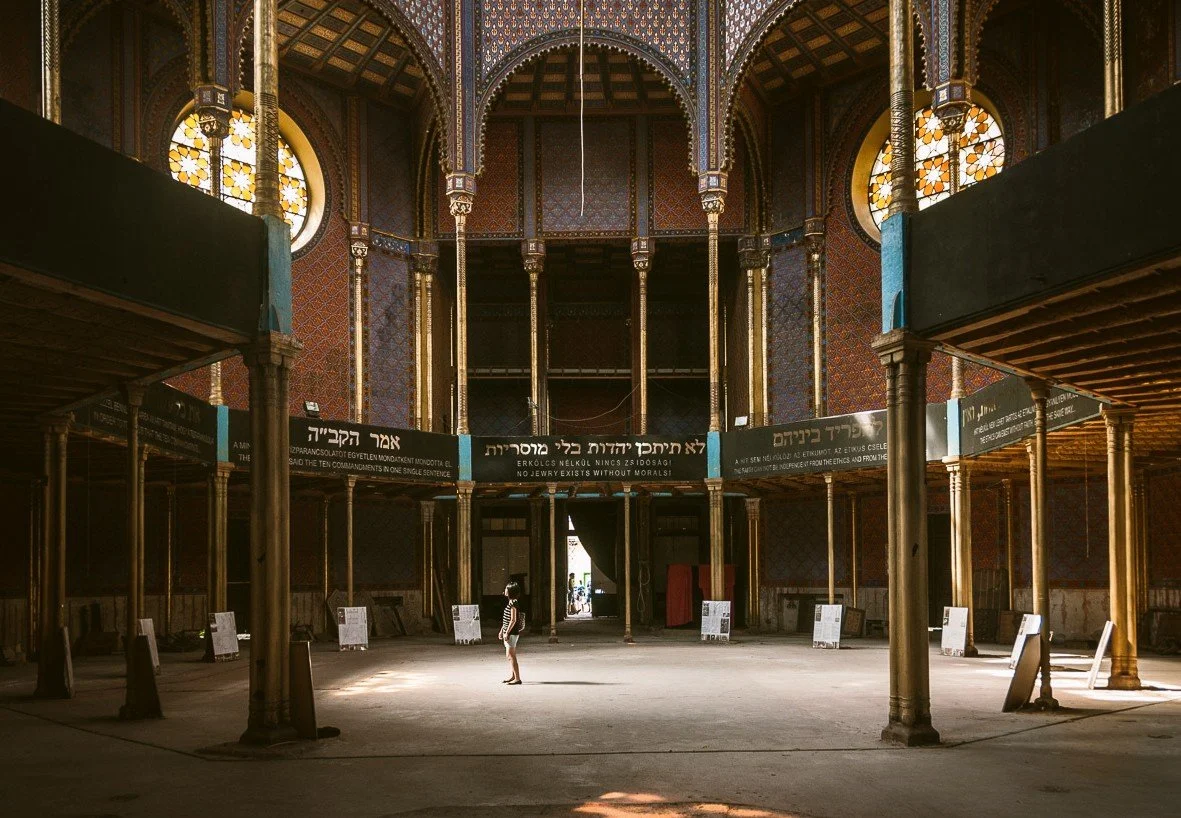
Rumbach Street Synagogue
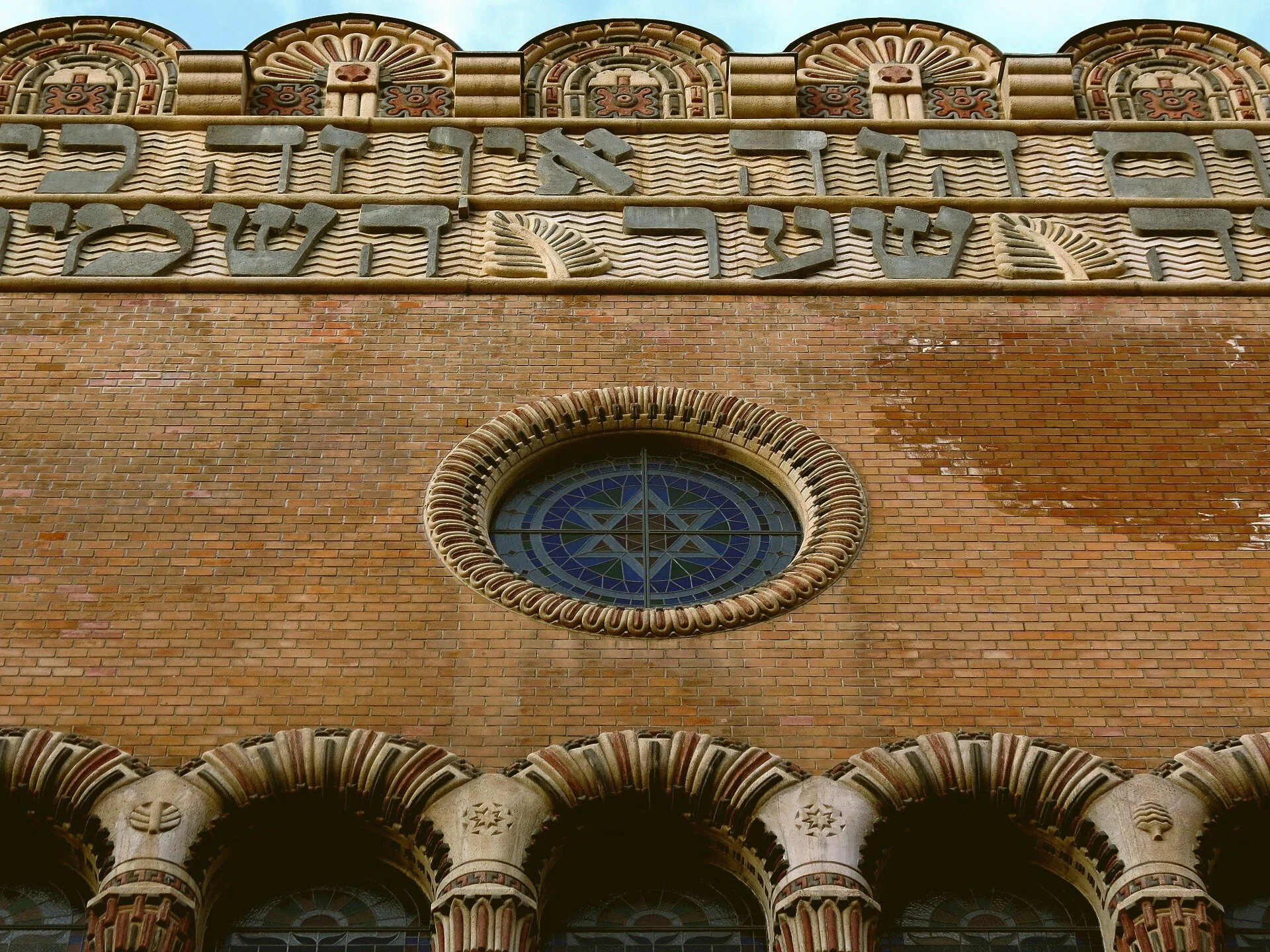
Kazinczy Street Synagogue
THE JEWISH QUARTER TODAY
The Seventh District wears its history without solemnity. By day, the streets around Kazinczy utca still carry the quiet weight of the old Jewish Quarter — the Great Synagogue's domes, weathered courtyards, a handful of kosher bakeries holding their ground. By night, the same streets become something else entirely: Budapest's party district, where crumbling courtyards fill with ruin bars, music, and crowds until the small hours. It shouldn't work, this layering of memory and mayhem, yet somehow it does — synagogues a few steps from cocktail queues, plaques beside graffiti. District VII doesn't choose between its past and its present. It simply carries both, unapologetically, after dark.
Photo: Michal Huniewicz · CC BY 3.0 · editedPhoto: xorge · CC BY-SA 2.0 · edited