PINTXOS & TXAKOLI
Ask a Basque what they did at the weekend and the answer will almost certainly involve food. What they ate, where, who cooked it and whether it was as good as last time. Here, eating is a social act long before it's a meal, and nobody takes it lightly.
Most of that life happens standing up, at a bar. Every Basque belongs to a cuadrilla, a group of friends that usually goes back to school days and stays together for decades. On a Friday evening or a Sunday before lunch, the cuadrilla goes out on the txikiteo: a slow crawl from bar to bar, one drink and one bite in each, then on to the next. It's less about getting full than about bumping into people, catching up and arguing about football.
That's why the pintxo matters so much. It's the Basque obsession with great food, shrunk down to a single bite and served on a bar counter. And the glass in your hand is often a txakoli, the young, sharp, slightly fizzy white wine that grows on the hills around Bilbao and tastes best with the sea nearby.
Join in. You don't need to speak the language, just point, eat and keep moving.
BEST AREAS FOR pintxoS
Plaza Nueva & The Old Town.
The classic crawl, under the arches and through the Siete Calles. Try:
Víctor Montes - for old-school elegance.
Gure Toki - for hot pintxos made to order.
Sorginzulo - for the calamari.
Café Bar Bilbao - the square's grand old bar.
Diputación.
A short street in the Ensanche packed with office workers at aperitivo time. Try:
La Viña del Ensanche - for ham under a ceiling of hanging legs.
El Globo - for the gratin squid and the crab.
Ledesma street & Abando.
Behind Gran Vía, a little more modern and a little less touristy. Try:
La Bodeguita del 12 - winner of Bizkaia's traditional pintxo of the year in 2025.
El Ledesma - for its crunchy black pudding skewer.
Calle Licenciado Pozas.
"Pozas" to locals, the street near San Mamés football stadium that fills up on match days. The pintxos area spreads into nearby Plaza Campuzano and Maestro García Rivero street. Try:
Ziripot - for stuffed peppers.
Gaztendegi - for Basque farmhouse cheese.
pintxos
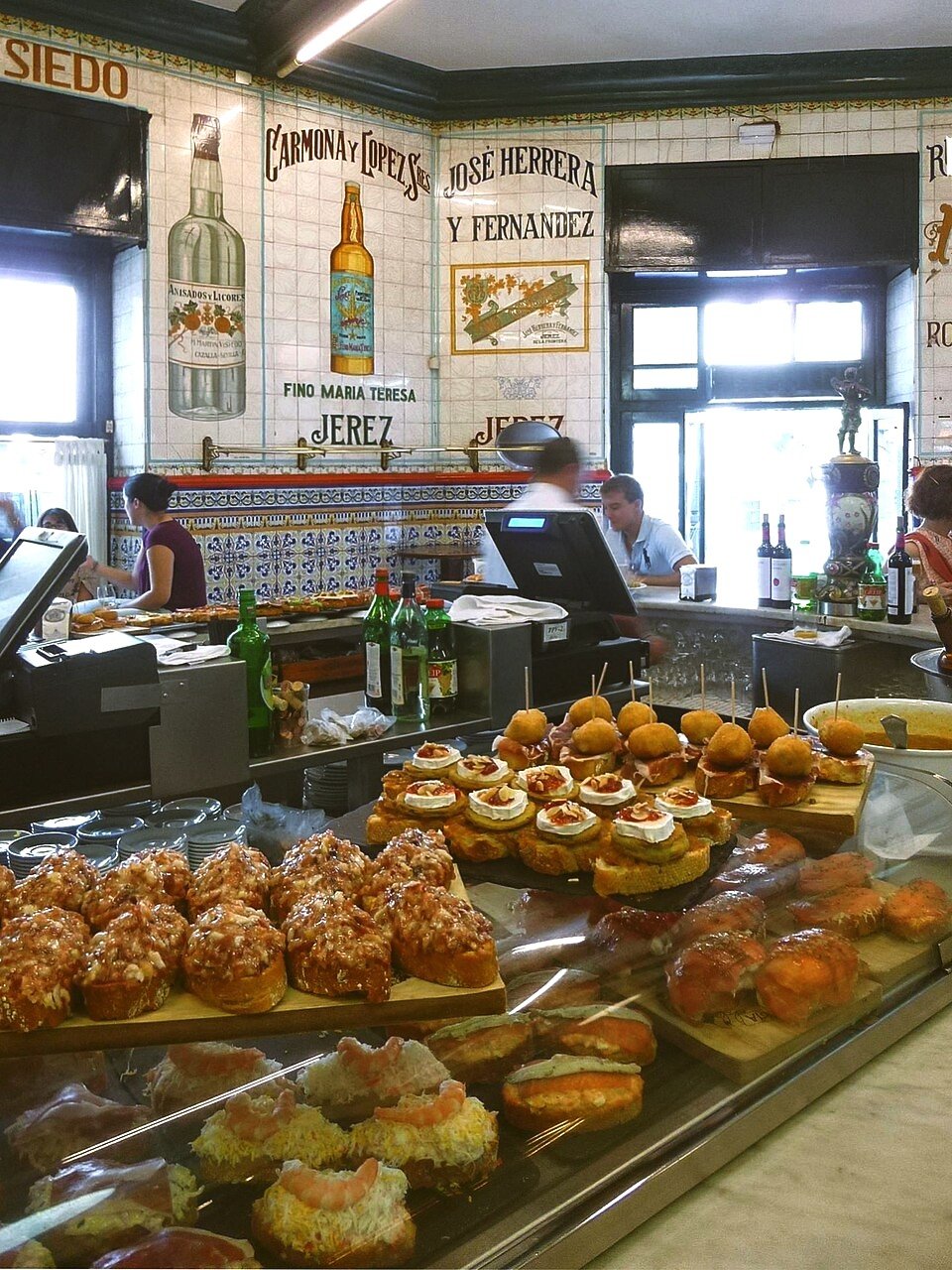
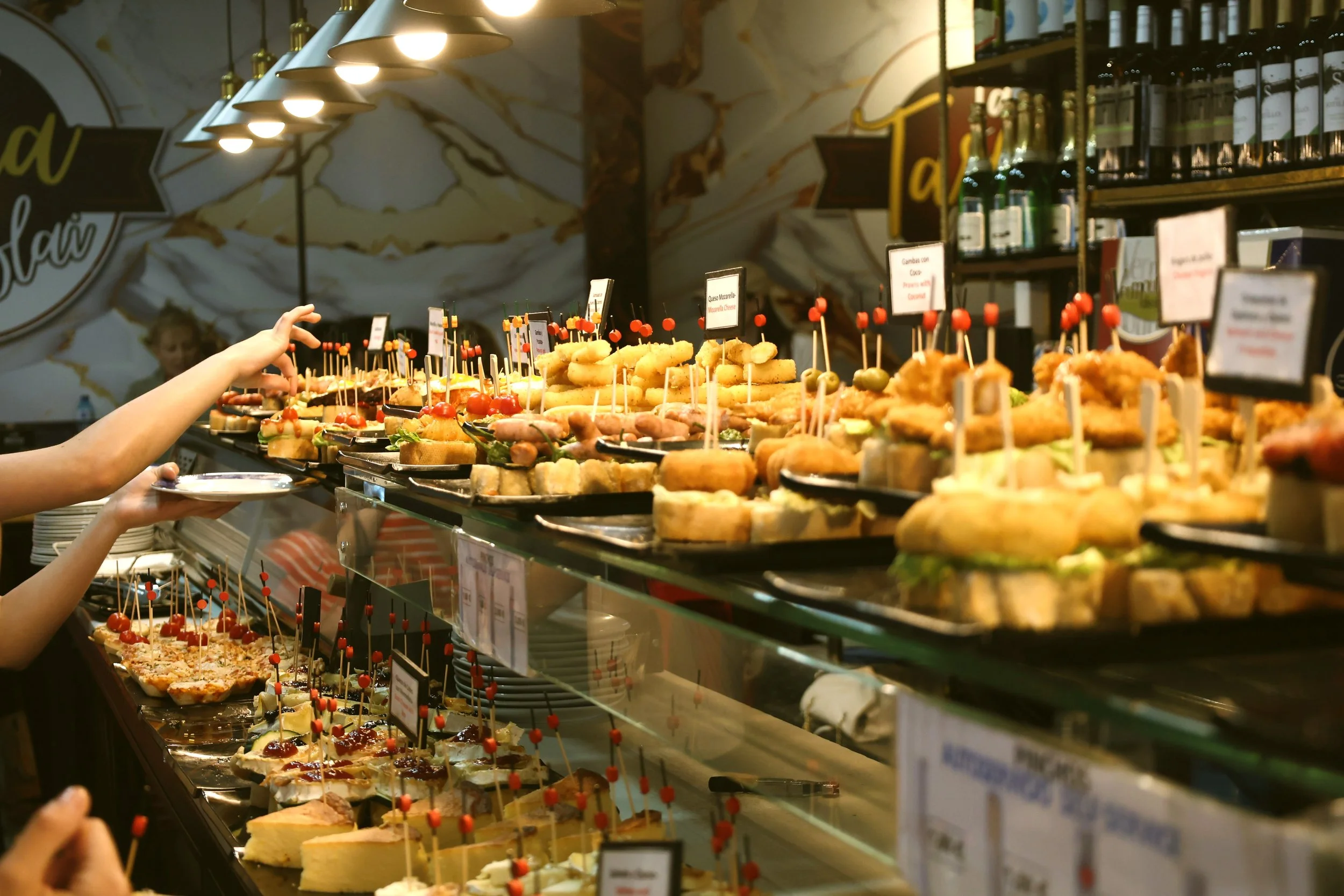
The word is the Basque spelling of the Spanish pincho, “spike,” after the toothpick that often holds it together. At its simplest, it’s a small bite on a slice of bread. At its best, it’s a tiny dish worked out with the care of a restaurant plate. Lined up along the bar, you pick the ones you want and pay for each, which makes every bar crawl a small tasting menu. Start with the classic Gilda, an anchovy, an olive and a green chili on a stick. Salty, sharp, gone in one bite.
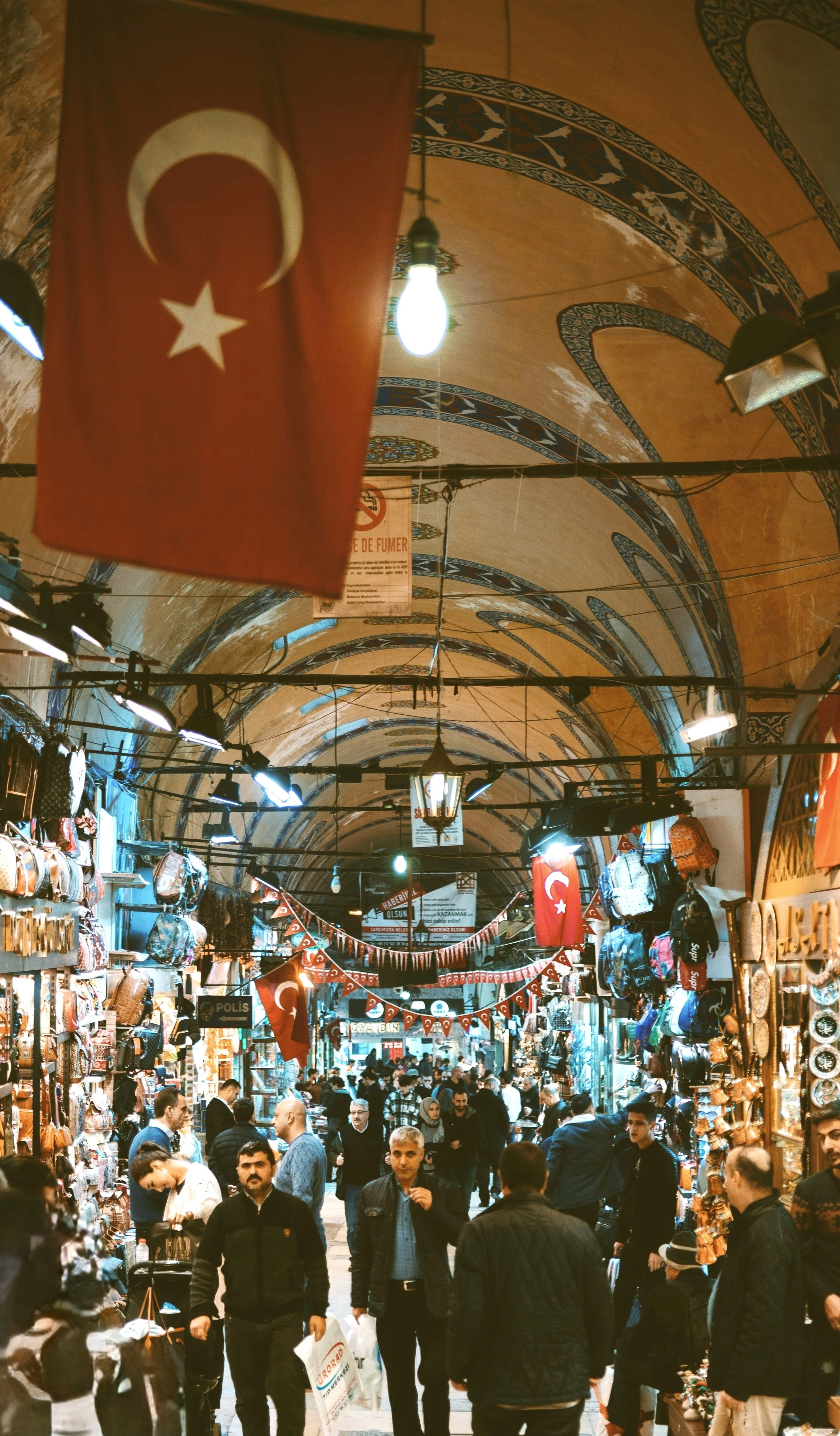
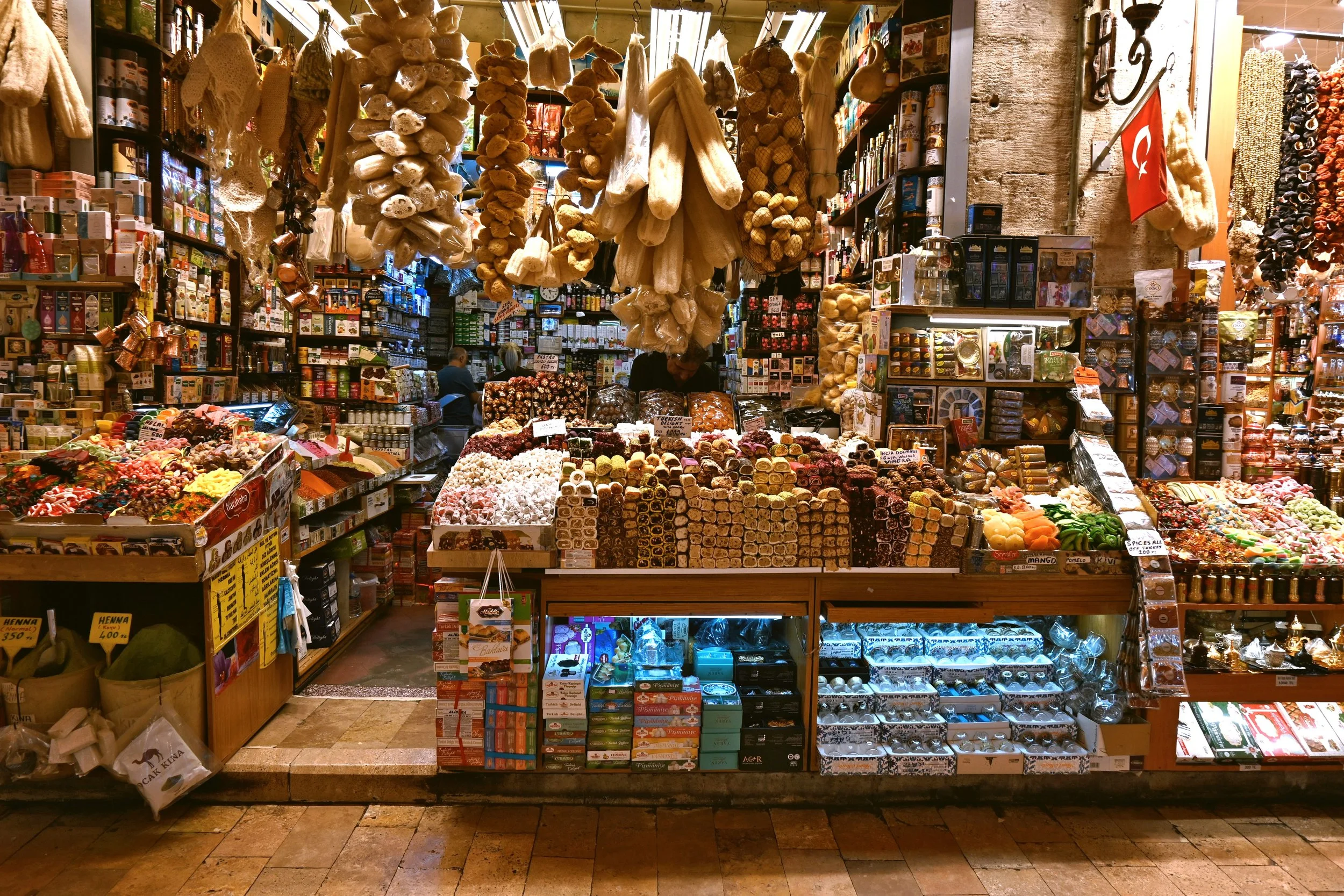
At the bazaar's heart sits the Old Bedesten, the stone core Mehmed II built in the 1450s, now holding antiques, old coins and silverware behind heavy lockable gates. Off the covered streets, courtyard hans like the Zincirli Han still house workshops and carpet dealers. The bazaar is closed on Sundays, when the Spice Bazaar makes the better plan.
Beyazıt, 34126 Istanbul - FATIH
how to pintxo
Stand up. Tables exist, but the real action is at the bar. Squeeze in, catch the bartender's eye and don't be shy about it.
Everything is on the bar. Point at what you want, and if it's one that's best served warm, they'll heat it up for you. Some bars also chalk a few extra pintxos on a blackboard, so it's worth a glance before you choose.
Just a few per bar, then move on. It's a crawl, not a sit-down dinner. Fill up at the first stop and you'll miss the rest.
Order small. A txikito is a short glass of wine, a zurito a small beer. Or go for a txakoli, poured from a height to wake it up.
Pay at the end, usually. Tell them what you had and they’ll add it up. Most Basque bars still run on trust.
Mind the clock. Pintxos are at their best at lunchtime, from around one, and again in the evening from about half past seven.
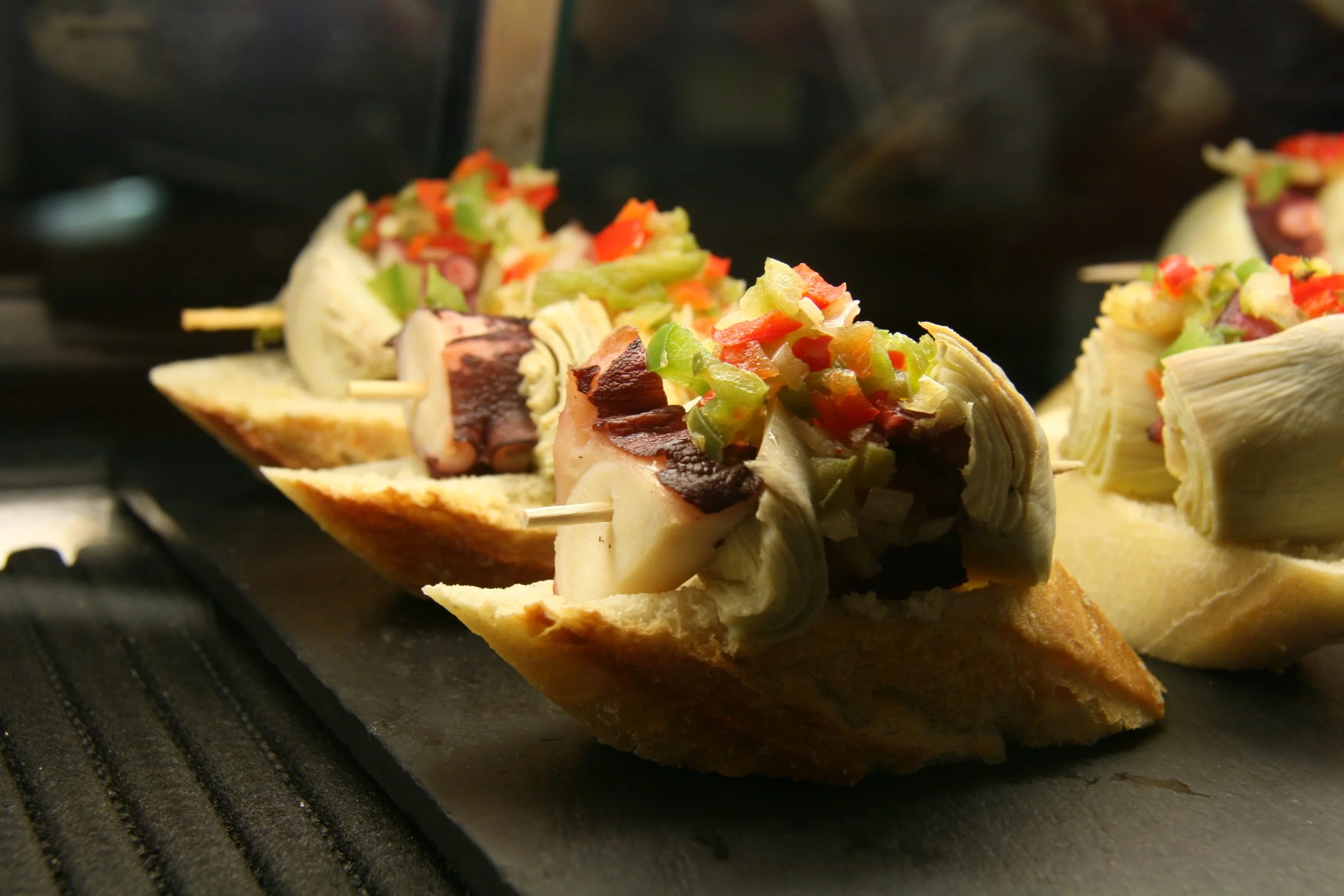
Photo: Tamorlan / Wikimedia Commons, CC BY 3.0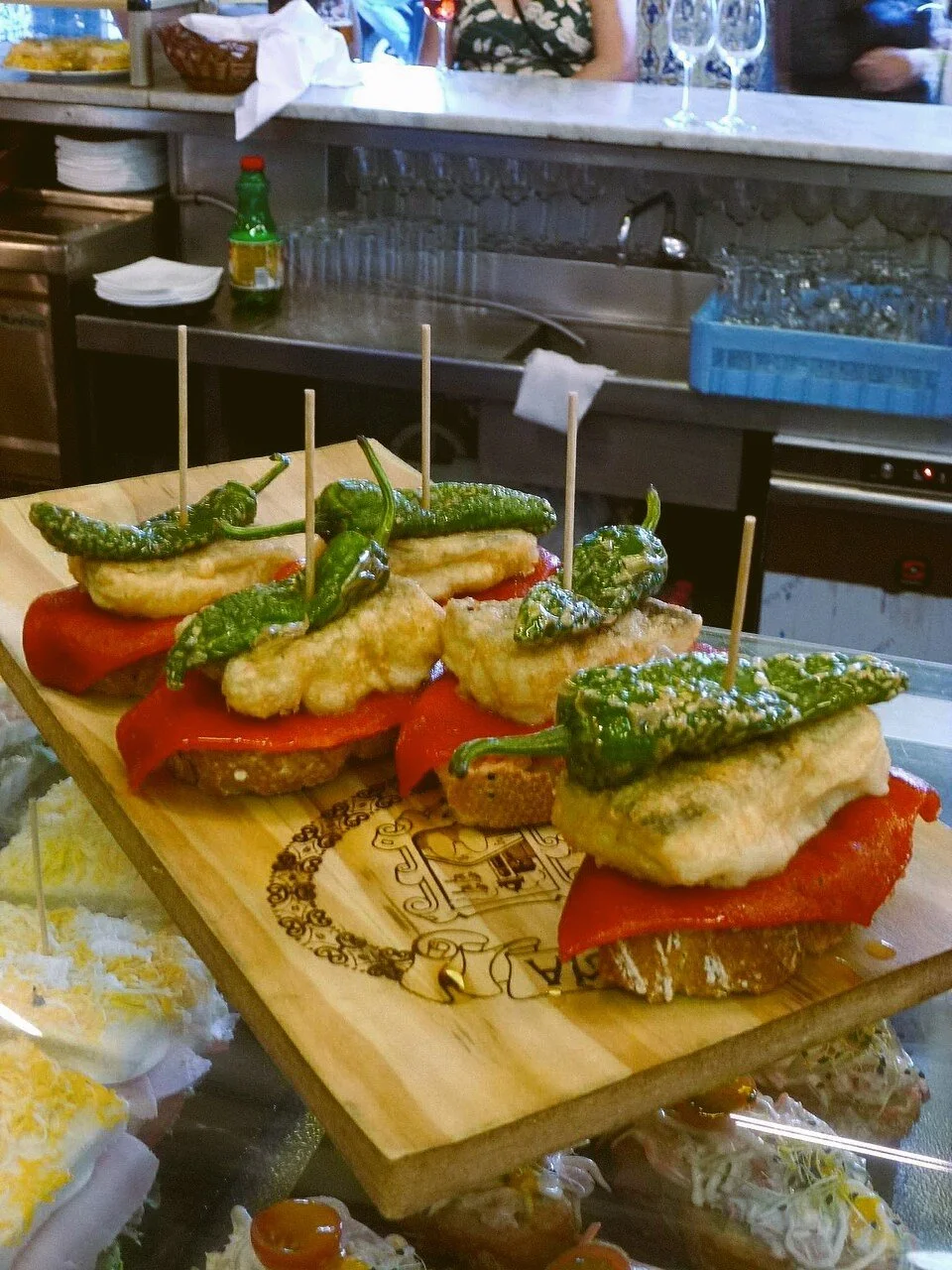
WHAT TO KNOW BEFORE YOU BARGAIN
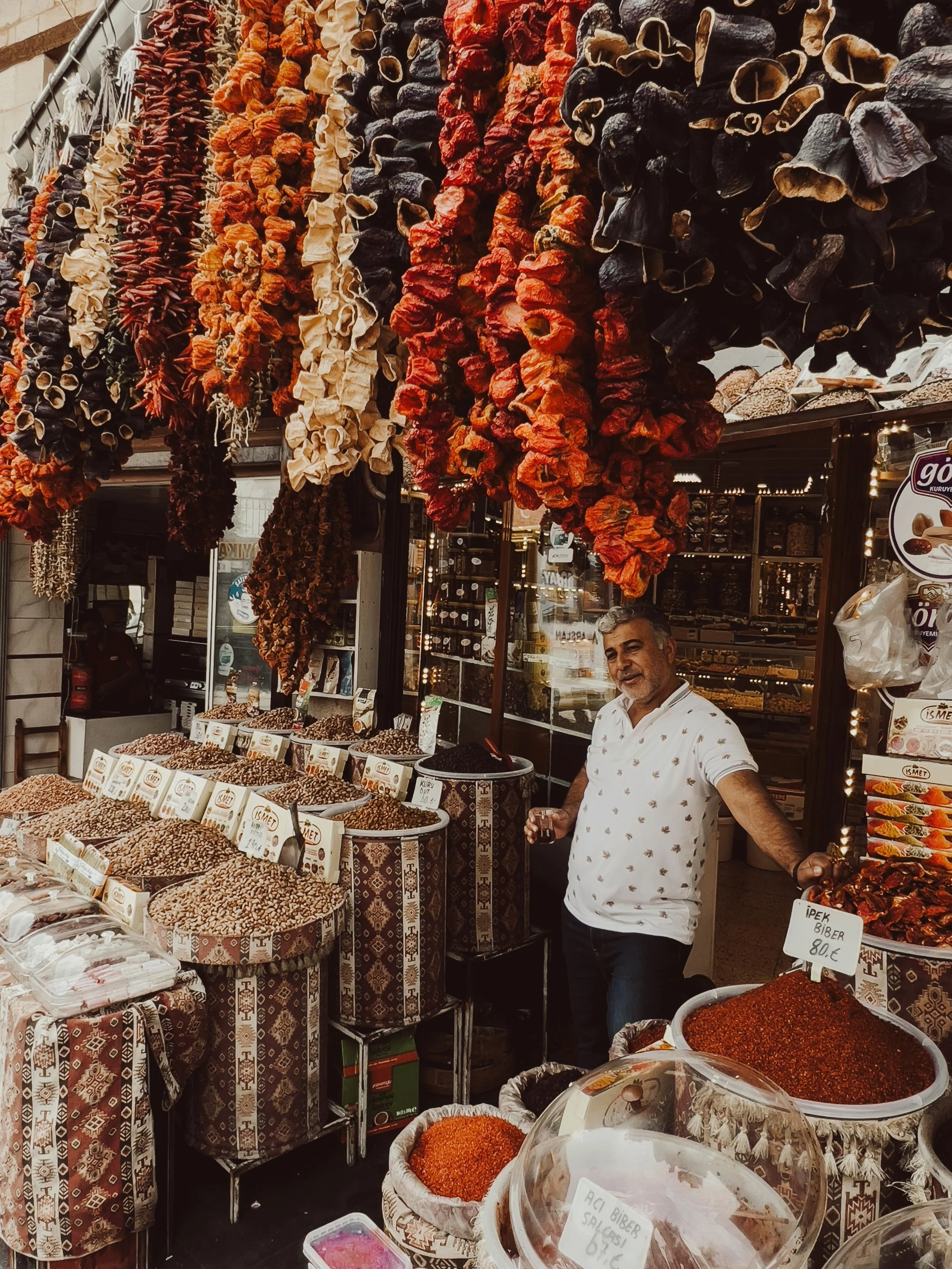
Prices at both bazaars are opening offers, not final ones — expect the first number quoted to be roughly double what a vendor will actually accept. Counter low, stay friendly, and don't feel rude about it; haggling here is a social ritual, not a conflict.
Cash gets better prices almost everywhere, and small bills move faster than large ones. If a vendor offers you tea while you look, that's normal hospitality, not an obligation to buy — though it usually means the conversation's about to get more personal, and more negotiable.
Pickpockets work the crowded main avenues of the Grand Bazaar specifically because they're crowded; keep bags zipped and in front of you, same as any dense market anywhere in the world.
If navigating 4,000 shops solo sounds like more chaos than charm, a guided walking tour of both bazaars hits the highlights of each in a few hours, with someone who actually knows which vendors are worth your time.