ATHLETIC BILBAO & SAN MAMÉS
In most cities, football is something people follow. In Bilbao, it's closer to something they inherit, like a surname or a family recipe. Babies get their club membership before their first birthday, grandparents still talk about matches from fifty years ago as if they happened last week, and almost every argument eventually comes back to the same team.
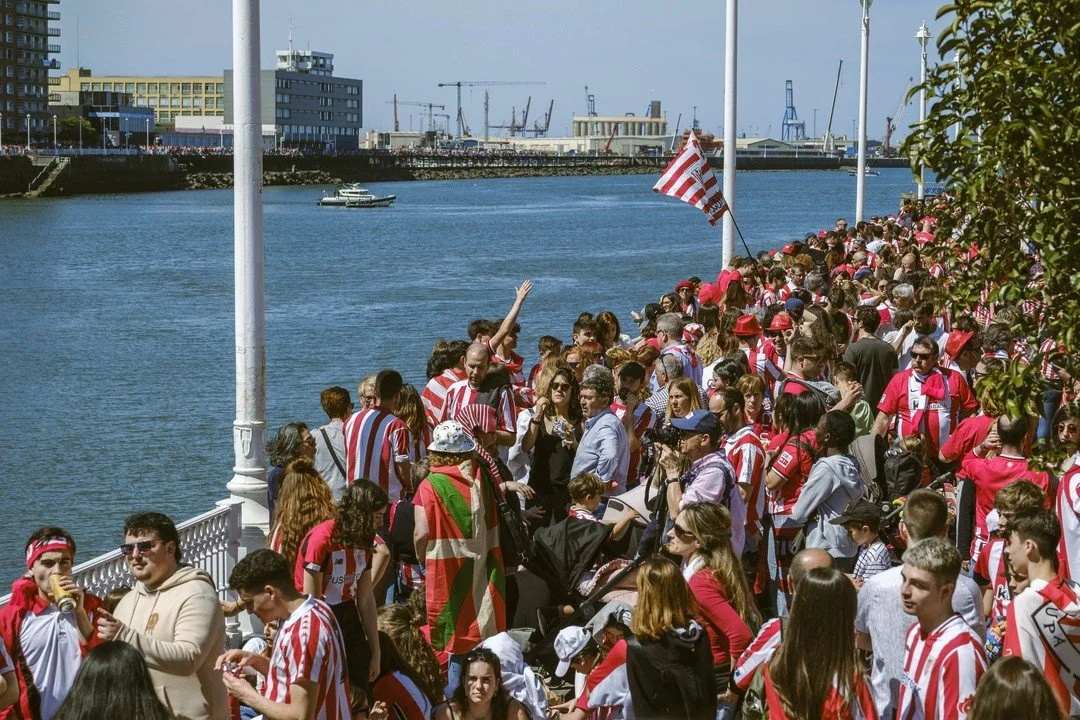
You'll notice it even if you never set foot in a stadium. Red-and-white stripes hang from balconies, bakeries sell cakes in the club colors, and on a match day the whole city seems to change shape. Bars fill up hours before kickoff, strangers talk to each other on the metro, and somewhere a brass band is warming up.
What makes it unusual is that nobody here supports the team because it wins. Most seasons, it doesn't win anything at all. They support it because it's theirs, and because of the way it does things, which, by modern football standards, is close to madness.
You don't need to know the offside rule to enjoy it. Just pick a red-and-white scarf, follow the crowd and let Bilbao explain the rest.
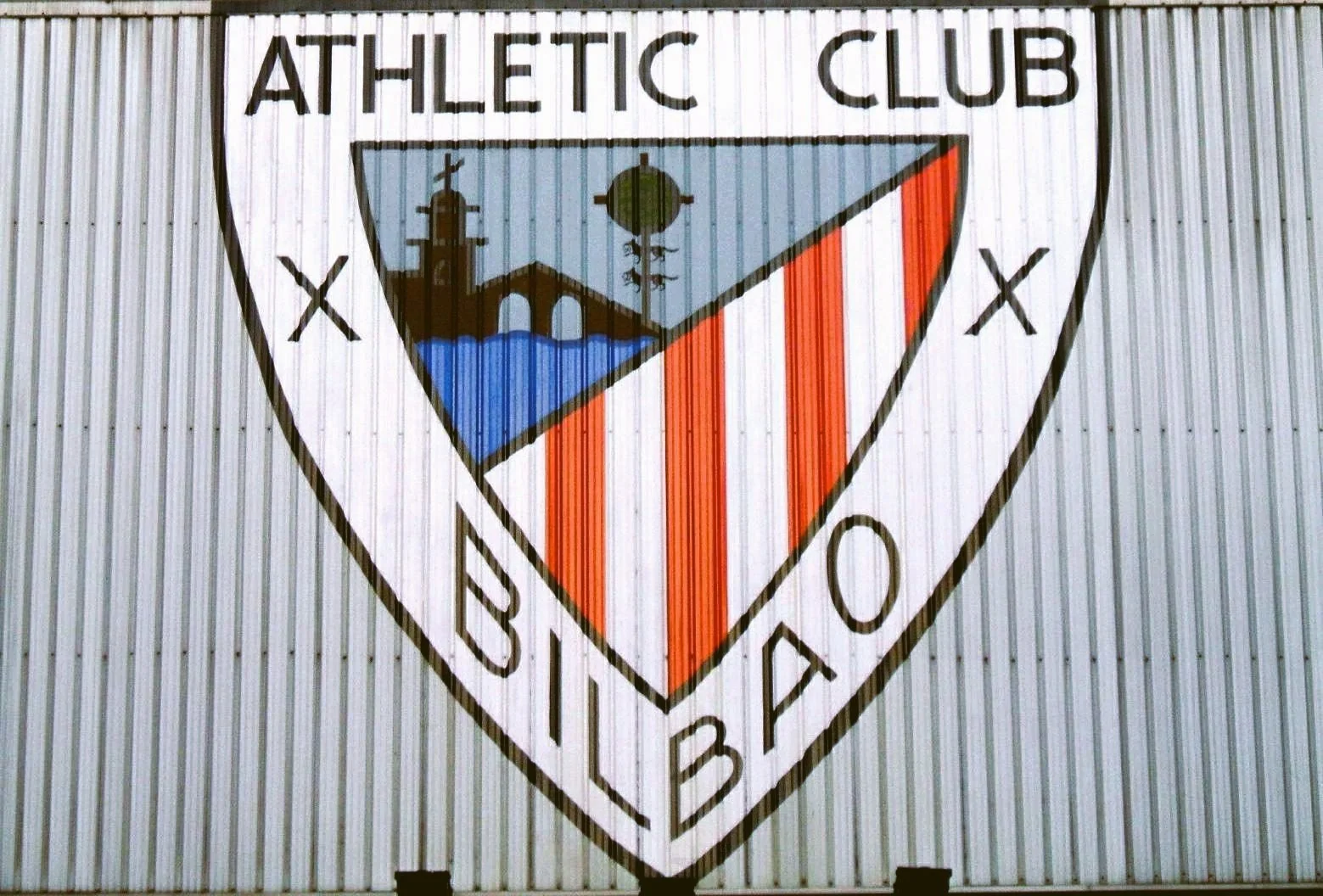
ATHLETIC CLUB
Here's the madness. Since the early twentieth century, Athletic has only fielded players born or raised in the Basque Country. No big-money signings from Brazil or England, no superstar imports. In a sport where the richest clubs buy their way to the top, Athletic grows its own, mostly through its youth academy at Lezama, and still competes with the best.
It works better than it has any right to. Athletic has never been relegated from Spain's top division. Only two other clubs can say the same: Real Madrid and Barcelona. Not bad for a team that picks from a region of around three million people.
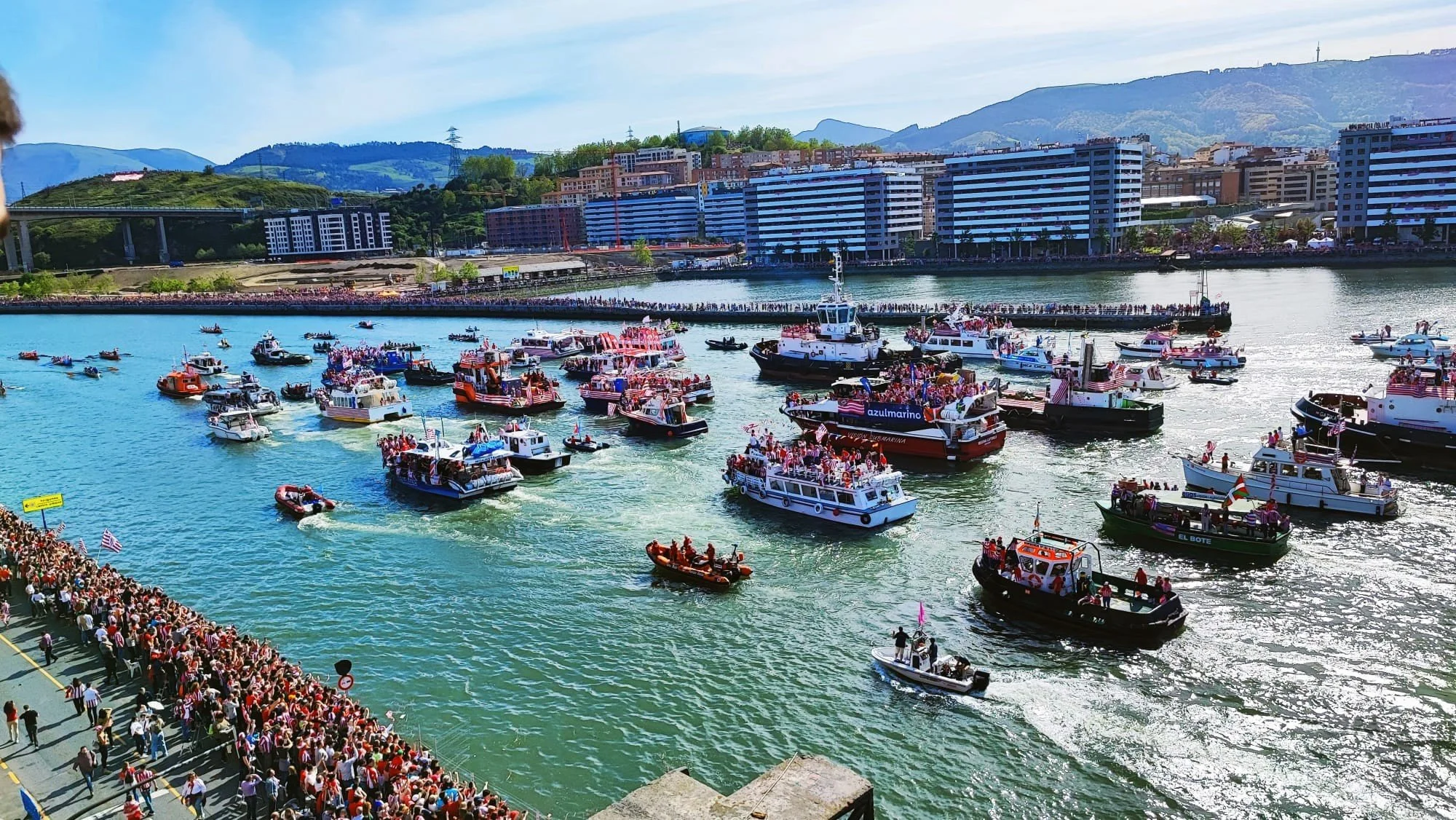
Photo: Hodei Torres, Ander Zarraga / Hiruka, CC BY-SA 4.0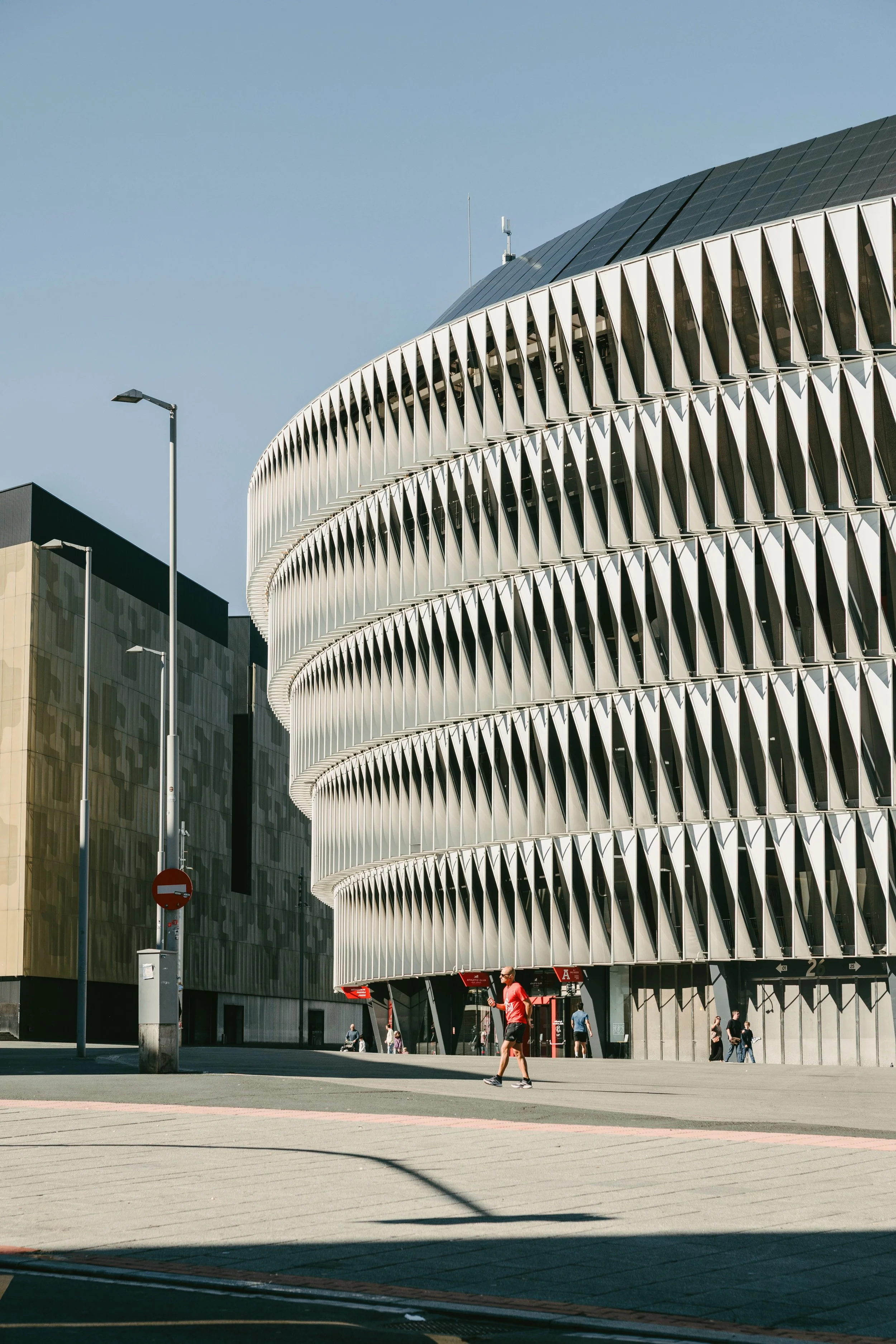
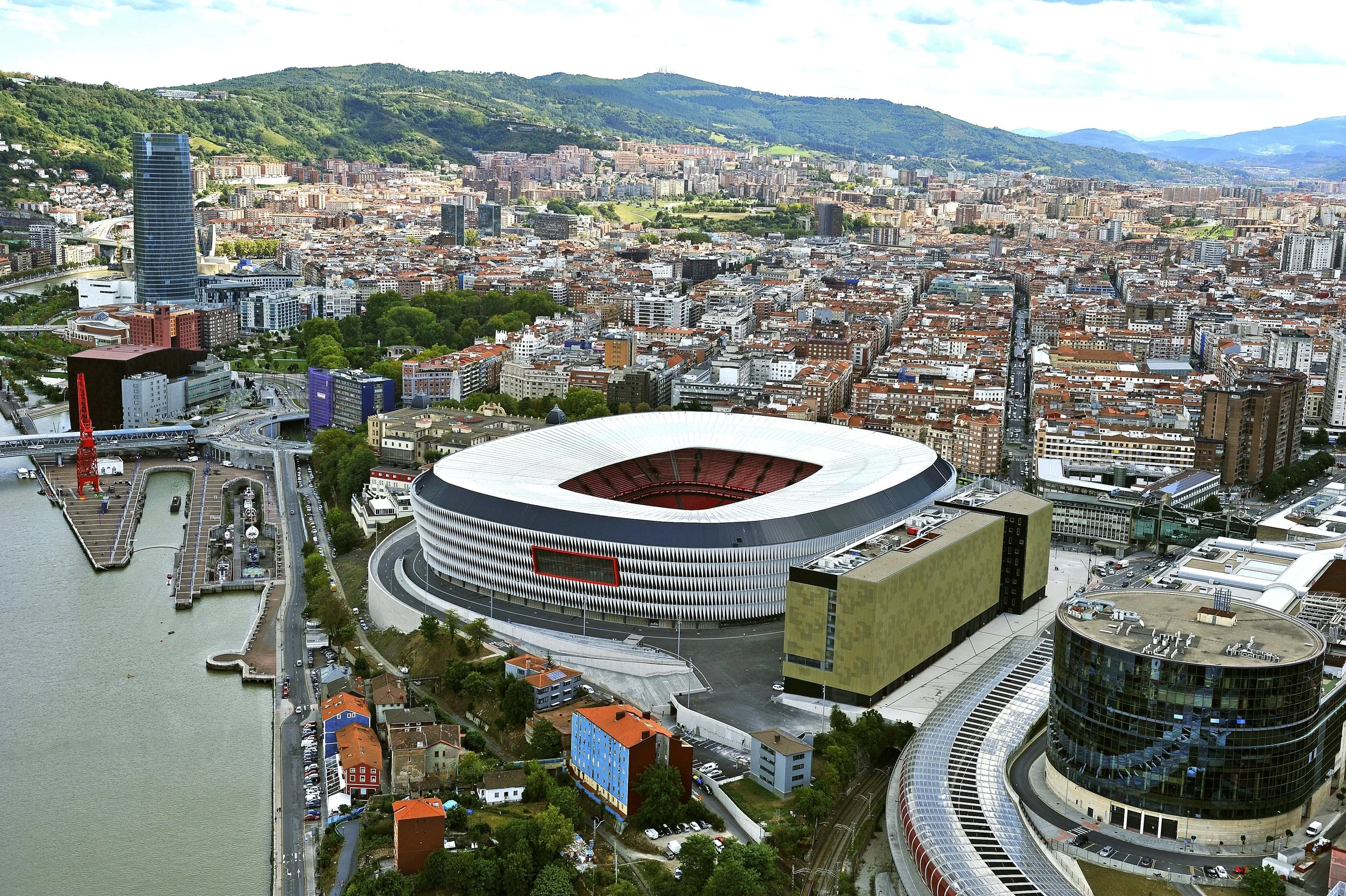
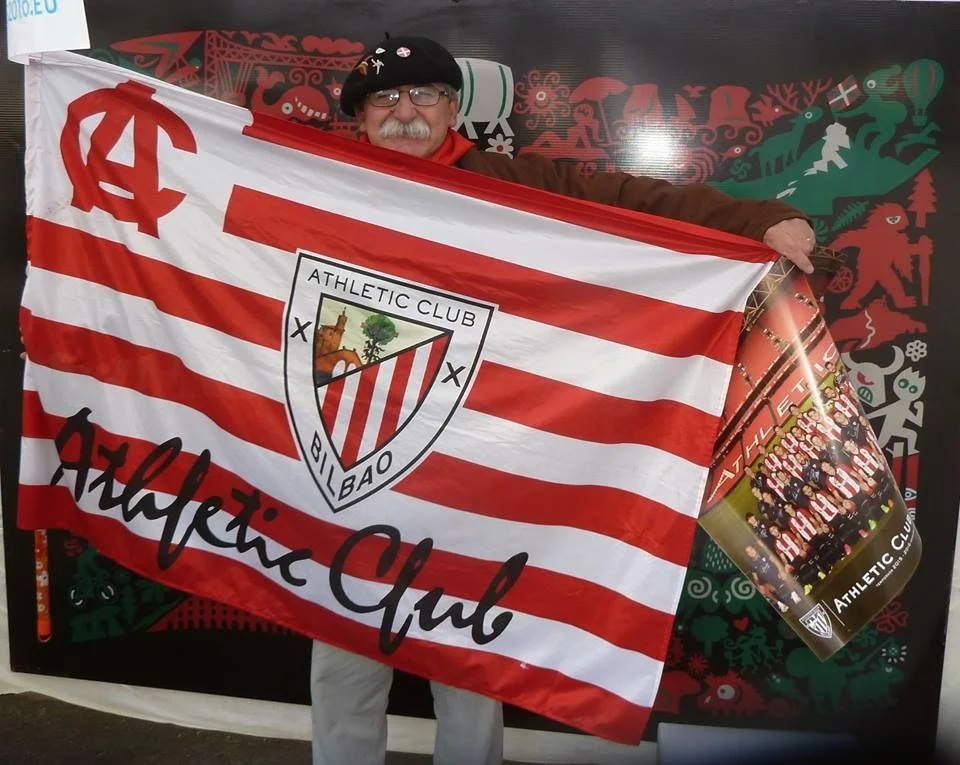
Photo: Euskal Etxeak / Wikimedia Commons, CC BY 3.0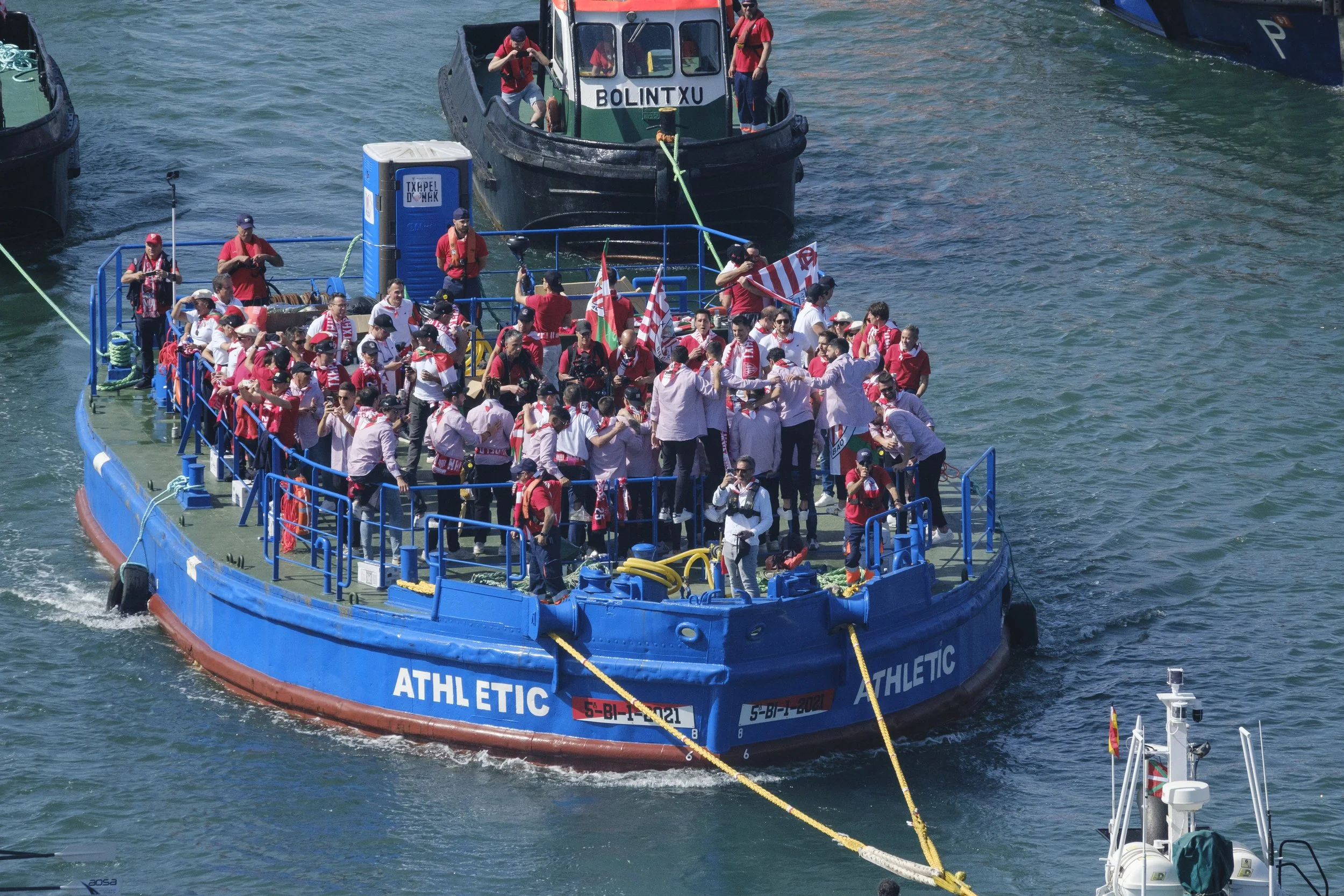
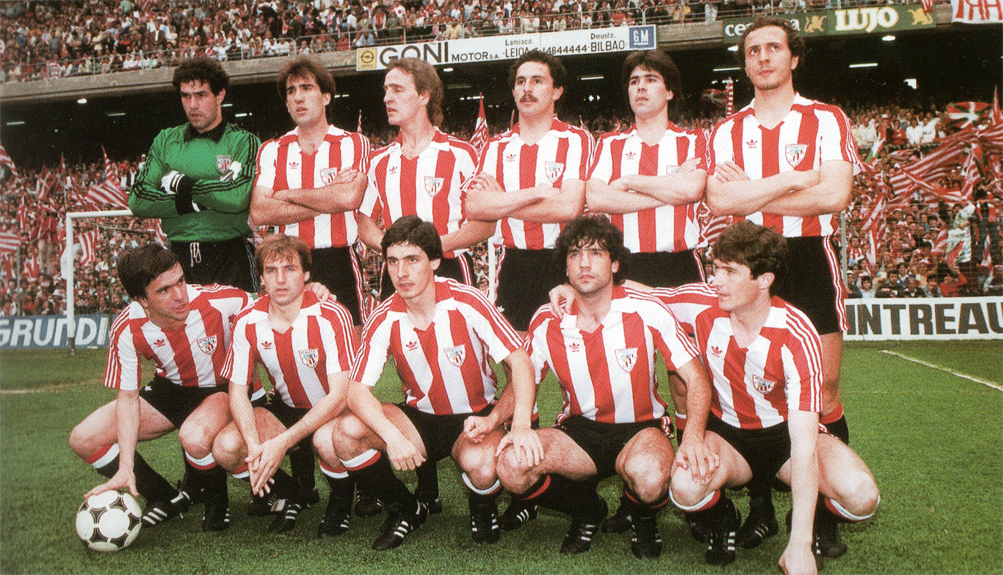
Athletic Club 1983/84 season
And when they do win, the city has a very particular way of celebrating. Instead of an open-top bus, the players board the gabarra, an old river barge, and sail down the river through the center of Bilbao while the crowds pack every bridge and bank. In April 2024, after winning their first Copa del Rey in forty years, it happened again. Hundreds of thousands of people turned out. Most of them are still talking about it.
SAN MAMÉS
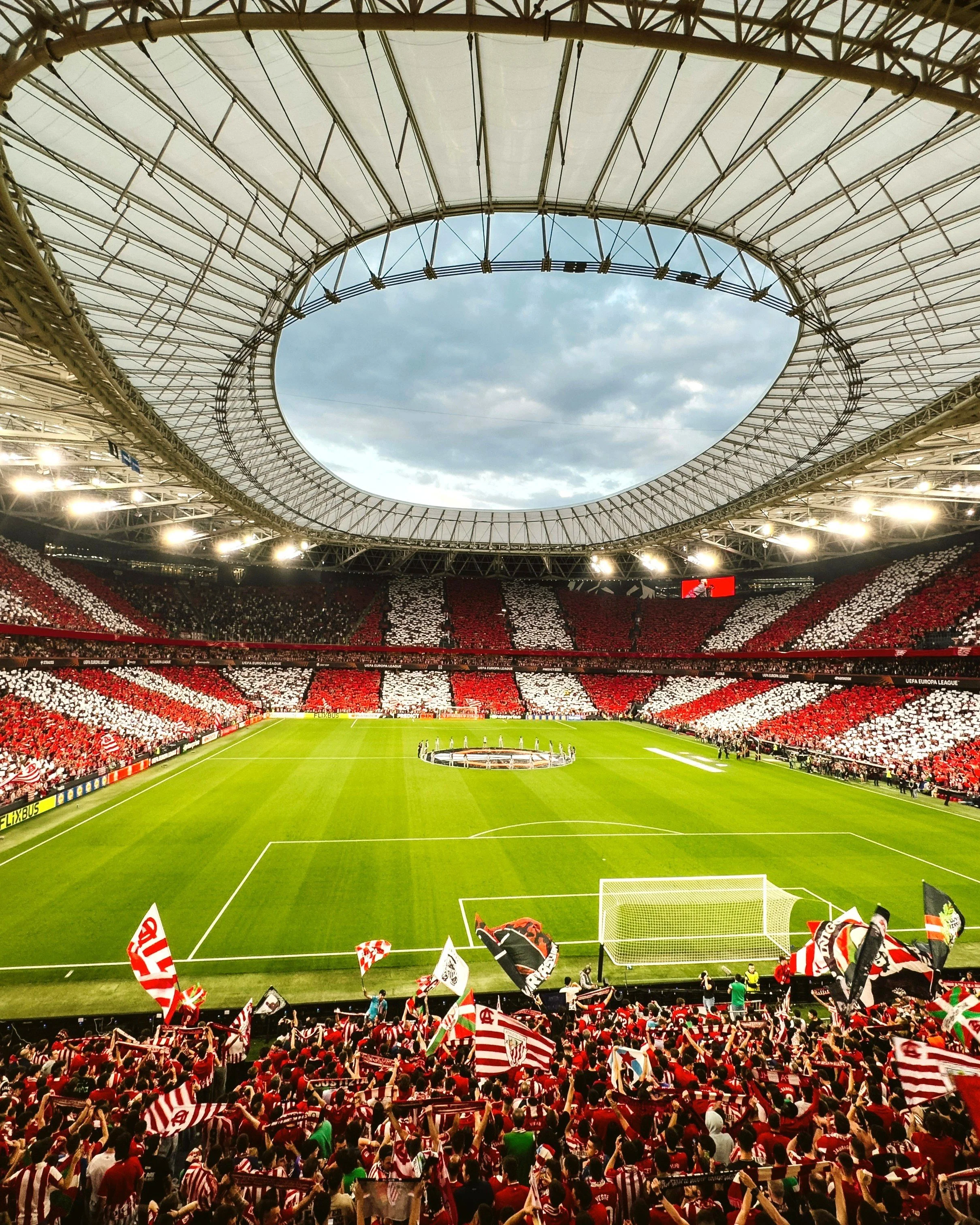
They call it La Catedral, the Cathedral. The old stadium took its name from a small church dedicated to Saint Mamés that once stood nearby, and the nickname stuck because, for Bilbao, this was the closest thing to a place of worship. Visiting players have been known to say the noise is worth a goal start.
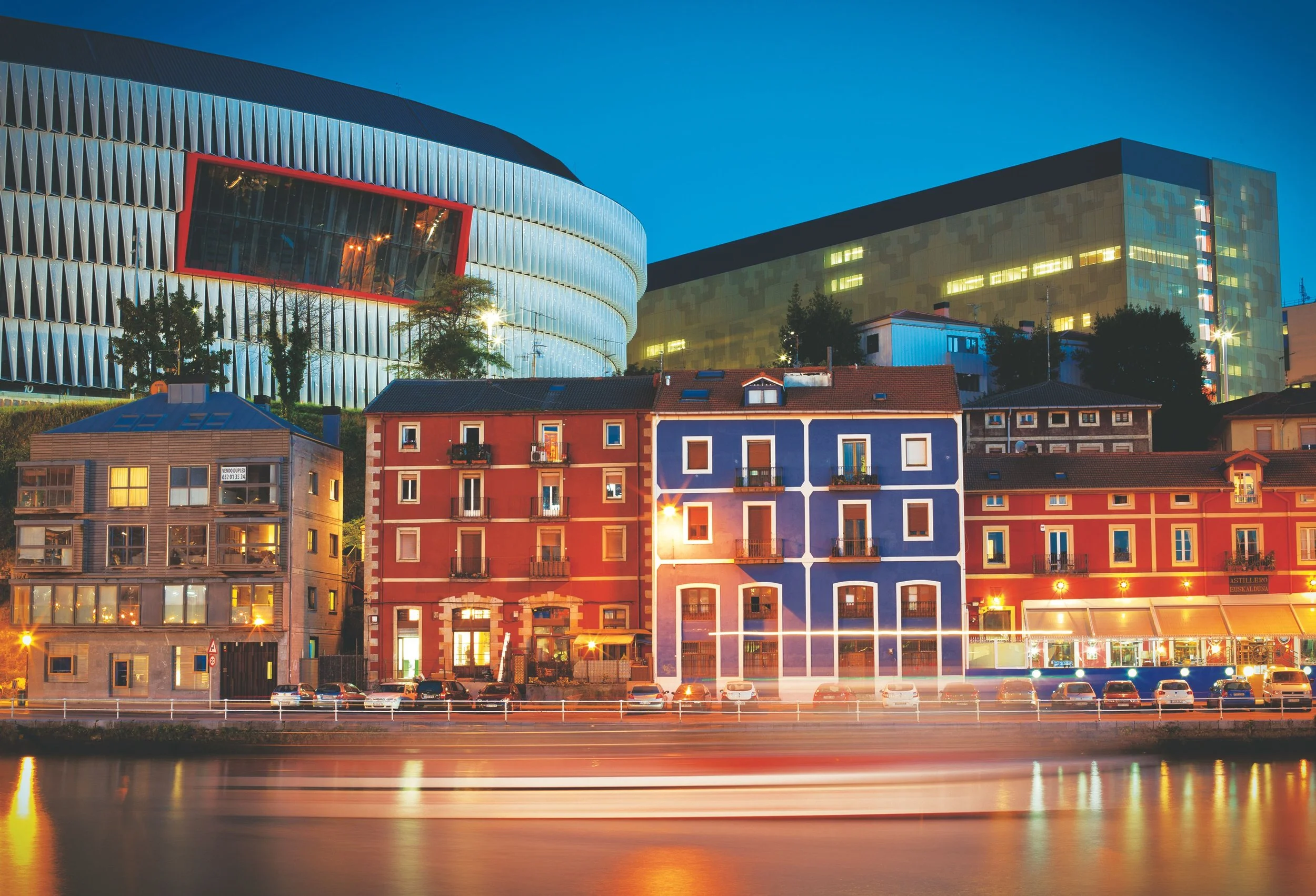
The old ground was pulled down in 2013, and a new San Mamés rose right next to it, almost on the same spot. Its curved facade is wrapped in white panels that light up at night, usually red and white. Driving past after dark, it looks less like a stadium than a lantern.
You don't need a match ticket to get inside. The museum tells the club's story through old shirts, trophies and a lot of memories, and the stadium tour takes you through the stands, the players' tunnel and down to the edge of the pitch.
If there is a game on, get there early. The streets around Licenciado Poza fill up hours before kickoff, and the pre-match drink is half the fun.
INSIDE LA CATEDRAL
On a quiet day, take the audio-guided tour of the museum and stadium, which goes as far as the dressing rooms and the edge of the pitch. Allow an hour and a half. Better still, see it full: forty-odd thousand people singing in red and white is something you don't forget.