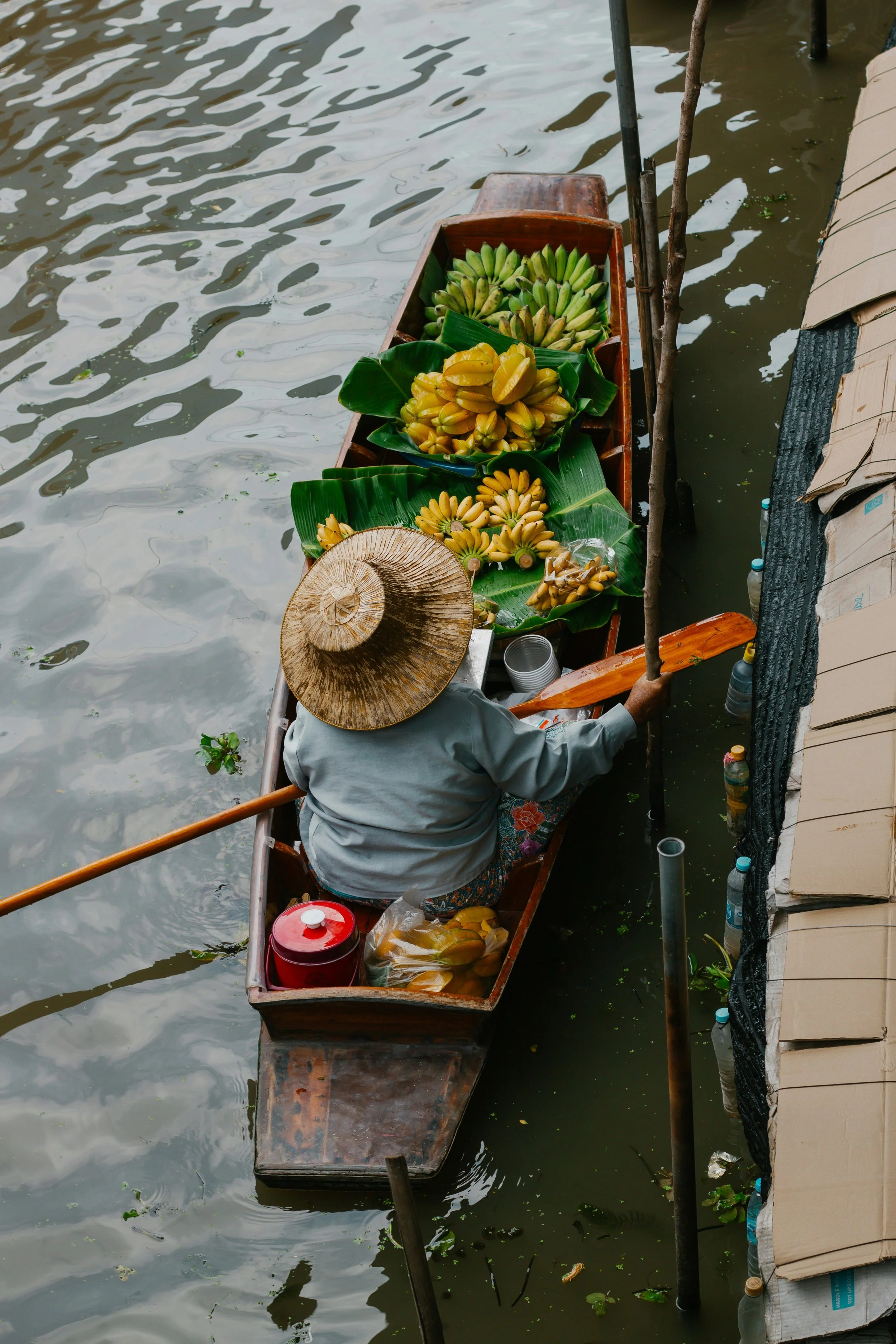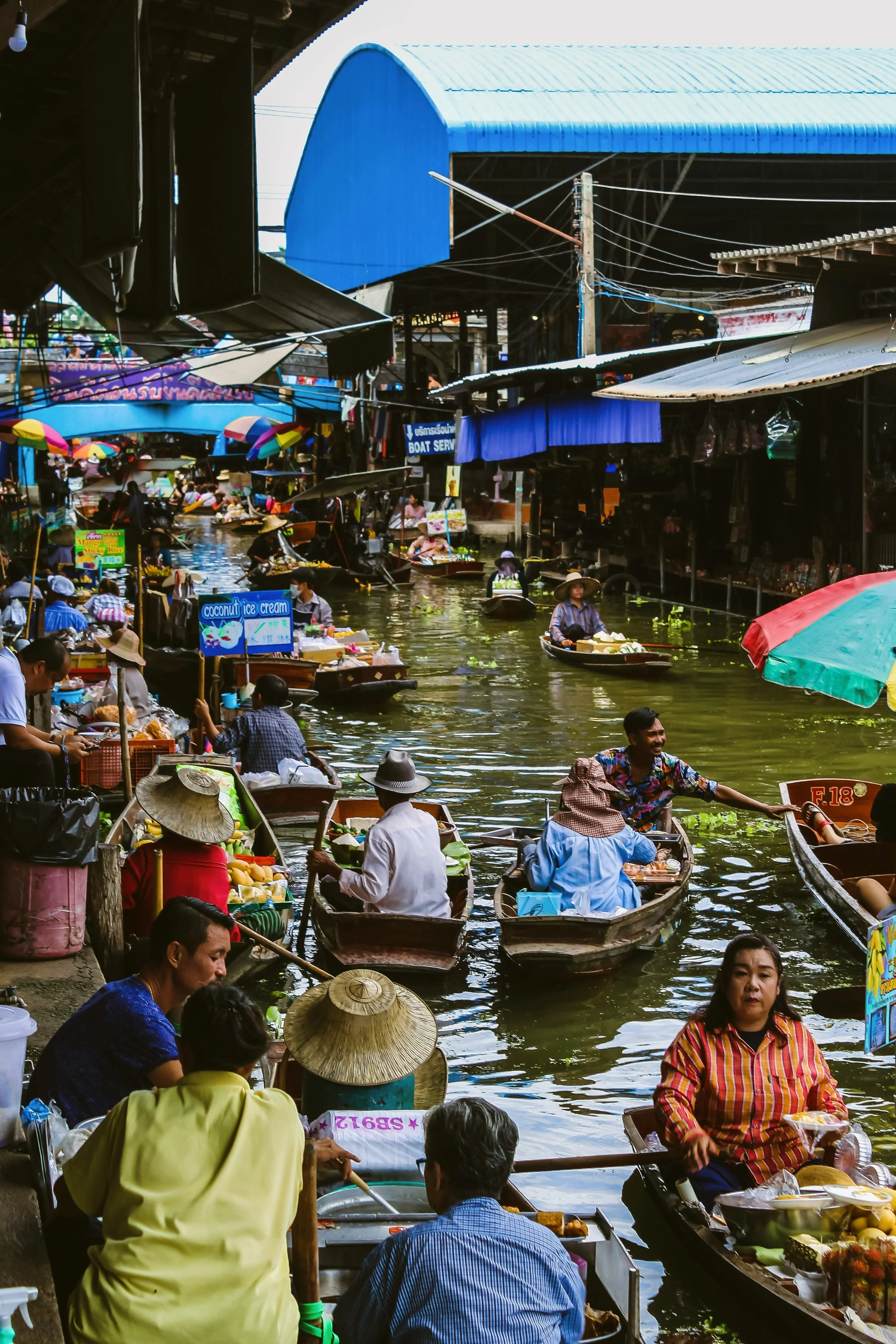
THE FLOATING MARKETS
Before Bangkok had roads, it had water. This was once a city that moved almost entirely by canal — so much of one that 19th-century foreign visitors nicknamed it the "Venice of the East," back when that comparison still made sense. Most of those canals got filled in and paved over decades ago to make room for the traffic the city now drowns in daily. But not all of them.
What's left splits into two very different experiences, and it's worth knowing which one you're signing up for before you commit a whole morning to it. One version has been dressed up for cameras for years now — beautiful, genuinely worth seeing once, but closer to a reenactment than daily life. The other still functions the way it always has: people living on stilted houses, buying groceries from a passing boat because that's simply how the street works when the street is water.
Both are real Bangkok. Only one of them is still happening whether or not anyone's watching.
the markets
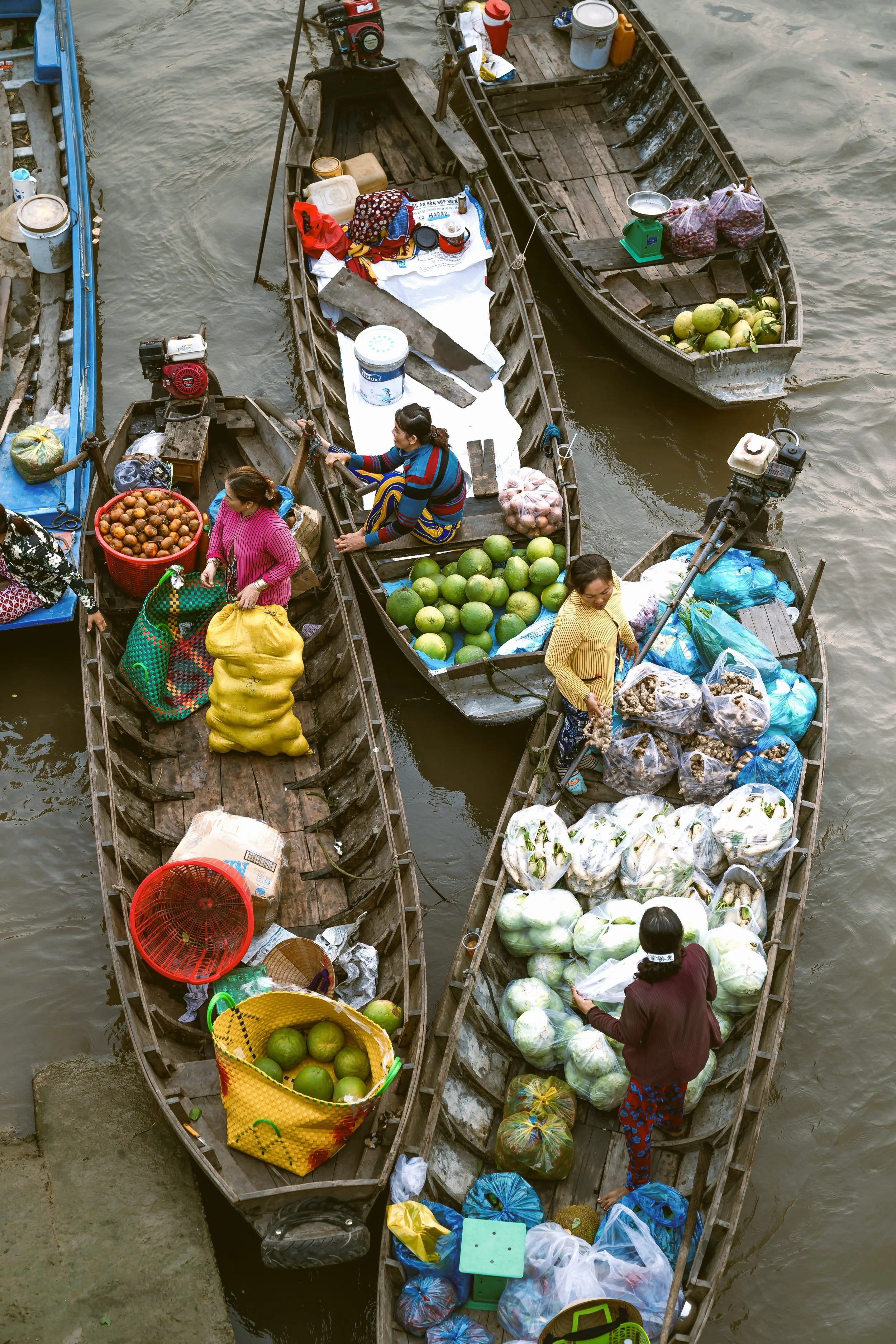
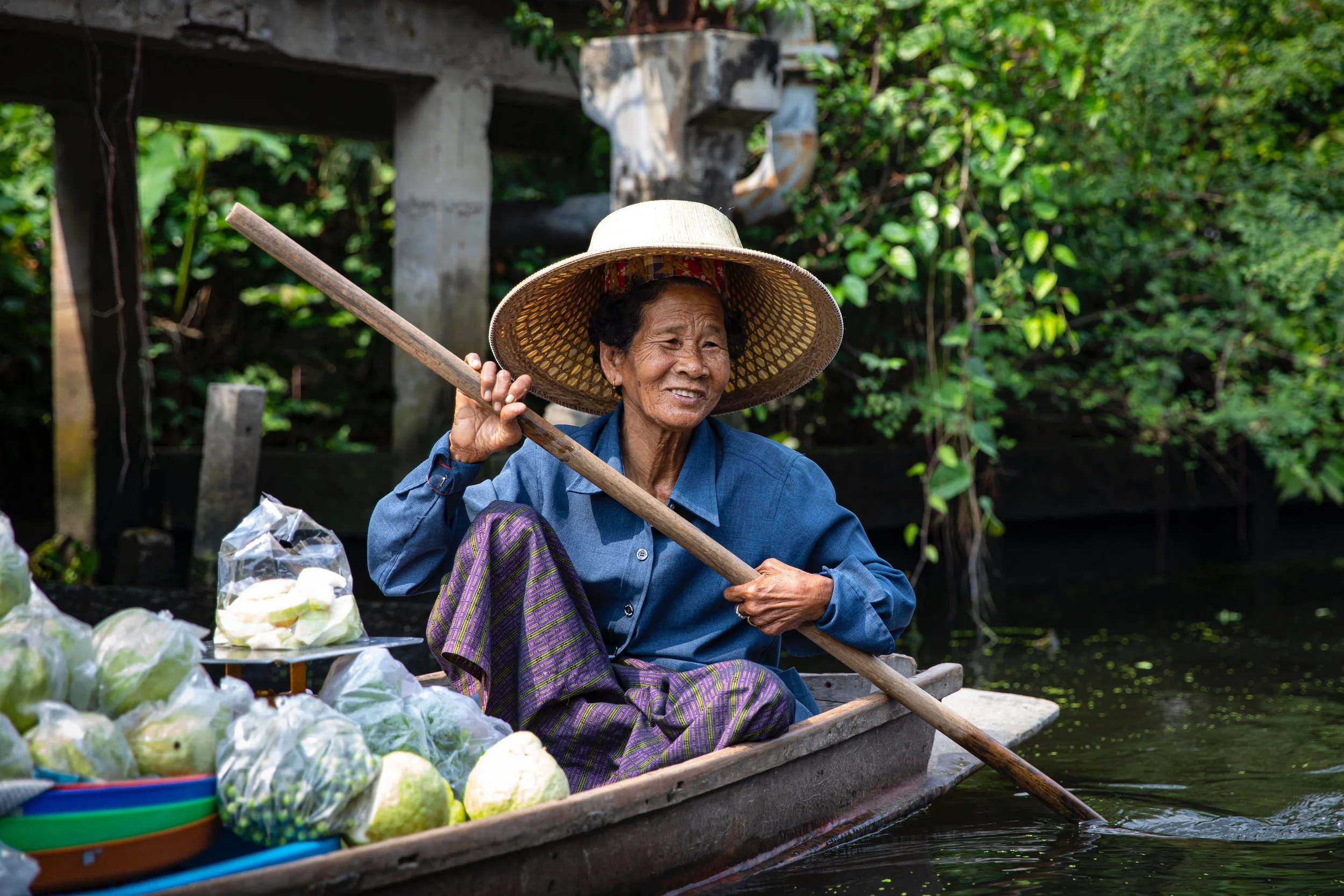
Damnoen Saduak is the one everyone's seen a photo of — women in wide straw hats, boats piled with mangoes and pineapple, canals barely wide enough for two vessels to pass. It's genuinely striking, and genuinely crowded; buses start arriving by 8am, so go at opening or not at all. This is the market performing itself as much as functioning as one, and it's worth knowing that going in.
Amphawa, about 85 km southwest, only opens Friday through Sunday afternoons, and feels like a different country entirely — grilled river prawns smoking over boats at dusk, wooden houses leaning over the water, a crowd that's as much Bangkok residents escaping for the weekend as it is tourists. If you only have time for one, this is the more honest version.
Closer to the city, Khlong Lat Mayom and Taling Chan (15-20 km out, weekends only) trade spectacle for convenience — smaller, less photogenic, but reachable without booking a day trip.
life on the khlongs
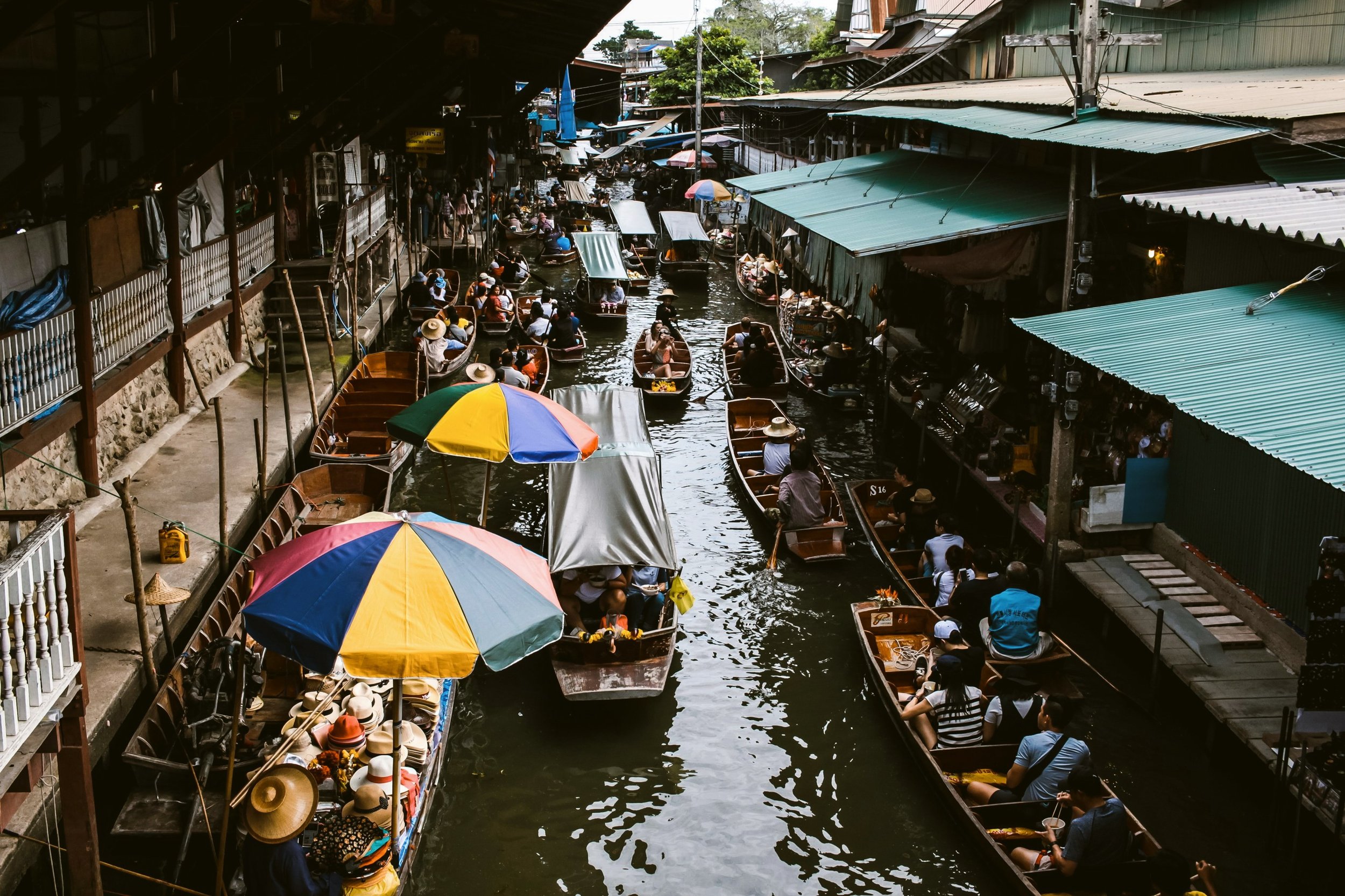
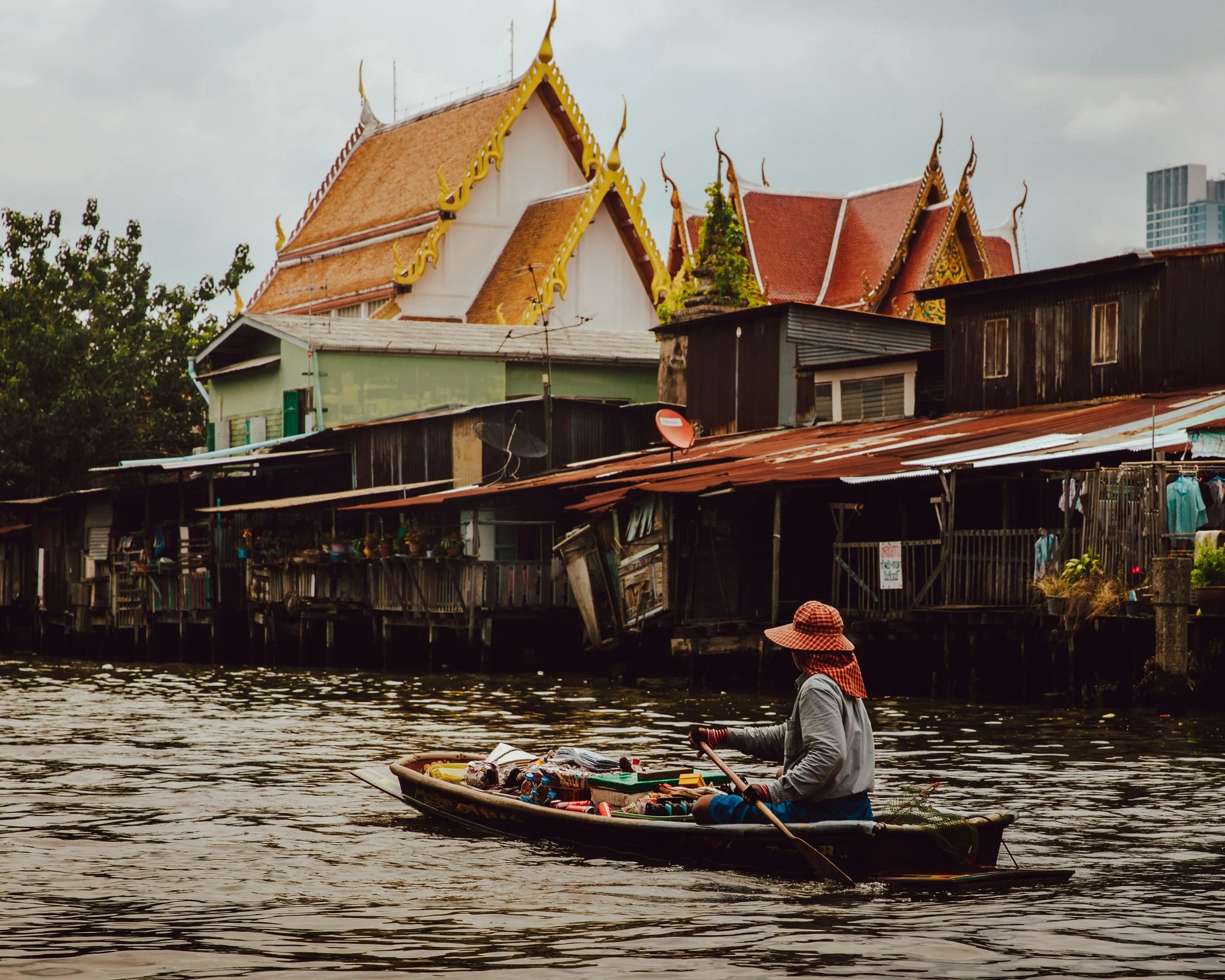
"Khlong" simply means canal, and once you cross the river into Thonburi, the network of them is still doing what it always did — not for visitors, just because it's how the neighborhood works. Long-tail boats cut through narrow waterways lined with stilted wooden houses, small canal-side temples, and the occasional floating noodle vendor who isn't performing for anyone's camera.
You don't have to leave the city center to find a trace of this, either. Jim Thompson's old house sits right on Khlong Saen Saep, in the middle of Bangkok — an American who revived Thailand's silk industry almost single-handedly, then disappeared without a trace in Malaysia in 1967, never found. It's a strange, quiet contrast to the malls a few blocks away, and proof the khlongs never fully left, even downtown.
THE FINE PRINT
Boat tour prices at the markets are rarely fixed — agree on the fare and the route length before stepping into any long-tail boat, not after, since "extra time" tends to appear on the bill afterward. And bring only small bills: almost nobody selling from a boat can break a large note, or wants to try.
If a tour operator offers Damnoen Saduak "with no crowds," be skeptical — the crowds are the market's defining feature by mid-morning, not a bug they can route around. The honest fix is going earlier, not choosing a different, quieter version that doesn't really exist.
PLAN YOUR VISIT
A half-day tour to Amphawa usually times the visit for the evening market and includes transport both ways — worth it given the limited opening hours.