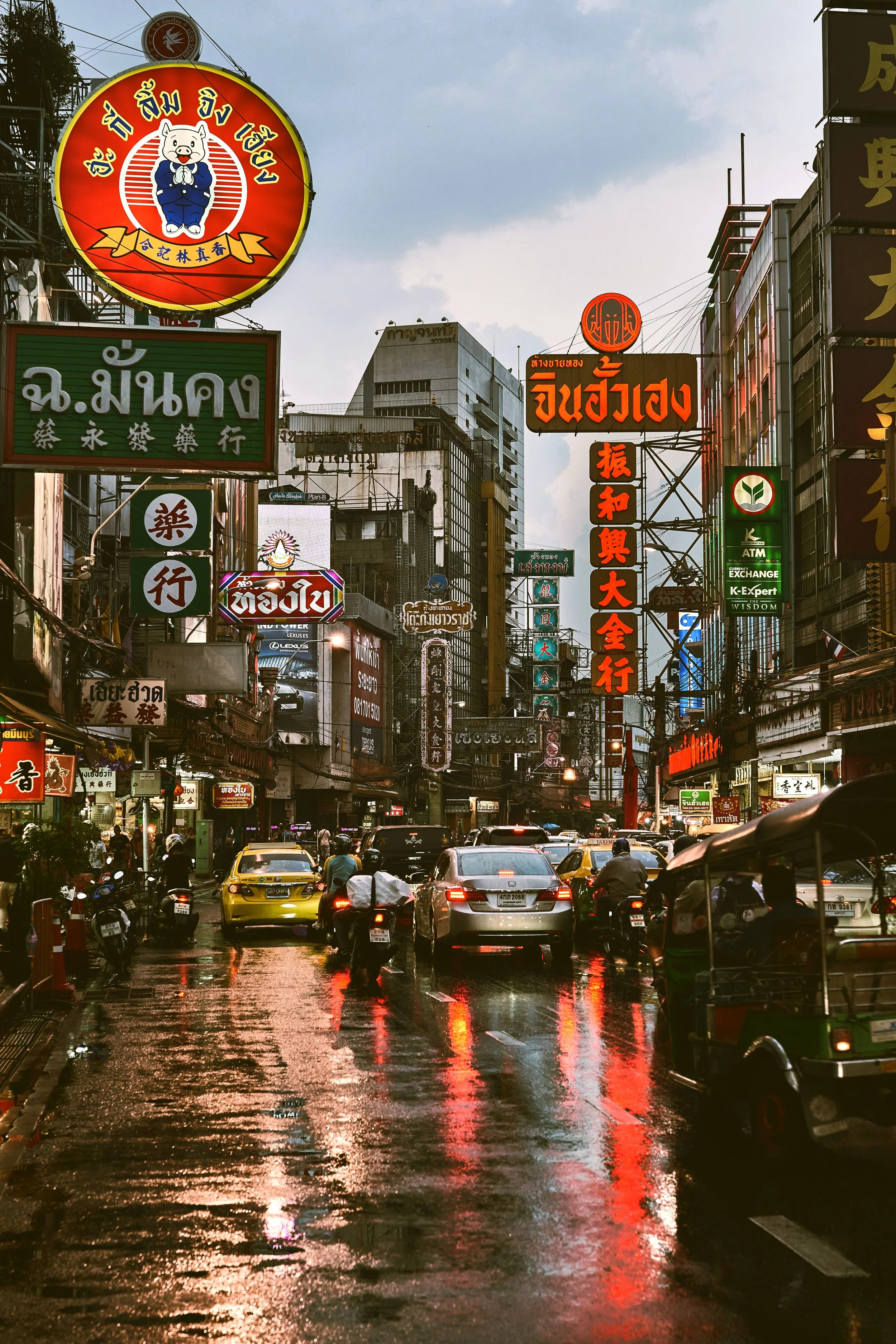
CHINATOWN & BANGKOK’S STREET LIFE
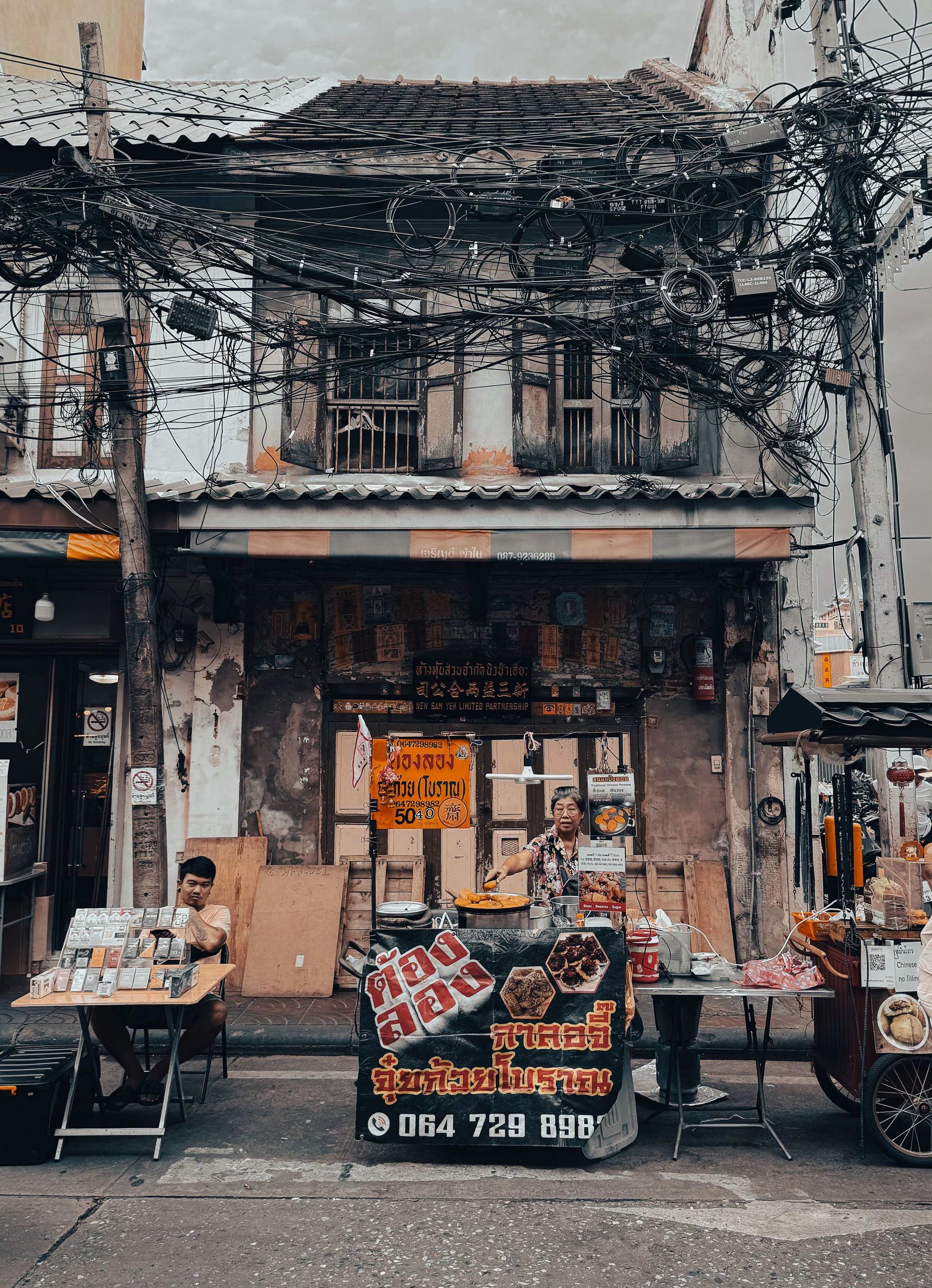
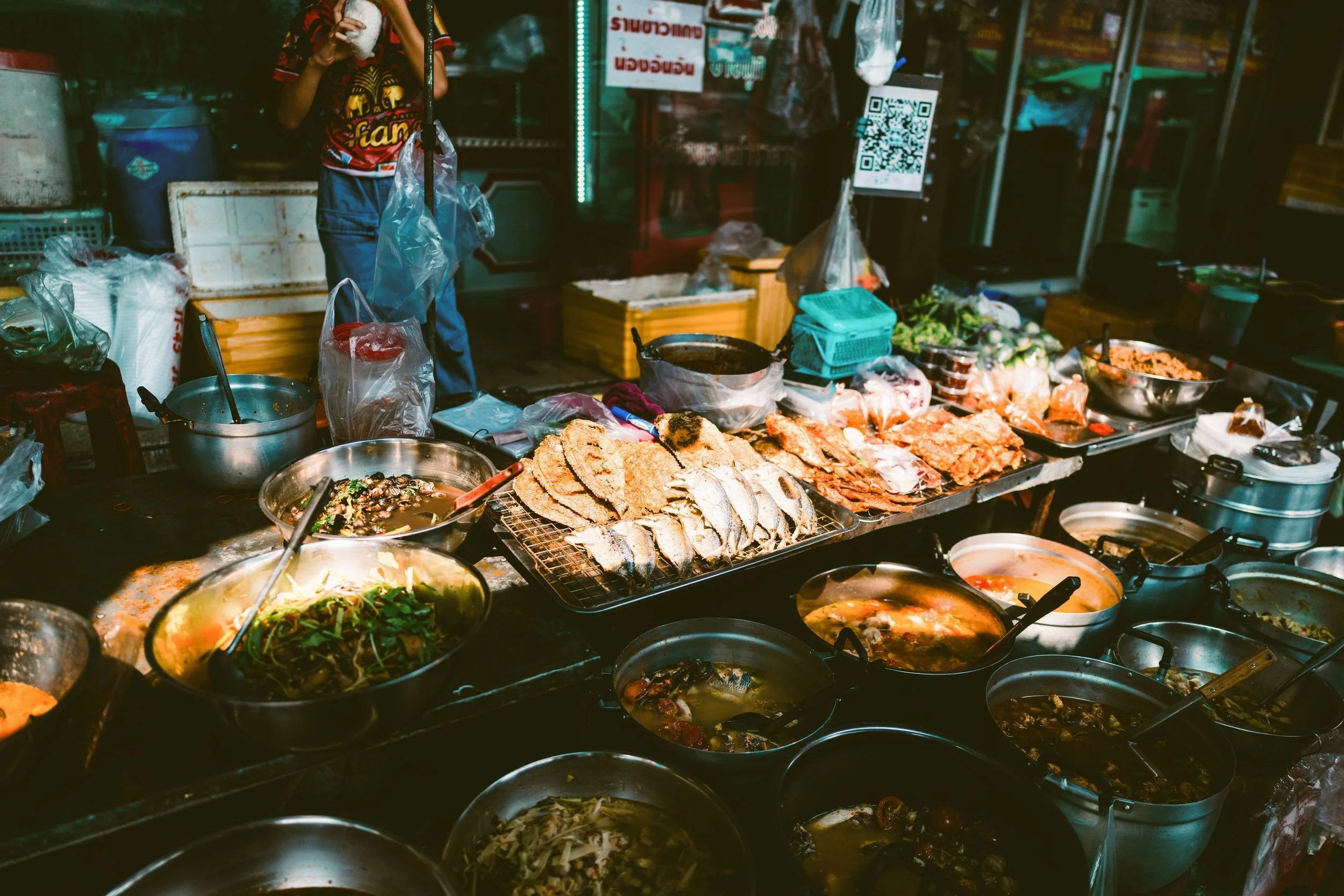
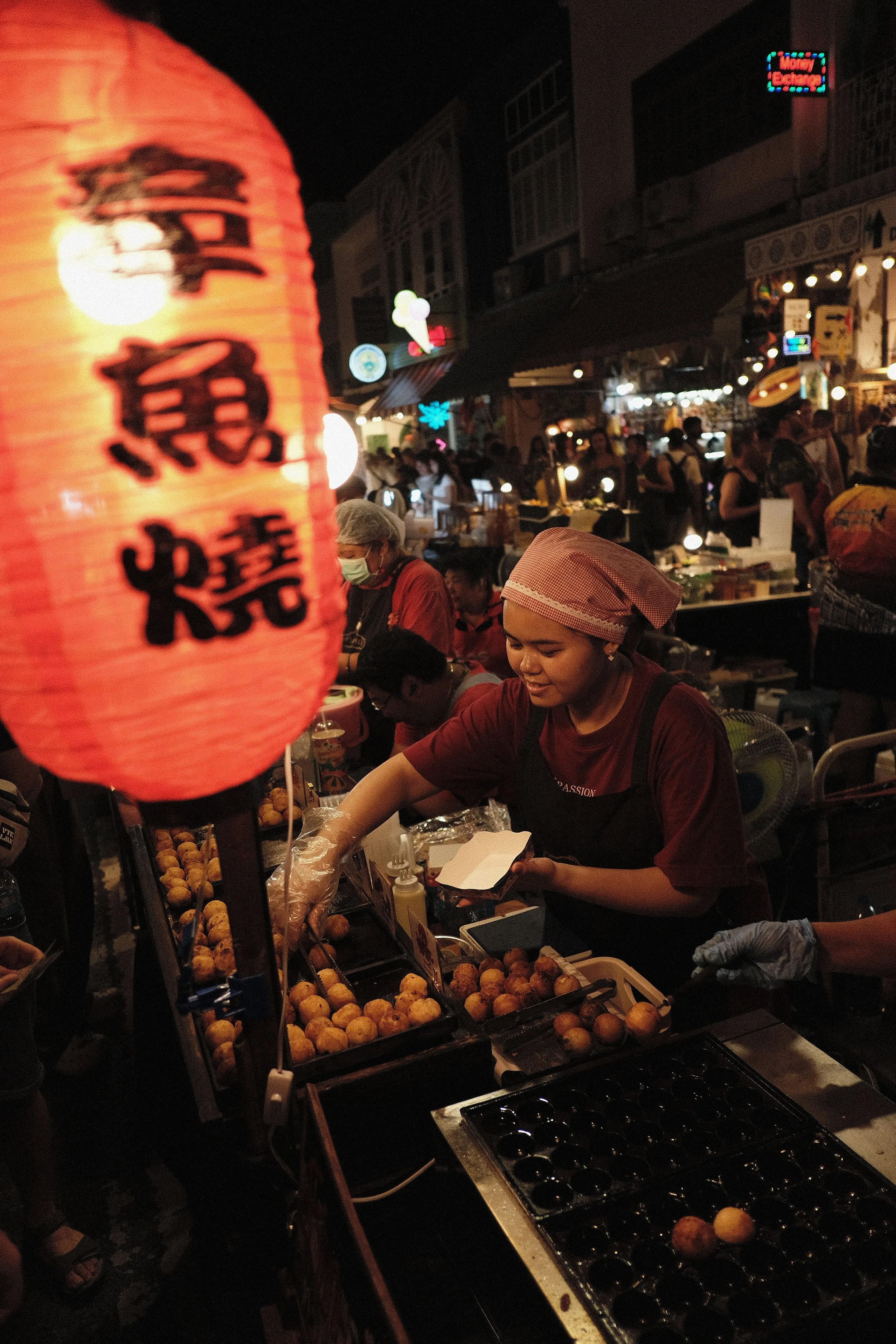
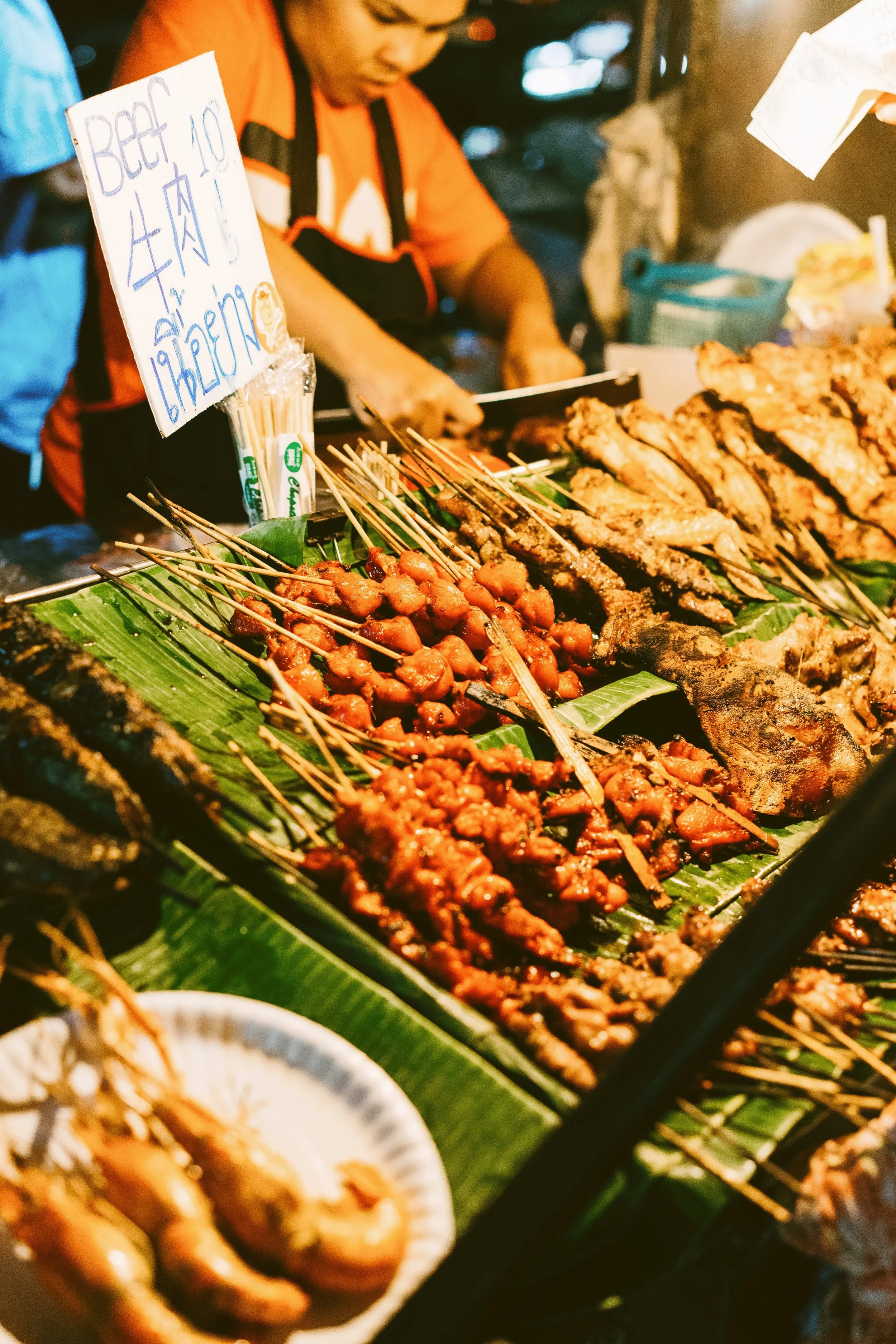
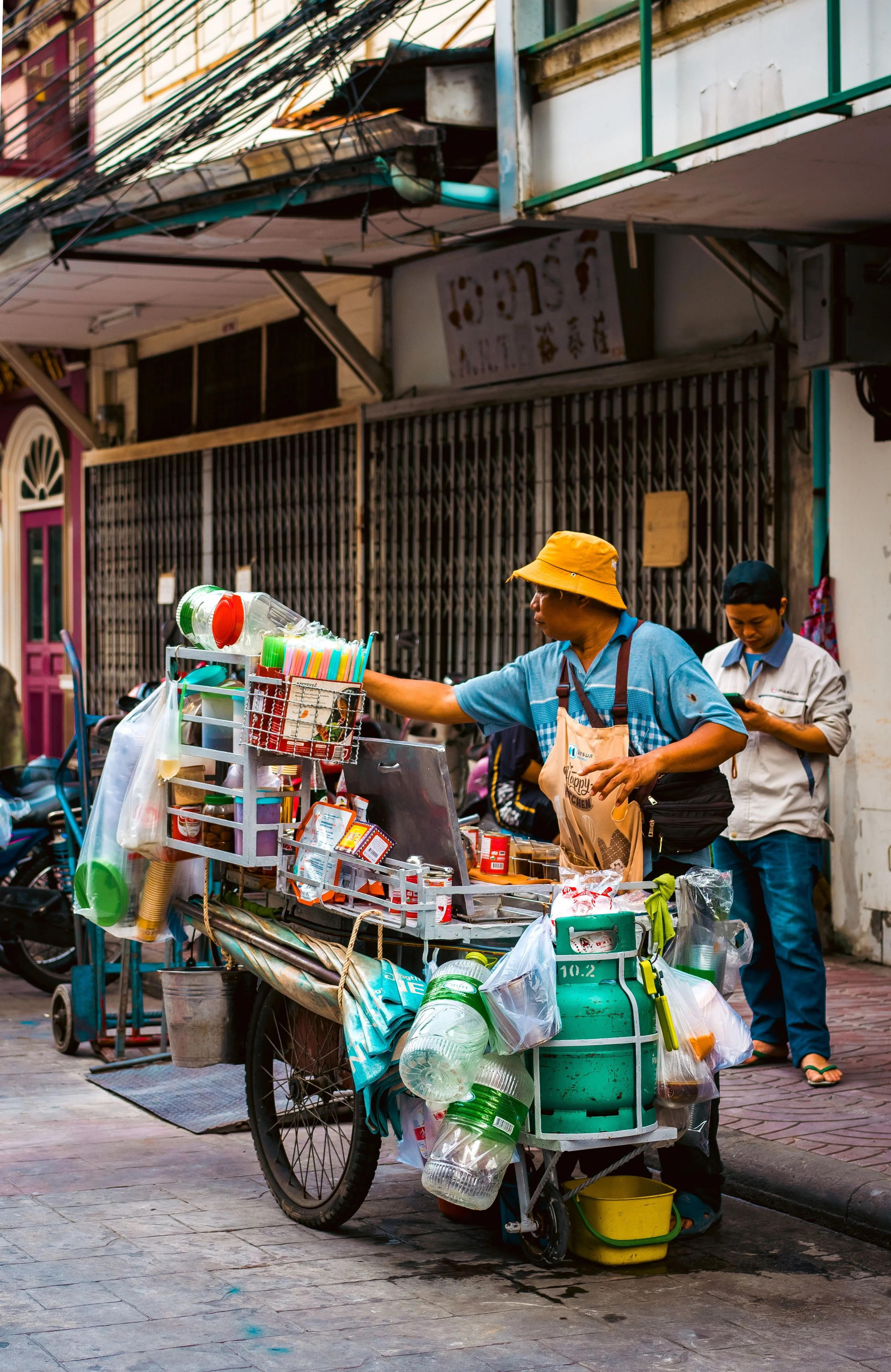
Bangkok does most of its living outdoors, on plastic stools, under strings of bare lightbulbs. Chinatown is where that reaches its most concentrated form — a neighborhood that's been selling, cooking, and haggling in the same streets for over two centuries, since King Rama I granted this stretch of riverbank to Chinese merchants back in 1782. Walk it at night and the street itself becomes the restaurant: woks throwing flame a few feet from where you're standing, gold shop windows lit up like altars, steam fogging up glasses that never quite clear.
Chinatown isn't the only place Bangkok shops and eats after dark, though. A few kilometers away, two very different markets are worth the detour — one is Chatuchak, a weekend institution so large that seeing all of it in a single visit is basically impossible, the other a retro night market built around vintage cars and secondhand denim rather than gold or ginger.
None of this moves fast, and none of it apologizes for the mess. Come hungry, bring cash, and don't expect a menu in English at most of it.
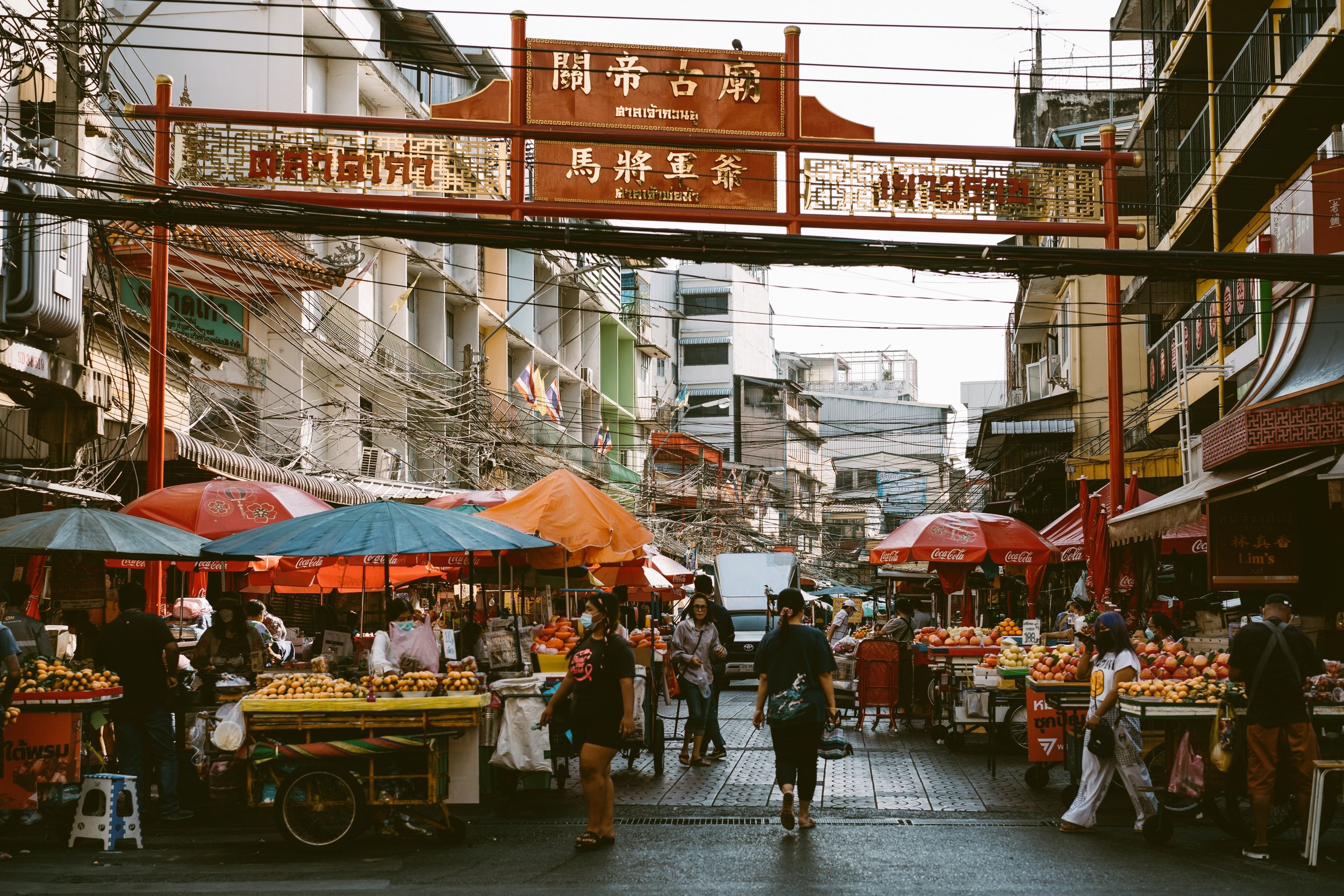
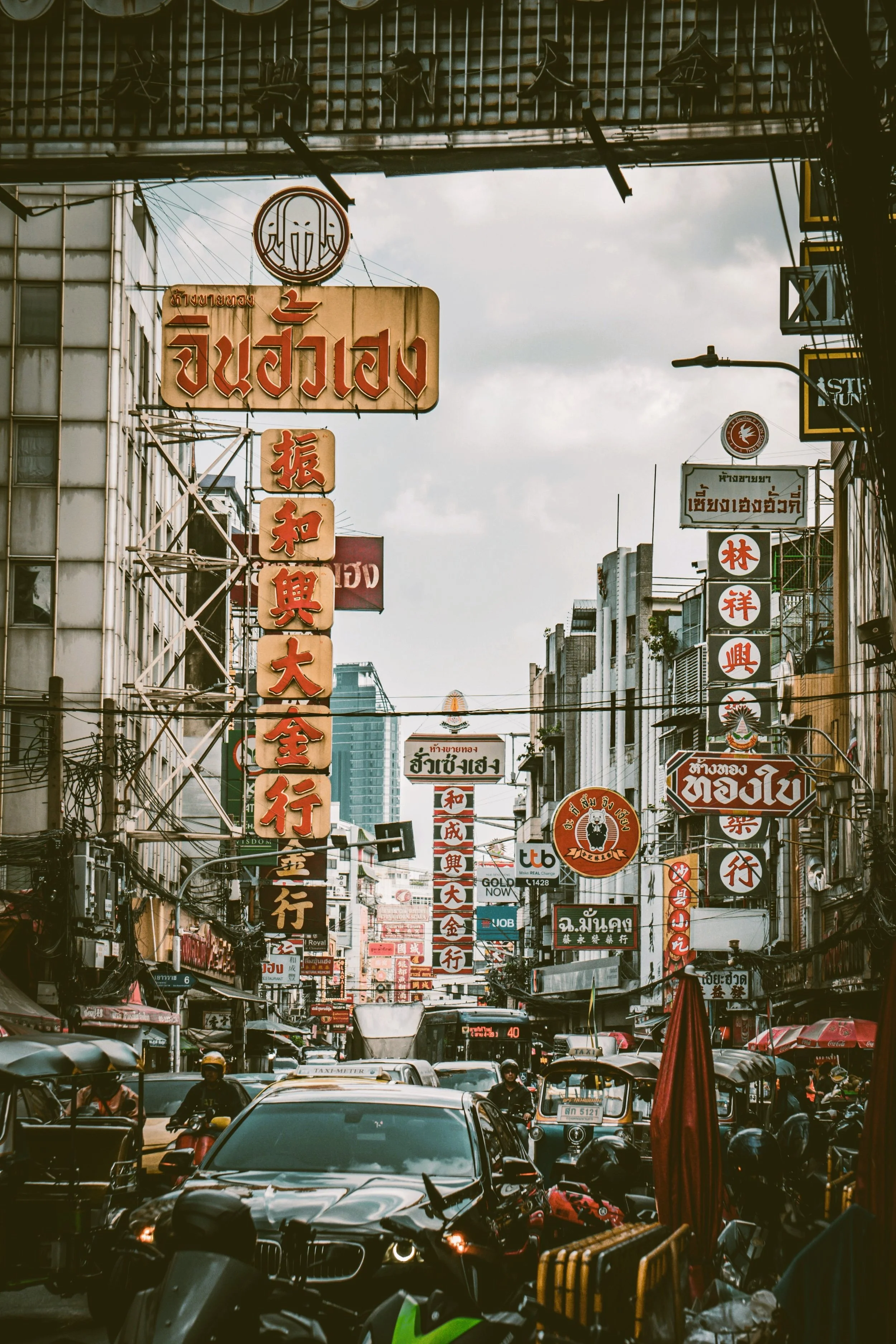
CHINATOWN (YAOWARAT)
Yaowarat Road is the spine of it all — five lanes of traffic by day, an entirely different creature after dark, when the neon signs switch on and the street stalls take over the sidewalks. Gold shops line the main road in numbers that make sense once you know gold has traditionally doubled as savings account and dowry here; some families have run the same shop for four generations.
Start at the Soi Texas corner for grilled prawns, then graze: Nai Mong Hoi Tod, on nearby Phlap Phla Chai Road, has been frying crispy oyster omelets since the 1960s. Between bites, slip into Wat Mangkon Kamalawat, a few minutes' walk off Yaowarat. Founded around 1871, it's Bangkok's largest Chinese Buddhist temple, thick with incense and busiest at Chinese New Year and the annual Vegetarian Festival.
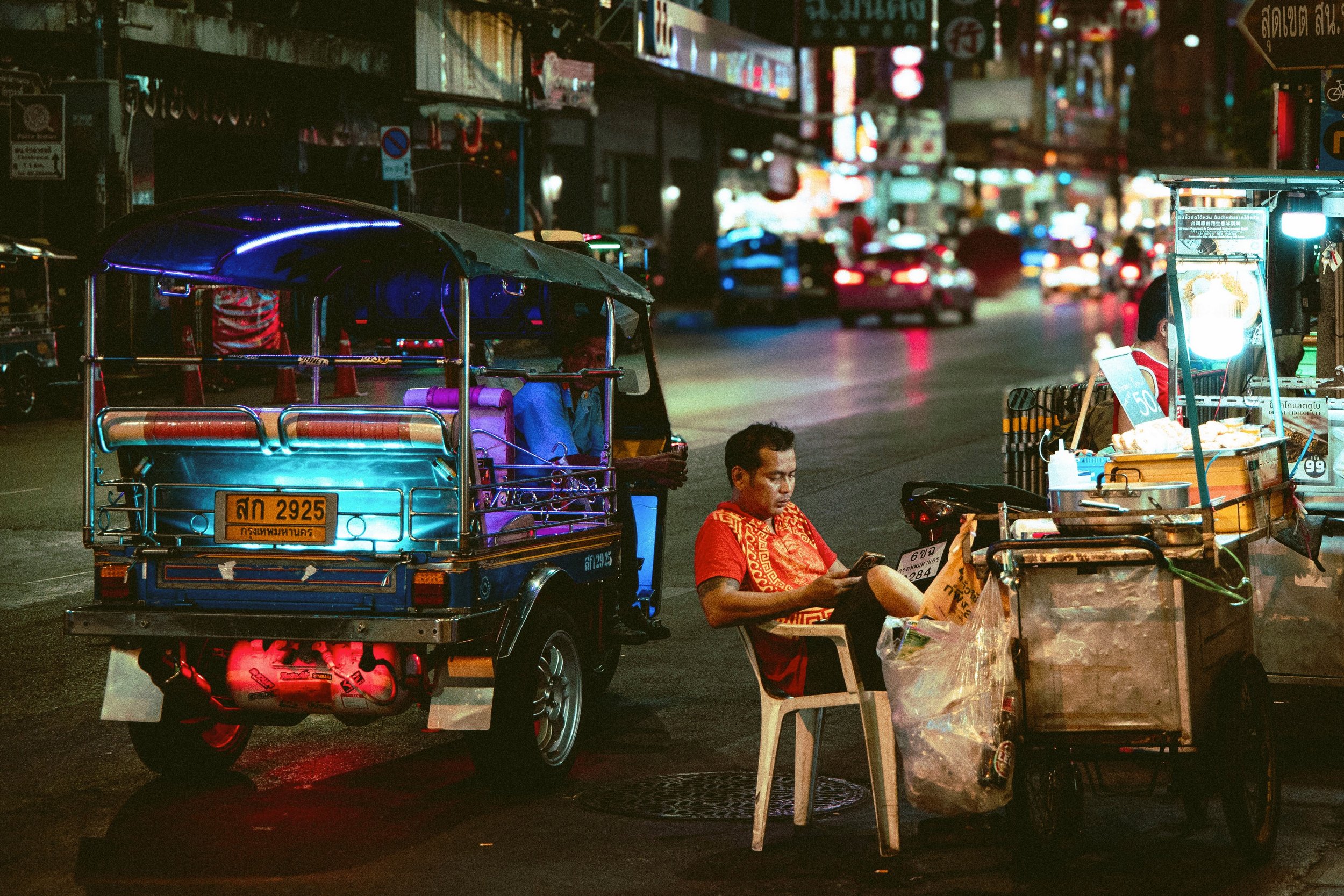
street food
Eating here mostly means eating standing up, or perched on a stool barely big enough to be called furniture. Order by pointing if the menu's only in Thai — nobody minds, and it's usually faster than trying to pronounce anything correctly on the first attempt.
The stalls that matter rarely have signs. Follow the longest line of locals, not the one stall with a laminated English menu clearly aimed at tourists — the food's rarely better there, just easier to order. And don't fill up early; the street rewards grazing across five stalls over committing fully to the first one that smells good.
Then there's the outlier. Jay Fai, in the old town on Maha Chai Road near the Giant Swing, a short ride from Chinatown, has cooked over a charcoal wok for decades, wearing ski goggles against the flames, and in 2018 her stall became the first street food vendor in Bangkok to earn a Michelin star. Expect a wait, cash only, and a crab omelette that costs far more than anything else on the street, and is worth it anyway.
GUIDED NIGHT FOOD TOUR OF CHINATOWN
If you'd rather have someone else do the pointing, a guided night food tour of Chinatown usually covers six or seven stalls in one night, translation included.
bANGKOK’S OTHER MARKETS
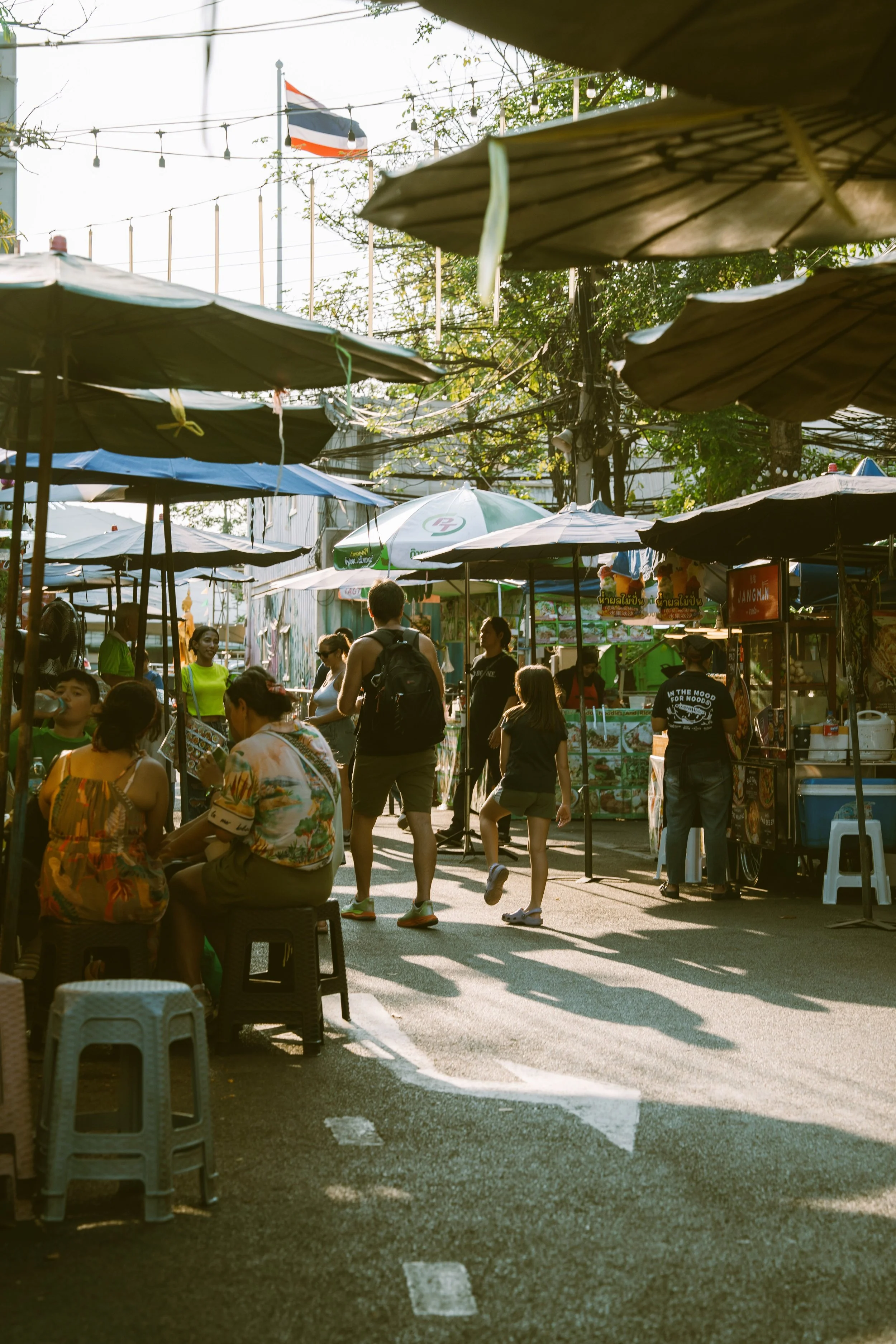
Chatuchak, open weekends only, is less a market than a small city — over 15,000 stalls spread across some 35 acres, loosely organized into sections for clothing, antiques, plants, pets, and food that make sense only once you've gotten lost in them a few times. Trying to see all of it in one visit is a losing game; pick two or three sections and let the rest go.
For something smaller and stranger, Rot Fai Night Market leans retro — vintage Vespas, secondhand Levi's, converted shipping containers turned into bars, open only Thursday through Sunday evenings. It's less about buying anything specific and more about wandering somewhere that looks like Bangkok crossed with a flea market in Brooklyn.
THAI CLASSICS
Pad Thai
Stir-fried rice noodles with egg, tofu or shrimp, tamarind, and crushed peanuts. Everywhere, and everywhere slightly different — the good stalls balance sour, sweet, and salty instead of leaning hard into one.
Tom Yum Goong
Hot and sour shrimp soup, lemongrass and lime leaf doing most of the work. Order it "nam khon" (creamy) if the clear broth version feels too sharp on a first try.
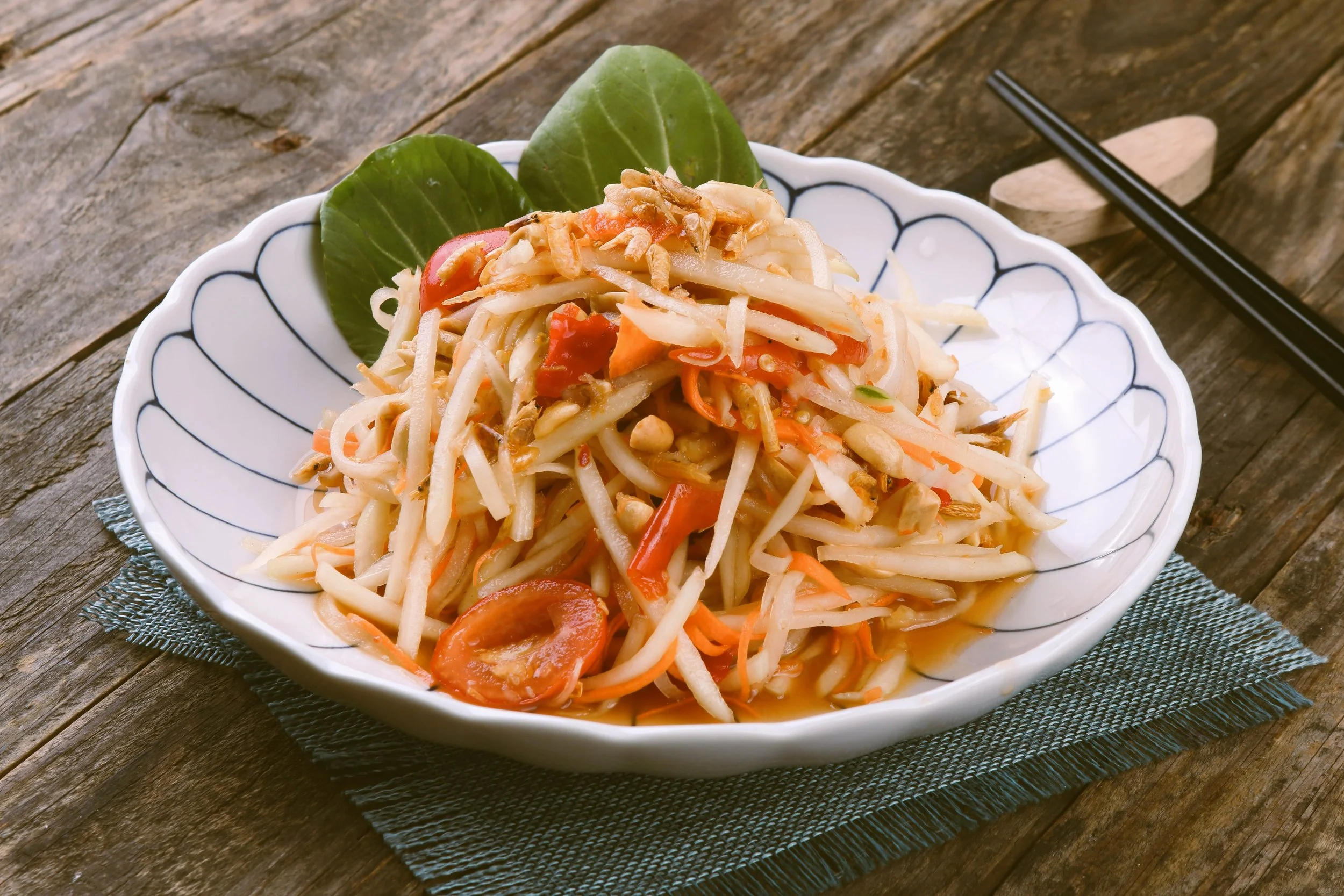
Som Tam
Green papaya salad, pounded to order in a mortar right in front of you — ask for "mai phet" if you want it not spicy, though the default heat here is no joke.
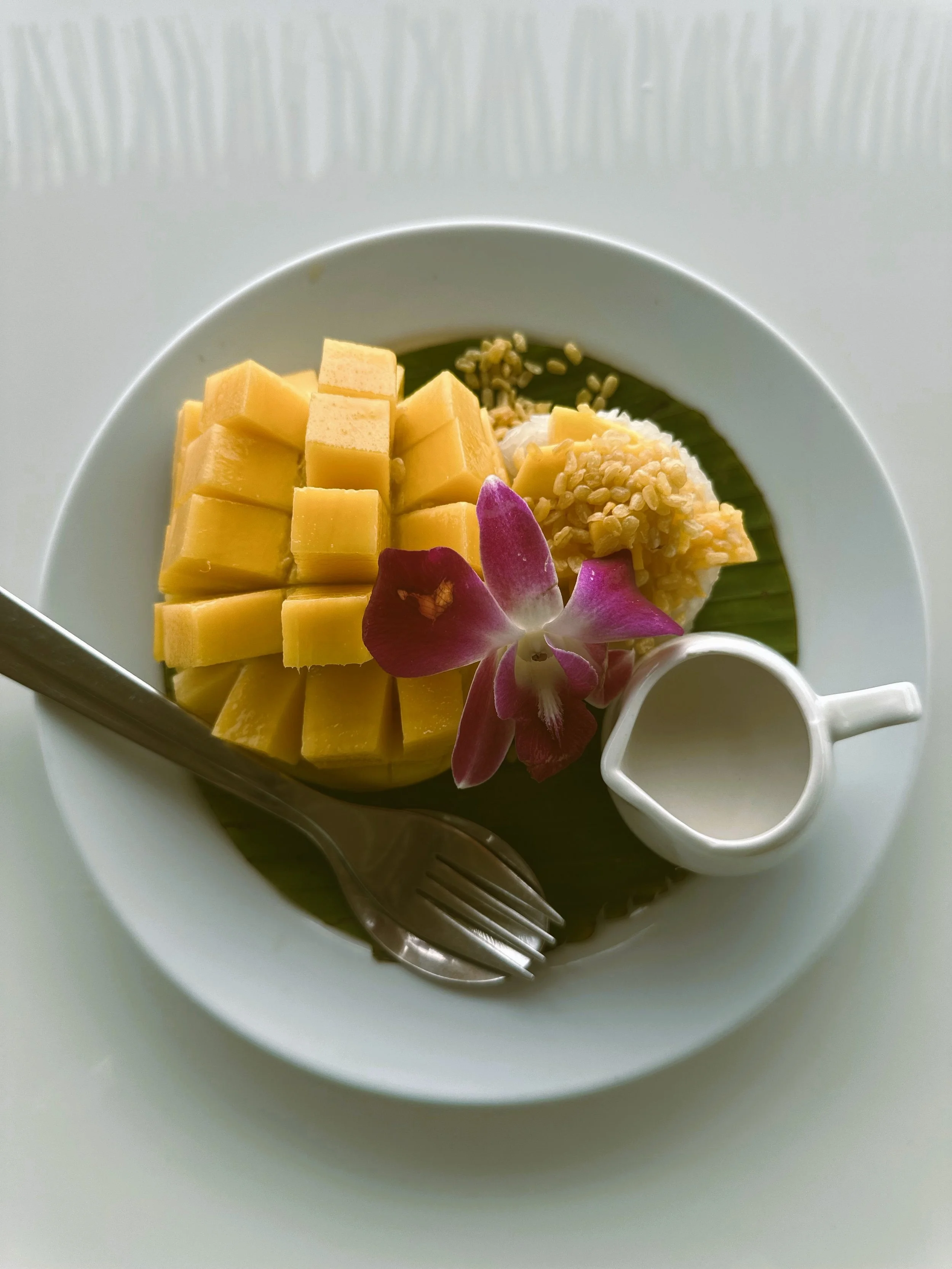
Mango Sticky Rice
Sweet coconut sticky rice with fresh mango, sold from carts as often as restaurants. Ask which mango variety is in season; it actually changes the dish more than you'd expect.
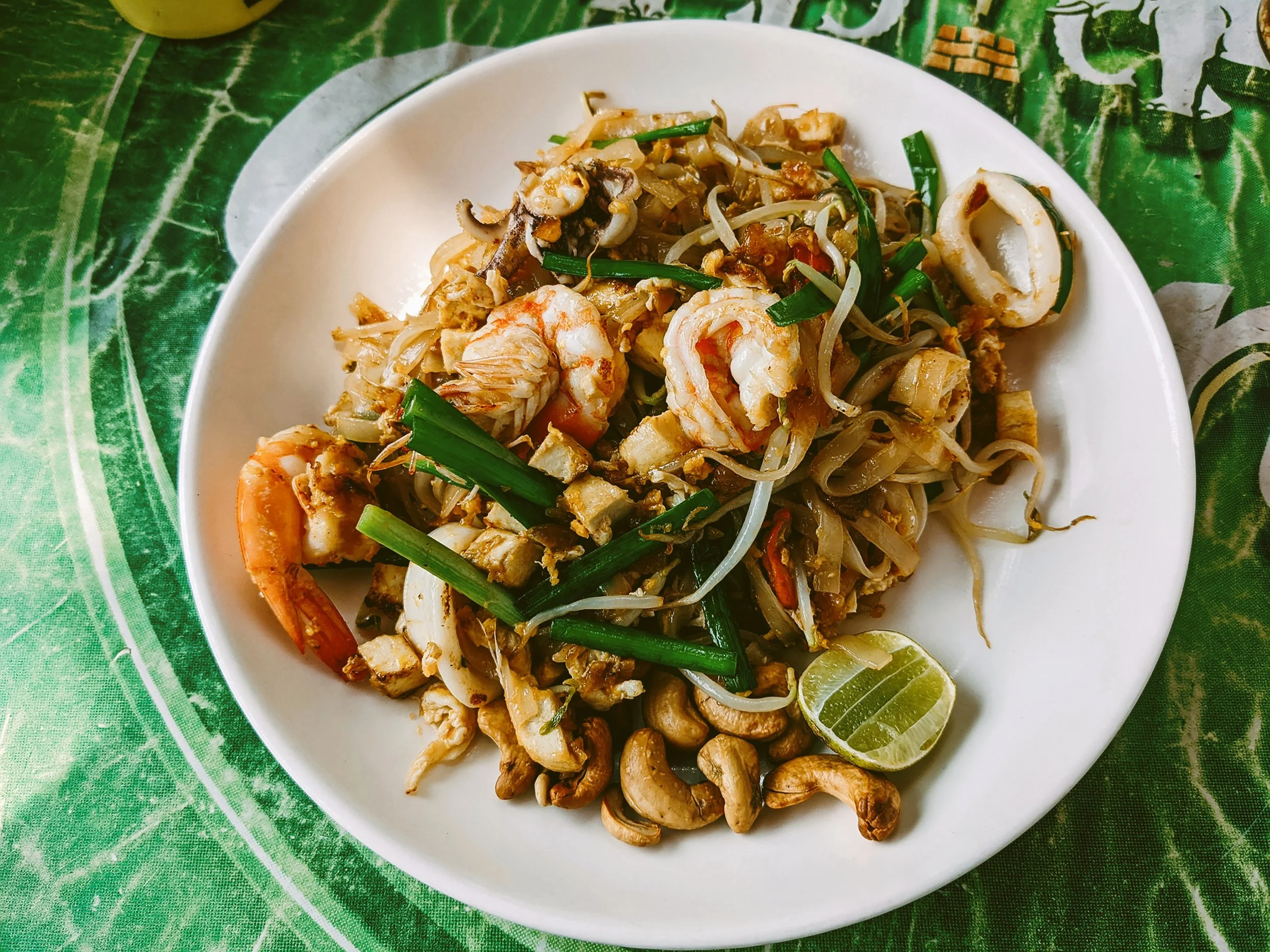
Pad Thai
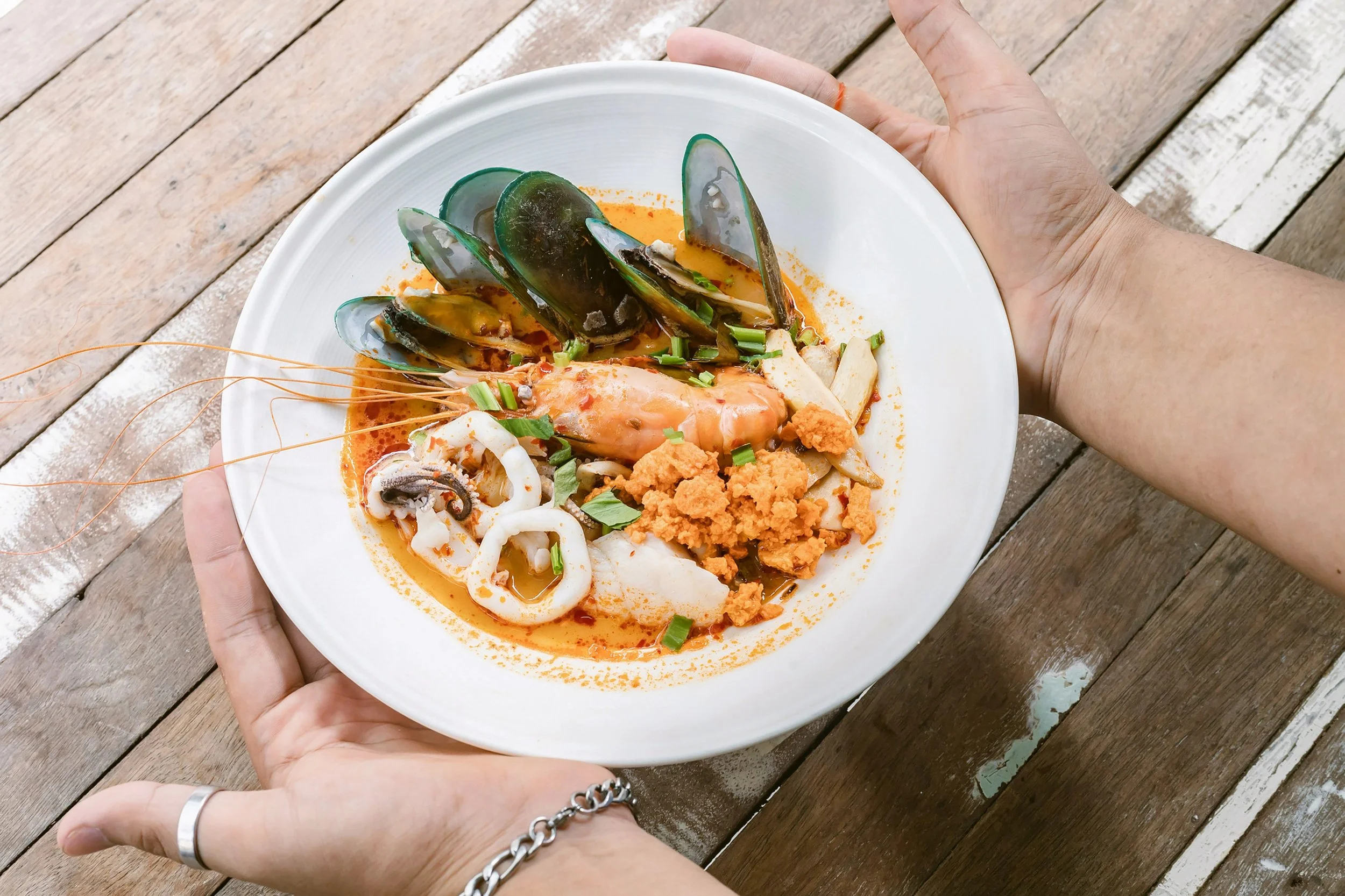
Tom Yum Goong
Som Tam
Mango Sticky Rice