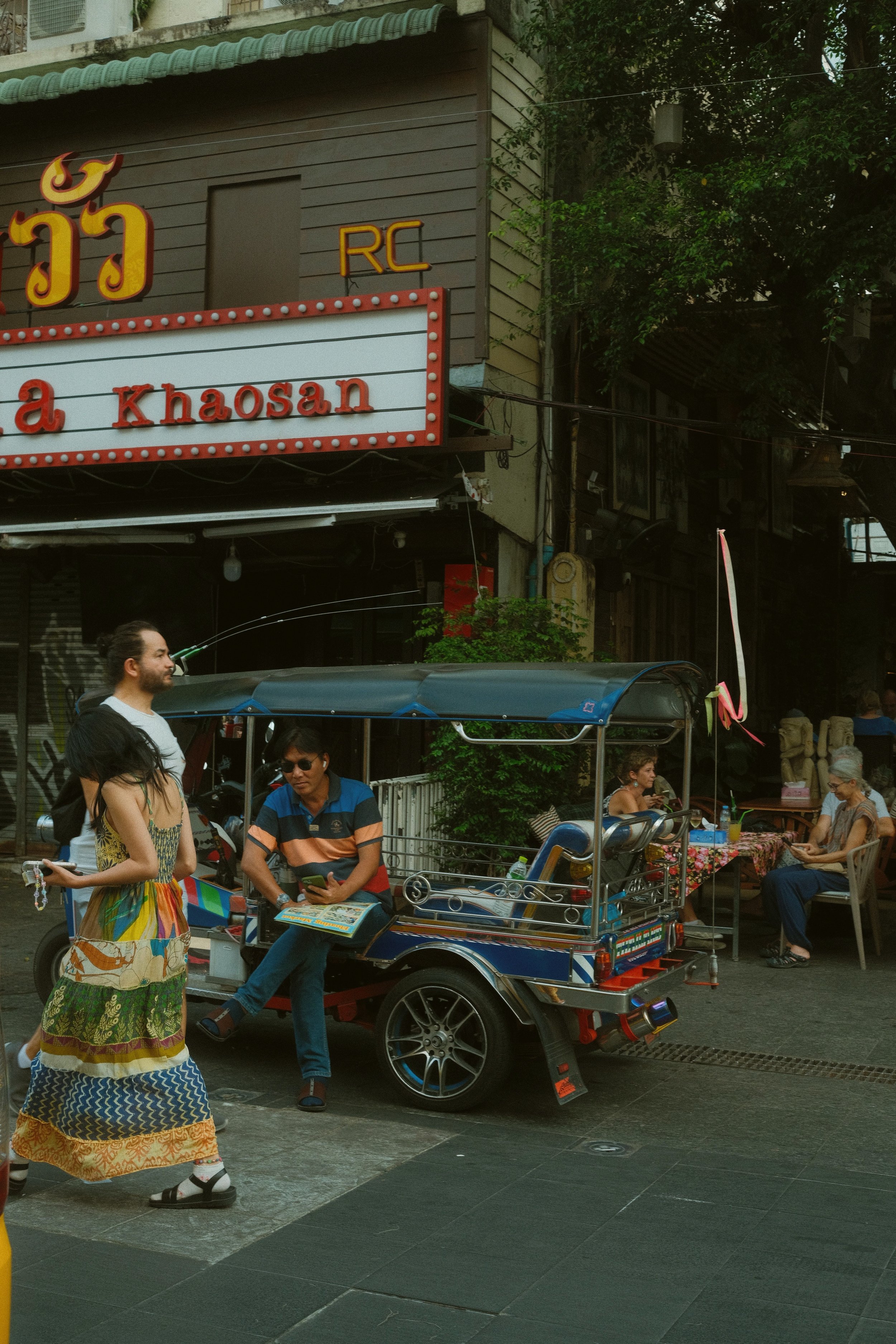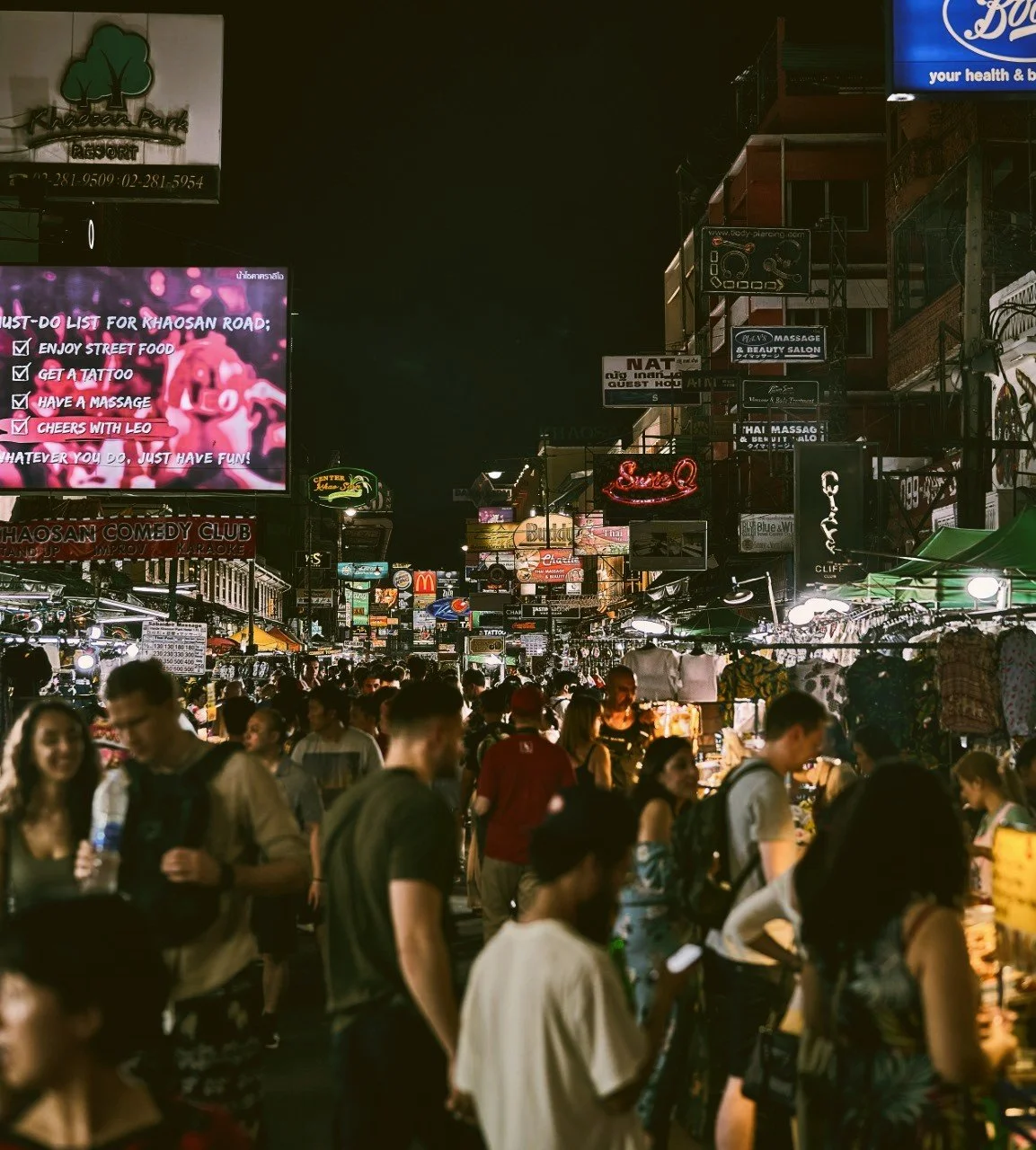
BANGLAMPHU & KHAO SAN ROAD
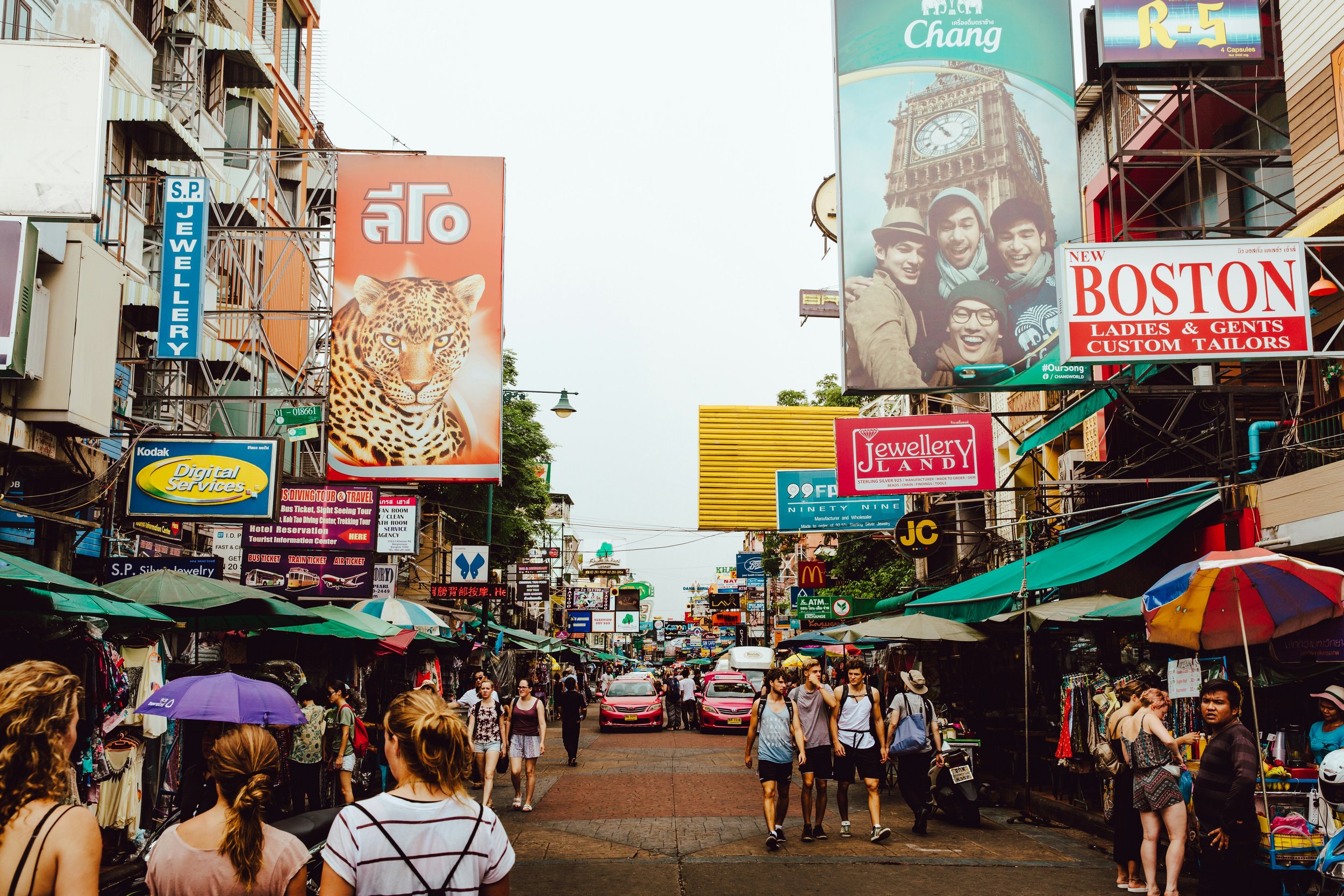
Khao San Road didn't get planned into existence — it just sort of happened. A cluster of cheap guesthouses in the 1980s, a Lonely Planet mention, and within a decade it had become the de facto starting line for backpackers across all of Southeast Asia, the place where gap years technically begin. It's louder now, more polished into its own cliché — fried scorpions sold mostly for photos, buckets of cheap liquor, the same three songs on repeat from competing speakers. It knows exactly what it is and leans into it without apology.
Walk two minutes in any direction, though, and Khao San stops being the whole story. Banglamphu is the neighborhood wrapped around it — temples on artificial hills, a monument with a genuinely dark political history, wooden houses tucked down side streets that have nothing to do with anyone's gap year. Most people who fly in for Khao San never notice they're standing somewhere with its own identity entirely separate from the street that made it famous.
Both versions are real. Neither cancels the other out.
Soi Rambuttri, one street over, is Khao San with the volume turned down — same guesthouses and street food stalls, fewer buckets of cheap liquor, actual room to walk without bumping into someone's backpack. If Khao San's energy sounds exhausting rather than fun, this is where to base yourself instead, close enough to wander back in five minutes if you change your mind later that night.
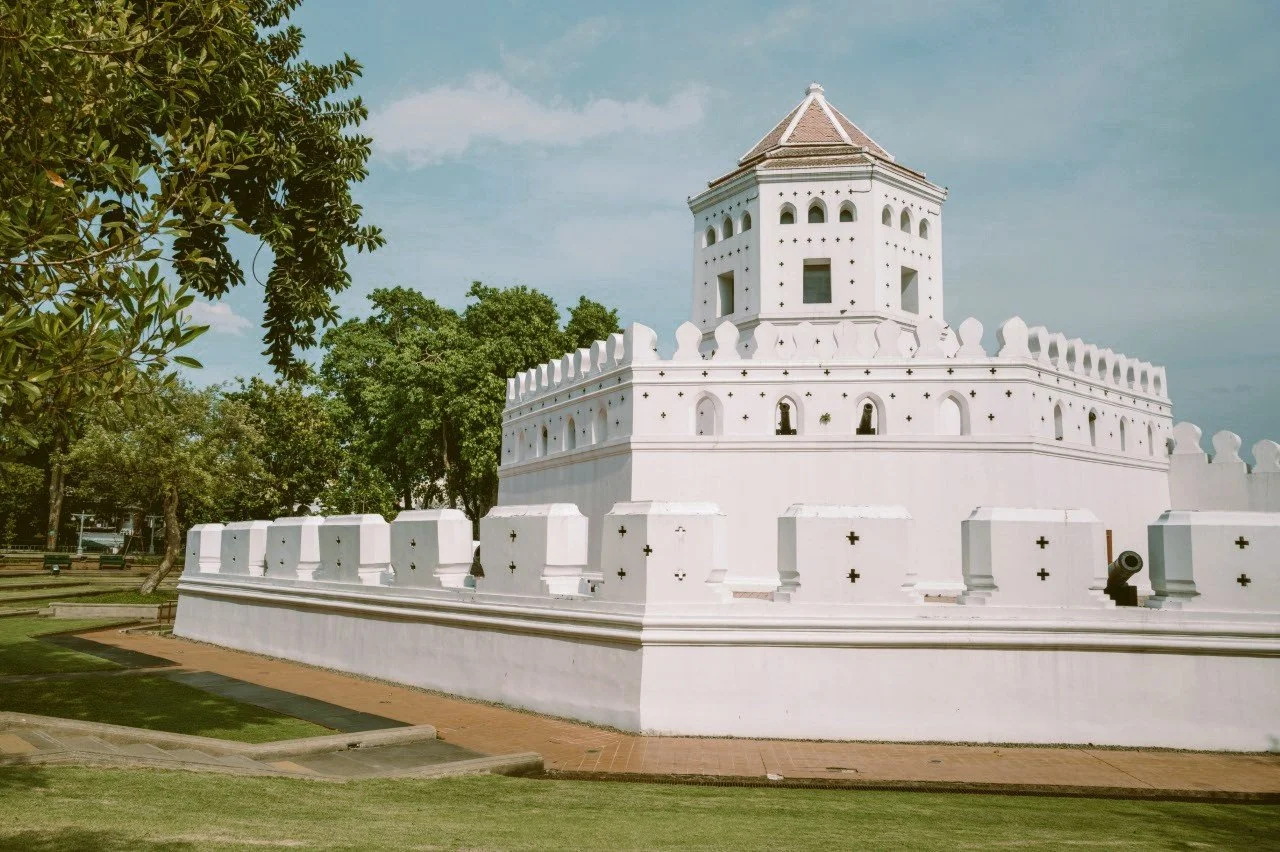
A few blocks north, right where the neighborhood meets the river, Phra Sumen Fort still stands — an octagonal white watchtower from 1783, one of only two survivors out of the fourteen forts that once ringed the old city wall. It's not open inside, but it's lit up dramatically after dark, and the little riverside park around it is one of the few spots in the area where you can actually hear the water instead of someone's speaker.
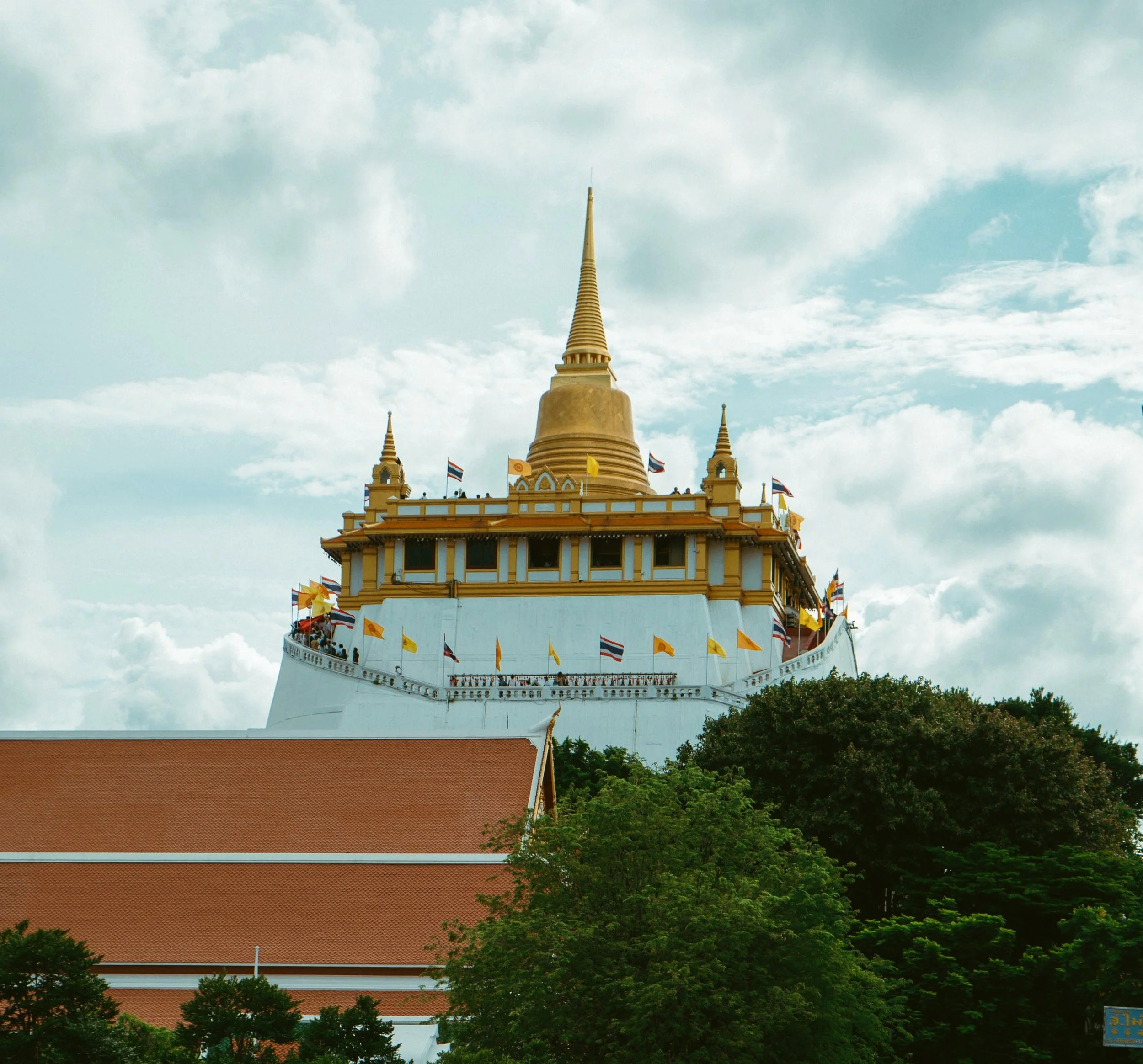
Further out, the Golden Mount offers a rooftop-bar view without the rooftop bar — 300-odd steps up an artificial hill to one of the better panoramas of old Bangkok, usually with a fraction of the crowd standing in line for Khao San's rooftop equivalents a few kilometers away. Climb it in the late afternoon rather than midday; the 300-plus steps are shadeless and brutal in full sun, and the view is better with the light lower anyway.
DON’T FALL FOR IT
The most persistent scam in this part of Bangkok goes like this: a friendly stranger tells you the Grand Palace is "closed for a Buddhist holiday" and offers to take you somewhere better instead — usually a gem or tailor shop paying him commission. The palace is essentially never closed for this reason. Smile, say no, and keep walking; this one's been running for decades and shows no sign of stopping.
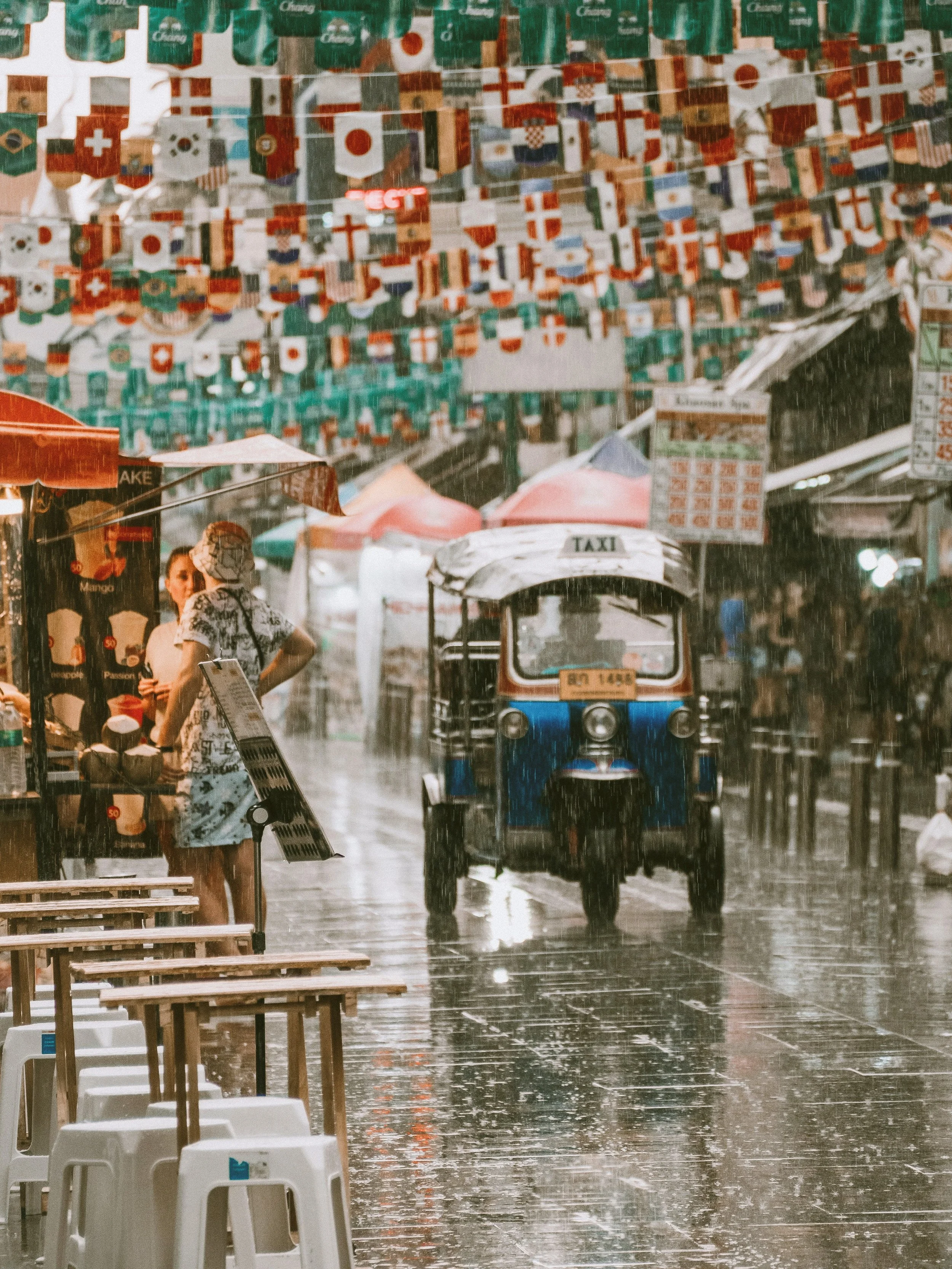
Tuk-tuks parked directly outside major sights tend to quote wildly inflated prices, banking on you not knowing better yet. Walk a block away first, or just use Grab — it's the local ride-hailing app, works exactly like Uber, and takes the haggling out of the equation entirely.
OLD CITY WALKING TOUR
If you'd rather have someone explain what you're looking at, a guided walking tour of the old city covers the Golden Mount, Democracy Monument, and the backstreets in a couple of hours.